
Retail operations today are becoming increasingly complex, especially when it comes to managing product returns across multiple channels such as eCommerce, in-store purchases, and omnichannel fulfillment. As return volumes rise, retailers must handle not just the physical movement of goods but also the financial documentation that follows each transaction. This makes it critical to track return invoices for retailers in a structured and reliable way.
When return invoices are not tracked efficiently, businesses often face mismatched records, delayed refunds, and customer dissatisfaction. These inefficiencies can lead to revenue leakage, accounting discrepancies, and compliance risks during audits. In highly competitive retail environments, even small errors in return processing can damage trust and brand reputation.
To address these challenges, digital billing systems have emerged as the most effective solution. By centralizing data, automating workflows, and providing real-time visibility, these platforms enable retailers to track return invoices for retailers with greater accuracy and efficiency.
What Are Return Invoices in Retail?
Return invoices are financial documents issued when a customer returns a product after a sale has been completed. They serve as a formal record that adjusts the original transaction, reflecting the returned goods and any associated refund or credit. Retailers rely on return invoices to maintain accurate financial and inventory records.
These invoices directly modify previously issued sales invoices by reversing or partially offsetting the transaction value. This ensures that revenue figures, tax calculations, and inventory levels remain accurate. Without proper documentation, retailers risk inconsistencies in their accounting systems.
It is important to distinguish return invoices from similar concepts. Refunds refer to the actual repayment of money, while credit notes are often used as a balance for future purchases. Exchanges involve replacing a product rather than reversing the transaction entirely, making return invoices a distinct and essential component of retail accounting.
Why Efficient Tracking of Return Invoices Matters
Efficient systems to track return invoices for retailers are essential for maintaining financial integrity. Accurate tracking ensures that all returned transactions are properly recorded, preventing discrepancies between sales, returns, and inventory levels. This alignment is critical for reliable financial reporting.
Another key advantage is the prevention of revenue leakage. Poor tracking can result in duplicate refunds, missed return entries, or incorrect adjustments, all of which negatively impact profitability. A structured system minimizes these risks and strengthens internal controls.
From a customer experience perspective, efficient tracking enables faster refund processing and clearer communication. Additionally, well-maintained records support audit readiness and regulatory compliance, ensuring retailers can provide accurate documentation when required.
Challenges of Tracking Return Invoices Manually
Manual processes make it difficult to track return invoices for retailers efficiently, especially when dealing with high transaction volumes. Records are often scattered across spreadsheets, POS systems, and paper files, leading to disorganization and inefficiencies.
Reconciling return invoices with original sales invoices can also become a time-consuming task. Without automation, staff must manually match transactions, increasing the likelihood of errors and delays. This becomes even more challenging in omnichannel retail environments.
Furthermore, manual tracking increases the risk of duplicate entries, incorrect data input, and lack of real-time visibility. Retailers may struggle to determine the status of returns, which can slow down operations and impact customer satisfaction.
Where Retailers Can Track Return Invoices Efficiently
Retailers have several options when choosing systems to track return invoices for retailers effectively, depending on their scale and operational complexity.
Centralized billing and invoicing software provides a unified platform where all invoices and return transactions are stored and managed. This eliminates data silos and simplifies tracking across departments.
Cloud-based accounting platforms offer flexibility and real-time access, allowing retailers to monitor return invoices from anywhere. These systems also support automated reconciliation and reporting, improving overall efficiency.
Integrated retail management systems that combine POS and invoicing functionalities enable seamless tracking of returns directly at the point of sale. Meanwhile, ERP systems with dedicated return management modules provide enterprise-level control and visibility.
Finally, automated billing platforms with real-time tracking capabilities deliver the highest level of efficiency. These systems ensure that return invoices are generated, updated, and reconciled automatically, significantly reducing manual workload.
Key Features to Look for in Return Invoice Tracking Systems
Centralized dashboard for invoice and return tracking
A centralized dashboard allows retailers to view all invoices, returns, and adjustments in one unified interface. This eliminates the inefficiencies of switching between multiple systems or spreadsheets. It also provides better operational visibility, enabling teams to quickly identify discrepancies and monitor return activity in real time.
Automated return invoice generation
Automated systems can instantly generate return invoices once a return request is initiated or approved. This reduces the need for manual data entry, lowering the risk of human error and inconsistencies. It also ensures that all return transactions follow standardized formats and workflows across the organization.
Real-time status updates and reporting
Real-time tracking enables retailers to monitor each stage of the return invoice lifecycle, from initiation to refund completion. This transparency helps teams respond quickly to delays or issues in processing. Additionally, reporting tools provide valuable insights into return trends, helping businesses make data-driven decisions.
Integration with inventory and POS systems
Integration ensures that returned items are automatically reflected in inventory counts and linked to original sales transactions. This reduces the need for manual reconciliation and improves data accuracy across systems. It also helps maintain alignment between financial records and physical stock levels.
Customer account and transaction history
Access to detailed customer profiles allows retailers to review past purchases, returns, and payment history in one place. This improves customer service by enabling faster resolution of return-related inquiries. It also helps businesses identify patterns such as frequent returns or high-value customers.
Audit trails and documentation management
A robust system records every action taken on a return invoice, including creation, modification, and approval steps. This creates a transparent audit trail that supports compliance and internal accountability. Proper documentation management also ensures that records are easily accessible during audits or financial reviews.
The Role of Recurring Billing in Retail Return Management
Recurring billing plays an important role in helping retailers track return invoices for retailers who deal with repeat customers or subscription-based products. It ensures that all transactions are systematically recorded, making it easier to manage returns tied to ongoing billing cycles.
When returns occur within recurring transactions, automated systems can quickly adjust invoices without disrupting the billing schedule. This reduces manual intervention and ensures consistency across all financial records.
Additionally, recurring billing improves reconciliation by linking repeat transactions with their corresponding return invoices. This creates a more organized and transparent system, especially for retailers handling high volumes of repeat purchases.
Best Practices for Tracking Return Invoices Efficiently
Use a centralized digital system for all invoices and returns
Consolidating all return and invoice data into a single platform ensures consistency and accuracy across operations. It eliminates data silos that can lead to confusion and reporting errors. A centralized system also makes it easier for teams to collaborate and access information quickly.
Automate return invoice generation and updates
Automation reduces the need for repetitive manual tasks and speeds up return processing. It ensures that invoices are created, updated, and tracked consistently without delays. This improves efficiency while minimizing the risk of missed or duplicate entries.
Maintain clear links between original and return invoices
Linking return invoices to their corresponding sales invoices simplifies reconciliation and tracking. This connection ensures that all financial adjustments are accurately reflected in reports. It also makes it easier to trace transactions during audits or customer inquiries.
Regularly reconcile financial and inventory records
Routine reconciliation ensures that all return transactions are properly recorded in both accounting and inventory systems. This helps identify discrepancies early before they become larger issues. Consistent checks also improve the accuracy of financial reporting and stock management.
Train staff on standardized return processes
Clear procedures and proper training ensure that all employees handle returns consistently. This reduces errors and improves the overall efficiency of return invoice tracking. Well-trained staff can also provide better customer service during return interactions.
How Automation Improves Return Invoice Tracking
Automation significantly enhances the ability to track return invoices for retailers by reducing reliance on manual processes. It minimizes human error, ensuring that all return transactions are accurately recorded and processed.
Automated systems also speed up return and refund processing, enabling retailers to handle high volumes efficiently. This leads to improved operational performance and better customer experiences.
Real-time visibility is another major advantage. Retailers can monitor return transactions as they happen, allowing for quicker decision-making and more accurate reporting.
Key Benefits of Efficient Return Invoice Tracking
Improves financial accuracy and reporting
Efficient tracking ensures that all return transactions are recorded correctly and reflected in financial statements. This leads to more accurate revenue, tax, and profit calculations. Reliable data also supports better decision-making and forecasting.
Reduces revenue leakage and errors
Automated tracking minimizes the risk of duplicate refunds, missed entries, and incorrect adjustments. This helps protect the business from unnecessary financial losses. Strong controls also improve accountability within the organization.
Enhances customer satisfaction
Faster and more accurate return processing leads to quicker refunds and better communication with customers. This improves trust and strengthens customer relationships. A smooth return experience can also encourage repeat business.
Streamlines return and refund processes
Efficient systems reduce bottlenecks and manual workload, allowing retailers to handle higher return volumes. This improves operational speed and consistency across all channels. Streamlined processes also free up staff to focus on higher-value tasks.
Supports compliance and audit readiness
Detailed records and audit trails ensure that businesses meet regulatory and accounting requirements. This makes it easier to provide documentation during audits or financial reviews. Strong compliance practices also reduce the risk of penalties or legal issues.
Common Use Cases
eCommerce product returns
Online retailers often deal with high volumes of returns due to customer expectations and flexible return policies. Efficient systems help track return invoices quickly and accurately across digital channels. This ensures smooth processing and maintains customer satisfaction.
In-store retail returns and exchanges
Physical stores require immediate processing of returns at the point of sale. Integrated systems allow staff to generate return invoices instantly and update inventory in real time. This improves both operational efficiency and customer experience.
Subscription product returns
Businesses offering recurring products need to handle returns within ongoing billing cycles. Automated systems can adjust invoices and maintain accurate billing schedules. This ensures consistency and simplifies tracking for repeat transactions.
Warranty and defective product claims
Return invoices are essential for documenting defective items and processing replacements or refunds. They ensure that financial adjustments are properly recorded and tracked. This also helps maintain transparency in warranty-related transactions.
Bulk return processing for large retailers
Large-scale retailers often process returns in batches, especially during peak seasons. Automated systems make it easier to handle high volumes without errors or delays. This improves efficiency and ensures accurate record-keeping at scale.
How ReliaBills Helps Retailers Track Return Invoices Efficiently
Retailers need a reliable way to track return invoices for retailers without dealing with scattered systems or manual errors. ReliaBills simplifies this process by centralizing invoicing, return tracking, and customer transactions into one easy-to-use platform. With automated workflows and real-time visibility, businesses can manage returns more accurately while reducing administrative workload.
One of the key advantages of ReliaBills is its strong recurring billing functionality, which is especially valuable for retailers handling repeat customers or subscription-based products. When returns occur, the system automatically adjusts invoices and keeps billing cycles consistent without requiring manual intervention. This makes it significantly easier to track return invoices for retailers dealing with ongoing transactions and frequent billing updates.
For businesses that need more advanced capabilities, ReliaBills PLUS offers enhanced tools such as detailed reporting, automated reconciliation, and robust customer management features. These capabilities provide deeper insights into return trends, helping retailers make more informed financial decisions. By leveraging these advanced features, retailers can improve accuracy, streamline operations, and scale their return invoice tracking processes with confidence.
How to Create a New Recurring Invoice Using ReliaBills
Creating a New Recurring Invoice using ReliaBills involves the following steps:
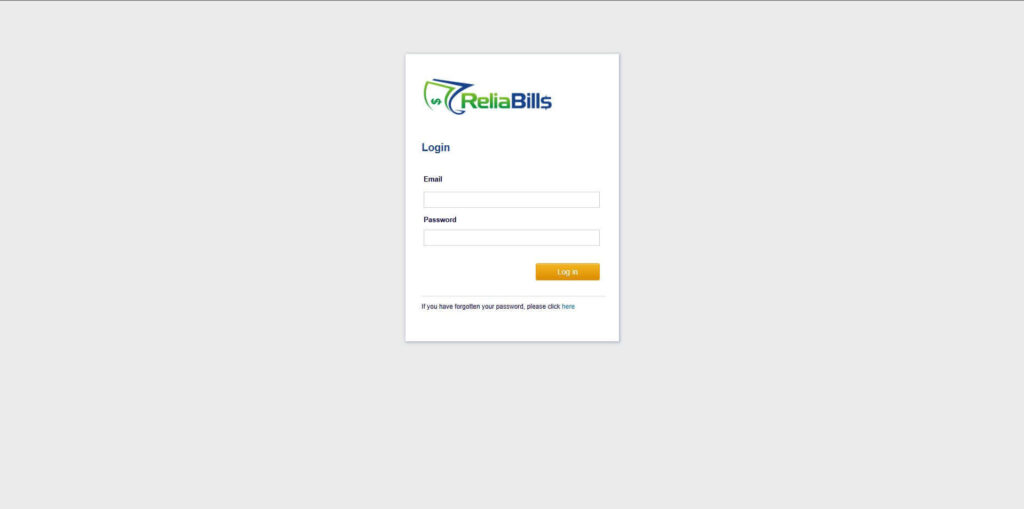
Step 1: Login to ReliaBills
- Access your ReliaBills Account using your login credentials. If you don’t have an account, sign up here.
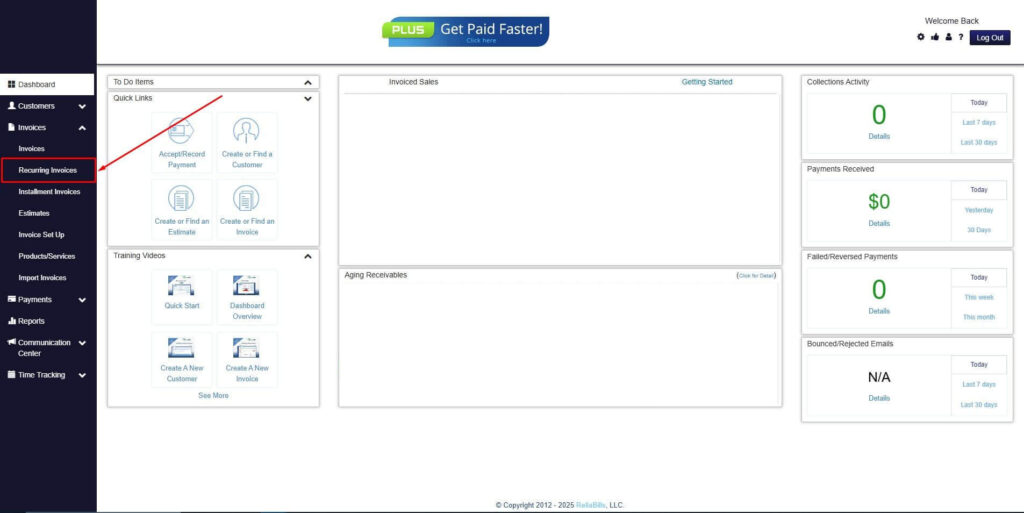
Step 2: Click on Recurring Invoices
- Navigate to the Invoices Dropdown and click on Recurring Invoices for an overview of the list of your existing customers.
Step 3: Go to the Customers Tab
- If you have already created a customer, search for them in the Customers tab and make sure their status is “Active”.
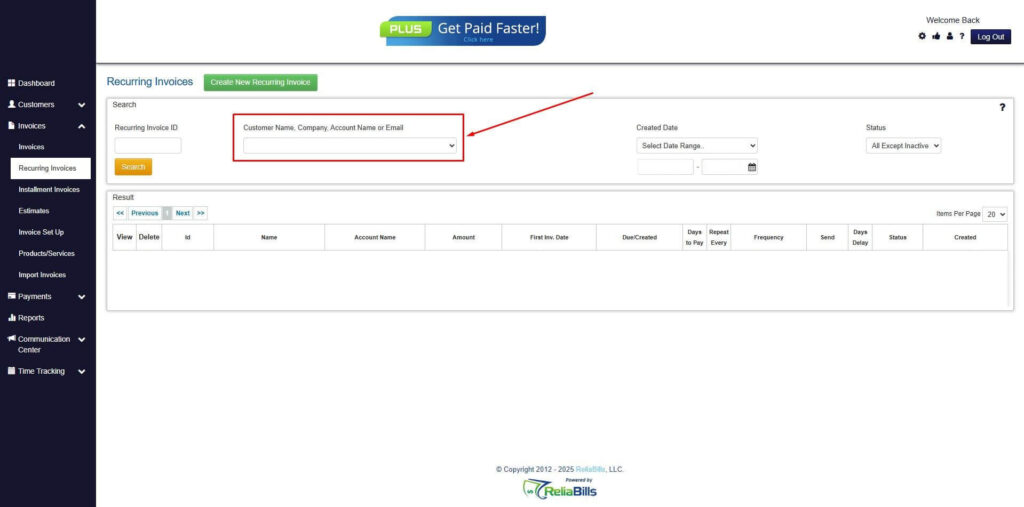
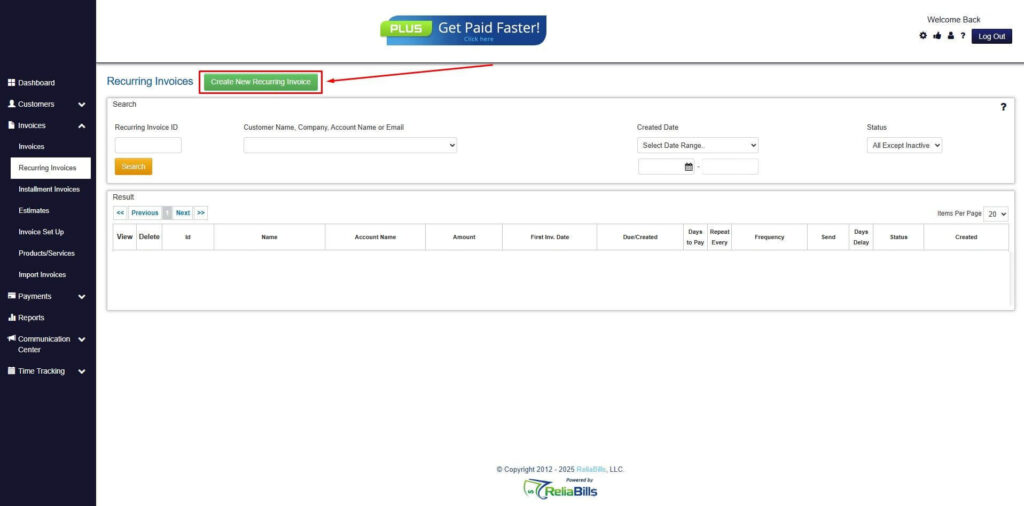
Step 4: Click the Create New Recurring Invoice
- If you haven’t created any customers yet, click the Create New Recurring Invoice to create a new customer.
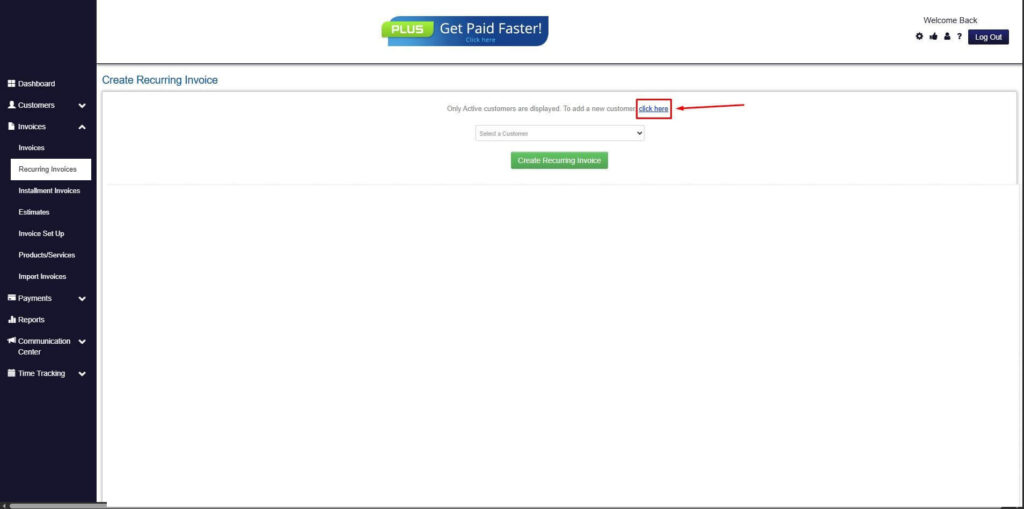
Step 5: Click on the “Click here” Button
- Click on the “Click here” button to proceed with the recurring invoice creation.
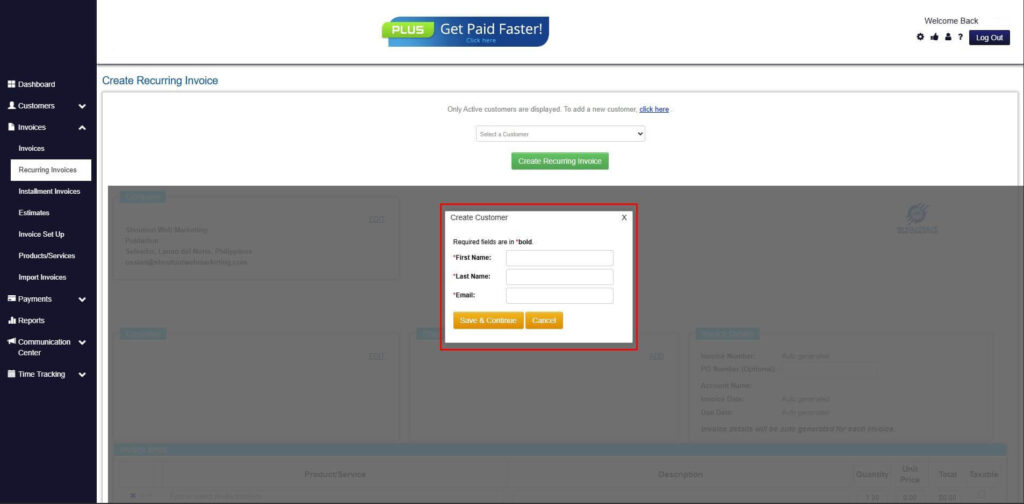
Step 6: Create Customer
- Provide your First Name, Last Name, and Email to proceed.
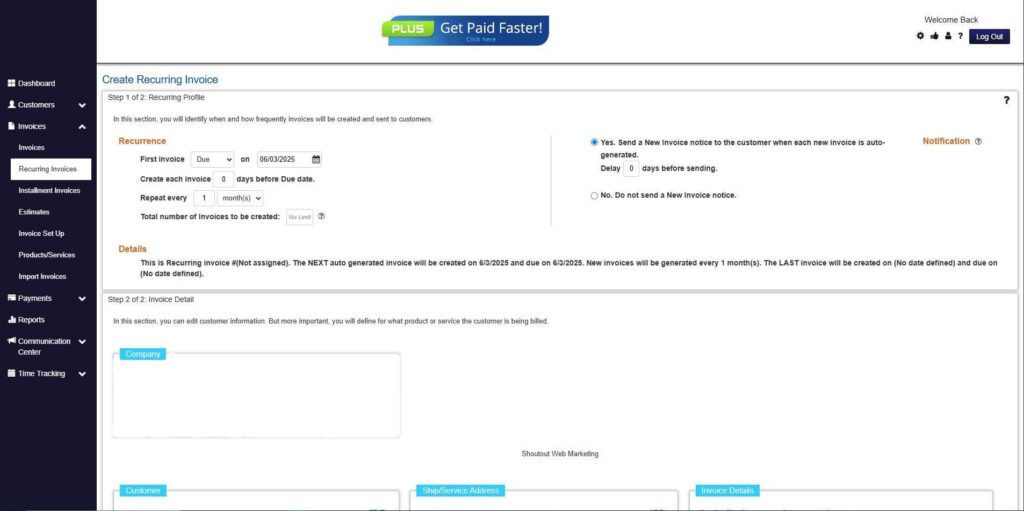
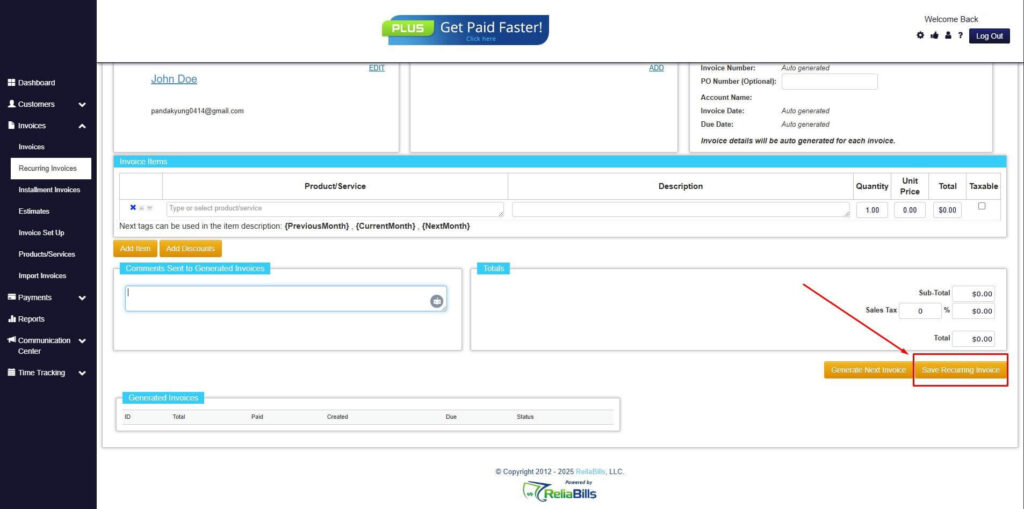
Step 7: Fill in the Create Recurring Invoice Form
- Fill in all the necessary fields.
Step 8: Save Recurring Invoice
- After filling up the form, click “Save Recurring Invoice” to continue.
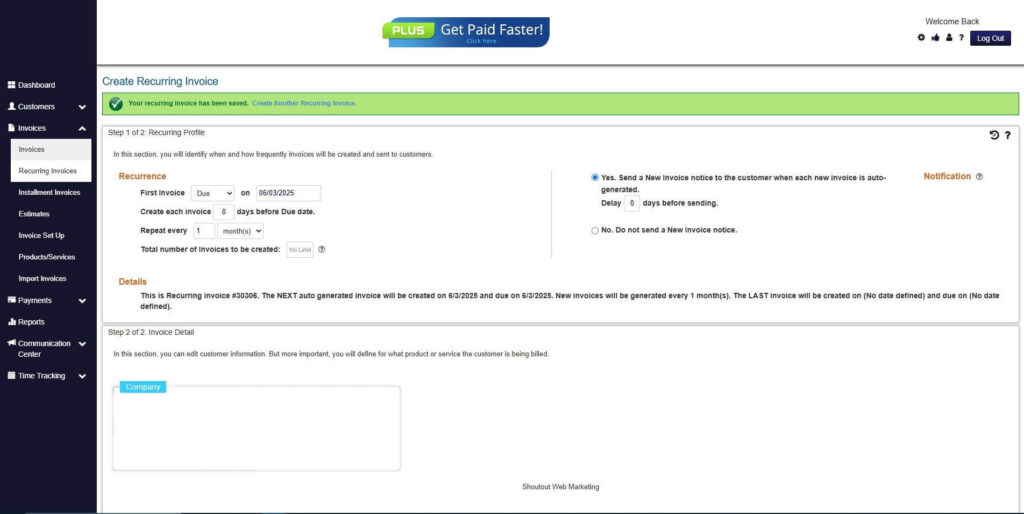
Step 9: Recurring Invoice Created
- Your Recurring Invoice has been created.
Frequently Asked Questions (FAQs)
1. What is a return invoice in retail?
A return invoice is a document issued when a customer returns a product after purchase. It adjusts the original sales transaction by reflecting the returned goods and any associated refund or credit. This ensures that financial and inventory records remain accurate.
2. How can retailers track return invoices efficiently?
Retailers can use centralized billing platforms, cloud-based accounting tools, or ERP systems with automation features. These solutions provide real-time visibility and reduce manual work. They also help ensure accuracy and consistency across all return transactions.
3. Can return invoices be automated?
Yes, modern invoicing systems can automatically generate and manage return invoices. Automation reduces errors, speeds up processing, and ensures standardized workflows. This is especially beneficial for retailers handling high volumes of returns.
4. How do return invoices affect financial records?
Return invoices reduce recorded revenue and adjust tax and inventory values accordingly. They ensure that financial statements accurately reflect actual business activity. Proper tracking also helps maintain compliance with accounting standards.
5. What systems are best for managing returns?
The best systems include integrated invoicing platforms, ERP solutions, and automated billing software. These tools provide centralized tracking, real-time updates, and seamless integration with other business systems. They are designed to handle complex return processes efficiently.
Conclusion
Retailers must adopt efficient systems to track return invoices for retailers as return volumes continue to grow across sales channels. Relying on manual processes is no longer sustainable in a fast-paced retail environment where accuracy and speed are critical.
By implementing centralized and automated solutions, businesses can improve financial accuracy, streamline operations, and enhance customer satisfaction. These systems provide the visibility and control needed to manage returns effectively.
Looking ahead, retailers that invest in digital invoicing and recurring billing solutions will be better positioned to scale their operations. Efficient return invoice tracking is not just a back-office function—it is a strategic advantage in modern retail management.