
In the manufacturing industry, distributing product samples plays a critical role in business development and quality assurance. Companies frequently send samples to potential clients, partners, or internal teams for testing, evaluation, and marketing purposes. Even though these transactions do not involve a sale, they still require proper documentation to ensure accountability and traceability.
Without proper documentation, manufacturers risk losing visibility over sample movements and may face compliance issues. Whether samples are shipped locally or internationally, authorities and internal systems require clear records of what is being transferred and why. This is especially important for inventory tracking and audit readiness.
This is where manufacturing non commercial invoices become essential. These documents help businesses maintain accurate records, ensure compliance with shipping regulations, and streamline internal processes. By using structured invoicing, manufacturers can manage sample distribution more efficiently and professionally.
What Is a Non-Commercial Invoice for Samples?
A non-commercial invoice for samples is a document used to record the shipment of goods that are not intended for sale. It provides detailed information about the items being shipped, even though no financial transaction is taking place. These invoices are commonly used in manufacturing for sample distribution.
The primary purpose of this type of invoice is to support logistics, compliance, and record-keeping. It ensures that both the sender and recipient understand the nature of the shipment. This is particularly important for customs authorities when goods cross international borders.
Unlike commercial invoices, which are used for sales transactions, non-commercial invoices do not represent revenue. They also differ from pro forma invoices, which are typically preliminary documents used before a sale. Instead, non-commercial invoices strictly document sample or non-sale shipments.
Why Manufacturers Provide Product Samples
Manufacturers provide product samples for several strategic reasons that support growth and innovation.
Product testing and evaluation by potential clients
Manufacturers provide samples so potential clients can evaluate product quality, durability, and real-world performance before making a purchase decision. This hands-on experience reduces uncertainty and allows buyers to verify if the product meets their specific requirements. As a result, businesses can build trust and significantly increase their chances of securing long-term contracts.
Marketing and promotional distribution
Samples are often used as a powerful marketing tool to introduce new products or highlight improvements to existing ones. By allowing customers to experience the product firsthand, manufacturers can create stronger engagement and interest. This strategy helps increase brand awareness and can lead to higher conversion rates over time.
Quality assurance and certification processes
Samples are sent to internal teams or third-party organizations for testing and certification to ensure compliance with industry standards. This process helps identify defects, validate performance, and confirm that products meet regulatory requirements. Achieving certifications enhances credibility and reassures customers about product reliability.
Research and development collaborations
Manufacturers share samples with research teams, engineers, or external partners to support innovation and product development. These collaborations allow for testing new materials, refining designs, and improving overall product functionality. Sample exchanges play a crucial role in driving continuous improvement and staying competitive in the market.
When Should Non-Commercial Invoices Be Issued for Samples?
Manufacturers should issue non-commercial invoices whenever samples are transferred, especially in the following situations:
Before shipping samples to domestic or international clients
A non-commercial invoice should always be prepared before samples are shipped to ensure proper documentation. This helps maintain accurate records of inventory movement and supports smooth delivery processes. It also minimizes confusion and ensures that both sender and recipient clearly understand the purpose of the shipment.
When sending samples for product testing or approval
Documentation is essential when samples are sent for evaluation or approval to ensure clarity and traceability. It helps define the purpose of the shipment and ensures that all stakeholders are aligned. Proper invoicing also supports internal tracking and reduces the risk of miscommunication.
For promotional or marketing sample distributions
Even when samples are distributed for free, they should still be documented using non-commercial invoices. This allows businesses to track inventory usage and measure the effectiveness of marketing campaigns. Proper records also support financial reporting and internal audits.
During intercompany transfers for evaluation purposes
When samples are transferred between departments or branches, non-commercial invoices help maintain accountability. They ensure that inventory levels remain accurate across different locations. This also improves coordination and transparency within the organization.
When required for customs documentation in international shipments
Customs authorities often require invoices even for goods that are not being sold. Providing accurate non-commercial invoices helps prevent delays, fines, or shipment rejections. It ensures compliance with international regulations and facilitates smooth cross-border transactions.
Key Information Included in Non-Commercial Sample Invoices
Description of goods labeled as “samples” or “not for resale”
Clearly labeling goods as samples ensures they are not mistaken for commercial products. This distinction is important for customs authorities and recipients to understand the nature of the shipment. Proper labeling reduces the risk of misclassification and unnecessary duties.
Declared value for customs purposes (often nominal)
Even though the goods are not being sold, a declared value is still required for customs processing. This value is usually minimal and does not reflect a selling price. Providing an accurate declared value helps avoid complications during clearance.
Quantity and specifications of the samples
Including precise quantities and detailed specifications ensures transparency and accuracy. This information helps recipients verify the shipment and confirm that all items are correct. It also reduces the likelihood of disputes or discrepancies.
Sender and recipient details
Complete contact information for both parties is essential for proper delivery and communication. It ensures that shipments reach the correct destination without delays. Accurate details also support traceability in case issues arise.
Reason for shipment (testing, promotion, evaluation)
Clearly stating the purpose of the shipment helps all parties understand why the samples are being sent. This information is particularly useful for customs authorities during processing. Transparency improves efficiency and reduces the risk of misunderstandings.
Statement indicating no commercial value or sale
This statement confirms that the shipment is not part of a commercial transaction. It helps prevent unnecessary taxes, duties, or misclassification. Including this declaration ensures compliance and proper handling of the shipment.
Compliance and Documentation Requirements
Accurate documentation is essential for customs clearance, especially for international shipments. Authorities rely on invoices to verify the nature and value of goods. Missing or incorrect information can result in delays or penalties.
Manufacturers must ensure all details are complete and consistent across documents. This includes aligning invoices with shipping labels and packing lists. Consistency reduces the risk of shipment rejection.
Maintaining proper records is also important for internal audits and reporting. Organized documentation supports transparency and accountability. It also helps businesses meet regulatory requirements.
Challenges of Managing Sample Invoices Manually
Manual processes often lead to inconsistencies in documentation across departments. Different teams may use varying formats or incomplete data. This creates confusion and inefficiencies.
There is also a higher risk of errors, such as missing details or incorrect values. These mistakes can cause delays or compliance issues. Fixing errors often requires additional time and effort.
Managing a high volume of sample shipments can become overwhelming without automation. Tracking, approvals, and record-keeping take significant time. This reduces overall productivity.
How Automation Simplifies Non-Commercial Invoice Management
Automation standardizes invoice templates, ensuring consistency across all sample shipments. This reduces errors and improves accuracy. It also simplifies the creation process.
Automated workflows streamline approvals and document generation. This speeds up operations and reduces manual intervention. Businesses can process shipments more efficiently.
Centralized systems provide real-time tracking and record-keeping. This improves visibility and control over sample distribution. It also supports compliance and reporting needs.
The Role of Recurring Billing in Sample Distribution
Recurring billing systems can support repeated sample shipments to partners or clients. This is useful for ongoing testing or evaluation programs. Automation ensures consistent documentation for each shipment.
By setting predefined schedules, manufacturers can automate recurring sample distributions. This reduces the need for manual invoicing each time. It improves efficiency and consistency.
Recurring billing also helps track repeated non-commercial transactions. Businesses gain better visibility into ongoing sample programs. This supports planning and resource allocation.
Best Practices for Issuing Non-Commercial Invoices for Samples
Clearly label all invoices as “non-commercial” or “samples only”
Proper labeling ensures that invoices are correctly identified and processed. It helps avoid confusion during shipping, customs clearance, or internal handling. Clear identification improves compliance and reduces the risk of errors.
Provide accurate but reasonable declared values
Declared values should reflect a fair estimate for customs purposes without overstating the product’s worth. Incorrect values can lead to delays, penalties, or additional scrutiny. Accuracy ensures smoother processing and compliance with regulations.
Include detailed product descriptions and quantities
Providing clear and detailed descriptions helps ensure transparency and accuracy in documentation. It allows recipients and authorities to easily understand what is being shipped. This reduces disputes and improves overall efficiency.
Ensure compliance with international shipping regulations
Different countries have specific documentation requirements for sample shipments. Understanding and following these regulations is essential to avoid delays or fines. Compliance ensures that shipments move smoothly across borders.
Use automated systems for consistency and efficiency
Automation helps standardize invoice creation and reduce manual errors. It ensures consistency across all documents and simplifies high-volume processing. Businesses can save time and improve productivity by using automated solutions.
Key Benefits of Using Non-Commercial Invoices for Samples
- Ensures compliance with shipping and customs regulations: Proper documentation helps meet legal requirements. It reduces the risk of penalties or delays. Compliance supports smooth operations.
- Improves tracking and documentation accuracy: Detailed invoices provide clear records of all shipments. This enhances visibility and control. Accurate tracking supports decision-making.
- Reduces administrative errors and delays: Standardized processes minimize mistakes. Fewer errors mean faster processing times. Efficiency improves overall operations.
- Enhances transparency in sample distribution: Clear documentation ensures all stakeholders understand transactions. This builds trust and accountability. Transparency improves collaboration.
- Streamlines internal processes: Organized systems simplify workflows and approvals. Teams can manage tasks more efficiently. This boosts productivity.
Common Use Cases
- Sending samples to prospective clients: Helps customers evaluate products before purchasing. Builds trust and confidence. Supports sales growth.
- Distributing promotional products: Supports marketing campaigns and brand awareness. Encourages customer engagement. Drives interest in products.
- Shipping prototypes for testing and approval: Enables product validation before full production. Reduces risks. Ensures quality standards.
- Intercompany sample transfers: Supports collaboration between departments or branches. Maintains inventory accuracy. Improves coordination.
- R&D and product development collaborations: Facilitates innovation and testing. Strengthens partnerships. Drives continuous improvement.
How ReliaBills Supports Non-Commercial Invoice Automation for Manufacturers
ReliaBills helps manufacturers simplify the creation and management of non-commercial invoices by automating repetitive billing tasks and reducing manual workload. Instead of relying on spreadsheets or inconsistent documentation, businesses can generate accurate, standardized invoices for every sample shipment. This improves efficiency, reduces errors, and ensures that all records are organized and easy to access. As a result, teams can focus more on operations and less on administrative processes.
With built-in recurring billing capabilities, ReliaBills makes it easy to manage repeat sample shipments for ongoing testing, evaluation, or partner programs. Manufacturers can automate invoice generation for recurring non-commercial transactions, ensuring consistency across all documentation. This eliminates the need to recreate invoices for each shipment and improves tracking across multiple cycles. Consistent automation also helps maintain compliance and supports better visibility into sample distribution activities.
ReliaBills PLUS enhances these capabilities with advanced automation, detailed reporting, and robust workflow management tools. Manufacturers can track all non-commercial invoice activity in real time, customize approval processes, and gain insights into operational performance. The platform also supports centralized customer and partner management, making it easier to handle large volumes of sample transactions. These features empower manufacturers to scale efficiently while maintaining full control over their non-commercial invoicing processes.
How to Create a New Recurring Invoice Using ReliaBills
Creating a New Recurring Invoice using ReliaBills involves the following steps:
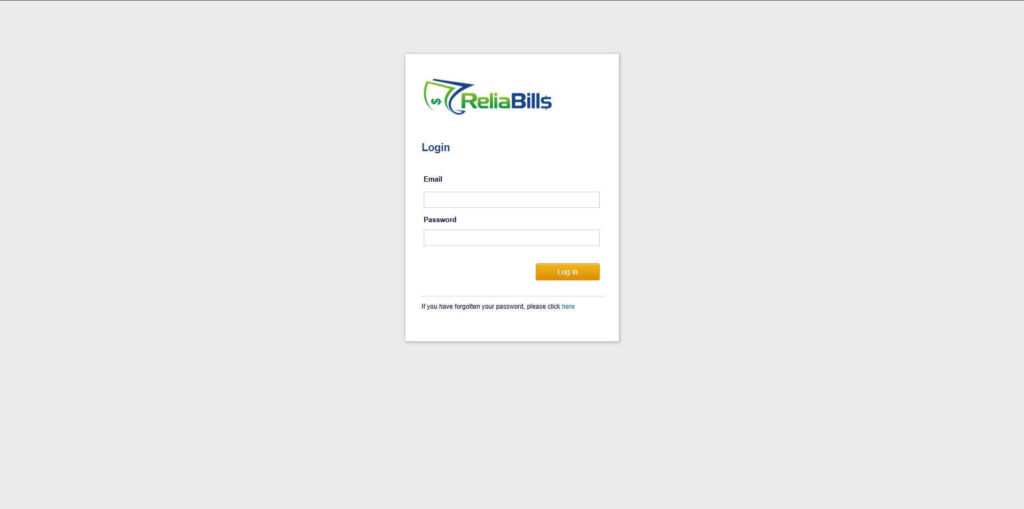
Step 1: Login to ReliaBills
- Access your ReliaBills Account using your login credentials. If you don’t have an account, sign up here.
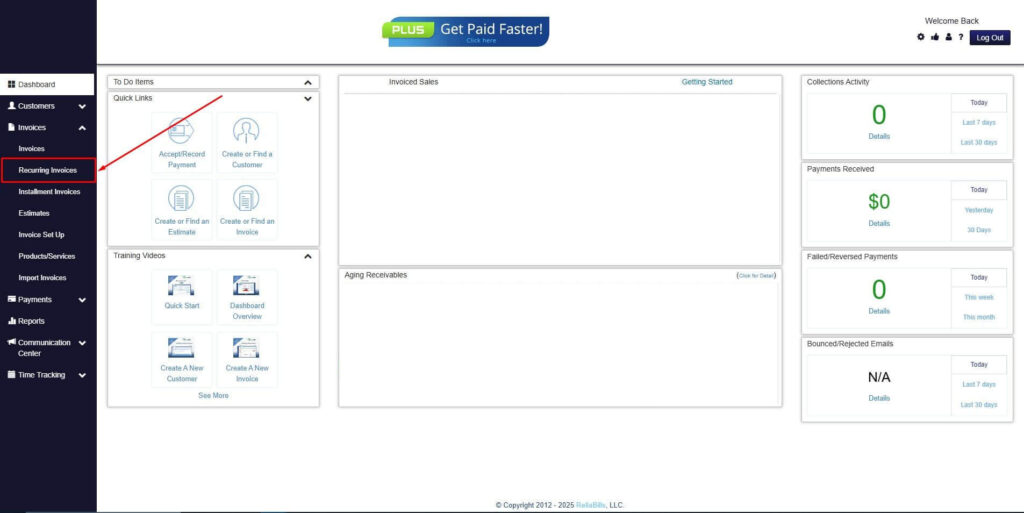
Step 2: Click on Recurring Invoices
- Navigate to the Invoices Dropdown and click on Recurring Invoices for an overview of the list of your existing customers.
Step 3: Go to the Customers Tab
- If you have already created a customer, search for them in the Customers tab and make sure their status is “Active”.
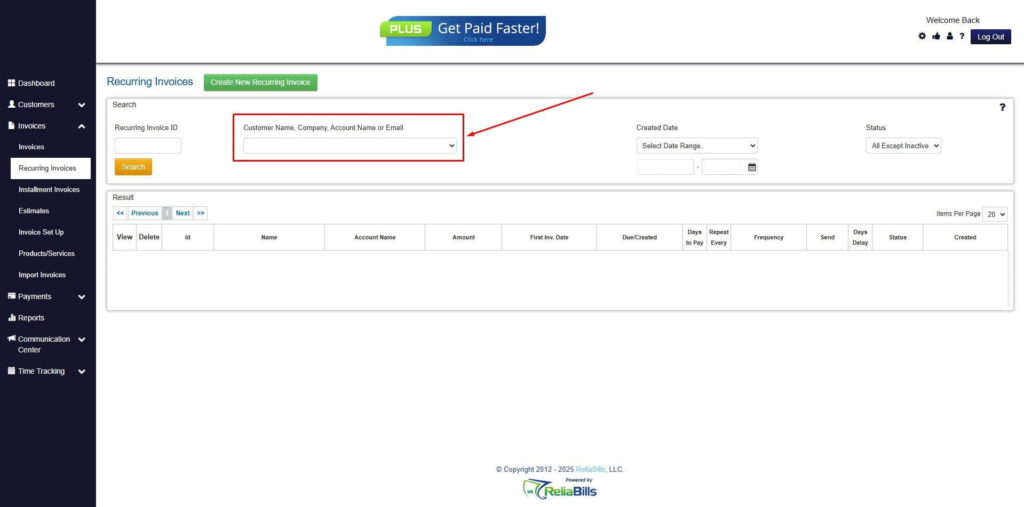
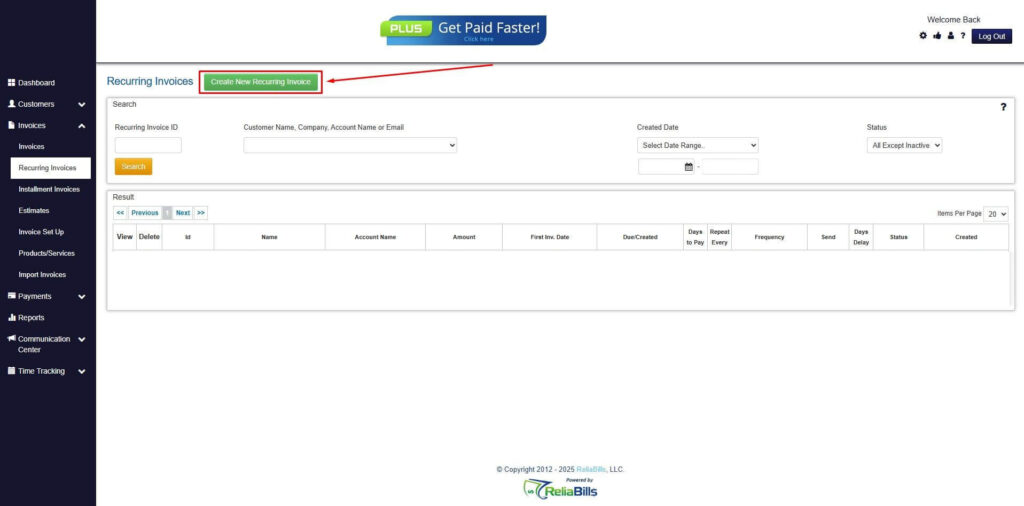
Step 4: Click the Create New Recurring Invoice
- If you haven’t created any customers yet, click the Create New Recurring Invoice to create a new customer.
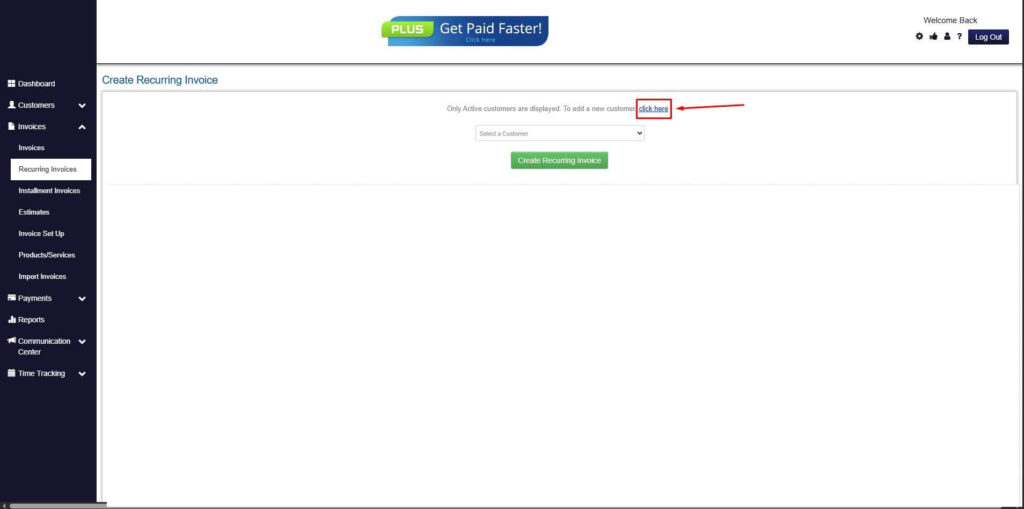
Step 5: Click on the “Click here” Button
- Click on the “Click here” button to proceed with the recurring invoice creation.
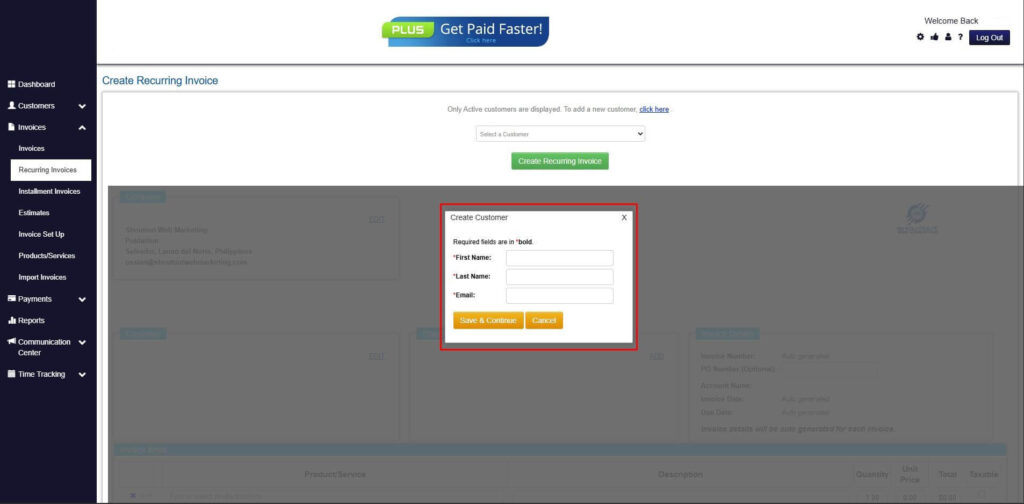
Step 6: Create Customer
- Provide your First Name, Last Name, and Email to proceed.
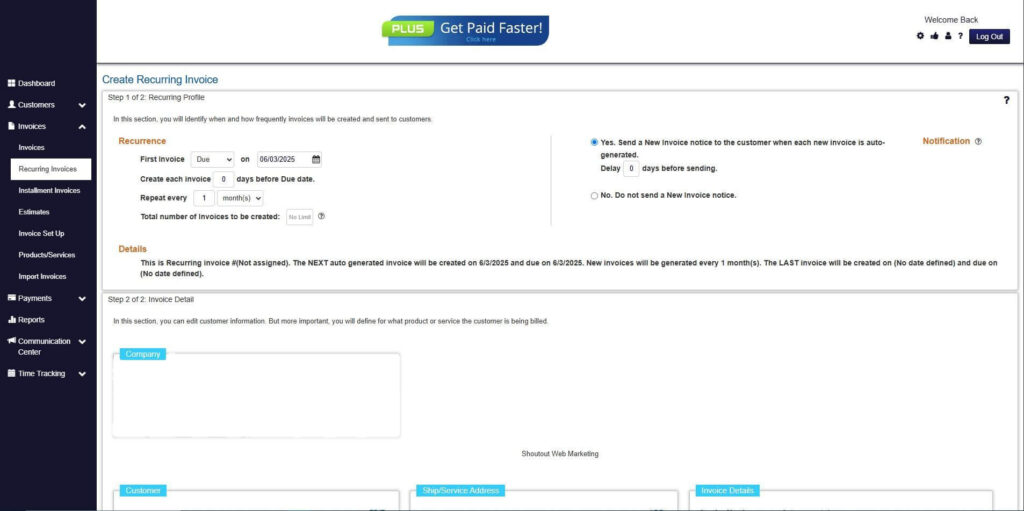
Step 7: Fill in the Create Recurring Invoice Form
- Fill in all the necessary fields.
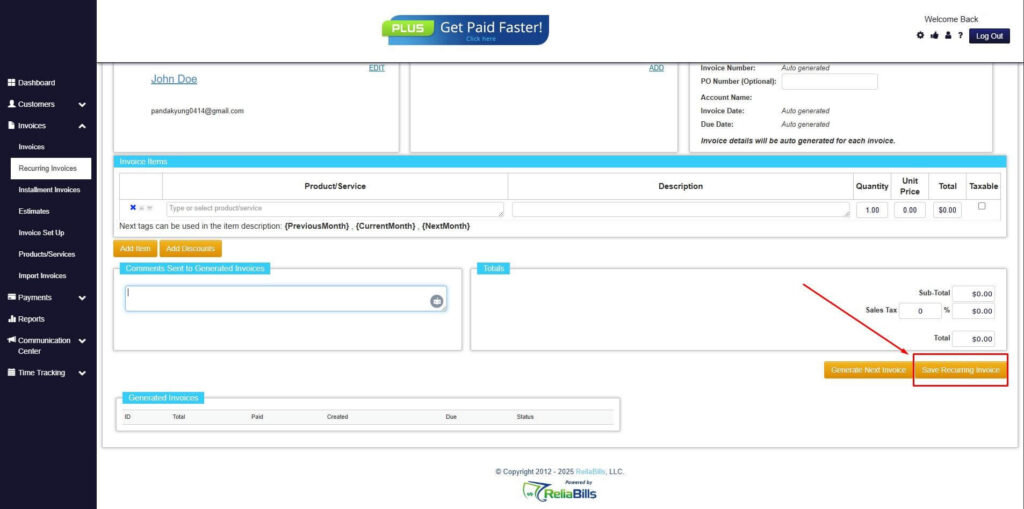
Step 8: Save Recurring Invoice
- After filling up the form, click “Save Recurring Invoice” to continue.
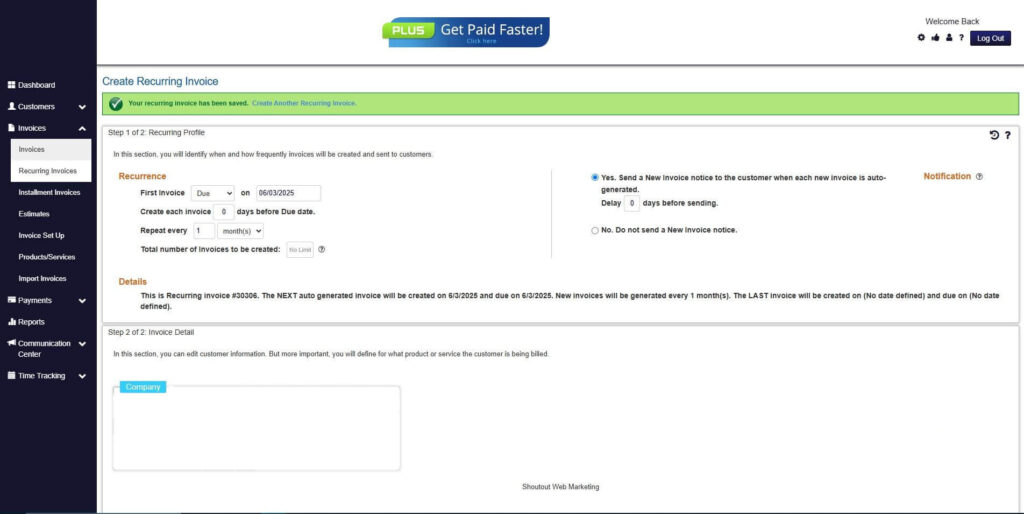
Step 9: Recurring Invoice Created
- Your Recurring Invoice has been created.
Frequently Asked Questions (FAQs)
1. What is a non-commercial invoice for samples?
It is a document used to record shipments of goods that are not intended for sale. It includes details about the items and their purpose. It supports compliance and tracking.
2. Is a declared value required for sample shipments?
Yes, a nominal value is usually required for customs purposes. This helps authorities process the shipment. It does not represent a sale price.
3. When should manufacturers issue these invoices?
They should be issued whenever samples are shipped. This includes domestic and international transfers. Proper documentation ensures compliance.
4. Are non-commercial invoices required for domestic shipments?
While not always mandatory, they are recommended for tracking. They help maintain accurate records. They also support internal processes.
5. How can automation improve sample invoice management?
Automation reduces manual errors and speeds up processes. It ensures consistency across all documents. It also improves tracking and reporting.
Conclusion
Manufacturers should issue non-commercial invoices whenever samples are distributed, especially for tracking, compliance, and operational efficiency. These documents play a crucial role in ensuring transparency and proper documentation, even when no sale is involved.
By adopting structured processes and leveraging automation, businesses can reduce errors, improve accuracy, and streamline workflows. The integration of recurring billing systems further enhances efficiency for repeated sample shipments.
As manufacturing operations continue to evolve, adopting automated solutions for manufacturing non commercial invoices will become increasingly important. Businesses that embrace these tools will be better positioned for growth, compliance, and long-term success.