
Digital payment systems have become the backbone of modern business operations, especially across SaaS platforms, service providers, and subscription-based companies. Businesses today rely heavily on automated billing and payment technologies to ensure consistent revenue collection and reduce manual administrative work. As customer expectations shift toward convenience and seamless transactions, adopting the right billing and payment approach is no longer optional.
Despite this shift, many businesses still struggle to fully understand the difference between subscription billing vs auto pay. These two concepts are often used interchangeably, but they serve entirely different functions within a billing ecosystem. Confusion between them can lead to inefficient processes, missed payments, and poor customer experiences.
This article aims to clearly explain the distinction between subscription billing and Auto Pay. It breaks down how each system works, when to use them, and why combining both creates a more efficient and scalable billing strategy for modern businesses.
What Is Subscription Billing?
Subscription billing is a structured billing model where customers are charged on a recurring basis for ongoing access to a product or service. This model is commonly used by SaaS companies, membership platforms, and service providers offering continuous value over time. Billing cycles are typically fixed, such as monthly, quarterly, or annually, depending on the business model.
In this system, businesses define subscription plans with specific pricing, features, and billing intervals. Once a customer subscribes, invoices are generated automatically according to the predefined schedule. This ensures consistency in billing and reduces the need for manual invoicing.
One of the biggest advantages of subscription billing is its ability to generate predictable revenue. Businesses can forecast income more accurately and scale operations efficiently. This model also supports long-term customer relationships, as it encourages ongoing engagement and retention.
What Is Auto Pay?
Auto Pay is a payment method that allows businesses to automatically charge a customer’s saved payment details, such as a credit card or bank account. Unlike subscription billing, Auto Pay does not define when or why a customer is billed. Instead, it focuses solely on how the payment is executed once a charge is due.
Customers typically opt in to Auto Pay by authorizing a business to store and use their payment information. Once enabled, payments are processed automatically on the invoice due date. This eliminates the need for customers to manually complete each transaction.
Auto Pay is highly effective in reducing missed or late payments. It simplifies the payment process for customers while ensuring that businesses receive funds on time. As a result, it improves cash flow and reduces the administrative burden associated with payment collection.
Subscription Billing vs Auto Pay: Key Differences
Billing structure vs payment method
Subscription billing defines the framework for how and when customers are charged over time. It establishes recurring billing cycles and pricing models that drive revenue generation. Auto Pay, on the other hand, is simply the mechanism used to collect payments automatically once charges are created. Understanding this distinction is essential because one controls billing logic while the other handles payment execution.
Recurring invoice generation vs automatic payment execution
Subscription billing systems are responsible for generating invoices at scheduled intervals. These invoices outline the charges based on the customer’s subscription plan. Auto Pay takes over after the invoice is issued by processing the payment automatically. Together, they create a seamless billing and payment flow.
Revenue model vs payment convenience
Subscription billing is a revenue model that supports predictable and recurring income streams. It is central to how SaaS and service businesses operate and scale. Auto Pay enhances this model by making payments more convenient for customers. It ensures that transactions happen without friction, improving overall efficiency.
Requires billing logic vs requires stored payment authorization
Subscription billing relies on predefined rules such as pricing tiers, billing cycles, and proration logic. These rules determine how charges are calculated and applied. Auto Pay requires customer authorization to store and use payment details securely. Without this authorization, automatic payments cannot be processed.
Used for subscriptions vs used for various payment types
Subscription billing is specifically designed for recurring services and long-term customer relationships. It is ideal for businesses offering ongoing value through subscriptions. Auto Pay, however, can be used for both recurring and one-time payments. This makes it a versatile tool across different billing scenarios.
How Subscription Billing Works
Businesses begin by creating subscription plans that define pricing, billing frequency, and included services. These plans are configured within a billing system, allowing for consistent and automated invoice generation. Once a customer subscribes, the system tracks their billing cycle and prepares invoices accordingly.
As each billing period arrives, invoices are generated automatically based on the customer’s active subscription. This ensures that charges are applied consistently without requiring manual input. Businesses can also incorporate features like proration to handle mid-cycle changes such as upgrades or downgrades.
Customers receive invoices and can either pay manually or use Auto Pay if it is enabled. This flexibility allows businesses to cater to different customer preferences while maintaining a structured billing system. Overall, subscription billing creates a reliable foundation for recurring revenue.
How Auto Pay Works
Auto Pay begins with customer authorization, where individuals agree to store their payment information for future use. This step is critical for compliance and security, ensuring that payments are processed with consent. Once authorized, the payment method is securely stored within the system.
When an invoice reaches its due date, the Auto Pay system automatically charges the saved payment method. This eliminates the need for manual payment actions and reduces the risk of missed deadlines. Customers benefit from a hassle-free experience, while businesses enjoy timely payments.
The system also provides notifications and confirmations, keeping customers informed about transactions. This transparency helps build trust and reduces disputes. In the long run, Auto Pay streamlines payment collection and improves operational efficiency.
When to Use Subscription Billing
Membership-based businesses
Membership-based businesses rely on consistent, recurring access to services such as gyms, clubs, or online communities. Subscription billing ensures that members are charged regularly without interruption. This creates a stable revenue stream that supports long-term operations. It also simplifies account management for both the business and the customer.
SaaS platforms with tiered pricing plans
SaaS companies often offer multiple pricing tiers with different features and usage limits. Subscription billing allows businesses to manage these tiers effectively while automating recurring charges. It ensures that customers are billed accurately based on their selected plan. This structure supports scalability and growth.
Service providers offering recurring packages
Service providers such as marketing agencies or maintenance companies often offer monthly or annual service packages. Subscription billing ensures that these services are billed consistently over time. This reduces administrative workload and improves payment reliability. It also enhances customer retention.
Businesses seeking predictable recurring revenue
Predictable revenue is essential for financial planning and growth. Subscription billing provides a steady income stream that businesses can rely on. This stability allows for better forecasting and resource allocation. It also reduces financial uncertainty.
Companies managing long-term customer relationships
Businesses that focus on long-term engagement benefit from subscription billing. It encourages ongoing interaction and builds stronger customer relationships. Regular billing cycles create a sense of continuity and reliability. This approach supports customer loyalty and retention.
When to Use Auto Pay
Businesses looking to reduce late or missed payments
Auto Pay is highly effective in minimizing late payments by automating the payment process. Customers no longer need to remember due dates or manually complete transactions. This leads to more consistent payment collection. It also reduces the need for follow-ups and reminders.
Companies offering flexible or one-time billing
Businesses that do not rely solely on subscriptions can still benefit from Auto Pay. It can be used for one-time invoices or variable billing scenarios. This flexibility makes it suitable for a wide range of industries. It ensures that payments are collected efficiently regardless of billing structure.
Service providers with recurring invoices
Even without a formal subscription model, service providers may issue recurring invoices. Auto Pay simplifies payment collection by automating these transactions. This reduces administrative effort and improves cash flow. It also enhances the customer experience.
Organizations wanting to improve payment convenience
Convenience is a key factor in customer satisfaction. Auto Pay removes friction from the payment process, making it easier for customers to stay on track. This leads to higher satisfaction and fewer disputes. It also strengthens customer relationships.
Businesses aiming to streamline collections
Manual payment collection can be time-consuming and error-prone. Auto Pay automates this process, reducing workload and improving accuracy. It allows businesses to focus on core operations instead of chasing payments. Efficiency is significantly improved.
How Subscription Billing and Auto Pay Work Together
Subscription billing and Auto Pay complement each other to create a fully automated billing ecosystem. Subscription billing handles the generation of recurring invoices based on predefined plans and schedules. Auto Pay ensures that these invoices are paid automatically without requiring manual intervention from customers.
When combined, these systems eliminate gaps in the billing and payment process. Businesses no longer need to worry about missed payments or inconsistent cash flow. The entire cycle, from invoice creation to payment collection, becomes seamless and efficient.
This integration also enhances the customer experience by providing a hassle-free payment journey. Customers enjoy uninterrupted service, while businesses benefit from improved revenue consistency. Together, subscription billing and Auto Pay form a powerful foundation for scalable growth.
Benefits of Subscription Billing
Predictable and recurring revenue streams
Subscription billing provides businesses with a steady and predictable income stream. This consistency allows for better financial planning and forecasting. It reduces uncertainty and supports long-term growth strategies. Reliable revenue is a key advantage in competitive markets.
Scalable pricing models
Businesses can easily scale their pricing structures with subscription billing. They can introduce new tiers, features, or add-ons without disrupting existing customers. This flexibility supports growth and innovation. It also allows businesses to adapt to changing market demands.
Simplified customer lifecycle management
Managing customer subscriptions becomes more efficient with automated billing systems. Businesses can track renewals, upgrades, and cancellations بسهولة. This improves operational efficiency and reduces errors. It also enhances the overall customer experience.
Improved financial forecasting
Accurate forecasting is essential for strategic decision-making. Subscription billing provides clear insights into future revenue streams. This allows businesses to plan investments and allocate resources effectively. Better forecasting leads to better outcomes.
Efficient billing operations
Automation reduces the need for manual invoicing and administrative tasks. This improves accuracy and saves time. Businesses can focus on growth instead of routine processes. Efficiency is significantly enhanced.
Benefits of Auto Pay
Faster payment collection
Auto Pay ensures that payments are processed immediately on the due date. This reduces delays and improves cash flow. Businesses receive funds faster and more consistently. Speed is a major advantage.
Reduced late or missed payments
By automating payments, Auto Pay eliminates the risk of forgotten invoices. Customers are charged automatically, ensuring timely payments. This reduces the need for reminders and follow-ups. Reliability is improved.
Improved customer convenience
Customers appreciate the ease of automated payments. They do not need to log in or manually process transactions. This convenience enhances satisfaction and loyalty. It also reduces friction.
Lower administrative workload
Automation reduces the burden on administrative teams. Fewer manual tasks mean fewer errors and faster processing. This allows teams to focus on higher-value activities. Productivity increases.
Increased cash flow consistency
Consistent payment collection leads to stable cash flow. Businesses can rely on timely payments to manage expenses and investments. This stability supports growth and scalability. Financial health improves.
Common Mistakes Businesses Make
Confusing billing systems with payment methods
Many businesses mistakenly treat subscription billing and Auto Pay as the same thing. This misunderstanding can lead to inefficient processes and poor system implementation. It is important to recognize their distinct roles. Clear understanding improves decision-making.
Implementing Auto Pay without structured billing
Auto Pay alone cannot replace a proper billing system. Without structured billing, businesses may struggle with inconsistent charges and tracking issues. A solid billing framework is essential. Auto Pay should complement, not replace it.
Not offering flexible payment options
Customers have different preferences when it comes to payments. Limiting options can lead to dissatisfaction and churn. Offering both manual and automated payment methods improves flexibility. This enhances customer experience.
Failing to communicate billing terms clearly
Lack of transparency can create confusion and disputes. Customers need to understand billing schedules, payment methods, and charges. Clear communication builds trust and reduces issues. Transparency is key.
Ignoring customer preferences for payment methods
Not all customers prefer Auto Pay. Some may want manual control over payments. Businesses should accommodate different preferences. This ensures a better customer experience.
Challenges Without Proper Billing and Payment Systems
Inconsistent cash flow
Without structured billing and automated payments, revenue can become unpredictable. This makes financial planning difficult. Businesses may struggle to maintain stability. Consistency is essential.
High rate of missed payments
Manual payment processes often lead to missed or late payments. This impacts cash flow and increases administrative work. Automation helps mitigate this issue. Reliability improves.
Increased administrative workload
Handling billing and payments manually requires significant effort. This increases the risk of errors and inefficiencies. Automation reduces workload and improves accuracy. Efficiency is key.
Poor customer experience
Complicated or inconsistent billing processes frustrate customers. This can lead to dissatisfaction and churn. Simplified systems improve the experience. Customer satisfaction increases.
Difficulty scaling operations
As businesses grow, manual processes become unsustainable. Scaling requires automation and efficiency. Without proper systems, growth is limited. Technology enables scalability.
Key Features to Look for in Billing Software
Subscription billing management
A robust system should support the creation and management of subscription plans. This includes pricing tiers, billing cycles, and customer segmentation. Effective management ensures accurate billing. It also supports scalability.
Auto Pay and recurring payment capabilities
The software should enable automatic payment processing for recurring invoices. This ensures timely collection and reduces manual effort. Integration with payment gateways is essential. Automation improves efficiency.
Automated invoicing and reminders
Automated invoice generation and reminders help reduce missed payments. Customers receive timely notifications about upcoming charges. This improves transparency and compliance. Communication is enhanced.
Flexible pricing and billing cycles
Businesses need the ability to customize pricing and billing schedules. Flexibility allows adaptation to different customer needs. This supports growth and innovation. Customization is important.
Real-time reporting and analytics
Access to real-time data helps businesses make informed decisions. Reporting tools provide insights into revenue, payments, and customer behavior. This improves strategy and performance. Data-driven decisions are more effective.
Customer communication tools
Effective communication is essential for billing transparency. Tools for notifications, updates, and support improve customer relationships. Clear communication reduces disputes. Trust is built.
Key Benefits of Combining Subscription Billing and Auto Pay
Fully automated billing and payment system
Combining both systems creates a seamless end-to-end process. Invoices are generated and paid automatically. This eliminates manual intervention. Efficiency is maximized.
Improved cash flow and revenue predictability
Automation ensures consistent payment collection. This improves cash flow and financial stability. Predictable revenue supports growth. Planning becomes easier.
Reduced administrative burden
Fewer manual tasks mean less workload for teams. Automation reduces errors and improves accuracy. Resources can be allocated more effectively. Productivity increases.
Enhanced customer experience
Customers benefit from a smooth and convenient payment process. This improves satisfaction and retention. Positive experiences drive loyalty. Engagement increases.
Increased operational efficiency
Streamlined processes improve overall business performance. Automation enables scalability and growth. Efficiency leads to better outcomes. Operations become more effective.
Common Use Cases
SaaS companies with subscription plans
SaaS businesses rely heavily on recurring billing and automated payments. Subscription billing defines pricing structures, while Auto Pay ensures timely payments. This combination supports scalability. It is essential for growth.
Gyms and fitness memberships
Fitness centers use subscription billing for membership fees. Auto Pay ensures that payments are collected consistently. This reduces administrative work. It also improves member retention.
Utility and service providers
Utilities often bill customers regularly for usage. Auto Pay simplifies payment collection. Subscription billing ensures consistent invoicing. This improves efficiency.
Online learning platforms
Educational platforms offer courses on a subscription basis. Billing systems manage recurring charges. Auto Pay ensures seamless payments. This enhances user experience.
Subscription box businesses
Subscription box services rely on recurring billing for product delivery. Auto Pay ensures timely payments. This supports consistent operations. It also improves customer satisfaction.
How ReliaBills Simplifies Subscription Billing and Auto Pay
Managing subscription billing and payment collection can quickly become complex as a business grows, especially when dealing with recurring invoices, customer preferences, and payment timelines. ReliaBills simplifies this process by providing an automated billing environment that reduces manual work and minimizes errors. Businesses can generate invoices, track payments, and manage customer accounts from a single platform. This streamlined approach improves efficiency while ensuring that billing operations remain accurate and consistent.
With its strong recurring billing capabilities, ReliaBills allows businesses to automate subscription cycles, set flexible billing schedules, and handle customer plan changes with ease. The platform ensures that invoices are generated on time and integrates Auto Pay seamlessly, so payments are collected without delays. This combination helps businesses maintain steady cash flow while reducing the risk of missed or late payments. By aligning subscription billing with automated payment collection, companies can deliver a smoother and more reliable customer experience.
ReliaBills PLUS takes these capabilities further by offering advanced automation, enhanced reporting tools, and centralized billing management features. Businesses gain deeper visibility into revenue performance, payment trends, and customer activity, allowing for better financial decision-making. The platform also supports scalable operations, making it easier to manage growing customer bases and more complex billing structures. With ReliaBills PLUS, companies can maintain full control over their subscription billing and Auto Pay processes while positioning themselves for long-term growth.
How to Create a New Recurring Invoice Using ReliaBills
Creating a New Recurring Invoice using ReliaBills involves the following steps:
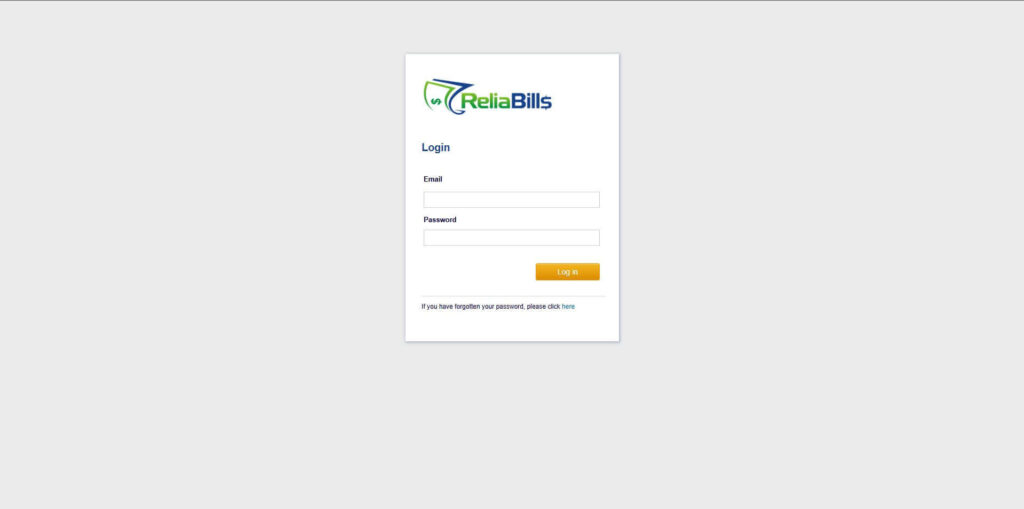
Step 1: Login to ReliaBills
- Access your ReliaBills Account using your login credentials. If you don’t have an account, sign up here.
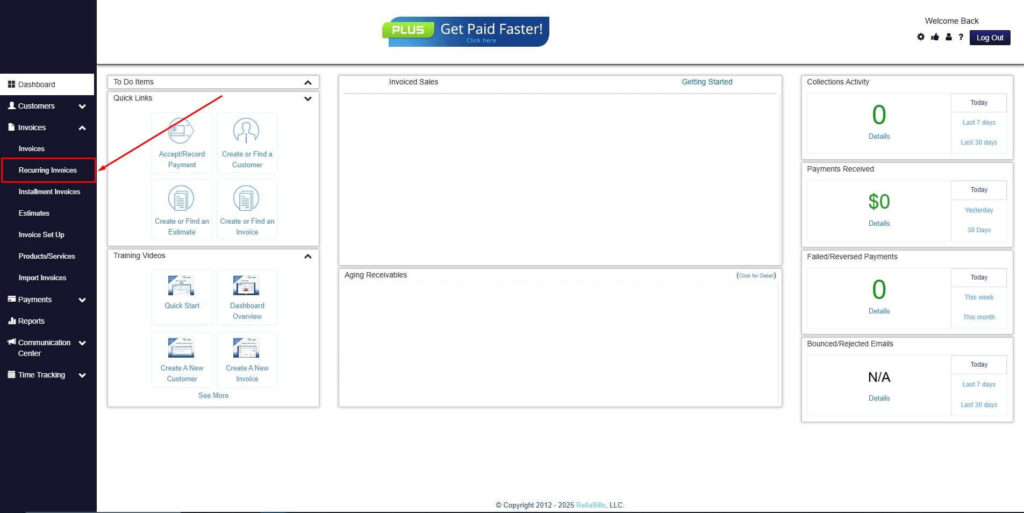
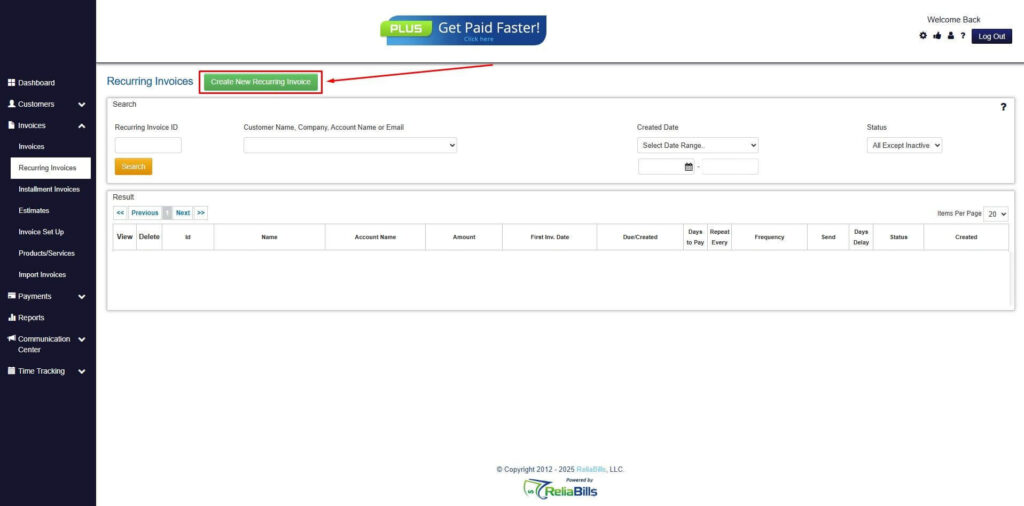
Step 2: Click on Recurring Invoices
- Navigate to the Invoices Dropdown and click on Recurring Invoices for an overview of the list of your existing customers.
Step 3: Go to the Customers Tab
- If you have already created a customer, search for them in the Customers tab and make sure their status is “Active”.
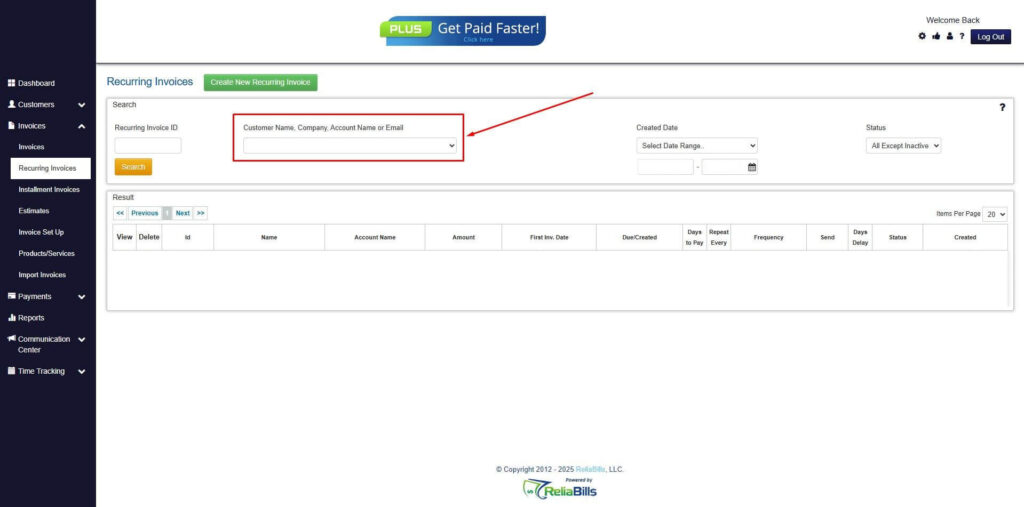
Step 4: Click the Create New Recurring Invoice
- If you haven’t created any customers yet, click the Create New Recurring Invoice to create a new customer.
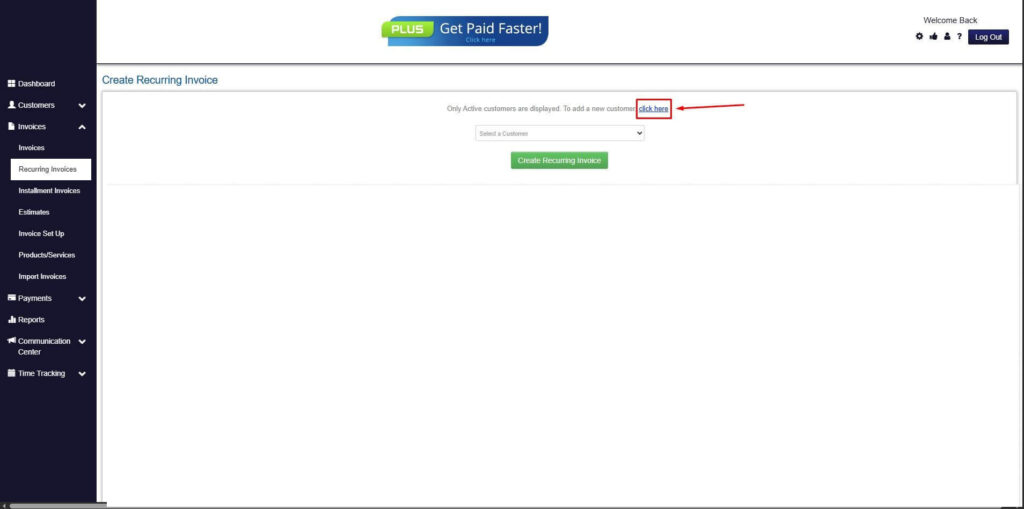
Step 5: Click on the “Click here” Button
- Click on the “Click here” button to proceed with the recurring invoice creation.
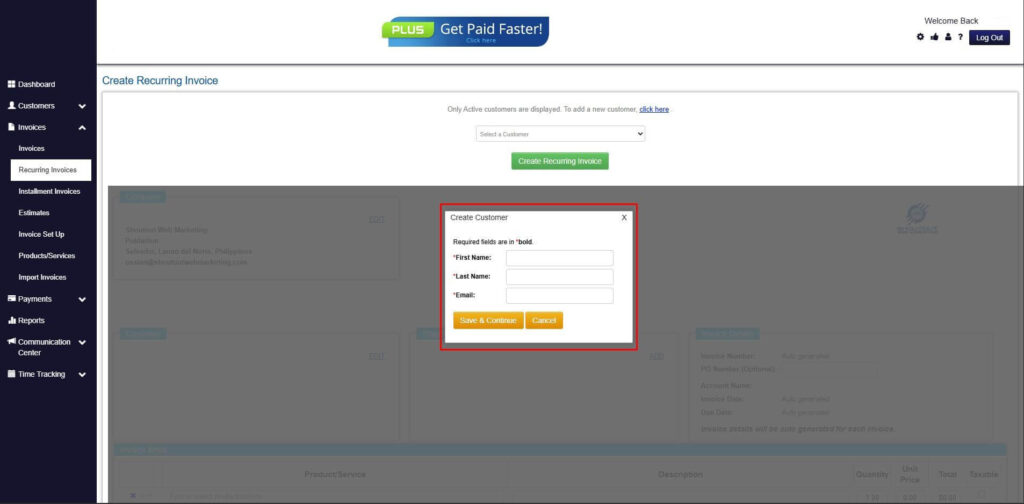
Step 6: Create Customer
- Provide your First Name, Last Name, and Email to proceed.
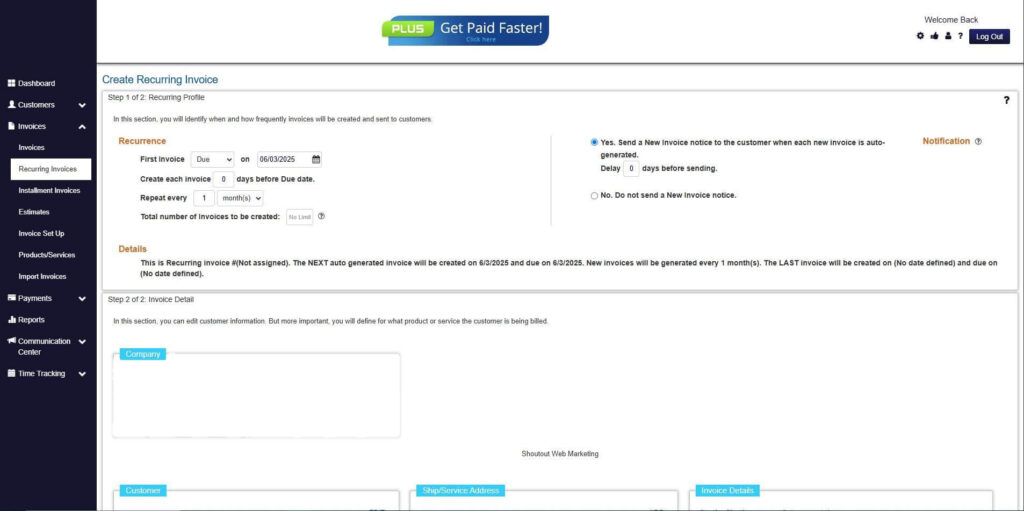
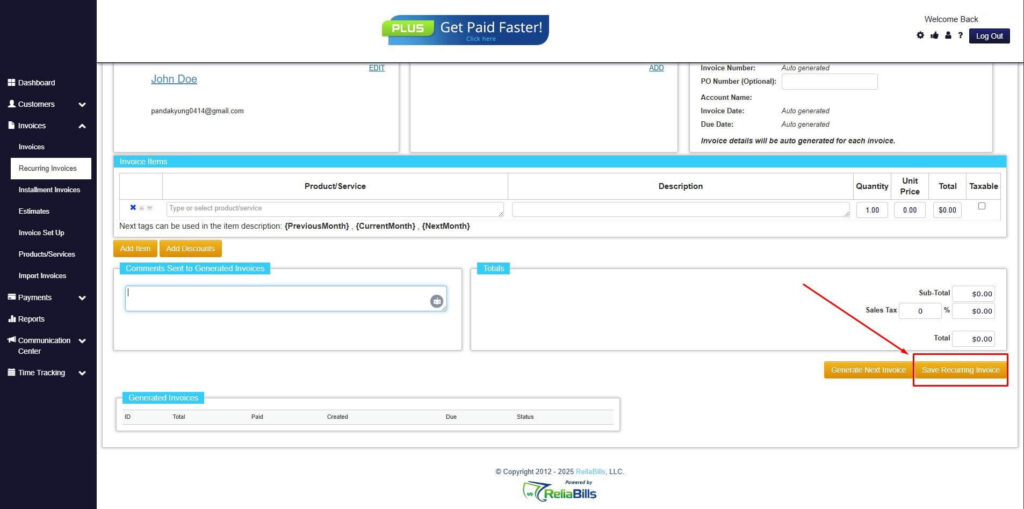
Step 7: Fill in the Create Recurring Invoice Form
- Fill in all the necessary fields.
Step 8: Save Recurring Invoice
- After filling up the form, click “Save Recurring Invoice” to continue.
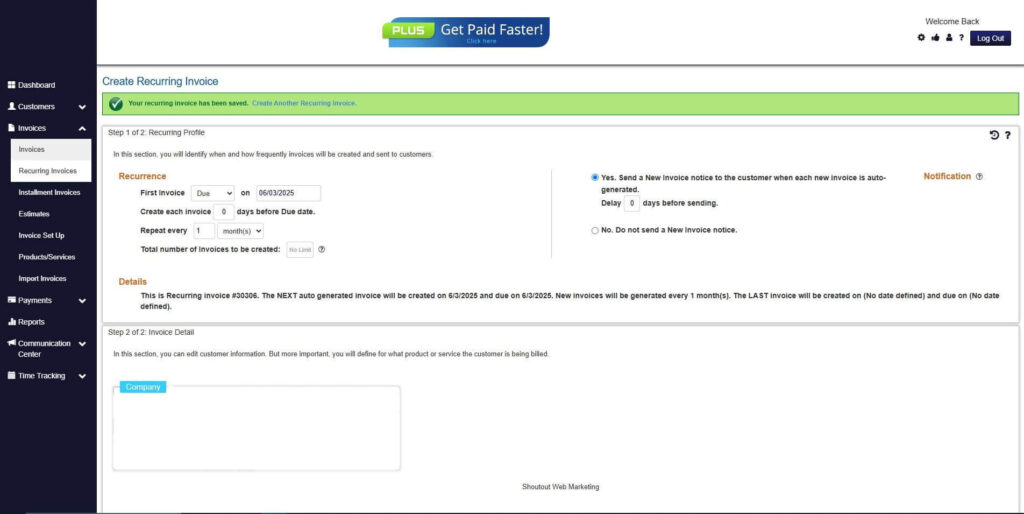
Step 9: Recurring Invoice Created
- Your Recurring Invoice has been created.
Frequently Asked Questions (FAQs)
1. What is the difference between subscription billing vs auto pay?
Subscription billing defines how and when customers are charged, while Auto Pay determines how payments are collected. They serve different roles but work best together. Understanding this difference is essential. It improves billing efficiency.
2. Can you use Auto Pay without subscription billing?
Yes, Auto Pay can be used for one-time or irregular invoices. It is not limited to subscription models. This makes it a flexible payment option. It works across various scenarios.
3. Is subscription billing required for recurring payments?
Subscription billing is the most common way to manage recurring payments. It provides structure and consistency. However, recurring invoices can exist without formal subscriptions. Structure improves efficiency.
4. How does Auto Pay improve cash flow?
Auto Pay ensures timely payment collection by automating transactions. This reduces delays and missed payments. Consistent payments improve cash flow. Financial stability increases.
5. What businesses benefit most from combining both systems?
SaaS companies, service providers, and membership-based businesses benefit the most. These industries rely on recurring revenue and efficient payment collection. Combining both systems improves operations. Growth is supported.
Conclusion
Understanding subscription billing vs auto pay is essential for businesses that rely on recurring revenue and efficient payment systems. Subscription billing provides the structure for consistent invoicing, while Auto Pay ensures that payments are collected automatically and on time. Each plays a distinct role in the billing ecosystem.
When used together, these systems create a seamless and fully automated process that improves cash flow, reduces administrative work, and enhances customer satisfaction. Businesses can operate more efficiently while delivering a better experience to their customers.
As digital payments continue to evolve, adopting both subscription billing and Auto Pay is a strategic move for long-term success. Businesses that invest in automation and integration will be better positioned to scale and compete in today’s fast-paced market.