

In modern SaaS environments, billing is rarely static. Subscription models introduce ongoing charges, upgrades, downgrades, and cancellations, which naturally lead to adjustments such as refunds, credits, and corrections. As a result, finance and operations teams must manage a dynamic billing lifecycle where flexibility and accuracy are equally important.
One of the most common areas of confusion in this space is understanding billing credits vs return invoices SaaS. While both are used to adjust customer balances, they serve fundamentally different purposes and operate in distinct ways within a billing system. Misusing one for the other can lead to accounting discrepancies, customer confusion, and reporting challenges.
This article breaks down the differences between billing credits and return invoices in SaaS. It clarifies when and how each should be used, explains their impact on financial records, and provides practical guidance for SaaS businesses aiming to optimize billing operations.
What Are Billing Credits in SaaS?
Billing credits in SaaS refer to balances added to a customer’s account that can be applied toward future invoices. These credits are typically issued as adjustments rather than direct reversals of past charges. They act as a financial buffer that reduces upcoming payments instead of modifying historical transactions.
Credits are commonly used in scenarios where a business wants to compensate a customer without initiating a refund. For example, a SaaS provider might issue credits as part of a promotional campaign, onboarding incentive, or goodwill gesture after a minor service disruption. This approach allows companies to maintain revenue flow while still addressing customer concerns.
Another key characteristic of billing credits is their flexibility. They can be partially or fully applied across multiple billing cycles, depending on the system configuration. This makes them a practical tool for managing ongoing customer relationships without introducing unnecessary complexity into financial records.
What Are Return Invoices in SaaS?
Return invoices, sometimes referred to as credit memos or reversal invoices, are formal financial documents used to correct or reverse a previously issued invoice. Unlike billing credits, they directly impact historical transactions and are essential for maintaining accurate accounting records.
These invoices are typically issued when there is a billing error, overcharge, or a need to process a refund due to subscription changes. For example, if a customer cancels mid-cycle and is entitled to a prorated refund, a return invoice is generated to adjust the original charge accordingly. This ensures that financial statements reflect the corrected revenue.
Return invoices also play a critical role in compliance and audit readiness. Because they are tied to specific invoices, they provide a clear audit trail for adjustments. This level of traceability is essential for SaaS companies that must adhere to accounting standards and regulatory requirements.
Billing Credits vs Return Invoices SaaS: Key Differences
Billing credits apply to future invoices, while return invoices adjust past invoices
Billing credits are forward-looking adjustments that reduce what a customer will pay in upcoming billing cycles. They do not alter historical invoices or previously recognized revenue, which makes them simpler to implement for minor changes. In contrast, return invoices are backward-looking and specifically designed to modify or reverse transactions that have already occurred. This distinction is critical because it directly impacts how revenue is reported and tracked over time.
Credits act as account balances, while return invoices are formal financial documents
Billing credits function as a running balance within a customer’s account, similar to a stored value that gets applied automatically. They are often managed internally within billing systems and may not always be issued as standalone documents. Return invoices, on the other hand, are official financial records that must be documented, stored, and linked to original invoices. This makes them more structured and necessary for formal accounting processes.
Credits do not always involve cash refunds, while return invoices may trigger refunds
Billing credits typically avoid immediate cash outflows because they are applied to future charges instead of being refunded. This makes them a preferred option for SaaS businesses looking to maintain cash flow while resolving customer issues. Return invoices, however, often lead to refunds if the original invoice has already been paid. This introduces additional steps such as payment reversals or reimbursement processing.
Credits simplify small adjustments, while return invoices are used for formal corrections
Credits are ideal for minor adjustments where simplicity and speed are priorities. They can be issued quickly without requiring extensive documentation or accounting intervention. Return invoices are more appropriate for significant corrections that must be formally recorded. This includes billing errors, contractual changes, or compliance-driven adjustments.
Credits are often flexible, while return invoices follow stricter accounting rules
Billing credits offer flexibility in how and when they are applied, which makes them useful for customer-centric adjustments. SaaS companies can tailor credit usage based on business policies and customer relationships. Return invoices, however, must adhere to strict accounting standards and procedures. This ensures consistency, accuracy, and compliance across financial reporting.
When to Use Billing Credits in SaaS
Offering promotional or onboarding incentives
Billing credits are an effective way to attract new customers and encourage adoption of SaaS products. By offering credits during onboarding, businesses can lower the initial cost barrier and improve conversion rates. These credits can be applied over time, helping customers experience the product before committing fully. This strategy also supports long-term engagement and retention.
Compensating customers for minor service issues
When customers experience minor disruptions, billing credits provide a quick and non-intrusive way to address concerns. Instead of issuing refunds, companies can apply credits to future invoices, maintaining goodwill without impacting current revenue. This approach simplifies resolution processes and reduces administrative overhead. It also reinforces a customer-first mindset.
Adjusting balances without issuing refunds
Credits allow businesses to make financial adjustments without triggering refund workflows. This is particularly useful when dealing with small discrepancies or negotiated changes. By avoiding refunds, companies can streamline operations and reduce transaction costs. It also keeps financial records cleaner and easier to manage.
Supporting customer retention strategies
Billing credits can be used as a retention tool to prevent churn. For example, offering a credit to a dissatisfied customer can encourage them to stay and continue using the service. This proactive approach helps maintain recurring revenue and strengthens customer relationships. It also demonstrates flexibility and responsiveness.
Applying goodwill credits for customer satisfaction
Goodwill credits are often issued to maintain positive relationships with customers. These credits show appreciation and reinforce trust, especially in competitive SaaS markets. They can be applied strategically to enhance customer satisfaction and loyalty. Over time, this contributes to stronger brand perception and reduced churn.
When to Use Return Invoices in SaaS
Correcting billing errors or overcharges
Return invoices are essential when a customer has been incorrectly billed. They provide a formal mechanism to reverse or adjust the original charge, ensuring accuracy in financial records. This is particularly important for maintaining trust and compliance. Proper documentation also supports internal audits.
Processing refunds after cancellations
When customers cancel subscriptions and are entitled to refunds, return invoices ensure that adjustments are properly recorded. They reflect the reversal of revenue and align financial statements with actual transactions. This process is critical for transparency and accountability. It also ensures consistent handling of refunds.
Handling subscription downgrades with prorated adjustments
In cases where customers downgrade their plans mid-cycle, return invoices are used to calculate and apply prorated refunds. This ensures that customers are only charged for the services they used. It also maintains fairness and accuracy in billing. Proper handling of these scenarios is key to customer satisfaction.
Reversing duplicate or incorrect invoices
Duplicate invoices can occur due to system errors or manual mistakes. Return invoices provide a structured way to correct these issues without disrupting overall billing operations. They ensure that customers are not overcharged and that records remain accurate. This is essential for maintaining operational integrity.
Meeting accounting and compliance requirements
Return invoices are necessary for compliance with accounting standards such as revenue recognition rules. They provide a clear audit trail for all adjustments made to invoices. This is especially important for SaaS companies operating at scale. Proper documentation helps avoid regulatory issues and ensures financial transparency.
How Billing Credits Work in a Subscription Model
Billing credits are first added to a customer’s account as a balance that can be used in future billing cycles. This process is typically automated within SaaS billing systems, ensuring that credits are tracked accurately. Once applied, they remain available until consumed by upcoming invoices.
As new invoices are generated, the system automatically applies available credits to reduce the total amount due. This eliminates the need for manual intervention and ensures a seamless customer experience. Customers benefit from lower payments without needing to request adjustments each time.
From an operational standpoint, billing credits provide flexibility for both customers and providers. They simplify the handling of minor adjustments while maintaining predictable revenue streams. This makes them a valuable tool in subscription-based business models.
How Return Invoices Work in SaaS Billing
Return invoices are directly linked to the original invoice, ensuring full traceability of adjustments. This connection allows businesses to maintain a clear record of what was changed and why. It also supports accurate reporting and auditing processes.
When a return invoice is issued, it reverses or modifies specific charges from the original invoice. This adjustment is reflected in financial records, ensuring that revenue is accurately reported. The process is more structured than issuing credits and often involves additional validation steps.
Depending on the payment status, return invoices may trigger refunds to the customer. If the original invoice has already been paid, the system processes the refund accordingly. This ensures that customers are reimbursed fairly and that financial records remain consistent.
Pros and Cons of Billing Credits
Pros: Easy to apply, improves customer experience, flexible adjustments
Billing credits are simple to implement and can be applied quickly without complex workflows. This makes them ideal for resolving customer issues in real time. Their flexibility allows businesses to tailor adjustments based on specific scenarios. Overall, they enhance the customer experience by providing fast and convenient solutions.
Pros: Reduces need for refunds and simplifies minor corrections
By using credits instead of refunds, SaaS companies can avoid unnecessary financial transactions. This reduces administrative workload and transaction fees. It also keeps revenue within the system rather than issuing cash outflows. As a result, operations become more efficient.
Cons: Can complicate revenue tracking if not managed properly
If credits are not tracked accurately, they can create discrepancies in financial reporting. This is especially true when credits are applied across multiple billing cycles. Proper systems and controls are required to maintain accuracy. Without them, revenue recognition can become complex.
Cons: May create confusion if not clearly communicated
Customers may not always understand how credits are applied to their invoices. This can lead to confusion or disputes if expectations are not clearly set. Transparent communication is essential to avoid misunderstandings. Clear billing statements help mitigate this issue.
Pros and Cons of Return Invoices
Pros: Ensures accurate financial records and compliance
Return invoices provide a structured way to correct billing errors while maintaining compliance. They ensure that all adjustments are properly documented and traceable. This is critical for audits and financial reporting. Accuracy is significantly improved.
Pros: Provides clear documentation for audits and reporting
Because return invoices are formal documents, they create a clear audit trail. This makes it easier for finance teams to track changes and justify adjustments. It also supports regulatory compliance. Documentation is consistent and reliable.
Cons: More complex to process than credits
Issuing return invoices involves more steps than applying credits. This includes linking them to original invoices and ensuring proper accounting treatment. The process can be time-consuming without automation. Complexity increases with scale.
Cons: May require additional steps for refund handling
When refunds are involved, return invoices introduce additional workflows. This includes payment processing and reconciliation. These steps can add operational overhead. Proper systems are needed to manage them efficiently.
Common Mistakes SaaS Businesses Make
Using credits when a formal return invoice is required
Some businesses rely too heavily on credits, even when formal corrections are necessary. This can lead to inaccurate financial records and compliance issues. It is important to understand when a return invoice is the appropriate tool. Proper training and policies can prevent this mistake.
Issuing return invoices for minor adjustments unnecessarily
Overusing return invoices for small changes can create unnecessary complexity. It increases administrative workload and slows down processes. Credits are often a better option for minor adjustments. Choosing the right method improves efficiency.
Failing to track credits properly
Without proper tracking, billing credits can become difficult to manage. This can lead to discrepancies and customer disputes. Robust systems are essential for monitoring credit balances. Accurate tracking ensures consistency.
Not linking return invoices to original transactions
Failing to connect return invoices to their original counterparts breaks the audit trail. This makes it harder to validate adjustments and maintain compliance. Proper linkage is critical for transparency. Systems should enforce this connection.
Poor communication with customers about billing changes
Lack of clear communication can lead to confusion and dissatisfaction. Customers need to understand how adjustments are applied. Transparent billing statements and notifications are essential. Good communication builds trust.
How Automation Simplifies Both Processes
Automation plays a critical role in managing billing credits and return invoices efficiently. It eliminates manual intervention, reducing the risk of errors and inconsistencies. Automated systems ensure that credits are applied correctly and that return invoices are generated with proper documentation.
With automation, billing credits can be seamlessly applied to future invoices without requiring manual adjustments. This improves accuracy and enhances the customer experience. It also allows businesses to scale their operations without increasing administrative workload.
Similarly, automated systems can generate return invoices instantly based on predefined triggers. This ensures that all adjustments are properly recorded and compliant with accounting standards. Overall, automation improves efficiency, accuracy, and scalability in SaaS billing operations.
Key Features to Look For in SaaS Billing Software
Support for both billing credits and return invoices
A robust billing system should handle both credits and return invoices seamlessly. This ensures flexibility in managing different types of adjustments. It also allows businesses to choose the appropriate method for each scenario. Comprehensive support improves operational efficiency.
Automated recurring billing and invoicing
Recurring billing is a core feature of SaaS businesses. Automation ensures that invoices are generated accurately and on time. It also simplifies the application of credits and adjustments. This reduces manual workload and improves reliability.
Proration and adjustment handling
Proration is essential for handling mid-cycle changes such as upgrades or downgrades. A good system should calculate adjustments automatically. This ensures fairness and accuracy in billing. Proper handling of proration improves customer satisfaction.
Real-time financial reporting and analytics
Access to real-time data is critical for decision-making. Billing systems should provide insights into revenue, credits, and adjustments. This helps businesses monitor performance and identify trends. Accurate reporting supports strategic planning.
Integration with accounting and payment systems
Seamless integration ensures that billing data flows smoothly across systems. This reduces duplication and improves accuracy. It also simplifies reconciliation and reporting. Integration is key to efficient operations.
Key Benefits of Understanding the Difference
Improved billing accuracy and financial reporting
Understanding the difference between billing credits and return invoices ensures that adjustments are handled correctly. This leads to more accurate financial records. It also reduces the risk of errors. Better accuracy improves overall business performance.
Better decision-making for handling customer adjustments
Knowing when to use credits versus return invoices allows businesses to make informed decisions. This improves efficiency and customer satisfaction. It also ensures consistency in processes. Better decisions lead to better outcomes.
Reduced risk of compliance and accounting errors
Proper use of return invoices ensures compliance with accounting standards. This reduces the risk of regulatory issues. It also improves audit readiness. Compliance is critical for long-term success.
Enhanced customer trust and transparency
Clear and accurate billing builds trust with customers. When adjustments are handled properly, customers feel more confident in the service. Transparency reduces disputes and improves relationships. Trust is a key driver of retention.
More efficient billing operations
Efficient processes reduce workload and improve scalability. Understanding the right tools for each scenario streamlines operations. This allows businesses to focus on growth. Efficiency drives profitability.
Common Use Cases
SaaS platforms offering subscription-based services
Subscription-based platforms frequently deal with recurring charges and adjustments. Billing credits and return invoices are essential tools in this environment. They help manage changes efficiently. Proper usage ensures smooth operations.
Companies handling frequent billing adjustments
Businesses with high volumes of adjustments need flexible solutions. Credits and return invoices provide the necessary tools. They help maintain accuracy and efficiency. This is especially important at scale.
Businesses providing promotional credits
Promotional strategies often involve issuing credits to attract customers. These credits reduce future payments and encourage engagement. They are a key part of marketing efforts. Proper management ensures effectiveness.
Organizations managing refunds and cancellations
Refunds and cancellations require precise handling. Return invoices ensure that adjustments are properly recorded. This maintains financial accuracy. It also improves customer satisfaction.
SaaS startups scaling their billing systems
As startups grow, billing complexity increases. Understanding how to use credits and return invoices becomes critical. Proper systems and processes support scalability. This ensures long-term success.
How ReliaBills Manages Billing Credits and Return Invoices
Automated invoicing systems like ReliaBills provide SaaS businesses with the tools needed to manage billing adjustments efficiently. By reducing manual intervention, these systems ensure that both billing credits and return invoices are handled accurately and consistently. This leads to fewer errors, improved financial reporting, and a better overall customer experience. Businesses can streamline operations while maintaining full control over their billing processes.
ReliaBills excels in recurring billing environments where credits and return invoices must work seamlessly together. Its automation capabilities allow credits to be applied to future invoices without disruption, while return invoices are generated instantly when corrections are needed. This integration ensures that subscription billing remains smooth and predictable. As a result, SaaS companies can maintain strong cash flow while addressing customer needs effectively.
With ReliaBills PLUS, businesses gain access to advanced features such as enhanced automation, detailed reporting, and centralized billing management. These tools provide deeper insights into financial performance and ensure accurate tracking of all adjustments. The platform supports scalability by handling complex billing scenarios with ease. Ultimately, ReliaBills empowers SaaS businesses to maintain precise financial control while optimizing their billing operations.
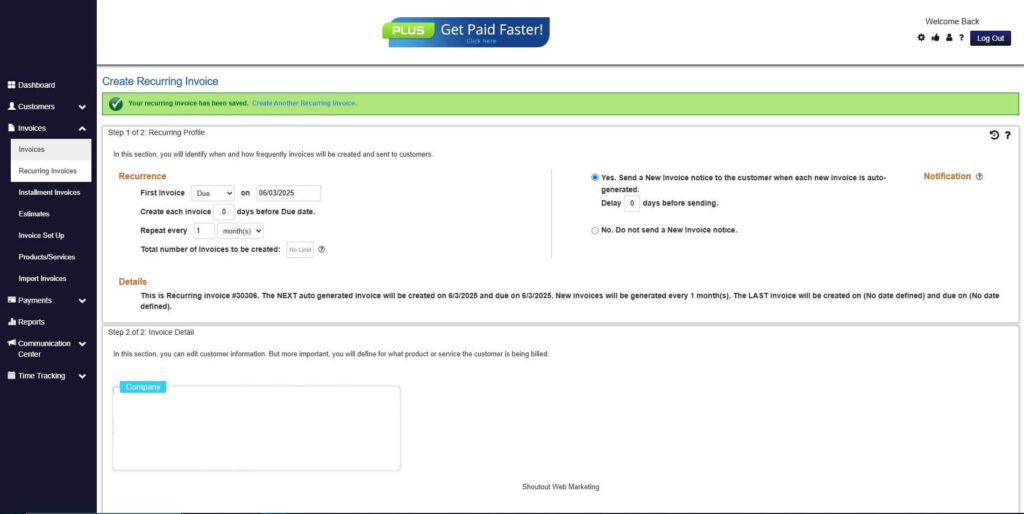
How to Create a New Recurring Invoice Using ReliaBills
Creating a New Recurring Invoice using ReliaBills involves the following steps:
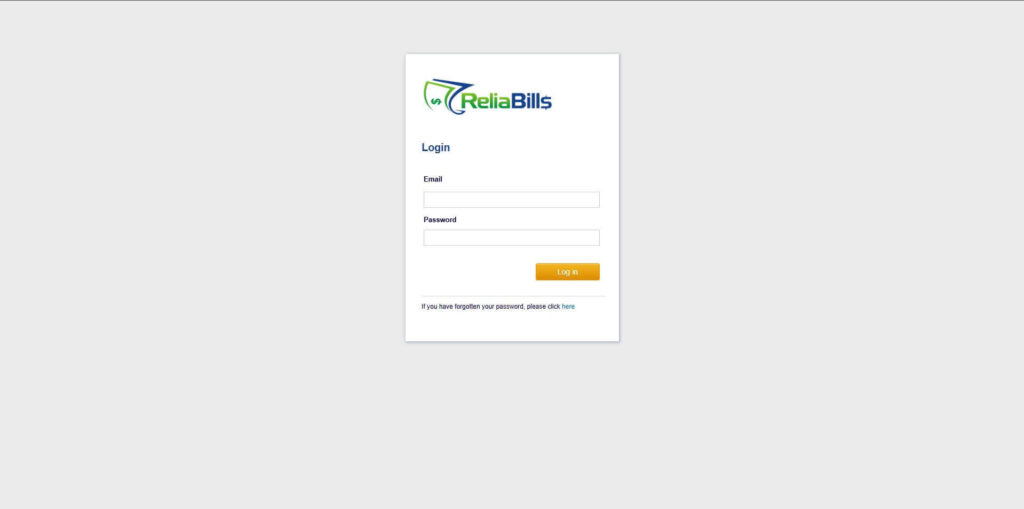
Step 1: Login to ReliaBills
- Access your ReliaBills Account using your login credentials. If you don’t have an account, sign up here.
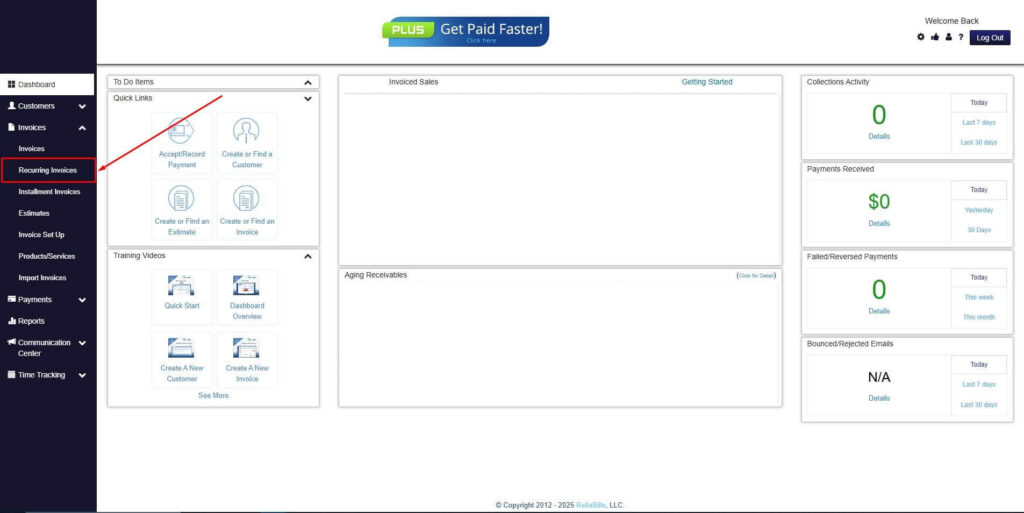
Step 2: Click on Recurring Invoices
- Navigate to the Invoices Dropdown and click on Recurring Invoices for an overview of the list of your existing customers.
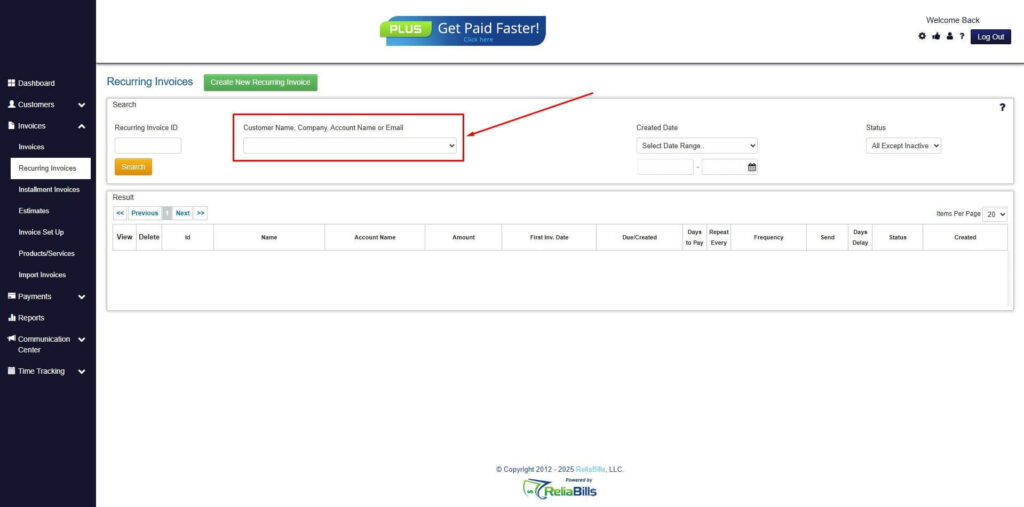
Step 3: Go to the Customers Tab
- If you have already created a customer, search for them in the Customers tab and make sure their status is “Active”.
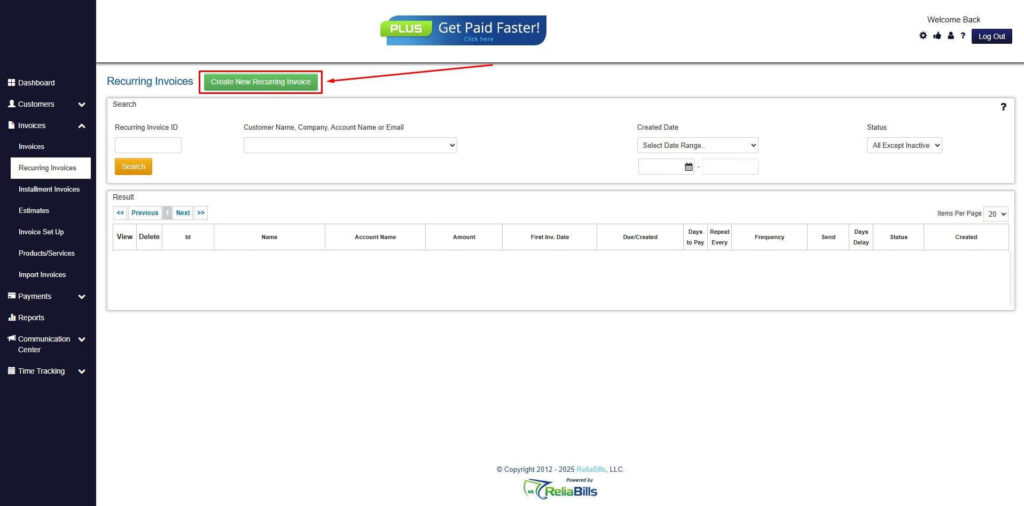
Step 4: Click the Create New Recurring Invoice
- If you haven’t created any customers yet, click the Create New Recurring Invoice to create a new customer.
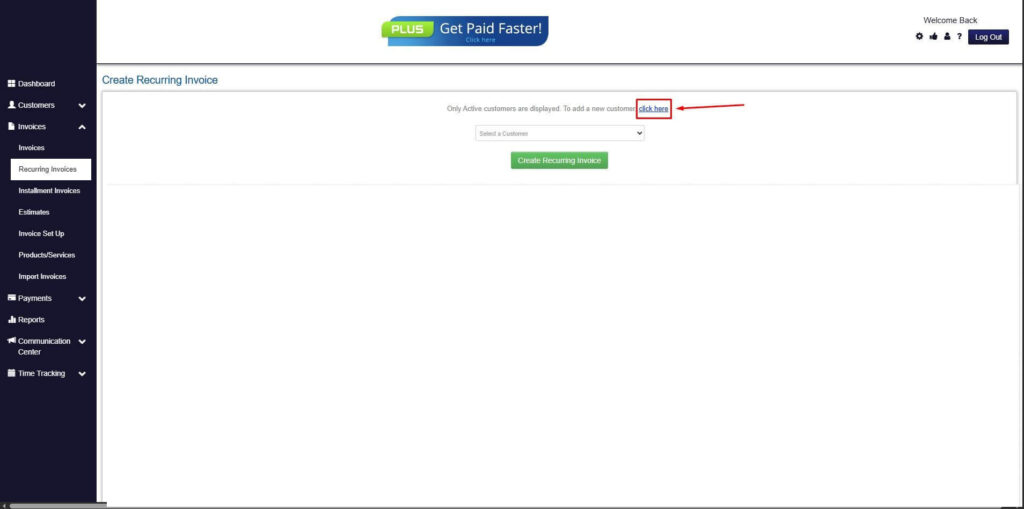
Step 5: Click on the “Click here” Button
- Click on the “Click here” button to proceed with the recurring invoice creation.
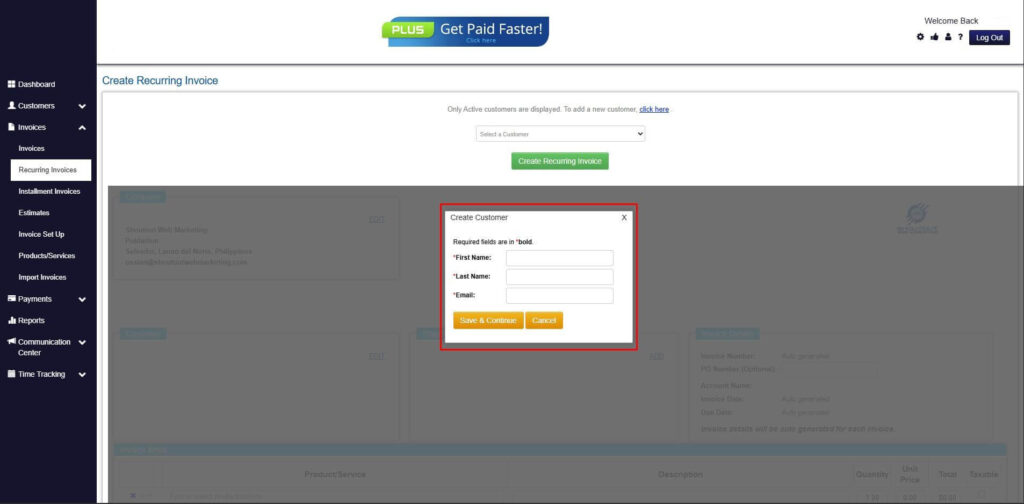
Step 6: Create Customer
- Provide your First Name, Last Name, and Email to proceed.
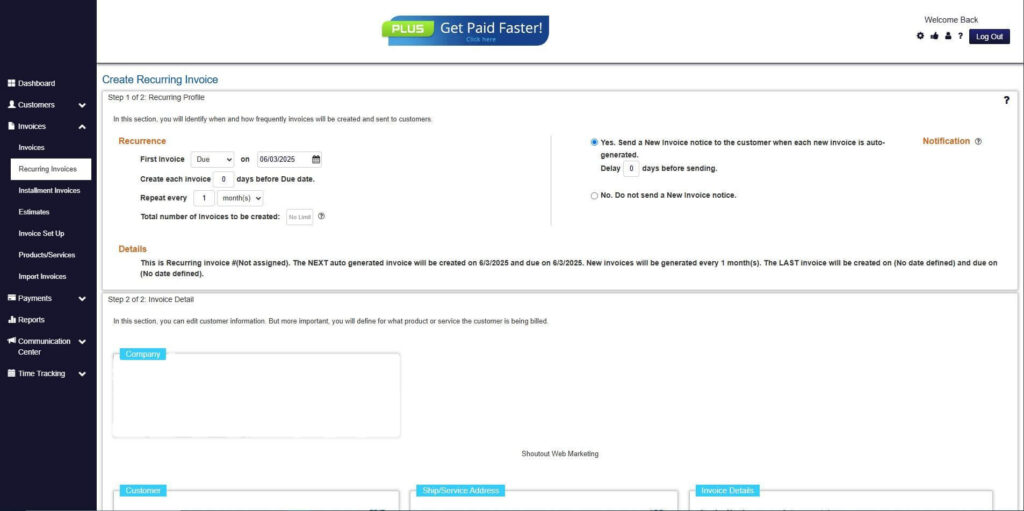
Step 7: Fill in the Create Recurring Invoice Form
- Fill in all the necessary fields.
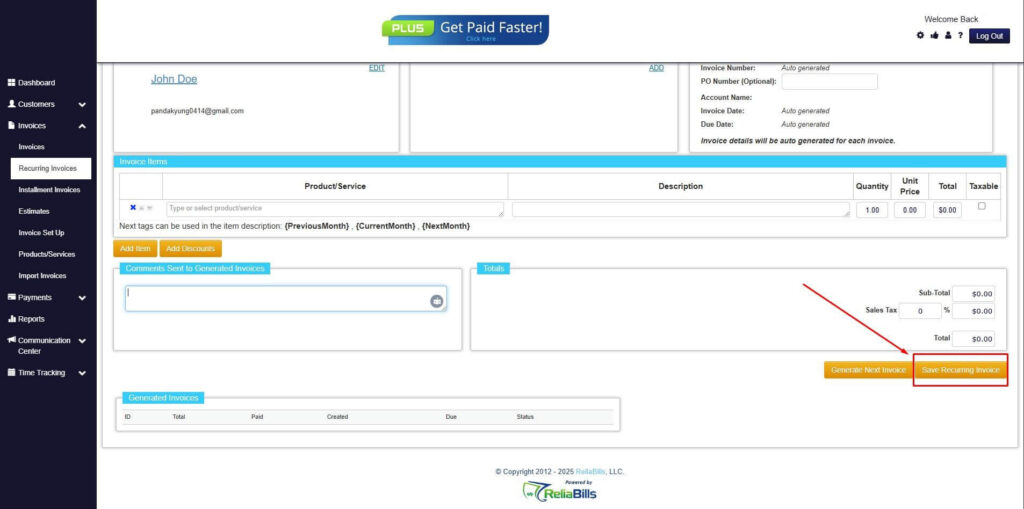
Step 8: Save Recurring Invoice
- After filling up the form, click “Save Recurring Invoice” to continue.
Step 9: Recurring Invoice Created
- Your Recurring Invoice has been created.
Frequently Asked Questions (FAQs)
1. What is the difference between billing credits and return invoices in SaaS?
Billing credits are applied to future invoices, while return invoices adjust past transactions. Credits act as account balances, whereas return invoices are formal financial documents. The choice depends on whether the adjustment affects future or past billing. Understanding this distinction is essential for accurate financial management.
2. When should I use billing credits instead of return invoices?
Billing credits are best used for minor adjustments, promotions, or goodwill gestures. They are ideal when no formal correction of past invoices is required. Credits simplify processes and improve customer experience. They are also useful for maintaining cash flow.
3. Do return invoices always involve refunds?
Not always, but they often do when the original invoice has been paid. Return invoices adjust the financial record first, and refunds may follow depending on the situation. They ensure accurate accounting regardless of payment status. Refund handling depends on business policies.
4. How are billing credits applied to invoices?
Billing credits are automatically applied to upcoming invoices in most SaaS systems. They reduce the total amount due without requiring manual action. This process is typically seamless and transparent to the customer. Proper tracking ensures accuracy.
5. Can billing credits and return invoices be automated?
Yes, modern SaaS billing platforms can automate both processes بالكامل. Automation ensures accuracy, reduces manual workload, and improves efficiency. It also supports scalability for growing businesses. This makes automation a critical component of effective billing systems.
Conclusion
The comparison of billing credits vs return invoices SaaS highlights two essential but distinct tools for managing billing adjustments. Billing credits focus on future invoices and offer flexibility, while return invoices correct past transactions and ensure compliance. Understanding when to use each is critical for maintaining accurate financial records and delivering a seamless customer experience.
By applying the right method in the right scenario, SaaS businesses can improve billing accuracy, reduce operational complexity, and strengthen customer trust. Misuse of these tools can lead to confusion and reporting issues, making clarity essential for success.
As SaaS companies continue to scale, adopting automated billing systems becomes increasingly important. Automation not only simplifies the management of credits and return invoices but also ensures efficiency and accuracy at scale. Investing in the right tools positions businesses for long-term growth and operational excellence.