
Gyms and fitness businesses operate on a revenue model that heavily depends on memberships, class packages, and recurring payments. Whether it is a boutique fitness studio, a large commercial gym, or a personal training business, consistent billing is essential to maintaining steady income. As membership bases grow and services diversify, managing billing manually becomes increasingly complex and time-consuming. This complexity often leads to inefficiencies that impact both operations and member satisfaction.
As gyms scale, billing processes must handle a wide range of scenarios, including recurring memberships, class subscriptions, add-on services, and temporary account changes. Manual or semi-manual systems struggle to keep up with this demand, resulting in errors, delays, and missed payments. Staff may spend hours managing invoices instead of focusing on improving member experience or growing the business. These inefficiencies can quickly compound and affect overall profitability.
Automated invoicing for gyms provides a modern solution to these challenges by streamlining billing workflows and improving financial consistency. It allows gyms to automate invoice generation, send timely reminders, and integrate payment systems for seamless transactions. This not only improves cash flow but also enhances the member experience through accurate and transparent billing. For growing fitness businesses, adopting automation is often a necessary step toward scalability and operational efficiency.
What Is Automated Invoicing for Gyms?
Automated invoicing for gyms refers to the use of digital billing systems that automatically generate and send invoices for memberships, classes, and services. These systems are designed to align with gym operations, ensuring that every member is billed accurately based on their subscription or usage. Instead of manually creating invoices, the system handles billing based on predefined rules and schedules. This reduces administrative effort while improving consistency.
In a gym setting, automated invoicing can handle recurring memberships, session packages, and one-time purchases with ease. For example, monthly memberships can be billed automatically on a set date, while personal training sessions can trigger invoices after completion. This ensures that billing aligns with actual service delivery and membership terms. It also minimizes the risk of missed or delayed invoices.
Unlike manual or semi-manual billing systems, automated invoicing operates in real time and integrates with payment platforms. Manual systems often rely on spreadsheets or manual tracking, which increases the likelihood of errors and delays. Automated solutions eliminate these inefficiencies by managing the entire billing lifecycle digitally. This results in faster payments, better accuracy, and improved financial control.
Why Manual Billing Becomes a Problem for Gyms
Time-consuming invoice creation and tracking
Manual billing requires staff to generate invoices individually and track each payment status, which consumes valuable time. As the number of members increases, this process becomes increasingly difficult to manage efficiently. Staff may need to cross-check multiple records, leading to delays and inconsistencies. Automated invoicing for gyms removes this burden by handling invoice creation and tracking automatically.
Increased risk of billing errors
Human error is a common issue in manual billing systems, especially when dealing with large volumes of transactions. Incorrect charges, missed invoices, or duplicate billing can lead to disputes and dissatisfaction among members. These errors also impact revenue accuracy and financial reporting. Automation significantly reduces these risks by standardizing billing processes.
Difficulty managing recurring memberships
Recurring memberships require consistent billing cycles, which can be challenging to maintain manually. Missing a billing cycle or charging the wrong amount can disrupt revenue flow and member trust. Manual systems often lack the flexibility needed to manage different membership tiers and pricing structures. Automated systems ensure consistent and accurate recurring billing.
Delays in payment collection
Manual invoicing often leads to delays between service delivery and billing, which slows down payment collection. Late invoices result in late payments, affecting cash flow. Staff may also forget to follow up on unpaid invoices. Automated invoicing ensures that invoices are sent immediately and reminders are scheduled automatically.
Limited visibility into financial performance
Manual systems make it difficult to gain real-time insights into revenue and outstanding payments. Gym owners may rely on outdated or incomplete data when making decisions. This lack of visibility can hinder growth and financial planning. Automated systems provide real-time dashboards and reporting for better decision-making.
Key Signs It’s Time to Switch to Automated Invoicing
Growing number of members and transactions
As gyms expand, the volume of billing transactions increases significantly. Managing these transactions manually becomes inefficient and error-prone. Staff may struggle to keep up with billing demands, leading to delays and mistakes. Automated invoicing ensures scalability by handling large volumes with ease.
Frequent billing errors or disputes
Recurring billing issues and member complaints are clear indicators of system inefficiencies. Errors in invoices can damage trust and lead to revenue loss. Resolving disputes also consumes time and resources. Automation helps eliminate these errors by standardizing billing processes.
Increasing late or missed payments
If late payments are becoming more common, it may indicate that billing processes are not timely or consistent. Delayed invoices often lead to delayed payments. Without proper reminders, members may forget to pay altogether. Automated invoicing addresses this by sending invoices and reminders on schedule.
Staff spending too much time on billing tasks
When staff are overwhelmed with billing responsibilities, it affects overall productivity. Time spent on administrative tasks could be better used for member engagement and business growth. Manual billing limits operational efficiency. Automation frees up staff to focus on higher-value activities.
Lack of real-time payment tracking
Without real-time tracking, it is difficult to monitor which invoices are paid or overdue. This can lead to missed follow-ups and revenue leakage. Gym owners may lack visibility into cash flow trends. Automated systems provide instant updates on payment status.
Difficulty managing membership changes
Membership upgrades, downgrades, and pauses can complicate billing processes. Manual systems often struggle to adjust invoices accurately in real time. This can result in incorrect charges or missed billing adjustments. Automated invoicing handles these changes seamlessly.
Common Billing Scenarios in Gyms
Monthly or annual membership subscriptions
Most gyms rely on recurring membership plans as their primary revenue source. These subscriptions require consistent billing cycles to maintain steady income. Manual systems often struggle to keep billing aligned with membership terms. Automated invoicing ensures that subscriptions are billed accurately and on time.
Personal training session packages
Personal training services are often sold in packages that need to be tracked and billed accordingly. Manual tracking can lead to missed sessions or incorrect billing. This affects both revenue and client trust. Automated systems ensure accurate billing based on session usage.
Group class subscriptions
Group fitness classes often operate on subscription models with varying pricing tiers. Managing these subscriptions manually can become complex as membership grows. Billing errors can lead to dissatisfaction among members. Automation simplifies subscription management and billing.
Add-on services like nutrition coaching
Gyms often offer additional services that require separate billing. Tracking and invoicing these add-ons manually increases complexity. It also raises the risk of missed charges. Automated invoicing ensures that all services are billed correctly.
Temporary membership pauses or freezes
Members may request pauses due to travel or personal reasons. Adjusting billing manually for these changes can be challenging. Errors can result in overcharging or undercharging. Automated systems handle these adjustments seamlessly.
How Automated Invoicing Works in Gym Operations
Automated invoicing for gyms works by using predefined rules to generate invoices based on membership plans and service usage. Once a member enrolls in a plan, the system schedules invoices according to billing cycles, such as monthly or annually. This eliminates the need for manual intervention and ensures that billing is consistent. It also reduces the likelihood of missed invoices.
Invoices and payment reminders are sent automatically through digital channels such as email or mobile notifications. This ensures that members receive timely communication about their payments. Automated reminders help reduce late payments and improve collection rates. The process becomes more efficient and reliable.
Additionally, automated systems track payments in real time and update member accounts accordingly. Integration with payment gateways allows members to pay directly from invoices. This seamless experience reduces friction and encourages timely payments. Overall, automation creates a streamlined and efficient billing ecosystem.
Benefits of Switching to Automated Invoicing
Faster and more consistent billing cycles
Automation ensures that invoices are generated and sent on time without delays. This consistency improves payment timelines and reduces revenue gaps. Gyms can rely on predictable billing cycles. This stability supports better financial planning.
Reduced administrative workload
Automated systems eliminate repetitive billing tasks, freeing up staff time. Employees can focus on member engagement and service quality. Reduced workload also lowers the risk of errors. This improves overall operational efficiency.
Improved billing accuracy and fewer errors
Automation standardizes billing processes, reducing the likelihood of mistakes. Accurate invoices lead to fewer disputes and faster payments. Members gain confidence in the billing system. This enhances trust and satisfaction.
Better cash flow and revenue predictability
Consistent invoicing and faster payments improve cash flow stability. Gyms can forecast revenue more accurately. This supports budgeting and growth planning. Predictable income streams are essential for scaling operations.
Enhanced member satisfaction
Clear and timely billing improves the overall member experience. Members appreciate transparency and convenience. Fewer billing issues lead to higher retention rates. Automation contributes to long-term loyalty.
The Role of Recurring Billing in Gym Automation
Recurring billing is a core component of automated invoicing for gyms, especially for membership-based revenue models. It allows gyms to automatically charge members at regular intervals without manual input. This ensures that payments are collected consistently and on time. It also simplifies financial management for both the gym and its members.
For long-term members, recurring billing provides a seamless experience by eliminating the need for repeated transactions. Members can set up Auto Pay and enjoy uninterrupted access to services. This convenience improves satisfaction and reduces churn. Gyms benefit from reliable and predictable revenue streams.
By automating recurring billing, gyms can focus on delivering value rather than managing administrative tasks. It reduces the risk of missed invoices and late payments. This creates a more efficient and scalable billing system. Ultimately, recurring billing supports long-term business stability.
Challenges of Delaying Automation
Increased operational inefficiencies
Continuing with manual billing processes creates unnecessary complexity as the business grows. Tasks that could be automated require significant time and effort. This reduces overall productivity. Inefficiencies can slow down operations.
Higher risk of revenue leakage
Missed invoices and billing errors can lead to lost revenue. Manual systems make it difficult to track every transaction accurately. Over time, these losses can add up significantly. Automation helps prevent revenue leakage.
Poor member experience due to billing issues
Billing errors and delays can frustrate members and damage trust. Negative experiences may lead to cancellations or reduced engagement. Consistent billing is essential for maintaining satisfaction. Automation improves reliability.
Difficulty scaling business operations
Manual systems cannot easily handle increased demand as membership grows. This limits the ability to scale operations effectively. Staff may become overwhelmed with administrative tasks. Automation enables growth without added complexity.
Greater reliance on manual processes
Dependence on manual workflows increases the risk of human error. It also makes operations less efficient and harder to manage. Businesses may struggle to keep up with industry standards. Automation provides a more modern solution.
Key Features Gyms Should Look For in Billing Software
Recurring billing and membership management
A strong billing system should support automated recurring payments for memberships. It should also manage different membership tiers and pricing structures. This ensures accurate and consistent billing. It simplifies overall operations.
Automated invoice generation and delivery
The ability to generate and send invoices automatically is essential. This ensures timely billing and reduces manual effort. Consistent delivery improves payment timelines. It also enhances professionalism.
Auto Pay and multiple payment options
Offering flexible payment methods improves convenience for members. Auto Pay ensures that recurring payments are processed automatically. This reduces late payments and improves cash flow. Multiple options increase accessibility.
Real-time reporting and financial dashboards
Visibility into financial data is critical for decision-making. Real-time dashboards provide insights into revenue and outstanding payments. This helps identify trends and issues quickly. Better data leads to smarter decisions.
Customer communication and notification tools
Effective communication keeps members informed about billing. Automated notifications ensure timely reminders and updates. This reduces confusion and disputes. Clear communication improves satisfaction.
Integration with gym management systems
Billing software should integrate seamlessly with existing gym management tools. This ensures smooth data flow and reduces duplication. Integration improves efficiency and accuracy. It creates a unified system.
Best Practices for Transitioning to Automated Invoicing
Evaluate current billing processes and pain points
Understanding existing challenges is the first step toward improvement. Identify inefficiencies and areas for automation. This helps in selecting the right solution. A clear assessment ensures a smoother transition.
Choose scalable invoicing software
Select a system that can grow with your business. Scalability ensures long-term usability and value. It prevents the need for frequent system changes. A flexible solution supports expansion.
Migrate member data accurately
Accurate data migration is critical for successful implementation. Errors during migration can lead to billing issues. Ensure that all member information is up to date. This reduces disruptions.
Communicate changes clearly with members
Inform members about the transition and any changes to billing. Clear communication helps manage expectations. It also reduces confusion and resistance. Transparency builds trust.
Test the system before full implementation
Testing ensures that the system works as expected. Identify and resolve any issues before going live. This minimizes disruptions. A smooth rollout improves adoption.
Common Mistakes Gyms Should Avoid
Waiting too long to adopt automation
Delaying automation can lead to increased inefficiencies and missed opportunities. The longer manual systems are used, the more challenges arise. Early adoption provides competitive advantages. Timely action is essential.
Choosing software that cannot scale
Selecting the wrong system can limit growth. Non-scalable solutions may require costly replacements. It is important to choose flexible software. Scalability ensures long-term success.
Failing to train staff on new systems
Proper training is essential for effective implementation. Without it, staff may struggle to use the system. This can lead to errors and inefficiencies. Training ensures smooth adoption.
Not informing members about billing changes
Lack of communication can create confusion and dissatisfaction. Members need to understand how billing will work. Clear updates prevent misunderstandings. Communication is key.
Ignoring performance metrics after implementation
Monitoring performance helps identify areas for improvement. Without tracking, issues may go unnoticed. Regular analysis ensures optimal system use. Data-driven decisions improve outcomes.
How Automation Improves Member Experience
Automated invoicing for gyms enhances the member experience by providing consistent and transparent billing. Members receive clear invoices on time, reducing confusion and uncertainty about charges. This level of reliability builds trust and improves satisfaction. Transparency is key to maintaining strong relationships.
Automation also reduces disputes by ensuring accurate billing and clear communication. Members are less likely to question charges when invoices are consistent and detailed. This minimizes friction and improves overall experience. Fewer disputes lead to higher retention rates.
Convenience is another major benefit, as automated systems offer flexible payment options such as Auto Pay. Members can manage payments بسهولة without manual effort. This ease of use encourages timely payments and improves engagement. Overall, automation creates a smoother and more enjoyable experience.
Key Benefits of Automated Invoicing for Gyms
Improved cash flow and payment consistency
Automated invoicing ensures that payments are collected on time and consistently. This improves cash flow and reduces financial uncertainty. Gyms can plan more effectively. Predictable income supports growth.
Reduced administrative workload
Automation eliminates repetitive billing tasks, freeing up staff time. This allows employees to focus on member services. Reduced workload improves efficiency. It also lowers operational costs.
Increased billing accuracy
Standardized processes reduce errors and inconsistencies. Accurate billing improves trust and reduces disputes. Members feel more confident in the system. This enhances satisfaction.
Better financial visibility
Real-time data provides insights into revenue and payments. This helps with decision-making and planning. Visibility improves financial control. It supports business growth.
Scalable operations as membership grows
Automated systems can handle increased demand. This allows gyms to expand without added complexity. Scalability ensures long-term success. Growth becomes more manageable.
Common Use Cases
Fitness centers with monthly memberships
These gyms rely on recurring billing for steady revenue. Automation ensures consistent and accurate billing. It simplifies operations. This improves financial stability.
Boutique gyms offering class subscriptions
Class-based businesses require flexible billing systems. Automated invoicing handles different subscription models. It reduces complexity. This improves efficiency.
Personal training businesses
Trainers often manage multiple clients and packages. Automation simplifies billing for sessions and packages. It ensures accuracy. This improves client satisfaction.
Yoga and wellness studios
Studios offering various services need flexible billing solutions. Automated systems manage subscriptions and add-ons. This reduces administrative work. It improves operations.
Multi-location gym franchises
Franchises require centralized billing management. Automation ensures consistency across locations. It improves reporting and control. This supports large-scale operations.
How ReliaBills Helps Gyms Transition to Automated Invoicing
Automated invoicing platforms like ReliaBills provide gyms with a streamlined way to manage billing across memberships, classes, and services. By automating invoice generation and delivery, gyms can eliminate delays and reduce administrative workload. This allows staff to focus more on member engagement and business growth. Consistent billing also improves accuracy and overall financial performance.
ReliaBills stands out with its strong recurring billing capabilities, which are essential for membership-based businesses. Gyms can automate subscription billing, ensuring that invoices are generated and payments are collected on schedule. This reduces missed payments and creates predictable revenue streams. Automated invoicing for gyms becomes more efficient and reliable with these features.
With ReliaBills PLUS, gyms gain access to advanced automation, detailed reporting, and centralized billing management tools. These features are designed to support growing fitness businesses with more complex billing needs. Enhanced insights help owners make better financial decisions. As gyms scale, ReliaBills PLUS provides the tools needed to maintain efficiency and control.
How to Create a New Recurring Invoice Using ReliaBills
Creating a New Recurring Invoice using ReliaBills involves the following steps:
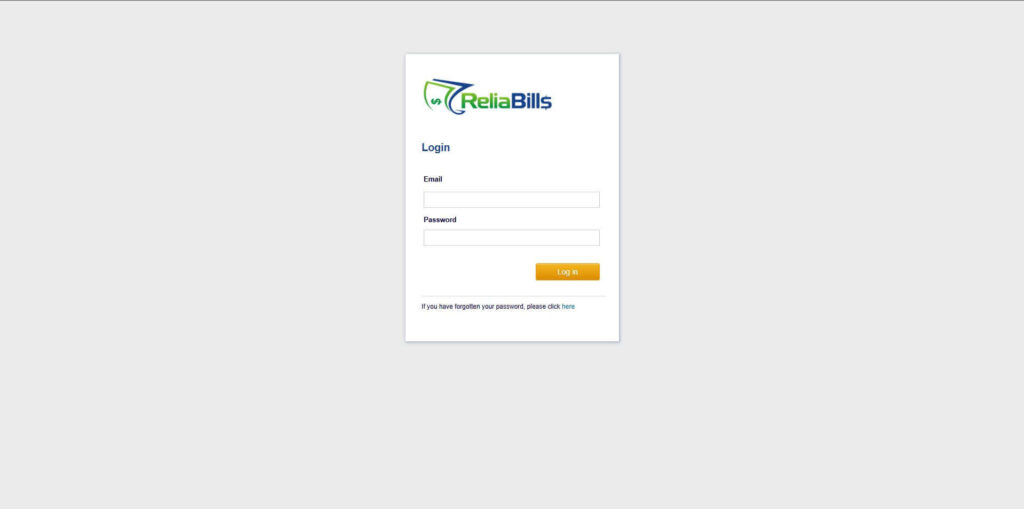
Step 1: Login to ReliaBills
- Access your ReliaBills Account using your login credentials. If you don’t have an account, sign up here.
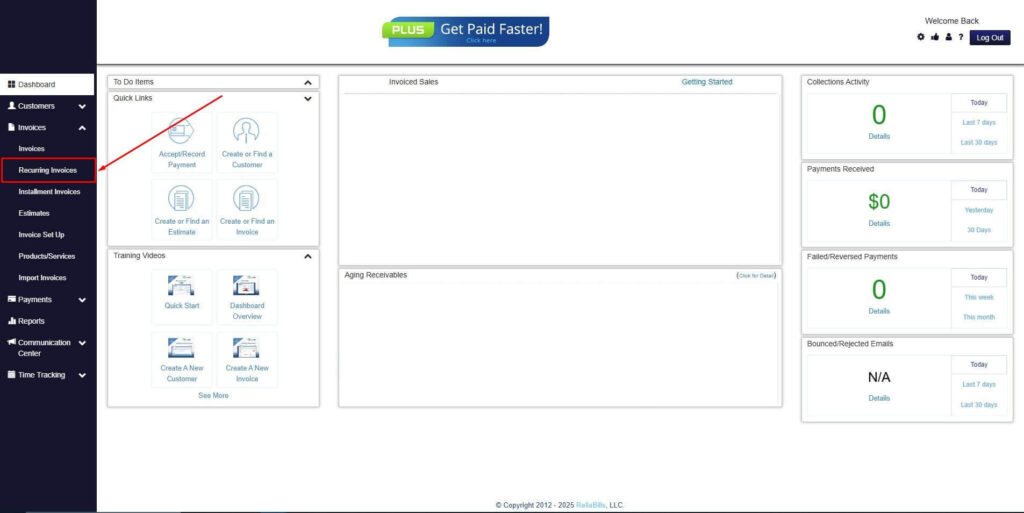
Step 2: Click on Recurring Invoices
- Navigate to the Invoices Dropdown and click on Recurring Invoices for an overview of the list of your existing customers.
Step 3: Go to the Customers Tab
- If you have already created a customer, search for them in the Customers tab and make sure their status is “Active”.
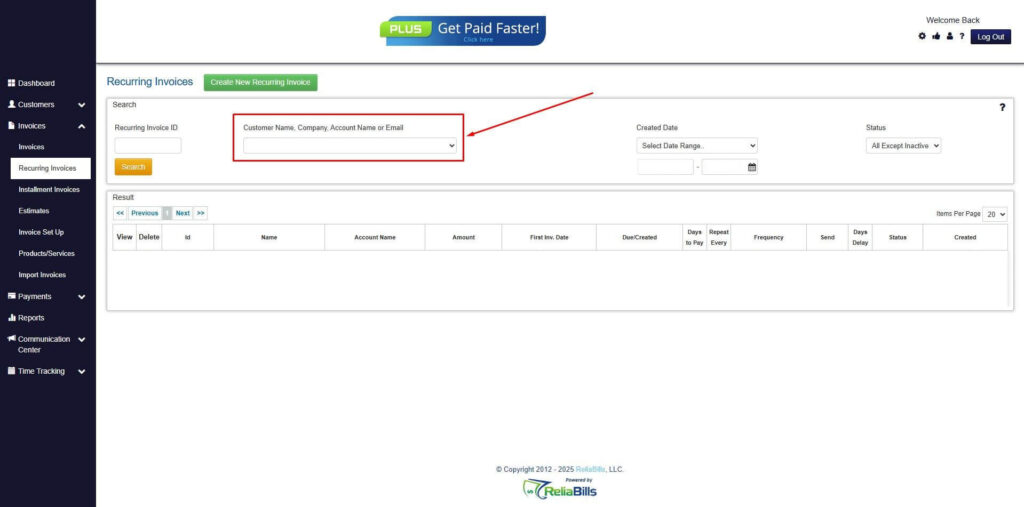
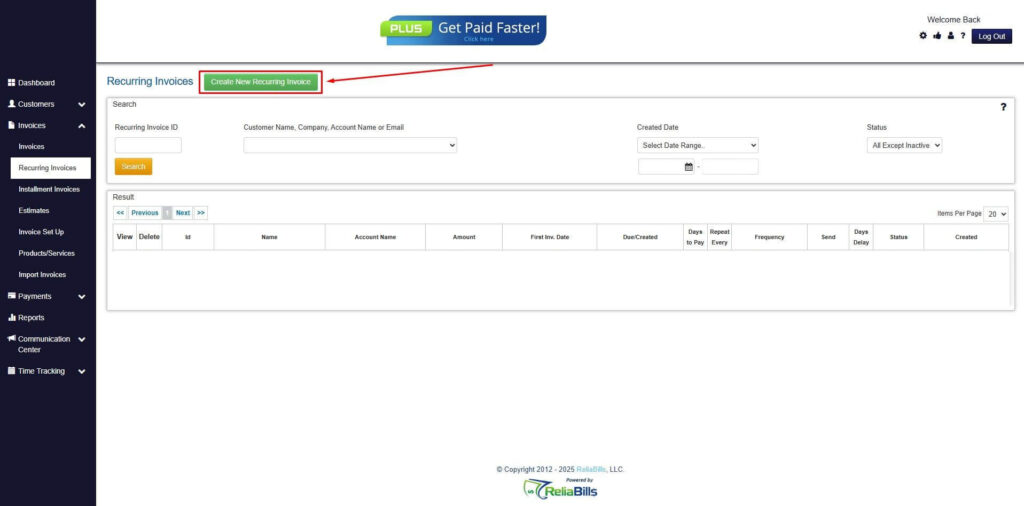
Step 4: Click the Create New Recurring Invoice
- If you haven’t created any customers yet, click the Create New Recurring Invoice to create a new customer.
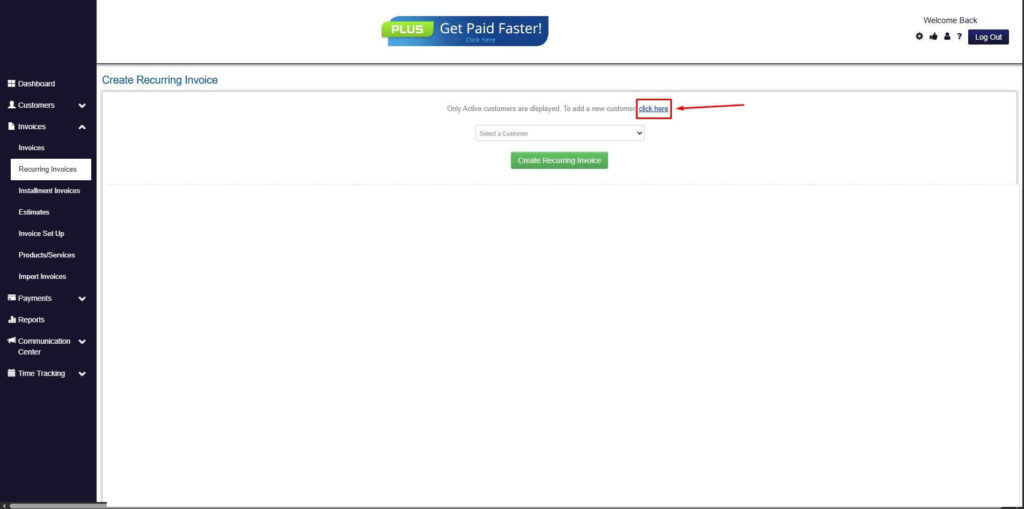
Step 5: Click on the “Click here” Button
- Click on the “Click here” button to proceed with the recurring invoice creation.
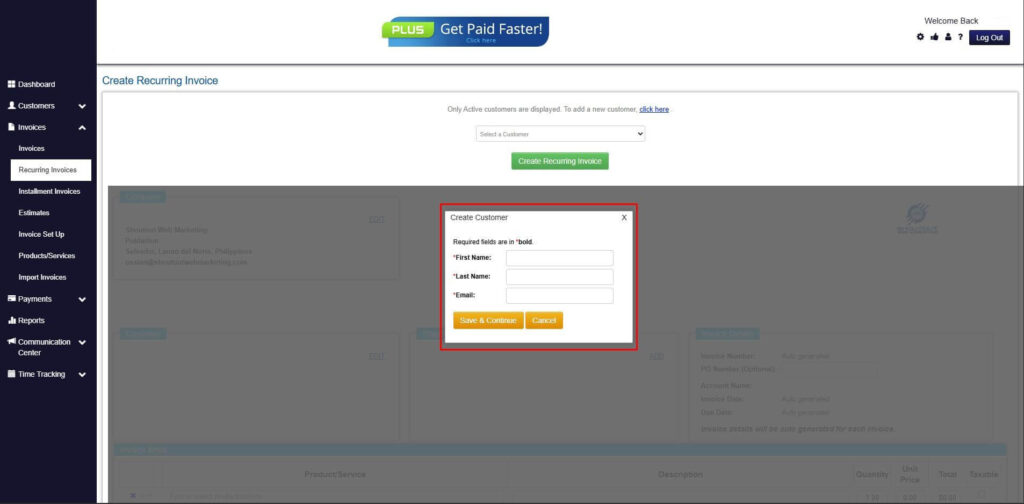
Step 6: Create Customer
- Provide your First Name, Last Name, and Email to proceed.
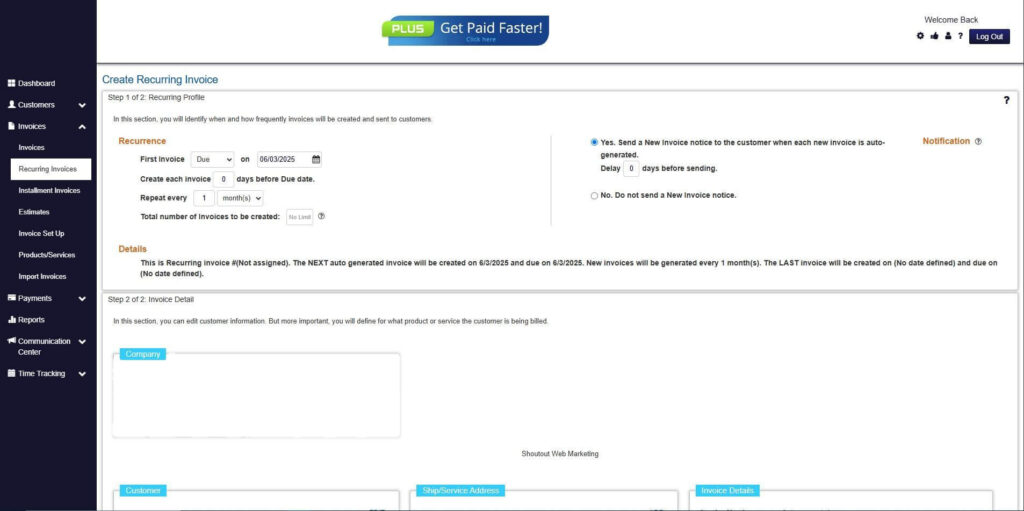
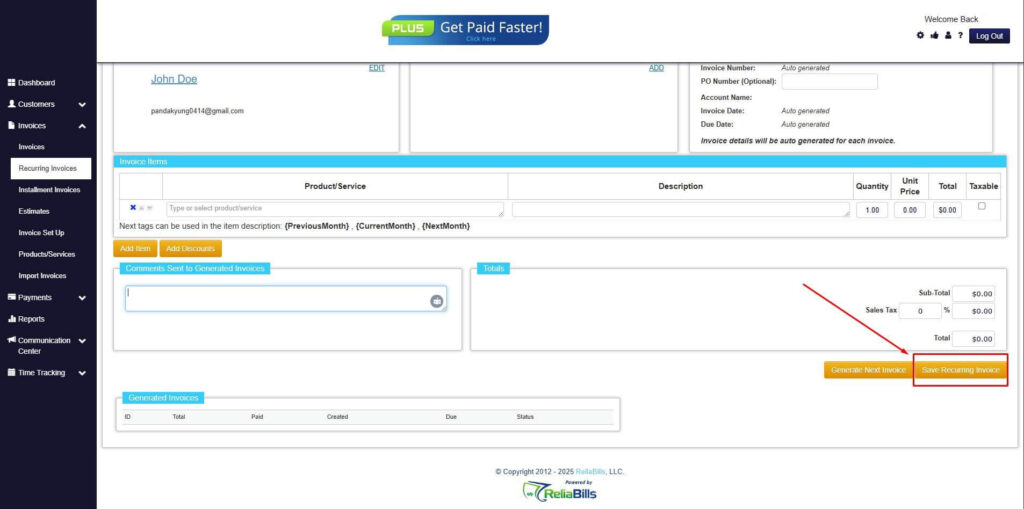
Step 7: Fill in the Create Recurring Invoice Form
- Fill in all the necessary fields.
Step 8: Save Recurring Invoice
- After filling up the form, click “Save Recurring Invoice” to continue.
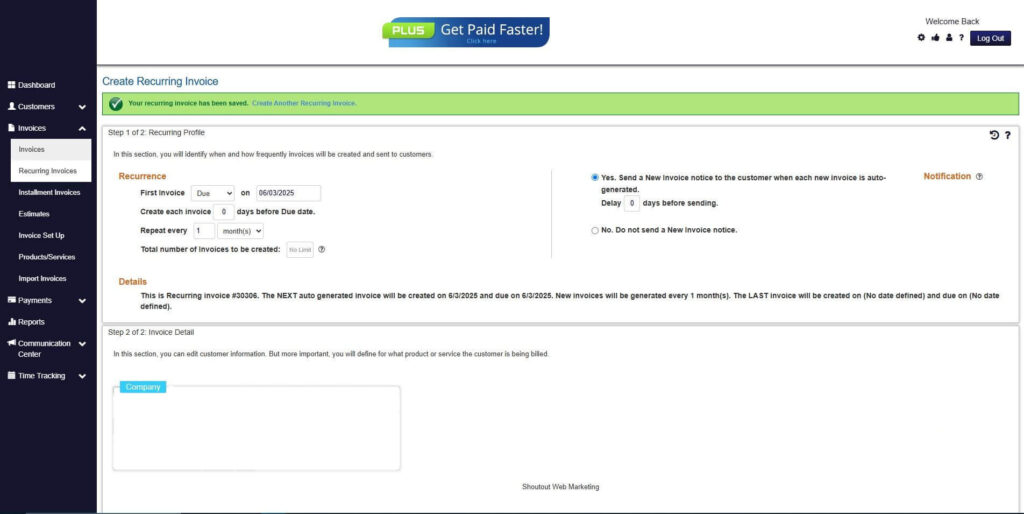
Step 9: Recurring Invoice Created
- Your Recurring Invoice has been created.
Frequently Asked Questions (FAQs)
1. When should gyms switch to automated invoicing?
Gyms should switch when manual billing becomes time-consuming and error-prone. Signs include increased membership, billing errors, and late payments. Automation helps address these issues. Early adoption improves efficiency.
2. What are the benefits of automated billing for gyms?
Benefits include faster billing, improved accuracy, and better cash flow. Automation reduces workload and enhances member experience. It also supports scalability. These advantages make it essential.
3. Can small gyms use automated invoicing systems?
Yes, automated invoicing is suitable for gyms of all sizes. Small gyms benefit from reduced administrative tasks. It also improves payment consistency. These tools are scalable.
4. How does recurring billing work for memberships?
Recurring billing automatically charges members at regular intervals. This ensures consistent payments. It reduces manual effort. Members enjoy convenience.
5. What features should gym billing software include?
Key features include automation, recurring billing, and payment integration. Real-time reporting is also important. Communication tools improve transparency. These features ensure efficiency.
Conclusion
Automated invoicing for gyms is no longer just a convenience but a necessity for growing fitness businesses. As membership bases expand and billing scenarios become more complex, manual systems struggle to keep up with demand. Automation provides a reliable and scalable solution that improves efficiency and reduces errors. It also ensures consistent and timely billing.
Switching to automated invoicing helps gyms overcome common challenges such as late payments, billing inaccuracies, and administrative overload. By streamlining processes and improving financial visibility, gyms can operate more effectively and focus on delivering better member experiences. This leads to stronger relationships and higher retention rates. Accurate billing also builds trust and credibility.
Looking ahead, gyms that adopt automated invoicing position themselves for long-term growth and success. With improved cash flow, scalable systems, and enhanced member satisfaction, automation becomes a strategic advantage. Fitness businesses that embrace this shift can stay competitive and future-ready. Now is the right time to invest in smarter billing solutions.