

Agencies across industries such as marketing, creative design, IT services, and consulting rely heavily on long-term client relationships supported by monthly retainers and ongoing service agreements. These businesses do not operate on one-off transactions alone but instead depend on consistent engagement and continuous delivery of value. Because of this structure, maintaining a steady and predictable billing process becomes essential for both operational efficiency and client satisfaction. Without a reliable system, agencies risk revenue inconsistencies and administrative bottlenecks.
Recurring monthly client billing plays a central role in ensuring agencies maintain stable cash flow and financial clarity. It allows agencies to bill clients on a consistent schedule, reducing uncertainty and improving revenue predictability. This model also supports long-term partnerships by aligning billing with ongoing service delivery. As agencies grow and manage more clients, recurring monthly client billing becomes a foundational system for scalability and sustainability.
What Is Recurring Monthly Client Billing?
Recurring monthly client billing refers to a structured billing model where agencies charge clients on a fixed schedule, typically every month, for ongoing services. This model is commonly used for retainers, subscriptions, or continuous support agreements. Instead of issuing invoices manually for each service rendered, agencies automate the billing cycle based on predefined terms. This creates consistency in both billing operations and client expectations.
Unlike one-time or project-based invoicing, recurring monthly client billing focuses on long-term value rather than individual deliverables. Clients are billed regularly regardless of specific outputs within that period, as long as services are being maintained. This approach simplifies financial management for both parties and ensures uninterrupted service delivery. It also reduces administrative overhead by eliminating repetitive invoice creation tasks.
Why Recurring Billing Is Essential for Agencies
Creates predictable and stable revenue streams
Recurring monthly client billing ensures agencies receive consistent income every billing cycle without relying on new project acquisition. This stability allows agencies to forecast revenue more accurately and plan business growth with confidence. Predictable income also supports hiring decisions, operational investments, and long-term strategy. Without this consistency, agencies may face fluctuating cash flow that disrupts operations.
Reduces the need for repeated manual invoicing
Manual invoicing every month for multiple clients is time-consuming and prone to inefficiencies. Recurring billing automates invoice generation, sending, and tracking based on predefined schedules. This reduces administrative workload and frees up time for higher-value tasks such as client service and business development. Automation also ensures invoices are never forgotten or delayed.
Strengthens long-term client relationships
Clients prefer predictable billing structures that align with ongoing service delivery. Recurring monthly client billing reinforces trust by providing consistency and transparency in financial interactions. It also encourages long-term commitments, as clients are more likely to stay when billing is simple and reliable. This stability benefits both client retention and overall revenue growth.
Simplifies financial planning and forecasting
With recurring billing, agencies can project future revenue with greater accuracy. This enables better budgeting, expense management, and strategic decision-making. Financial forecasting becomes more reliable because income is based on contracted agreements rather than uncertain project pipelines. As a result, agencies can operate with greater confidence and control.
Improves payment consistency and timeliness
Recurring billing systems often include automated reminders and payment collection features. This reduces late payments and improves overall cash flow. Clients are more likely to pay on time when invoices are consistent and predictable. Improved payment behavior also reduces the need for follow-ups and collection efforts.
Common Pricing Models Used by Agencies
Monthly retainer packages
Monthly retainers provide clients with ongoing access to services for a fixed fee. This model is widely used because it ensures consistent revenue while offering flexibility in service delivery. Agencies can allocate resources more efficiently based on retainer agreements. Clients benefit from predictable costs and continuous support.
Tiered service plans
Tiered pricing offers different levels of service at varying price points. This allows agencies to cater to a broader range of clients with different needs and budgets. Each tier typically includes a defined set of services and deliverables. This structure simplifies upselling and scaling client accounts over time.
Hourly retainers with capped hours
Some agencies combine hourly billing with a monthly cap to create predictable pricing. Clients pay for a set number of hours each month, regardless of actual usage within that limit. This ensures consistent revenue while maintaining flexibility in service delivery. It also prevents overuse and helps manage workload expectations.
Performance-based pricing with base fees
This model combines a fixed monthly fee with performance-based incentives. Agencies receive a base retainer along with additional compensation tied to results such as leads or conversions. This aligns agency success with client outcomes. It also creates opportunities for higher earnings while maintaining baseline stability.
Hybrid models combining project and recurring billing
Hybrid models allow agencies to blend one-time project fees with ongoing retainers. This provides flexibility in structuring client agreements. Agencies can charge for initial setup or strategy work, followed by recurring billing for maintenance and execution. This approach supports both short-term and long-term revenue streams.
How Agencies Structure Recurring Billing Cycles
Most agencies adopt monthly billing cycles because they align naturally with service delivery timelines and client expectations. Monthly cycles provide a balance between frequent cash flow and manageable administrative effort. Some agencies also offer quarterly or annual billing options for long-term contracts, often with incentives such as discounts. These extended cycles can improve cash flow upfront and reduce billing frequency.
Billing cycles are typically aligned with either the client’s contract start date or standardized calendar periods. This ensures consistency and clarity in billing schedules. Automation tools play a critical role in generating and sending invoices on time without manual intervention. As a result, agencies can maintain consistency across multiple client accounts without increasing administrative workload.
Key Components of a Recurring Client Invoice
Client details and contract information
Invoices should clearly include the client’s name, business details, and contract reference. This ensures transparency and helps both parties track agreements accurately. Including contract terms also reduces confusion and supports dispute resolution. Clear identification improves professionalism and record-keeping.
Invoice number and billing period
Each invoice must have a unique identifier and clearly defined billing period. This helps track payments and maintain organized financial records. The billing period ensures clients understand exactly what timeframe they are being charged for. Proper documentation supports accounting accuracy.
Description of services covered in the retainer
Even in recurring billing, it is important to outline the services included. This provides clarity and reinforces the value being delivered. Detailed descriptions reduce misunderstandings and improve client satisfaction. Transparency is key to maintaining trust.
Pricing and payment terms
Invoices should clearly state the total amount due along with payment deadlines. This ensures clients know when and how much to pay. Clear terms also reduce delays and disputes. Consistency in pricing builds credibility.
Taxes and additional fees if applicable
Any applicable taxes or extra charges should be itemized on the invoice. This ensures compliance with financial regulations. It also provides full transparency to clients. Accurate tax handling is essential for proper accounting.
Payment instructions and due date
Invoices must include clear payment methods and deadlines. This simplifies the payment process for clients. Providing multiple payment options improves convenience. Clear instructions reduce delays and missed payments.
Challenges Agencies Face with Manual Billing
Time-consuming invoice creation each month
Manual billing requires repetitive effort for every client each cycle. This consumes valuable time that could be spent on revenue-generating activities. As client numbers grow, the workload becomes unsustainable. Automation becomes necessary to scale efficiently.
Risk of human error in pricing or billing periods
Manual calculations often lead to mistakes in pricing or billing timelines. These errors can result in disputes or revenue loss. Even small inaccuracies can damage client trust. Automation ensures consistency and accuracy.
Missed or delayed invoices affecting cash flow
Forgetting to send invoices or sending them late directly impacts cash flow. Delays can create gaps in revenue and disrupt financial planning. Automated systems eliminate this risk by scheduling invoices in advance. Timeliness is critical for stability.
Difficulty tracking multiple client accounts
Managing multiple invoices manually makes tracking payments and balances challenging. This can lead to confusion and missed follow-ups. A centralized system simplifies tracking and improves visibility. Better tracking leads to better decision-making.
Inconsistent communication with clients
Manual processes often result in inconsistent communication regarding billing. Clients may not receive timely updates or reminders. This can lead to confusion and delayed payments. Automation ensures consistent and professional communication.
How Agencies Automate Recurring Monthly Billing
Agencies automate recurring monthly client billing by using specialized billing software that handles invoice scheduling and generation. These platforms allow businesses to define billing rules based on client agreements, ensuring invoices are created automatically each cycle. Integration with payment gateways enables seamless transaction processing, reducing manual intervention. Automation also supports features like Auto Pay, which collects payments automatically without requiring client action.
This approach not only improves efficiency but also enhances accuracy and consistency in billing operations. Agencies can manage multiple clients without increasing administrative workload. Automated systems also provide real-time insights into payment status and financial performance. As a result, agencies gain better control over their revenue streams.
Key Features Agencies Should Look For in Billing Software
Recurring invoicing and subscription management
The software should support automated recurring invoices based on predefined schedules. This ensures consistency and reduces manual work. Subscription management features allow easy updates to billing terms. Flexibility is essential for handling different client agreements.
Automated payment reminders and dunning tools
Reminder systems help reduce late payments by notifying clients before and after due dates. Dunning tools manage failed payments and retry attempts automatically. This improves collection rates and reduces manual follow-ups. Consistent reminders enhance payment behavior.
Customizable invoice templates
Custom templates allow agencies to maintain branding and professionalism. They also enable clear communication of services and pricing. Customization ensures invoices meet specific business needs. Professional presentation builds client trust.
Real-time payment tracking and reporting
Tracking tools provide visibility into paid, pending, and overdue invoices. This helps agencies monitor financial performance in real time. Reporting features support data-driven decision-making. Better insights lead to better financial management.
Integration with CRM and accounting systems
Integration ensures data flows seamlessly between systems. This reduces duplication and improves accuracy. It also simplifies workflow management across departments. Connected systems enhance operational efficiency.
Secure payment processing options
Security is essential when handling financial transactions. The software should support encrypted payments and compliance standards. Multiple payment options improve client convenience. Secure systems build trust and reduce risk.
Best Practices for Managing Recurring Client Billing
Clearly define billing terms in contracts
Contracts should outline billing schedules, pricing, and payment terms clearly. This prevents misunderstandings and disputes. Clear agreements support automation setup. Transparency builds trust.
Standardize pricing and service packages
Standardization simplifies billing and improves scalability. It also makes pricing easier to communicate to clients. Consistent packages reduce complexity. Simplicity improves efficiency.
Automate invoicing as early as possible
Early automation prevents inefficiencies as the business grows. It also ensures consistency from the start. Delaying automation creates unnecessary workload. Proactive implementation supports scalability.
Communicate billing schedules with clients
Clients should know when to expect invoices and payments. Clear communication reduces confusion. It also improves payment behavior. Transparency strengthens relationships.
Regularly review billing performance and client accounts
Periodic reviews help identify issues and optimize processes. This ensures billing remains accurate and effective. Monitoring performance supports continuous improvement. It also helps detect revenue leaks.
Common Mistakes Agencies Should Avoid
Relying on spreadsheets for recurring billing
Spreadsheets lack automation and scalability. They are prone to errors and inefficiencies. As client volume grows, they become unmanageable. Dedicated software is a better solution.
Failing to automate invoice generation
Manual processes slow down operations and increase errors. Automation ensures consistency and efficiency. Without it, scaling becomes difficult. Automation is essential for growth.
Inconsistent billing cycles across clients
Inconsistency creates confusion and complicates tracking. Standardized cycles simplify management. They also improve client understanding. Consistency is key to efficiency.
Not tracking overdue payments effectively
Ignoring overdue invoices leads to cash flow issues. Tracking tools help manage collections. Proactive follow-ups improve payment rates. Visibility is critical.
Overcomplicating pricing structures
Complex pricing confuses clients and complicates billing. Simpler structures are easier to manage and understand. Clarity improves client satisfaction. Simplicity supports scalability.
How Recurring Billing Improves Agency Cash Flow
Recurring monthly client billing ensures agencies receive payments on a predictable schedule, which stabilizes cash flow and reduces financial uncertainty. By eliminating reliance on irregular project payments, agencies can maintain steady income throughout the year. Automation further reduces delays by ensuring invoices are sent and processed on time. This consistency improves financial planning and reduces operational risk.
Additionally, recurring billing minimizes revenue leakage caused by missed or delayed invoices. Agencies gain better visibility into incoming payments and can forecast cash flow more accurately. This allows for smarter budgeting and investment decisions. Ultimately, recurring billing creates a more resilient financial structure.
How Automation Enhances Client Experience
Automation improves the client experience by delivering consistent, professional, and timely invoices every billing cycle. Clients appreciate predictable billing that aligns with agreed terms and requires minimal effort on their part. Automated systems also provide clear documentation, reducing disputes and confusion. This creates a smoother and more transparent financial relationship.
Features like Auto Pay and payment reminders make it easier for clients to manage their obligations. Convenience plays a significant role in customer satisfaction. When billing processes are seamless, clients are more likely to continue working with the agency. This contributes to long-term loyalty and retention.
Key Benefits of Recurring Monthly Billing for Agencies
Predictable revenue and improved cash flow
Recurring monthly client billing ensures steady income streams that support long-term planning. Predictability reduces financial stress and enables strategic growth. Agencies can allocate resources more effectively. Stability improves overall business performance.
Reduced administrative workload
Automation eliminates repetitive billing tasks. This frees up time for core business activities. Reduced workload improves efficiency and productivity. Staff can focus on higher-value tasks.
Increased billing accuracy and consistency
Automated systems ensure consistent application of billing rules. This reduces errors and disputes. Accuracy improves financial reporting. Consistency builds trust.
Better client relationship management
Reliable billing strengthens client trust and satisfaction. It also simplifies communication and expectations. Strong relationships lead to higher retention. Retention drives long-term growth.
Scalable operations as the agency grows
Recurring billing systems support business expansion without increasing workload. Automation handles increased client volume efficiently. Scalability is essential for growth. Systems must support long-term success.
Common Use Cases
Digital marketing agencies with monthly retainers
Marketing agencies often charge clients monthly for ongoing campaigns and optimization. Recurring billing simplifies invoicing for these services. It ensures consistent revenue and streamlined operations. Clients benefit from predictable costs.
Creative agencies offering ongoing design services
Design agencies provide continuous creative support under retainer agreements. Recurring billing ensures regular payments for ongoing work. This supports stable income. It also simplifies client management.
IT service providers with maintenance contracts
IT agencies offer ongoing support and maintenance services. Recurring billing aligns with these continuous services. It ensures timely payments. It also improves operational efficiency.
Consulting firms with advisory retainers
Consultants often work with clients on long-term advisory agreements. Recurring billing supports these engagements. It provides consistent income. It also simplifies financial management.
Social media management agencies
Social media agencies manage accounts on an ongoing basis. Recurring billing ensures regular payments for continuous services. It simplifies invoicing. It also supports scalability.
How ReliaBills Helps Agencies Streamline Recurring Billing
ReliaBills simplifies recurring monthly client billing for agencies by providing a centralized platform to manage multiple clients, invoices, and payment schedules efficiently. Instead of juggling spreadsheets or manual invoicing processes, agencies can automate billing workflows and ensure every invoice is generated and sent on time. This improves accuracy, reduces administrative overhead, and allows teams to focus more on delivering client value. As a result, agencies can scale operations without increasing back-office workload.
ReliaBills enhances recurring billing by automating retainer management, invoice generation, and payment collection. Agencies can set up recurring billing rules based on client agreements, ensuring consistent and predictable revenue every month. Features like Auto Pay and automated reminders help reduce late payments and improve cash flow reliability. This integration of recurring billing with automation ensures a seamless and professional billing experience for both agencies and their clients.
With ReliaBills PLUS, agencies gain access to advanced tools such as detailed reporting, enhanced automation workflows, and centralized client billing management. These features provide deeper insights into financial performance and allow agencies to manage complex billing structures with ease. ReliaBills PLUS is designed to support growing agencies that need scalable solutions for handling high volumes of recurring transactions. This enables businesses to maintain efficiency, accuracy, and control as they expand.
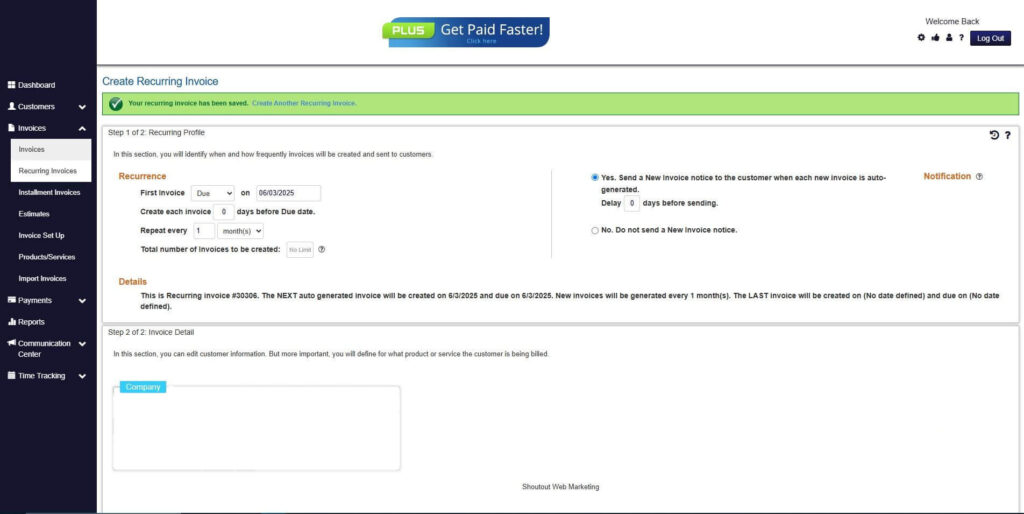
How to Create a New Recurring Invoice Using ReliaBills
Creating a New Recurring Invoice using ReliaBills involves the following steps:
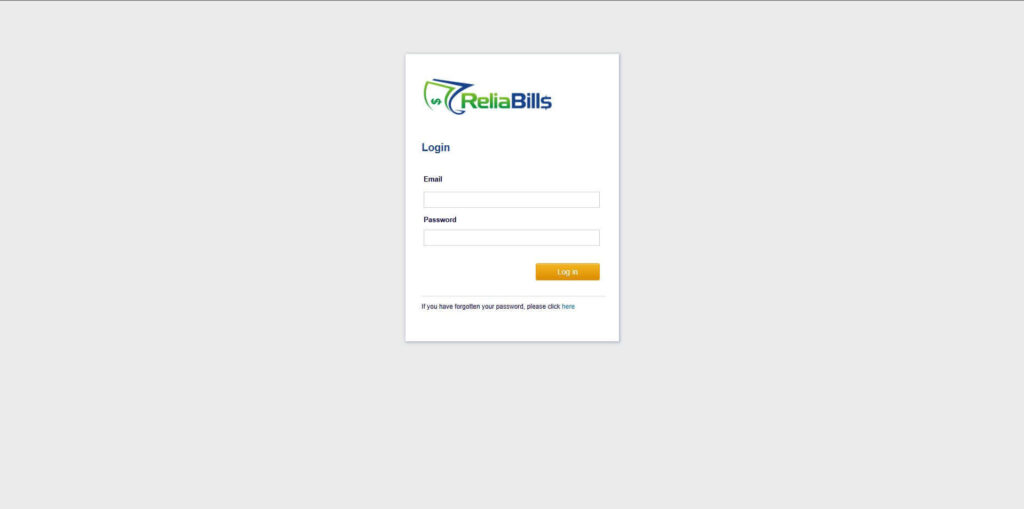
Step 1: Login to ReliaBills
- Access your ReliaBills Account using your login credentials. If you don’t have an account, sign up here.
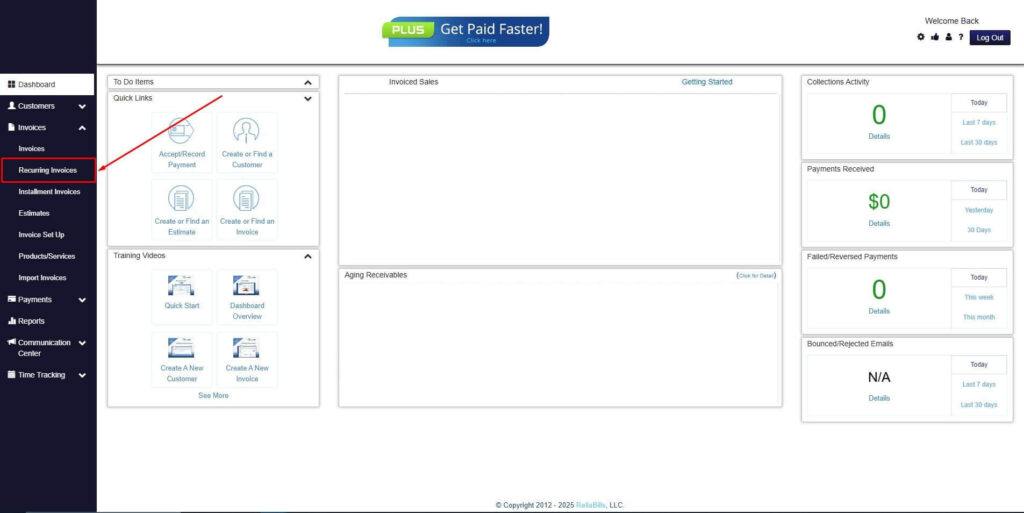
Step 2: Click on Recurring Invoices
- Navigate to the Invoices Dropdown and click on Recurring Invoices for an overview of the list of your existing customers.
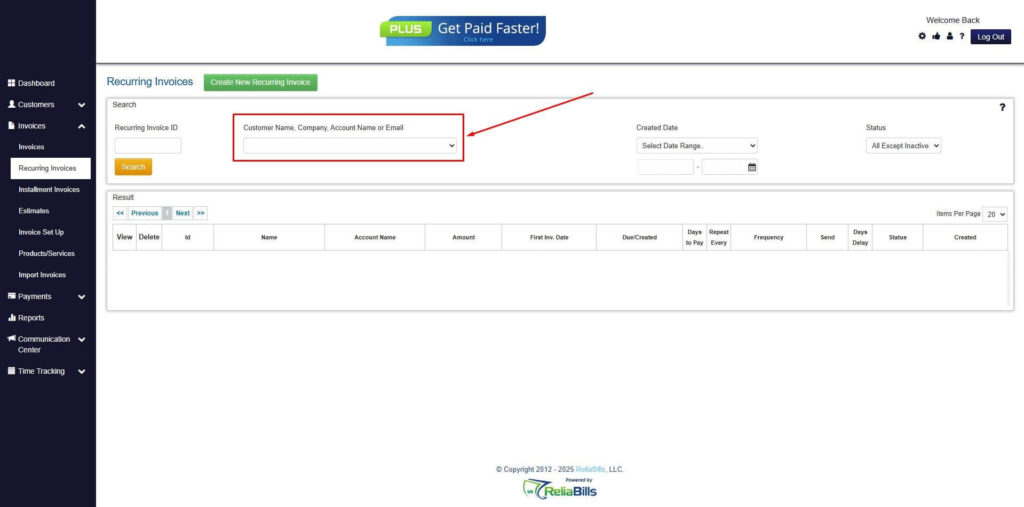
Step 3: Go to the Customers Tab
- If you have already created a customer, search for them in the Customers tab and make sure their status is “Active”.
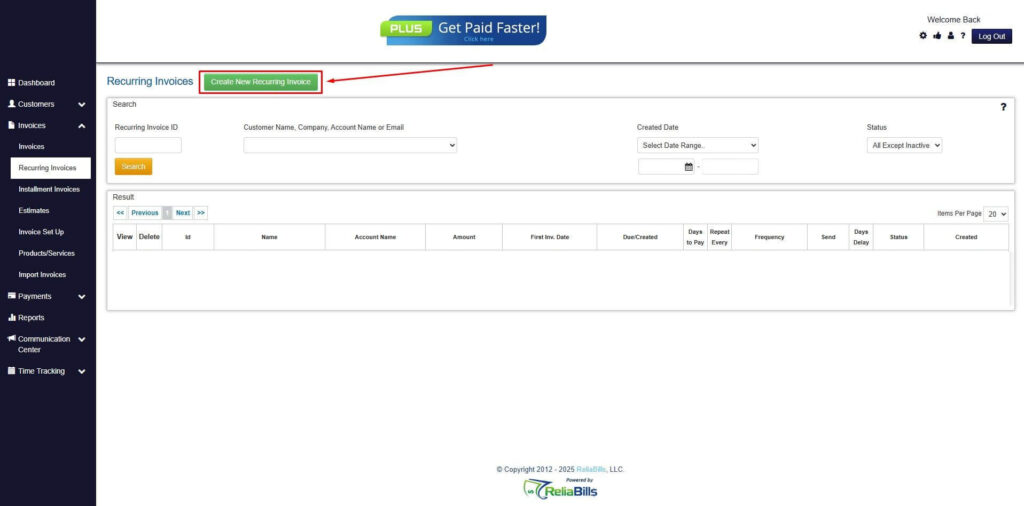
Step 4: Click the Create New Recurring Invoice
- If you haven’t created any customers yet, click the Create New Recurring Invoice to create a new customer.
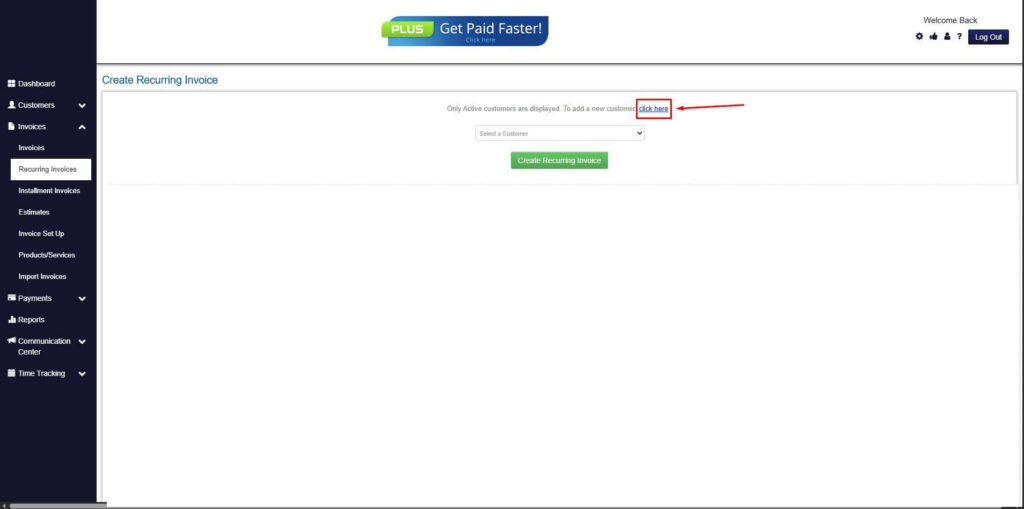
Step 5: Click on the “Click here” Button
- Click on the “Click here” button to proceed with the recurring invoice creation.
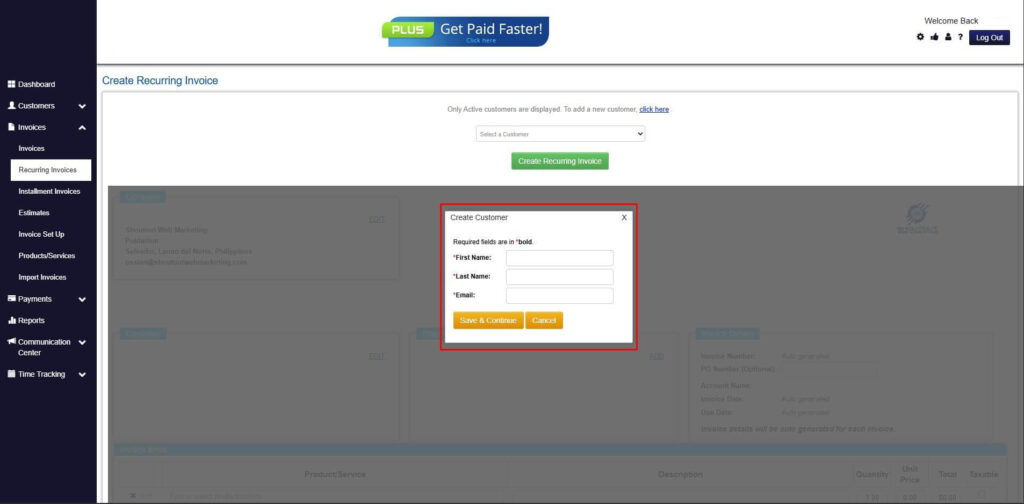
Step 6: Create Customer
- Provide your First Name, Last Name, and Email to proceed.
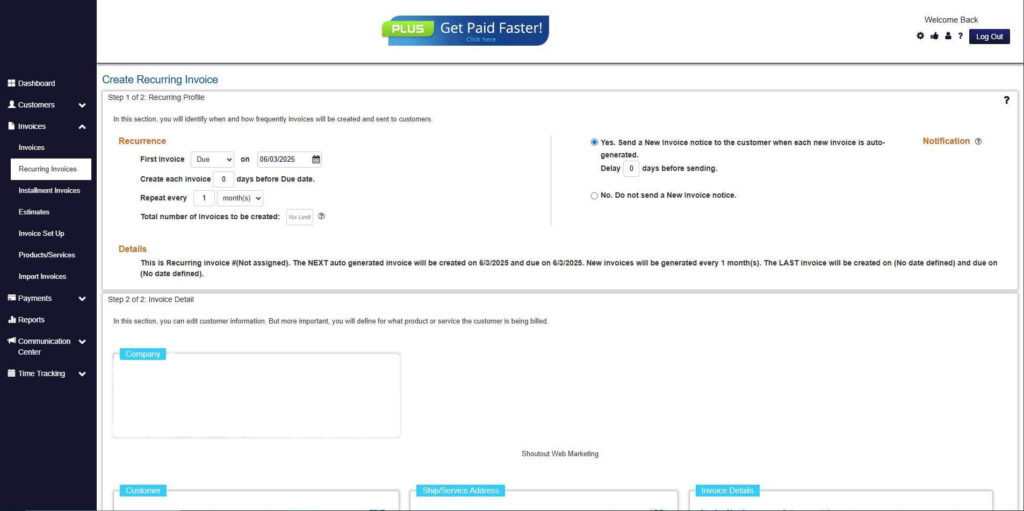
Step 7: Fill in the Create Recurring Invoice Form
- Fill in all the necessary fields.
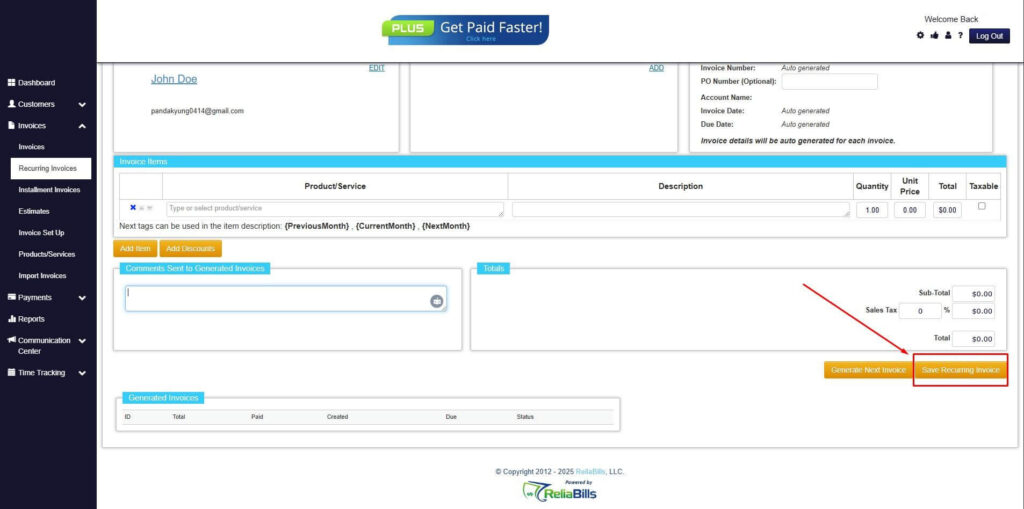
Step 8: Save Recurring Invoice
- After filling up the form, click “Save Recurring Invoice” to continue.
Step 9: Recurring Invoice Created
- Your Recurring Invoice has been created.
Frequently Asked Questions (FAQs)
1. What is recurring billing for agencies?
Recurring billing for agencies is a system where clients are charged automatically on a regular schedule for ongoing services. It is commonly used for retainers and subscriptions. This ensures consistent revenue. It also simplifies billing operations.
2. How do agencies automate monthly invoices?
Agencies use billing software to schedule and generate invoices automatically. These systems follow predefined rules based on client agreements. Automation reduces manual effort. It also improves accuracy and efficiency.
3. What is the best billing model for agency retainers?
The best model depends on the agency’s services and client needs. Monthly retainers are the most common. Hybrid and tiered models are also popular. Flexibility is key.
4. Can small agencies use recurring billing systems?
Yes, small agencies can benefit greatly from automation. Recurring billing reduces workload and improves cash flow. It also supports growth. Even simple systems can provide value.
5. How do agencies handle late payments?
Agencies use automated reminders and dunning tools to manage late payments. Some also apply late fees based on contract terms. Automation improves collection rates. Clear communication is essential.
Conclusion
Recurring monthly client billing is a fundamental system that allows agencies to maintain financial stability, improve operational efficiency, and build long-term client relationships. By implementing structured billing processes, agencies can ensure consistent revenue and reduce administrative complexity. This approach supports scalability and enables better financial planning as the business grows.
Automation plays a critical role in maximizing the benefits of recurring monthly client billing. It improves accuracy, eliminates manual errors, and enhances the overall client experience through consistent and transparent billing practices. Agencies that adopt automated solutions position themselves for greater efficiency and competitiveness.
Looking ahead, agencies that invest in scalable billing systems will be better equipped to handle growth and evolving client demands. Recurring monthly client billing is not just a financial tool but a strategic advantage that supports long-term success.