

SaaS billing models are built around recurring transactions, where customers are charged on a monthly, annual, or usage-based basis for continued access to software services. This subscription-driven approach enables predictable revenue streams, but it also introduces ongoing billing complexity as customer accounts evolve over time. Unlike one-time sales, SaaS companies must continuously manage billing relationships that include renewals, plan changes, and service adjustments. These dynamics make billing accuracy and flexibility critical from the very beginning.
Because SaaS environments are highly dynamic, billing adjustments such as refunds, corrections, and prorations are not rare; they are expected as part of normal operations. Customers frequently upgrade, downgrade, or cancel subscriptions, which requires billing systems to adapt quickly and accurately. Without a structured way to manage these changes, businesses can face disputes, revenue inconsistencies, and customer dissatisfaction. This is why having clear billing adjustment mechanisms is essential for maintaining operational stability.
The concept of a return invoice SaaS billing process plays a key role in addressing these challenges. A return invoice allows businesses to reverse or adjust previously issued invoices while preserving a clear audit trail. Instead of modifying original invoices, it documents corrections transparently and systematically. This ensures financial accuracy, compliance, and a better customer experience.
What Is a Return Invoice in SaaS?
A return invoice in SaaS billing is a financial document used to reverse or adjust a previously issued invoice due to changes in service or billing conditions. It ensures that the amount charged to a customer accurately reflects the services actually delivered or retained. This is particularly important in subscription models where billing is continuous and subject to change. By issuing a return invoice, businesses can maintain clean and accurate financial records.
In a return invoice SaaS billing system, each return invoice is typically linked directly to the original invoice. This connection provides a clear audit trail that documents the full lifecycle of the transaction, including the initial charge and the subsequent adjustment. It also helps accounting teams track and reconcile financial data more efficiently. This level of traceability is essential for both internal operations and compliance requirements.
Return invoices are commonly used in situations such as refunds, billing errors, service cancellations, or mid-cycle subscription changes. Instead of deleting or altering the original invoice, the return invoice records the adjustment separately for transparency. This approach aligns with accounting best practices and ensures historical accuracy. As a result, businesses can manage billing changes without compromising data integrity.
How Return Invoices Differ from Credit Notes and Refunds
Return invoices, credit notes, and refunds are often confused, but they serve distinct purposes in SaaS billing systems. A return invoice specifically reverses or adjusts a previously issued invoice, while a credit note provides a balance that can be applied to future invoices. Refunds, on the other hand, involve returning actual funds to the customer’s payment method. Each plays a unique role in financial operations.
In many SaaS platforms, these tools may be used together depending on the situation. For example, a return invoice might first adjust the billing record, followed by a refund transaction to return money to the customer. Alternatively, the adjusted amount may be issued as a credit for future use instead of a direct refund. This flexibility allows businesses to tailor their billing approach based on customer needs.
Understanding the differences between these processes is essential for accurate accounting and reporting. Each method impacts revenue recognition, tax calculations, and financial statements differently. A well-implemented return invoice SaaS billing system ensures that the appropriate process is used in each scenario. This helps maintain compliance and financial transparency.
Why Return Invoices Are Important in SaaS Billing
Maintains Accurate Financial and Accounting Records
Return invoices ensure that all billing adjustments are properly documented and reflected in financial records. Without them, revenue figures may become inflated or inconsistent due to unrecorded reversals. Accurate accounting data is critical for both internal decision-making and external reporting. This helps businesses maintain financial integrity as they scale.
Ensures Transparency in Billing Adjustments
Customers expect clarity when it comes to billing changes, especially in subscription-based services. Return invoices provide detailed explanations of adjustments, including the reason and amount involved. This transparency reduces confusion and minimizes disputes. It also strengthens customer confidence in the billing process.
Supports Compliance with Tax and Audit Requirements
Regulatory compliance requires clear documentation of all financial transactions and adjustments. Return invoices create a structured record that can be easily reviewed during audits. This helps businesses meet tax obligations and accounting standards. Proper documentation reduces the risk of compliance issues.
Improves Customer Trust and Billing Clarity
Clear and accurate billing is essential for building long-term customer relationships. When customers can easily understand adjustments, they are less likely to question or dispute charges. Return invoices provide that clarity and reassurance. This leads to improved customer satisfaction and retention.
Helps Reconcile Subscription Changes Effectively
SaaS businesses frequently deal with subscription updates that impact billing. Return invoices make it easier to reconcile these changes with financial records. This ensures that all adjustments are properly tracked and accounted for. It also simplifies reconciliation processes for accounting teams.
Common Scenarios That Require Return Invoices
Subscription Cancellations Before the Billing Cycle Ends
When a customer cancels a subscription mid-cycle, they may be entitled to a partial refund for unused services. Return invoices calculate and document this adjustment accurately. This ensures that customers are only charged for what they have used. It also maintains fairness and transparency in billing.
Downgrades to Lower Pricing Tiers
Customers who switch to a lower-tier plan often require billing adjustments to reflect the reduced cost. Return invoices handle the difference between the original and updated pricing. This ensures that billing aligns with the new subscription level. It also prevents overcharging.
Billing Errors or Overcharges
Errors can occur in billing due to system issues or manual mistakes. Return invoices correct these discrepancies without altering the original transaction. This maintains a clear audit trail and ensures accountability. It also helps resolve customer concerns quickly.
Service Outages or SLA Violations Requiring Compensation
Service disruptions may require compensation as outlined in service level agreements. Return invoices document these compensations clearly and accurately. This helps businesses fulfill contractual obligations. It also supports customer trust and satisfaction.
Refund Requests Within Trial or Guarantee Periods
Customers may request refunds during trial periods or under satisfaction guarantees. Return invoices formalize these adjustments in the billing system. This ensures that refunds are properly recorded and tracked. It also supports accurate financial reporting.
How Return Invoices Work in a Subscription Model
In a return invoice SaaS billing system, the process begins when a triggering event occurs, such as a cancellation, downgrade, or refund request. The system identifies the relevant invoice and calculates the necessary adjustment based on predefined rules. This often includes prorated calculations to ensure fairness. Accurate calculations are essential for maintaining trust and compliance.
Once calculated, the return invoice is generated and linked to the original invoice. This linkage ensures that all adjustments are traceable and properly documented. It also simplifies reconciliation and audit processes. Maintaining this connection is critical for financial transparency.
Finally, the system updates the customer’s account balance and payment status in real time. This ensures that both the business and the customer have accurate billing information. Automation further enhances this process by reducing delays and errors. This leads to faster resolution and improved operational efficiency.
Key Components of a Return Invoice
Reference to the Original Invoice Number
Every return invoice must include a reference to the original invoice it is adjusting. This ensures traceability and helps maintain a clear transaction history. It also simplifies audits and financial reviews. Proper referencing is essential for accurate record-keeping.
Customer Details and Account Information
Accurate customer information ensures that adjustments are applied correctly. This includes account identifiers, billing details, and contact information. It helps prevent errors and misallocation of credits. Clear documentation improves overall efficiency.
Description of Returned or Adjusted Service
A detailed description explains the reason for the adjustment. This improves transparency and reduces confusion for customers. It also provides context for internal teams and auditors. Clear descriptions help prevent disputes.
Amount Being Reversed or Credited
The financial adjustment must be clearly stated on the return invoice. This includes the exact amount being reversed or credited. Accurate figures are essential for financial reporting. This ensures consistency across records.
Date of Issuance
The issuance date determines when the adjustment is recorded in financial systems. It plays a role in revenue recognition and reporting timelines. Accurate dating ensures compliance with accounting standards. It also supports audit readiness.
Reason for Adjustment or Return
Providing a clear reason helps explain why the return invoice was issued. This improves transparency for customers and internal teams. It also supports compliance and documentation requirements. Clear reasoning reduces disputes.
Updated Balance or Credit Status
The return invoice should reflect the updated account balance after the adjustment. This ensures clarity on what is owed or credited. It also helps customers understand their financial position. Accurate balances improve trust and reconciliation.
Manual vs. Automated Return Invoice Processing
Manual return invoice processing involves calculating adjustments and issuing invoices individually, which can be time-consuming and prone to human error. As transaction volumes increase, this approach becomes increasingly inefficient and difficult to manage. Even small mistakes can lead to significant discrepancies in financial records. This makes manual processing unsustainable for growing SaaS businesses.
Automated systems streamline the process by generating return invoices instantly based on predefined rules and triggers. They handle calculations, invoice linking, and account updates without manual intervention. This ensures consistency and accuracy across all transactions. Automation also reduces the risk of errors significantly.
By adopting automation, SaaS companies can improve efficiency and scalability. Automated systems allow businesses to handle high volumes of billing adjustments with ease. They also enhance the customer experience by providing faster resolution times. This makes automation a critical component of modern return invoice SaaS billing systems.
Challenges Without Proper Return Invoice Management
Inaccurate Revenue Reporting
Without structured return invoice processes, revenue figures may not reflect actual earnings. This can lead to misleading financial statements and poor decision-making. Accurate reporting becomes difficult to maintain. This creates risks for business growth.
Time-Consuming Manual Reconciliation
Manual reconciliation requires matching invoices, payments, and adjustments manually. This process is labor-intensive and prone to errors. It reduces overall productivity and efficiency. Automation can significantly improve this.
Increased Risk of Billing Disputes
Unclear or incorrect adjustments can lead to customer disputes. This creates friction and damages relationships. Proper documentation helps prevent misunderstandings. Return invoices provide that clarity.
Poor Customer Experience Due to Delays
Delayed billing adjustments can frustrate customers and reduce satisfaction. Slow processes may lead to churn. Efficient handling of return invoices improves the overall experience. Speed is critical in SaaS billing.
Compliance Issues During Audits
Incomplete or inaccurate records can cause problems during audits. Regulatory requirements demand clear documentation. Return invoices help ensure compliance. This reduces legal and financial risks.
Best Practices for Managing Return Invoices in SaaS
Implement Automated Billing Systems for Adjustments
Automation ensures that return invoices are generated accurately and consistently. It reduces reliance on manual processes and minimizes errors. This improves operational efficiency. It also supports scalability.
Clearly Define Refund and Return Policies
Clear policies set expectations for customers and guide internal processes. They help ensure consistency in handling adjustments. This reduces confusion and disputes. Transparency improves trust.
Maintain Detailed Records Linked to Original Invoices
Proper documentation ensures traceability and simplifies audits. Linking return invoices to original transactions improves clarity. It also enhances financial accuracy. Detailed records are essential.
Use Prorated Calculations for Fairness
Proration ensures customers are billed fairly based on usage. This is especially important for mid-cycle changes. Accurate calculations improve satisfaction. Fair billing builds trust.
Regularly Audit Billing and Return Processes
Regular reviews help identify inefficiencies and errors. Continuous improvement ensures optimal performance. This strengthens billing operations. Audits support compliance and accuracy.
How Return Invoices Impact Revenue Recognition
Return invoices directly impact revenue recognition by ensuring that recorded revenue aligns with actual service delivery. When adjustments occur, recognized revenue must be recalculated accordingly. This is particularly important in subscription-based models where revenue is earned over time. Accurate adjustments maintain financial integrity.
They also ensure that deferred revenue is properly updated when subscriptions change. For example, cancellations or downgrades require recalculating unearned revenue. Return invoices provide the mechanism for these updates. This ensures compliance with accounting standards.
Additionally, return invoices support transparency in financial reporting. Investors and stakeholders rely on accurate data for decision-making. Proper adjustments improve credibility and trust. This strengthens overall financial health.
The Role of Automation in Handling Return Invoices
Automation plays a crucial role in managing return invoices efficiently and accurately. It streamlines the creation, tracking, and updating of billing adjustments. This reduces manual effort and minimizes errors. Automated systems ensure consistency across all transactions.
Real-time updates ensure that customer accounts reflect the latest billing information. This improves transparency and reduces confusion. It also enhances the overall customer experience. Accurate data is always available.
By reducing administrative workload, automation allows teams to focus on strategic tasks. It also enables businesses to handle high transaction volumes. Scalability becomes easier to achieve. Automation is essential for modern SaaS billing.
Key Benefits of Using Return Invoices in SaaS
Accurate Financial Reporting and Reconciliation
Return invoices ensure that all adjustments are properly documented. This improves the accuracy of financial statements. It also simplifies reconciliation processes. Accurate reporting supports better decisions.
Faster Resolution of Billing Issues
Automated return invoices speed up the resolution of billing disputes. Customers receive timely updates on adjustments. This improves satisfaction and trust. Faster resolution enhances the experience.
Improved Customer Satisfaction and Trust
Transparent billing processes build confidence among customers. Clear documentation reduces confusion. This leads to stronger relationships. Trust is essential for retention.
Better Compliance with Tax and Accounting Standards
Return invoices provide a clear audit trail for compliance purposes. This helps meet regulatory requirements. It reduces risks during audits. Proper documentation is critical.
Scalable Billing Operations
Automation enables businesses to handle increasing transaction volumes. Processes remain efficient as complexity grows. This supports long-term scalability. Efficient systems drive growth.
Common Use Cases
SaaS Subscription Downgrades and Cancellations
Return invoices adjust billing for subscription changes accurately. They ensure that customers are charged fairly. This maintains consistency in billing records. It also improves transparency.
Refund Processing for Overcharges
Overcharges are corrected using return invoices. This ensures that customers receive accurate billing adjustments. It helps maintain trust and credibility. Proper handling is essential.
Adjustments for Service Disruptions
Service issues may require compensation for customers. Return invoices document these adjustments clearly. This supports transparency and accountability. It also fulfills contractual obligations.
Trial Period Refunds
Customers may request refunds during trial periods. Return invoices formalize these transactions. This ensures accurate tracking and reporting. Proper documentation is maintained.
Billing Corrections for Pricing Errors
Pricing errors can occur in complex billing systems. Return invoices correct these issues systematically. This maintains accurate records. It also prevents future discrepancies.
How ReliaBills Simplifies Return Invoice Management
ReliaBills simplifies return invoice SaaS billing by providing an automated platform that manages billing adjustments within a centralized system. Instead of handling corrections manually, businesses can generate, track, and process return invoices directly through ReliaBills with accuracy and speed. This reduces administrative workload while ensuring every billing change is properly recorded and linked to the original transaction. As a result, SaaS companies gain better control over financial records while improving overall billing efficiency.
ReliaBills also strengthens recurring billing operations by connecting subscription management with automated return invoice processing. When customers cancel, downgrade, or modify their plans mid-cycle, the system automatically applies prorated calculations and generates accurate return invoices. This ensures that recurring billing cycles remain consistent and aligned with actual service usage. By integrating recurring billing with invoice adjustments, businesses maintain accuracy, transparency, and smoother subscription management.
With ReliaBills PLUS, SaaS companies gain access to advanced automation and enhanced billing control for return invoice SaaS billing. It provides deeper reporting tools, centralized dashboards, and improved workflow automation that make managing high-volume billing environments easier. These capabilities help businesses monitor financial activity, ensure compliance, and scale operations without complexity. ReliaBills PLUS ultimately delivers greater precision and efficiency in handling return invoice processes.
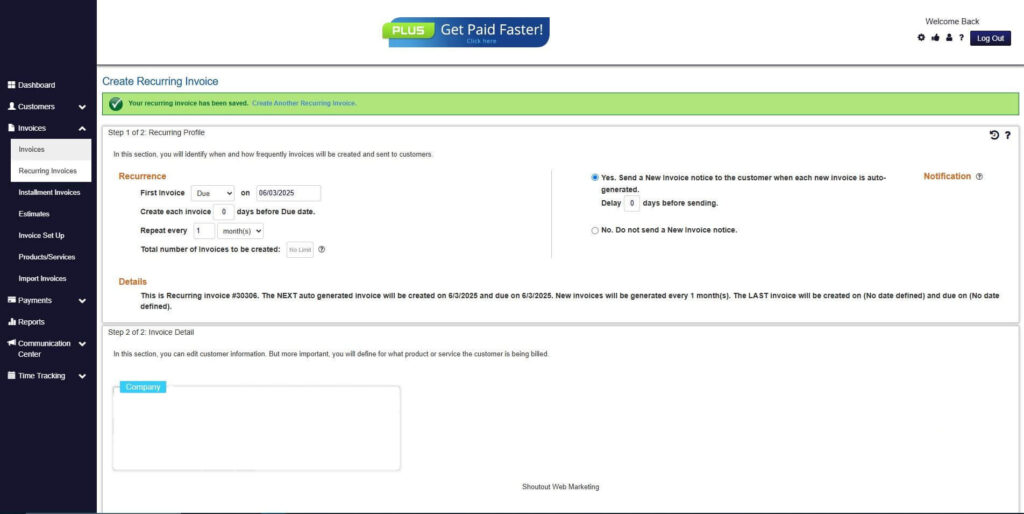
How to Create a New Recurring Invoice Using ReliaBills
Creating a New Recurring Invoice using ReliaBills involves the following steps:
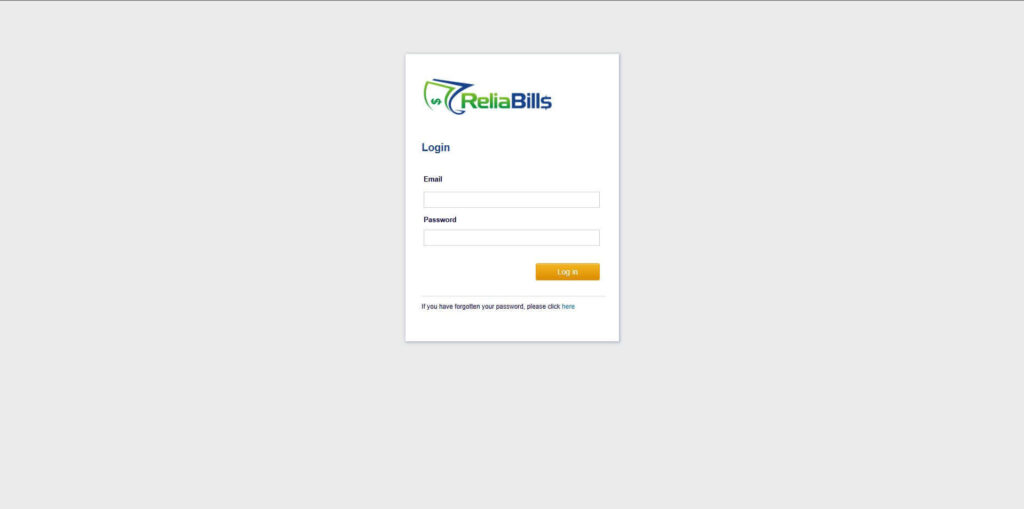
Step 1: Login to ReliaBills
- Access your ReliaBills Account using your login credentials. If you don’t have an account, sign up here.
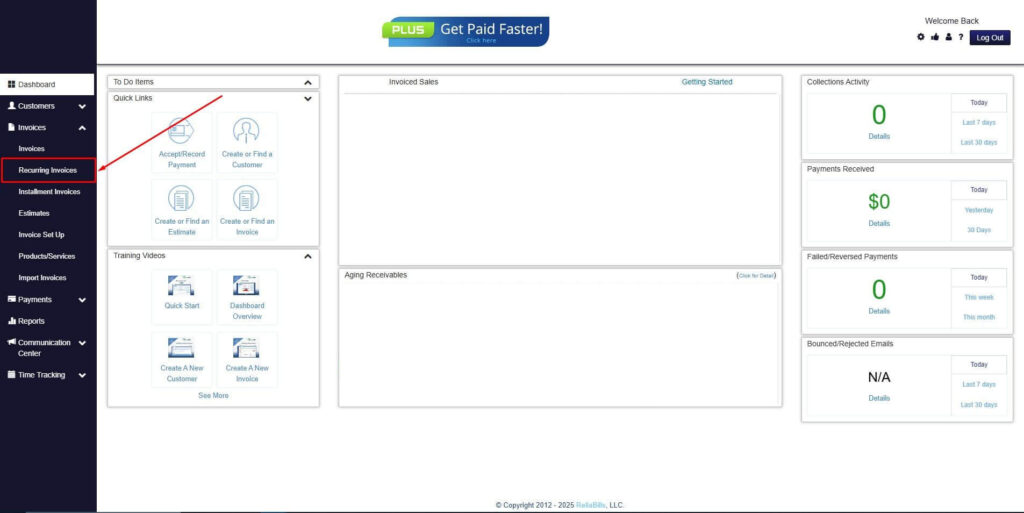
Step 2: Click on Recurring Invoices
- Navigate to the Invoices Dropdown and click on Recurring Invoices for an overview of the list of your existing customers.
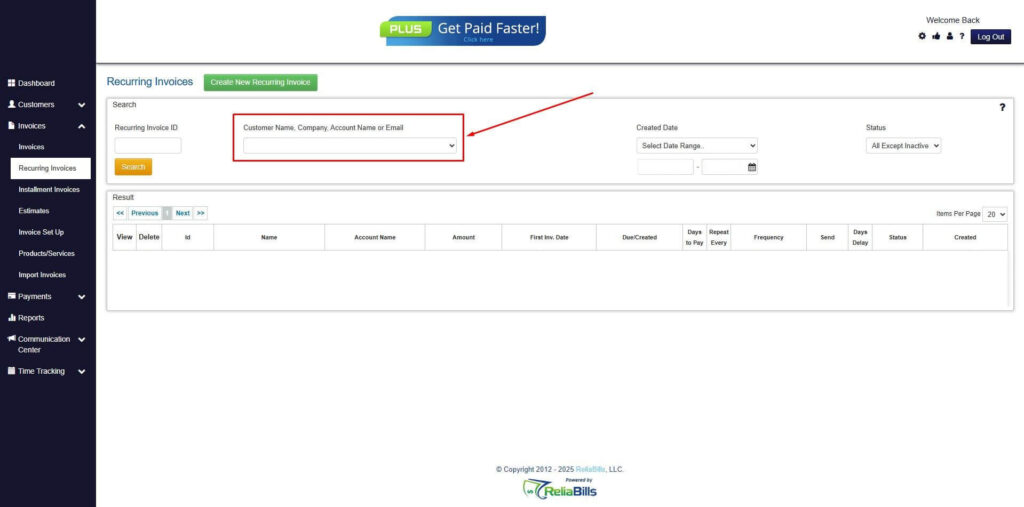
Step 3: Go to the Customers Tab
- If you have already created a customer, search for them in the Customers tab and make sure their status is “Active”.
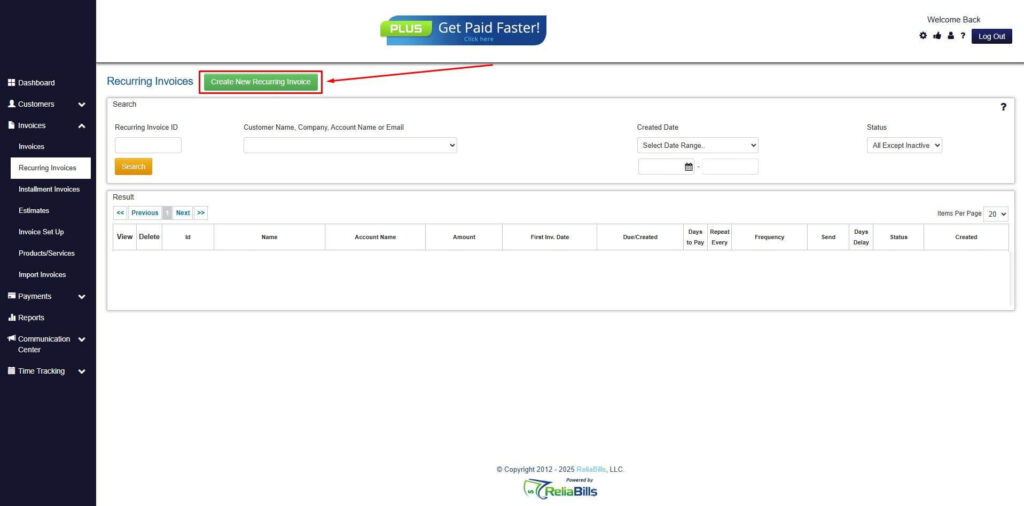
Step 4: Click the Create New Recurring Invoice
- If you haven’t created any customers yet, click the Create New Recurring Invoice to create a new customer.
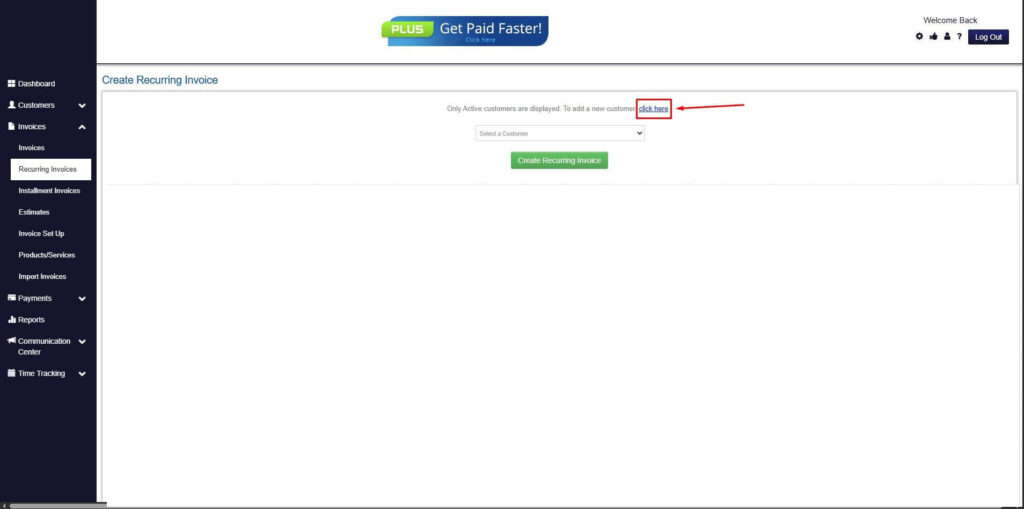
Step 5: Click on the “Click here” Button
- Click on the “Click here” button to proceed with the recurring invoice creation.
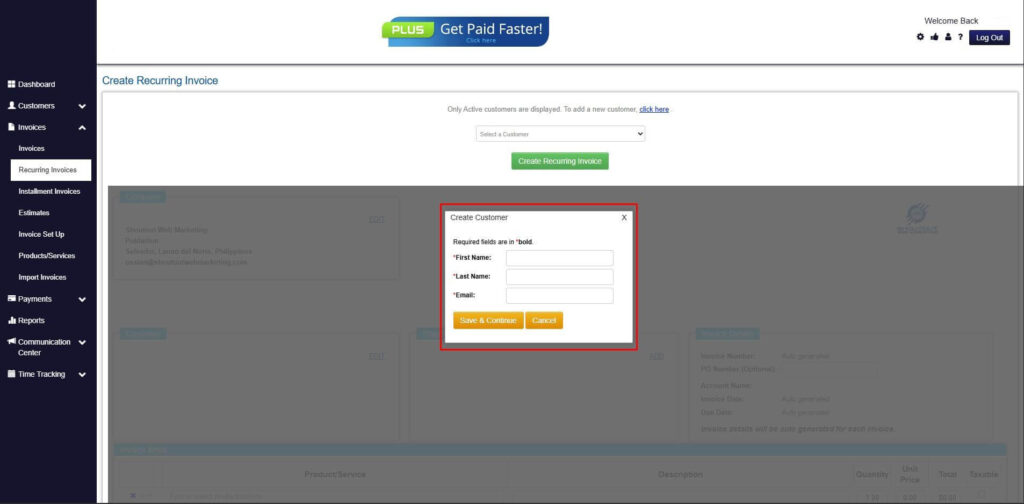
Step 6: Create Customer
- Provide your First Name, Last Name, and Email to proceed.
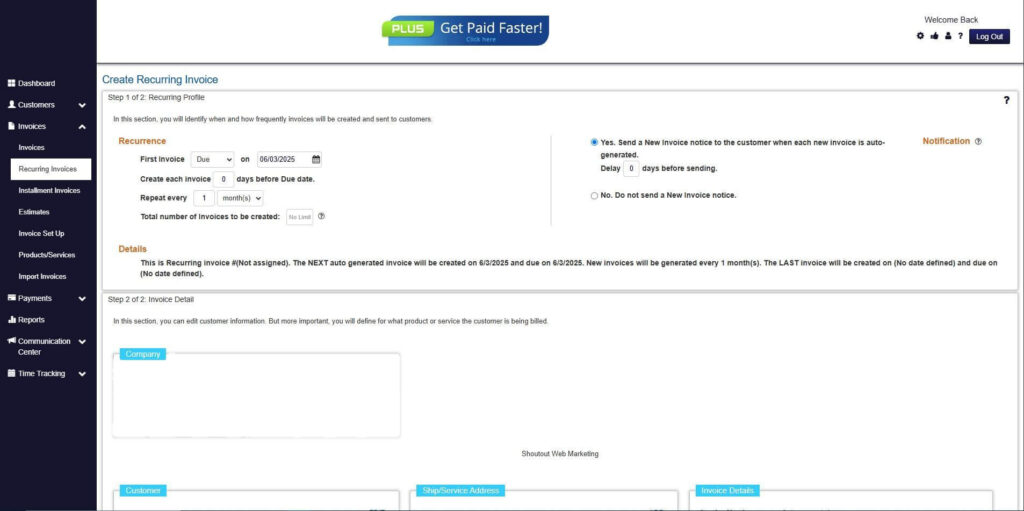
Step 7: Fill in the Create Recurring Invoice Form
- Fill in all the necessary fields.
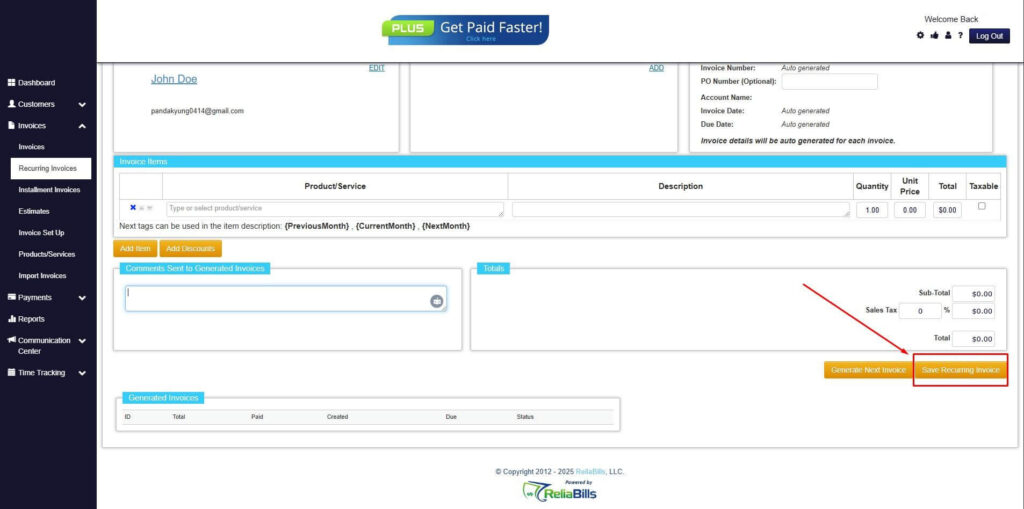
Step 8: Save Recurring Invoice
- After filling up the form, click “Save Recurring Invoice” to continue.
Step 9: Recurring Invoice Created
- Your Recurring Invoice has been created.
Frequently Asked Questions (FAQs)
1. What is a return invoice in SaaS billing?
A return invoice in SaaS billing is a document used to reverse or adjust a previously issued invoice. It ensures that billing reflects actual service usage and corrects discrepancies. This helps maintain accurate financial records. It is a key component of subscription billing systems.
2. Is a return invoice the same as a refund?
No, a return invoice is not the same as a refund. A return invoice adjusts the billing record, while a refund returns money to the customer. Both may be used together depending on the situation. Each serves a different purpose in accounting.
3. When should a SaaS company issue a return invoice?
A return invoice should be issued when billing adjustments are required, such as cancellations, downgrades, or errors. It ensures that financial records remain accurate. This is standard practice in subscription billing. Proper timing is important for compliance.
4. How are return invoices calculated?
Return invoices are typically calculated using prorated adjustments based on service usage. The system determines the unused portion of the subscription. This ensures fair billing corrections. Accurate calculations are essential.
5. Can return invoices be automated?
Yes, return invoices can be fully automated using billing software. Automation ensures accuracy and consistency. It also speeds up processing times. This is highly recommended for SaaS businesses.
Conclusion
Return invoice SaaS billing processes are essential for maintaining accurate and transparent financial operations in subscription-based businesses. They provide a structured way to handle refunds, adjustments, and billing corrections without compromising data integrity. This ensures that both businesses and customers have a clear understanding of all financial transactions. Accurate billing is critical for long-term success.
Without proper return invoice management, SaaS companies risk inaccurate reporting, customer dissatisfaction, and compliance issues. Manual processes become inefficient as billing complexity increases. This can hinder growth and create operational challenges. Implementing structured systems helps mitigate these risks.
Looking ahead, SaaS businesses that adopt automation for return invoice management will be better positioned to scale efficiently. Automated systems ensure accuracy, improve customer trust, and support financial transparency. They also enable companies to handle increasing transaction volumes with ease. For sustainable growth, investing in automation is a strategic necessity.