
Modern gyms and fitness centers operate using structured, subscription-based revenue models that depend heavily on recurring memberships, prepaid class bundles, and long-term training packages. This creates a predictable cash flow, but it also introduces ongoing billing complexity because members frequently upgrade, downgrade, pause, or cancel their plans. Every one of these changes requires accurate financial adjustments to ensure the business does not overcharge or misreport revenue. Without a reliable system, even small billing inconsistencies can accumulate into larger accounting problems over time.
Refund requests are a routine operational reality in the fitness industry rather than an exception. Members may cancel due to relocation, financial changes, injuries, dissatisfaction with facilities, or simple scheduling conflicts that prevent them from continuing their membership. In other cases, refunds are requested for unused personal training sessions, unused class credits, or accidental duplicate charges. When handled manually, these requests can quickly overwhelm staff, especially in high-volume gyms with hundreds of active members.
This is why gym refund invoice automation has become a critical operational upgrade for modern fitness businesses. Automation allows gyms to process refund requests faster, reduce administrative burden, and eliminate errors caused by manual calculations or inconsistent policies. It also ensures every refund is properly documented through structured invoices, improving transparency for both accounting teams and members. Ultimately, automation transforms refund handling from a reactive task into a controlled and scalable process.
What Are Refund Invoices in a Gym Business?
Refund invoices in a gym business are formal financial documents used to record the reversal or adjustment of previously charged membership fees, training services, or class packages. Instead of simply returning money to a member, a refund invoice clearly documents what portion of the original charge is being reversed and why. This creates a structured financial record that ensures both the business and the customer have a shared understanding of the transaction.
From an accounting perspective, refund invoices play a critical role in maintaining accurate financial statements. They ensure that revenue is adjusted correctly in the system and that financial reports reflect actual income rather than uncorrected billing data. This is especially important for gyms that rely on recurring billing cycles, where even small errors can affect monthly revenue reporting. Proper documentation also supports compliance with tax regulations and internal auditing processes.
Refund invoices should not be confused with cancellations or simple payment reversals. A cancellation stops future billing cycles, but it does not necessarily correct past charges that have already been processed. Payment reversals may occur at the transaction level through a payment gateway, but they do not always provide detailed accounting records. Refund invoices fill this gap by ensuring that every financial adjustment is fully documented and traceable within the gym’s accounting system.
Why Refund Processing Is Challenging for Gyms
High volume of recurring payments and membership changes
Gyms typically manage a large number of members who are all on recurring billing cycles, often with different pricing tiers and contract terms. Each membership may change over time due to upgrades, downgrades, freezes, or cancellations, which creates constant movement in billing data. Tracking all of these changes manually increases the risk of missed adjustments and inconsistent financial records.
Manual tracking of cancellations and refund eligibility
Without automation, staff must manually review refund requests and verify whether each member is eligible based on contract terms and usage history. This requires checking payment records, attendance logs, and membership conditions before processing any adjustment. The process is not only time-consuming but also prone to human error, especially during peak operational periods.
Prorated calculations for unused membership periods
Many gym refunds are not full refunds but partial adjustments based on unused time or sessions. Calculating these prorated amounts can become complex when memberships include discounts, promotions, or bundled services. Manual calculation increases the likelihood of inconsistencies, which can lead to disputes with members and financial discrepancies.
Delays in processing leading to customer dissatisfaction
When refund processing takes too long, members often become frustrated and lose trust in the business. Customers expect financial issues to be resolved quickly, especially when they are entitled to a refund. Delays can lead to negative reviews, increased support requests, and even membership cancellations, which directly impacts revenue and reputation.
Common Scenarios That Require Refund Invoices
Membership cancellations before billing cycle ends
When a member cancels their subscription mid-cycle, they are often entitled to a partial refund for the unused portion of their membership. A refund invoice is used to calculate and document this adjustment accurately. This ensures the customer is only charged for the time they actually used the gym.
Class package refunds for unused sessions
Many gyms sell prepaid class packages that include a fixed number of sessions. If a member is unable to use all their sessions due to schedule conflicts or personal reasons, a refund invoice is needed to calculate the remaining value. This ensures fair treatment and accurate financial reporting.
Billing errors or duplicate charges
Occasionally, system glitches or human errors can result in duplicate billing or incorrect charges. Refund invoices are used to formally correct these mistakes and ensure that financial records remain accurate. This also helps maintain customer trust by resolving issues transparently.
Service disruptions such as facility closures or maintenance
Unexpected events like equipment failure, renovations, or emergency closures can temporarily prevent members from using the facility. In such cases, gyms may issue partial refunds or credits, which must be documented through refund invoices. This ensures fairness and accountability.
Promotional or trial-based refund guarantees
Gyms often offer trial memberships or promotional guarantees to attract new members. If a member chooses not to continue after the trial period, refund invoices are used to document any promised money-back guarantees. This ensures proper accounting of marketing incentives.
What Is Automated Refund Invoicing?
Automated refund invoicing is a digital billing process where software automatically generates refund invoices based on predefined rules and triggers within a gym’s billing system. Instead of relying on staff to manually calculate and issue refunds, the system identifies qualifying events such as cancellations, disputes, or membership changes. Once detected, it automatically processes the refund documentation.
In the context of gym refund invoice automation, this process ensures that every refund is handled consistently and without delay. The system applies predefined business logic to determine eligibility, calculate refund amounts, and generate a structured invoice. This eliminates guesswork and ensures uniformity across all transactions, regardless of staff workload or experience level.
Automation also improves accuracy and compliance by ensuring that every refund is properly recorded in the accounting system. Each transaction is documented in real time, reducing the risk of missing records or inconsistent reporting. This makes financial audits significantly easier and more reliable for gym operators.
How Automated Refund Invoicing Works
Automated refund invoicing begins when the system detects a trigger event such as a membership cancellation, downgrade request, billing dispute, or service interruption. These triggers are predefined within the gym’s billing rules, allowing the system to automatically recognize when a refund process should begin. This removes the need for manual monitoring by staff.
Once triggered, the system calculates the refund amount using stored membership data and billing rules. This includes prorated calculations for unused days, session-based deductions, or promotional adjustments. The process is completed instantly, ensuring that refund amounts are accurate and consistent across all members.
After calculation, the system generates a refund invoice and updates the customer’s account in real time. Payment records, balances, and financial reports are automatically adjusted to reflect the transaction. In many cases, the system also initiates the refund through an integrated payment gateway, ensuring a seamless end-to-end workflow.
Key Features Gyms Need for Refund Automation
Recurring billing and membership management
Gyms need systems that manage ongoing subscription cycles while tracking member status in real time. This ensures refund calculations are always based on accurate membership data. It also helps reduce inconsistencies between billing and service usage.
Automated refund and invoice generation
Automation should instantly generate refund invoices without manual input. This ensures every eligible transaction is processed consistently. It also reduces administrative delays.
Proration handling for partial-period refunds
Accurate proration ensures members are charged fairly based on usage. Systems must calculate time-based or session-based refunds precisely. This prevents disputes and financial errors.
Payment gateway integration for faster reimbursements
Integration with payment processors allows refunds to be issued quickly. This reduces waiting times for members and improves satisfaction. It also streamlines financial reconciliation.
Real-time reporting and refund tracking
Gyms need visibility into all refund activity across memberships and billing cycles. Real-time dashboards provide insights into financial adjustments. This helps identify trends and improve decision-making.
Customer communication and notification tools
Automated notifications keep members informed about refund status at every stage. This improves transparency and reduces support inquiries. It also enhances overall customer experience.
Benefits of Automating Refund Invoices
Faster refund processing times
Automation significantly reduces refund processing time by eliminating manual review, calculations, and approvals for every request. Instead of waiting days for administrative handling, refunds can be triggered and completed within minutes depending on the payment gateway. This speed is especially important for gyms that handle high volumes of membership changes daily. Faster processing also reduces customer frustration and improves overall service perception.
Reduced manual errors in calculations
Manual refund calculations often lead to mistakes such as incorrect proration, duplicate refunds, or missed adjustments. Automated systems apply predefined rules consistently, ensuring every refund follows the same logic. This eliminates human error caused by fatigue, oversight, or inconsistent policy interpretation. As a result, financial records remain accurate and easier to reconcile.
Improved member satisfaction and retention
Members expect quick and transparent handling of financial requests, especially refunds. When gyms process refunds efficiently, it builds trust and reinforces professionalism. Even when a member is leaving, a smooth refund experience increases the likelihood of them returning in the future. This directly contributes to stronger long-term retention and brand reputation.
Better financial tracking and reconciliation
Automated refund invoicing ensures every transaction is logged in real time and linked to the original invoice. This makes month-end reconciliation faster and more accurate for accounting teams. It also improves visibility into revenue adjustments and financial performance trends. Gyms can better understand how refunds impact overall profitability.
Increased operational efficiency for staff
By removing repetitive refund tasks from staff workloads, automation allows employees to focus on higher-value activities like member engagement and sales. Administrative teams spend less time correcting errors or chasing approvals. This improves productivity across the organization and reduces operational stress during peak periods. It also enables gyms to scale without increasing administrative headcount.
Manual vs. Automated Refund Processing
Manual refund processing requires staff to review each request individually, verify eligibility, calculate amounts, and issue invoices one by one. This process is slow, inconsistent, and heavily dependent on human accuracy. As membership volume increases, manual systems become increasingly difficult to manage effectively.
Automated refund systems handle the entire workflow in a structured and rule-based manner. From detecting triggers to generating invoices and updating accounts, everything happens automatically. This ensures consistency, reduces delays, and eliminates many common sources of error.
For growing fitness businesses, gym refund invoice automation is essential because it allows refund operations to scale without increasing administrative workload. Automation ensures that even high volumes of refund requests are handled efficiently and accurately.
Best Practices for Implementing Refund Automation
Define clear refund and cancellation policies
Clear policies are essential for effective automation because they serve as the foundation for system rules. Gyms should define eligibility conditions, timelines, and proration rules in advance. This prevents confusion and ensures the system behaves consistently across all membership types. Well-defined policies also reduce disputes and customer complaints.
Automate prorated refund calculations
Proration logic should be embedded directly into the billing system to ensure accurate refunds based on actual usage. This includes calculating unused days, sessions, or billing cycles depending on membership structure. Automating this process eliminates manual guesswork and ensures fairness. It also standardizes refund amounts across all members.
Integrate billing with membership management systems
Refund automation works best when billing systems are fully connected to membership databases. This allows real-time updates when members cancel, pause, or modify subscriptions. Integration ensures refund calculations are based on accurate and current data. It also reduces duplication and inconsistencies across systems.
Ensure transparency in customer communication
Members should be informed at every stage of the refund process, from request submission to final approval. Automated notifications help set expectations and reduce uncertainty. Clear communication also improves trust and reduces support inquiries. Transparency is key to maintaining a positive customer experience.
Regularly audit refund processes for accuracy
Even automated systems require periodic review to ensure rules and calculations remain correct. Audits help identify outdated policies, configuration errors, or unexpected system behavior. This ensures long-term reliability and compliance with financial standards. Regular checks also improve system performance over time.
Common Mistakes Gyms Should Avoid
Delaying refunds due to manual processing
Relying on manual workflows often causes unnecessary delays in refund approval and issuance. This leads to frustrated members and negative feedback. Automation helps eliminate bottlenecks by processing refunds immediately after trigger events. Delays can also damage the gym’s reputation and reduce retention rates.
Inconsistent refund policies across memberships
Applying different refund rules across membership types without clear structure creates confusion and disputes. Inconsistency also makes automation difficult to implement effectively. Standardized policies ensure fairness and simplify system configuration. This leads to smoother operations and fewer customer complaints.
Failing to document refunds with proper invoices
Some gyms issue refunds without generating formal documentation, which creates accounting gaps. Without refund invoices, financial records become incomplete and difficult to audit. Proper documentation ensures traceability and compliance. It also protects the business during financial reviews.
Ignoring automation until refund volume increases
Many gyms delay automation until refund requests become overwhelming. This reactive approach leads to inefficiencies and rushed system implementation. Early adoption allows smoother integration and better long-term scalability. Waiting too long often increases operational costs.
Not tracking refund data for financial insights
Refund data provides valuable insights into membership trends, pricing issues, and service quality. Without tracking, gyms miss opportunities to improve operations. Automated systems make it easier to analyze refund patterns over time. This supports smarter business decisions.
How Automation Improves Member Experience
Automation significantly improves the member experience by ensuring refunds are processed quickly and accurately. Members no longer need to wait for manual approvals or follow up repeatedly with staff. This speed creates a more positive impression of the gym’s professionalism.
It also improves transparency by clearly showing how refund amounts are calculated. Members can understand exactly what they are receiving and why. This reduces misunderstandings and builds trust in the billing system.
Overall, gym refund invoice automation enhances satisfaction, reduces disputes, and strengthens long-term member relationships by creating a smoother financial experience.
Key Benefits of Refund Invoice Automation for Gyms
Faster and more reliable refund processing
Automation ensures refund requests are processed consistently without manual delays. This creates a predictable and efficient workflow for both staff and members. Reliability improves trust in the gym’s financial processes. It also reduces administrative workload significantly.
Reduced administrative workload
Staff no longer need to manually calculate refunds or process invoices individually. This frees up time for customer service, sales, and facility management tasks. Reduced workload also lowers the risk of burnout among administrative teams. It makes overall operations more efficient.
Improved billing accuracy and consistency
Automated systems apply the same rules to every refund transaction. This eliminates inconsistencies caused by human interpretation or error. Consistent billing improves financial accuracy and reduces disputes. It also simplifies auditing processes.
Better financial reporting and tracking
Every refund is automatically recorded and linked to financial reports. This provides real-time visibility into revenue adjustments. It also helps gyms understand how refunds impact monthly performance. Better reporting supports strategic planning and forecasting.
Stronger member trust and retention
When members receive fast and accurate refunds, they are more likely to trust the gym. Even during cancellations, a smooth refund experience leaves a positive impression. This increases the chance of rejoining in the future. Trust is a key factor in long-term retention.
Common Use Cases
Monthly gym membership cancellations
When members cancel mid-cycle, they are often entitled to partial refunds. Automation ensures unused membership time is calculated accurately. This makes cancellation handling faster and more transparent. It also improves financial consistency.
Personal training package refunds
Unused personal training sessions often require partial reimbursement. Automated systems calculate remaining value based on session usage. This reduces manual effort and ensures fair refunds. It also improves customer satisfaction.
Fitness class subscription adjustments
Members frequently switch class packages or modify subscriptions. Refund invoices adjust billing differences automatically. This ensures pricing changes are reflected accurately. It also keeps financial records aligned.
Seasonal membership pauses or closures
Gyms may temporarily close or offer membership freezes during off-seasons or renovations. Refund automation helps calculate compensation for lost access periods. This ensures fairness for members. It also reduces administrative complexity.
Refunds for promotional or trial offers
Trial memberships and promotional campaigns often include refund guarantees. Automation ensures these refunds are processed quickly and consistently. This supports marketing efforts and improves user experience. It also reduces manual handling for temporary offers.
How ReliaBills Helps Gyms Automate Refund Invoices
ReliaBills helps gyms streamline gym refund invoice automation by simplifying how refund requests are processed and documented across membership systems. Instead of relying on manual calculations and staff intervention, ReliaBills automates refund invoicing through structured billing workflows. This ensures that every cancellation, adjustment, or refund request is handled quickly and accurately. The result is reduced administrative pressure and improved financial consistency across all gym operations.
ReliaBills also strengthens recurring billing management by integrating membership tracking with automated refund logic. When members change plans, cancel subscriptions, or modify billing cycles, the system automatically calculates prorated adjustments and generates refund invoices. This keeps recurring billing aligned with real-time membership activity. It also reduces errors caused by manual reconciliation and ensures smoother financial operations.
With ReliaBills PLUS, gyms gain access to advanced automation tools, detailed reporting dashboards, and centralized billing control systems. These features allow fitness businesses to monitor refund activity, track financial performance, and manage large volumes of memberships with ease. The platform supports scalable operations by improving visibility and control over every billing transaction. ReliaBills PLUS ultimately enables gyms to manage refunds faster, more accurately, and with greater operational confidence.
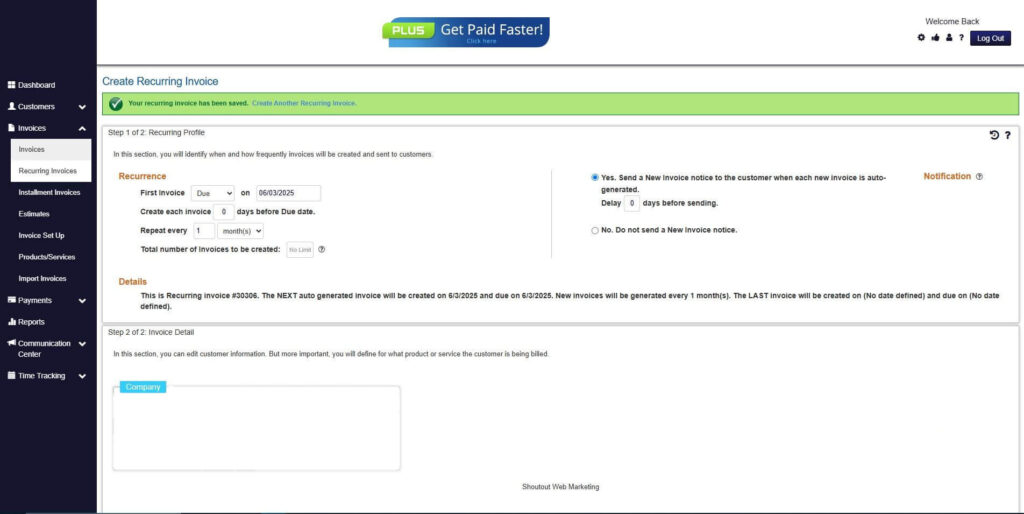
How to Create a New Recurring Invoice Using ReliaBills
Creating a New Recurring Invoice using ReliaBills involves the following steps:
Step 1: Login to ReliaBills
- Access your ReliaBills Account using your login credentials. If you don’t have an account, sign up here.

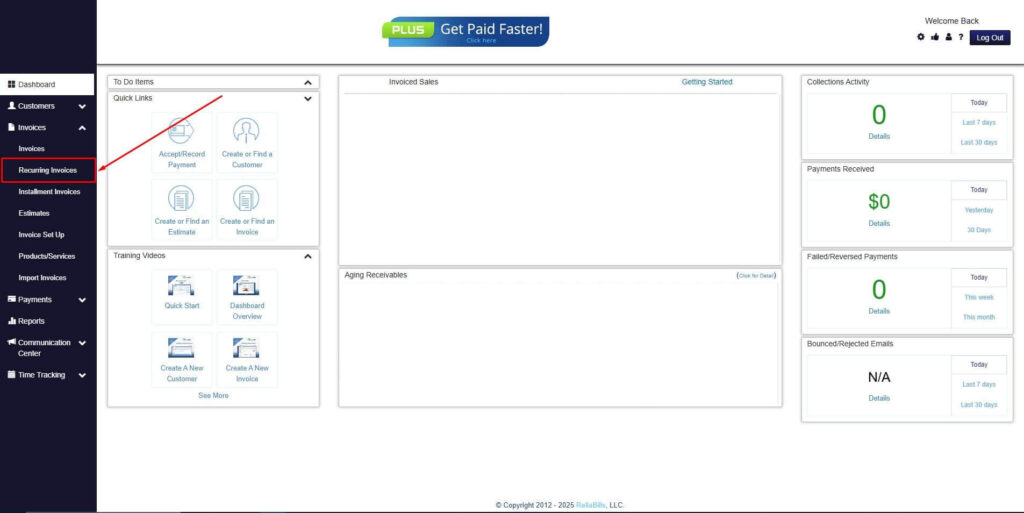
Step 2: Click on Recurring Invoices
- Navigate to the Invoices Dropdown and click on Recurring Invoices for an overview of the list of your existing customers.
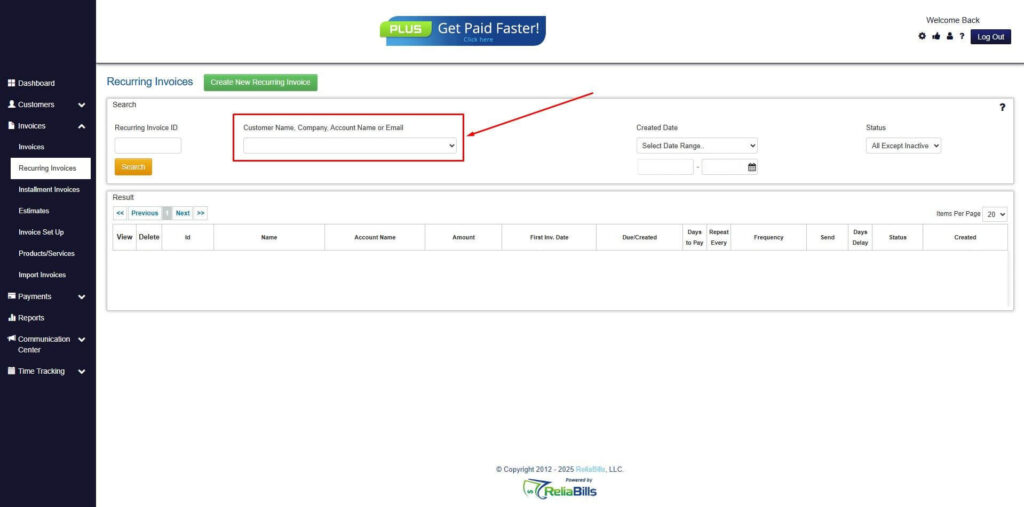
Step 3: Go to the Customers Tab
- If you have already created a customer, search for them in the Customers tab and make sure their status is “Active”.
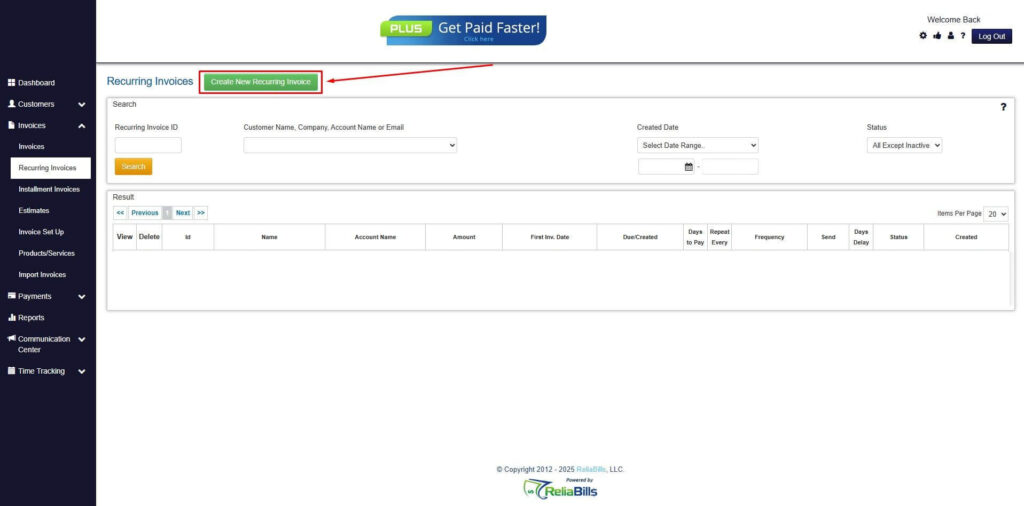
Step 4: Click the Create New Recurring Invoice
- If you haven’t created any customers yet, click the Create New Recurring Invoice to create a new customer.
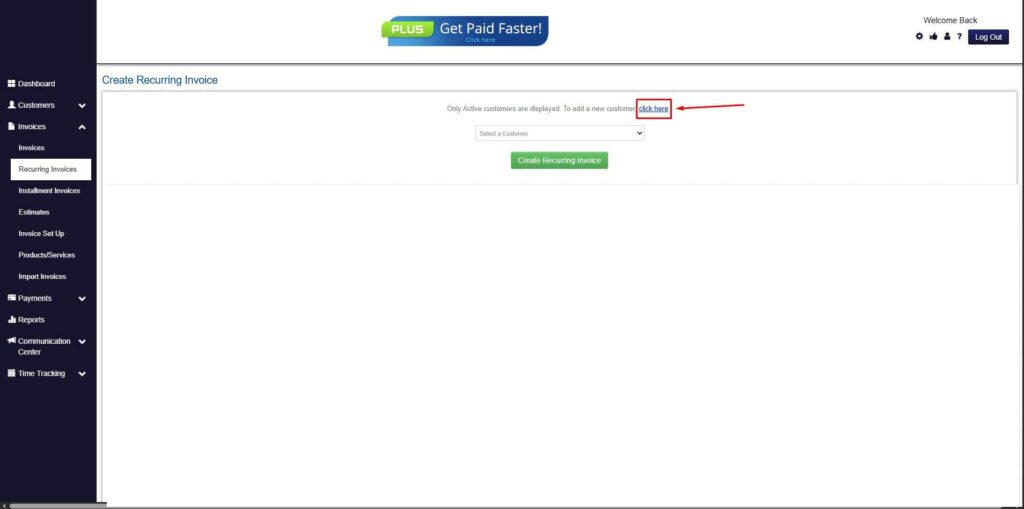
Step 5: Click on the “Click here” Button
- Click on the “Click here” button to proceed with the recurring invoice creation.
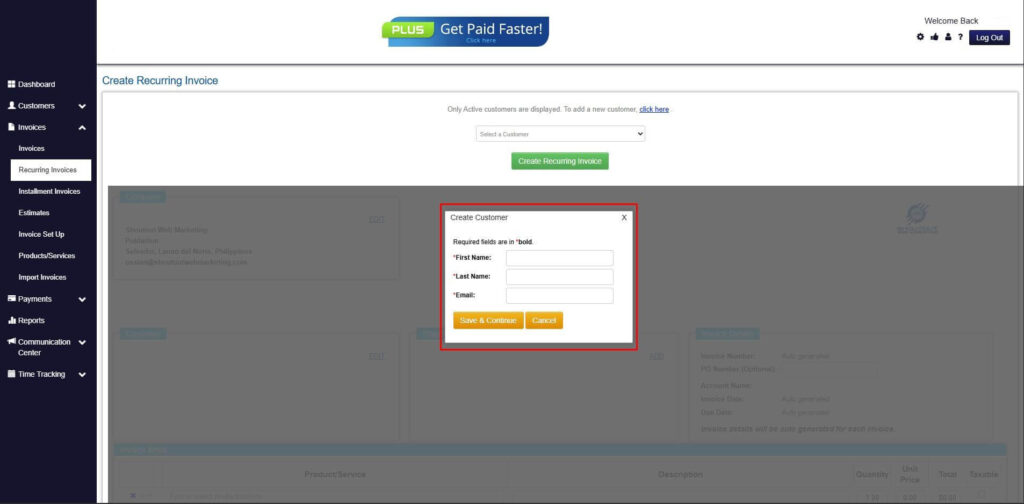
Step 6: Create Customer
- Provide your First Name, Last Name, and Email to proceed.
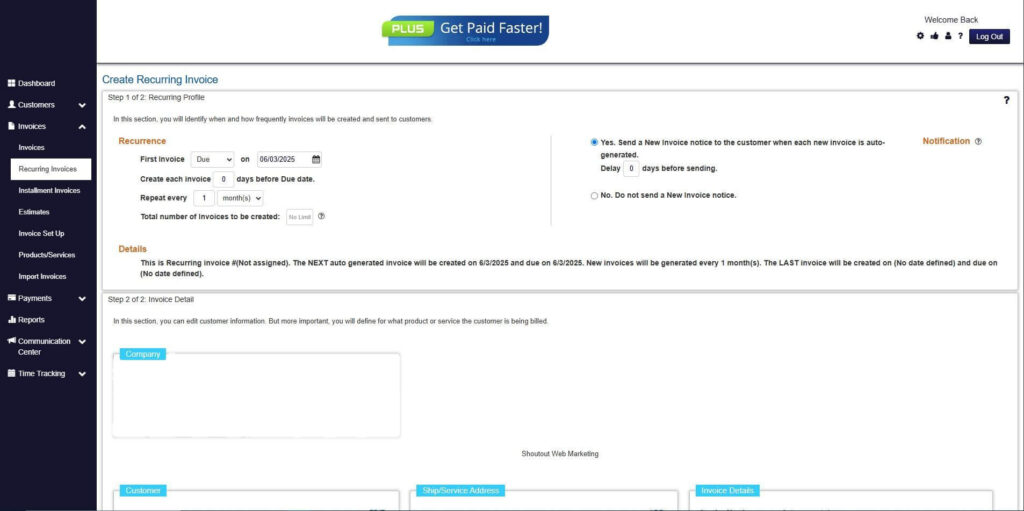
Step 7: Fill in the Create Recurring Invoice Form
- Fill in all the necessary fields.
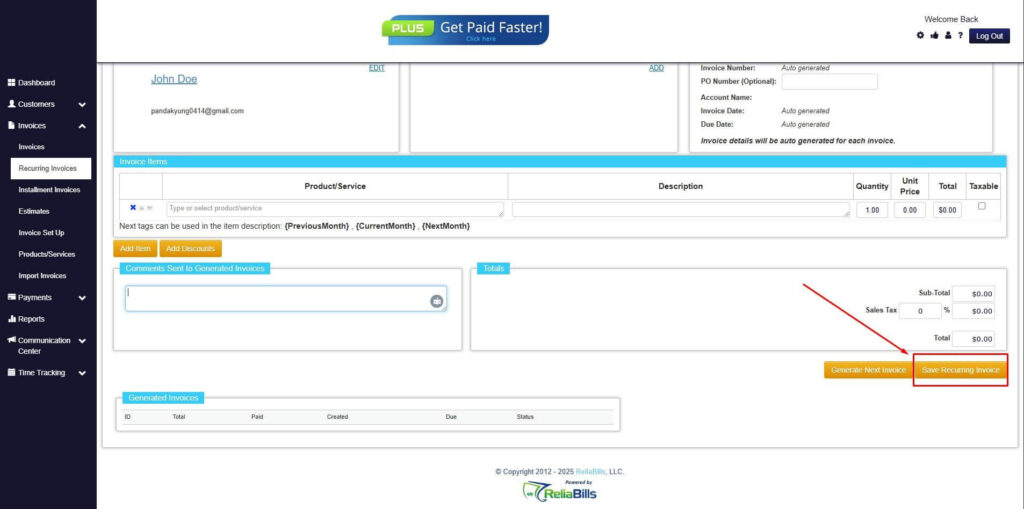
Step 8: Save Recurring Invoice
- After filling up the form, click “Save Recurring Invoice” to continue.
Step 9: Recurring Invoice Created
- Your Recurring Invoice has been created.
Frequently Asked Questions (FAQs)
1. What is a refund invoice in a gym business?
It is a formal document that records the reversal or adjustment of a gym charge. It ensures financial accuracy and transparency. It also supports proper accounting.
2. How can gyms automate refund processing?
Gyms can use billing software that includes automated refund workflows. These systems detect triggers and process refunds instantly. This reduces manual effort.
3. Are automated refunds accurate for prorated memberships?
Yes, automation uses predefined rules to calculate precise prorated amounts. This ensures fairness and consistency. It also reduces disputes.
4. How long should gym refunds take?
With automation, refunds can be processed within minutes or a few days depending on payment systems. Manual processes take much longer. Speed improves satisfaction.
5. What tools help manage gym billing and refunds?
Gym management platforms with integrated billing automation are ideal. Tools like ReliaBills support refund invoice automation. They improve efficiency and accuracy.
Conclusion
Automating refund invoices is becoming a critical necessity for gyms that want to operate efficiently in a subscription-driven environment. Manual refund processes often create delays, errors, and unnecessary administrative burden that negatively impact both staff and members. By adopting gym refund invoice automation, fitness businesses can streamline financial operations and ensure consistent accuracy.
Automation improves speed, transparency, and reliability in refund processing. It ensures members receive timely resolutions while maintaining clean and accurate financial records for the business. This balance is essential for both operational efficiency and customer satisfaction.
As the fitness industry continues to grow and become more competitive, gyms that invest in automated billing systems will be better positioned for long-term success. Adopting scalable solutions ensures smoother operations, stronger member relationships, and a more professional billing experience overall.