
Healthcare providers such as clinics, hospitals, and specialized practices manage a wide range of patient services that often require ongoing care and continuous billing. From routine checkups to long-term treatment plans, these organizations must handle multiple invoices across different timelines and service types, which increases administrative complexity. Billing becomes even more challenging when providers must account for recurring treatments, subscriptions, and installment-based care programs across many patients. Recurring invoices for healthcare provide a structured and efficient way to manage these demands while reducing manual intervention. By adopting recurring invoicing, providers can improve cash flow, enhance billing accuracy, and deliver a more consistent and transparent financial experience for patients.
Healthcare organizations also face increasing pressure to maintain financial stability while delivering high quality care. Inefficient billing processes can lead to delayed payments, errors, and patient dissatisfaction, all of which impact revenue cycles. Recurring invoices for healthcare help standardize billing operations, ensuring that charges are applied consistently and on schedule. This level of automation allows providers to reduce administrative strain while maintaining better control over their financial processes. As a result, healthcare teams can focus more on patient care rather than repetitive billing tasks.
What Are Recurring Invoices in Healthcare?
Recurring invoices for healthcare refer to automatically generated bills that are issued at scheduled intervals for ongoing medical services or structured payment plans. These invoices are commonly used for treatments that occur regularly, such as therapy sessions, chronic care management, or subscription based healthcare services. Unlike one time medical billing, recurring invoices eliminate the need to manually create new invoices for each service cycle, which improves efficiency. This ensures that patients are billed consistently and accurately based on predefined agreements and schedules. As a result, healthcare providers can maintain better financial control while minimizing billing errors and delays.
These invoices are typically configured based on treatment plans, service agreements, or subscription models established between the provider and the patient. Once set up, the system automatically generates invoices at the appropriate intervals without requiring manual input from staff. Recurring invoices for healthcare also integrate with payment systems to track balances, process payments, and send reminders. This level of automation improves both operational efficiency and financial visibility. It also ensures that billing aligns closely with the actual services delivered.
Why Healthcare Billing Is Complex
Multiple services billed at different intervals
Healthcare providers often deliver various services that follow different billing schedules, which makes invoice tracking more complicated. Some treatments may require weekly billing, while others are billed monthly or after each visit. Managing these varied timelines manually increases the likelihood of missed or delayed invoices. Recurring invoices for healthcare help standardize billing schedules and ensure that all services are invoiced correctly and on time.
Insurance coordination and patient responsibility splits
Billing in healthcare often involves coordination between insurance providers and patients, with costs divided across multiple parties. This adds complexity in determining how much the patient owes versus what insurance will cover. Errors in this process can lead to billing disputes or delayed payments. Automated systems simplify these calculations and ensure accurate billing for both insurers and patients.
Long term treatment plans requiring continuous billing
Many healthcare services involve long term care plans that require ongoing billing over several months or even years. Manually managing these invoices can be time consuming and prone to inconsistencies. Recurring invoices for healthcare allow providers to automate billing for the entire duration of a treatment plan. This ensures continuity and accuracy throughout the patient’s care journey.
High administrative workload for billing teams
Healthcare billing teams often handle a high volume of invoices, patient accounts, and payment tracking tasks. Manual processes can quickly overwhelm staff and lead to inefficiencies. This reduces productivity and increases the risk of errors. Automation helps reduce workload and allows teams to focus on higher value administrative tasks.
Strict compliance and documentation requirements
Healthcare billing must comply with strict regulatory and documentation standards, which adds another layer of complexity. Inaccurate or incomplete records can lead to compliance issues and financial penalties. Maintaining proper documentation manually is challenging and time intensive. Recurring invoicing systems help ensure that all billing records are accurate, consistent, and audit ready.
When Should Healthcare Providers Use Recurring Invoices?
Ongoing treatment plans such as physical therapy or dialysis
Recurring invoices for healthcare are ideal for treatments that occur regularly over an extended period. Services like physical therapy or dialysis require consistent billing aligned with treatment schedules. Automating invoices ensures that patients are billed accurately for each session without delays. This improves both operational efficiency and revenue consistency.
Subscription based healthcare services or memberships
Many healthcare providers now offer subscription based models that include routine care or wellness services. These services require regular billing cycles that can be difficult to manage manually. Recurring invoicing automates this process and ensures consistent billing for each subscription period. This creates a predictable revenue stream for providers.
Chronic care management programs
Patients with chronic conditions often require continuous monitoring and regular medical services. Billing for these programs involves repeated charges over time. Recurring invoices for healthcare ensure that all services are billed systematically and without interruption. This supports long term care delivery while maintaining financial accuracy.
Payment plans for large medical bills
Healthcare providers frequently offer payment plans to help patients manage high medical costs. These plans require scheduled payments over a defined period. Recurring invoicing simplifies this process by automatically generating invoices for each installment. This improves payment compliance and reduces missed payments.
Routine services with fixed schedules
Services such as monthly checkups or preventive care programs follow predictable schedules. Manually invoicing these services can lead to inconsistencies or delays. Recurring invoices for healthcare ensure that billing aligns with service frequency. This enhances reliability and improves patient satisfaction.
Types of Healthcare Services That Benefit from Recurring Billing
Physical therapy and rehabilitation sessions
Physical therapy programs often involve multiple sessions scheduled over weeks or months. Managing invoices for each session manually can be inefficient and error prone. Recurring invoices for healthcare allow providers to automate billing for these sessions. This ensures accurate and timely invoicing throughout the treatment period.
Mental health counseling and therapy programs
Therapy sessions typically occur on a regular basis, making them well suited for recurring billing. Providers can set up automated invoices that align with session schedules. This reduces administrative work and ensures consistent billing for patients. It also helps maintain financial transparency and trust.
Dental care plans and orthodontic treatments
Dental providers often offer long term treatment plans that include multiple procedures and payment installments. Managing these invoices manually can be complex. Recurring invoicing simplifies billing for these services by automating scheduled payments. This ensures that both providers and patients stay on track financially.
Telehealth and subscription based care models
Telehealth services often operate on subscription based pricing models with monthly or annual fees. Recurring invoices for healthcare make it easy to manage these billing cycles. Providers can automate invoice generation and payment collection for each subscription period. This improves efficiency and supports scalable service delivery.
Wellness programs and preventive care packages
Wellness programs and preventive care services are often offered as bundled packages with recurring fees. These services benefit from automated billing systems that ensure consistent invoicing. Recurring invoices help providers manage these programs more effectively. This enhances both operational efficiency and patient engagement.
How Recurring Invoicing Works in Healthcare
Recurring invoices for healthcare operate by establishing predefined billing schedules based on treatment plans or service agreements. Once these schedules are set, the system automatically generates invoices at the appropriate intervals without manual input. This ensures that patients receive accurate and timely bills for all ongoing services. The system also tracks payment statuses and outstanding balances in real time, providing full visibility into financial performance. Integration with payment systems further streamlines collections and reduces delays.
Recurring invoicing systems also allow healthcare providers to customize billing cycles based on patient needs and service types. For example, providers can align billing with weekly therapy sessions or monthly subscription plans. This flexibility ensures that billing accurately reflects the care being delivered. Recurring invoices for healthcare also support automated reminders and notifications, which help patients stay informed about upcoming payments. These features reduce missed payments and improve overall collection rates.
Key Benefits of Recurring Invoices for Healthcare Providers
Predictable and steady cash flow
Recurring invoices for healthcare create consistent billing cycles that support predictable revenue streams. This helps providers plan finances more effectively and reduce uncertainty. Regular payments improve overall cash flow stability. This is especially important for practices managing long term treatment programs.
Reduced administrative workload
Automating invoice generation significantly reduces the time and effort required for manual billing tasks. Staff no longer need to create and send invoices individually. This allows billing teams to focus on more strategic responsibilities. Overall efficiency improves across the organization.
Improved billing accuracy and consistency
Automated systems reduce human error by standardizing billing processes. Recurring invoices ensure that all charges are calculated correctly and applied consistently. This minimizes discrepancies and billing disputes. Accurate invoicing strengthens trust between providers and patients.
Better patient payment compliance
Recurring invoices for healthcare make it easier for patients to keep track of their payment obligations. Automated reminders and consistent billing schedules encourage timely payments. This reduces the number of overdue accounts. Improved compliance leads to better financial outcomes for providers.
Enhanced financial planning and reporting
Recurring billing systems provide detailed insights into revenue trends and financial performance. Providers can access real time data to make informed decisions. This improves budgeting and long term planning. Enhanced reporting capabilities support overall business growth.
Challenges of Manual Billing in Healthcare
Time consuming invoice creation and tracking
Manual billing requires staff to create, send, and monitor each invoice individually. This process is labor intensive and prone to delays. As patient volumes increase, the workload becomes difficult to manage. Automation eliminates these inefficiencies.
Increased risk of billing errors
Human involvement in billing increases the likelihood of mistakes such as incorrect charges or missed invoices. These errors can lead to disputes and revenue loss. Manual systems lack the safeguards needed to ensure accuracy. Recurring invoices for healthcare reduce these risks significantly.
Delays in payment collection
Manual processes often result in slower invoice delivery and delayed payments. Patients may not receive invoices on time, which impacts cash flow. Follow ups and reminders require additional effort from staff. Automated systems streamline collections and improve payment timelines.
Difficulty managing multiple patient accounts
Healthcare providers must track numerous patient accounts with different billing needs. Managing these accounts manually can lead to confusion and missed details. This increases administrative complexity. Centralized systems simplify account management and improve accuracy.
Limited visibility into outstanding balances
Manual systems often lack real time tracking capabilities. This makes it difficult to monitor unpaid invoices and financial performance. Providers may struggle to identify overdue accounts quickly. Automated tools provide clear visibility into all billing activities.
How Automation Improves Healthcare Billing
Automation transforms healthcare billing by streamlining invoice generation, reducing manual intervention, and improving overall accuracy. Recurring invoices for healthcare ensure that billing processes are consistent and aligned with treatment schedules. Real time tracking allows providers to monitor payments and outstanding balances more effectively. Automated systems also integrate with payment platforms, enabling faster and more convenient collections. This leads to improved efficiency, reduced errors, and better financial outcomes.
Automation also supports scalability by allowing healthcare providers to handle increasing patient volumes without adding administrative burden. As organizations grow, billing complexity naturally increases, making manual processes unsustainable. Recurring invoices for healthcare provide a scalable solution that adapts to these demands. Providers can manage more patients and services without compromising accuracy or efficiency. This ensures long term operational success.
Key Features to Look for in Healthcare Billing Software
Recurring invoicing and payment scheduling
A strong billing system should support automated recurring invoices based on predefined schedules. This ensures that all ongoing services are billed consistently. Flexible scheduling options allow providers to customize billing cycles. This improves efficiency and accuracy.
Secure payment processing and Auto Pay options
Healthcare billing software must offer secure payment solutions to protect patient data. Auto Pay features enable automatic payment collection for recurring invoices. This reduces missed payments and simplifies the payment process. Secure systems also build patient trust.
Patient account management and history tracking
Comprehensive account management tools allow providers to track patient billing history and payment records. This improves transparency and organization. Easy access to account details supports better decision making. It also enhances patient communication.
Compliance ready documentation and reporting
Healthcare billing systems must meet regulatory requirements and maintain accurate records. Automated documentation ensures compliance with industry standards. Detailed reporting tools provide insights into financial performance. This supports audits and regulatory reviews.
Integration with healthcare management systems
Integration with existing healthcare systems improves data accuracy and workflow efficiency. Billing software should connect seamlessly with electronic health records and practice management tools. This reduces duplication and manual data entry. Integrated systems enhance overall operational performance.
Best Practices for Implementing Recurring Invoices
Clearly communicate billing schedules to patients
Providers should ensure that patients understand when and how they will be billed. Clear communication reduces confusion and disputes. Transparent billing practices build trust. This improves the overall patient experience.
Align invoices with treatment plans and service timelines
Recurring invoices for healthcare should reflect actual treatment schedules. This ensures that billing is accurate and relevant. Aligning invoices with services improves clarity for patients. It also supports better financial tracking.
Automate recurring billing processes early
Implementing automation early helps providers avoid inefficiencies as they grow. Automated systems reduce manual workload and errors. Early adoption supports scalability. This sets a strong foundation for long term success.
Maintain transparency in pricing and charges
Providers should clearly outline all costs associated with services. Transparent pricing reduces misunderstandings and disputes. Patients are more likely to comply with payments when they understand charges. This improves financial outcomes.
Regularly review billing performance and patient accounts
Ongoing monitoring of billing processes helps identify issues early. Providers can address discrepancies and improve efficiency. Regular reviews support continuous improvement. This ensures optimal billing performance.
Common Mistakes Healthcare Providers Should Avoid
Using manual systems for recurring billing
Relying on manual processes for recurring invoices leads to inefficiencies and errors. As patient volumes increase, these systems become unsustainable. Automation is essential for managing ongoing billing effectively. Providers should transition to digital solutions early.
Inconsistent billing schedules across patients
Inconsistent billing creates confusion and disrupts cash flow. Patients may struggle to track payment obligations. Standardized schedules improve clarity and reliability. Recurring invoices for healthcare help maintain consistency.
Lack of clear communication about charges
Poor communication leads to misunderstandings and billing disputes. Patients need clear information about costs and payment schedules. Transparent communication improves trust. It also enhances payment compliance.
Failing to track overdue payments
Ignoring overdue invoices can lead to revenue loss. Providers must actively monitor outstanding balances. Automated reminders help address late payments promptly. This improves overall financial health.
Delaying adoption of automation tools
Waiting too long to adopt automation can hinder growth. Manual processes become more difficult to manage over time. Early implementation supports scalability. Providers should invest in automation as soon as possible.
How Recurring Billing Enhances Patient Experience
Recurring invoices for healthcare improve the patient experience by providing predictable and transparent billing. Patients know exactly when to expect invoices and how much they need to pay. Automated reminders help them stay on track with payments. Convenient payment options such as Auto Pay reduce friction in the payment process. This builds trust and strengthens the relationship between providers and patients.
Recurring billing also minimizes confusion by eliminating unexpected charges or inconsistent billing schedules. Patients receive clear documentation that outlines all services and associated costs. This transparency reduces disputes and improves communication between providers and patients. Recurring invoices for healthcare create a smoother financial journey for patients. As a result, satisfaction and retention rates improve.
Key Benefits of Using Recurring Invoices in Healthcare
Improved cash flow and revenue predictability
Recurring invoices create consistent revenue streams that improve financial stability. Providers can forecast income more accurately. Predictable cash flow supports better planning. This is essential for long term growth.
Reduced administrative burden
Automation reduces the need for manual billing tasks. Staff can focus on patient care and strategic initiatives. This improves productivity across the organization. Reduced workload leads to greater efficiency.
Increased billing accuracy and compliance
Automated systems ensure that invoices are accurate and compliant with regulations. This reduces the risk of errors and penalties. Consistent billing improves trust and reliability. Compliance ready systems support audits and reporting.
Better patient payment adherence
Recurring invoices make it easier for patients to meet their financial obligations. Clear schedules and automated reminders encourage timely payments. This reduces overdue accounts. Improved adherence supports financial stability.
Scalable billing operations
Recurring invoicing systems can handle increasing patient volumes without added complexity. Providers can scale operations efficiently. Automation supports growth without additional administrative burden. This enables long term success.
Common Use Cases
Clinics offering subscription based care
Many clinics provide membership programs that include routine services. Recurring invoices for healthcare simplify billing for these subscriptions. Automated systems ensure consistent payments. This supports predictable revenue.
Therapy centers with ongoing sessions
Therapy centers often schedule regular sessions over extended periods. Recurring billing ensures that each session is invoiced correctly. Automation reduces administrative workload. This improves operational efficiency.
Dental practices with installment plans
Dental treatments often involve multiple payments over time. Recurring invoices help manage these installment plans easily and accurately. Patients benefit from structured payment schedules. Providers maintain financial control.
Telehealth platforms with monthly fees
Telehealth services commonly operate on subscription models. Recurring invoices automate billing for these services. This supports scalability and efficiency. Providers can manage large patient bases effectively.
Healthcare providers managing chronic care programs
Chronic care programs require continuous monitoring and billing. Recurring invoices ensure consistent billing for these services. Automation improves accuracy and reduces errors. This supports long term patient care.
How ReliaBills Supports Healthcare Recurring Billing
ReliaBills helps healthcare providers streamline recurring invoices for healthcare by automating the entire billing lifecycle within a centralized platform. Instead of relying on manual systems, providers can generate, track, and manage patient invoices with greater accuracy and efficiency. This reduces administrative burden while ensuring every billing detail is properly recorded and aligned with treatment plans. As a result, healthcare organizations can improve financial control while delivering a smoother billing experience for patients.
ReliaBills also enhances recurring billing by aligning invoice generation with treatment schedules and ongoing care programs. Whether managing therapy sessions, subscription based services, or installment plans, the platform automatically calculates charges and generates invoices at the right intervals. This ensures consistent billing cycles and reduces the risk of missed or delayed invoices. By integrating recurring billing with payment tracking, providers can maintain reliable cash flow and improve patient payment compliance.
With ReliaBills PLUS, healthcare organizations gain access to advanced automation, reporting, and centralized billing tools designed for complex healthcare environments. It offers real time financial insights, detailed reporting, and enhanced workflow automation that improves visibility across all billing activities. These features help providers monitor patient accounts, ensure compliance, and scale operations more effectively. ReliaBills PLUS ultimately enables healthcare providers to manage recurring invoices with precision, efficiency, and confidence.
How to Create a New Recurring Invoice Using ReliaBills
Creating a New Recurring Invoice using ReliaBills involves the following steps:
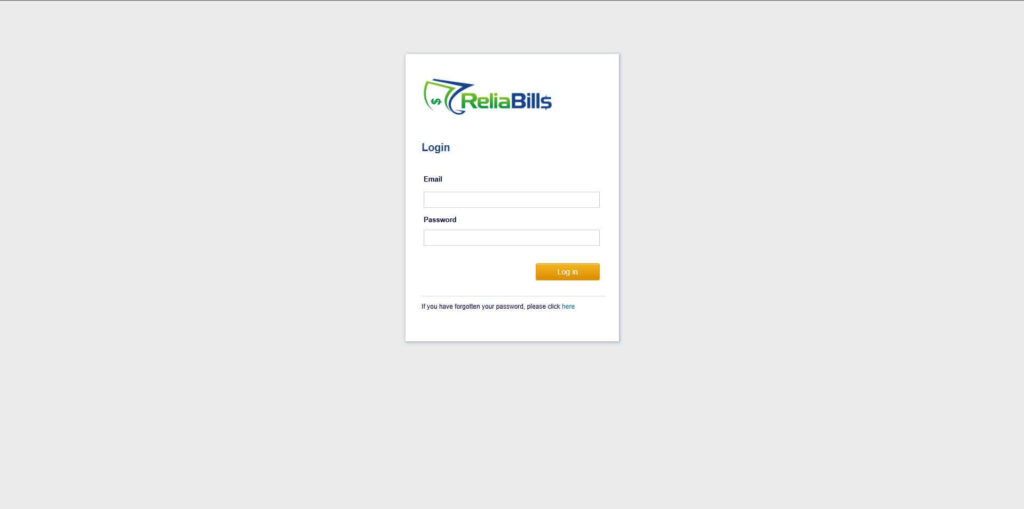
Step 1: Login to ReliaBills
- Access your ReliaBills Account using your login credentials. If you don’t have an account, sign up here.
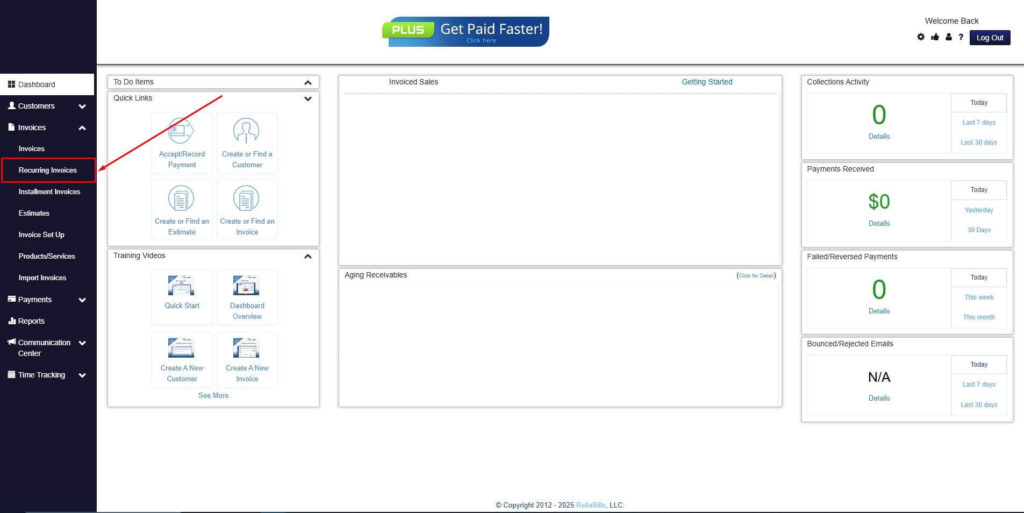
Step 2: Click on Recurring Invoices
- Navigate to the Invoices Dropdown and click on Recurring Invoices for an overview of the list of your existing customers.
Step 3: Go to the Customers Tab
- If you have already created a customer, search for them in the Customers tab and make sure their status is “Active”.
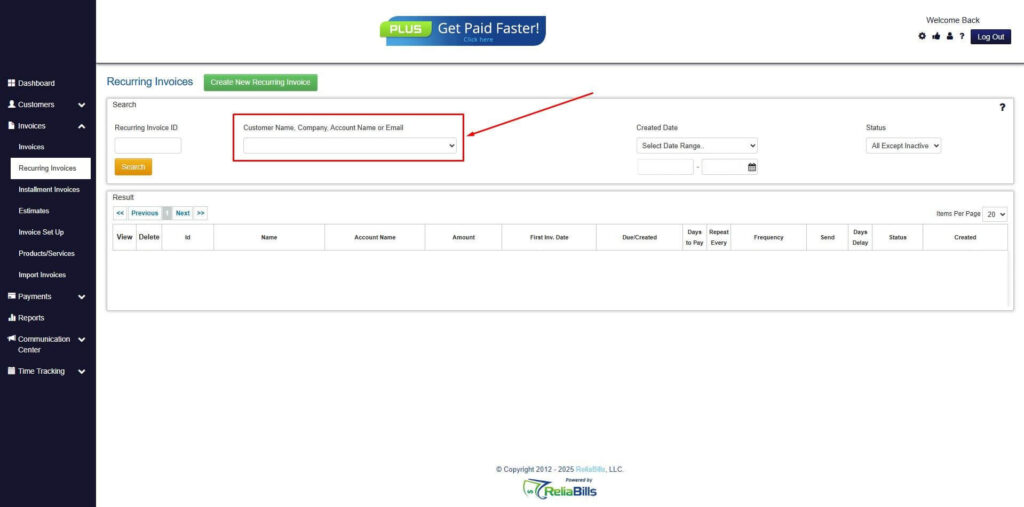
Step 4: Click the Create New Recurring Invoice
- If you haven’t created any customers yet, click the Create New Recurring Invoice to create a new customer.
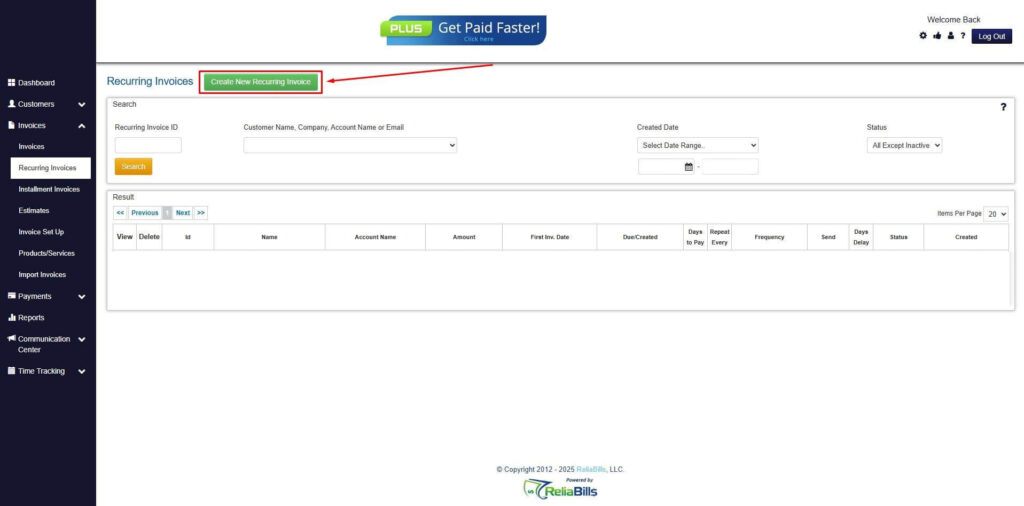
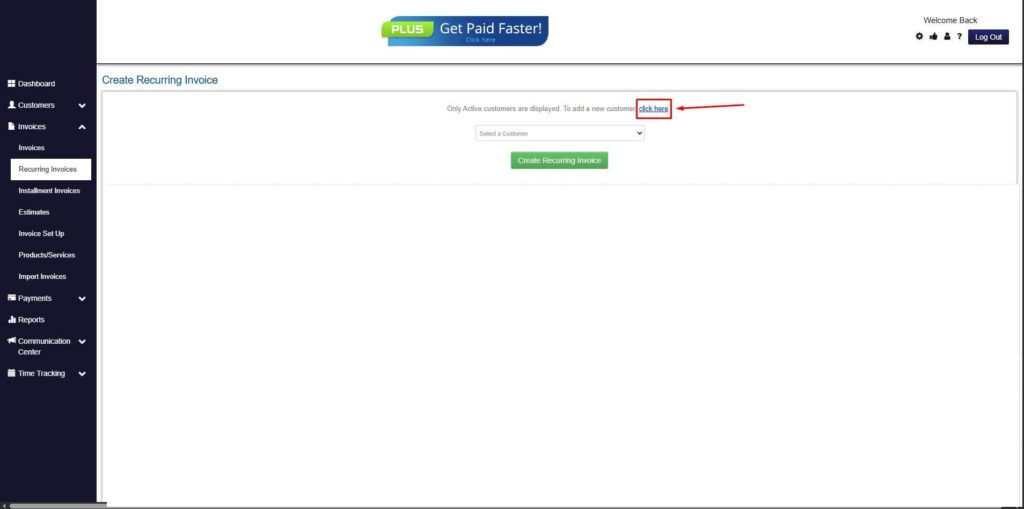
Step 5: Click on the “Click here” Button
- Click on the “Click here” button to proceed with the recurring invoice creation.
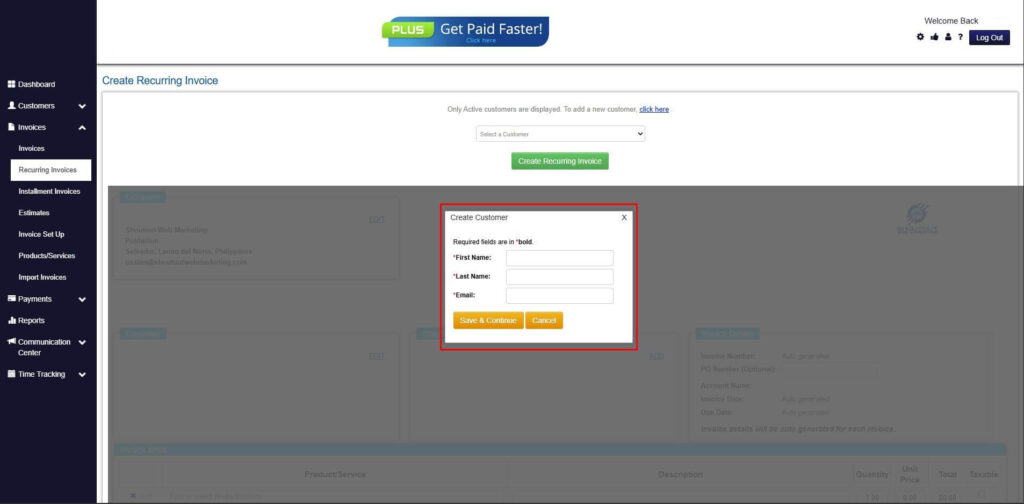
Step 6: Create Customer
- Provide your First Name, Last Name, and Email to proceed.
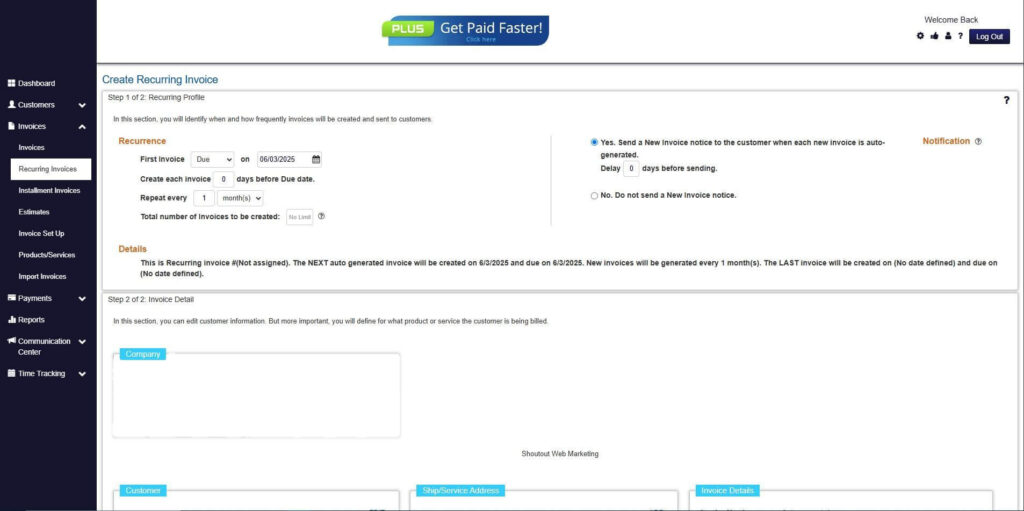
Step 7: Fill in the Create Recurring Invoice Form
- Fill in all the necessary fields.
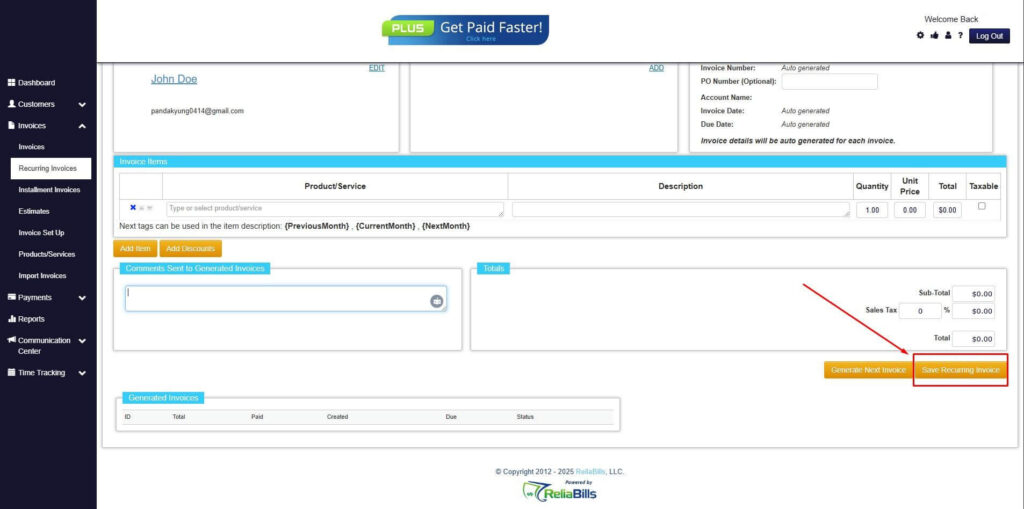
Step 8: Save Recurring Invoice
- After filling up the form, click “Save Recurring Invoice” to continue.
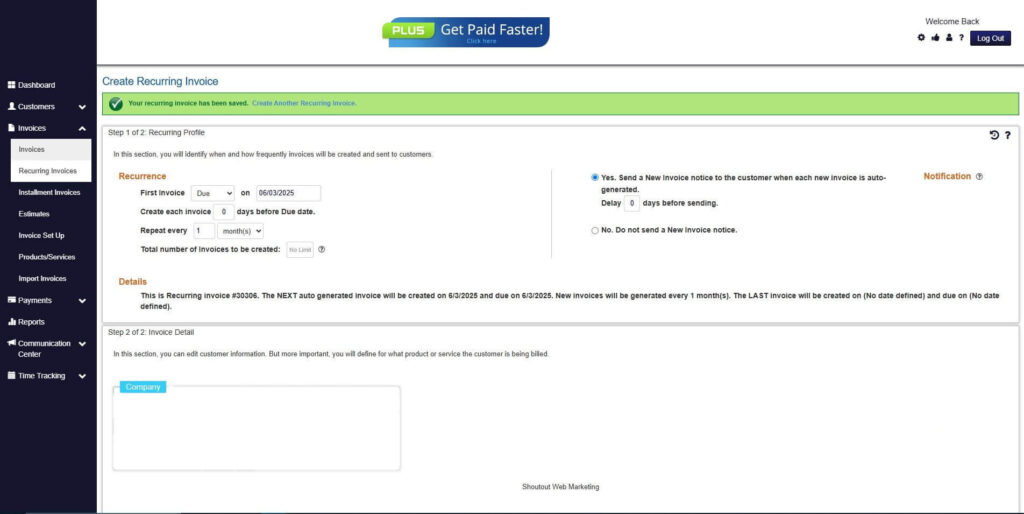
Step 9: Recurring Invoice Created
- Your Recurring Invoice has been created.
Frequently Asked Questions (FAQs)
1. What are recurring invoices in healthcare?
Recurring invoices in healthcare are automated bills generated at scheduled intervals for ongoing services or payment plans. They are commonly used for treatments that require continuous care. These invoices eliminate the need for manual billing. This ensures consistency and accuracy.
2. When should healthcare providers use recurring billing?
Providers should use recurring billing for services that occur regularly or require installment payments. This includes therapy sessions, subscriptions, and chronic care programs. Recurring invoices for healthcare ensure consistent billing. They also improve efficiency and cash flow.
3. Are recurring invoices compliant with healthcare regulations?
Yes, when implemented correctly, recurring invoicing systems can support compliance requirements. They maintain accurate records and documentation. Automated systems reduce errors and improve audit readiness. This helps providers meet regulatory standards.
4. How do recurring invoices improve cash flow?
Recurring invoices ensure consistent billing and timely payments. Automated reminders encourage patients to pay on time. This reduces delays and overdue accounts. As a result, providers experience more stable cash flow.
5. What tools help automate healthcare billing?
Modern billing platforms offer features such as recurring invoicing, payment automation, and reporting. These tools streamline billing processes and improve accuracy. Integration with healthcare systems enhances efficiency. Automation supports scalable operations.
Conclusion
Recurring invoices for healthcare provide a powerful solution for managing complex billing environments in clinics, hospitals, and specialized practices. By automating billing for ongoing services, providers can reduce errors, improve efficiency, and ensure consistent revenue collection. These systems also enhance the patient experience by offering clear, predictable billing and convenient payment options. As healthcare organizations continue to grow and evolve, adopting recurring invoicing becomes essential for maintaining financial accuracy and operational scalability. Moving toward automated billing solutions positions providers for long term success and improved patient satisfaction.