

SaaS businesses operate on subscription-based models that rely heavily on recurring revenue to sustain growth and stability. In this environment, invoicing is not just a back-office task but a critical financial function that directly impacts cash flow, customer retention, and revenue accuracy. Even small inconsistencies in billing can lead to compounding issues over time, especially as customer volume increases. This makes billing infrastructure a foundational component of any successful SaaS operation.
In the early stages, many SaaS startups adopt manual invoicing processes because they are simple to implement and require minimal upfront investment. Founders and small teams often rely on spreadsheets or basic tools to generate and send invoices. While this approach may work initially, it quickly becomes inefficient as subscription complexity grows. The risks associated with manual invoicing in SaaS environments begin to surface as billing scenarios become more dynamic.
Understanding manual invoicing risks SaaS businesses face is essential for making informed decisions about scaling operations. What starts as a manageable process can evolve into a major operational bottleneck that affects multiple areas of the business. From revenue leakage to customer dissatisfaction, the consequences can be significant. Recognizing these risks early allows SaaS companies to transition toward more scalable and reliable billing solutions.
What Is Manual Invoicing in SaaS?
Manual invoicing in SaaS refers to the process of creating, sending, and managing invoices without the use of automated billing systems. This typically involves using spreadsheets, email, and standalone tools that are not fully integrated with subscription management platforms. Teams must manually calculate charges, apply adjustments, and track payments for each customer. This approach requires constant oversight and increases the likelihood of inconsistencies.
In many cases, manual invoicing relies on disconnected systems that do not communicate with each other. For example, customer data may exist in one platform, while billing records are maintained separately. This lack of integration creates inefficiencies and makes it difficult to maintain accurate records. As a result, finance teams spend more time reconciling data and correcting errors.
Startups often choose manual invoicing because it offers flexibility and low initial cost. However, as the customer base expands and billing scenarios become more complex, manual processes struggle to keep up. Subscription changes, usage-based pricing, and proration introduce layers of complexity that are difficult to manage manually. This is where manual invoicing risks SaaS businesses begin to significantly impact operations.
Why SaaS Billing Is Naturally Complex
Subscription-based pricing with recurring billing cycles
SaaS companies rely on recurring billing cycles that require invoices to be generated on a consistent schedule. Each subscription must be tracked accurately to ensure customers are billed correctly every cycle. Manual processes make it difficult to maintain consistency across hundreds or thousands of accounts. As the number of subscriptions grows, the risk of missed or incorrect invoices increases significantly.
Frequent plan upgrades, downgrades, and cancellations
Customers often change their subscription plans based on their needs, which introduces dynamic billing scenarios. Each change requires recalculating charges and updating invoices accordingly. Managing these adjustments manually can lead to errors and delays. This complexity is one of the primary contributors to manual invoicing risks SaaS companies face.
Usage-based or tiered pricing structures
Many SaaS businesses implement pricing models based on usage or tiered service levels. These models require precise tracking of customer activity and accurate billing calculations. Manual invoicing systems are not well-suited to handle such variability. Errors in usage tracking or pricing tiers can result in incorrect invoices and customer dissatisfaction.
Proration for mid-cycle changes
When customers upgrade or downgrade mid-cycle, proration must be applied to adjust billing amounts fairly. Calculating prorated charges manually is time-consuming and prone to mistakes. Even small errors can lead to disputes or revenue discrepancies. Automated systems handle proration seamlessly, reducing these risks.
High transaction volume as customer base grows
As SaaS businesses scale, the number of transactions increases rapidly. Managing a high volume of invoices manually becomes unsustainable. Teams may struggle to keep up with demand, leading to delays and errors. This growth amplifies the impact of manual invoicing risks SaaS companies experience.
Major Risks of Manual Invoicing in SaaS
Increased likelihood of human errors in invoices
Manual data entry increases the chances of mistakes in pricing, billing periods, and customer details. These errors can lead to incorrect invoices that require time-consuming corrections. Even minor inaccuracies can damage customer trust. Over time, repeated errors can harm the company’s reputation.
Missed or delayed invoice generation
Without automation, it is easy to forget or delay sending invoices. Missed invoices directly impact revenue collection and cash flow. Delays can also create confusion for customers expecting regular billing. Consistency is difficult to maintain with manual processes.
Inconsistent billing cycles across customers
Manual invoicing often leads to inconsistencies in billing schedules. Different customers may be billed at different times, creating operational inefficiencies. This inconsistency complicates revenue tracking and forecasting. It also affects the overall customer experience.
Revenue leakage from incorrect charges
Incorrect pricing, missed charges, or billing errors can result in lost revenue. These issues are often difficult to detect without real-time tracking systems. Over time, small discrepancies can accumulate into significant financial losses. Revenue leakage is one of the most critical manual invoicing risks SaaS businesses face.
Difficulty managing subscription changes
Handling subscription changes manually requires constant updates and recalculations. This increases the workload for finance teams and introduces more opportunities for error. Managing these changes at scale becomes increasingly difficult. Automation is essential to handle dynamic subscription environments effectively.
Financial Risks and Revenue Leakage
Manual invoicing increases the likelihood of underbilling or overbilling customers, both of which can have serious financial consequences. Underbilling results in lost revenue, while overbilling can damage customer trust and lead to refunds or disputes. These issues are often difficult to detect without automated tracking systems that provide real-time visibility into billing activities. As a result, discrepancies may go unnoticed for extended periods.
Missed invoices are another common issue associated with manual processes. When invoices are not generated or sent on time, revenue collection is delayed or lost entirely. This directly impacts cash flow and financial stability, especially for SaaS businesses that rely on recurring income. Consistent billing is essential for maintaining predictable revenue streams.
Over time, small billing errors can compound into significant financial losses. Without proper systems in place, it becomes challenging to identify patterns or recurring issues. This lack of visibility makes it harder to implement corrective measures. Addressing manual invoicing risks SaaS businesses face requires a shift toward automated and integrated billing solutions.
Operational Inefficiencies and Time Costs
Time-consuming invoice creation and distribution
Creating invoices manually for each customer requires significant time and effort. Teams must input data, verify details, and send invoices individually. This repetitive process reduces productivity and limits scalability. Automation can significantly reduce this workload.
Manual reconciliation of payments and records
Reconciling payments with invoices manually is a complex and error-prone task. Finance teams must cross-check records across multiple systems. This increases the risk of discrepancies and delays in financial reporting. Automated reconciliation improves accuracy and efficiency.
Increased administrative workload for finance teams
Manual invoicing places a heavy burden on finance teams, requiring them to handle repetitive tasks daily. This reduces their ability to focus on strategic financial planning. As the business grows, the workload becomes unsustainable. Automation helps streamline operations and reduce stress.
Slower billing cycles impacting cash flow
Delays in invoice generation and delivery slow down the entire billing cycle. This leads to delayed payments and reduced cash flow. Consistent and timely invoicing is essential for financial stability. Manual processes often fail to meet this requirement.
Limited scalability without hiring additional staff
As transaction volumes increase, manual processes require more personnel to manage billing tasks. This increases operational costs and reduces efficiency. Scaling becomes dependent on workforce expansion rather than system improvements. Automated solutions enable scalable growth without additional overhead.
Impact on Customer Experience
Manual invoicing can negatively impact the customer experience by introducing delays and inaccuracies in billing. Customers expect clear, timely, and accurate invoices, especially in subscription-based services where consistency is key. When invoices are late or incorrect, it creates confusion and frustration. This can lead to increased support requests and strained customer relationships.
Billing errors often result in disputes that require time and effort to resolve. These disputes can damage trust and reduce customer satisfaction, particularly if they occur frequently. A poor billing experience can overshadow the value of the product or service itself. This makes invoicing a critical component of customer retention.
Lack of automated reminders also contributes to late payments and communication gaps. Customers may forget due dates or miss invoices entirely without proper notifications. This affects both the customer and the business. Addressing manual invoicing risks SaaS companies face can significantly improve the overall customer experience.
Compliance and Reporting Challenges
Difficulty maintaining accurate financial records
Manual systems make it challenging to maintain consistent and accurate financial records. Data may be scattered across multiple tools, increasing the risk of discrepancies. This complicates financial reporting and analysis. Accurate records are essential for compliance and decision-making.
Challenges in meeting tax and regulatory requirements
SaaS businesses must comply with various tax laws and regulations, which require precise documentation. Manual invoicing increases the risk of errors in tax calculations and reporting. Non-compliance can result in penalties and legal issues. Automated systems help ensure compliance.
Limited audit trails for invoice adjustments
Manual processes often lack detailed audit trails for tracking changes to invoices. This makes it difficult to verify adjustments or investigate discrepancies. Audit trails are critical for transparency and accountability. Automated systems provide comprehensive tracking.
Errors in revenue recognition reporting
Revenue recognition requires accurate tracking of billing cycles and customer payments. Manual invoicing increases the risk of errors in recognizing revenue correctly. These errors can impact financial statements and investor confidence. Automation ensures compliance with accounting standards.
Increased risk during financial audits
During audits, incomplete or inaccurate records can create significant challenges. Manual systems make it harder to provide the necessary documentation. This increases the risk of audit findings and penalties. Automated systems simplify audit preparation.
Challenges in Scaling SaaS Operations
Manual invoicing processes are not designed to support rapid business growth. As SaaS companies acquire more customers, the complexity of billing increases significantly. Managing this complexity manually leads to inefficiencies and higher error rates. This creates operational bottlenecks that slow down growth.
Teams often become overwhelmed with repetitive billing tasks, reducing their ability to focus on strategic initiatives. Instead of driving innovation, resources are spent on maintaining outdated processes. This limits the company’s ability to compete in a fast-paced market. Efficiency becomes a critical factor in scaling successfully.
Without automation, scaling requires hiring additional staff to handle increased workload. This raises operational costs and reduces overall profitability. Automated billing systems provide a more sustainable solution by handling increased volume without additional resources. Addressing manual invoicing risks SaaS businesses face is essential for long-term scalability.
Common Mistakes SaaS Businesses Make with Manual Invoicing
Relying on spreadsheets for subscription billing
Spreadsheets are not designed to handle complex subscription billing scenarios. They require manual updates and are prone to errors. This limits efficiency and accuracy. Modern billing systems offer more reliable solutions.
Delaying automation until problems arise
Many SaaS businesses wait too long before adopting automated solutions. By the time issues become apparent, they are often more difficult to resolve. Early adoption of automation prevents many common problems. Proactive decisions lead to better outcomes.
Not standardizing billing processes
Inconsistent billing practices create confusion and inefficiencies. Standardization ensures consistency and accuracy across all invoices. It also simplifies management and reporting. Consistent processes improve overall performance.
Ignoring the importance of real-time tracking
Without real-time tracking, it is difficult to monitor payments and identify issues quickly. This delays corrective actions and impacts cash flow. Real-time visibility is essential for effective billing management. Automation provides this capability.
Underestimating billing complexity
SaaS billing involves multiple variables that can quickly become complex. Underestimating this complexity leads to inadequate systems and processes. This increases the risk of errors and inefficiencies. Recognizing complexity is the first step toward improvement.
How Automation Eliminates These Risks
Automation addresses manual invoicing risks SaaS businesses face by streamlining the entire billing process. It enables automatic generation and delivery of invoices based on predefined schedules and customer data. This ensures consistency and reduces the likelihood of errors. As a result, businesses can maintain accurate and reliable billing operations.
Automated systems also ensure that billing cycles are consistent across all customers. They handle complex calculations such as proration, usage-based pricing, and subscription changes with precision. This eliminates the need for manual intervention and reduces administrative workload. Efficiency and accuracy are significantly improved.
Real-time visibility into payments and revenue allows businesses to monitor financial performance effectively. Automated systems provide insights that help identify discrepancies and optimize billing processes. This enhances decision-making and financial planning. Transitioning to automation is essential for scalable and efficient SaaS operations.
Key Features of Automated Invoicing Solutions
Recurring billing and subscription management
Automated systems manage recurring billing cycles and subscription plans seamlessly. They ensure invoices are generated consistently and accurately. This reduces manual effort and improves efficiency. Subscription management becomes more streamlined.
Automated proration and billing adjustments
Proration and billing adjustments are handled automatically, reducing errors. This ensures fair and accurate billing for customers. Manual calculations are no longer required. Accuracy and consistency are improved.
Payment gateway integration and Auto Pay
Integration with payment gateways enables seamless transactions and faster payments. Auto Pay features ensure timely collection of recurring charges. This improves cash flow and reduces late payments. Customers benefit from convenience.
Real-time analytics and reporting
Real-time data provides insights into billing performance and revenue trends. Businesses can make informed decisions. This improves financial planning and forecasting. Visibility enhances control.
Dunning management for overdue payments
Automated reminders and dunning processes help manage overdue invoices effectively. This reduces outstanding balances and improves collections. Communication with customers is improved. Consistent follow-ups enhance payment behavior.
Key Benefits of Moving Away from Manual Invoicing
Improved billing accuracy and consistency
Automation reduces errors and ensures consistent billing practices. This improves reliability and customer trust. Accurate invoices reduce disputes. Consistency enhances professionalism.
Faster invoice generation and payment collection
Invoices are generated and delivered instantly, reducing delays. Faster billing leads to quicker payments. This improves cash flow. Efficiency is significantly increased.
Reduced operational workload
Automation eliminates repetitive tasks, freeing up time for strategic activities. This improves productivity and efficiency. Teams can focus on growth initiatives. Workload is significantly reduced.
Better financial visibility and reporting
Real-time insights provide a clear view of financial performance. Businesses can track revenue and identify trends. This supports better decision-making. Visibility improves control.
Enhanced customer satisfaction
Accurate and timely invoices improve the customer experience. This builds trust and reduces disputes. Customers appreciate consistency. Satisfaction leads to retention.
Common Use Cases
SaaS startups transitioning from manual to automated billing
Startups often begin with manual processes and transition to automation as they grow. This shift improves efficiency and scalability. It also reduces errors. Automation supports long-term success.
Subscription-based platforms with growing user bases
As user numbers increase, billing complexity grows. Automated systems handle this complexity efficiently. This ensures consistent billing. Growth becomes manageable.
Businesses offering tiered or usage-based pricing
Complex pricing models require accurate calculations. Automation ensures precision and consistency. This reduces errors. Customer trust is maintained.
Companies experiencing billing errors or revenue leakage
Frequent errors indicate the need for better systems. Automation addresses these issues effectively. This improves accuracy and revenue. Financial performance is enhanced.
SaaS firms preparing for scale
Scaling requires efficient and reliable billing systems. Automation supports growth without increasing workload. This improves efficiency. Businesses can scale confidently.
How ReliaBills Helps SaaS Businesses Avoid Invoicing Risks
ReliaBills helps SaaS businesses minimize manual invoicing risks SaaS companies commonly face by providing a fully automated invoicing platform designed for accuracy and efficiency. Instead of relying on spreadsheets or disconnected systems, businesses can manage invoice creation, tracking, and adjustments within a single centralized environment. This reduces human error, eliminates missed invoices, and ensures every transaction is recorded correctly. As a result, SaaS companies gain stronger financial control while improving billing consistency and operational reliability.
ReliaBills also enhances recurring billing processes by automating subscription-based invoicing and handling complex billing scenarios with ease. Whether customers upgrade, downgrade, or cancel mid-cycle, the platform automatically calculates prorated charges and generates accurate invoices in real time. This ensures that recurring billing cycles remain consistent, predictable, and aligned with actual service usage. By integrating subscription management with invoicing, businesses can reduce revenue leakage while maintaining a seamless billing experience for customers.
With ReliaBills PLUS, SaaS companies can take billing automation to a more advanced level with enhanced tools built for scalability and precision. It offers deeper financial reporting, real-time analytics, and centralized billing controls that provide full visibility across all transactions. These capabilities allow businesses to identify discrepancies quickly, maintain compliance, and optimize revenue operations as they grow. ReliaBills PLUS ultimately empowers SaaS companies to eliminate invoicing risks while supporting long term, scalable growth.
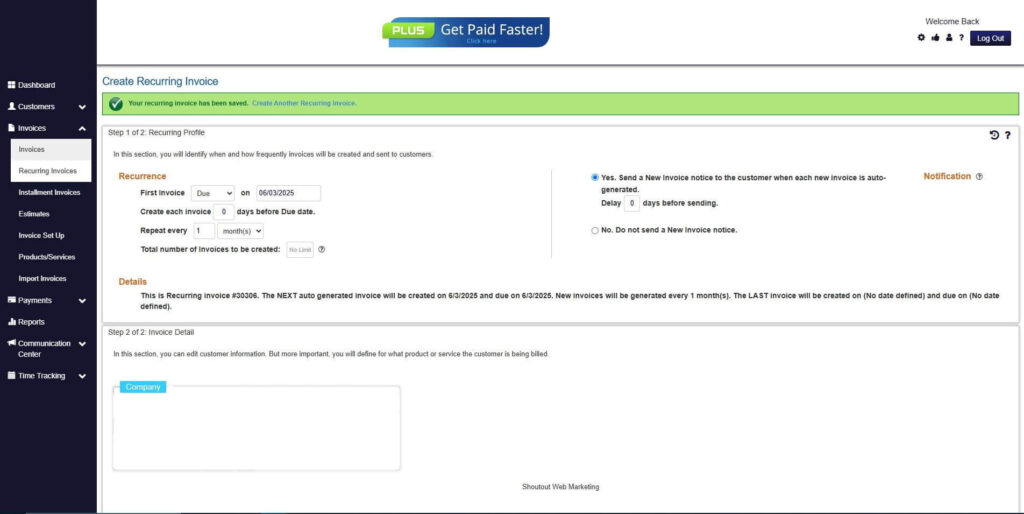
How to Create a New Recurring Invoice Using ReliaBills
Creating a New Recurring Invoice using ReliaBills involves the following steps:
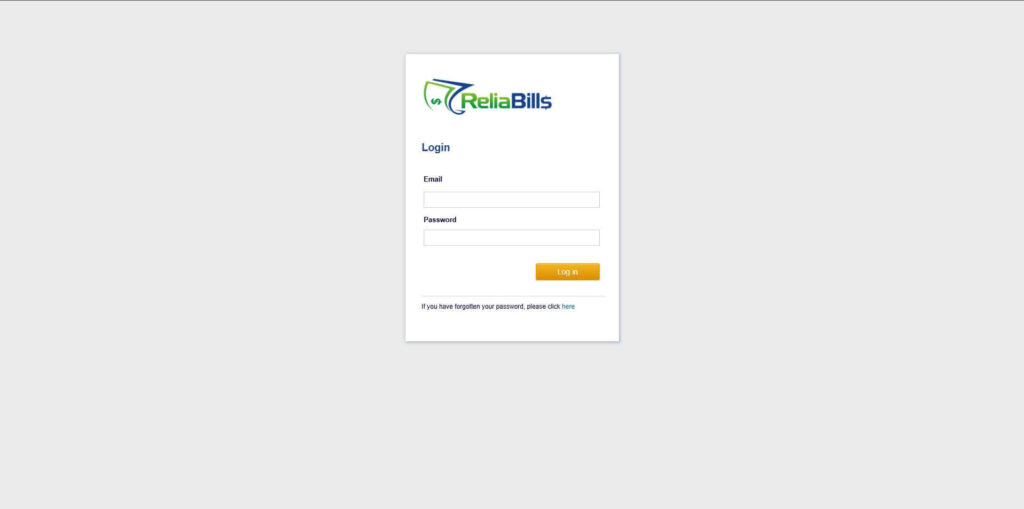
Step 1: Login to ReliaBills
- Access your ReliaBills Account using your login credentials. If you don’t have an account, sign up here.
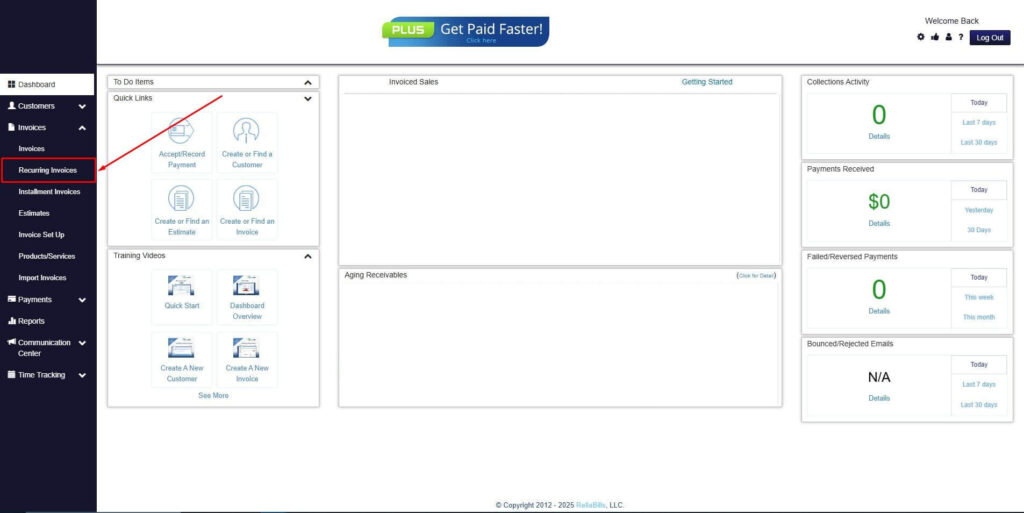
Step 2: Click on Recurring Invoices
- Navigate to the Invoices Dropdown and click on Recurring Invoices for an overview of the list of your existing customers.
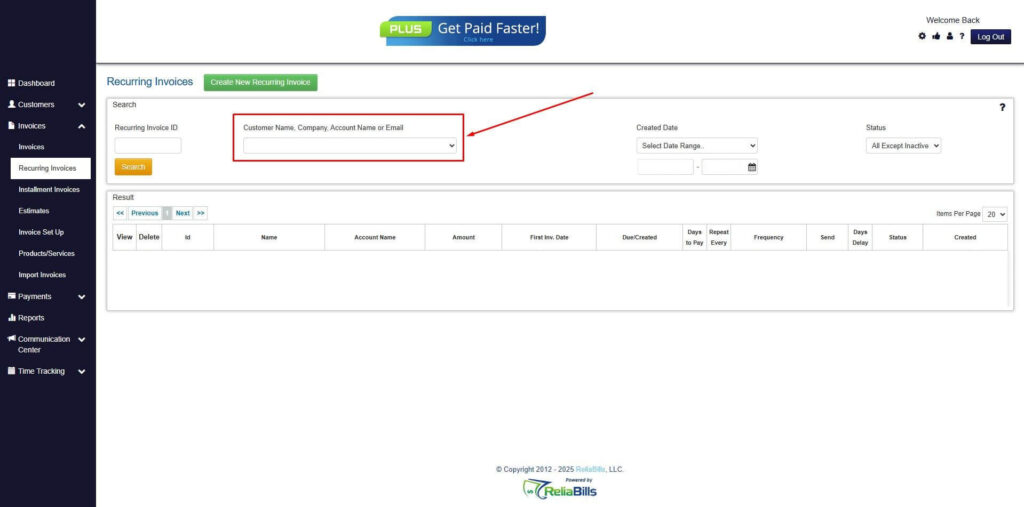
Step 3: Go to the Customers Tab
- If you have already created a customer, search for them in the Customers tab and make sure their status is “Active”.
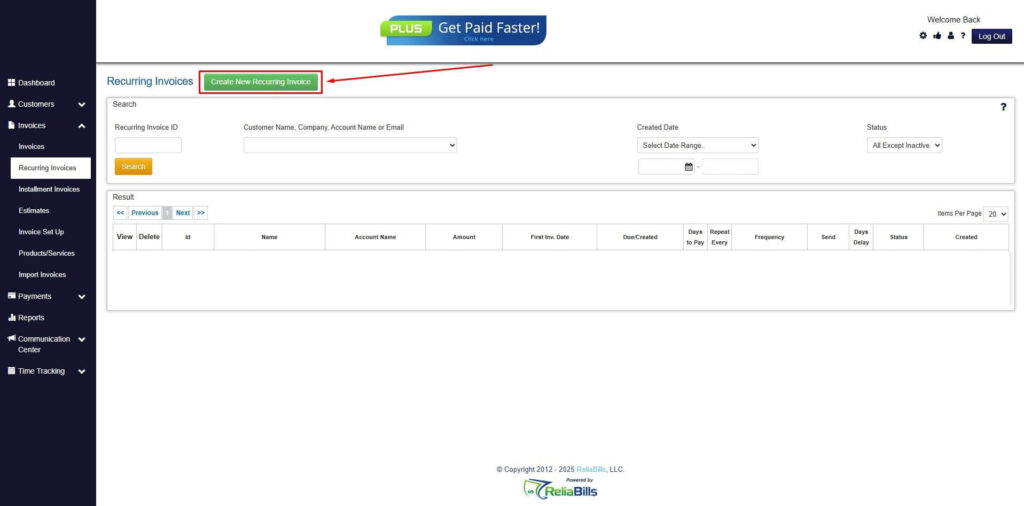
Step 4: Click the Create New Recurring Invoice
- If you haven’t created any customers yet, click the Create New Recurring Invoice to create a new customer.
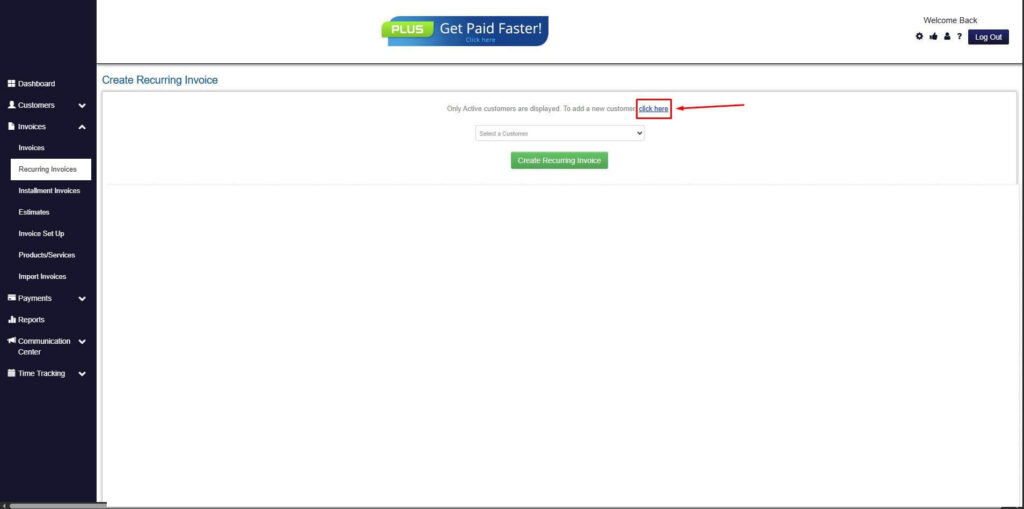
Step 5: Click on the “Click here” Button
- Click on the “Click here” button to proceed with the recurring invoice creation.
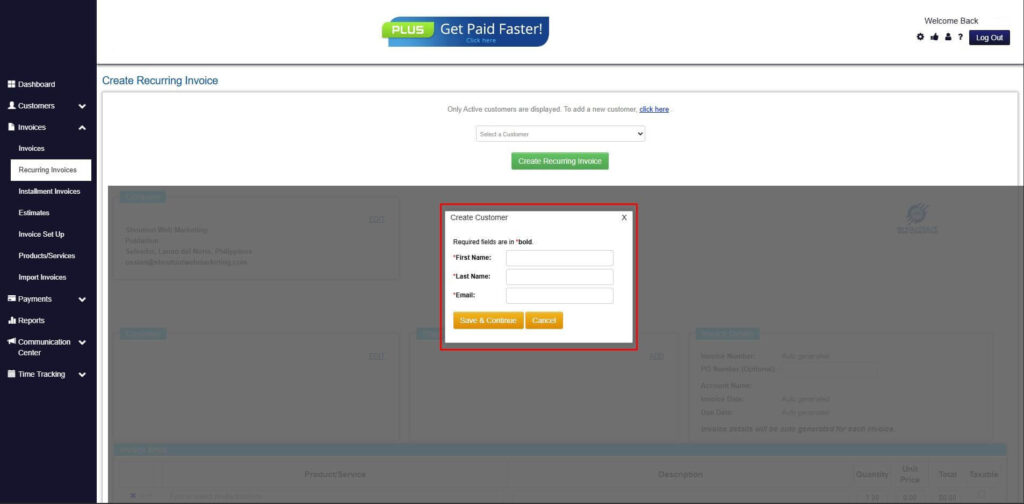
Step 6: Create Customer
- Provide your First Name, Last Name, and Email to proceed.
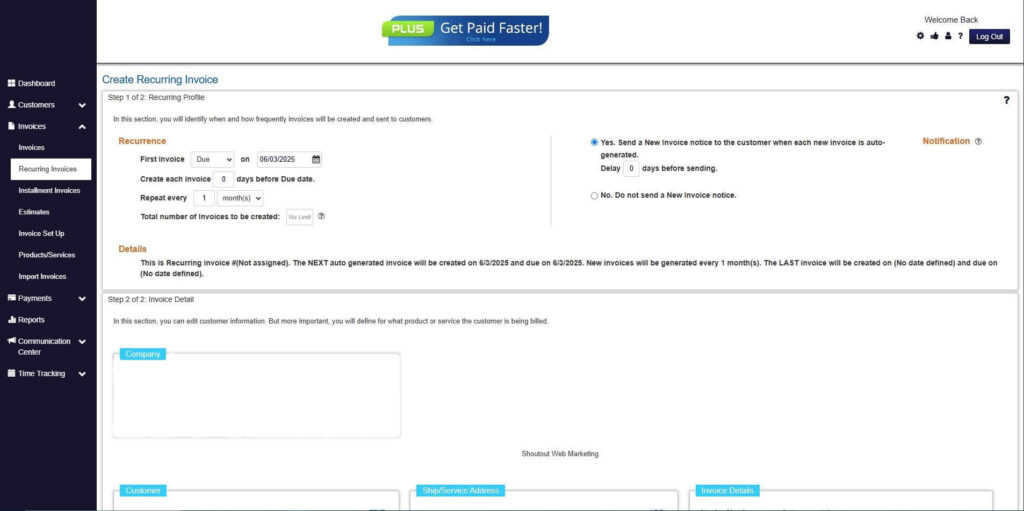
Step 7: Fill in the Create Recurring Invoice Form
- Fill in all the necessary fields.
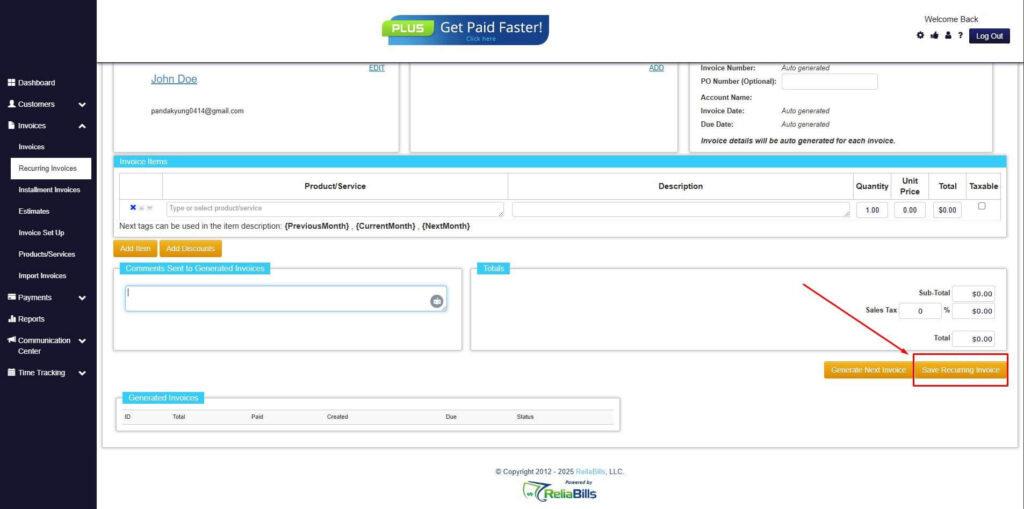
Step 8: Save Recurring Invoice
- After filling up the form, click “Save Recurring Invoice” to continue.
Step 9: Recurring Invoice Created
- Your Recurring Invoice has been created.
Frequently Asked Questions (FAQs)
1. What is manual invoicing in SaaS?
Manual invoicing in SaaS involves creating and managing invoices without automation. This includes using spreadsheets and basic tools. It requires manual calculations and tracking. This approach increases the risk of errors.
2. Why is manual invoicing risky for SaaS businesses?
Manual invoicing introduces errors, delays, and inefficiencies. It affects cash flow and customer experience. It also increases administrative workload. These risks grow as the business scales.
3. When should SaaS companies switch to automation?
Companies should switch to automation as soon as billing complexity increases. Early adoption prevents operational issues. It also supports scalability. Automation improves efficiency.
4. How does automation improve billing accuracy?
Automation reduces human error and ensures consistent calculations. It handles complex billing scenarios accurately. This improves reliability. Accurate billing enhances trust.
5. What tools help automate SaaS invoicing?
Billing software with recurring billing, automation, and reporting features helps streamline invoicing. These tools improve efficiency and accuracy. They also provide real-time insights. Modern solutions support growth.
Conclusion
Manual invoicing risks SaaS businesses face can significantly impact financial performance, operational efficiency, and customer experience. As billing complexity increases, manual processes become less reliable and more prone to errors. These challenges can lead to revenue leakage, delayed payments, and reduced customer trust. Addressing these risks is essential for maintaining stability and growth.
Automation provides a scalable solution that improves accuracy, efficiency, and visibility across billing operations. By eliminating manual tasks, SaaS companies can focus on strategic initiatives and innovation. Automated systems ensure consistent billing practices and support better financial management. This leads to improved performance and customer satisfaction.
Looking ahead, SaaS businesses that adopt automated invoicing solutions will be better equipped to scale and compete in a dynamic market. Efficient billing systems are critical for sustaining growth and maintaining profitability. By transitioning away from manual invoicing, companies can unlock new opportunities and drive long-term success.