
Property management invoice tracking is a critical function for businesses that oversee multiple tenants, units, and properties at the same time. Property managers are responsible for handling rent collection, utility billing, maintenance fees, and various one-time charges across different tenants. This creates a complex billing environment where accuracy and consistency are essential to avoid disputes and financial discrepancies. Without an efficient system, managing invoices manually can quickly become overwhelming and error-prone.
As property portfolios grow, so does the need for streamlined processes that ensure every tenant is billed correctly and on time. Tracking invoices across multiple properties requires visibility into payment statuses, billing cycles, and tenant histories. Delays or errors in invoicing can directly impact cash flow and tenant satisfaction. This makes organized and automated invoice tracking a necessity rather than an option for modern property management businesses.
Efficient property management invoice tracking enables property managers to maintain financial stability while improving operational workflows. By adopting structured billing systems, businesses can reduce administrative burdens and enhance transparency. This not only improves internal efficiency but also builds trust with tenants through clear and consistent billing practices. Ultimately, effective invoice tracking supports long-term growth and scalability in property management operations.
What Are Tenant Invoices in Property Management?
Tenant invoices are formal billing documents issued by property managers to tenants for rent and additional charges related to their lease agreements. These invoices serve as a record of financial obligations, ensuring tenants understand what they are being charged and when payments are due. They typically include recurring charges such as monthly rent, as well as variable costs like utilities, maintenance, and penalties. Properly structured invoices help maintain transparency and reduce misunderstandings between property managers and tenants.
In property management invoice tracking, tenant invoices can include both recurring and one-time charges depending on the nature of the expense. For example, rent is billed monthly, while repair fees or service charges may appear as one-time line items. Managing both types of charges requires a system that can handle different billing frequencies without confusion. This ensures that all financial transactions are accurately recorded and easily accessible when needed.
Organized invoice tracking is essential for maintaining accurate financial records and ensuring compliance with lease agreements. Without proper tracking, property managers may struggle to monitor payments, identify overdue accounts, or reconcile financial reports. A structured invoicing system helps maintain consistency and supports better decision-making. It also ensures that all tenant-related financial data is centralized and easy to audit.
Why Tracking Multiple Tenant Invoices Is Challenging
Managing multiple tenants with different lease terms
Property managers often handle tenants with varying lease agreements, billing schedules, and payment terms, which complicates property management invoice tracking. Each tenant may have unique due dates, rent amounts, and contract conditions that must be carefully monitored. Keeping track of these differences manually increases the likelihood of billing inconsistencies and missed invoices. As the number of tenants grows, managing these variations becomes increasingly difficult without automation.
Tracking recurring and variable charges simultaneously
Property management involves both fixed recurring charges such as rent and fluctuating expenses like utilities and maintenance fees. Managing these different billing types within the same system requires careful coordination and organization. Manual processes often struggle to keep up with these dynamic changes, leading to errors or omissions. Automated systems help ensure that both recurring and variable charges are captured accurately and billed on time.
Handling late payments and partial payments
Late payments and partial payments are common challenges in property management invoice tracking. Property managers must track outstanding balances, apply penalties, and communicate with tenants regarding overdue amounts. Without a structured system, it becomes difficult to maintain accurate records of payment statuses. This can lead to confusion, disputes, and delays in revenue collection.
Maintaining accurate records for each property and unit
Each property and unit requires its own set of financial records, including invoices, payment histories, and tenant details. Managing this information manually can result in disorganized data and difficulty retrieving important records when needed. Accurate documentation is essential for audits, reporting, and legal compliance. Centralized systems help maintain clean and accessible records for every unit and tenant.
Coordinating billing across multiple properties
Property managers handling multiple locations must coordinate billing processes across different properties simultaneously. Each property may have its own billing structure, tenant mix, and operational requirements. Without a unified system, tracking invoices across locations can become fragmented and inefficient. Centralized invoice tracking solutions enable seamless coordination and improved financial oversight.
Types of Tenant Charges Property Managers Must Track
Monthly rent payments
Monthly rent is the primary source of income in property management and must be tracked consistently for each tenant. These payments follow a fixed schedule and are often the foundation of recurring billing systems. Ensuring timely invoicing and payment collection is critical for maintaining steady cash flow. Automated systems help eliminate missed or delayed rent invoices.
Utility bills (water, electricity, internet)
Utility charges can vary each month based on usage, making them more complex to track than fixed rent payments. Property managers must ensure that these charges are accurately calculated and billed to the correct tenant. Manual tracking can lead to discrepancies and tenant disputes. Integrating utilities into property management invoice tracking systems improves accuracy and transparency.
Maintenance and repair fees
Maintenance and repair costs are often billed as needed and can vary significantly depending on the issue. These charges must be documented clearly and linked to the appropriate tenant or unit. Proper tracking ensures that all expenses are accounted for and reimbursed when applicable. Automated invoicing helps streamline the process and reduce administrative work.
Late payment penalties
Late fees are applied when tenants fail to pay on time and must be calculated according to lease agreements. Tracking these penalties manually can lead to inconsistencies or missed charges. Automated systems ensure that penalties are applied accurately and consistently. This helps enforce payment policies and encourages timely payments.
Security deposit adjustments
Security deposits may require adjustments for damages, unpaid rent, or other expenses at the end of a lease. These transactions must be carefully documented to ensure fairness and compliance. Proper invoice tracking ensures that all deductions and refunds are transparent. This reduces disputes and builds trust with tenants.
One-time service charges
One-time charges may include services such as cleaning, inspections, or special requests from tenants. These charges must be added to invoices without disrupting recurring billing cycles. Manual processes can easily overlook these items, leading to revenue loss. Automated systems ensure that all one-time charges are captured and billed correctly.
How Property Managers Traditionally Track Invoices
Traditionally, property managers relied on spreadsheets, paper records, or basic accounting tools for property management invoice tracking. These methods require manual data entry and constant updates to ensure accuracy. Each tenant invoice is often created individually, which increases administrative workload and the risk of human error. As the number of tenants grows, these manual processes become increasingly inefficient and difficult to manage.
Another limitation of traditional methods is the lack of integration between invoicing, payment processing, and accounting systems. Property managers may need to use separate tools for each function, leading to fragmented workflows and duplicated efforts. This makes it harder to maintain a clear overview of financial performance. It also increases the chances of inconsistencies in financial data.
Manual invoice tracking also limits real-time visibility into payment statuses and outstanding balances. Property managers may struggle to quickly identify overdue accounts or generate accurate financial reports. This lack of visibility can impact decision-making and delay necessary actions. As a result, many property management businesses are shifting toward digital solutions for more efficient invoice tracking.
Limitations of Manual Invoice Tracking
Time-consuming administrative work
Manual invoice tracking requires significant time and effort to create, update, and manage billing records. Property managers must handle repetitive tasks that could otherwise be automated. This reduces overall productivity and diverts attention from more strategic activities. Over time, the administrative burden can become overwhelming.
Higher risk of missed or duplicate invoices
Without automation, it is easy to overlook invoices or accidentally create duplicates. These errors can lead to lost revenue or tenant dissatisfaction. Identifying and correcting such mistakes requires additional time and effort. Automated systems help minimize these risks by standardizing processes.
Difficulty monitoring payment status in real time
Manual systems do not provide instant visibility into payment statuses or outstanding balances. Property managers must manually check records to determine which tenants have paid. This delays follow-ups and slows down collections. Real-time tracking tools improve responsiveness and efficiency.
Limited visibility into overall cash flow
Tracking financial performance manually makes it difficult to gain a clear overview of cash flow. Property managers may struggle to identify trends or forecast future revenue. This limits their ability to make informed financial decisions. Digital tools provide better insights through reporting and analytics.
Challenges in scaling operations
As property portfolios grow, manual invoice tracking becomes increasingly difficult to maintain. Managing more tenants and properties requires more time and resources. This limits the ability to scale efficiently. Automation enables property managers to handle growth without increasing administrative workload.
How Digital Tools Simplify Invoice Tracking
Digital solutions have transformed property management invoice tracking by centralizing all billing activities into a single platform. These systems allow property managers to store tenant information, generate invoices, and track payments in one place. This eliminates the need for multiple tools and reduces the risk of data inconsistencies. With centralized access, managers can quickly retrieve information and monitor financial performance.
Automation is a key advantage of digital tools, enabling property managers to generate invoices based on predefined lease terms. Recurring charges such as rent can be scheduled in advance, while variable charges can be added بسهولة when needed. This reduces manual input and ensures consistent billing practices. It also helps maintain accuracy across all tenant accounts.
Real-time dashboards provide immediate visibility into payment statuses, overdue accounts, and overall cash flow. Property managers can use these insights to make informed decisions and take timely action. Integration with accounting systems further enhances financial reporting and compliance. These features make digital tools essential for modern property management operations.
How Recurring Billing Improves Tenant Invoice Management
Recurring billing plays a crucial role in improving property management invoice tracking by automating the generation of monthly rent invoices. Property managers can set up billing schedules that align with lease agreements, ensuring invoices are sent consistently. This reduces the need for manual input and minimizes the risk of missed invoices. As a result, rent collection becomes more predictable and efficient.
By automating repetitive billing tasks, recurring billing systems free up time for property managers to focus on higher-value activities. They also ensure that all tenants are billed uniformly, regardless of the number of properties being managed. This consistency improves financial accuracy and reduces administrative errors. It also enhances the overall professionalism of billing processes.
Recurring billing also supports better financial planning by providing predictable income streams. Property managers can forecast revenue more accurately and plan expenses accordingly. This stability is essential for maintaining cash flow and supporting business growth. In addition, tenants benefit from clear and consistent billing schedules.
Key Features Property Managers Should Look For
Recurring billing and automated invoice generation
A strong billing system should support recurring billing to automate rent and regular charges. This ensures invoices are generated consistently without manual effort. Automation reduces errors and improves efficiency. It also helps maintain accurate billing cycles.
Tenant account management and tracking
Managing tenant accounts in one place allows property managers to track invoices, payments, and histories بسهولة. This improves organization and accessibility of financial data. It also enables quick resolution of tenant inquiries. Centralized tracking enhances overall efficiency.
Payment gateway integration and Auto Pay options
Integrated payment gateways allow tenants to pay invoices بسهولة through various methods. Auto Pay features ensure timely payments and reduce late fees. This improves cash flow and reduces collection efforts. It also enhances tenant convenience.
Real-time reporting and financial dashboards
Real-time reporting provides insights into payment statuses, revenue trends, and outstanding balances. Property managers can use these insights for better decision-making. Dashboards offer a clear overview of financial performance. This improves transparency and control.
Customizable invoice templates
Customizable templates allow property managers to create professional and consistent invoices. These templates can include branding, detailed breakdowns, and payment terms. This improves communication with tenants. It also enhances the overall billing experience.
Alerts for overdue or missed payments
Automated alerts notify property managers and tenants about overdue invoices. This ensures timely follow-ups and reduces missed payments. Notifications improve communication and accountability. They also help maintain consistent cash flow.
Best Practices for Tracking Tenant Invoices Efficiently
Standardize billing processes across all properties
Standardizing billing processes ensures consistency in property management invoice tracking across different locations. This reduces confusion and improves efficiency. It also makes it easier to train staff and manage operations. Consistency leads to better accuracy and reliability.
Automate recurring rent and fee invoicing
Automation eliminates repetitive tasks and ensures invoices are generated on time. This reduces the risk of errors and missed invoices. It also improves overall efficiency. Automated systems support scalable operations.
Maintain detailed tenant records and payment history
Keeping detailed records helps property managers track financial activity and resolve disputes quickly. It also supports accurate reporting and compliance. Organized data improves decision-making. It ensures transparency in all transactions.
Use centralized software for all billing activities
Centralized systems provide a single source of truth for all financial data. This improves visibility and coordination across properties. It also reduces the need for multiple tools. Centralization enhances efficiency and accuracy.
Regularly review financial reports and outstanding balances
Regular reviews help identify trends, overdue accounts, and potential issues. This allows property managers to take proactive action. It also supports better financial planning. Consistent monitoring improves overall performance.
Common Mistakes Property Managers Should Avoid
Relying solely on spreadsheets for invoice tracking
Spreadsheets are prone to errors and lack automation capabilities. They require manual updates and can become difficult to manage. This limits efficiency and scalability. Digital tools provide better solutions.
Inconsistent billing schedules across tenants
Inconsistent schedules can confuse tenants and lead to missed payments. Standardizing billing cycles improves clarity and consistency. It also simplifies tracking and reporting. Consistency enhances professionalism.
Failing to automate recurring charges
Manual billing increases the risk of errors and missed invoices. Automation ensures consistent and accurate billing. It also reduces administrative workload. This improves efficiency and reliability.
Not monitoring overdue invoices proactively
Ignoring overdue invoices can impact cash flow and financial stability. Proactive monitoring helps ensure timely collections. It also reduces outstanding balances. Consistent follow-ups improve payment behavior.
Poor communication regarding billing and payments
Lack of communication can lead to misunderstandings and disputes. Clear and consistent communication improves tenant relationships. It also ensures transparency in billing. Good communication supports trust and satisfaction.
How Automation Enhances Tenant Payment Experience
Automation significantly improves the tenant payment experience by providing convenient and flexible payment options. Tenants can use Auto Pay to ensure their rent is paid on time without manual intervention. This reduces the likelihood of missed payments and late fees. It also simplifies the payment process for tenants.
Automated reminders help tenants stay informed about upcoming and overdue invoices. These notifications improve communication and reduce the need for manual follow-ups. Tenants appreciate timely reminders that help them manage their finances. This leads to better payment consistency.
Clear and consistent billing documentation reduces disputes and builds trust between tenants and property managers. Automation ensures that invoices are accurate and easy to understand. This transparency enhances the overall tenant experience. It also strengthens long-term relationships.
Key Benefits of Efficient Invoice Tracking
Improved cash flow and timely rent collection
Efficient tracking ensures invoices are sent and paid on time, improving cash flow. This helps property managers maintain financial stability. It also reduces delays in revenue collection. Consistent income supports business growth.
Reduced administrative workload
Automation reduces the need for manual tasks, freeing up time for strategic activities. This improves productivity and efficiency. Property managers can focus on tenant relationships and operations. Reduced workload supports scalability.
Increased billing accuracy and consistency
Accurate billing reduces errors and disputes. Consistency ensures all tenants are billed correctly. This improves trust and transparency. Reliable systems enhance overall performance.
Better financial visibility across properties
Centralized tracking provides insights into financial performance. Property managers can monitor trends and make informed decisions. This improves planning and forecasting. Visibility enhances control and efficiency.
Enhanced tenant satisfaction and retention
Clear and consistent billing improves tenant experience. This leads to higher satisfaction and retention rates. Happy tenants are more likely to renew leases. Strong relationships support long-term success.
Common Use Cases
Residential property management companies
Residential managers handle multiple tenants and recurring rent payments. Efficient tracking ensures accurate billing. It also improves tenant satisfaction. Automation supports scalability.
Commercial real estate managers
Commercial properties often involve complex lease agreements and billing structures. Tracking invoices ensures compliance and accuracy. It also supports financial reporting. Efficient systems improve operations.
Multi-unit apartment complexes
Large complexes require managing numerous tenants simultaneously. Centralized tracking simplifies billing processes. It also improves efficiency. Automation ensures consistency.
Property management firms handling multiple locations
Managing multiple properties requires coordination and visibility. Centralized systems enable seamless tracking. This improves financial oversight. It supports business growth.
Landlords managing multiple rental properties
Individual landlords benefit from organized invoice tracking. Automation reduces manual work. It also improves accuracy. Efficient systems enhance management capabilities.
How ReliaBills Helps Property Managers Track Invoices Easily
ReliaBills provides property managers with a centralized platform designed to simplify property management invoice tracking across multiple tenants and properties. By automating invoice creation and payment tracking, it reduces the need for manual processes that often lead to errors and inefficiencies. Property managers can manage all tenant accounts, billing cycles, and financial records from a single system. This improves visibility and ensures that all invoices are accurate and consistently generated.
ReliaBills enhances recurring billing capabilities by allowing property managers to automate rent collection and schedule invoices based on lease agreements. The system ensures that recurring charges are billed on time while also supporting one-time fees such as maintenance or penalties. Automated reminders and payment tracking help reduce late payments and improve cash flow consistency. This integration of recurring billing and invoice management streamlines the entire billing process.
With ReliaBills PLUS, property management businesses gain access to advanced automation tools, detailed reporting, and centralized billing controls. These features provide deeper insights into financial performance and tenant payment behavior. Property managers can easily monitor multiple properties and generate comprehensive reports for better decision-making. ReliaBills PLUS enables scalable and efficient invoice tracking, making it ideal for growing property management operations.
How to Create a New Recurring Invoice Using ReliaBills
Creating a New Recurring Invoice using ReliaBills involves the following steps:
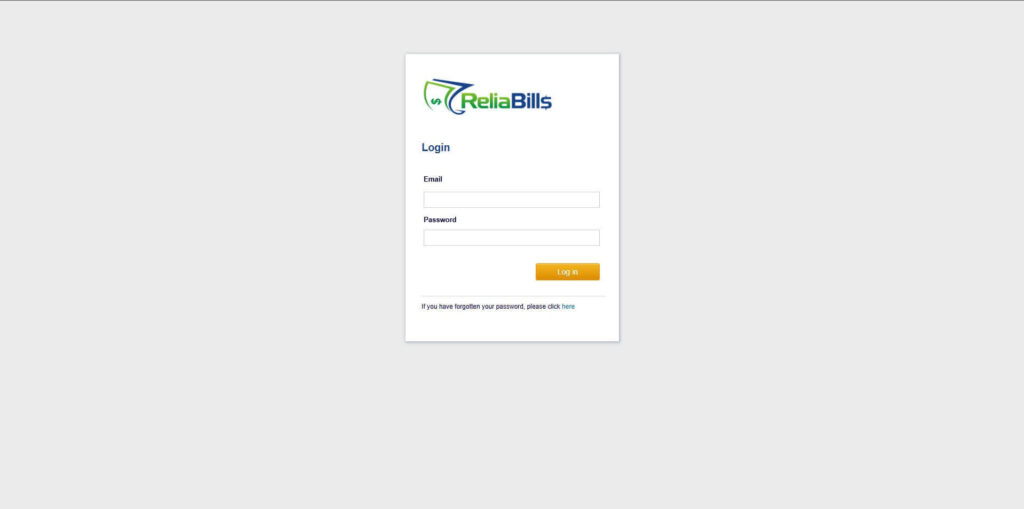
Step 1: Login to ReliaBills
- Access your ReliaBills Account using your login credentials. If you don’t have an account, sign up here.
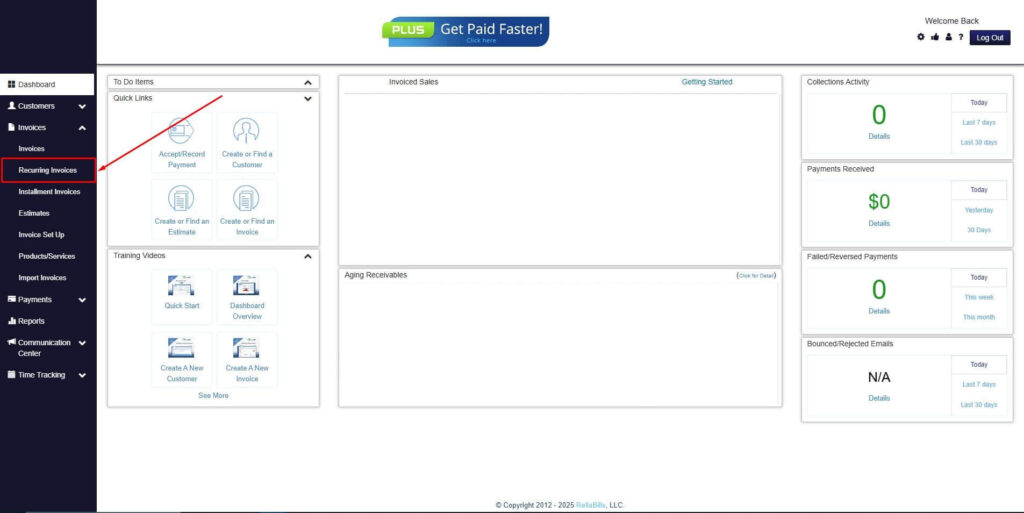
Step 2: Click on Recurring Invoices
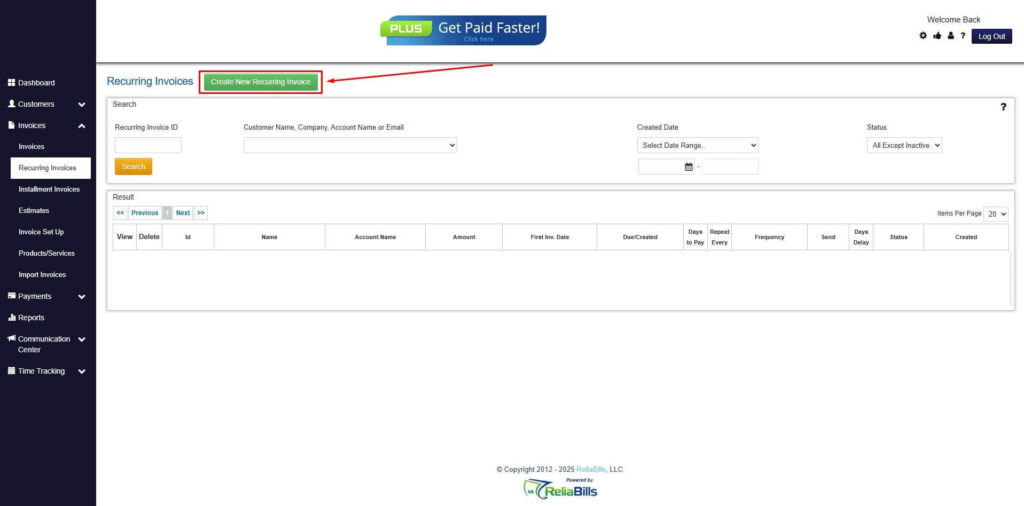
- Navigate to the Invoices Dropdown and click on Recurring Invoices for an overview of the list of your existing customers.
Step 3: Go to the Customers Tab
- If you have already created a customer, search for them in the Customers tab and make sure their status is “Active”.
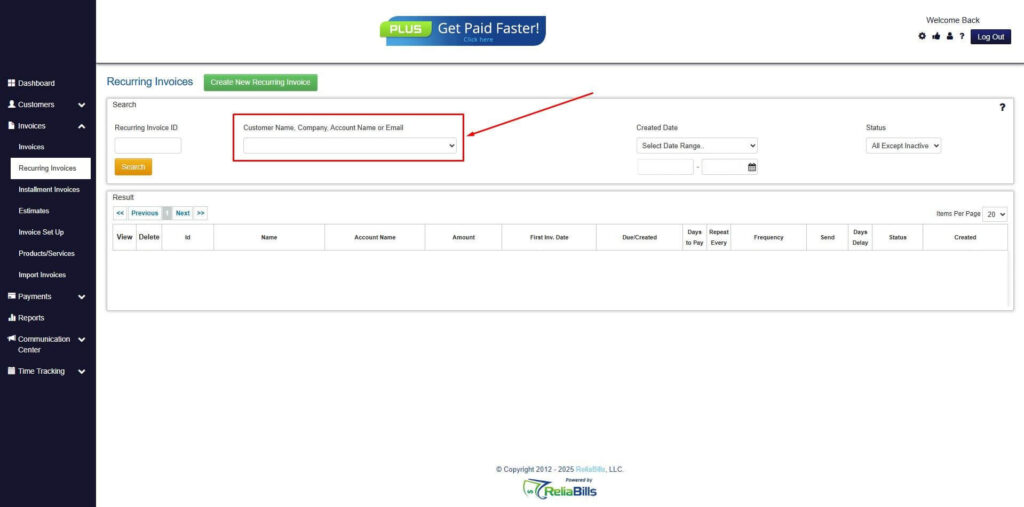
Step 4: Click the Create New Recurring Invoice
- If you haven’t created any customers yet, click the Create New Recurring Invoice to create a new customer.
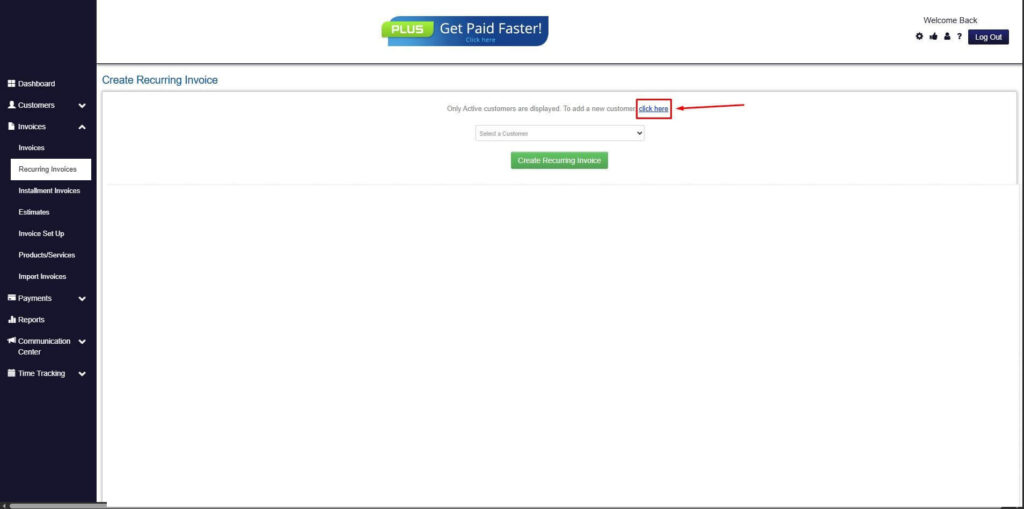
Step 5: Click on the “Click here” Button
- Click on the “Click here” button to proceed with the recurring invoice creation.
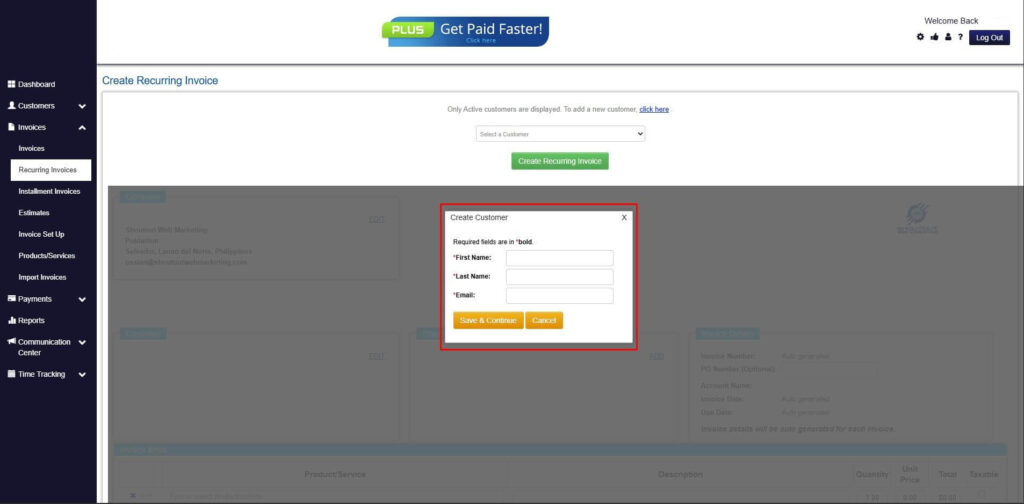
Step 6: Create Customer
- Provide your First Name, Last Name, and Email to proceed.
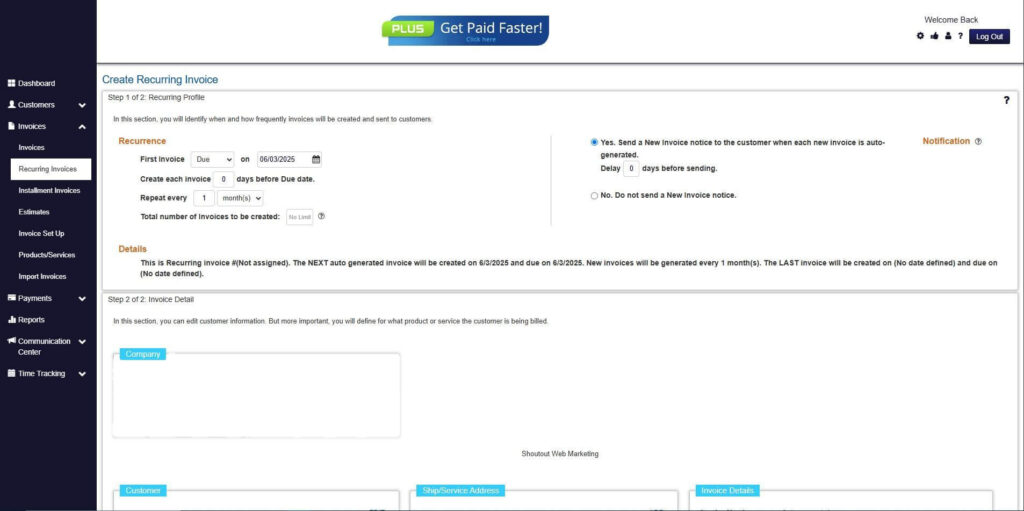
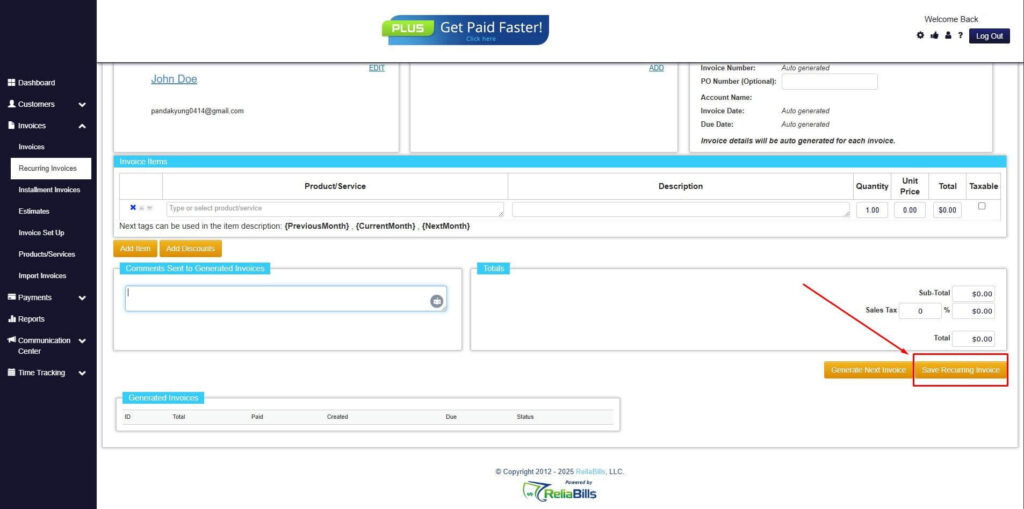
Step 7: Fill in the Create Recurring Invoice Form
- Fill in all the necessary fields.
Step 8: Save Recurring Invoice
- After filling up the form, click “Save Recurring Invoice” to continue.
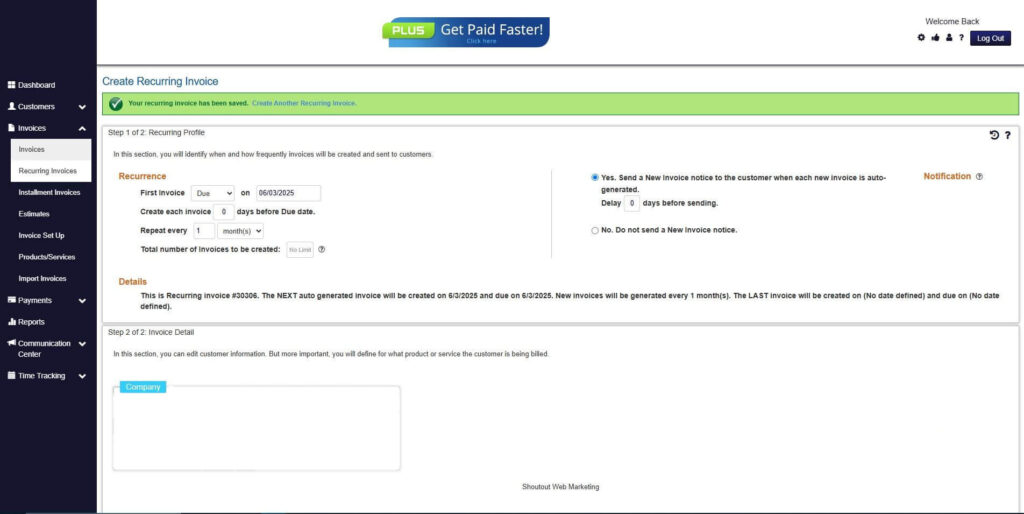
Step 9: Recurring Invoice Created
- Your Recurring Invoice has been created.
Frequently Asked Questions (FAQs)
1. How do property managers track tenant invoices?
Property managers track tenant invoices using digital billing systems that centralize all financial data. These systems automate invoice generation and payment tracking. They also provide real-time visibility into account statuses. This improves efficiency and accuracy.
2. What is the best way to manage multiple rental payments?
The best way is to use automated billing software with recurring billing features. This ensures consistent invoicing and timely payments. It also reduces manual work. Automation improves overall management.
3. Can tenant invoicing be automated?
Yes, tenant invoicing can be fully automated using modern billing platforms. These systems generate invoices based on lease terms. They also send reminders and track payments. Automation improves efficiency and accuracy.
4. How do property managers handle late payments?
Late payments are managed through automated reminders and penalty systems. Property managers can track overdue accounts بسهولة. They can also apply late fees automatically. This ensures consistent enforcement of policies.
5. What tools help simplify property management billing?
Billing software with automation, reporting, and payment integration features simplifies invoice tracking. These tools centralize data and improve efficiency. They also enhance accuracy and transparency. Modern solutions support scalable operations.
Conclusion
Property management invoice tracking is essential for maintaining accurate financial records and ensuring consistent cash flow across multiple tenants and properties. As billing complexity increases, manual processes become inefficient and prone to errors. This highlights the need for structured and automated solutions that streamline invoice management. Efficient tracking systems enable property managers to stay organized and responsive.
Automation plays a key role in improving accuracy, reducing administrative workload, and enhancing tenant satisfaction. By adopting digital tools, property managers can simplify recurring billing, monitor payments in real time, and maintain transparency in financial operations. These improvements lead to better decision-making and stronger tenant relationships. Technology-driven solutions are becoming the standard in modern property management.
Looking ahead, property managers who invest in scalable billing solutions will be better positioned for growth and long-term success. Efficient systems not only improve current operations but also prepare businesses for expanding property portfolios. By embracing automation and centralized platforms, property managers can achieve greater efficiency and reliability. This ultimately drives sustainable growth in a competitive market.