
Late rent payments are one of the most common challenges property managers face, directly impacting cash flow and operational stability. When invoices are handled manually, delays in sending bills, inconsistent reminders, and limited payment options often lead to missed or late payments.
Modern invoicing systems address these issues by streamlining how rent and related charges are billed and tracked. By leveraging the right invoice features for property managers, businesses can improve payment timeliness and reduce administrative stress.
Automation and recurring billing play a crucial role in ensuring tenants receive accurate invoices on time while making it easier for them to pay. With the right tools in place, property managers can significantly reduce late payments and maintain consistent revenue streams.
Why Late Payments Are a Common Issue in Property Management
Tenant forgetfulness or missed due dates
Many tenants forget payment deadlines due to busy schedules or competing financial priorities. Without reminders, rent payments can easily be overlooked. This makes consistent communication essential for timely collections.
Lack of clear billing schedules and communication
Unclear billing timelines can confuse tenants about when payments are due. Inconsistent communication increases the likelihood of delays. Establishing predictable billing cycles helps prevent misunderstandings.
Manual invoicing delays
Sending invoices manually often results in late delivery. This reduces the time tenants have to make payments before the due date. Automation ensures invoices are sent promptly and consistently.
Limited payment options causing friction
Restricting payment methods can make it inconvenient for tenants to pay on time. Some tenants may delay payments if their preferred method is unavailable. Offering multiple options improves payment convenience.
Inconsistent follow-ups and reminders
Manual reminders are often irregular and easy to forget. This leads to missed opportunities to prompt tenants before due dates. Automated reminders ensure consistent and timely follow-ups.
What Makes an Invoice Effective for Property Managers?
An effective invoice clearly outlines all charges, including rent, utilities, and additional fees. Transparency helps tenants understand exactly what they are paying for, reducing confusion and disputes. Well-structured invoices also build trust and improve payment compliance.
Accurate due dates and clearly defined payment terms are essential components of effective invoicing. When tenants know exactly when and how to pay, they are more likely to meet deadlines. Consistency across billing cycles reinforces good payment habits.
Easy-to-read formatting, along with clear payment instructions and multiple payment options, enhances the tenant experience. When invoices are simple and accessible, tenants are more likely to act quickly. This is why strong invoice features for property managers are critical for reducing late payments.
Key Invoice Features That Help Avoid Late Payments
Automated recurring invoicing for rent collection
Recurring invoicing ensures rent bills are generated and sent automatically each cycle. This eliminates delays caused by manual processes. It also creates a predictable billing schedule for tenants.
Auto-pay options for tenants
Auto-pay allows tenants to schedule payments automatically on due dates. This reduces the risk of missed or late payments. It also provides convenience and reliability for both parties.
Scheduled payment reminders and notifications
Automated reminders notify tenants before and after due dates. These alerts encourage timely payments and reduce forgetfulness. Consistent communication improves overall payment behavior.
Integrated online payment methods
Accepting cards, bank transfers, and digital wallets simplifies the payment process. Tenants can choose the most convenient method. This reduces friction and increases on-time payments.
Real-time invoice tracking and payment status updates
Property managers can instantly see which invoices are paid or overdue. This visibility allows for faster follow-ups. It also helps identify trends in tenant payment behavior.
Late fee automation and penalty settings
Automated late fees enforce consistent payment policies. Tenants are more likely to pay on time when penalties are applied fairly. This reduces the need for manual enforcement.
How Recurring Billing Ensures On-Time Rent Payments
Recurring billing automates the entire rent invoicing process, ensuring tenants receive invoices on the same date each month. This consistency helps tenants plan their finances and avoid missed payments. It also eliminates the risk of delayed invoice delivery.
With predictable billing cycles, tenants become accustomed to regular payment schedules. This encourages timely payments and reduces confusion about due dates. Over time, it helps establish reliable payment habits.
For property managers, recurring billing reduces manual workload and administrative errors. It ensures that no invoice is missed or delayed. This makes it one of the most valuable invoice features for property managers.
The Role of Automation in Reducing Payment Delays
Automation ensures invoices and reminders are sent without manual intervention. This guarantees timely communication with tenants every billing cycle. It significantly reduces the chances of late payments.
Real-time tracking allows property managers to monitor payment statuses instantly. Overdue accounts can be flagged and addressed quickly. This proactive approach improves collection efficiency.
By reducing repetitive tasks, automation frees up time for property managers to focus on higher-value activities. It also improves consistency and accuracy in billing processes. Overall, automation creates a more reliable and efficient system.
Best Practices for Using Invoice Features Effectively
Set clear payment terms and communicate them upfront
Clearly defined terms help tenants understand their obligations. This reduces confusion and potential disputes. Transparency encourages timely payments.
Encourage tenants to enroll in auto-pay
Auto-pay simplifies the payment process for tenants. It ensures payments are made automatically on time. This reduces missed payments and improves consistency.
Send reminders before and after due dates
Pre-due reminders help tenants prepare for upcoming payments. Follow-up reminders address missed deadlines promptly. This dual approach improves collection rates.
Offer multiple payment options for convenience
Flexible payment options make it easier for tenants to pay on time. Different tenants prefer different methods. Providing choices removes barriers to payment.
Regularly review payment data and tenant behavior
Monitoring payment patterns helps identify recurring issues. Property managers can adjust strategies based on insights. This leads to continuous improvement in collections.
How Digital Invoicing Improves Tenant Experience
Digital invoicing provides tenants with instant access to their bills online. This convenience makes it easier to review and pay invoices quickly. It also eliminates delays associated with paper billing.
Transparency is improved through clear billing details and accessible payment history. Tenants can track their payments and understand charges بسهولة. This reduces disputes and misunderstandings.
Faster communication between tenants and property managers enhances overall satisfaction. Questions and concerns can be addressed quickly. A better tenant experience often leads to more consistent payments.
Key Benefits of Using Advanced Invoice Features
Reduces late and missed payments
Automated systems ensure invoices and reminders are sent on time. This minimizes the chances of tenants missing deadlines. Consistency improves payment behavior.
Improves cash flow consistency
Predictable payments create steady revenue streams. Property managers can better plan expenses and investments. This supports financial stability.
Saves time on manual billing tasks
Automation eliminates repetitive administrative work. This allows property managers to focus on higher-value tasks. Efficiency is significantly improved.
Enhances tenant satisfaction
Transparent and convenient billing improves the tenant experience. Satisfied tenants are more likely to pay on time. This strengthens long-term relationships.
Increases billing accuracy and transparency
Automated systems reduce errors in invoicing. Clear billing details build trust with tenants. This minimizes disputes and misunderstandings.
Common Use Cases
- Residential property rent collection: Automates monthly rent invoicing for tenants. Ensures consistent billing and payment tracking. Reduces late payments and administrative workload.
- Commercial property leasing: Manages complex billing structures with multiple charges. Improves accuracy and transparency in invoicing. Ensures timely payments from business tenants.
- Multi-unit property management: Handles billing across multiple units and tenants efficiently. Centralizes invoice and payment data in one system. Simplifies large-scale property operations.
- Utility and maintenance billing for tenants: Automates additional charges such as utilities and repairs. Ensures accurate and timely billing for extra services. Reduces manual calculations and errors.
- Short-term and long-term rental agreements: Supports flexible billing cycles for different rental terms. Ensures consistent invoicing regardless of lease duration. Improves payment tracking and organization.
How ReliaBills Helps Property Managers Avoid Late Payments
Managing rent collection manually can often lead to delays, missed invoices, and inconsistent follow-ups with tenants. ReliaBills simplifies this process by automating invoice creation, delivery, and payment tracking within a single centralized platform. This allows property managers to reduce administrative workload while improving visibility and ensuring invoices are sent on time every billing cycle.
One of the key strengths of ReliaBills is its recurring billing and auto-pay functionality, which helps automate rent collection for repeat transactions. By setting up predefined billing schedules and enabling automatic payments, property managers can significantly reduce late payments and eliminate the need for constant reminders. This not only improves cash flow consistency but also ensures tenants follow a reliable and predictable payment routine.
For property managers looking for more advanced capabilities, ReliaBills PLUS offers enhanced automation, detailed reporting, and tenant communication tools. These features allow businesses to monitor payment trends, enforce billing policies, and optimize workflows for better efficiency. With ReliaBills PLUS, property managers can scale their operations while maintaining accuracy, control, and improved tenant satisfaction.
How to Create a New Recurring Invoice Using ReliaBills
Creating a New Recurring Invoice using ReliaBills involves the following steps:
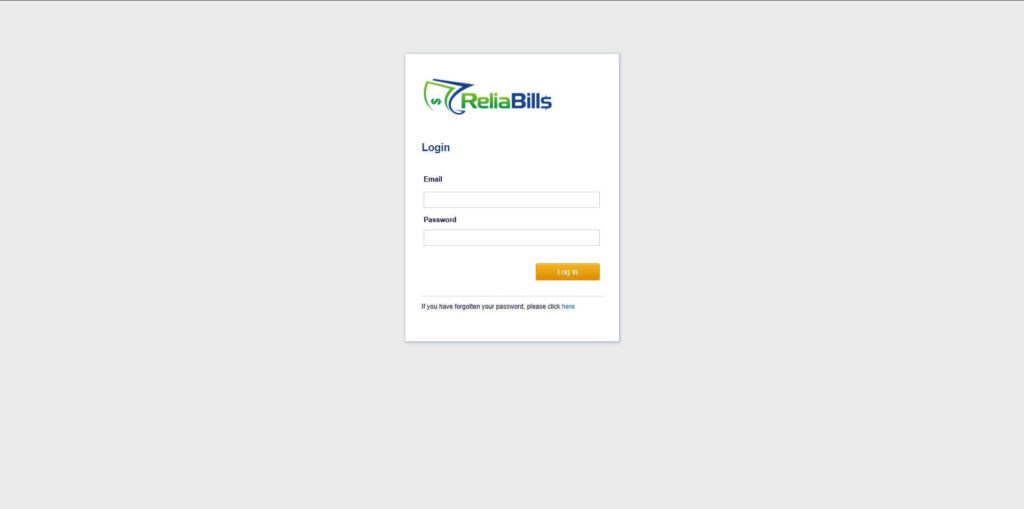
Step 1: Login to ReliaBills
- Access your ReliaBills Account using your login credentials. If you don’t have an account, sign up here.
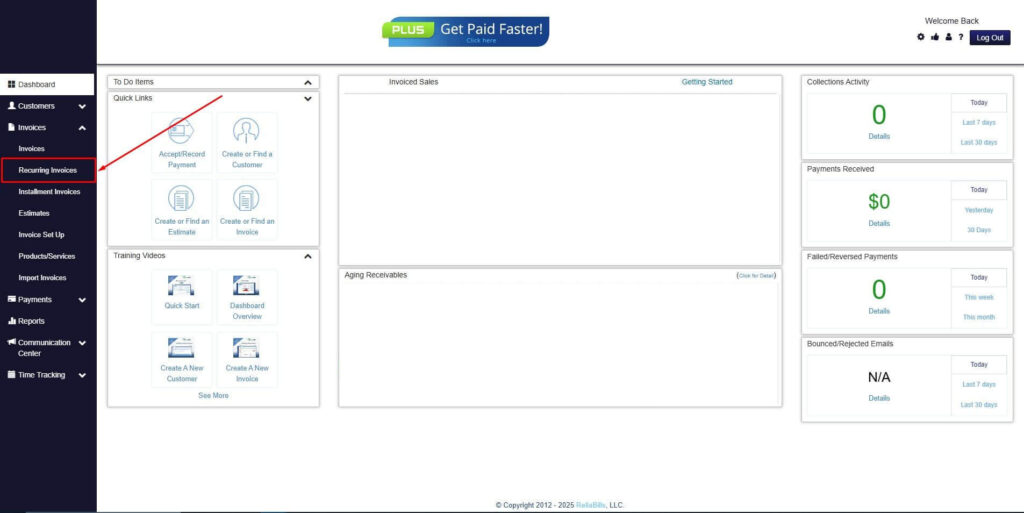
Step 2: Click on Recurring Invoices
- Navigate to the Invoices Dropdown and click on Recurring Invoices for an overview of the list of your existing customers.
Step 3: Go to the Customers Tab
- If you have already created a customer, search for them in the Customers tab and make sure their status is “Active”.
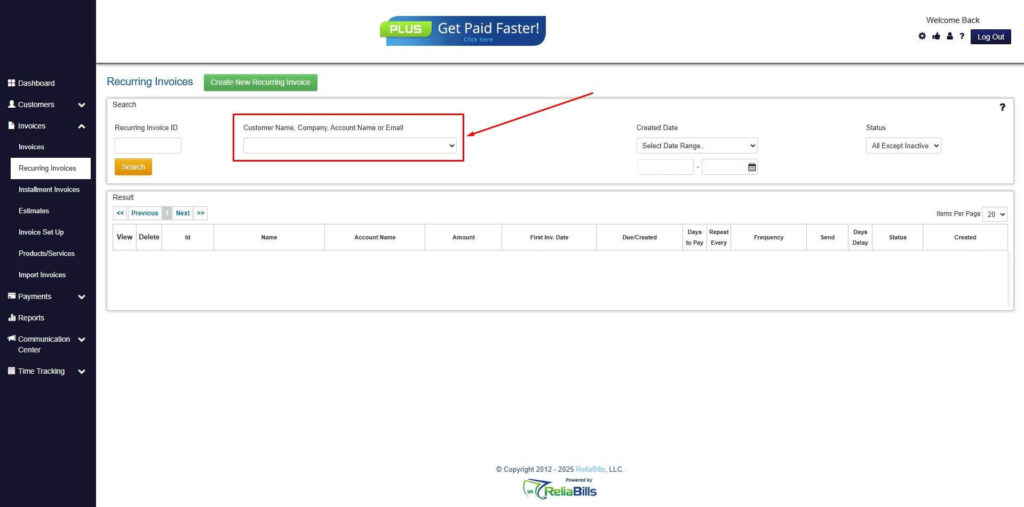
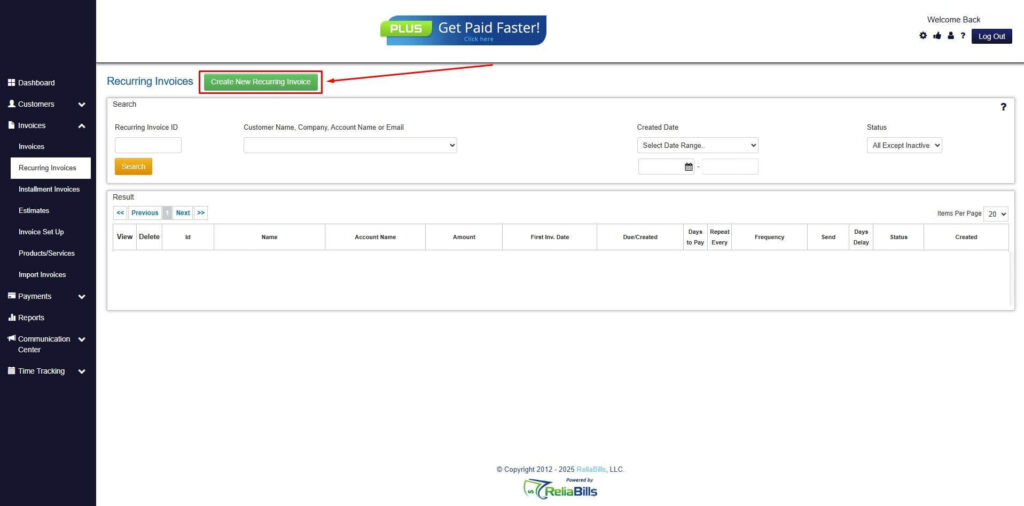
Step 4: Click the Create New Recurring Invoice
- If you haven’t created any customers yet, click the Create New Recurring Invoice to create a new customer.
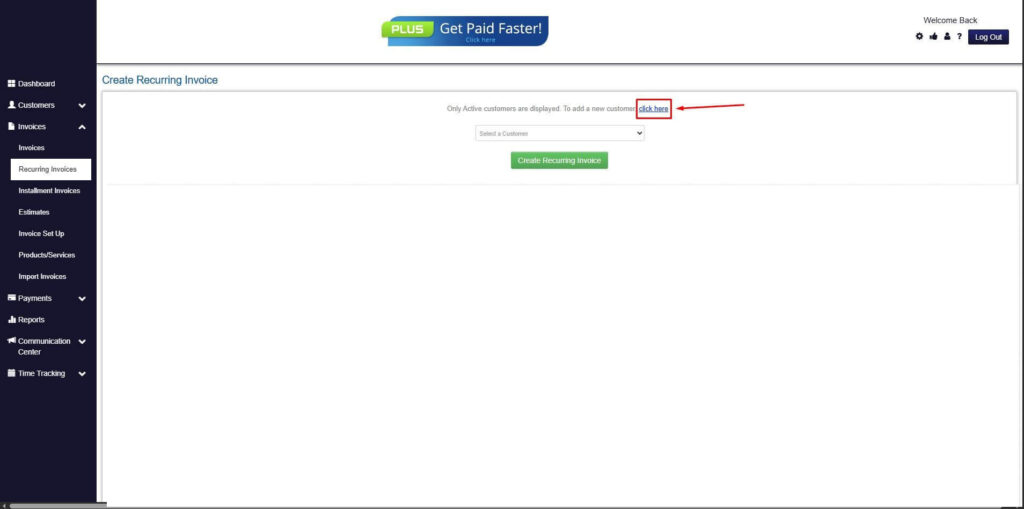
Step 5: Click on the “Click here” Button
- Click on the “Click here” button to proceed with the recurring invoice creation.
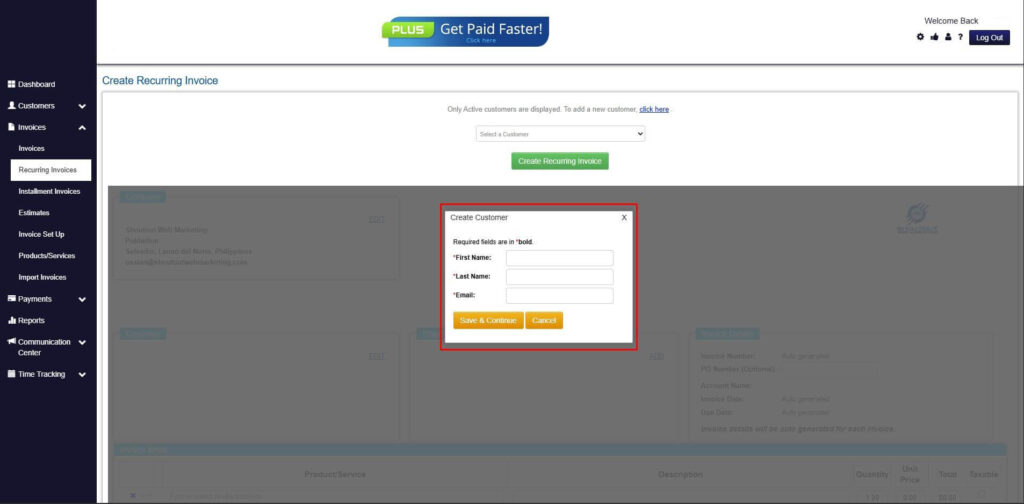
Step 6: Create Customer
- Provide your First Name, Last Name, and Email to proceed.
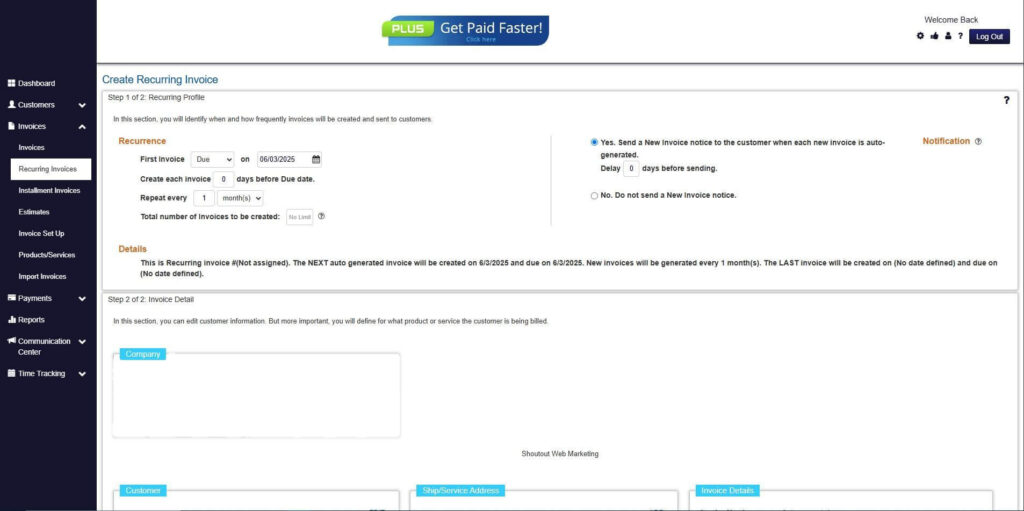
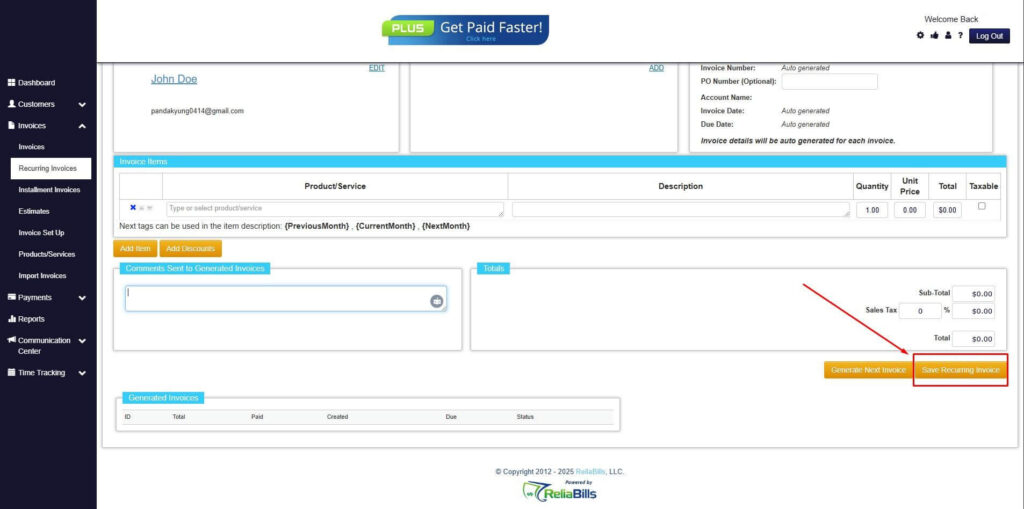
Step 7: Fill in the Create Recurring Invoice Form
- Fill in all the necessary fields.
Step 8: Save Recurring Invoice
- After filling up the form, click “Save Recurring Invoice” to continue.
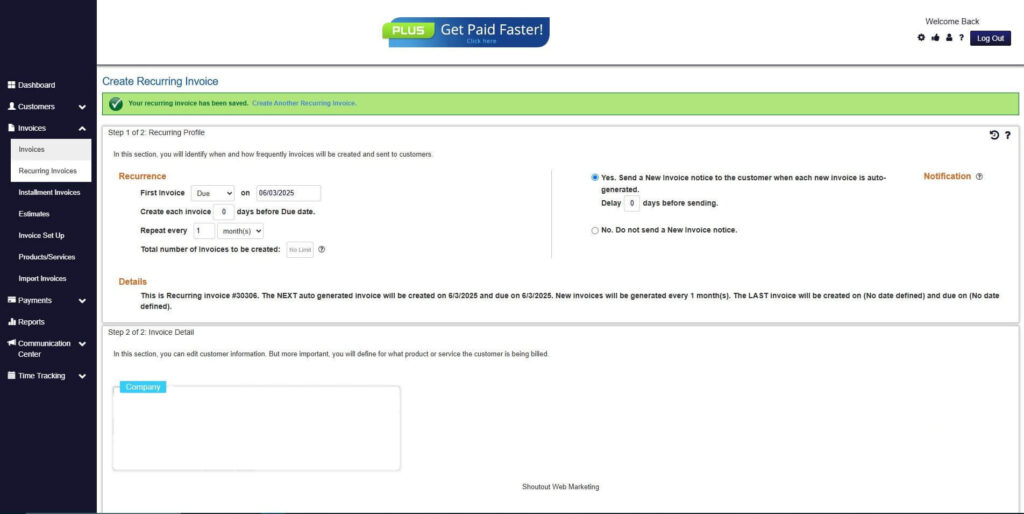
Step 9: Recurring Invoice Created
- Your Recurring Invoice has been created.
Frequently Asked Questions (FAQs)
1. What invoice features help reduce late payments?
Features like automated invoicing, reminders, and auto-pay significantly improve payment timeliness. They ensure tenants receive and act on invoices promptly. Consistency is key to reducing delays.
2. How does auto-pay work for rent collection?
Auto-pay allows tenants to schedule automatic payments from their accounts. Payments are processed on due dates without manual action. This reduces missed or late payments.
3. Can recurring billing prevent missed rent payments?
Yes, recurring billing ensures invoices are sent consistently on schedule. This helps tenants plan and remember payments. It reduces reliance on manual processes.
4. Are digital invoices secure for tenants?
Most modern systems use encryption and secure payment gateways. This protects sensitive financial information. Security measures ensure safe transactions.
5. How do reminders impact payment behavior?
Reminders keep payment deadlines top of mind for tenants. They reduce forgetfulness and encourage timely action. Consistent reminders improve overall payment rates.
Conclusion
Late payments can disrupt cash flow and create unnecessary stress for property managers. By leveraging the right invoice features for property managers, businesses can streamline billing, improve accuracy, and encourage timely payments.
Automation and recurring billing are essential tools for reducing administrative workload and ensuring consistency. They help eliminate delays, improve visibility, and create a more efficient billing process.
As property management continues to evolve, adopting digital invoicing solutions is no longer optional. Businesses that invest in automation will be better positioned to scale operations, maintain steady cash flow, and deliver a better tenant experience.