
Invoice discounting is a widely adopted financing method that allows businesses to unlock working capital tied up in unpaid invoices. Instead of waiting for customers to settle their balances, companies can access immediate funds by leveraging their accounts receivable. This is especially critical for businesses with long payment cycles, where cash flow gaps can disrupt operations, supplier payments, and growth initiatives.
Despite its advantages, invoice discounting introduces several risks that can affect both the borrower and the lender. Inaccurate invoices, delayed payments, and a lack of real-time financial visibility can lead to funding delays or even rejected financing applications. These issues not only strain cash flow but also damage credibility with financial partners.
This is where invoice automation for invoice discounting becomes a strategic advantage. By digitizing invoicing workflows and enforcing data accuracy, businesses can significantly reduce operational risks. Automation enhances control, improves transparency, and ensures that invoices meet the strict requirements of lenders, ultimately strengthening financial stability.
What Is Invoice Discounting?
Invoice discounting is a form of short-term borrowing where businesses use their outstanding invoices as collateral to obtain immediate funding. Rather than waiting for customers to pay, companies receive a large percentage of the invoice value upfront, helping them maintain liquidity and meet financial obligations.
The process typically involves submitting approved invoices to a lender, who advances a portion of the total value—often between 70% and 90%. Once the customer pays the invoice, the lender releases the remaining balance after deducting fees. This structure allows businesses to continuously access funds as new invoices are generated.
Unlike invoice factoring, where the lender takes over collections and communicates directly with customers, invoice discounting keeps control within the business. This preserves customer relationships and brand reputation. Compared to traditional loans, it is more flexible and scalable since funding grows alongside sales volume.
Key Risks in Invoice Discounting Agreements
While invoice discounting provides flexibility, it also exposes businesses to several operational and financial risks that must be carefully managed.
Inaccurate or incomplete invoice data is one of the most common challenges. Errors in pricing, quantities, or customer details can delay approval or lead to disputes. Lenders rely heavily on accurate documentation, so even minor inconsistencies can raise red flags.
Delayed or missed customer payments directly impact repayment schedules. If customers fail to pay on time, businesses may struggle to settle their obligations with lenders, increasing financial pressure and potentially damaging creditworthiness.
Fraud or duplicate invoicing is a serious concern in invoice financing. Submitting the same invoice multiple times or falsifying records can result in penalties, contract termination, or legal consequences. It also erodes trust between businesses and financial institutions.
Lack of real-time visibility into receivables limits a company’s ability to track outstanding invoices and monitor cash flow. Without clear insights, businesses may overestimate their available funds or miss early warning signs of payment delays.
Disputes between businesses and customers can stall payments and disrupt financing arrangements. Issues related to product quality, delivery timelines, or billing discrepancies can delay collections and increase administrative overhead.
How Invoice Automation Reduces Risk
Adopting invoice automation for invoice discounting introduces a structured and reliable approach to managing invoices, significantly reducing risk exposure.
Automation ensures that invoices are generated using standardized templates and pre-validated data. This consistency eliminates manual entry errors and ensures compliance with lender requirements. Businesses can confidently submit invoices knowing that they meet accuracy standards.
Automated validation and approval workflows add another layer of control. Invoices can be reviewed against predefined rules, such as matching purchase orders or delivery confirmations, before being finalized. This reduces the likelihood of disputes and rejected financing requests.
Real-time tracking provides complete visibility into invoice status, from issuance to payment. Businesses can monitor which invoices are outstanding, overdue, or paid, enabling proactive cash flow management. Lenders also benefit from this transparency, as it reduces uncertainty.
Additionally, automation systems can detect anomalies such as duplicate invoices, unusual billing patterns, or irregular transaction amounts. These safeguards help prevent fraud and ensure that only legitimate invoices are used in discounting agreements.
Key Features of Invoice Automation for Risk Reduction
Automated invoice generation with standardized templates
Invoice automation ensures every invoice is created using a consistent and standardized format. This reduces inconsistencies in layout, data entry, and required fields, which are common causes of rejection in invoice discounting agreements. It also ensures that all invoices comply with lender expectations and financial documentation standards, improving approval speed.
Real-time payment tracking and reconciliation
Automated systems provide live updates on invoice status, including whether it is sent, viewed, partially paid, or fully settled. This allows businesses to monitor cash flow in real time instead of relying on delayed manual reports. It also helps lenders assess repayment risk more accurately by accessing up-to-date receivables data.
Built-in audit trails and activity logs
Every action performed on an invoice is recorded, including creation, edits, approvals, and payment updates. This creates a complete financial history that can be reviewed by auditors or lenders at any time. It also strengthens accountability by identifying exactly who made changes and when they occurred.
Integration with accounting and ERP systems
Invoice automation tools can connect directly with accounting software and ERP platforms to synchronize financial data. This eliminates duplicate data entry and reduces the risk of discrepancies between systems. It also ensures that financial reporting remains consistent across all departments.
Fraud detection and duplicate invoice prevention
Automation systems scan for duplicate invoice numbers, repeated billing entries, and unusual transaction patterns. These checks help prevent fraudulent submissions that could compromise financing agreements. By identifying issues early, businesses can avoid penalties and maintain lender trust.
Automated reminders and collections workflows
The system automatically sends reminders to customers before and after invoice due dates. This improves the likelihood of timely payments without requiring manual follow-ups from staff. It also reduces overdue invoices, which directly improves cash flow stability.
Data validation rules and error checking
Invoice automation validates key fields such as tax rates, customer details, and item descriptions before invoices are finalized. This reduces human error that could lead to disputes or rejected financing requests. It also ensures that all invoices meet compliance and formatting standards.
Role-based access control (RBAC)
Access to invoice creation, editing, and approval is restricted based on user roles within the organization. This prevents unauthorized changes that could introduce errors or fraudulent activity. It also strengthens internal financial governance and accountability.
The Role of Recurring Billing in Reducing Financial Risk
Recurring billing is a powerful complement to invoice automation, particularly for businesses with repeat customers or subscription-based services. By automating billing cycles, companies can ensure invoices are generated and sent on a consistent schedule without manual intervention.
This consistency reduces the risk of missed or delayed invoices, which can negatively impact cash flow and financing timelines. Predictable billing patterns also make it easier to forecast revenue, allowing businesses to plan more effectively and avoid liquidity issues.
For lenders, recurring billing provides a higher level of confidence in the reliability of receivables. Regular, predictable invoices indicate stable customer relationships and consistent revenue streams. This reduces perceived risk and can improve financing terms in invoice discounting agreements.
Best Practices for Using Automation in Invoice Discounting
Standardize invoice data structures across all departments
Standardization ensures that every department uses the same invoice format and data fields. This makes invoices easier to process, verify, and finance under discounting agreements. It also reduces confusion and inconsistencies that can delay funding approvals.
Implement multi-step automated approval workflows
Invoices should pass through multiple validation stages before being finalized or submitted for financing. These stages may include automated checks, manager approval, and system validation rules. This layered approach significantly reduces the risk of errors or fraud.
Integrate invoicing systems with financial and lending platforms
Integration allows invoice data to be shared instantly with accounting systems and financing partners. This reduces delays caused by manual uploads or data transfers. It also ensures lenders have real-time access to accurate financial information.
Monitor customer payment behavior continuously
Tracking payment patterns helps businesses identify reliable and high-risk customers. This allows companies to adjust credit terms or financing strategies accordingly. It also reduces the likelihood of delayed payments affecting invoice discounting agreements.
Maintain detailed audit trails for every transaction
Every invoice-related action should be recorded in a secure and accessible log. This helps businesses prove invoice legitimacy during audits or lender reviews. It also supports compliance with financial regulations and reporting standards.
Regularly update automation rules and validation logic
Financial rules, tax requirements, and lender policies often change over time. Keeping automation systems updated ensures continued compliance and accuracy. It also prevents outdated rules from causing processing errors.
Train staff on automation tools and compliance standards
Employees must understand how to properly use invoicing systems to avoid mistakes. Training ensures consistent usage across departments and reduces operational risks. It also improves overall system efficiency and adoption.
Conduct periodic system performance and data accuracy reviews
Regular reviews help identify inefficiencies or errors in automated workflows. Businesses can then optimize processes to improve reliability and performance. This ensures long-term effectiveness of invoice automation systems.
How Automation Improves Transparency and Compliance
Transparency is a critical factor in successful invoice discounting agreements, and automation plays a key role in achieving it. Automated systems provide detailed records of every transaction, including invoice creation, modifications, approvals, and payments.
These records are essential for lenders and auditors, who require clear documentation to verify the legitimacy of receivables. With automation, businesses can quickly generate reports and provide evidence of financial activity, reducing delays in audits or funding approvals.
Automation also ensures compliance with financial regulations by maintaining consistent and accurate records. By reducing manual intervention, businesses minimize the risk of missing documentation or errors that could lead to compliance issues.
Key Benefits of Invoice Automation in Discounting Agreements
Reduces human error in invoice creation and processing
Automation eliminates manual data entry, which is a common source of invoice mistakes. This ensures that invoices submitted for discounting are accurate and complete. It also reduces the risk of financing delays caused by incorrect documentation.
Improves cash flow predictability and financial planning
Automated invoicing ensures that billing cycles are consistent and timely. This makes it easier for businesses to forecast incoming cash flow. Predictability is especially important when managing invoice discounting arrangements.
Enhances transparency for lenders and financial institutions
Lenders gain access to real-time invoice and payment data. This transparency reduces uncertainty and improves trust between parties. It also helps lenders make faster and more accurate funding decisions.
Speeds up invoice approval and financing cycles
Automation removes manual bottlenecks in invoice processing and validation. As a result, invoices move more quickly through approval and financing stages. This allows businesses to access funds faster when needed.
Strengthens fraud prevention and financial security
Automated systems detect duplicate or suspicious invoices before they are submitted. This reduces the risk of fraudulent activity affecting financing agreements. It also improves overall financial integrity.
Reduces administrative workload and operational costs
Automation eliminates repetitive manual tasks such as invoice creation and follow-ups. This allows staff to focus on higher-value financial activities. It also reduces operational costs associated with manual processing.
Improves audit readiness and regulatory compliance
All invoice data is stored systematically and can be retrieved easily during audits. This ensures compliance with financial regulations and reporting standards. It also reduces stress during external financial reviews.
Builds stronger lender confidence and better financing terms
Reliable and accurate invoicing improves trust between businesses and lenders. This can lead to higher credit limits or more favorable discounting rates. It also strengthens long-term financing relationships.
Common Use Cases
Manufacturing companies with large supplier and buyer networks
Manufacturing businesses often deal with high invoice volumes across multiple clients. Automation helps maintain accuracy and ensures invoices are processed quickly for financing. It also reduces delays caused by manual reconciliation.
Freight and logistics providers managing frequent shipments
Logistics companies generate invoices based on deliveries, routes, and contracts. Automation ensures invoices are created immediately after service completion. This improves cash flow and reduces billing delays.
Wholesale distributors handling bulk B2B transactions
Wholesale businesses manage large-scale orders with frequent billing cycles. Automation ensures consistency across all transactions and reduces invoice errors. It also supports faster financing approvals.
Service-based businesses with recurring client contracts
Service providers often rely on repeat billing cycles for revenue. Automation ensures invoices are issued on time for each contract period. This helps maintain predictable income streams.
Exporters and importers with cross-border invoices
International trade involves complex tax rules and currency conversions. Automation helps ensure compliance and accuracy in global transactions. It also reduces errors that could delay financing.
Companies using invoice financing or factoring solutions
Businesses using financing rely heavily on accurate invoice documentation. Automation ensures invoices meet lender requirements and reduces rejection risks. It also speeds up funding approvals.
Subscription-based or SaaS businesses with recurring billing models
Subscription businesses require consistent billing cycles to maintain revenue flow. Automation ensures invoices are generated automatically for each billing period. This supports stable and predictable financing structures.
How ReliaBills Helps Reduce Risk in Invoice Discounting
ReliaBills helps businesses reduce risk in invoice discounting by ensuring that every invoice generated is accurate, consistent, and properly documented. Through automated invoicing, companies eliminate many of the manual errors that typically lead to financing delays or invoice rejection. This improves the overall reliability of receivables data, which is critical for lenders evaluating invoice discounting agreements. By maintaining clean and structured invoice records, businesses can significantly strengthen their financial credibility.
A major advantage of ReliaBills is its recurring billing functionality, which is especially valuable for businesses with repeat customers or subscription-based revenue models. Automated recurring billing ensures invoices are issued on a fixed schedule without delays or missed billing cycles. This creates predictable cash flow patterns, which reduces uncertainty in invoice discounting arrangements. Consistent invoicing also helps lenders better assess repayment reliability, often resulting in improved financing confidence and smoother approval processes.
ReliaBills PLUS further enhances financial control through advanced reporting, automation tools, and detailed payment tracking capabilities. Businesses gain deeper visibility into receivables performance, customer payment behavior, and outstanding balances in real time. This level of insight allows companies to identify risks early and take corrective action before they affect financing agreements. With stronger analytics and automation, ReliaBills PLUS supports more stable, transparent, and efficient invoice discounting operations.
How to Create a New Recurring Invoice Using ReliaBills
Creating a New Recurring Invoice using ReliaBills involves the following steps:
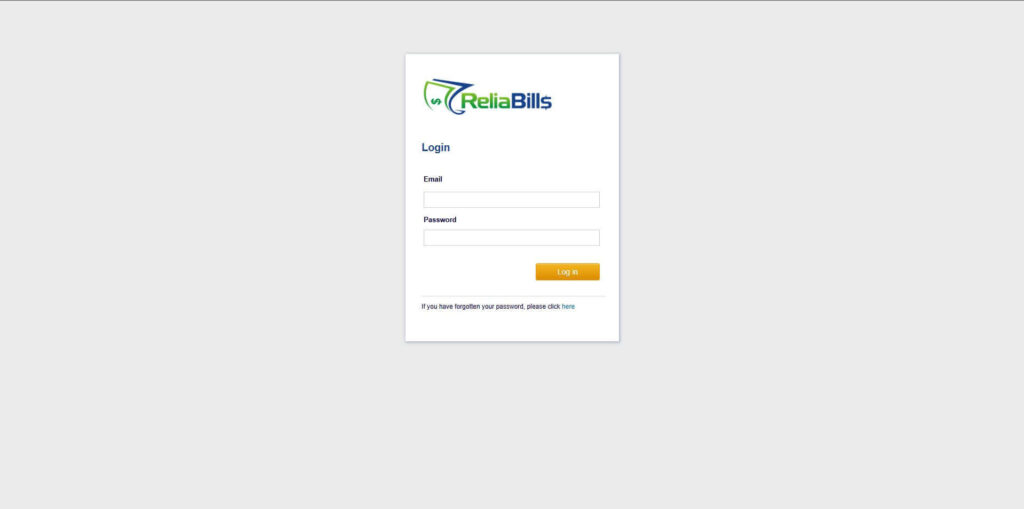
Step 1: Login to ReliaBills
- Access your ReliaBills Account using your login credentials. If you don’t have an account, sign up here.
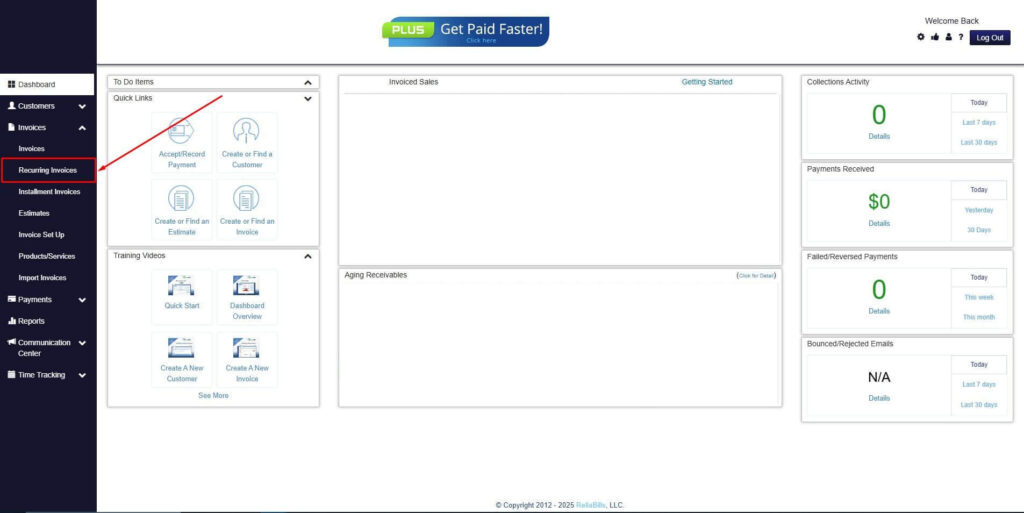
Step 2: Click on Recurring Invoices
- Navigate to the Invoices Dropdown and click on Recurring Invoices for an overview of the list of your existing customers.
Step 3: Go to the Customers Tab
- If you have already created a customer, search for them in the Customers tab and make sure their status is “Active”.
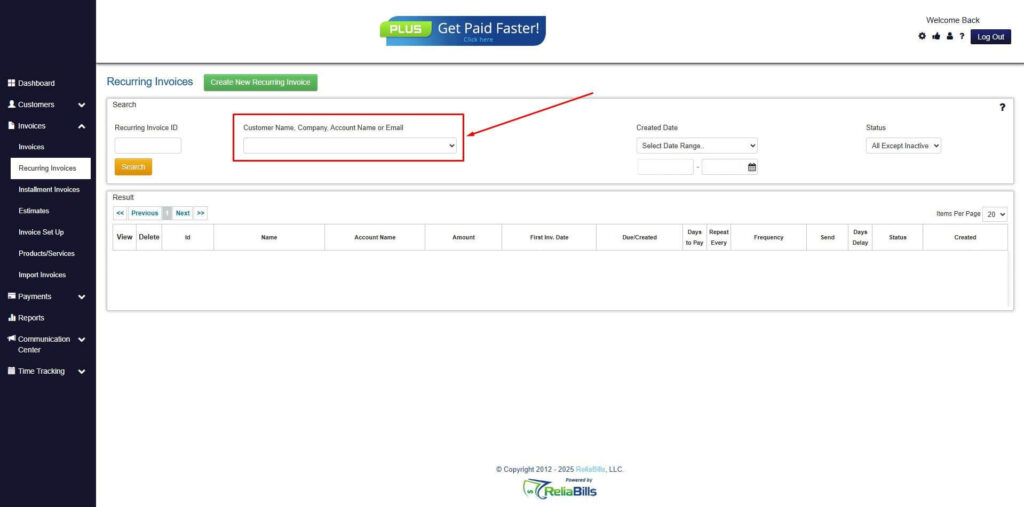
Step 4: Click the Create New Recurring Invoice
- If you haven’t created any customers yet, click the Create New Recurring Invoice to create a new customer.
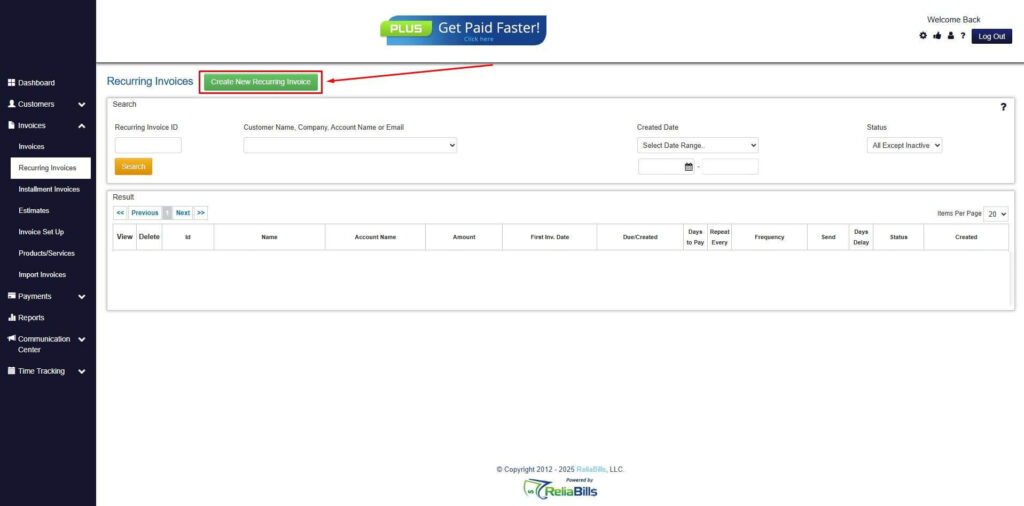
Step 5: Click on the “Click here” Button
- Click on the “Click here” button to proceed with the recurring invoice creation.
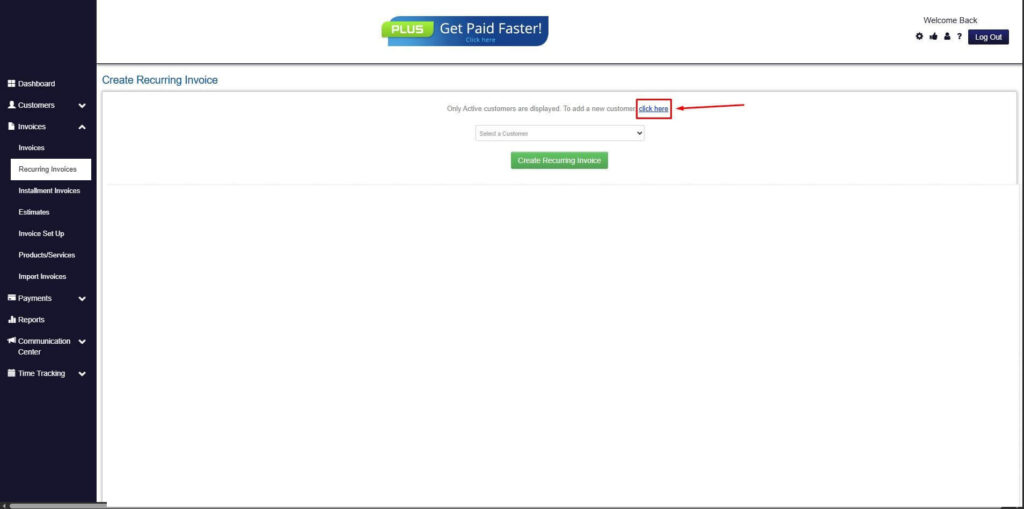
Step 6: Create Customer
- Provide your First Name, Last Name, and Email to proceed.
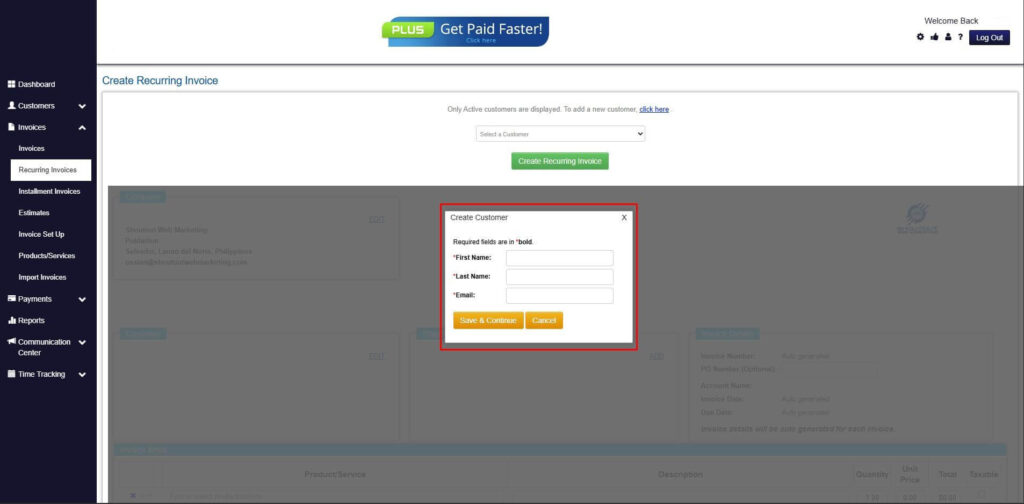
Step 7: Fill in the Create Recurring Invoice Form
- Fill in all the necessary fields.
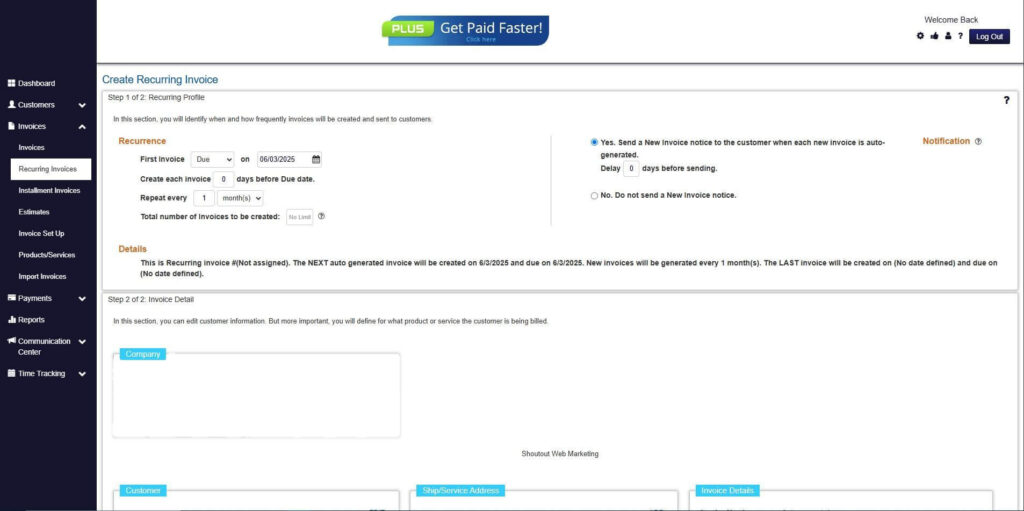
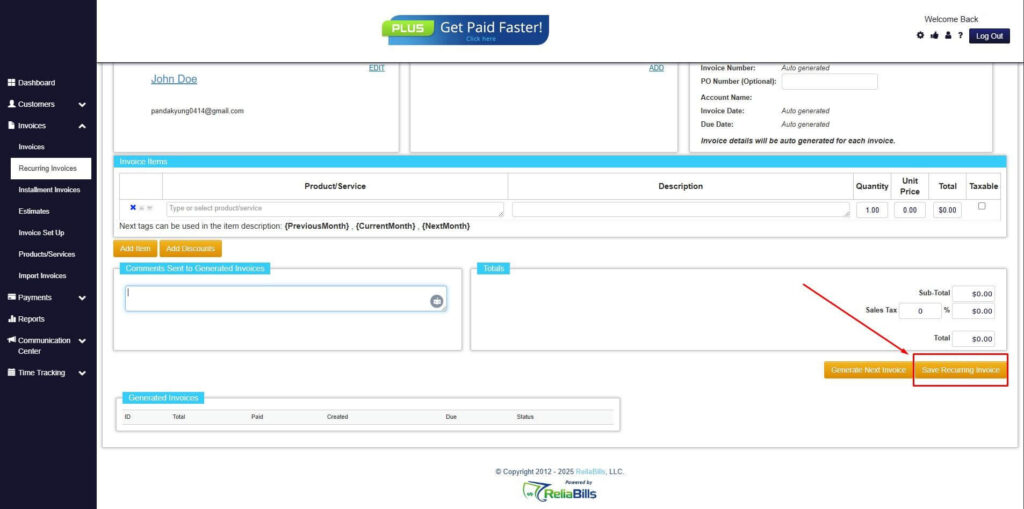
Step 8: Save Recurring Invoice
- After filling up the form, click “Save Recurring Invoice” to continue.
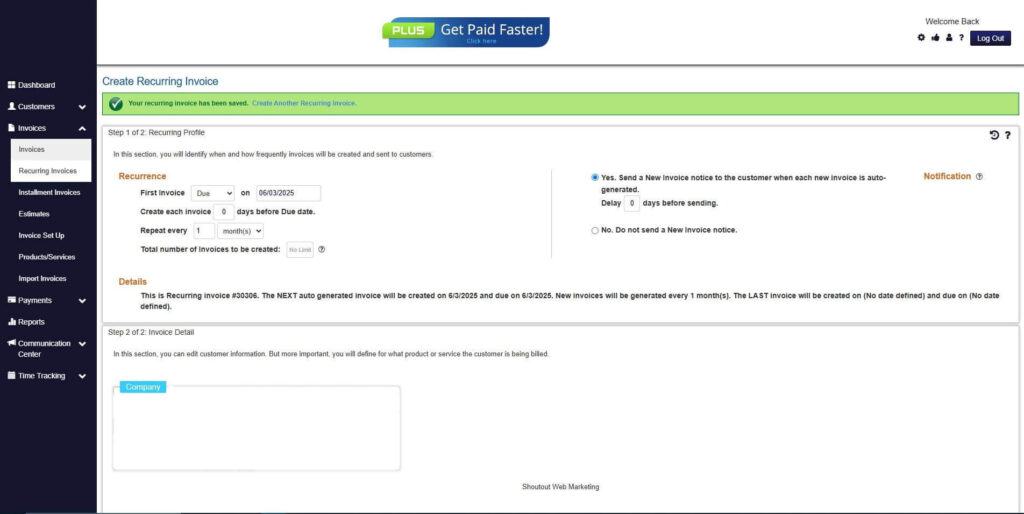
Step 9: Recurring Invoice Created
- Your Recurring Invoice has been created.
Frequently Asked Questions (FAQs)
1. What is invoice discounting?
Invoice discounting is a financing method where businesses receive immediate cash by using unpaid invoices as collateral. The business retains control of customer collections and repays the lender once the customer pays. It is commonly used to improve cash flow without taking traditional loans.
2. How does invoice automation reduce risk in invoice discounting?
It reduces risk by ensuring invoices are accurate, standardized, and free from manual errors. Automation also improves visibility into receivables and prevents duplicate or fraudulent invoices. This makes financing more secure and reliable.
3. Can automation completely eliminate invoice fraud?
No system can eliminate fraud entirely, but automation significantly reduces the risk. It detects duplicates, flags anomalies, and maintains audit trails for accountability. Combined with internal controls, it provides strong fraud protection.
4. Is recurring billing important for invoice financing?
Yes, recurring billing creates predictable and stable cash flow patterns. This makes it easier for lenders to assess repayment risk. It also reduces the chance of missed or delayed invoices.
5. How do lenders benefit from automated invoicing systems?
Lenders receive accurate, real-time financial data that improves decision-making. This reduces uncertainty and speeds up approval processes. It also lowers the risk of default by improving transparency.
Conclusion
Invoice discounting is an effective way for businesses to improve cash flow, but it requires careful management to avoid risks. Challenges such as inaccurate invoices, delayed payments, and limited visibility can undermine its benefits and create financial instability.
By implementing invoice automation for invoice discounting, businesses can address these challenges head-on. Automation improves accuracy, enhances transparency, and ensures consistent invoicing practices, especially when combined with recurring billing.
Looking ahead, businesses that embrace automation will be better equipped to navigate financial complexities and build stronger relationships with lenders. Investing in automated invoicing solutions is not just about efficiency—it is a strategic move toward long-term financial stability and sustainable growth.