
SaaS billing is inherently complex, especially when businesses need to manage return invoices such as refunds, credits, and billing adjustments. Unlike traditional billing models, SaaS companies operate on dynamic subscription structures that frequently change based on user activity, upgrades, downgrades, and cancellations. These constant adjustments make it challenging to maintain billing accuracy, particularly when multiple pricing tiers and usage-based components are involved. Even a small oversight in this environment can quickly escalate into a significant financial discrepancy.
Manual processes often struggle to keep up with this level of complexity, leading to costly billing mistakes and frustrated customers. Teams relying on spreadsheets or disconnected tools may overlook key details such as billing cycles, proration logic, or applied discounts. These errors not only affect revenue but also create confusion for customers who expect clear and accurate invoices. Over time, repeated mistakes can increase churn and damage the company’s reputation.
This is where billing errors automation SaaS invoices becomes a critical operational advantage for modern SaaS companies. Automation introduces consistency, accuracy, and speed into billing workflows by removing repetitive manual tasks. It ensures that calculations are standardized and data is always up to date across systems. Ultimately, automation allows SaaS businesses to scale efficiently while maintaining high levels of billing accuracy and customer trust.
What Are SaaS Return Invoices?
SaaS return invoices, often referred to as credit invoices, are used to adjust or reverse previously issued charges in a subscription-based billing system. These invoices are essential for reflecting refunds, service downgrades, promotional credits, or corrections to billing errors. In a SaaS environment, where billing is continuous and flexible, return invoices ensure that customers are charged fairly based on their actual usage or subscription status. Without them, financial records would quickly become inconsistent and unreliable.
Return invoices are commonly issued in scenarios such as mid-cycle plan changes, cancellations, or service interruptions. For example, if a customer cancels a subscription halfway through a billing period, a return invoice may be generated to refund the unused portion. Similarly, if a billing error occurs, a credit invoice is used to correct the mistake and restore accuracy. These situations are frequent in SaaS operations, making return invoice management a critical component of billing systems.
Beyond financial accuracy, return invoices also play a key role in maintaining customer trust and transparency. Customers expect clear explanations for any billing adjustments, especially when refunds or credits are involved. Properly documented return invoices provide that clarity and help avoid disputes. They also ensure compliance with accounting standards, making them essential for audits and financial reporting.
Why Billing Errors Occur in SaaS Return Invoices
Billing errors in SaaS return invoices often arise due to the highly dynamic nature of subscription-based services. Customers frequently switch plans, pause subscriptions, or modify usage, which requires constant recalculations. When these changes are handled manually, the risk of errors increases significantly. Even experienced teams can struggle to keep up with the volume and complexity of adjustments.
Manual calculations for prorations and refunds are another major source of errors. Determining the exact amount to credit or refund requires precise timing and accurate data inputs. Without automated systems, these calculations are prone to inconsistencies and rounding errors. This can result in customers being overcharged or under-refunded, both of which can lead to dissatisfaction.
Disconnected billing and payment systems further compound the problem. When different platforms handle subscriptions, invoicing, and payments, data silos can form. This lack of integration leads to mismatched records, duplicate entries, or missing updates. Businesses may struggle to maintain a unified view of customer billing activity, increasing the likelihood of errors.
Additionally, the absence of real-time data synchronization means that billing decisions are often based on outdated information. For example, a system may not reflect a recent plan downgrade when generating a return invoice. This creates discrepancies that require manual correction later. Over time, these inefficiencies can significantly impact both operational performance and customer experience.
Common Billing Errors in SaaS Return Invoices
Incorrect proration calculations
Proration errors occur when adjustments for partial billing periods are calculated inaccurately, often due to incorrect date ranges or usage assumptions. These mistakes are common when subscription changes happen mid-cycle and require precise calculations. Even minor discrepancies can lead to customer complaints or financial imbalances. Automation ensures that prorations are calculated consistently based on real-time subscription data and predefined rules.
Duplicate return invoices or credits
Duplicate invoices can occur when systems fail to track previously issued credits or when manual processes are repeated unintentionally. This can result in customers receiving multiple refunds for the same transaction, leading to revenue loss. It also complicates reconciliation and financial reporting. Automated systems prevent duplication by validating transactions and maintaining a centralized record of all billing activities.
Missing or delayed refund processing
Manual workflows often cause delays in processing refunds, especially when approvals or calculations are required. Missing refunds can lead to customer dissatisfaction and increased support inquiries. Delays also create a negative perception of the company’s reliability. Automation streamlines refund processing, ensuring that credits are issued promptly and accurately.
Incorrect customer or subscription details
Errors in customer information or subscription data can result in inaccurate return invoices. This may include incorrect billing periods, plan details, or account identifiers. Such mistakes can confuse customers and lead to disputes. Automated systems pull data directly from integrated platforms, reducing the risk of incorrect information.
Failure to link return invoices to original invoices
Return invoices must be properly associated with their corresponding original invoices to maintain accurate records. Failure to establish this link can create gaps in audit trails and make reconciliation difficult. This also increases compliance risks during audits. Automation ensures that all invoices are properly linked and documented.
Inaccurate tax or discount calculations
Applying taxes and discounts incorrectly can significantly impact billing accuracy. Manual processes may overlook regional tax rules or promotional conditions. This can lead to compliance issues and customer dissatisfaction. Automated systems apply consistent rules to ensure accurate calculations across all invoices.
How These Errors Impact SaaS Businesses
Billing errors can lead to revenue leakage and inaccurate financial reporting, which directly affects a company’s ability to make informed decisions. When financial data is unreliable, it becomes difficult to assess profitability, forecast growth, or allocate resources effectively. These inaccuracies can also impact investor confidence and strategic planning. Maintaining accurate billing records is essential for long-term success.
Customer disputes and support tickets often increase when billing errors occur, placing additional strain on support teams. Customers expect transparency and accuracy, and any discrepancy can lead to frustration. Resolving these issues requires time and effort, diverting resources from more valuable activities. Over time, this can reduce overall operational efficiency.
Loss of customer trust is another significant consequence of billing errors. Customers may lose confidence in a company’s ability to manage their accounts accurately. This can lead to increased churn and reduced lifetime value. Trust is a critical factor in customer retention, especially in competitive SaaS markets.
Compliance and audit challenges also arise from inaccurate billing records. Regulatory requirements demand precise documentation and transparency. Errors in return invoices can lead to penalties, failed audits, or legal complications. Automation helps mitigate these risks by ensuring consistent and accurate record-keeping.
How Automation Prevents Billing Errors
Automation significantly reduces billing errors automation SaaS invoices by handling complex calculations with precision and consistency. It eliminates the need for manual input, ensuring that prorations, refunds, and credits are calculated accurately every time. This reduces inconsistencies and improves overall billing reliability. Businesses can confidently manage even the most complex billing scenarios.
Automated systems also standardize invoice generation, ensuring that every return invoice follows the same rules and structure. This consistency minimizes discrepancies and improves clarity for both businesses and customers. By applying predefined logic, automation ensures that all invoices are accurate and compliant. This leads to fewer disputes and smoother operations.
Real-time data synchronization ensures that billing systems always have access to the latest information. This prevents errors caused by outdated data and ensures that all adjustments reflect current subscription statuses. Integration across platforms further enhances accuracy by eliminating data silos. This creates a unified and reliable billing environment.
Finally, automation reduces reliance on manual data entry, which is a common source of errors. By minimizing human intervention, businesses can significantly lower the risk of mistakes. This improves efficiency, reduces costs, and enhances overall customer satisfaction. Automation ultimately transforms billing into a more reliable and scalable process.
Specific Errors Automation Can Prevent
Miscalculated partial refunds during plan changes
Automation accurately calculates refunds when customers upgrade or downgrade their subscriptions mid-cycle. It considers factors such as billing periods, usage, and pricing tiers. This eliminates guesswork and ensures consistency across all transactions. As a result, customers receive fair and accurate refunds.
Duplicate invoice generation
Automated systems include validation checks to prevent duplicate invoices from being created. These safeguards ensure that each transaction is processed only once. This reduces the risk of over-crediting customers and simplifies financial tracking. It also improves overall billing integrity.
Missing invoice references and audit trails
Automation ensures that every return invoice is properly linked to its original transaction. This creates a clear and traceable audit trail for all billing activities. It simplifies reconciliation and supports compliance requirements. Businesses can easily track and verify all adjustments.
Delayed updates to billing records
Real-time updates ensure that billing records reflect the latest subscription changes तुरंत. This prevents discrepancies caused by outdated information. It also improves coordination between billing and payment systems. Businesses can operate with greater accuracy and confidence.
Inconsistent application of discounts or taxes
Automation applies predefined rules for discounts and taxes across all invoices. This ensures consistency and compliance with regulations. It reduces the risk of manual errors and discrepancies. Customers receive accurate and transparent billing every time.
Key Features of Automated SaaS Billing Systems
Automated return invoice generation
This feature allows systems to automatically create credit invoices based on predefined triggers such as cancellations or refunds. It eliminates manual intervention and reduces errors. Businesses can process adjustments quickly and efficiently. This improves overall billing workflows.
Real-time billing and payment tracking
Real-time tracking provides visibility into all billing activities and payment statuses. Businesses can monitor transactions and identify issues immediately. This helps prevent errors and improve decision-making. It also enhances transparency.
Proration and adjustment engines
Advanced engines handle complex billing scenarios such as mid-cycle changes and usage-based pricing. They calculate adjustments accurately and consistently. This reduces errors and simplifies billing management. Businesses can handle complexity with ease.
Integration with subscription and payment platforms
Integration ensures seamless data flow between systems, reducing discrepancies and improving accuracy. Businesses can manage billing, subscriptions, and payments in a unified environment. This enhances efficiency and reliability. It also supports scalability.
Audit logs and reporting tools
Audit logs provide detailed records of all billing activities, supporting compliance and transparency. Reporting tools offer insights into performance and trends. Businesses can use this data to optimize processes. It also improves accountability.
Workflow automation for approvals and refunds
Automated workflows streamline approval processes and ensure consistency in handling refunds. This reduces delays and improves efficiency. Businesses can manage operations more effectively. It also enhances customer experience.
The Role of Recurring Billing in Reducing Errors
Recurring billing ensures consistent billing cycles and predictable invoice generation, which significantly reduces the likelihood of errors. By automating repetitive transactions, businesses can eliminate manual input and maintain accuracy across billing periods. This consistency is especially important in SaaS environments where subscriptions are ongoing. It also improves financial forecasting and planning.
Another key advantage is the ability to automatically adjust invoices for subscription changes. Recurring billing systems can handle upgrades, downgrades, and cancellations seamlessly. This ensures that invoices always reflect the correct charges and credits. Customers receive accurate billing without delays or confusion.
Minimizing manual intervention is essential for reducing errors. Recurring billing automates routine tasks, allowing teams to focus on strategic activities. This improves efficiency and reduces the risk of mistakes. It also supports scalability as the business grows.
Overall, recurring billing enhances both accuracy and efficiency in SaaS billing operations. It ensures that transactions are processed consistently and reliably. This reduces discrepancies and improves customer satisfaction. Businesses can maintain better control over their billing processes.
Challenges of Managing Return Invoices Without Automation
Managing return invoices without automation exposes businesses to a high risk of human error, particularly in complex billing scenarios. Employees must manually calculate adjustments, track changes, and ensure consistency across systems. This increases the likelihood of mistakes and inefficiencies. Over time, these errors can accumulate and impact financial performance.
Reconciliation processes become significantly more time-consuming without automation. Teams must manually verify transactions, identify discrepancies, and correct errors. This requires substantial effort and resources. It also delays financial reporting and decision-making.
Scaling billing operations is another major challenge without automation. As the volume of transactions grows, manual processes become increasingly difficult to manage. This can lead to bottlenecks and reduced efficiency. Businesses may struggle to maintain accuracy at scale.
Operational costs also increase when relying on manual processes. Additional staff and resources are needed to manage billing activities. This reduces profitability and limits growth potential. Automation helps address these challenges by improving efficiency and reducing costs.
Best Practices for Error-Free SaaS Return Invoice Management
Implement automated invoicing systems
Automation reduces manual errors and ensures consistent billing processes. It allows businesses to handle complex scenarios efficiently. By relying on automated tools, companies can improve accuracy and reduce operational risks. This creates a more reliable billing environment.
Standardize billing and refund processes
Standardization ensures that all transactions follow consistent rules and procedures. This reduces variability and improves accuracy. Businesses can create clear guidelines for handling adjustments and refunds. This enhances efficiency and reliability.
Regularly audit billing data and reports
Regular audits help identify discrepancies and improve accuracy. Businesses can proactively address issues before they escalate. This ensures compliance and transparency. It also strengthens financial integrity.
Maintain clear documentation for all adjustments
Documentation provides a record of all billing changes, supporting audits and reconciliation. Businesses can track adjustments بسهولة and ensure accountability. Clear records also improve transparency. This reduces the risk of disputes.
Ensure system integrations are properly configured
Proper integration ensures seamless data flow between systems, reducing discrepancies and errors. Businesses can maintain consistency across platforms. This improves efficiency and accuracy. It also supports scalable operations.
How Automation Improves SaaS Billing Accuracy
Automation provides real-time visibility into billing changes, allowing businesses to track adjustments as they occur. This ensures that all data is current and accurate. Businesses can quickly identify and resolve issues. This improves overall billing reliability.
Reducing discrepancies in financial records is another key benefit. Automation ensures that all transactions are recorded consistently across systems. This minimizes errors and improves data integrity. Accurate records support better decision-making and reporting.
Automation also enhances compliance and audit readiness by maintaining detailed records and audit trails. Businesses can easily demonstrate transparency and accuracy during audits. This reduces compliance risks and potential penalties. It also builds trust with stakeholders.
Finally, automation supports scalable billing operations by handling increasing transaction volumes efficiently. Businesses can grow without compromising accuracy. This ensures long-term sustainability and success. Automation becomes a critical tool for scaling SaaS operations.
Key Benefits of Preventing Billing Errors
- Improved financial accuracy and reporting: Accurate billing ensures reliable financial data, enabling better decision-making. Businesses can confidently plan and forecast growth. This improves overall performance. It also builds trust with stakeholders.
- Reduced customer disputes and refunds: Fewer errors lead to fewer disputes and complaints. Customers receive accurate invoices, improving satisfaction. This reduces support workload. It also enhances customer relationships.
- Faster billing and reconciliation processes: Automation speeds up billing workflows and simplifies reconciliation. Businesses can close accounts more efficiently. This improves productivity. It also reduces operational delays.
- Increased operational efficiency: Automation reduces manual tasks and streamlines processes. Employees can focus on strategic activities. This improves productivity and reduces costs. It also supports business growth.
- Better customer trust and retention: Accurate billing builds trust and confidence among customers. Satisfied customers are more likely to stay and continue using the service. This improves retention rates. It also supports long-term success.
Common Use Cases
- SaaS subscription downgrades and cancellations: Return invoices are essential for adjusting charges when customers change or cancel their subscriptions. Automation ensures accurate calculations and timely processing. This improves customer satisfaction. It also reduces errors.
- Refund processing for unused services: Customers often request refunds for unused portions of their subscriptions. Automated systems handle these requests efficiently and accurately. This improves the customer experience. It also reduces disputes.
- Billing corrections and dispute resolution: Errors in billing may require adjustments through return invoices. Automation ensures accurate corrections and faster resolution. This improves efficiency. It also maintains customer trust.
- Promotional credits and adjustments: Businesses may offer credits for promotions or goodwill. Automation ensures consistent application of these credits. This reduces errors and improves transparency. It also enhances customer satisfaction.
- Enterprise SaaS contract modifications: Large contracts often involve complex adjustments and custom billing terms. Automation handles these changes accurately and efficiently. This supports scalability. It also improves operational performance.
How ReliaBills Helps Prevent SaaS Return Invoice Errors
Managing SaaS return invoices manually can quickly become overwhelming, especially when dealing with refunds, credits, and subscription adjustments at scale. ReliaBills simplifies this process by automating invoice creation, tracking, and reconciliation, ensuring that every return invoice is accurate and properly documented. This reduces the risk of human error while giving businesses better visibility into their billing operations. As a result, SaaS companies can maintain cleaner financial records and deliver a more consistent customer experience.
With built-in recurring billing capabilities, ReliaBills automatically adjusts invoices based on subscription changes such as upgrades, downgrades, or cancellations. This means prorations, refunds, and credits are calculated in real time without manual intervention, significantly reducing billing errors. Automated workflows also ensure that return invoices are properly linked to original transactions, improving traceability and audit readiness. By minimizing missed updates and inconsistencies, businesses can prevent disputes and keep cash flow predictable.
For growing SaaS companies, ReliaBills PLUS offers advanced features that further enhance billing accuracy and control. These include detailed reporting tools, automated approval workflows, and centralized customer account management for handling complex billing scenarios. Businesses can monitor trends, identify discrepancies quickly, and make data-driven decisions with confidence. With these capabilities, ReliaBills not only prevents billing errors but also supports scalable, efficient, and professional financial operations.
How to Create a New Recurring Invoice Using ReliaBills
Creating a New Recurring Invoice using ReliaBills involves the following steps:
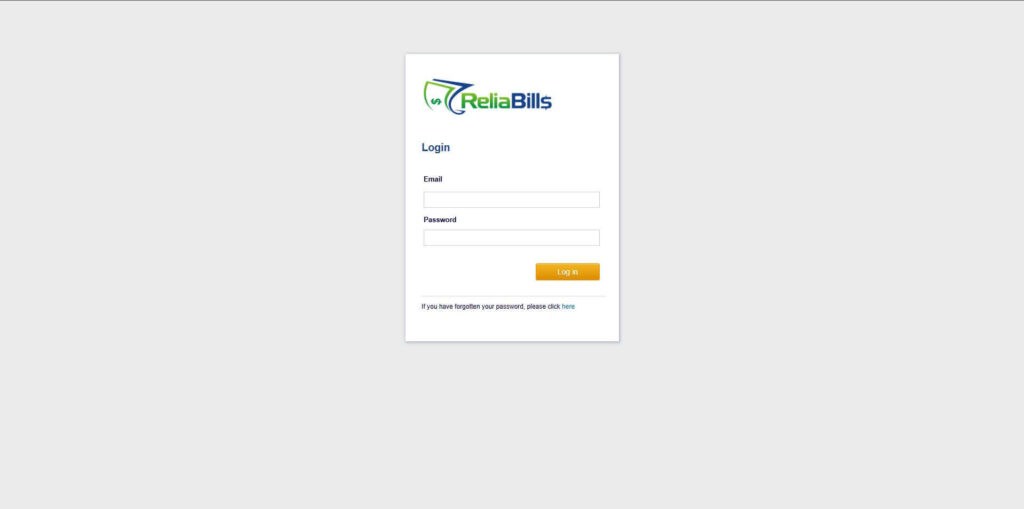
Step 1: Login to ReliaBills
- Access your ReliaBills Account using your login credentials. If you don’t have an account, sign up here.
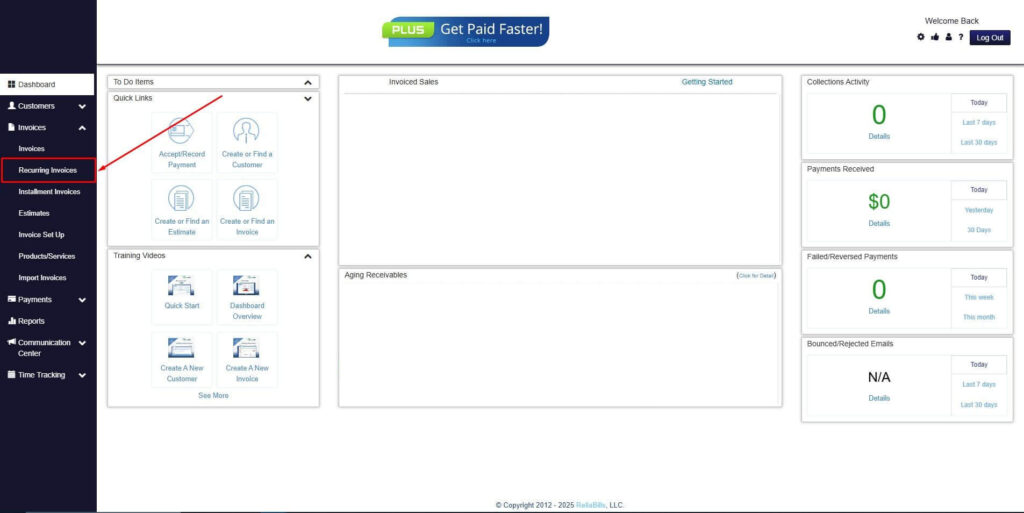
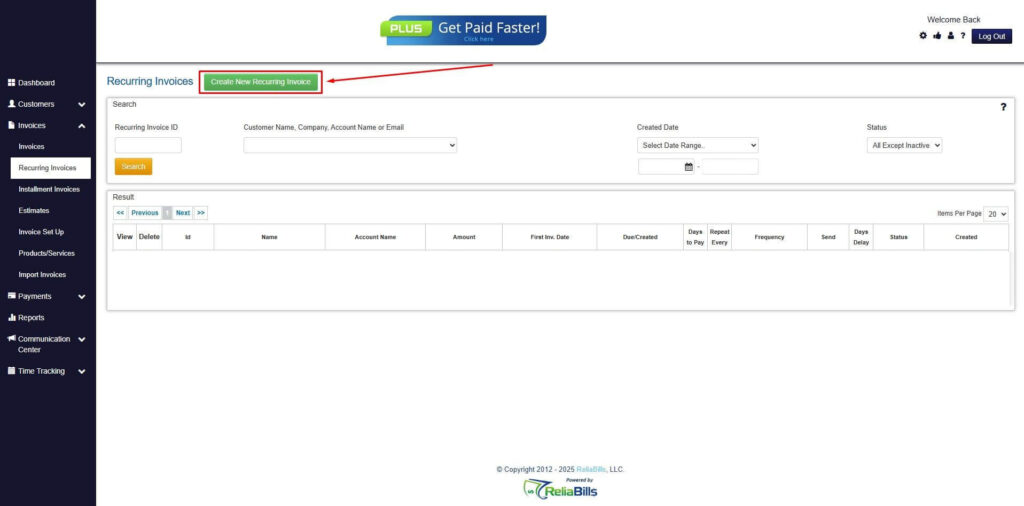
Step 2: Click on Recurring Invoices
- Navigate to the Invoices Dropdown and click on Recurring Invoices for an overview of the list of your existing customers.
Step 3: Go to the Customers Tab
- If you have already created a customer, search for them in the Customers tab and make sure their status is “Active”.
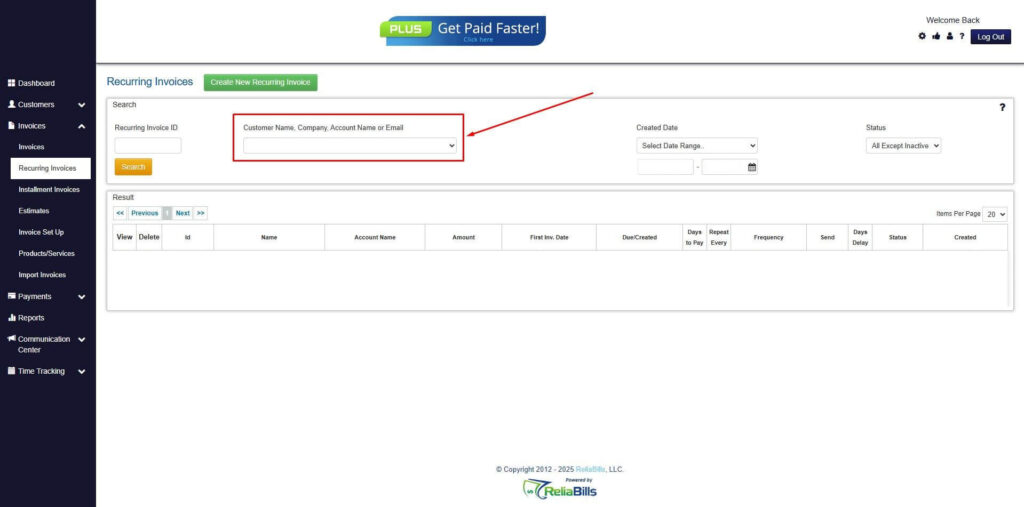
Step 4: Click the Create New Recurring Invoice
- If you haven’t created any customers yet, click the Create New Recurring Invoice to create a new customer.
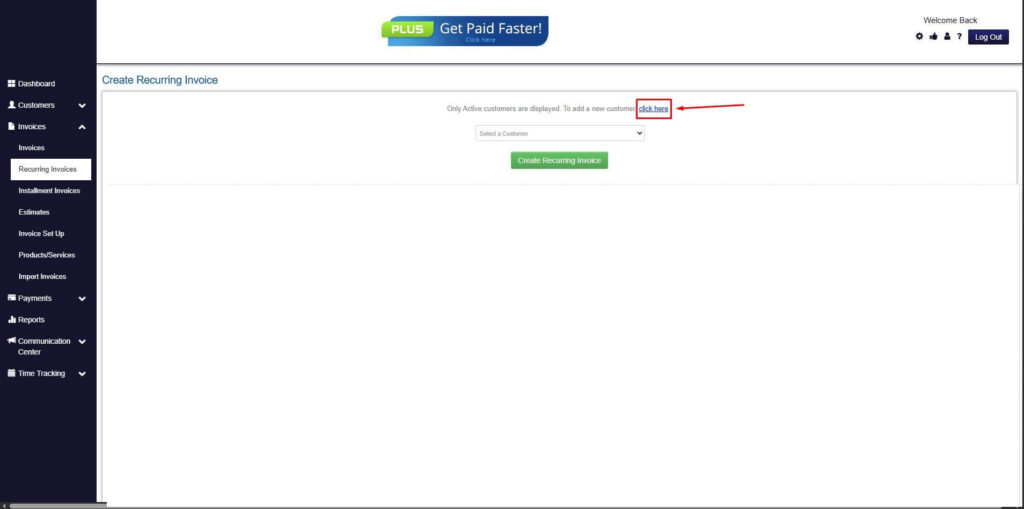
Step 5: Click on the “Click here” Button
- Click on the “Click here” button to proceed with the recurring invoice creation.
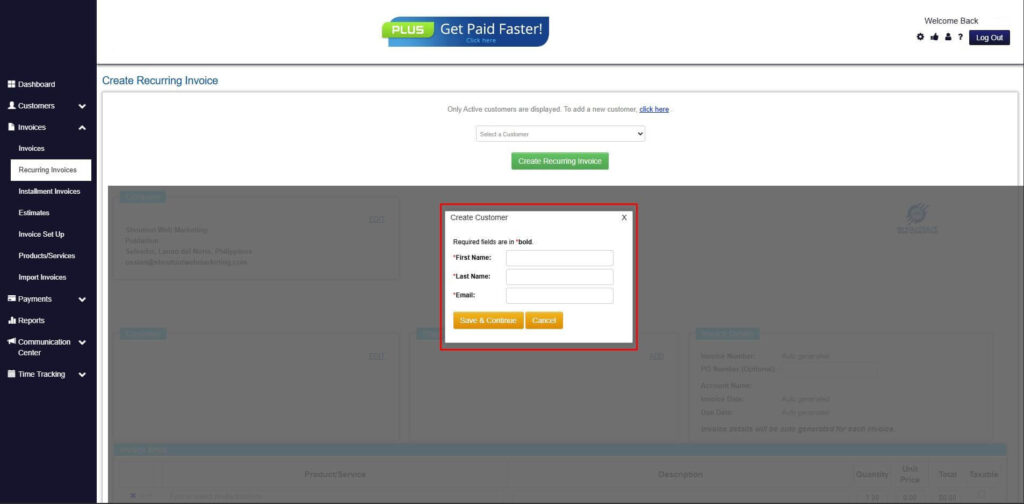
Step 6: Create Customer
- Provide your First Name, Last Name, and Email to proceed.
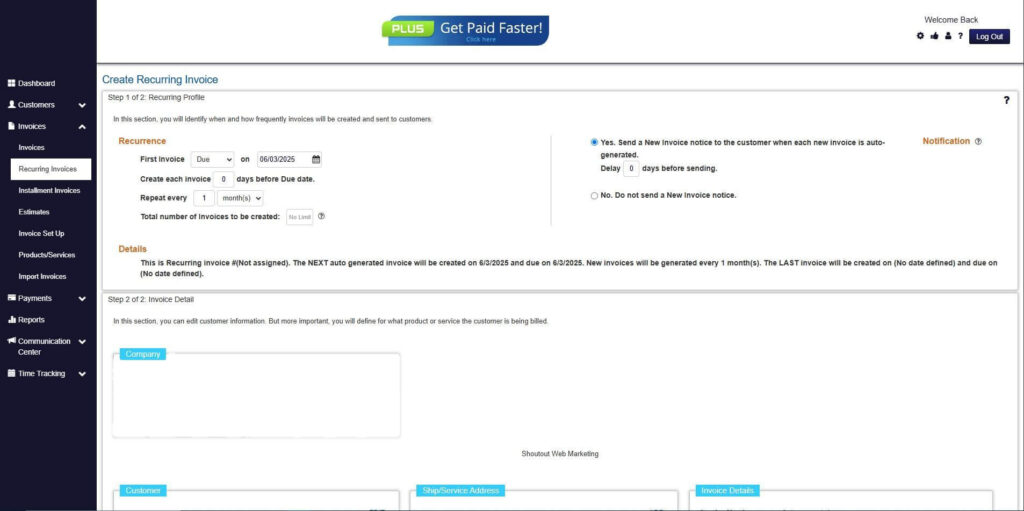
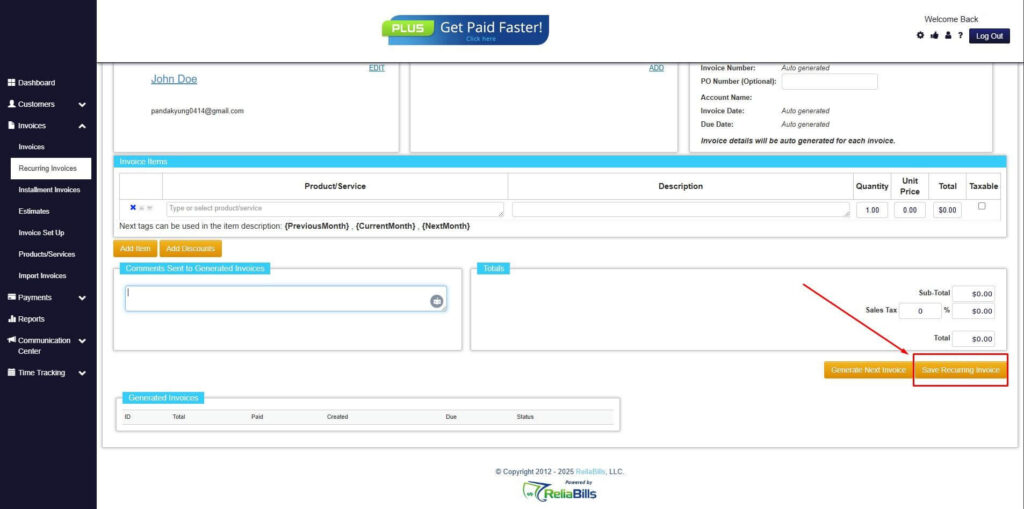
Step 7: Fill in the Create Recurring Invoice Form
- Fill in all the necessary fields.
Step 8: Save Recurring Invoice
- After filling up the form, click “Save Recurring Invoice” to continue.
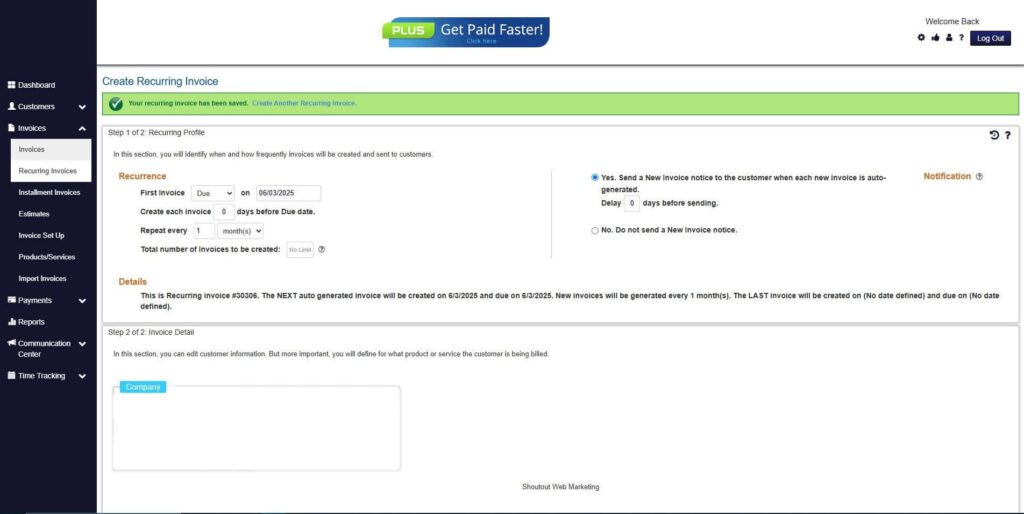
Step 9: Recurring Invoice Created
- Your Recurring Invoice has been created.
Frequently Asked Questions (FAQs)
1. What are common errors in SaaS return invoices?
Common errors include incorrect prorations, duplicate invoices, and missing refunds. These issues often arise from manual processes. Automation helps prevent these mistakes. It improves accuracy and efficiency.
2. How does automation prevent billing mistakes?
Automation eliminates manual calculations and ensures consistent processes. It synchronizes data in real time across systems. This reduces errors and discrepancies. It also improves overall efficiency.
3. Can automated systems handle prorated refunds?
Yes, automated systems are designed to calculate prorated refunds accurately. They consider timing, usage, and subscription changes. This ensures fair and precise adjustments. It reduces the risk of disputes.
4. Why is recurring billing important for SaaS accuracy?
Recurring billing ensures consistent invoice generation and reduces manual intervention. It improves accuracy and efficiency. This supports scalability and growth. It also enhances customer satisfaction.
5. What features should SaaS billing software include?
Key features include automation, real-time tracking, integration, and audit logs. Reporting tools are also essential. These features improve accuracy and efficiency. They support effective billing management.
Conclusion
Automation plays a critical role in preventing common billing errors in SaaS return invoices by ensuring accuracy, consistency, and efficiency. By reducing manual intervention, businesses can minimize discrepancies and improve financial reliability. This leads to better reporting, fewer disputes, and stronger customer relationships. Accurate billing becomes a competitive advantage in the SaaS industry.
Recurring billing and real-time data synchronization further enhance billing accuracy by ensuring that all transactions reflect the latest subscription changes. These technologies allow businesses to handle complex billing scenarios with confidence. They also support scalability as transaction volumes grow. This makes automation an essential component of modern SaaS operations.
Looking ahead, SaaS companies that invest in automated billing systems will be better positioned for sustainable growth. Automation not only improves operational efficiency but also enhances customer trust and satisfaction. As the industry evolves, adopting advanced billing solutions will become increasingly important. This sets the foundation for long-term success and scalability.