
Manual invoicing may work for very small operations, but it quickly becomes a bottleneck as a business begins to grow. Tasks like creating invoices, sending them individually, and tracking payments consume valuable time that could be spent on revenue-generating activities. These inefficiencies often lead to delayed billing cycles and inconsistent cash flow, which can slow down business momentum. As customer bases expand, manual processes become increasingly difficult to manage effectively. This is where automated invoicing for small business becomes a necessary operational upgrade rather than a luxury.
Efficiency is a core requirement for any growing company, especially when dealing with financial workflows. Automated systems reduce repetitive tasks and eliminate unnecessary delays in invoice creation and delivery. Accuracy also improves significantly since automation minimizes human errors in calculations and data entry. Businesses that rely on manual systems often face discrepancies that affect financial reporting and customer trust. Implementing automated invoicing ensures that operations remain consistent, reliable, and scalable.
Scalability is another critical factor that pushes businesses toward automation. As transaction volumes increase, manual invoicing cannot keep pace without adding more administrative resources. Automated invoicing for small business allows companies to handle growth without proportionally increasing overhead costs. It supports a structured billing system that adapts to evolving business needs. Ultimately, it positions businesses for sustainable expansion and long-term success.
What Is Automated Invoicing for Small Business?
Automated invoicing for small business refers to the use of software to generate, send, and manage invoices without manual intervention. These systems automatically create invoices based on predefined rules, such as completed transactions or scheduled billing cycles. They also handle delivery through email or digital platforms, ensuring customers receive invoices promptly. By eliminating manual steps, businesses can significantly reduce processing time and administrative workload. This creates a more streamlined and efficient billing operation.
Integration is a key feature of automated invoicing systems. They often connect seamlessly with accounting software, customer relationship management tools, and payment gateways. This integration ensures that data flows smoothly across platforms, reducing duplication and inconsistencies. Businesses gain a unified view of their financial operations, which improves accuracy and reporting capabilities. As a result, decision-making becomes more data-driven and reliable.
In modern business environments, automation is no longer optional but essential. Customers expect fast, professional, and convenient billing experiences. Automated invoicing for small business meets these expectations by providing clear, timely, and accessible invoices. It also supports digital payment methods, making transactions easier for customers. This alignment with current market demands strengthens both operational efficiency and customer satisfaction.
Why Manual Invoicing Becomes Inefficient Over Time
Manual invoicing systems struggle to keep up with increasing business demands. As the number of customers grows, so does the volume of invoices that need to be processed. This creates a heavier workload for staff, leading to slower turnaround times. Delays in invoicing can directly impact how quickly a business gets paid. Over time, these inefficiencies accumulate and affect overall financial performance.
Human error is another significant issue in manual invoicing. Mistakes in pricing, tax calculations, or customer details are common when processes rely heavily on manual input. These errors can lead to disputes, delayed payments, and damaged customer relationships. Correcting mistakes also requires additional time and effort, further reducing productivity. Automated invoicing for small business minimizes these risks by ensuring consistency and accuracy.
Slow billing cycles are a direct consequence of manual processes. Preparing, reviewing, and sending invoices individually takes time, especially without standardized workflows. This delay affects revenue collection and cash flow stability. Businesses may find themselves waiting longer to receive payments, which can disrupt operations. Automation eliminates these delays by streamlining the entire invoicing process.
Key Signs It’s Time to Switch to Automated Invoicing
Increasing Invoice Volume
Businesses experiencing growth often face a surge in invoice volume that manual systems cannot efficiently handle. Managing multiple invoices individually creates bottlenecks that slow down operations. Tracking each invoice manually increases the likelihood of confusion and missed entries. As the workload increases, administrative teams become overwhelmed and less productive. Automated invoicing for small business resolves this by organizing and processing invoices quickly and accurately.
Frequent Late Payments
Late payments are a common issue when businesses rely on manual invoicing methods. Customers may forget due dates if they do not receive timely reminders. Following up manually requires significant time and effort from staff. This delays revenue collection and creates unnecessary friction in customer relationships. Automation introduces scheduled reminders and autopay options that encourage consistent and timely payments.
Rising Administrative Workload
As businesses expand, administrative responsibilities grow alongside them. Staff spend more time creating invoices, tracking payments, and managing records. This reduces the time available for strategic tasks that drive business growth. The increasing workload can also lead to burnout and inefficiency. Automated invoicing for small business reduces this burden by handling repetitive tasks automatically.
Errors in Billing and Data Entry
Manual invoicing processes are prone to errors that can disrupt operations. Mistakes in calculations or incorrect customer details can lead to disputes and payment delays. These issues damage credibility and require additional effort to resolve. Consistency becomes difficult to maintain when processes depend on manual input. Automation ensures accuracy by standardizing invoice creation and minimizing human intervention.
Difficulty Tracking Payments
Tracking payments manually can be challenging and time-consuming. Businesses often lack real-time visibility into which invoices are paid or overdue. This makes it harder to manage cash flow and follow up with customers. Inconsistent tracking can also lead to financial discrepancies. Automated invoicing systems provide dashboards and instant updates that improve transparency and control.
How Automated Invoicing Improves Cash Flow
Faster Invoice Delivery
Automated invoicing ensures that invoices are generated and sent immediately after a transaction occurs. This eliminates delays associated with manual preparation and approval processes. Faster delivery means customers receive invoices sooner and can act on them quickly. It shortens the billing cycle and accelerates revenue collection. As a result, businesses experience more consistent cash flow.
Automated Payment Reminders
Automated systems send reminders before and after invoice due dates. This reduces the need for manual follow-ups and improves efficiency. Customers are more likely to pay on time when they receive consistent notifications. It also helps maintain a professional and organized communication process. This feature significantly reduces overdue payments.
Integration with Payment Gateways
Automation allows invoices to include direct payment options through integrated gateways. Customers can complete transactions immediately upon receiving an invoice. This convenience reduces friction and speeds up the payment process. Businesses benefit from faster transaction completion and reduced delays. It enhances the overall billing experience for both parties.
Recurring Billing Automation
Recurring billing automates invoicing for repeat customers on a set schedule. Businesses no longer need to recreate invoices for ongoing services. This ensures consistency and eliminates missed billing cycles. It also supports predictable revenue streams that improve financial planning. Automated invoicing for small business becomes even more powerful when combined with recurring billing.
The Role of Recurring Billing in Automation
Subscription-Based Billing
Subscription models rely heavily on consistent and accurate billing cycles. Automated invoicing ensures that customers are billed correctly at regular intervals. This reduces the risk of missed invoices and improves customer retention. Businesses can maintain steady revenue without manual intervention. It is ideal for service-based and membership-driven companies.
Scheduled Payment Collection
Scheduled payments allow businesses to automatically charge customers at predefined intervals. This minimizes the chances of missed or late payments. Customers benefit from a hassle-free payment experience. Businesses gain more predictable and stable cash flow. Automation ensures that billing cycles remain consistent and reliable.
Reduced Manual Intervention
Recurring billing eliminates the need for repetitive invoicing tasks. Staff no longer need to generate invoices manually for repeat transactions. This frees up time for more strategic and value-driven activities. Operational efficiency improves significantly as a result. Automated invoicing for small business becomes a key driver of productivity.
Benefits of Automated Invoicing for Small Businesses
Improved Efficiency
Automation streamlines the entire invoicing process from creation to payment tracking. Businesses can handle more transactions without increasing workload. Administrative tasks are reduced, allowing teams to focus on growth initiatives. Processes become faster and more consistent. This leads to higher overall productivity.
Better Accuracy
Automated systems eliminate common errors in calculations and data entry. Standardized templates ensure consistency across all invoices. Financial records become more reliable and easier to manage. This improves reporting accuracy and compliance. Businesses can operate with greater confidence in their data.
Faster Payments
Automation provides customers with convenient and immediate payment options. This encourages quicker transactions and reduces delays. Payment reminders further support timely collections. Businesses experience fewer outstanding balances. Cash flow becomes more stable and predictable.
Enhanced Customer Experience
Customers receive clear, professional, and timely invoices. Flexible payment options make transactions easier and more convenient. Consistent communication builds trust and reliability. A seamless billing experience improves customer satisfaction. This contributes to stronger long-term relationships.
Scalability
Automated invoicing systems are designed to grow with the business. They can handle increasing transaction volumes without additional resources. Businesses can expand operations without worrying about billing limitations. Systems adapt to new services and pricing models. This ensures long-term operational sustainability.
Common Challenges Without Automated Invoicing
Missed or Delayed Invoices
Manual processes increase the risk of forgetting to send invoices. Delays in billing directly impact revenue collection timelines. Customers may lose trust if invoicing becomes inconsistent. Businesses struggle to maintain a reliable billing schedule. This creates unnecessary financial instability.
Inefficient Payment Tracking
Tracking payments manually lacks real-time visibility and accuracy. Businesses may not know which invoices are outstanding at any given time. This leads to confusion and delays in follow-ups. Financial records can become inconsistent over time. Automation resolves these issues with centralized tracking.
High Administrative Costs
Manual invoicing requires significant time and effort from staff. As the business grows, more resources are needed to manage billing. This increases operational costs and reduces profitability. Efficiency remains limited despite higher expenses. Automated invoicing for small business reduces these costs significantly.
How Automation Reduces Administrative Burden
Centralized Billing Management
Automation consolidates all billing activities into a single system. Businesses can access invoices, payments, and customer data in one place. This simplifies tracking and improves organization. It reduces the complexity of managing multiple processes. Efficiency increases across the entire workflow.
Automated Reporting
Automated systems generate financial reports instantly. Businesses gain insights into revenue, outstanding invoices, and cash flow trends. This supports better decision-making and planning. Reports are accurate and up to date. It eliminates the need for manual data compilation.
Reduced Manual Data Entry
Automation eliminates repetitive data entry tasks. Information is automatically captured and processed within the system. This reduces the risk of human error. Staff can focus on higher-value responsibilities. Overall productivity improves significantly.
When Is the Right Time to Implement Automated Invoicing?
During Rapid Business Growth
Rapid growth increases transaction volumes and operational complexity. Manual invoicing becomes unsustainable under these conditions. Automation ensures that billing processes remain consistent and efficient. Businesses can scale without disruptions. It supports long-term expansion strategies.
When Expanding Services or Products
Offering multiple services introduces more complex billing requirements. Manual systems struggle to handle varied pricing structures. Automation simplifies multi-service invoicing. It ensures accuracy and consistency across all offerings. Businesses can expand with confidence.
When Entering Recurring Revenue Models
Subscription-based models require reliable and consistent billing cycles. Automation ensures that invoices are generated on schedule. This reduces the risk of missed payments. Revenue becomes more predictable and stable. Automated invoicing for small business is essential in this scenario.
When Experiencing Cash Flow Issues
Cash flow problems often stem from delayed or inconsistent payments. Automation improves collection processes through reminders and integrated payments. Businesses receive payments faster and more reliably. Financial stability improves over time. This makes automation a strategic investment.
How Billing Software Supports Automated Invoicing
Customizable Invoice Templates
Billing software allows businesses to create professional and branded invoices. Templates ensure consistency in formatting and presentation. This enhances the overall customer experience. Businesses can maintain a strong brand identity. It also saves time in invoice creation.
Integration Capabilities
Modern billing platforms integrate with accounting and CRM systems. This ensures seamless data flow across different tools. Businesses avoid duplication of work and inconsistencies. Processes become more efficient and reliable. Integration enhances overall operational performance.
Real-Time Tracking and Analytics
Billing software provides real-time insights into invoice status and payments. Businesses can monitor outstanding balances بسهولة. This improves financial planning and decision-making. Data-driven insights lead to better strategies. Automation ensures transparency and control.
Best Practices for Transitioning to Automated Invoicing
Audit Your Current Billing Process
Start by analyzing existing invoicing workflows. Identify inefficiencies and bottlenecks that slow down operations. Determine which tasks can be automated. This creates a clear roadmap for implementation. Preparation ensures a smoother transition.
Choose Scalable Software
Select a platform that can grow with your business. Look for features like recurring billing and automation capabilities. Ensure the system is user-friendly and reliable. Scalability is essential for long-term success. The right software supports continuous growth.
Train Your Team
Educate staff on how to use the new system effectively. Provide training sessions and resources for smooth adoption. Address any concerns or challenges early on. Proper training minimizes errors and resistance. It ensures successful implementation.
Communicate with Customers
Inform customers about changes to your billing process. Provide clear instructions on new payment methods. Transparency builds trust and reduces confusion. Customers adapt more easily when informed. Communication ensures a seamless transition.
Common Use Cases of Automated Invoicing
Subscription Services
Subscription businesses rely on consistent billing cycles. Automation ensures invoices are generated and sent on time. This reduces manual effort and improves accuracy. Revenue becomes predictable and stable. It supports long-term customer retention.
Freelancers and Agencies
Freelancers handle multiple clients and projects simultaneously. Automated invoicing simplifies billing across different accounts. It improves payment tracking and organization. Time spent on administrative tasks is reduced. Productivity increases significantly.
E-commerce Businesses
E-commerce platforms generate high volumes of transactions daily. Automation ensures invoices are created instantly for each order. Integration with payment systems speeds up transactions. Businesses can manage large-scale operations efficiently. Customer experience improves.
How ReliaBills Supports Automated Invoicing for Small Business
ReliaBills simplifies billing operations by offering intuitive tools that automate invoice creation, delivery, and tracking. Small businesses can reduce manual effort and improve efficiency through a centralized platform. The system ensures invoices are sent promptly and tracked accurately. This helps businesses maintain consistent cash flow and organized financial records. Automated invoicing for small business becomes seamless with such a solution.
A key strength of ReliaBills is its recurring billing capability, which allows businesses to charge customers automatically on scheduled cycles. This eliminates missed invoices and reduces late payments significantly. Businesses can create predictable revenue streams without manual intervention. The automation also enhances customer convenience through consistent and reliable billing. It is especially valuable for subscription-based and service-oriented businesses.
ReliaBills PLUS further enhances these capabilities with advanced automation features, branded invoicing, and detailed analytics. Businesses gain deeper insights into their financial performance and customer behavior. The platform supports scalability by adapting to growing transaction volumes. Enhanced reporting tools improve decision-making and planning. This makes ReliaBills a comprehensive solution for modern billing needs.
How to Create a New Recurring Invoice Using ReliaBills
Creating a New Recurring Invoice using ReliaBills involves the following steps:
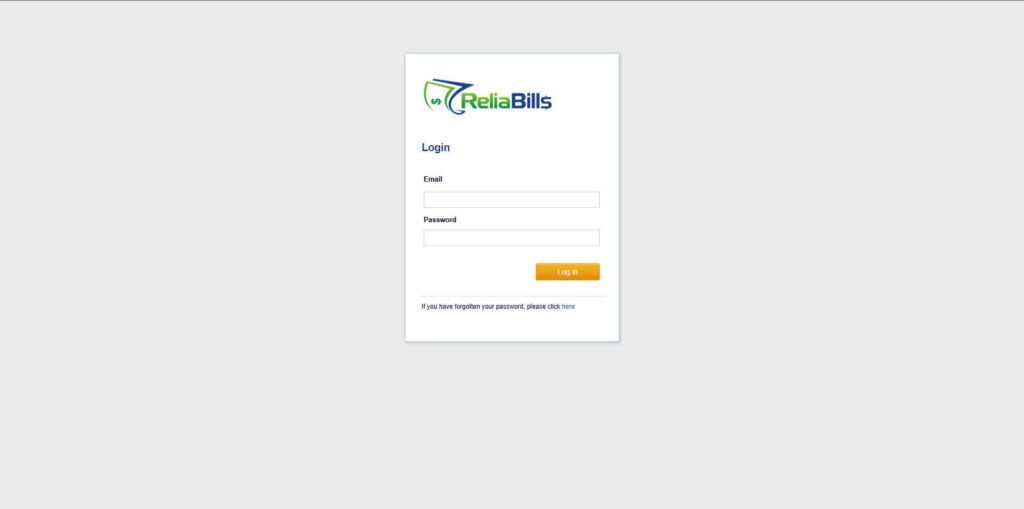
Step 1: Login to ReliaBills
- Access your ReliaBills Account using your login credentials. If you don’t have an account, sign up here.
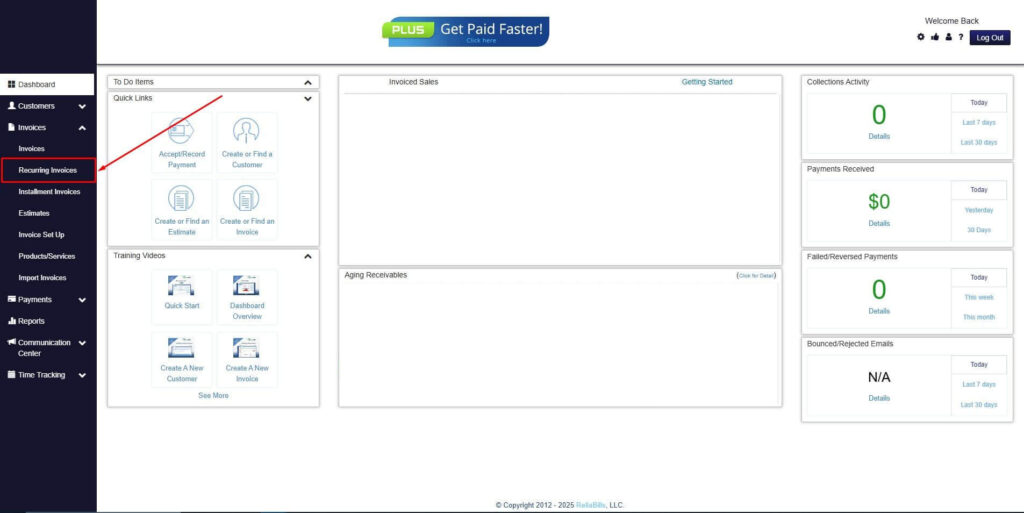
Step 2: Click on Recurring Invoices
- Navigate to the Invoices Dropdown and click on Recurring Invoices for an overview of the list of your existing customers.
Step 3: Go to the Customers Tab
- If you have already created a customer, search for them in the Customers tab and make sure their status is “Active”.
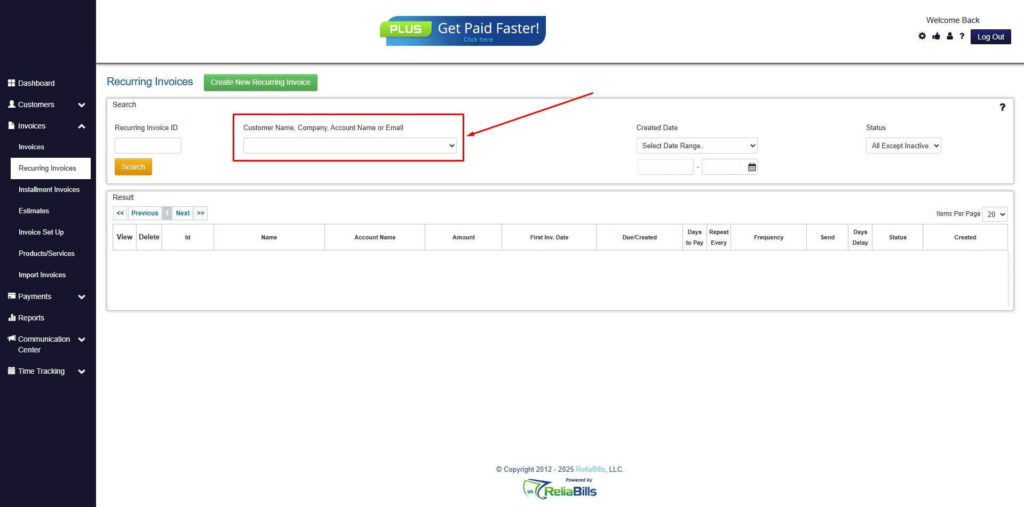
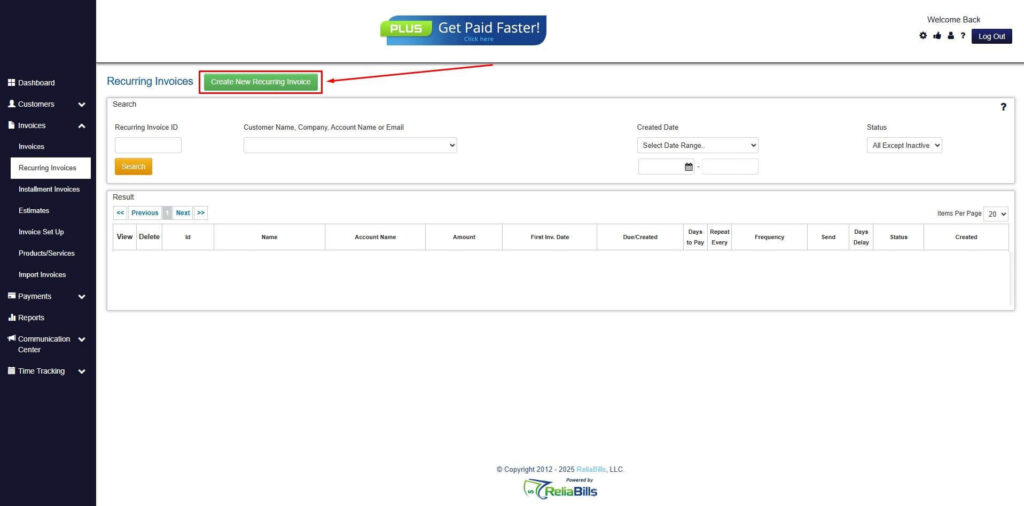
Step 4: Click the Create New Recurring Invoice
- If you haven’t created any customers yet, click the Create New Recurring Invoice to create a new customer.
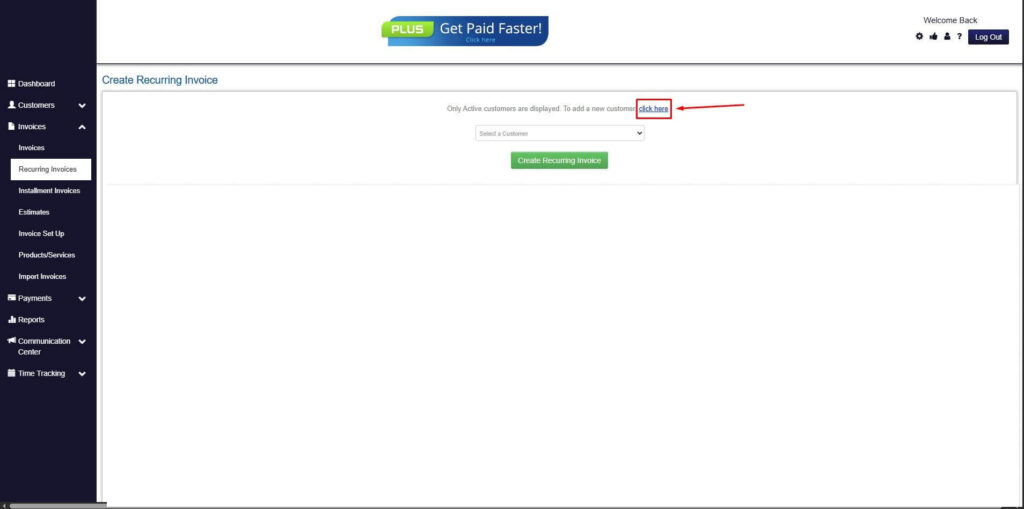
Step 5: Click on the “Click here” Button
- Click on the “Click here” button to proceed with the recurring invoice creation.
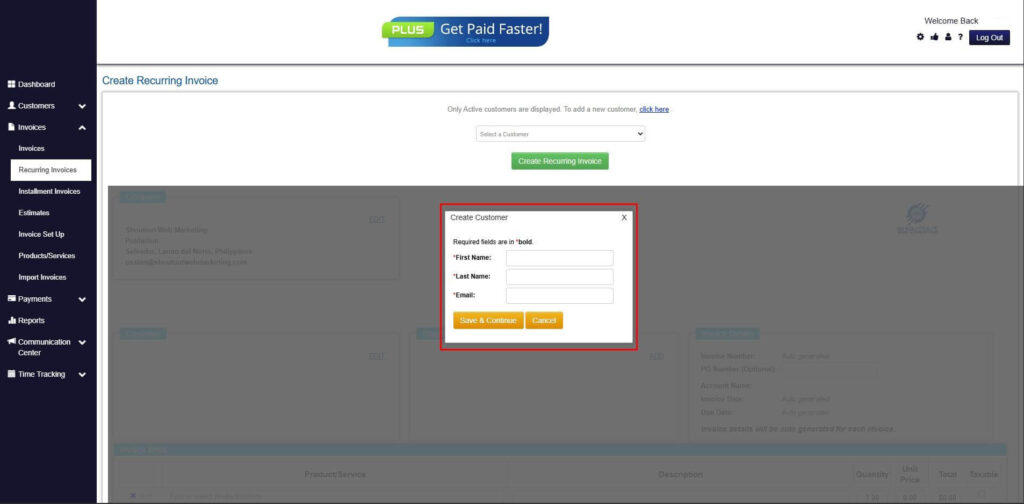
Step 6: Create Customer
- Provide your First Name, Last Name, and Email to proceed.
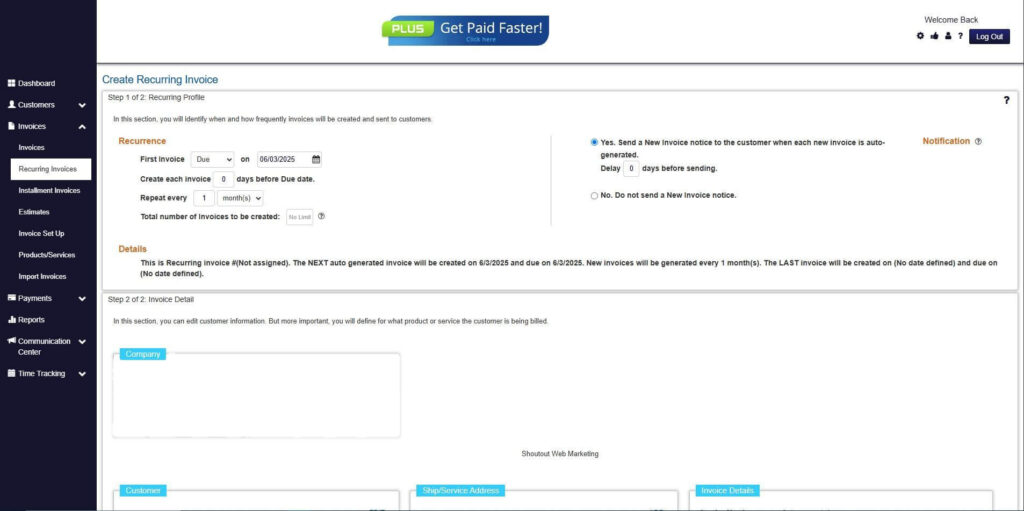
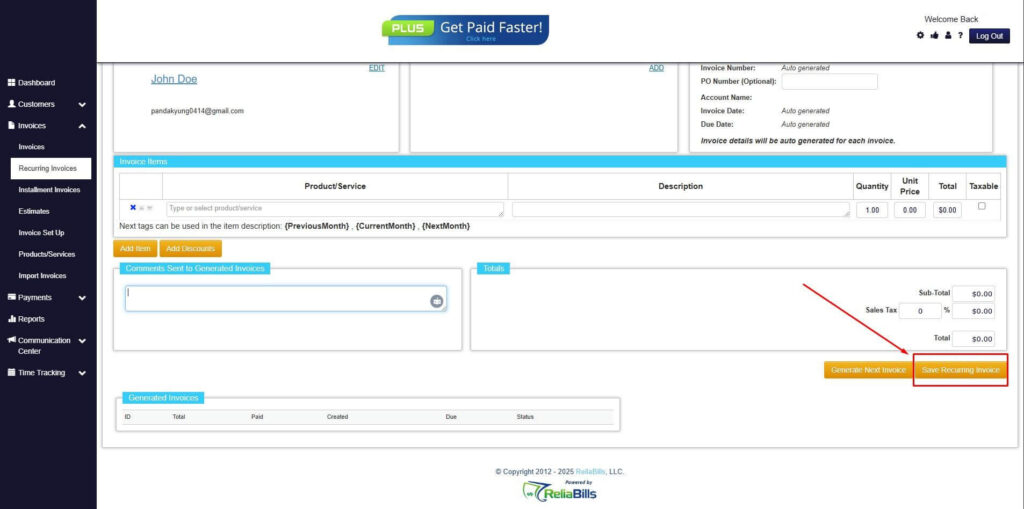
Step 7: Fill in the Create Recurring Invoice Form
- Fill in all the necessary fields.
Step 8: Save Recurring Invoice
- After filling up the form, click “Save Recurring Invoice” to continue.
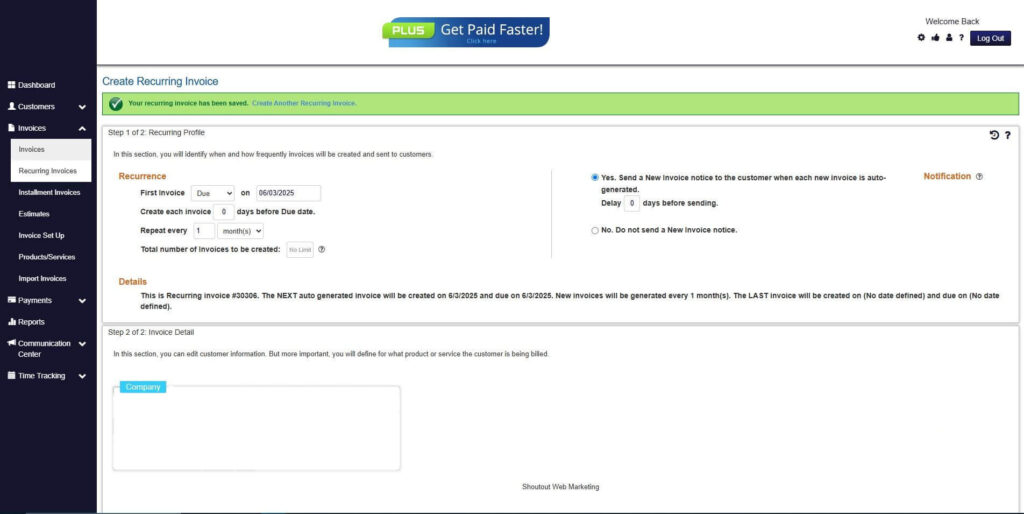
Step 9: Recurring Invoice Created
- Your Recurring Invoice has been created.
Frequently Asked Questions
1. What is automated invoicing for small business?
Automated invoicing for small business is a system that generates and manages invoices without manual input. It streamlines billing processes and reduces administrative workload. Businesses can send invoices faster and more accurately. It also integrates with payment systems for seamless transactions. Overall, it improves efficiency and cash flow management.
2. Is automated invoicing expensive to implement?
Many automated invoicing tools offer scalable pricing suitable for small businesses. Costs are often offset by increased efficiency and reduced labor expenses. Businesses save time and resources through automation. Long-term financial benefits outweigh initial investment. It is a cost-effective solution for growth.
3. Can automated invoicing handle recurring billing?
Yes, most automated invoicing platforms include recurring billing features. These systems automatically generate invoices for repeat transactions. Businesses can set schedules for consistent billing cycles. This ensures reliable revenue streams. It reduces manual effort significantly.
4. How secure is automated invoicing software?
Automated invoicing systems use encryption and secure payment gateways to protect data. Sensitive customer information is safeguarded against unauthorized access. Many platforms comply with industry security standards. Businesses can operate with confidence in data protection. Security is a top priority in modern billing systems.
Conclusion
Adopting automation in billing processes is no longer optional for growing businesses. Manual invoicing creates inefficiencies that limit scalability and financial stability. Automated invoicing for small business provides a structured and reliable solution to these challenges. It improves accuracy, reduces workload, and enhances customer experience. Businesses that embrace automation position themselves for long-term success.
Efficiency gains from automation allow businesses to focus on strategic growth rather than administrative tasks. Faster invoicing and payment collection improve cash flow consistency. Integration with modern tools ensures seamless operations across systems. Businesses can scale without increasing operational complexity. This creates a strong foundation for sustainable expansion.
Transitioning to automated invoicing early provides a competitive advantage. It prepares businesses for increasing demands and evolving market expectations. Automation ensures that billing processes remain efficient and accurate. Companies can maintain financial stability even during periods of rapid growth. Ultimately, automated invoicing for small business is a critical step toward operational excellence.