
Non-commercial invoices play a critical role in international shipping and customs clearance processes, especially when no financial transaction takes place. These documents are required by customs authorities to evaluate goods being transported across borders for regulatory, tax, and security purposes. Accuracy is essential because even minor errors can result in shipment delays or penalties. Businesses increasingly rely on billing software for customs invoice creation to ensure documentation is consistent and compliant. This shift improves operational efficiency while reducing manual errors in global logistics workflows.
Billing software has become an essential tool for organizations dealing with exports, samples, gifts, or returned goods. Instead of manually preparing invoices, companies now use automated systems that standardize data entry and enforce compliance rules. This ensures that every non-commercial invoice meets customs requirements regardless of destination country. By integrating automation into documentation processes, businesses can reduce administrative overhead. The result is faster clearance and improved supply chain reliability.
As global trade continues to expand, compliance requirements are becoming more complex and varied across jurisdictions. Companies must ensure that their documentation aligns with international customs standards at all times. This is where billing software for customs invoice solutions provide significant value. They help organizations maintain accuracy, reduce risk, and streamline cross-border operations. Ultimately, automation supports smoother international logistics and reduces costly disruptions.
What Is a Non-Commercial Invoice for Customs?
A non-commercial invoice is a customs document used when goods are shipped without a sale or monetary exchange. It is commonly used for samples, gifts, warranty replacements, and returned items. Even though no payment is involved, customs authorities still require documentation to assess the nature and value of goods. This ensures compliance with import/export regulations and prevents illegal trade activities. A billing software for customs invoice system helps generate these documents accurately and consistently.
These invoices serve as proof of shipment details and item classification for customs officials. They help determine whether duties or taxes apply based on product type and declared value. Without this documentation, shipments may be held for inspection or rejected entirely. Businesses rely on structured documentation to maintain smooth logistics operations. Automation ensures that all required fields are included and properly formatted.
Non-commercial invoices are essential in maintaining transparency in global trade. They ensure that even non-sale transactions are properly recorded and regulated. This protects both exporters and importers from compliance risks. With modern tools, companies can streamline this process efficiently. As a result, international shipping becomes more predictable and secure.
Why Accuracy Matters in Customs Documentation
Incorrect or incomplete customs invoices can lead to serious operational disruptions. Shipments may be delayed, inspected, or even returned to the sender if documentation errors are detected. These issues often result in increased costs and strained business relationships. Accuracy ensures that customs officials can process goods without unnecessary complications. Using billing software for customs invoice creation reduces the likelihood of human error.
Customs authorities rely heavily on precise documentation to assess goods entering their jurisdiction. Even small discrepancies in product descriptions or declared values can trigger audits or inspections. These processes can significantly slow down supply chains and affect delivery timelines. Businesses operating internationally must prioritize accuracy in every shipment. Automated systems help enforce consistency across all documents.
Operational efficiency in global logistics depends on reliable and accurate data. Errors in documentation can cascade into broader supply chain issues. This impacts inventory planning, customer satisfaction, and revenue cycles. Maintaining precision is not just a compliance requirement but a business necessity. Automation tools help eliminate these risks through structured workflows.
Essential Elements of a Non-Commercial Invoice
Sender and Recipient Information
A non-commercial invoice must include complete sender and recipient details for identification purposes. This includes names, addresses, and contact information for both parties. Accuracy ensures that customs officials can verify shipment origin and destination without confusion. Mismatched information between shipping labels and invoices can cause delays. Billing software for customs invoice systems automatically sync these details to prevent inconsistencies.
Goods Description and Classification
Each item in the shipment must be clearly and accurately described for customs classification. Vague descriptions such as “samples” or “products” are insufficient for compliance purposes. Detailed labeling helps authorities determine duty applicability and regulatory requirements. Software tools standardize descriptions to meet international customs expectations. This reduces the risk of rejection or inspection delays.
Value Declaration and Reason for Export
Even without a commercial sale, goods must still have a declared value for customs assessment. The invoice must also clearly state the reason for export, such as gifts or returns. These details influence duty calculations and regulatory treatment. Automated systems ensure values are calculated consistently and correctly formatted. This improves transparency and compliance across shipments.
How Billing Software Automates Invoice Creation
Billing software simplifies the creation of non-commercial invoices through automation and templates. It eliminates repetitive manual entry by storing sender and product data for reuse. This significantly reduces the time required to generate documentation. A billing software for customs invoice solution ensures that all required fields are populated correctly. Businesses benefit from faster and more reliable document preparation.
Automation also reduces the risk of inconsistencies between invoices and shipping records. Predefined templates enforce standard formatting across all documentation. This helps maintain compliance with international customs requirements. It also reduces dependency on manual oversight for every shipment. As a result, operational efficiency improves across logistics workflows.
Modern billing systems integrate seamlessly with broader business processes. They connect invoicing, shipping, and inventory management into a unified system. This improves visibility and control over international transactions. Automation ensures scalability for growing businesses with increasing export volumes. It also supports long-term compliance and operational stability.
Key Benefits of Using Billing Software for Customs Invoice
Improved Operational Efficiency
Billing software significantly reduces the time required to prepare customs documentation. Automated workflows eliminate repetitive manual tasks and streamline invoice creation. This allows teams to focus on higher-value logistics activities. Faster processing leads to improved shipping timelines and customer satisfaction. Overall efficiency increases across the entire supply chain.
Reduced Errors and Higher Accuracy
Human error is a major cause of customs delays and compliance issues. Automation ensures that all required fields are correctly filled and validated. This reduces inconsistencies in shipment documentation. Accurate invoices help prevent inspections and penalties. Reliability becomes a core advantage of using software solutions.
Scalable Global Operations
As businesses expand internationally, documentation requirements become more complex. Billing software supports scalability by handling large volumes of invoices efficiently. It adapts to different customs regulations across countries. This ensures smooth operations regardless of shipment volume or destination. Growth becomes easier to manage with automated systems in place.
Best Practices for Creating Non-Commercial Invoices
Maintain Consistent Formatting
Consistency in invoice structure ensures clarity and compliance with customs requirements. Standardized formats help customs officials quickly interpret documentation. This reduces processing time and minimizes errors. Businesses should avoid ad-hoc invoice creation methods. Billing software for customs invoice tools enforce consistent formatting automatically.
Provide Accurate and Realistic Values
Declared values must reflect fair market estimates even when no sale occurs. Inflated or incorrect values can trigger customs audits or penalties. Accuracy ensures transparency and regulatory compliance. Businesses should establish clear valuation guidelines. Automation tools help apply these rules consistently.
Use Automation Tools for Efficiency
Manual invoice creation increases the risk of inconsistency and delay. Automation tools simplify the entire documentation process. They ensure that all required fields are included and validated. This improves both speed and accuracy. It also reduces administrative workload significantly.
Common Use Cases for Non-Commercial Invoices
Shipping Samples to Prospects
Businesses often send product samples to potential customers for evaluation. These shipments require proper documentation even without a sale. Non-commercial invoices ensure compliance with customs regulations. They also help avoid unnecessary delays during transit. Automation simplifies this recurring process.
Sending Gifts Internationally
Companies frequently send promotional gifts to partners or clients abroad. These items still require customs documentation for legal entry into the destination country. Proper invoicing ensures smooth clearance and delivery. It also helps avoid unexpected duties or taxes. Billing software simplifies this process significantly.
Returning Defective Goods
Returned goods must be documented accurately for customs processing. Non-commercial invoices explain the reason for return and item value. This ensures proper classification and handling by authorities. It also prevents misinterpretation of shipment purpose. Automation ensures consistency in return documentation.
How ReliaBills Supports Non-Commercial Invoice Creation
ReliaBills provides businesses with a structured invoicing system that helps standardize documentation processes for international shipping needs. While it is widely used for billing automation, it also supports consistent invoice generation that can be adapted for non-commercial customs documentation. This ensures that businesses maintain accurate and uniform records across all transactions. The platform reduces reliance on manual data entry, which helps minimize formatting and content errors. As a result, companies can produce more reliable invoices for cross-border shipments.
One of the key advantages of ReliaBills is its support for automation and recurring billing workflows, which directly benefits companies handling repeated non-commercial shipments such as samples or replacement goods. By reusing stored customer and product data, businesses can quickly generate consistent invoices without rebuilding information each time. This is especially useful for organizations that frequently deal with international logistics requirements. The automation also improves speed while maintaining compliance standards across documentation. Over time, this helps businesses streamline repetitive invoicing tasks and improve operational efficiency.
ReliaBills PLUS extends these capabilities by offering more advanced automation features, enhanced customization, and improved reporting tools for business oversight. It allows companies to maintain stronger control over invoice formatting and data accuracy while scaling their operations globally. Businesses can also improve branding consistency across all documents, including those used for customs purposes. These features are particularly valuable for organizations managing high volumes of cross-border shipments. More information can be found at ReliaBills
How to Create a New Recurring Invoice Using ReliaBills
Creating a New Recurring Invoice using ReliaBills involves the following steps:
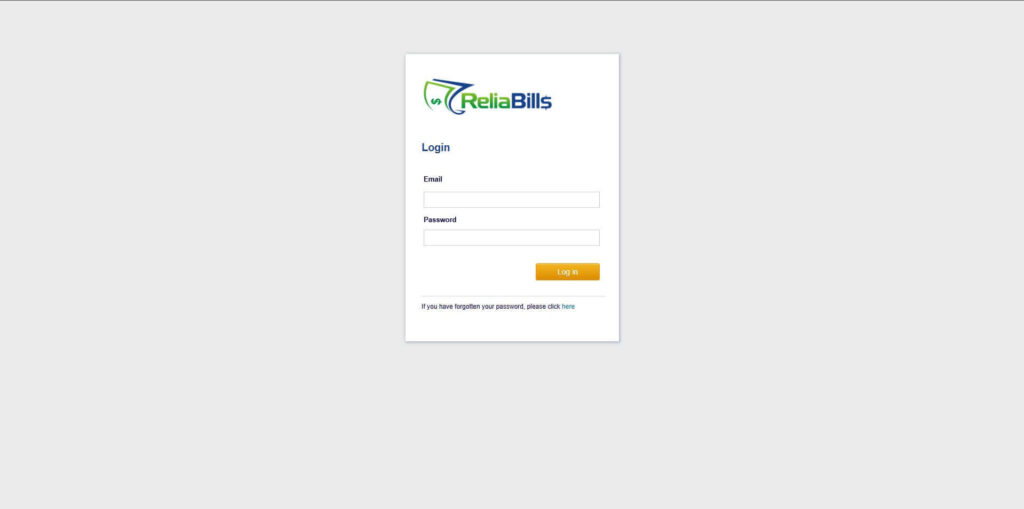
Step 1: Login to ReliaBills
- Access your ReliaBills Account using your login credentials. If you don’t have an account, sign up here.
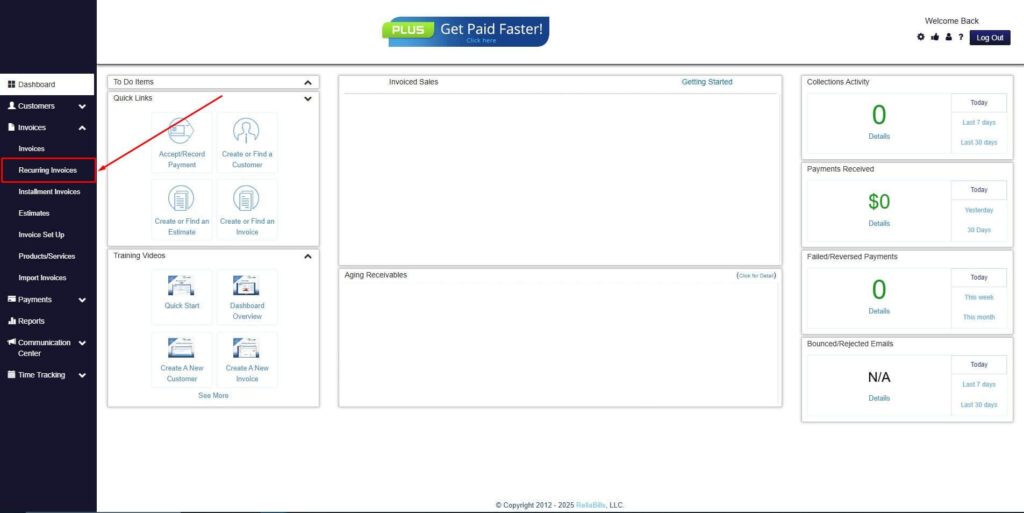
Step 2: Click on Recurring Invoices
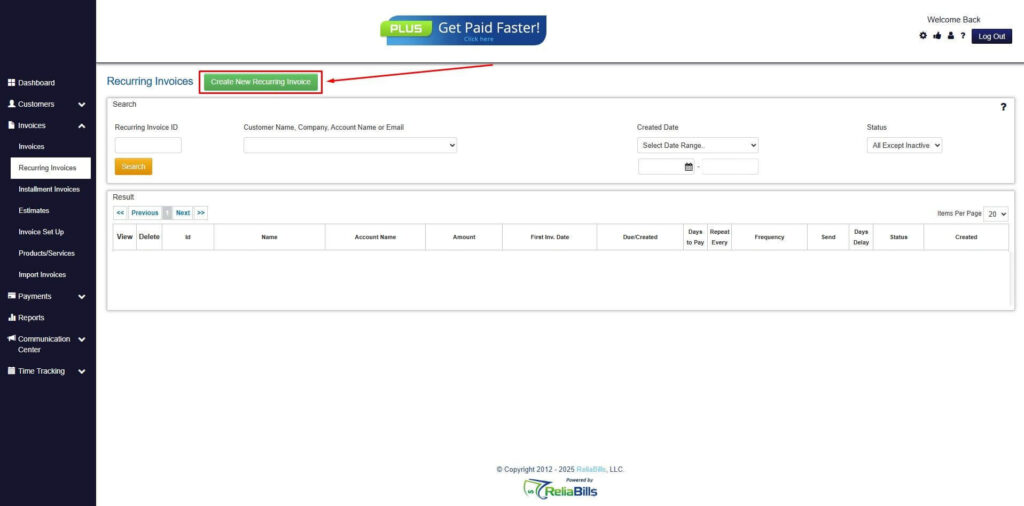
- Navigate to the Invoices Dropdown and click on Recurring Invoices for an overview of the list of your existing customers.
Step 3: Go to the Customers Tab
- If you have already created a customer, search for them in the Customers tab and make sure their status is “Active”.
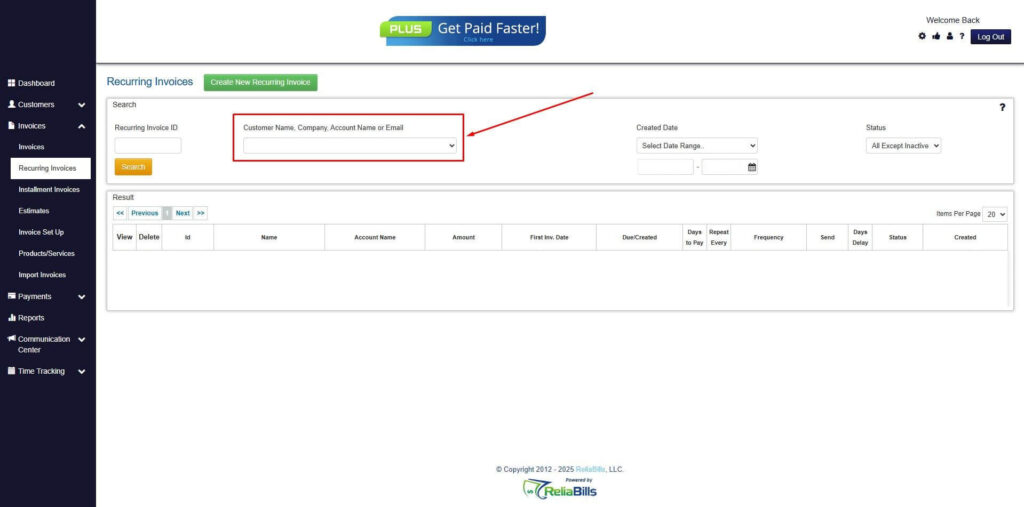
Step 4: Click the Create New Recurring Invoice
- If you haven’t created any customers yet, click the Create New Recurring Invoice to create a new customer.
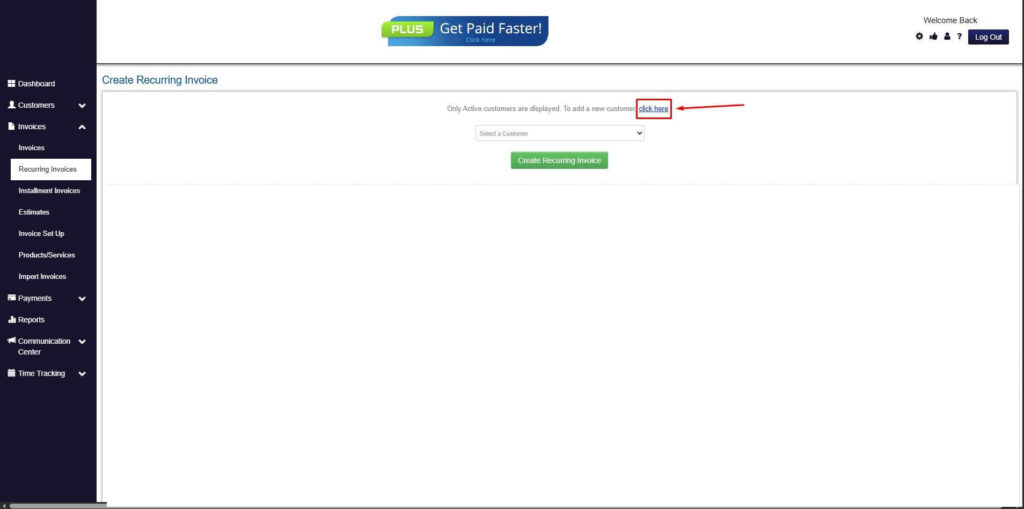
Step 5: Click on the “Click here” Button
- Click on the “Click here” button to proceed with the recurring invoice creation.
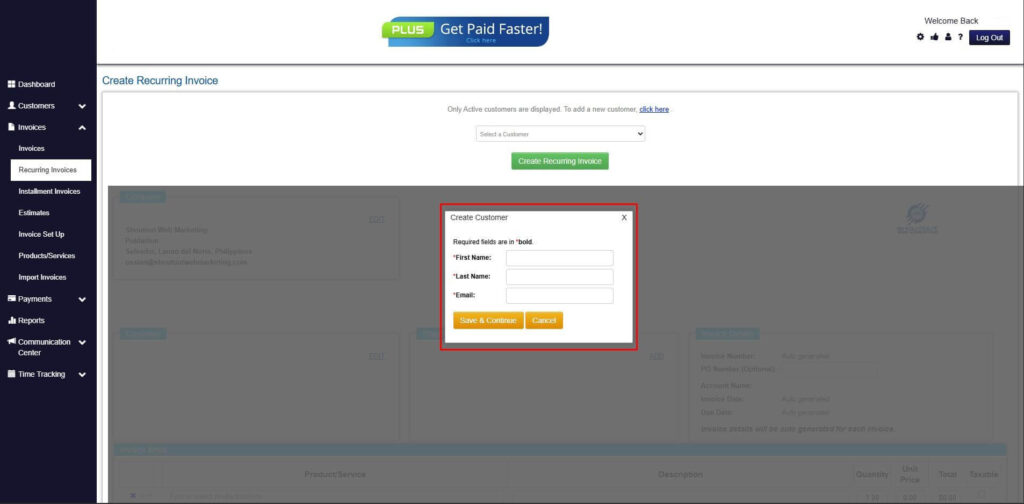
Step 6: Create Customer
- Provide your First Name, Last Name, and Email to proceed.
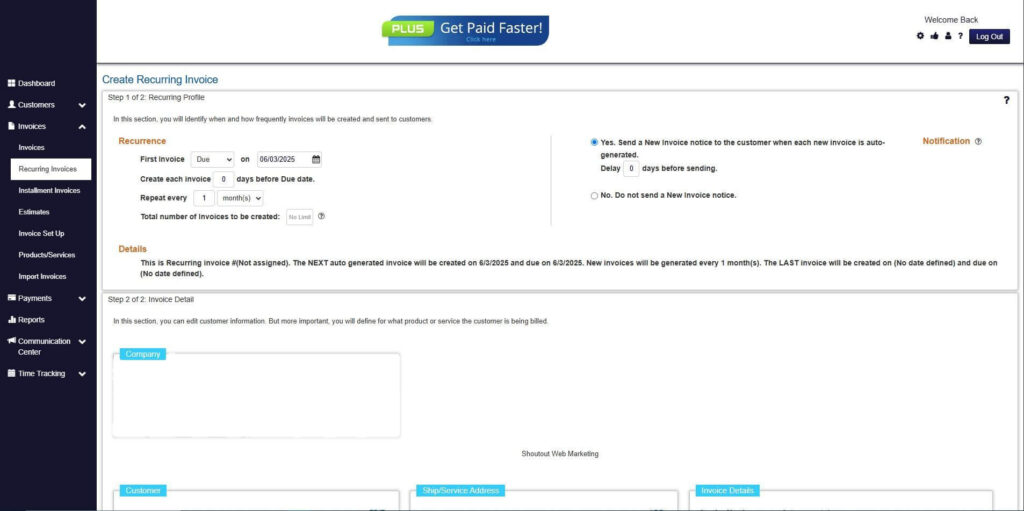
Step 7: Fill in the Create Recurring Invoice Form
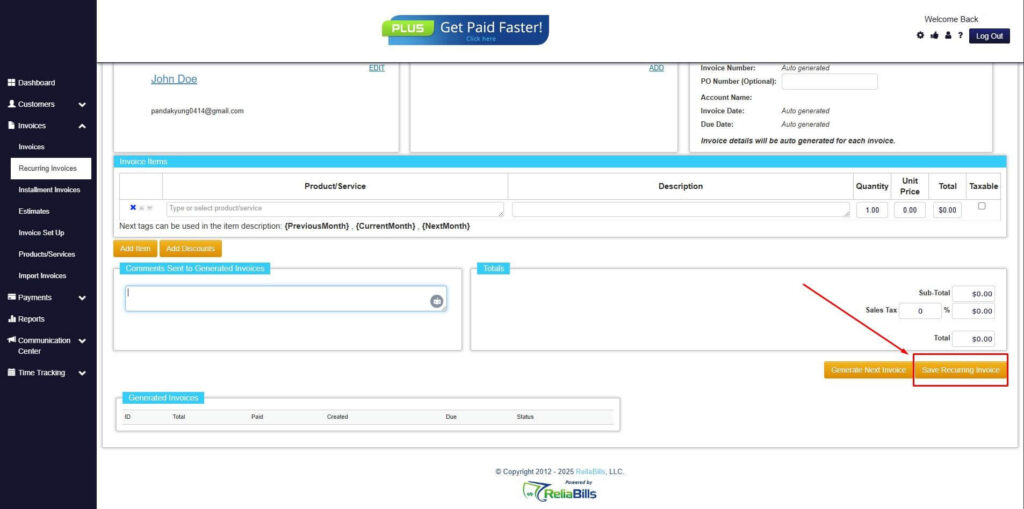
- Fill in all the necessary fields.
Step 8: Save Recurring Invoice
- After filling up the form, click “Save Recurring Invoice” to continue.
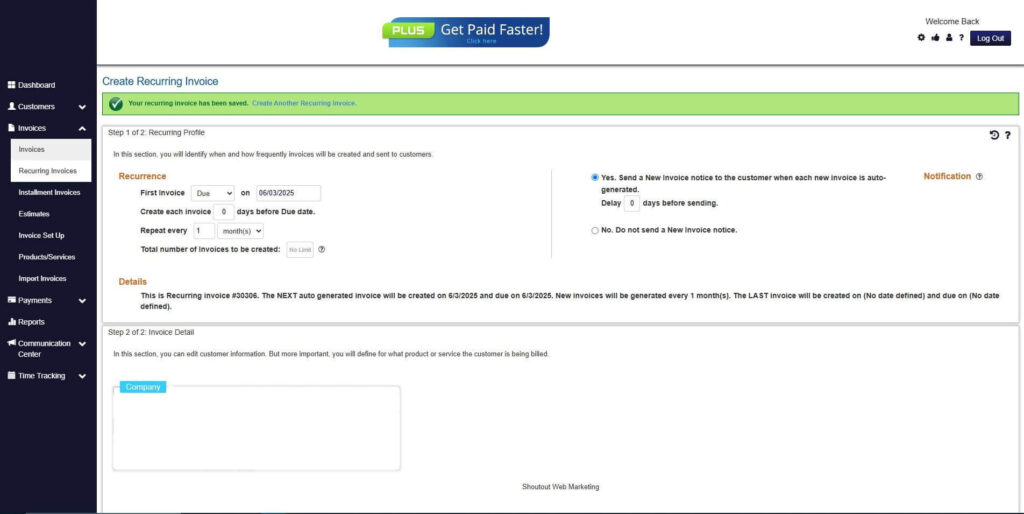
Step 9: Recurring Invoice Created
- Your Recurring Invoice has been created.
Frequently Asked Questions
1. What is a non-commercial invoice used for in customs?
A non-commercial invoice is used to document shipments that do not involve a sale or payment. It helps customs authorities understand the nature, value, and purpose of goods being transported. Common examples include samples, gifts, warranty replacements, and returned items. Even without a transaction, customs still requires this documentation for compliance. It ensures transparency and proper classification of goods during clearance.
2. Is a declared value required even if no sale occurred?
Yes, a declared value is still required even when goods are not sold. Customs uses this value to assess duties, taxes, and regulatory requirements. The value is typically based on fair market estimation rather than an invoice price. Providing an accurate value helps prevent delays or disputes during inspection. Inaccurate declarations may result in penalties or shipment holds.
3. What happens if a non-commercial invoice is incorrect?
Incorrect or incomplete invoices can cause shipment delays, customs inspections, or even rejection of goods. Authorities rely on accurate data to process imports efficiently. Missing or inconsistent details may trigger additional verification steps. This can increase shipping time and operational costs. Ensuring accuracy is essential for smooth international logistics.
4. Can billing software help with customs invoice creation?
Yes, billing software for customs invoice creation helps automate and standardize documentation. It reduces manual data entry and enforces required fields for compliance. This minimizes errors and improves consistency across all shipments. It also speeds up invoice generation for businesses handling frequent exports. Automation improves both accuracy and efficiency in global operations.
5. When is a non-commercial invoice required?
A non-commercial invoice is required whenever goods are shipped internationally without a financial transaction. This includes sending samples, gifts, or returned goods. Customs authorities need this document to evaluate and process the shipment correctly. It ensures proper classification and compliance with import/export regulations. Without it, shipments may face delays or rejection.
Conclusion
Non-commercial invoices are a critical component of international trade compliance and logistics operations. They ensure that goods shipped without a sale are still properly documented for customs evaluation. Accuracy and completeness are essential to avoid delays, penalties, or shipment rejection. Businesses must prioritize structured documentation processes to maintain operational efficiency. Using billing software for customs invoice solutions significantly improves accuracy and speed.
Automation plays a key role in reducing manual errors and streamlining invoice creation workflows. It helps businesses maintain consistency across global shipments and adapt to varying customs regulations. This improves both compliance and supply chain performance. As international trade continues to grow, efficient documentation becomes increasingly important. Software-driven solutions provide a scalable answer to these challenges.
Ultimately, adopting automation tools like ReliaBills allows businesses to simplify invoicing and improve compliance. It reduces administrative workload while enhancing accuracy and operational visibility. Companies benefit from faster processing and fewer disruptions in their logistics chain. The shift toward automation is now a strategic necessity. Businesses that embrace it gain a clear advantage in global operations.