

The business landscape is rapidly shifting toward automated financial systems, especially in how companies manage payments. One of the most significant changes is the rise of autopay for recurring billing, which supports predictable revenue models. Businesses are increasingly relying on subscription-based and membership-driven structures that require consistent payment cycles. This shift is driven by the need for efficiency, accuracy, and reduced operational friction. As a result, automation has become a core part of modern billing strategies.
Recurring revenue models depend heavily on timely and consistent payments to maintain financial stability. When payments are delayed or missed, cash flow becomes unpredictable and can disrupt business operations. Traditional manual billing methods often introduce inefficiencies that affect both customers and internal teams. This is where autopay for recurring billing becomes essential in maintaining steady revenue streams. It ensures payments are processed automatically without requiring customer intervention.
Autopay for recurring billing offers a streamlined solution that improves both cash flow and operational efficiency. By automating payment collection, businesses reduce administrative overhead and minimize human error. Customers also benefit from a more seamless payment experience that requires no recurring action. This combination of efficiency and reliability makes autopay a critical tool for modern businesses. Ultimately, it supports long-term financial health and scalability.
What Is Autopay for Recurring Billing?
Autopay for recurring billing refers to an automated payment system designed for subscription-based and recurring charge models. It allows businesses to automatically collect payments from customers on pre-defined billing cycles. This eliminates the need for manual invoice processing or repeated payment requests. The system is widely used in industries that depend on subscriptions or ongoing service agreements. It simplifies the entire payment lifecycle for both businesses and customers.
In practical terms, autopay works by securely storing customer payment details through encrypted systems. Once a billing schedule is set, payments are automatically deducted on the due date. This reduces delays and ensures that billing cycles remain consistent. Businesses no longer need to follow up manually on overdue payments. As a result, the entire process becomes more efficient and predictable.
Autopay for recurring billing also plays a major role in reducing administrative tasks. Finance teams spend less time managing invoices and tracking payments. Instead, they can focus on strategic financial planning and customer engagement. This automation improves accuracy and reduces the risk of human error. Overall, it enhances both operational efficiency and customer satisfaction.
How Recurring Billing Works in Modern Businesses
Recurring billing is based on a structured system where customers are charged at regular intervals. These intervals can be monthly, quarterly, or annually depending on the service agreement. Businesses typically use subscription management systems to automate these billing cycles. This ensures that payments are consistently collected without manual intervention. The model is widely used across digital services and membership platforms.
Monthly billing is the most common structure, especially for SaaS and digital subscriptions. Quarterly and annual billing models are often used to improve customer retention and reduce processing frequency. Each model is designed to align with different business strategies and customer preferences. The flexibility of recurring billing makes it adaptable to various industries. It provides a predictable revenue stream for businesses.
Autopay for recurring billing integrates directly into these systems by automating payment execution. Once a billing cycle is established, autopay ensures that payments are processed automatically. This eliminates delays caused by manual payment actions. It also reduces the likelihood of failed transactions due to customer oversight. As a result, businesses maintain smoother financial operations.
Why Businesses Are Moving Away from Manual Payments
Manual payment systems often create inefficiencies that slow down business operations. Companies must generate invoices, send reminders, and track payments manually. This process increases the risk of errors and delays. Over time, it becomes difficult to scale without adding more administrative resources. Many businesses are therefore transitioning away from these outdated systems.
One major challenge of manual billing is the increased workload on finance teams. Employees spend significant time managing repetitive tasks instead of focusing on higher-value work. This reduces overall productivity and operational efficiency. It also increases the likelihood of missed payments and reconciliation issues. These inefficiencies directly impact business performance.
Another issue is the higher risk of late or missed payments from customers. Without automation, customers may forget payment deadlines or delay processing invoices. This creates cash flow inconsistencies that can affect business stability. Autopay for recurring billing solves this issue by ensuring payments are processed automatically. As a result, businesses are increasingly adopting automated systems.
Key Drivers Behind the Adoption of Autopay Systems
Operational Efficiency Demand
Businesses are under constant pressure to streamline operations and reduce unnecessary manual work. Autopay for recurring billing helps eliminate repetitive administrative tasks such as payment tracking and invoicing follow-ups. This leads to faster financial processing and fewer human errors across departments. Companies also benefit from improved workflow automation that scales easily as they grow. Efficiency remains one of the strongest motivations for adoption.
Growth of Subscription-Based Models
Subscription-based business models continue to expand across SaaS, media, fitness, and service industries. These models rely on stable, recurring revenue streams that require consistent payment collection. Autopay ensures customers are charged automatically on schedule without disruption. This supports predictable income and reduces revenue leakage. As subscriptions grow, automation becomes essential infrastructure.
Customer Expectation for Convenience
Modern customers expect seamless digital experiences, including frictionless payment methods. Manual billing systems are often viewed as outdated and inconvenient. Autopay for recurring billing meets this expectation by removing the need for repetitive payment actions. Customers enjoy uninterrupted access to services without worrying about due dates. Convenience directly influences satisfaction and retention.
Digital Transformation Across Industries
Many industries are undergoing full digital transformation, especially in financial operations. Businesses are replacing legacy billing systems with automated platforms that support scalability. Autopay for recurring billing fits directly into this modernization trend. It enables companies to digitize revenue collection while improving accuracy. This shift is accelerating across both small and large enterprises.
Increased Focus on Revenue Predictability
Organizations are prioritizing predictable revenue to improve financial planning and investment decisions. Unstable cash flow can limit growth opportunities and operational stability. Autopay for recurring billing ensures payments are collected consistently on schedule. This reduces uncertainty and supports long-term forecasting. Predictability has become a strategic business advantage.
How Autopay for Recurring Billing Improves Cash Flow
Autopay for recurring billing ensures that revenue is collected on a predictable schedule. This consistency allows businesses to maintain stable cash flow throughout the year. Predictability is especially important for budgeting and financial planning. Companies can allocate resources more effectively when income is reliable. This strengthens overall financial stability.
It also reduces delays caused by late or missed payments. Since payments are processed automatically, businesses do not need to wait for customer action. This minimizes outstanding balances and improves liquidity. Faster payment cycles help businesses reinvest in operations more quickly. The result is improved financial agility.
Autopay also supports better forecasting and financial analysis. With consistent payment data, businesses can predict future revenue more accurately. This improves decision-making at both operational and strategic levels. Autopay for recurring billing becomes a key tool in financial planning. It enhances long-term business sustainability.
Reducing Late Payments with Automated Billing
Autopay for recurring billing eliminates reliance on customer-initiated payments. Once set up, payments are automatically processed on due dates. This significantly reduces the chances of late payments. Businesses no longer need to send repeated reminders. The system ensures consistent payment execution.
It also minimizes the administrative burden of collections and follow-ups. Finance teams spend less time chasing overdue invoices. This improves operational efficiency and reduces stress on internal teams. The billing process becomes more streamlined and reliable. Automation enhances overall payment performance.
Improved payment reliability is one of the biggest advantages of autopay systems. Customers are less likely to miss payments due to forgetfulness. Businesses benefit from reduced revenue leakage and improved cash flow. Autopay for recurring billing strengthens financial consistency. It creates a more stable payment ecosystem.
Enhancing Customer Convenience Through Autopay
Autopay for recurring billing significantly improves the customer experience. Customers no longer need to manually process payments each billing cycle. This removes friction from subscription management. It ensures uninterrupted access to services. Convenience becomes a key value driver.
It also simplifies renewal processes for recurring services. Customers do not have to worry about payment deadlines or service interruptions. This creates a smoother and more reliable experience. Businesses benefit from higher customer satisfaction. Reduced friction leads to better engagement.
Convenience directly impacts customer retention and loyalty. When payments are seamless, customers are more likely to continue subscriptions. Autopay systems reduce frustration and improve trust. This strengthens long-term customer relationships. Ultimately, it supports business growth.
Security and Compliance in Autopay Systems
Modern autopay systems use advanced encryption to protect sensitive payment data. This ensures that customer information is securely stored and transmitted. Tokenization further enhances security by replacing card details with secure identifiers. These technologies reduce the risk of data breaches. Security is a foundational element of autopay for recurring billing.
Compliance with financial regulations is also a critical requirement. Businesses must adhere to standards such as PCI DSS for payment security. Autopay systems are designed to meet these regulatory requirements. This ensures legal and operational compliance across industries. It reduces risk exposure for businesses.
Compared to manual payment handling, autopay significantly reduces security risks. Employees are not required to handle sensitive card data directly. This minimizes human error and potential vulnerabilities. Automated systems provide a safer payment environment. Security improvements build customer trust.
Common Industries Using Autopay for Recurring Billing
SaaS and Software Companies
Software-as-a-service businesses depend heavily on recurring subscriptions for revenue. Autopay ensures uninterrupted access to digital platforms for customers. It also reduces churn caused by failed manual payments. These companies benefit from scalable billing systems that handle large user bases efficiently. Automation is essential for SaaS growth models.
Gyms and Fitness Centers
Fitness businesses often operate on membership-based billing structures. Autopay for recurring billing simplifies monthly or annual membership collection. It reduces administrative workload for staff managing payments manually. Members benefit from uninterrupted access to facilities without needing to renew constantly. This improves retention rates.
Utilities and Telecom Providers
Utility companies and telecom providers require consistent billing for essential services. Autopay ensures customers are charged automatically each cycle. This reduces service interruptions caused by missed payments. It also improves revenue stability for providers managing large customer bases. These industries rely heavily on automated billing systems.
E-Commerce Subscription Boxes
Subscription box services depend on recurring delivery and payment cycles. Autopay ensures customers are charged before each shipment. This eliminates delays in order processing and fulfillment. Businesses can better manage inventory and logistics based on predictable payments. It enhances both operational planning and customer satisfaction.
Educational Platforms and Online Courses
E-learning platforms often use subscription models for course access. Autopay ensures students maintain uninterrupted access to learning materials. It removes friction from monthly or yearly renewals. This supports continuous learning experiences without payment disruptions. Education providers benefit from stable enrollment revenue.
Challenges Businesses Face Without Autopay
High Risk of Involuntary Churn
Without automation, customers may lose access to services due to failed manual payments. This creates involuntary churn even when customers want to continue subscriptions. Autopay for recurring billing helps eliminate this issue entirely. It ensures continuity of service without interruption. This improves overall retention rates.
Increased Administrative Costs
Manual billing systems require more staff time and operational resources. Finance teams must manage invoices, reminders, and reconciliations manually. Autopay for recurring billing reduces this workload significantly. Businesses can reallocate resources to strategic functions. This improves cost efficiency.
Revenue Inconsistency and Delays
Manual payments often result in delayed or missed transactions. This creates unpredictable cash flow and financial instability. Autopay for recurring billing ensures consistent revenue collection. Businesses can rely on stable income streams for planning. Predictability strengthens financial management.
Customer Confusion and Support Requests
Manual billing systems often lead to confusion about charges or due dates. This increases customer support workload and dispute resolution cases. Autopay for recurring billing reduces these misunderstandings. Customers receive clear, automated payment schedules. This improves overall user experience.
Operational Inefficiencies at Scale
As businesses grow, manual billing becomes harder to manage effectively. Scaling requires additional staff and resources, increasing costs. Autopay for recurring billing removes these scaling barriers. Automation supports growth without proportional increases in workload. This enables sustainable expansion.
How Autopay Reduces Administrative Workload
Autopay for recurring billing automates invoice generation and payment processing. This eliminates repetitive manual tasks for finance teams. It ensures that billing cycles run consistently without intervention. Administrative efficiency improves significantly. Businesses can scale more effectively.
It also reduces the need for manual reconciliation of payments. Transactions are automatically recorded and matched within the system. This improves accuracy and reduces errors. Finance teams spend less time on routine tasks. Productivity increases across departments.
By automating billing processes, staff can focus on higher-value activities. This includes financial planning and customer support improvements. The overall workflow becomes more strategic and efficient. Autopay enhances organizational performance. It supports long-term scalability.
Improving Customer Retention with Autopay Systems
Autopay for recurring billing reduces involuntary churn caused by failed payments. Customers remain subscribed without interruptions. This ensures continuous access to services. Businesses benefit from improved retention rates. Revenue becomes more stable.
It also prevents service disruptions caused by missed renewals. Customers do not need to manually extend subscriptions. This improves the overall user experience. Consistency builds trust and satisfaction. Retention improves naturally.
Long-term customer relationships are strengthened through seamless billing. Autopay reduces friction in payment processes. This encourages customers to stay longer with the service. Businesses gain more predictable lifetime value. Retention becomes more sustainable.
How Billing Platforms Enable Autopay for Recurring Billing
Billing platforms integrate directly with payment gateways to enable automation. These systems securely process transactions on scheduled dates. Autopay for recurring billing is built into their core functionality. This ensures smooth and reliable payment execution. Integration is key to efficiency.
They also provide automated scheduling and reminder systems. Businesses can configure billing cycles based on customer agreements. Reminders help reduce failed payments and improve success rates. This enhances overall payment reliability. Automation simplifies operations.
Centralized dashboards allow businesses to monitor all transactions in real time. This improves visibility into revenue and payment performance. It also helps identify issues quickly. Billing platforms make financial management more transparent. They support data-driven decisions.
Best Practices for Implementing Autopay Systems
Clear Communication of Terms
Businesses must clearly explain autopay terms to customers before activation. Transparency builds trust and reduces disputes. Customers should understand billing cycles and charges. Autopay for recurring billing works best when expectations are clear. Communication is essential.
Easy Opt-In and Opt-Out Options
Customers should be able to easily manage their autopay settings. This includes simple enrollment and cancellation processes. Flexibility improves customer satisfaction. It also reduces frustration and churn. User control is important.
Monitoring Payment Performance
Businesses should regularly review payment success rates. This helps identify failed transactions and system issues. Adjustments can be made to improve efficiency. Continuous monitoring ensures optimal performance. Data-driven improvements are critical.
Update Payment Methods and Security Protocols
Outdated payment details often lead to failed transactions. Businesses should encourage customers to update expired cards or accounts. Autopay for recurring billing systems must also stay aligned with modern security standards. Regular updates reduce risk and improve transaction success. Security maintenance is essential for reliability.
Offer Multiple Payment Options
Providing multiple payment methods increases successful autopay enrollment rates. Customers may prefer credit cards, debit cards, or digital wallets. Autopay for recurring billing becomes more effective when options are flexible. This reduces friction during setup and payment execution. More options lead to higher conversion and retention.
How ReliaBills Supports Autopay for Recurring Billing
ReliaBills provides a fully integrated system that streamlines autopay for recurring billing across subscription-based and service-driven businesses. It automates the entire billing lifecycle, from invoice generation to payment collection, reducing the need for manual intervention. Businesses can set up recurring billing schedules that ensure customers are charged automatically on defined cycles. This creates a more consistent and reliable revenue flow with fewer delays or missed payments. The platform is designed to support scalability for both small businesses and growing enterprises.
With its automation framework, ReliaBills improves payment success rates by combining invoicing, reminders, and secure payment processing into one system. Customers receive timely notifications that help ensure payments are completed without confusion or friction. Autopay for recurring billing becomes more efficient because the system minimizes failed transactions and reduces administrative follow-ups. Finance teams benefit from reduced workload and improved accuracy in reconciliation processes. This results in stronger operational efficiency and better financial control.
ReliaBills PLUS enhances these capabilities with advanced automation features, branded billing experiences, and deeper financial reporting tools. Businesses gain better visibility into customer payment behavior and revenue performance trends. This allows companies to refine billing strategies and improve long-term financial planning. Autopay for recurring billing becomes more strategic when supported by real-time insights and customizable workflows. Overall, ReliaBills strengthens the reliability, scalability, and efficiency of modern automated billing systems.
How to Create a New Recurring Invoice Using ReliaBills
Creating a New Recurring Invoice using ReliaBills involves the following steps:
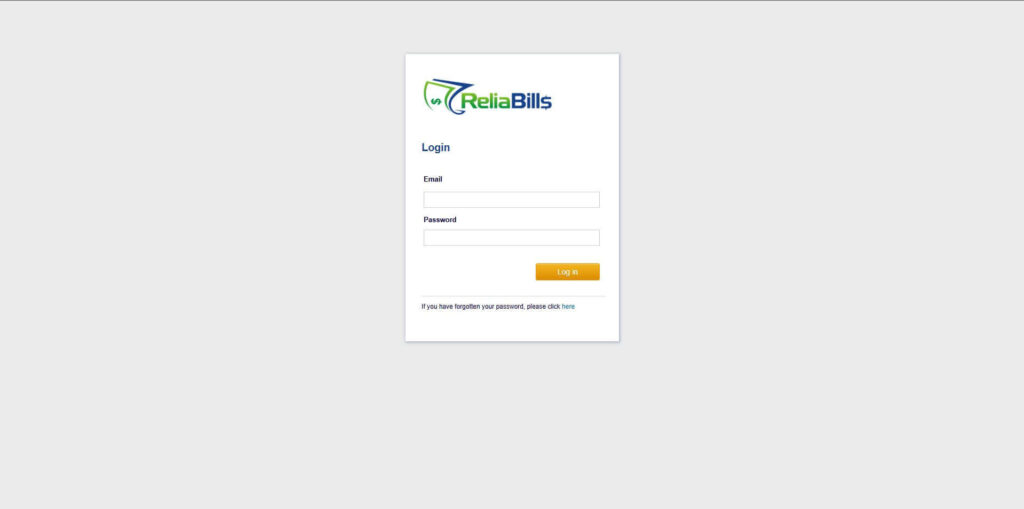
Step 1: Login to ReliaBills
- Access your ReliaBills Account using your login credentials. If you don’t have an account, sign up here.
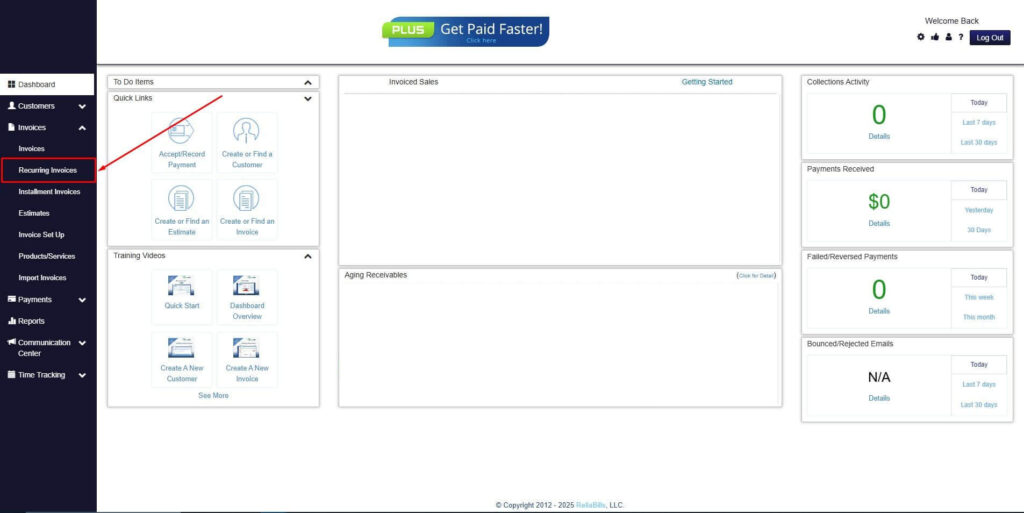
Step 2: Click on Recurring Invoices
- Navigate to the Invoices Dropdown and click on Recurring Invoices for an overview of the list of your existing customers.
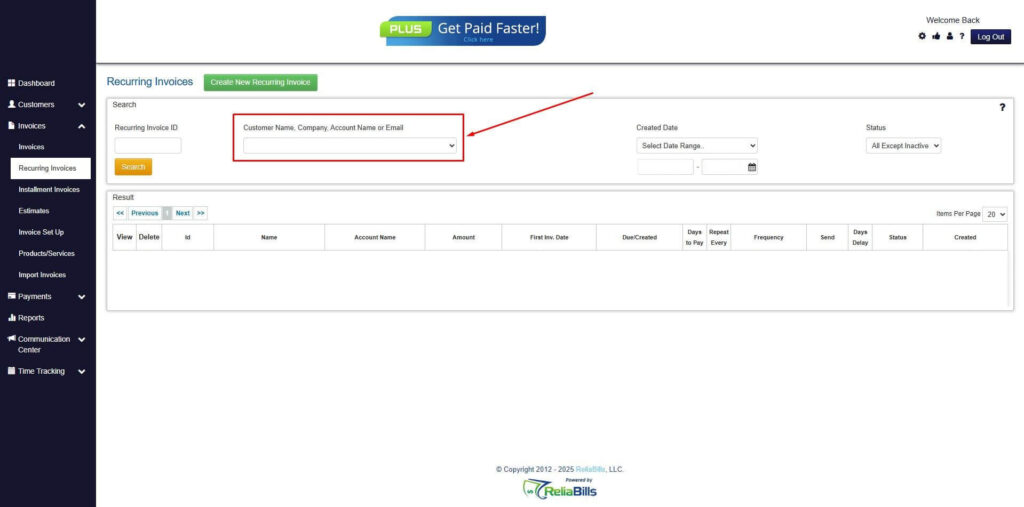
Step 3: Go to the Customers Tab
- If you have already created a customer, search for them in the Customers tab and make sure their status is “Active”.
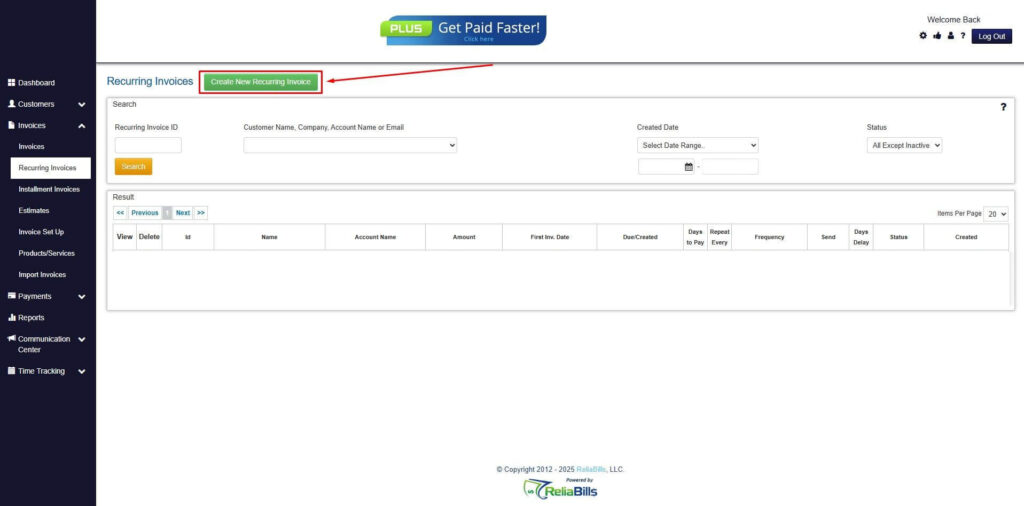
Step 4: Click the Create New Recurring Invoice
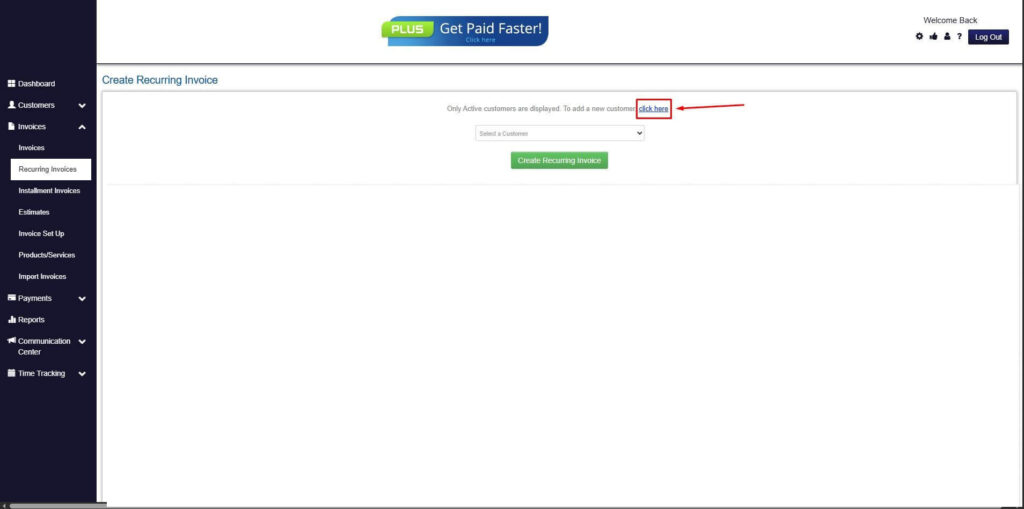
- If you haven’t created any customers yet, click the Create New Recurring Invoice to create a new customer.
Step 5: Click on the “Click here” Button
- Click on the “Click here” button to proceed with the recurring invoice creation.
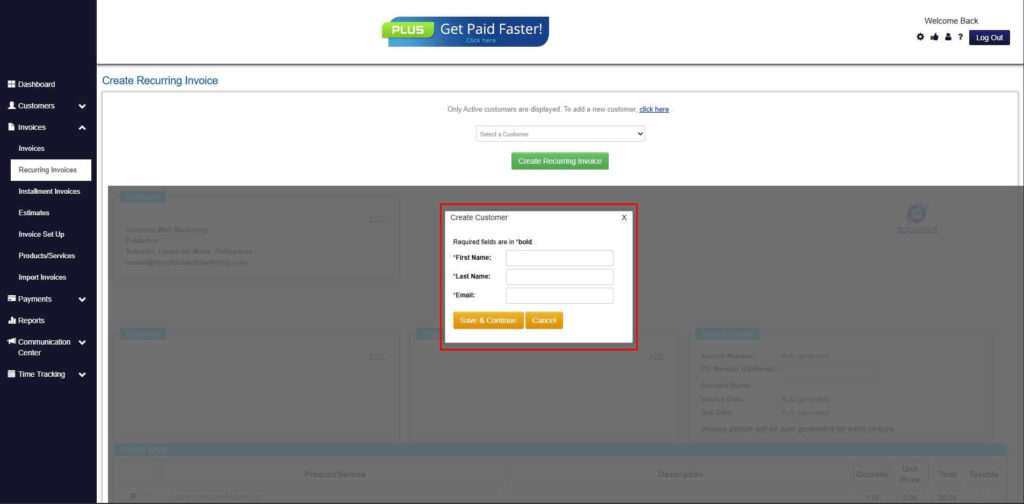
Step 6: Create Customer
- Provide your First Name, Last Name, and Email to proceed.
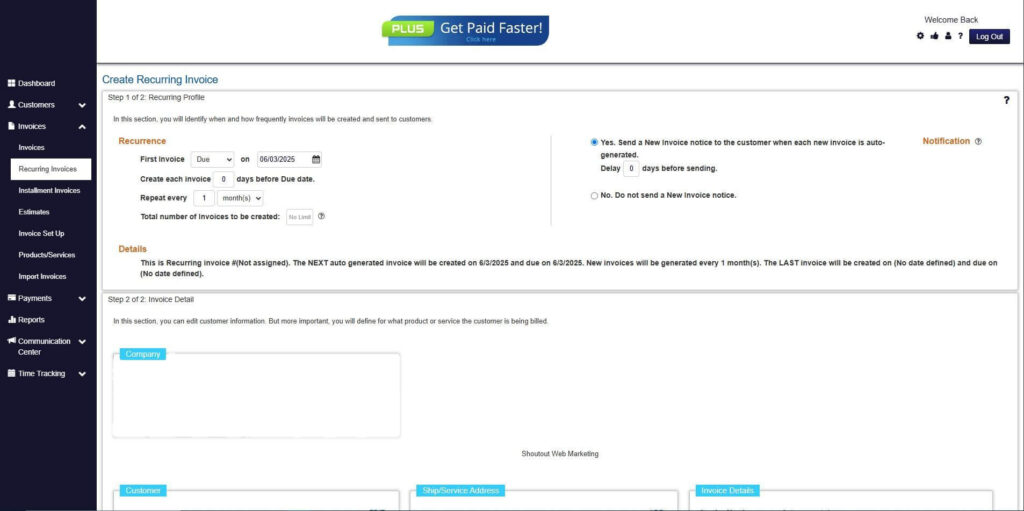
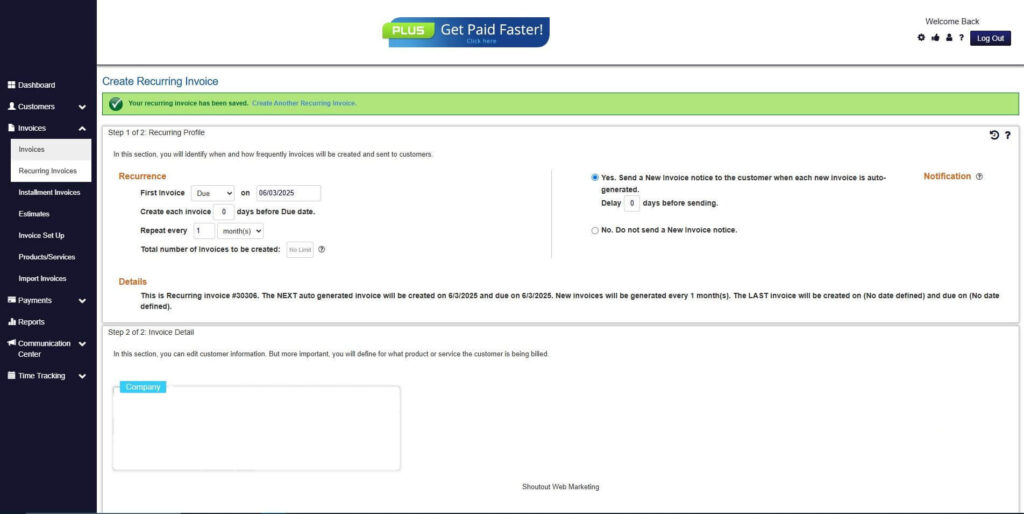
Step 7: Fill in the Create Recurring Invoice Form
- Fill in all the necessary fields.
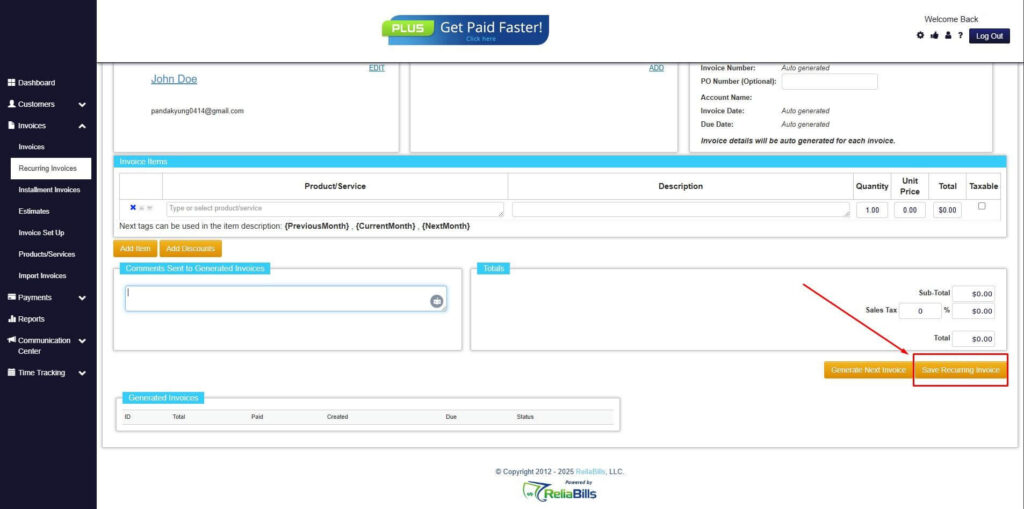
Step 8: Save Recurring Invoice
- After filling up the form, click “Save Recurring Invoice” to continue.
Step 9: Recurring Invoice Created
- Your Recurring Invoice has been created.
Frequently Asked Questions
1. What is autopay for recurring billing?
Autopay for recurring billing is an automated payment system that charges customers on a scheduled basis for subscription or recurring services. It removes the need for manual payment processing each billing cycle. Payments are deducted automatically based on the agreed billing schedule. This helps businesses maintain consistent revenue collection. It also improves convenience for customers.
2. Is autopay for recurring billing safe?
Yes, autopay systems are designed with strong security measures such as encryption and tokenization. These technologies protect sensitive payment information from exposure. Most systems also comply with industry standards like PCI DSS. This ensures that customer data is handled securely during transactions. Overall, it is considered a safe and widely used payment method.
3. Can customers cancel autopay for recurring billing anytime?
In most cases, customers can cancel or modify autopay settings at any time. Businesses usually provide account settings where users can manage their payment preferences. However, cancellation policies may vary depending on the provider or agreement. Transparency is important to maintain customer trust. Customers should always review terms before enrolling.
4. What happens if a payment fails in autopay systems?
If a payment fails, most autopay systems automatically retry the transaction after a set period. Customers may also receive notifications to update their payment details. Some businesses provide grace periods before service interruption. This helps reduce involuntary service disruptions. It also ensures smoother billing continuity.
5. Why do businesses prefer autopay for recurring billing?
Businesses prefer autopay because it improves cash flow stability and reduces administrative workload. It minimizes late or missed payments by automating collections. It also improves financial forecasting and operational efficiency. Customers benefit from uninterrupted service without manual payments. This makes it a win-win solution for both parties.
Conclusion
Autopay for recurring billing has become a critical component of modern business payment systems. It enhances efficiency by automating repetitive financial tasks. Businesses benefit from improved cash flow, reduced errors, and stronger financial forecasting. Customers also enjoy a more convenient and seamless payment experience. These combined advantages drive widespread adoption.
The shift toward automation reflects the growing demand for scalable and reliable billing systems. Manual processes are no longer sufficient for subscription-driven businesses. Autopay ensures consistency and reduces operational friction across industries. It supports both small businesses and large enterprises. The impact on financial stability is significant.
In the long term, autopay for recurring billing provides strategic advantages that go beyond payment processing. It strengthens customer relationships, improves retention, and supports business growth. Companies that adopt automation early gain a competitive edge in their industries. The future of billing is clearly centered on automation and efficiency.