

Cash flow management has become a critical priority for businesses of all sizes in today’s fast-moving financial environment. Companies need consistent liquidity to cover operational expenses, invest in growth, and maintain stability. However, delayed customer payments often create gaps that disrupt financial planning. To address this challenge, many businesses turn to invoice discounting as a flexible financing option. In this context, automated billing for invoice discounting plays a crucial role in ensuring accuracy, speed, and reliability.
Invoice discounting allows businesses to access funds tied up in unpaid invoices without waiting for customer payments. This financing method helps improve working capital while maintaining control over sales ledgers. It is especially useful for businesses experiencing rapid growth or seasonal cash flow fluctuations. However, the effectiveness of invoice discounting depends heavily on the accuracy of invoice data. This is where automation becomes essential for financial efficiency.
Automated billing systems strengthen invoice discounting by ensuring that financial records are always accurate and up to date. They reduce manual errors and improve transparency across all transactions. Businesses benefit from faster verification processes and improved lender confidence. As a result, automated billing for invoice discounting becomes a key enabler of financial stability. It supports smoother funding processes and more predictable cash flow outcomes.
What Is Invoice Discounting?
Invoice discounting is a financial arrangement where businesses use unpaid invoices as collateral to access immediate funds. Instead of waiting for customers to pay, companies receive a percentage of invoice value upfront from a lender. Once the customer pays the invoice, the remaining balance is released after deducting fees. This helps businesses maintain liquidity without disrupting their sales operations. It is a widely used form of short-term financing.
Businesses rely on invoice discounting to improve working capital and manage cash flow gaps. It is particularly useful for companies with long payment cycles or large receivables. This method allows them to continue operations without financial strain. It also provides flexibility compared to traditional loans. Understanding this process is essential when exploring automated billing for invoice discounting.
The success of invoice discounting depends on the accuracy and reliability of invoice data. Lenders evaluate invoices carefully before approving funding. Any inconsistencies or errors can delay the financing process. Therefore, businesses must maintain precise financial records. This makes automation an important factor in achieving success.
What Is Automated Billing Software?
Automated billing software is a digital system that manages invoicing, payments, and financial tracking without manual intervention. It generates invoices automatically based on predefined rules or transactions. The system also tracks payments and updates records in real time. This reduces administrative workload and improves operational efficiency. It is widely used in modern financial management systems.
These platforms streamline billing processes by eliminating repetitive manual tasks. Businesses no longer need to create or update invoices manually. Instead, automation ensures consistency and accuracy across all financial records. This reduces the likelihood of human error and delays. It also improves overall financial visibility.
Automated billing software plays a critical role in supporting faster and more accurate financial operations. It ensures that data is always synchronized across systems. This is especially important for financing models like invoice discounting. Automated billing for invoice discounting enhances speed and reliability in financial workflows. It bridges the gap between invoicing and funding processes.
Why Invoice Accuracy Matters in Invoice Discounting
Lenders depend heavily on accurate invoice data when evaluating funding requests. Even small errors in invoice details can affect trust and delay approval processes. Accurate invoices provide assurance that the transaction is legitimate and verifiable. This improves lender confidence significantly. Precision is essential for successful financing.
Errors in invoices can lead to funding delays or outright rejection of financing requests. Incorrect amounts, missing details, or mismatched records create uncertainty for lenders. These issues slow down the verification process and reduce efficiency. Businesses may experience unnecessary cash flow disruptions as a result. Accuracy directly impacts funding speed.
Consistency in invoice data strengthens financial credibility and improves trust between businesses and lenders. Reliable records make it easier to assess risk and approve funding quickly. This creates a smoother financing experience overall. Businesses benefit from faster access to working capital. Automated billing for invoice discounting helps maintain this consistency.
How Automated Billing for Invoice Discounting Works
Automated billing systems generate invoices automatically based on sales or service activity. These invoices are then tracked in real time within a centralized system. Payment updates are reflected instantly, ensuring accurate financial records. This eliminates delays caused by manual updates. It improves overall financial transparency.
The system also synchronizes invoice data with accounting and financing platforms. This ensures that lenders have access to up-to-date information when reviewing applications. Real-time data reduces the risk of discrepancies during verification. It also speeds up decision-making processes. Automation enhances financial coordination.
By maintaining accurate and continuously updated records, businesses can present reliable invoices to lenders. This increases the likelihood of faster funding approvals. It also reduces administrative effort during financing applications. Automated billing for invoice discounting improves both efficiency and trust. It creates a seamless link between billing and financing.
Key Features of Automated Billing Software
Automated Invoice Generation
Automated invoice generation creates invoices instantly based on predefined rules or transactions. It eliminates manual data entry and reduces human error significantly. Consistent formatting ensures professional and reliable documentation. This improves financial accuracy across all records.
Real-Time Payment Tracking
Real-time tracking monitors invoice status and payment activity continuously. It updates financial records automatically as payments are processed. This ensures accurate and up-to-date reporting. Businesses gain better visibility into receivables.
Recurring Billing Capabilities
Recurring billing automates repeat invoicing for subscription or ongoing services. It ensures consistent billing cycles without manual intervention. This improves revenue predictability and stability. It reduces administrative workload significantly.
Integration with Financial Systems
Integration allows billing software to sync with accounting and financial tools. This improves data accuracy across platforms. It simplifies reporting and reconciliation processes. It enhances overall financial efficiency.
Benefits of Automated Billing for Invoice Discounting
Improved Cash Flow Visibility
Automated systems provide real-time insights into outstanding invoices and receivables. This helps businesses plan finances more effectively. Better visibility supports faster decision-making. It strengthens overall financial control.
Reduced Errors
Automation minimizes manual data entry and reduces the risk of mistakes. Accurate invoices improve trust with lenders. This leads to fewer disputes and delays. It enhances financial reliability.
Faster Funding Approval
Lenders receive accurate and updated financial data instantly. This speeds up verification and approval processes. Businesses gain quicker access to funds. It improves liquidity management.
Operational Efficiency
Automated billing reduces repetitive administrative tasks significantly. Teams can focus on strategic financial activities. This saves time and resources. It improves overall productivity.
Challenges Without Automated Billing Systems
Manual Data Entry Issues
Manual processes increase the likelihood of errors in financial records. Inconsistent data can create confusion during verification. This slows down funding approvals. It reduces operational efficiency.
Delayed Payment Tracking
Without automation, tracking payments becomes time-consuming and inaccurate. Businesses may lack real-time updates on receivables. This delays financial decisions. It impacts cash flow management.
Poor Data Visibility
Limited visibility into financial data affects decision-making and forecasting. Businesses may struggle to present accurate reports to lenders. This reduces funding confidence. It weakens financial planning.
How Automation Improves Invoice Verification
Centralized Data Management
All invoice data is stored in a single system for easy access. This improves audit readiness and transparency. It simplifies verification for lenders. It enhances financial organization.
Accurate Record Keeping
Automation ensures consistent and reliable invoice history. It reduces discrepancies across financial records. This supports compliance requirements. It improves trust in financial data.
Real-Time Updates
Invoice changes and payments are reflected instantly in the system. This keeps financial data current at all times. It improves accuracy during verification. It strengthens lender confidence.
Best Practices for Using Automated Billing in Invoice Discounting
Ensure Data Accuracy
Businesses should validate invoice details before submission to lenders. Consistent formatting helps avoid discrepancies. Accurate data improves approval speed. It strengthens financial credibility.
Automate Payment Tracking
Real-time tracking ensures invoices are always up to date. It improves visibility into outstanding receivables. Automated updates reduce manual effort. It enhances financial control.
Integrate with Financial Tools
Integration with accounting systems improves data consistency. It simplifies reporting and reconciliation. This ensures smoother financial workflows. It improves operational efficiency.
Maintain Compliance
Proper documentation ensures regulatory compliance at all times. Businesses should maintain complete financial records. This supports audit readiness. It reduces legal and financial risks.
How Automated Billing Enhances Cash Flow Management
Automated billing for invoice discounting improves cash flow visibility by providing real-time insights into receivables. Businesses can quickly identify outstanding invoices and take action when needed. This helps reduce delays in payment collection. It supports more accurate financial forecasting. Overall cash flow becomes more predictable and stable.
Automation also speeds up payment cycles by ensuring invoices are sent and tracked efficiently. Customers receive accurate billing information without delay. This encourages faster payments and reduces overdue accounts. It improves liquidity for day-to-day operations. Businesses benefit from stronger financial stability.
Better cash flow management allows businesses to make more informed investment decisions. They can allocate resources more effectively based on real-time data. This reduces financial uncertainty and operational risk. It strengthens long-term business planning. Automation becomes a key driver of financial efficiency.
Common Use Cases of Automated Billing for Invoice Discounting
Manufacturing Businesses
Manufacturing companies manage large volumes of invoices regularly. Automation ensures accurate tracking and faster processing. This improves cash flow cycles significantly. It supports quicker access to funding.
Logistics and Supply Chain
Logistics businesses require precise invoice tracking for shipments and services. Automated systems ensure accuracy and transparency. This improves lender confidence. It speeds up financing approvals.
Service-Based Businesses
Service providers rely on timely invoicing for steady income. Automation reduces delays and errors in billing. This improves financial stability. It supports better cash flow management.
How ReliaBills Supports Invoice Discounting Success
ReliaBills streamlines automated billing for invoice discounting by providing a centralized platform for invoice creation, tracking, and payment management. It ensures that all invoices are generated with consistent formatting and accurate financial data, reducing the risk of errors that can delay funding approval. By keeping invoice records updated in real time, businesses can present reliable documentation to lenders at any stage of the financing process. This improves transparency and strengthens financial credibility. As a result, businesses experience smoother and faster invoice discounting workflows.
The platform’s automation capabilities ensure that invoices are issued and monitored without manual intervention, reducing administrative delays and improving operational efficiency. Real-time tracking allows businesses to instantly update invoice statuses as payments are received, ensuring lenders always have access to accurate receivable data. Its recurring billing functionality further enhances consistency by automating repeat invoicing cycles and reducing the risk of missed or delayed billing. This level of visibility helps speed up verification processes and improves access to working capital. It also minimizes discrepancies that could otherwise slow down financing approvals.
With ReliaBills PLUS, businesses gain access to advanced automation tools, enhanced reporting features, and branded invoicing capabilities that support scalable financial management. These features provide deeper insights into cash flow performance and outstanding receivables, helping businesses make more informed financing decisions. The added automation reduces manual workload while improving accuracy and consistency across all billing activities. This strengthens lender confidence and improves funding outcomes. ReliaBills PLUS ultimately supports long-term growth by making automated billing for invoice discounting more efficient and dependable.
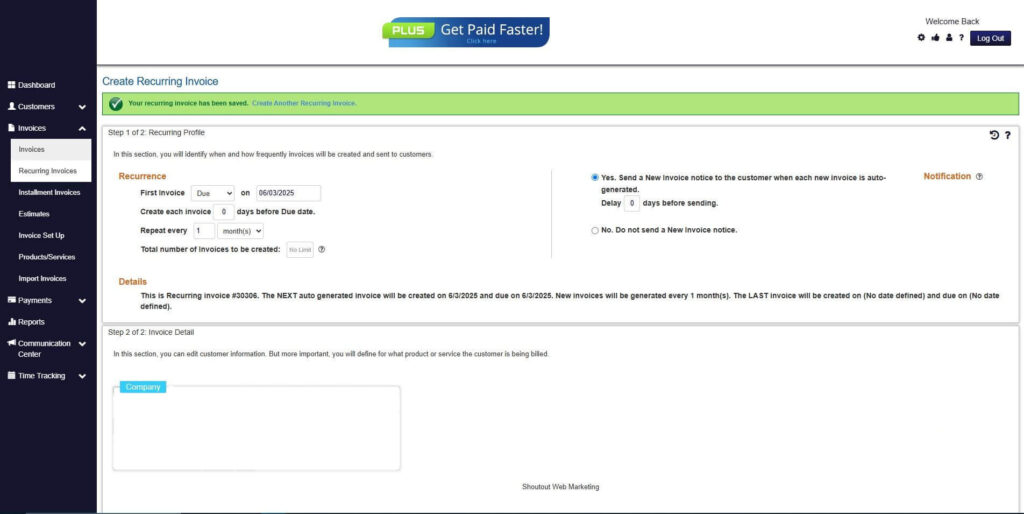
How to Create a New Recurring Invoice Using ReliaBills
Creating a New Recurring Invoice using ReliaBills involves the following steps:
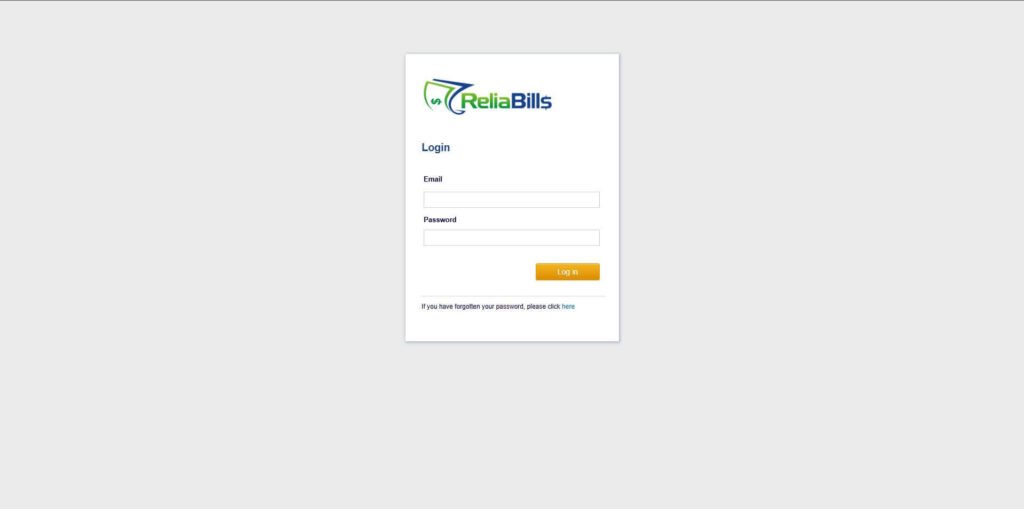
Step 1: Login to ReliaBills
- Access your ReliaBills Account using your login credentials. If you don’t have an account, sign up here.
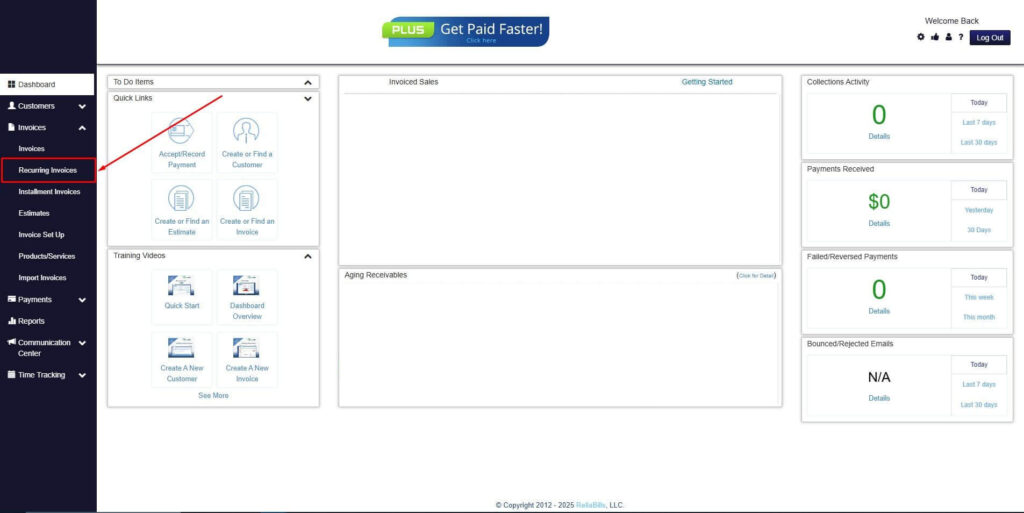
Step 2: Click on Recurring Invoices
- Navigate to the Invoices Dropdown and click on Recurring Invoices for an overview of the list of your existing customers.
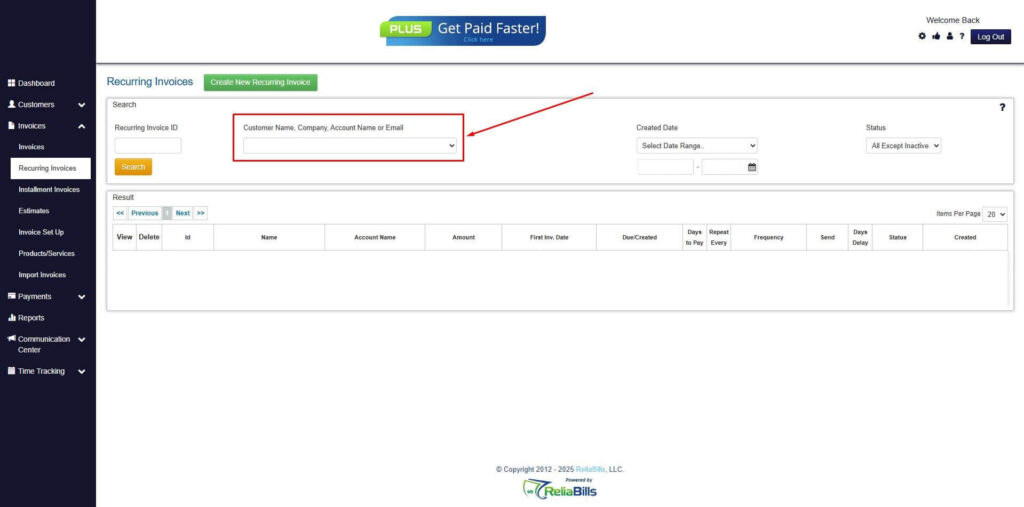
Step 3: Go to the Customers Tab
- If you have already created a customer, search for them in the Customers tab and make sure their status is “Active”.
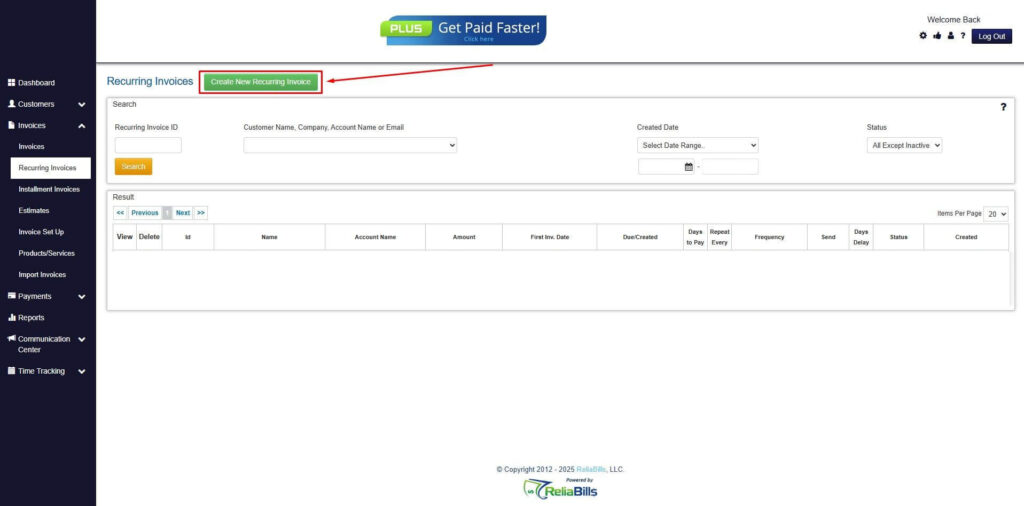
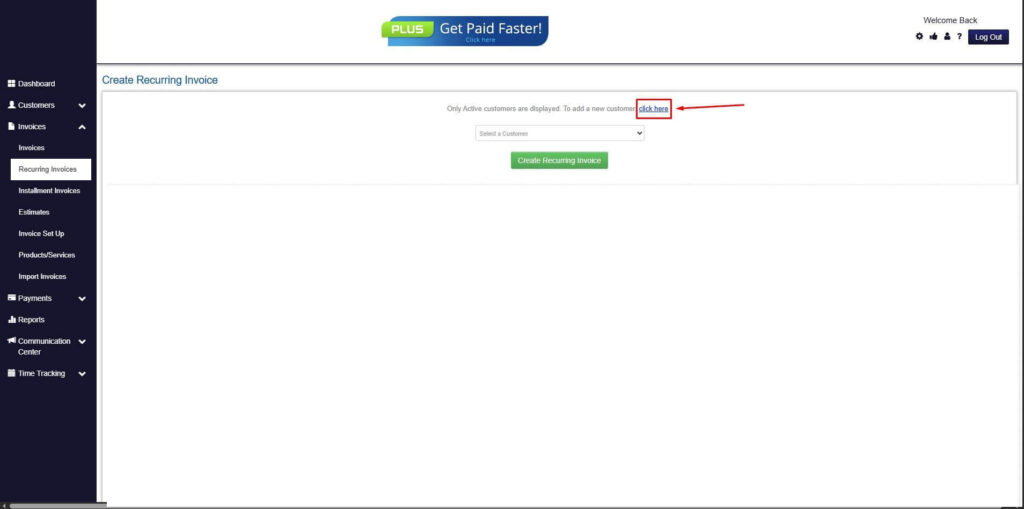
Step 4: Click the Create New Recurring Invoice
- If you haven’t created any customers yet, click the Create New Recurring Invoice to create a new customer.
Step 5: Click on the “Click here” Button
- Click on the “Click here” button to proceed with the recurring invoice creation.
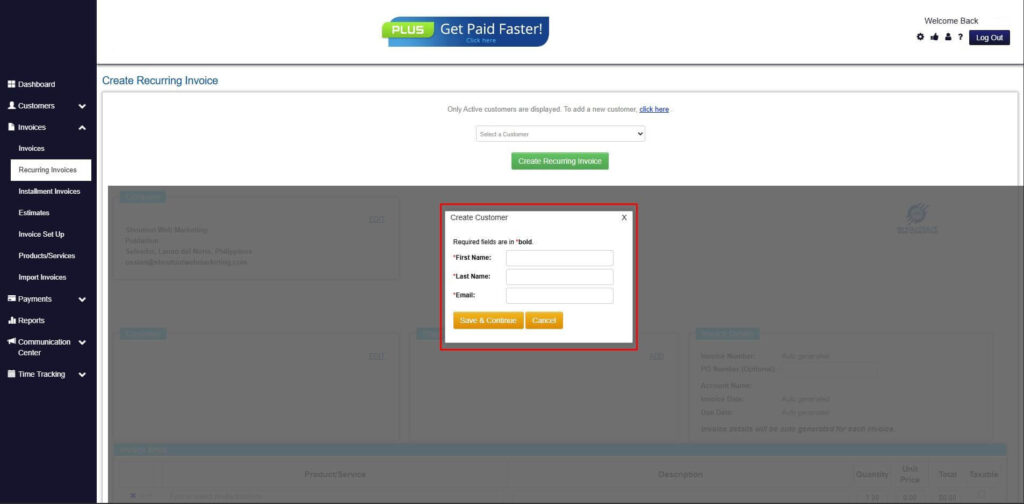
Step 6: Create Customer
- Provide your First Name, Last Name, and Email to proceed.
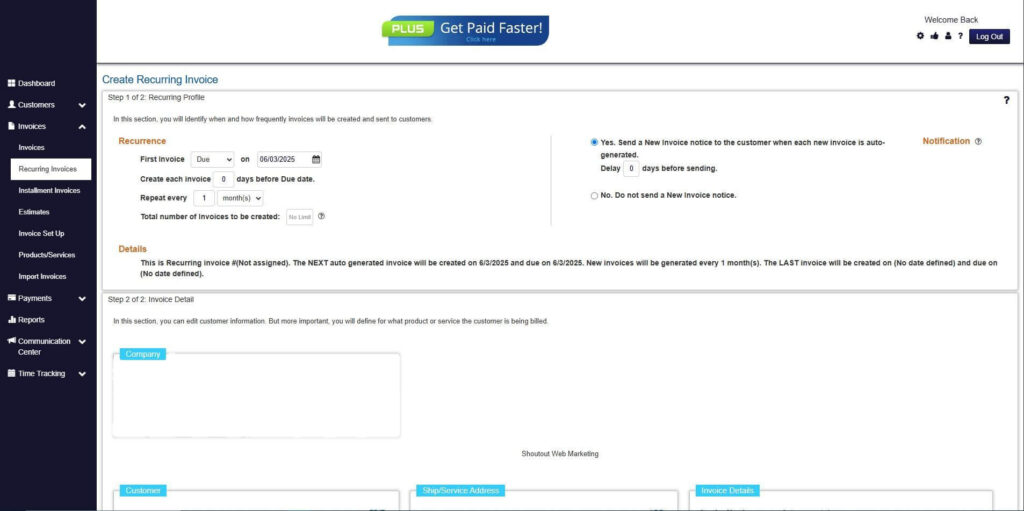
Step 7: Fill in the Create Recurring Invoice Form
- Fill in all the necessary fields.
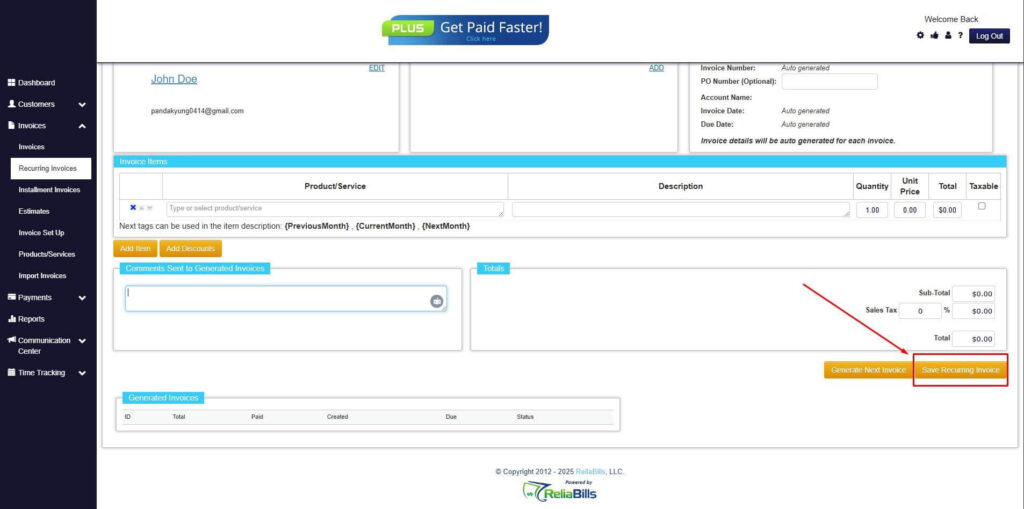
Step 8: Save Recurring Invoice
- After filling up the form, click “Save Recurring Invoice” to continue.
Step 9: Recurring Invoice Created
- Your Recurring Invoice has been created.
Frequently Asked Questions
1. What is automated billing for invoice discounting?
It is the use of billing software to manage invoices used for financing. It ensures accurate and real-time data. This improves funding processes. It enhances financial reliability.
2. Why is automation important for invoice discounting?
Automation reduces errors in invoice data significantly. It speeds up verification and approval processes. It improves transparency with lenders. This increases funding efficiency.
3. Can small businesses benefit from it?
Yes, small businesses can improve cash flow management using automation. It simplifies invoicing processes significantly. It also improves access to financing options. This supports business growth.
4. Does it integrate with accounting systems?
Most automated billing platforms support integration with accounting tools. This improves data accuracy across systems. It simplifies financial reporting. It enhances operational efficiency.
Conclusion
Automated billing plays a crucial role in improving the success of invoice discounting by ensuring accuracy and consistency in financial data. Businesses that rely on manual processes often face delays and errors that affect funding outcomes. Automation eliminates these inefficiencies and improves overall financial reliability. It strengthens communication between businesses and lenders. This makes invoice discounting more effective and efficient.
The integration of automated billing systems enhances cash flow visibility and speeds up funding approvals. Businesses benefit from real-time tracking and accurate reporting. These improvements reduce financial uncertainty and improve decision-making. They also support more stable working capital management. Automated billing for invoice discounting is essential for modern financial operations.
As financial systems become more complex, automation is no longer optional but necessary for scalability. Businesses that adopt automated solutions gain a competitive advantage in accessing funding. They also improve efficiency, accuracy, and financial control. Investing in automation leads to stronger long-term performance. It ensures smoother and more reliable financial processes overall.