

Payment failures are a frequent occurrence in SaaS subscription models due to the recurring nature of billing cycles. Customers may experience failed transactions for various reasons such as insufficient funds, expired cards, or banking errors. These disruptions can significantly affect predictable recurring revenue and cash flow stability. Because SaaS businesses rely heavily on uninterrupted billing cycles, addressing these issues quickly is essential. This is where SaaS failed payment invoicing becomes a critical process for maintaining revenue accuracy and continuity.
When payments fail, SaaS companies must ensure that invoicing records remain accurate and aligned with actual transaction outcomes. Without proper handling, financial discrepancies can occur between billing systems and accounting records. This can also lead to customer confusion and reduced trust in the platform. Clear and structured invoicing processes help prevent these issues from escalating. SaaS failed payment invoicing ensures that every failed transaction is properly documented and resolved.
Efficient handling of failed payments also plays a direct role in revenue recovery and customer retention. SaaS businesses must balance automation and communication to minimize churn risk. Proper invoicing workflows ensure that no revenue is lost due to unresolved transactions. As SaaS platforms scale, these systems become even more important for operational stability. SaaS failed payment invoicing is therefore a foundational element of subscription management.
What Is a Return Invoice in SaaS Billing?
A return invoice in SaaS billing refers to a corrected or adjusted invoice issued after a payment failure or reversal. It ensures that financial records accurately reflect the current status of a subscription account. These invoices are not standard billing documents but are used specifically for reconciliation purposes. They help maintain consistency between billing systems and accounting records. SaaS failed payment invoicing relies on these adjustments to ensure accuracy.
Return invoices differ from credit notes because they specifically address failed or reversed transactions rather than reducing charges. They are used to correct billing records rather than adjust pricing agreements. This distinction is important for financial reporting and auditing purposes. Proper classification ensures transparency in SaaS financial operations. Businesses use them to maintain structured billing workflows.
These invoices also improve communication between SaaS providers and customers. They clearly explain changes related to failed transactions and billing updates. This reduces confusion and improves trust in the billing system. Accurate return invoices support better customer experience. SaaS failed payment invoicing depends on this clarity for effective resolution.
Why Payment Failures Happen in SaaS Businesses
Insufficient Funds
Customers may not have enough available balance when subscription payments are processed. This results in an immediate decline from the payment gateway. SaaS systems often attempt automatic retries after a short period. These failures are common and directly impact SaaS failed payment invoicing workflows.
Expired or Invalid Payment Methods
Credit cards or payment details may expire without being updated by customers. This leads to automatic billing failures during subscription renewal cycles. SaaS platforms must prompt users to update their payment information regularly. Without updates, recurring payments continue to fail repeatedly.
Bank or Gateway Issues
Temporary issues within banks or payment gateways can also cause failures. These may include network interruptions or authorization errors. Although often temporary, they still disrupt billing cycles. SaaS failed payment invoicing must account for these unpredictable events.
The Impact of Failed Payments on SaaS Revenue
Failed payments disrupt the predictable nature of subscription-based revenue models. Even a small percentage of failures can accumulate into significant revenue loss over time. This creates instability in financial forecasting and planning. SaaS companies must address these issues quickly to maintain cash flow consistency.
Customer churn risk also increases when payment issues are not resolved efficiently. Users may abandon subscriptions if billing problems persist. Poor handling of failed payments negatively affects customer trust. This makes effective invoicing processes essential for retention.
Operational workload also increases significantly due to failed payments. Finance teams must manually track, correct, and reconcile transactions. This reduces efficiency and increases administrative costs. SaaS failed payment invoicing helps reduce this burden through automation.
How SaaS Failed Payment Invoicing Works
SaaS failed payment invoicing systems automatically detect unsuccessful transactions in real time. Once a failure occurs, the system flags the transaction and records all relevant details. This triggers automated workflows for correction and invoice adjustment. Businesses can maintain accurate billing records without manual intervention.
After detection, the system generates a return or adjusted invoice. This document reflects the updated financial status of the customer account. It ensures consistency across billing and accounting systems. Customers are also notified of the updated invoice details.
Automated notifications are sent to customers explaining the payment failure. These messages include instructions for resolving the issue and completing payment. This improves communication and reduces delays in recovery. SaaS failed payment invoicing ensures clarity throughout the process.
Steps SaaS Companies Take After Payment Failures
Identify the Failed Transaction
The system automatically detects and flags the failed payment in real time. Transaction data is recorded for reporting and reconciliation purposes. This ensures no failed payment is missed or ignored. It initiates the saas failed payment invoicing workflow immediately.
Generate a Return Invoice
A corrected invoice is created to reflect the failed transaction accurately. This ensures financial records remain consistent and compliant. It helps align billing data with accounting systems. SaaS failed payment invoicing depends on this correction step.
Notify the Customer
Customers receive automated alerts about the failed payment. These notifications include invoice updates and payment instructions. Clear communication reduces confusion and speeds up resolution. It also improves overall customer experience.
Retry the Payment
The system automatically retries the payment at scheduled intervals. Updated payment methods may be used if available. This increases the likelihood of successful recovery. It is a key function of SaaS failed payment invoicing systems.
Role of Automation in Handling Return Invoices
Automatic Invoice Generation
Automation eliminates the need for manual invoice corrections. Return invoices are generated instantly after a failure is detected. This improves consistency across financial records. It also saves significant time for finance teams.
Smart Payment Retries
Automated retry systems use optimized timing strategies to reattempt payments. This increases the chances of successful transaction completion. It also reduces customer churn caused by temporary failures. SaaS failed payment invoicing becomes more efficient with automation.
Customer Notifications
Automated alerts keep customers informed through email or SMS. These notifications provide real-time updates on billing issues. Faster communication improves response rates. It strengthens overall billing transparency.
Key Features Needed for SaaS Failed Payment Invoicing
Recurring Billing Management
Recurring billing systems manage subscription cycles automatically. They ensure invoices are generated consistently for each billing period. Payment tracking is integrated into the workflow. SaaS failed payment invoicing depends on this foundation.
Payment Failure Detection
Systems must detect failed transactions instantly to prevent delays. Automated workflows are triggered immediately after detection. This reduces revenue loss risks. It improves billing responsiveness.
Invoice Adjustment Tools
These tools update invoices after payment failures occur. They ensure financial records remain accurate and aligned. All changes are documented for compliance purposes. This supports structured invoicing workflows.
Reporting and Analytics
Analytics tools track payment failure trends across users. Businesses can identify high-risk accounts and patterns. This improves financial planning and decision-making. It strengthens revenue recovery strategies.
Common Challenges in Managing Return Invoices
Manual Processing Errors
Manual handling of return invoices increases the risk of errors. Incorrect adjustments can lead to financial discrepancies. These mistakes slow down reconciliation processes. SaaS failed payment invoicing reduces this risk significantly.
Customer Confusion
Poor communication about return invoices can confuse customers. This may delay payment recovery and increase support requests. Confusion negatively affects user experience. Clear messaging is essential for resolution.
Revenue Leakage
Untracked failed payments can result in lost revenue. Over time, these small losses become significant. Businesses may struggle to identify unpaid accounts. Automation helps prevent revenue leakage effectively.
Best Practices for Handling Return Invoices in SaaS
Automate Billing Workflows
Automation reduces manual intervention in billing processes. It ensures consistent handling of failed payments. This improves efficiency and accuracy. SaaS failed payment invoicing becomes more reliable.
Implement Smart Retry Logic
Strategic retry scheduling improves payment recovery success rates. Timing plays a crucial role in effectiveness. Multiple retry attempts increase chances of success. This reduces churn significantly.
Provide Clear Communication
Customers must clearly understand payment failure reasons. Instructions should guide them toward resolution steps. Transparency improves trust and satisfaction. It also speeds up recovery.
Maintain Accurate Records
All invoice changes must be documented properly. This ensures compliance with financial regulations. It also simplifies audits and reporting. Strong records support billing integrity.
How Return Invoices Affect Customer Experience
Return invoices can cause confusion if not handled properly. Customers may misunderstand billing adjustments or payment failures. This can negatively impact trust and satisfaction. However, timely communication helps reduce confusion.
Clear explanations improve transparency and customer confidence. Proper handling of billing issues strengthens long-term relationships. Customers appreciate structured and predictable billing processes. SaaS failed payment invoicing plays a key role in this experience.
How Automation Reduces SaaS Payment Failures
Real-Time Payment Monitoring
Systems detect payment failures instantly as they occur. This enables immediate corrective actions. It reduces delays in revenue recovery. It improves overall financial stability.
Automated Alerts
Customers are notified immediately after a payment failure. This encourages faster resolution of issues. It reduces churn risk significantly. Communication becomes more efficient.
Seamless Billing Updates
Invoices are updated automatically after failed payments. This ensures accurate and consistent records. It improves transparency in billing systems. SaaS failed payment invoicing becomes more streamlined.
Use Cases of SaaS Failed Payment Invoicing
Subscription-Based Platforms
These platforms rely heavily on recurring billing systems. Failed payment invoicing ensures continuity of service. It helps recover missed revenue efficiently. It supports subscription stability.
Digital Service Providers
Service providers manage frequent billing disruptions. Automated invoicing ensures accurate financial tracking. It reduces manual workload significantly. It improves operational efficiency.
Enterprise SaaS Solutions
Large SaaS platforms handle complex billing structures. Failed payment tracking ensures financial accuracy. It supports enterprise-level reporting needs. It enhances financial control.
How ReliaBills Supports SaaS Failed Payment Invoicing
ReliaBills provides a unified billing platform that helps SaaS companies manage failed payments through automated invoicing, tracking, and reconciliation. It centralizes billing operations so businesses can monitor subscription activity, detect failed transactions, and maintain accurate financial records in one system. This reduces the need for manual intervention and minimizes errors in invoice adjustments. SaaS teams gain better visibility into payment statuses and revenue performance in real time. Overall, it strengthens operational efficiency while improving billing accuracy.
A key capability of ReliaBills is its recurring billing and automated retry functionality, which directly supports saas failed payment invoicing workflows. When a payment fails, the system can automatically trigger retries based on predefined schedules and notify customers to update their payment details. This improves recovery rates and reduces churn caused by temporary payment issues. It also ensures that subscription billing continues with minimal disruption. As a result, SaaS companies can maintain more stable and predictable revenue streams.
With ReliaBills PLUS, businesses gain access to enhanced automation tools, branded customer communications, and advanced reporting features designed for revenue optimization. These tools allow companies to analyze failed payment trends, improve billing strategies, and strengthen customer relationships through clearer communication. The platform also supports scalable growth by handling increasing transaction volumes without added complexity. This makes it easier for SaaS businesses to refine their saas failed payment invoicing processes as they expand. Ultimately, ReliaBills PLUS delivers a more complete and scalable approach to subscription billing management.
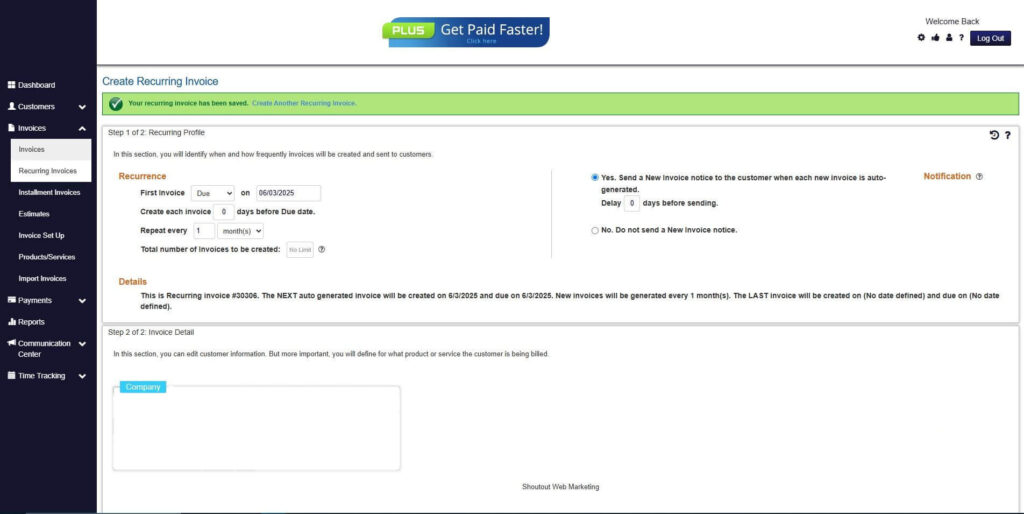
How to Create a New Recurring Invoice Using ReliaBills
Creating a New Recurring Invoice using ReliaBills involves the following steps:
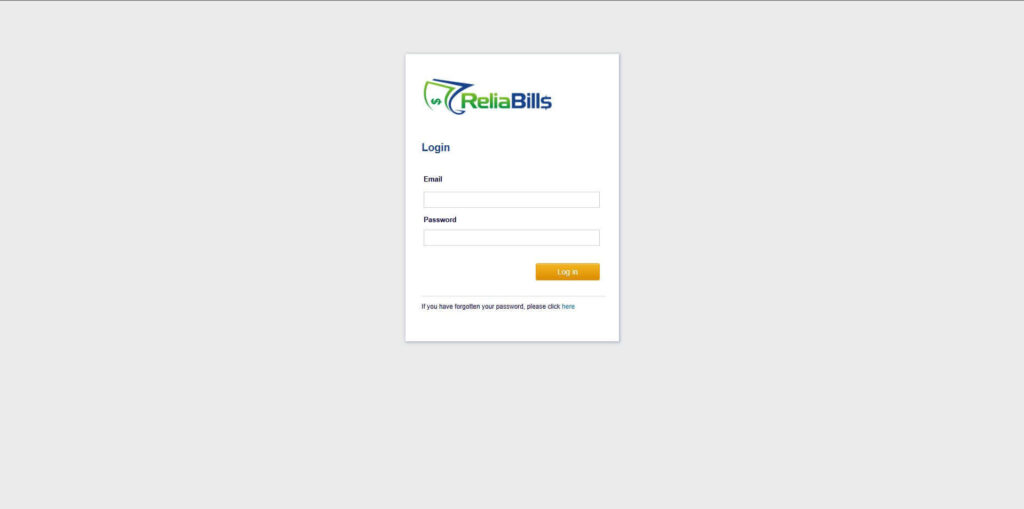
Step 1: Login to ReliaBills
- Access your ReliaBills Account using your login credentials. If you don’t have an account, sign up here.
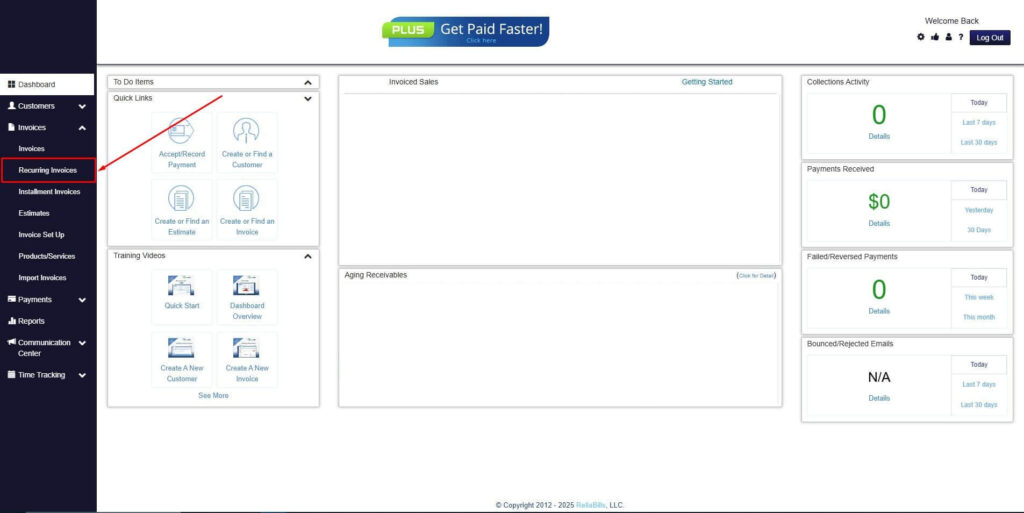
Step 2: Click on Recurring Invoices
- Navigate to the Invoices Dropdown and click on Recurring Invoices for an overview of the list of your existing customers.
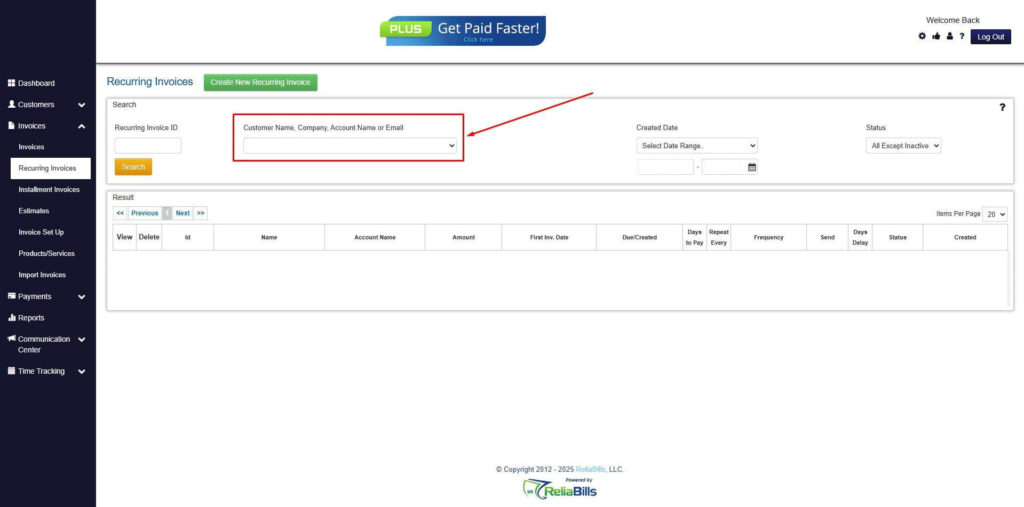
Step 3: Go to the Customers Tab
- If you have already created a customer, search for them in the Customers tab and make sure their status is “Active”.
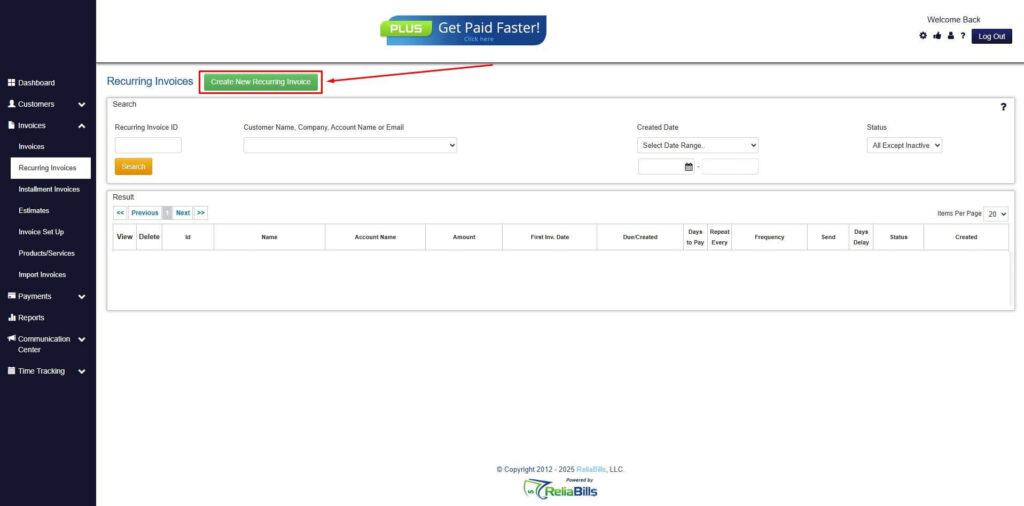
Step 4: Click the Create New Recurring Invoice
- If you haven’t created any customers yet, click the Create New Recurring Invoice to create a new customer.
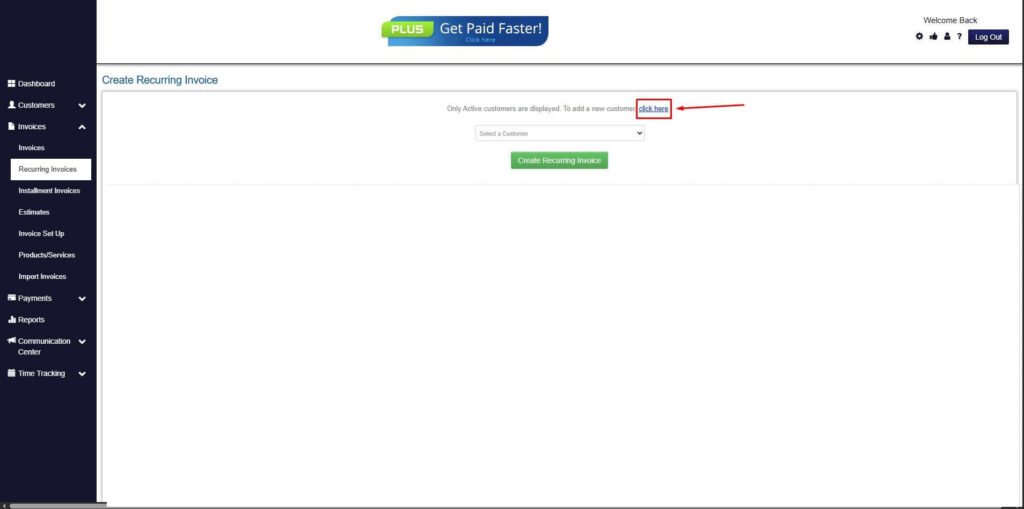
Step 5: Click on the “Click here” Button
- Click on the “Click here” button to proceed with the recurring invoice creation.
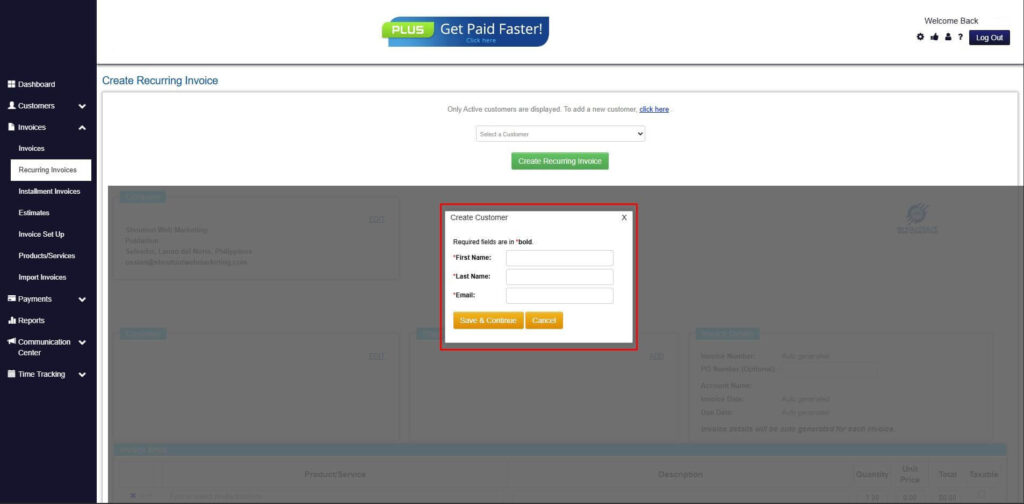
Step 6: Create Customer
- Provide your First Name, Last Name, and Email to proceed.
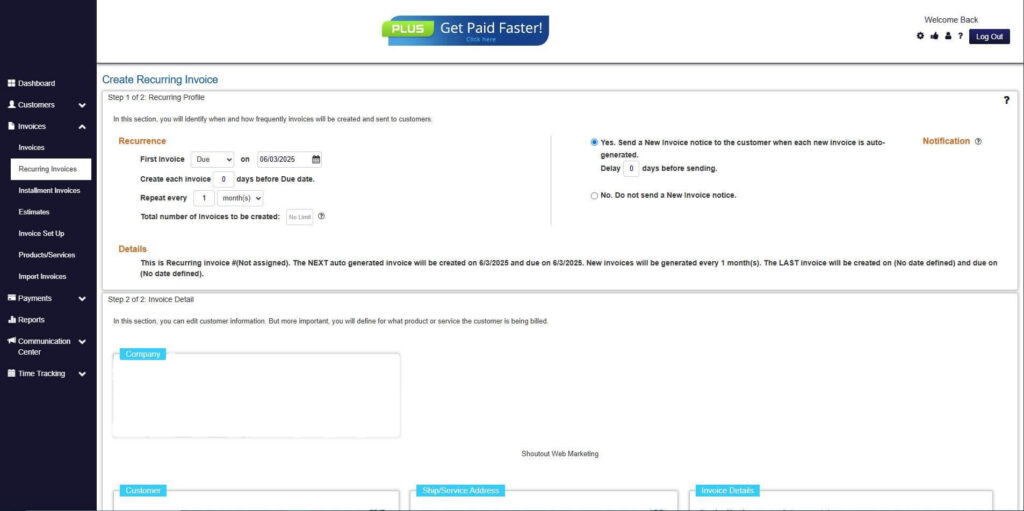
Step 7: Fill in the Create Recurring Invoice Form
- Fill in all the necessary fields.
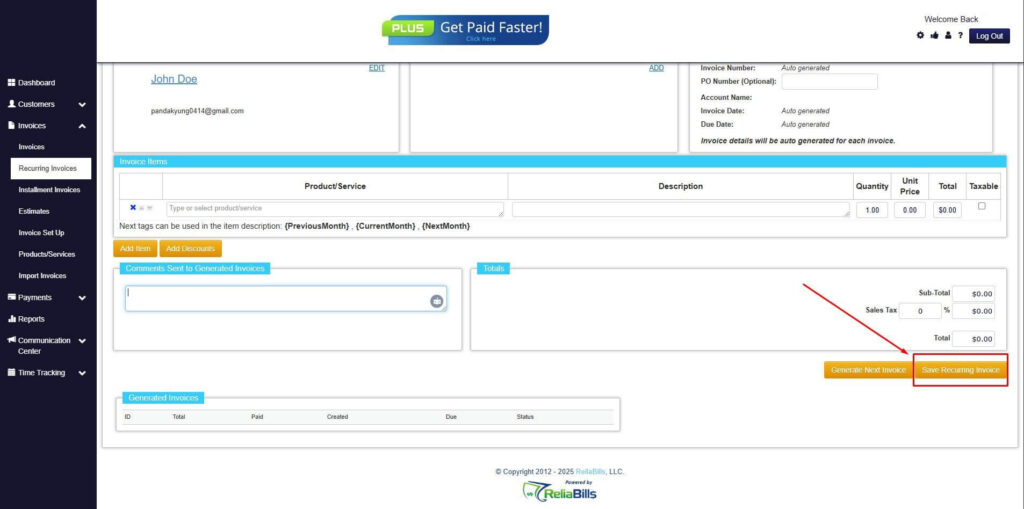
Step 8: Save Recurring Invoice
- After filling up the form, click “Save Recurring Invoice” to continue.
Step 9: Recurring Invoice Created
- Your Recurring Invoice has been created.
Frequently Asked Questions
1. What is SaaS failed payment invoicing?
It is the process of managing invoices after a payment failure occurs. It includes generating return or adjusted invoices. It ensures accurate billing records. It supports revenue recovery.
2. Why are return invoices important?
They correct billing discrepancies caused by failed payments. They ensure financial accuracy. They support compliance and reporting. They help recover revenue.
3. How can SaaS companies reduce payment failures?
They can use automated billing systems. They should implement smart retry mechanisms. They must ensure payment details are updated. These steps reduce failure rates.
4. Can automation handle failed payments effectively?
Yes, automation improves recovery rates significantly. It reduces manual workload. It enhances communication with customers. It ensures consistent billing operations.
Conclusion
Handling payment failures effectively is essential for maintaining SaaS revenue stability and customer trust. Without structured systems, failed transactions can lead to financial losses and operational inefficiencies. SaaS failed payment invoicing ensures accurate tracking and correction of billing issues. It plays a vital role in maintaining financial integrity.
Automation significantly improves how SaaS companies manage payment failures. It enables real-time detection, automated retries, and seamless invoice adjustments. These processes reduce revenue leakage and improve operational efficiency. Businesses benefit from faster recovery and improved customer experience.
As SaaS companies scale, efficient billing systems become increasingly important. Implementing automated invoicing solutions ensures long-term financial stability. It reduces churn and enhances revenue predictability. SaaS failed payment invoicing remains a core component of modern subscription management.