

Small businesses often struggle with managing billing and payment processes manually, which can create unnecessary complexity in daily operations. Tracking invoices, monitoring payments, and following up with customers can quickly consume valuable time and resources. These inefficiencies not only slow down workflows but also increase the likelihood of human error and missed revenue opportunities. As businesses grow, manual systems become even more difficult to sustain effectively. This is where billing automation for small business becomes an essential solution for improving efficiency and maintaining financial control.
Manual billing systems frequently lead to delayed invoicing and inconsistent payment tracking, which directly impacts cash flow stability. When invoices are not sent on time or payments are not monitored properly, businesses may experience revenue gaps and operational disruptions. Additionally, staff members are often burdened with repetitive administrative tasks that reduce overall productivity. These challenges make it harder for small businesses to focus on growth and customer satisfaction. Implementing billing automation for small business helps eliminate these inefficiencies by streamlining the entire process.
By adopting automation, small businesses can transform their billing operations into a more efficient and scalable system. Automated tools simplify invoicing, payment collection, and financial reporting, allowing business owners to focus on strategic activities. This shift not only improves operational efficiency but also enhances the customer experience through faster and more accurate transactions. Billing automation for small business provides a practical pathway to sustainable growth and improved cash flow management. It enables businesses to operate with greater confidence and financial clarity.
What Is Billing Automation for Small Business?
Billing automation for small business refers to the use of software systems to manage invoicing and payment processes without manual intervention. These systems are designed to handle tasks such as invoice creation, payment tracking, and customer notifications automatically. By eliminating the need for repetitive manual work, businesses can significantly reduce administrative overhead. Automation also ensures that billing processes are consistent and reliable across all transactions. This makes it an essential component of modern financial management.
At its core, billing automation replaces traditional manual invoicing methods with streamlined digital workflows. Instead of creating invoices individually, businesses can set predefined rules that generate invoices automatically based on transactions or schedules. Payments can also be tracked in real time, providing better visibility into financial performance. This reduces errors and improves the accuracy of financial records. Billing automation for small business ensures that operations run smoothly with minimal manual input.
In today’s competitive environment, businesses need efficient systems to manage finances effectively. Billing automation plays a crucial role in supporting scalability and operational efficiency. It integrates with other financial tools, enabling seamless data flow and reporting. This allows business owners to make informed decisions based on accurate and up-to-date information. As a result, billing automation for small business becomes a key driver of long-term success.
Why Manual Billing Slows Down Small Business Growth
Time-Consuming Invoice Creation and Tracking
Creating invoices manually requires significant time and effort, especially as transaction volumes increase. Staff must input customer details, pricing, and payment terms for every invoice, which slows down operations. Tracking these invoices manually adds another layer of complexity and inefficiency. This process reduces productivity and limits the ability to focus on strategic business activities.
Higher Risk of Errors and Missed Payments
Manual systems are prone to human errors, including incorrect pricing, duplicate entries, or missing information. These mistakes can lead to disputes, delayed payments, and damaged customer relationships. Additionally, without automated reminders, businesses may forget to follow up on overdue invoices. This increases the likelihood of missed or late payments. Such issues can negatively impact cash flow and financial stability.
Limited Scalability for Growing Operations
As a business grows, the volume of invoices and transactions increases significantly. Manual billing processes cannot keep up with this growth efficiently. This creates bottlenecks that slow down operations and reduce overall performance. Businesses may need to hire additional staff just to manage billing tasks. Billing automation for small business eliminates these limitations by supporting scalable growth.
Key Ways Billing Automation Simplifies Financial Processes
Automated Invoice Generation
Automated systems create invoices instantly based on predefined rules and triggers. This eliminates the need for repetitive manual data entry and reduces processing time. Businesses can ensure that all invoices follow consistent formats and include accurate information. As a result, operations become more efficient and professional.
Automated Payment Reminders
Automation tools send scheduled reminders to customers before and after payment due dates. This reduces the need for manual follow-ups and ensures consistent communication. Customers are more likely to pay on time when reminders are timely and structured. This directly improves cash flow and reduces overdue accounts.
Recurring Billing Automation
Recurring billing allows businesses to charge customers automatically at set intervals. This is particularly useful for subscription-based services or ongoing contracts. It eliminates the need to create invoices repeatedly for the same customers. Billing automation for small business ensures consistent revenue collection with minimal effort.
Integrated Payment Processing
Integrated systems enable customers to pay directly through invoices using secure payment methods. This simplifies the payment process and reduces friction for customers. Faster payment completion improves overall transaction efficiency. Businesses benefit from quicker revenue collection and improved customer satisfaction.
How Billing Automation Improves Cash Flow
Faster Invoice Delivery
Automated systems generate and send invoices immediately after a transaction occurs. This eliminates delays associated with manual invoice creation. Customers receive payment requests promptly, which encourages faster responses. Timely invoicing plays a critical role in maintaining steady cash flow.
Reduced Late Payments
Automated reminders ensure that customers are consistently notified about upcoming or overdue payments. This reduces the chances of forgotten invoices and delayed payments. Customers are more likely to meet deadlines when communication is consistent. As a result, businesses experience fewer disruptions in revenue.
Consistent Revenue Collection
Recurring billing features support predictable and steady income streams. Businesses can rely on automated systems to collect payments regularly without manual intervention. This reduces gaps in revenue and improves financial planning. Billing automation for small business creates a more stable financial environment.
Common Challenges Without Billing Automation
Manual Data Entry Errors
Entering data manually increases the risk of mistakes in pricing, customer details, or invoice calculations. These errors can lead to disputes and require additional time to correct. Businesses may also face credibility issues with customers. Automation helps eliminate these risks by ensuring accuracy.
Delayed Invoicing
Manual processes often result in delays when creating and sending invoices. These delays push back payment timelines and affect cash flow consistency. Businesses may struggle to maintain steady income streams. Automation ensures that invoices are generated and sent on time.
Poor Payment Tracking
Tracking payments manually makes it difficult to monitor outstanding balances effectively. Businesses may lack real-time visibility into their financial status. This increases the risk of missed or overlooked payments. Billing automation for small business provides clear and accurate tracking.
Benefits of Billing Automation for Small Business
Improved Efficiency
Automation reduces the time spent on repetitive billing tasks significantly. Employees can focus on higher-value activities instead of administrative work. This leads to better resource allocation and productivity. Overall operational efficiency improves across the business.
Better Accuracy
Automated systems minimize human error in invoicing and calculations. Standardized formats ensure consistency across all billing documents. Accurate records improve financial reporting and decision-making. Businesses can maintain greater confidence in their data.
Faster Payments
Invoices are delivered quickly, and payment options are integrated seamlessly. Customers can complete transactions بسهولة and without delays. This speeds up the entire billing cycle and improves collection rates. Faster payments contribute to healthier cash flow.
Scalability
Billing automation systems can handle increasing transaction volumes بسهولة. Businesses can grow without worrying about billing limitations. Automation adapts to changing needs and supports expansion. This makes it ideal for long-term growth strategies.
How Automation Reduces Administrative Workload
Centralized Billing System
A centralized platform stores all invoices and payment data in one location. This improves organization and makes information easily accessible. Teams can collaborate more effectively with shared data. It reduces confusion and enhances workflow efficiency.
Automated Reporting
Automation tools generate financial reports instantly without manual input. These reports provide valuable insights into revenue and cash flow trends. Business owners can make informed decisions based on real-time data. This supports strategic planning and growth.
Reduced Manual Follow-Ups
Automated reminders replace the need for phone calls and manual emails. This saves significant time for staff and ensures consistent communication. Customers receive timely notifications without delays. Billing automation for small business improves overall efficiency.
When Small Businesses Should Switch to Billing Automation
Increasing Customer Base
As the number of customers grows, managing invoices manually becomes more challenging. Businesses may struggle to keep up with demand efficiently. This can lead to delays and errors in billing. Automation supports scalable operations and improved management.
Frequent Payment Delays
Late payments can disrupt cash flow and create financial instability. Manual systems often fail to address this issue effectively. Automated reminders and processes improve payment collection speed. This reduces financial stress for businesses.
Expanding Service Offerings
Offering more products or services increases billing complexity. Manual systems may not handle multiple pricing structures efficiently. Automation simplifies invoicing for diverse offerings. It ensures consistency across all transactions.
High Administrative Costs
Manual billing requires significant staff time and resources. This increases operational costs and reduces profitability. Automation reduces the need for extensive manual work. Businesses can lower overhead and improve efficiency.
How Billing Software Enables Billing Automation
Custom Invoice Templates
Billing software allows businesses to create branded and professional invoice templates. These templates ensure consistency in formatting and presentation. Businesses can save time by reusing predefined designs. This enhances professionalism and brand identity.
Payment Gateway Integration
Integration with payment gateways enables secure and seamless transactions. Customers can pay directly through invoices using preferred methods. This improves convenience and speeds up payments. Businesses benefit from faster revenue collection.
Real-Time Tracking
Real-time tracking provides instant visibility into invoice and payment status. Businesses can monitor financial performance accurately. This reduces confusion and improves decision-making. Billing automation for small business ensures transparency and control.
Best Practices for Implementing Billing Automation
Standardize Billing Processes First
Businesses should define clear invoicing rules and workflows before implementing automation. Standardization ensures consistency across all billing activities. This reduces errors during system setup. A strong foundation improves overall efficiency.
Choose Scalable Software
Selecting software that can grow with the business is essential. Look for features such as recurring billing and integrations. Scalability ensures long-term usability and flexibility. This supports continuous business expansion.
Train Your Team
Employees should be properly trained on new systems and processes. This ensures smooth adoption and reduces resistance to change. Well-trained staff can maximize the benefits of automation. Training minimizes implementation challenges.
Communicate Changes to Customers
Customers should be informed about new billing methods and processes. Clear communication builds trust and transparency. Providing instructions helps customers adapt بسهولة. This improves the overall customer experience.
Common Use Cases of Billing Automation
Subscription Businesses
Subscription-based businesses rely heavily on recurring billing systems. Automation ensures consistent and timely payment collection. This reduces manual workload and improves efficiency. Revenue becomes more predictable and stable.
Freelancers and Agencies
Freelancers and agencies benefit from simplified client billing processes. Automation helps track payments and manage invoices efficiently. This saves time and reduces administrative burden. Professionals can focus more on delivering services.
E-commerce Businesses
E-commerce businesses handle high volumes of transactions ежедневно. Automation streamlines order-based invoicing and payment processing. Integration with payment systems speeds up transactions. This improves customer satisfaction and operational efficiency.
How ReliaBills Supports Billing Automation for Small Business
ReliaBills simplifies billing automation for small businesses by providing a centralized and easy-to-use platform for managing invoices, payments, and customer data. It eliminates manual billing tasks by automating invoice creation, delivery, and tracking, which improves operational efficiency. Businesses can streamline their workflows and reduce administrative burdens without needing complex systems. The platform also enhances accuracy by standardizing billing processes across all transactions. This allows small businesses to maintain better financial control and focus more on growth.
A key advantage of ReliaBills is its powerful recurring billing functionality, which is essential for businesses with subscription or repeat customers. It enables users to set up automated billing cycles that charge customers at scheduled intervals without manual intervention. This ensures consistent revenue collection and reduces the risk of missed or delayed payments. Recurring billing also improves customer experience by providing predictable and hassle-free payment processes. Billing automation for small business becomes more reliable and scalable with this level of automation.
For businesses looking to expand their capabilities, ReliaBills PLUS offers advanced tools that enhance automation and financial management. Users gain access to branded invoicing, deeper reporting insights, and more customization options to fit their business needs. These features support data-driven decision-making and improve overall financial visibility. ReliaBills PLUS is designed to grow with your business, making it easier to scale operations efficiently. It provides a comprehensive solution for small businesses aiming to optimize billing automation and long-term performance.
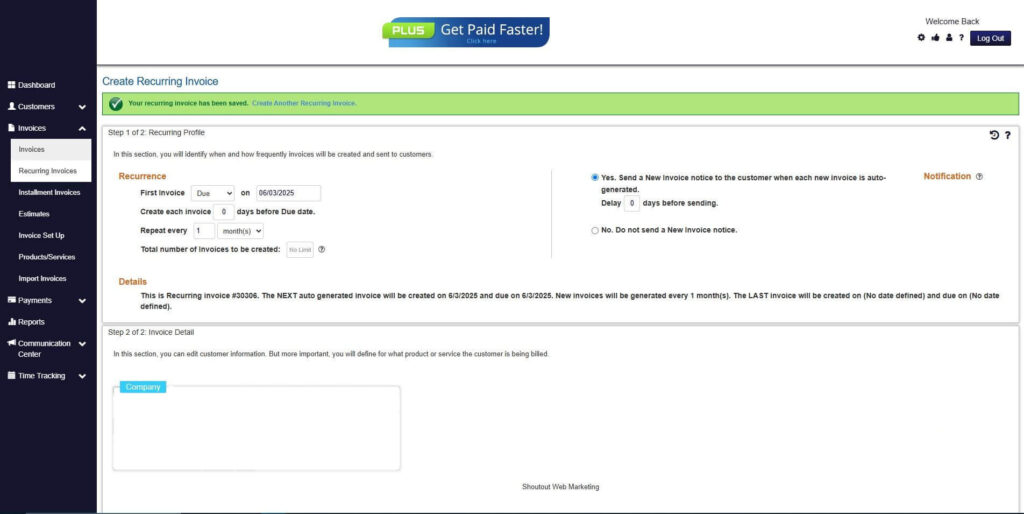
How to Create a New Recurring Invoice Using ReliaBills
Creating a New Recurring Invoice using ReliaBills involves the following steps:
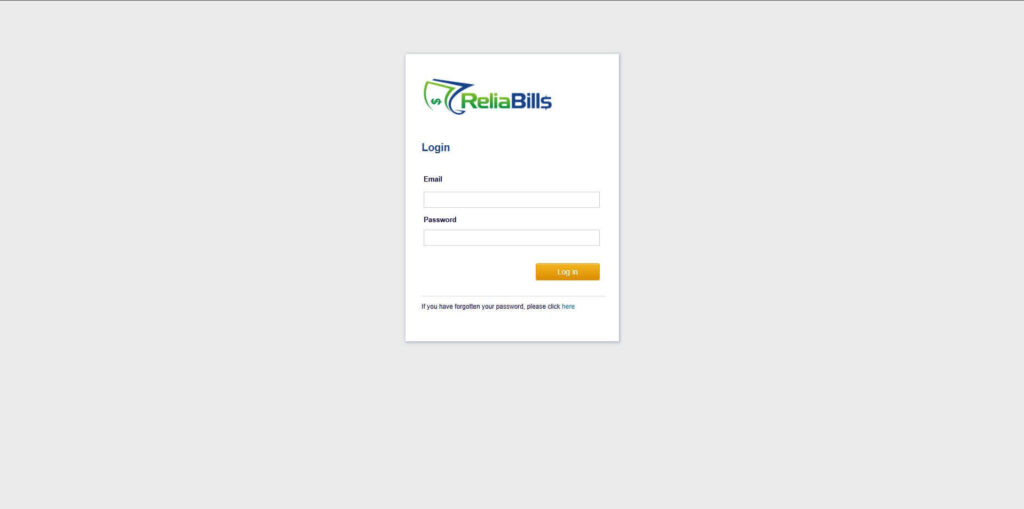
Step 1: Login to ReliaBills
- Access your ReliaBills Account using your login credentials. If you don’t have an account, sign up here.
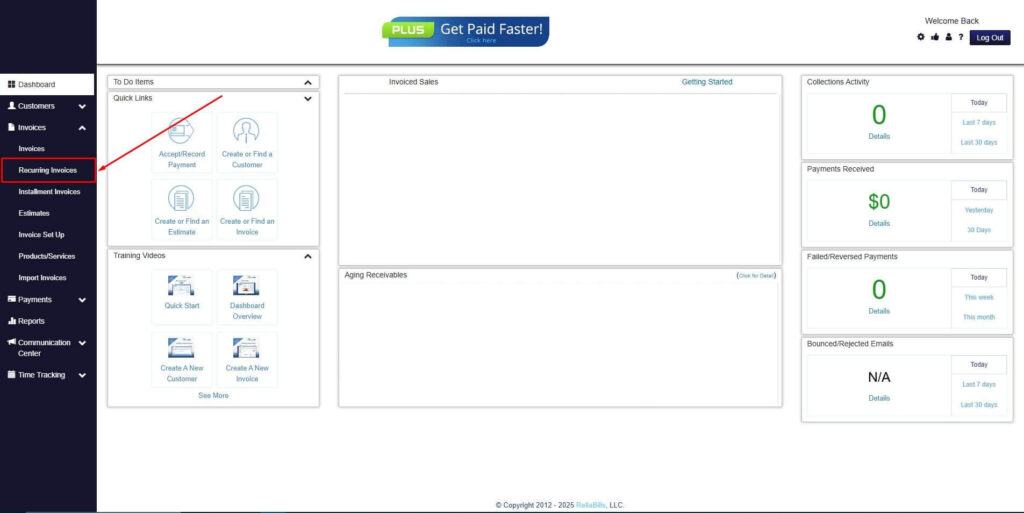
Step 2: Click on Recurring Invoices
- Navigate to the Invoices Dropdown and click on Recurring Invoices for an overview of the list of your existing customers.
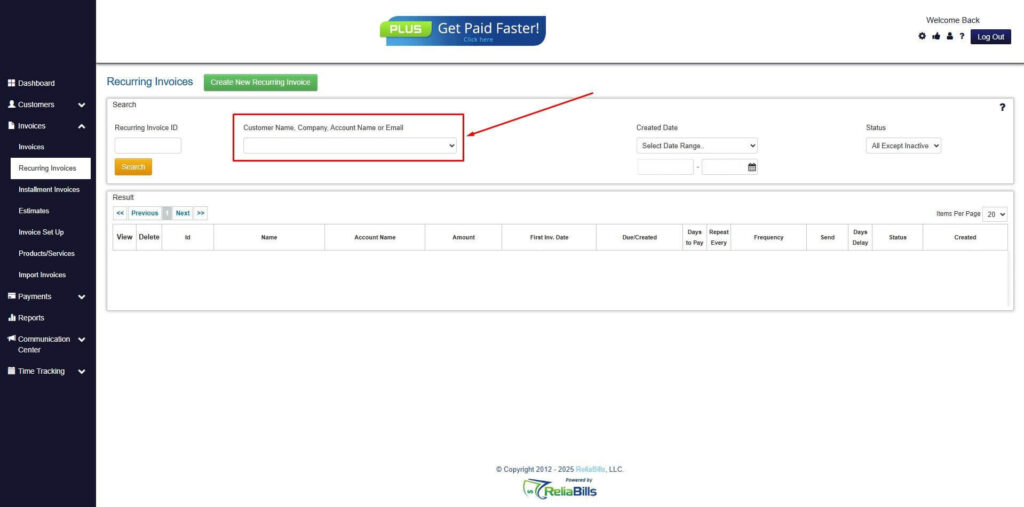
Step 3: Go to the Customers Tab
- If you have already created a customer, search for them in the Customers tab and make sure their status is “Active”.
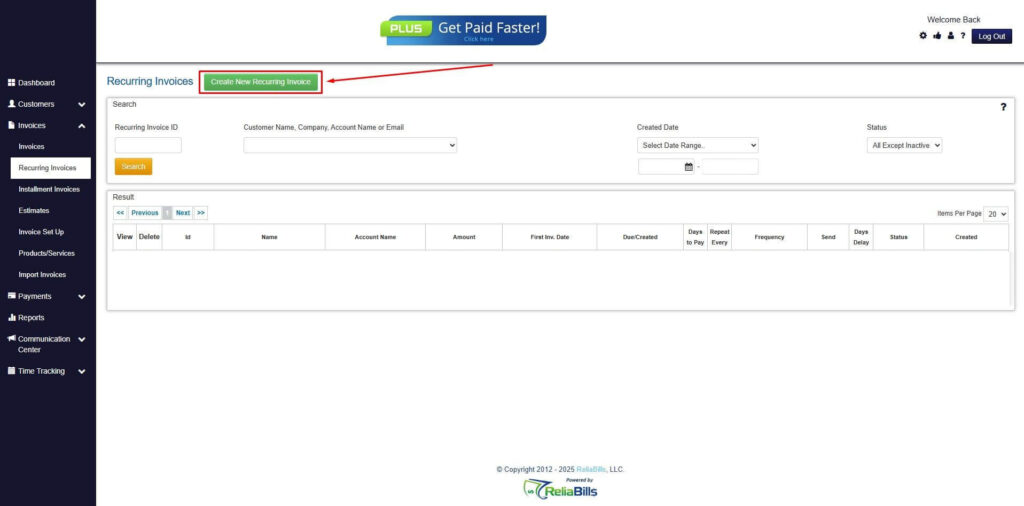
Step 4: Click the Create New Recurring Invoice
- If you haven’t created any customers yet, click the Create New Recurring Invoice to create a new customer.
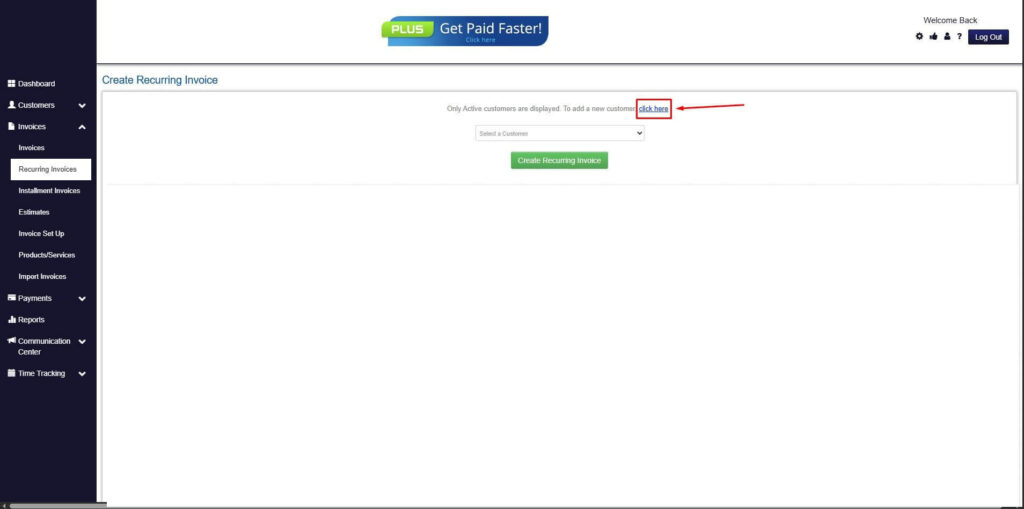
Step 5: Click on the “Click here” Button
- Click on the “Click here” button to proceed with the recurring invoice creation.
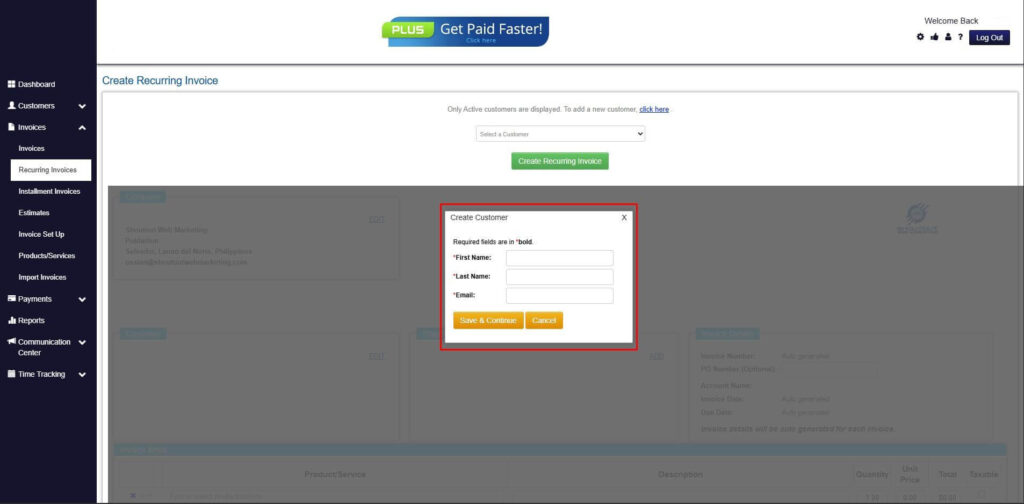
Step 6: Create Customer
- Provide your First Name, Last Name, and Email to proceed.
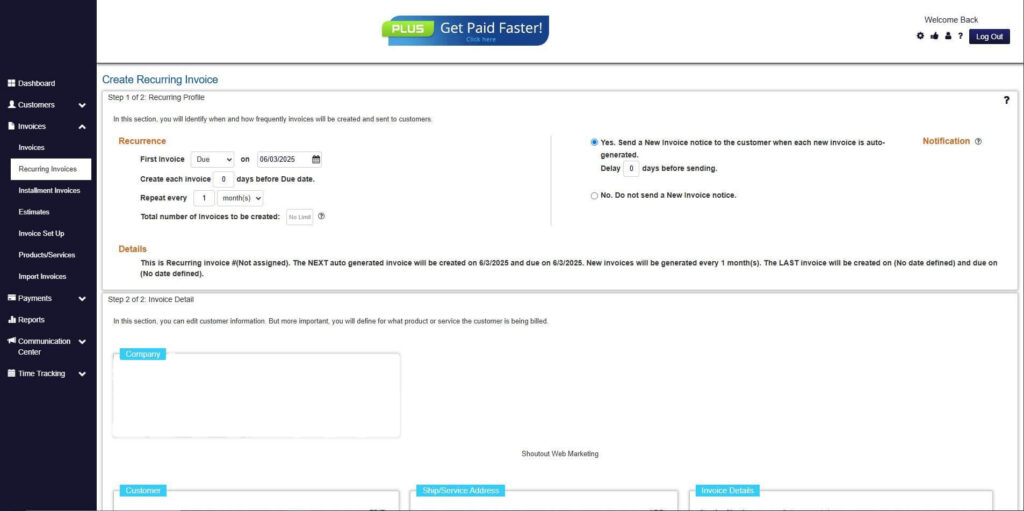
Step 7: Fill in the Create Recurring Invoice Form
- Fill in all the necessary fields.
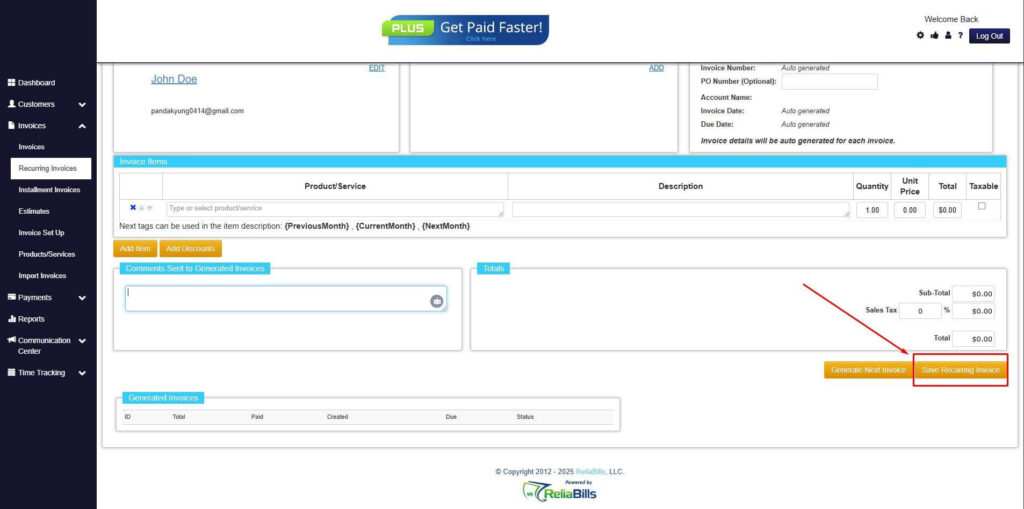
Step 8: Save Recurring Invoice
- After filling up the form, click “Save Recurring Invoice” to continue.
Step 9: Recurring Invoice Created
- Your Recurring Invoice has been created.
Frequently Asked Questions
1. What is billing automation for small business?
Billing automation for small business is the use of software to automate invoicing and payment processes. It eliminates repetitive manual tasks and reduces the risk of errors. Businesses can manage billing more efficiently with minimal effort. This improves overall financial operations.
2. Is billing automation expensive for small businesses?
Many billing automation platforms offer affordable pricing plans for small businesses. The cost is often offset by time savings and improved efficiency. Businesses can reduce administrative expenses significantly. This makes automation a valuable long-term investment.
3. Does billing automation support recurring payments?
Yes, most billing automation systems include recurring billing features. These allow businesses to automate subscription payments بسهولة. This ensures consistent revenue collection. It also reduces manual workload.
4. How does billing automation improve cash flow?
Billing automation speeds up invoicing and payment processing. It reduces delays and ensures timely payment collection. Automated reminders help minimize missed payments. This improves financial predictability and stability.
Conclusion
Billing automation for small business provides a powerful solution for simplifying complex billing and payment processes. By replacing manual systems with automated workflows, businesses can improve efficiency and reduce errors significantly. This leads to faster invoicing, better payment tracking, and enhanced financial control. Automation allows businesses to focus on growth rather than administrative tasks. It transforms billing into a streamlined and scalable operation.
The benefits of automation extend beyond efficiency to include improved cash flow and customer satisfaction. Businesses can collect payments faster and maintain consistent revenue streams. Real-time tracking and reporting provide better financial visibility. This enables smarter decision-making and long-term planning. Billing automation for small business becomes a critical tool for sustainability.
As competition increases, adopting modern solutions becomes essential for staying ahead. Billing automation helps businesses scale operations without increasing complexity. It reduces operational costs and enhances productivity. Investing in automation is a strategic move toward long-term success. Small businesses that embrace this approach position themselves for growth and stability.