

Invoice discounting is a widely used financing method that helps businesses improve cash flow by converting unpaid invoices into immediate working capital. Instead of waiting weeks or months for customers to pay, companies can access funds upfront based on their outstanding receivables. This provides liquidity support for operations, payroll, and expansion. However, it also introduces financial dependency on the accuracy and reliability of invoice data.
In invoice discounting risk management, even small inconsistencies in invoice records can create major financial exposure. Delayed payments, incorrect invoice details, or missing updates can lead to poor lending decisions and unexpected losses for financiers. Since lenders rely heavily on receivables to determine funding limits, any uncertainty directly increases risk.
Real-time payment tracking addresses these issues by providing continuous visibility into invoice status and payment behavior. Instead of relying on outdated reports, businesses and lenders can monitor financial activity as it happens. This improves transparency, reduces uncertainty, and strengthens trust in invoice-based financing systems.
What Is Invoice Discounting?
Invoice discounting is a short-term financing solution where businesses use unpaid invoices as collateral to receive immediate cash from lenders. The business retains control over customer relationships and continues managing collections while benefiting from early access to funds. This makes it a flexible financing option for companies with strong receivables.
The lender’s repayment depends entirely on customer payments, which makes invoice accuracy extremely important. Lenders assess invoice validity, customer creditworthiness, and historical payment patterns before providing funding. Once approved, repayment is expected when the customer settles the invoice in full.
Unlike factoring, where the lender takes over collections, invoice discounting allows businesses to maintain confidentiality and control. It also differs from traditional loans because repayment is not fixed but tied directly to invoice settlement. This structure increases flexibility but also raises the importance of strong invoice discounting risk management practices.
What Is Real-Time Payment Tracking?
Real-time payment tracking is a financial monitoring system that provides instant updates on invoice status, payment progress, and outstanding receivables. It eliminates delays caused by manual reporting or batch processing systems. Businesses gain immediate visibility into financial activity as transactions occur.
These systems integrate with invoicing platforms, banking systems, and accounting software to ensure seamless data synchronization. When a payment is made, failed, or delayed, the system updates instantly. This ensures that all financial stakeholders are working with accurate and current information.
For companies involved in invoice discounting risk management, this level of visibility is essential. It ensures that lenders and businesses can make informed decisions based on real-time data rather than outdated financial snapshots.
Key Risks in Invoice Discounting Agreements
Delayed or missed customer payments
When customers fail to pay on time, it directly impacts the lender’s repayment schedule. These delays can create liquidity pressure for both businesses and financing providers. Over time, repeated delays increase perceived credit risk and reduce financing flexibility. This makes timely tracking essential for risk control.
Inaccurate or outdated invoice data
If invoice records are not updated in real time, lenders may finance incorrect receivables. This can lead to over-financing or miscalculated exposure. Inaccurate data is one of the most serious threats in invoice discounting risk management. It undermines trust and financial stability.
Fraudulent or duplicate invoicing
Fraudulent invoices can distort financial reports and lead to improper funding. Without verification systems, lenders may unknowingly finance non-existent revenue. This creates direct financial loss and reputational risk. Strong validation processes are essential.
Lack of visibility for lenders and stakeholders
When financial data is delayed or fragmented, lenders cannot accurately assess repayment risk. This lack of transparency reduces confidence in financing decisions. It also slows down funding approvals and increases caution. Visibility is critical for trust.
Disputes affecting repayment confidence
Customer disputes over billing accuracy or service quality can delay payments. These disputes create uncertainty in repayment timelines. They also increase administrative workload for resolution. This weakens overall financial predictability.
How Real-Time Payment Tracking Reduces Invoice Discounting Risk
Real-time payment tracking significantly strengthens invoice discounting risk management by ensuring that all invoice and payment data is continuously updated. This eliminates blind spots caused by delayed reporting and gives lenders immediate access to accurate financial information. As a result, funding decisions become more reliable and informed.
One major advantage is early detection of payment issues. If an invoice becomes overdue or disputed, the system immediately flags it for review. This allows businesses and lenders to take corrective action before the issue escalates into a financial loss. Early intervention is key to reducing exposure.
It also improves the accuracy of receivables data used for financing decisions. Since lenders depend on invoice value and payment behavior, real-time updates ensure that funding is based on current conditions. This reduces the risk of overestimating cash flow or approving unsafe credit limits.
Finally, real-time tracking increases transparency between all parties involved. Businesses, lenders, and financial stakeholders operate with shared, up-to-date information. This builds trust and creates a more stable invoice discounting environment.
Key Features of Real-Time Payment Tracking Systems
Live invoice and payment status dashboards
Real-time dashboards give businesses a complete overview of all invoices, including paid, pending, overdue, and disputed statuses. This allows finance teams and lenders to instantly assess financial health without waiting for manual reports. It also improves decision-making speed in invoice discounting risk management by providing up-to-date receivables visibility.
Instant payment confirmation and updates
Every payment is reflected immediately once processed through the system. This eliminates delays in reconciliation and ensures that financial records remain accurate at all times. It also reduces confusion between businesses and lenders regarding outstanding balances.
Automated alerts and risk notifications
The system sends real-time alerts for overdue invoices, failed payments, or unusual transaction activity. These notifications help businesses act quickly before risks escalate. Early warnings are critical for reducing exposure in invoice financing agreements.
Integration with accounting and banking systems
Seamless integration ensures that all financial data is synchronized across platforms. This reduces manual entry errors and ensures consistency between invoicing and accounting records. It also improves transparency for lenders evaluating receivables.
Customer payment history tracking
Businesses can review past payment behavior for each customer, including delays and disputes. This helps identify high-risk accounts and improve credit decision-making. Over time, it strengthens invoice discounting risk management strategies.
The Role of Recurring Billing in Risk Reduction
Recurring billing contributes to stronger invoice discounting risk management by creating structured and predictable invoice cycles. When billing is automated and consistent, lenders can better forecast repayment timing and cash flow patterns. This reduces uncertainty in financing decisions.
Automation also ensures that invoices are generated without delays or omissions. This improves the accuracy and reliability of receivables data. Consistent billing cycles reduce discrepancies in financial reporting.
Over time, recurring billing minimizes manual intervention, which reduces human error. This leads to more stable financial records and improved lender confidence in the data being used for funding decisions.
Challenges Without Real-Time Tracking
Without real-time tracking, businesses operate with delayed financial visibility. This makes it difficult for lenders to assess current risk levels accurately. As a result, financing decisions may be based on outdated or incomplete information.
It also increases the likelihood of missed payment issues going undetected. By the time a problem is identified, it may already have escalated into a default or dispute. This increases financial exposure significantly.
Additionally, lack of transparency often leads to disagreements between businesses and lenders. These disputes slow down operations and weaken financing relationships. Trust becomes harder to maintain without accurate real-time data.
Best Practices for Reducing Invoice Discounting Risk
Adopt automated billing and real-time tracking systems
Automation ensures invoices and payment data are always current and accurate. This reduces reliance on manual updates, which are often prone to delays and errors. It is one of the most effective ways to strengthen invoice financing stability.
Maintain accurate and continuously updated invoice records
Clean and updated data is essential for reliable financing decisions. Businesses should regularly audit invoices to ensure accuracy and completeness. This reduces discrepancies that could negatively impact lender confidence.
Monitor customer payment behavior consistently
Tracking payment trends helps identify slow-paying or high-risk customers early. Businesses can then adjust credit terms or follow-up strategies accordingly. This proactive approach reduces financial exposure in discounting arrangements.
Integrate invoicing with financial and accounting systems
System integration ensures all financial data is aligned and consistent across platforms. This eliminates reporting gaps that could distort receivables data. It also improves overall transparency in financial operations.
Set up automated alerts for overdue or suspicious activity
Alerts help businesses react quickly when something goes wrong. Whether it is a delayed payment or unusual invoice activity, early detection reduces financial risk. This is essential for maintaining strong invoice discounting risk management practices.
How Automation Improves Financial Transparency
Automation ensures that financial data is continuously updated without manual delays. This creates a single source of truth for receivables and payment information. Businesses and lenders can rely on accurate, real-time insights.
It also reduces human errors in reporting, which is critical for financial integrity. Automated systems ensure consistency across all transactions. This improves trust in the data used for financing decisions.
Overall, automation enhances transparency and allows stakeholders to make better-informed financial decisions. It strengthens both operational efficiency and risk management frameworks.
Key Benefits of Real-Time Tracking in Invoice Discounting
- Reduces financial exposure and lending risk: Real-time tracking ensures lenders are always aware of invoice status and payment behavior. This reduces the chances of funding risky or unpaid receivables. It creates a safer financing environment overall.
- Improves accuracy of receivables data: Since data is updated instantly, financing decisions are based on accurate and current information. This eliminates errors caused by outdated reports. It improves confidence in financial assessments.
- Enhances lender trust and confidence: Transparent and real-time financial visibility builds stronger relationships between businesses and lenders. When data is reliable, lenders are more willing to extend financing. This supports smoother funding approvals.
- Speeds up financial decision-making processes: Real-time insights allow faster evaluation of invoices and credit risk. Businesses can access funding more quickly when needed. This improves liquidity and operational flexibility.
- Increases transparency and accountability: All stakeholders operate using the same live financial data. This reduces disputes and misunderstandings between businesses and lenders. It strengthens the overall financing ecosystem.
Common Use Cases
- Manufacturing and wholesale businesses: These industries often deal with large invoice volumes and long payment cycles. Real-time tracking helps manage cash flow and reduce financing risks.
- Logistics and freight companies: Transportation businesses rely on timely payments to maintain operations. Tracking systems ensure invoices are monitored and paid efficiently.
- B2B service providers: Service-based companies often depend on invoice financing for cash flow. Real-time tracking improves payment reliability and financial planning.
- SaaS and subscription businesses: Recurring revenue models benefit from automated tracking and predictable payment cycles. This reduces uncertainty in financing decisions.
- Companies using invoice discounting solutions: Any business leveraging invoice-based funding benefits from real-time visibility. It strengthens overall invoice discounting risk management and financial control.
How ReliaBills Supports Real-Time Payment Tracking and Risk Reduction
ReliaBills helps businesses strengthen invoice discounting risk management by providing real-time visibility into invoices, payments, and customer accounts. Instead of relying on delayed reports or manual updates, businesses can instantly see which invoices are paid, pending, or overdue. This continuous visibility helps reduce uncertainty when managing receivables and improves financial decision-making for both internal teams and financing partners. By ensuring that invoice data is always current, ReliaBills minimizes the risk of funding inaccuracies and improves overall trust in financial reporting.
Through automated recurring billing and real-time payment tracking, ReliaBills ensures that invoices are generated and updated on a consistent schedule without manual intervention. Payments are reflected immediately in the system, allowing businesses to track cash flow with greater precision and respond quickly to any delays. This level of automation reduces human error, improves collection efficiency, and ensures that lenders or stakeholders always have access to accurate receivables data. As a result, businesses can maintain stronger financial stability while reducing exposure to invoice financing risks.
ReliaBills PLUS further enhances risk reduction with advanced reporting, automation workflows, and customer management tools designed for high-volume billing environments. These features allow businesses to analyze payment trends, identify at-risk accounts early, and optimize credit and collection strategies. With deeper insights into financial performance, companies can make smarter financing decisions and reduce dependency risks associated with invoice discounting. Ultimately, ReliaBills creates a more transparent, predictable, and controlled billing ecosystem that supports long-term financial health.
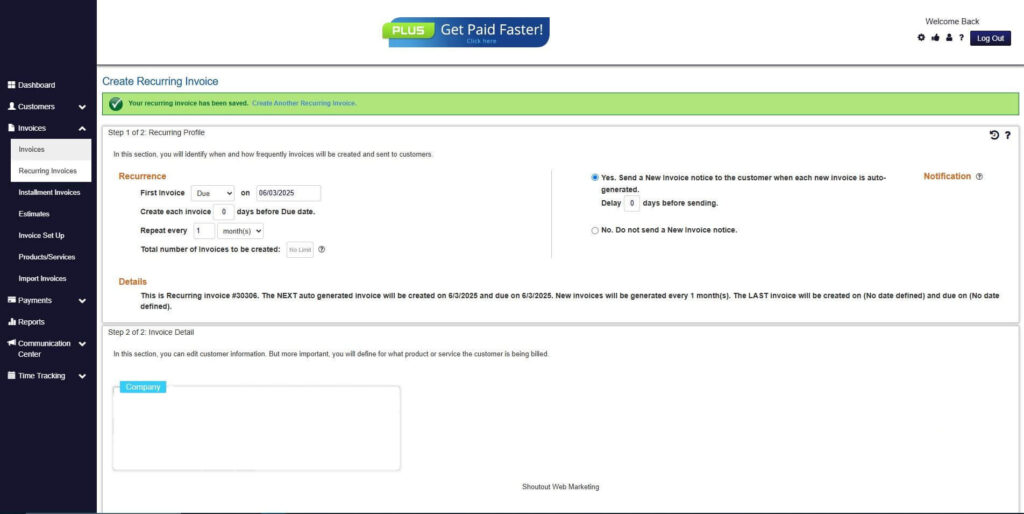
How to Create a New Recurring Invoice Using ReliaBills
Creating a New Recurring Invoice using ReliaBills involves the following steps:
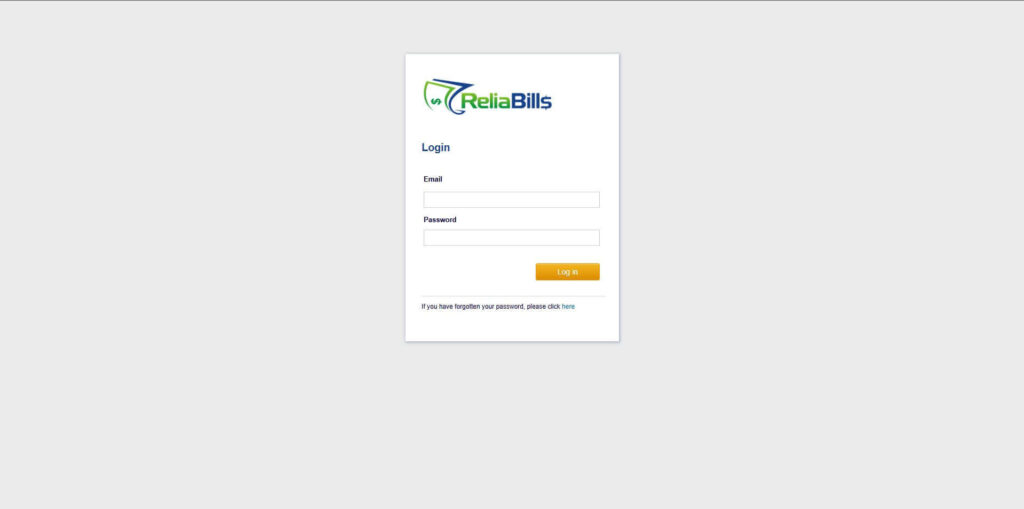
Step 1: Login to ReliaBills
- Access your ReliaBills Account using your login credentials. If you don’t have an account, sign up here.
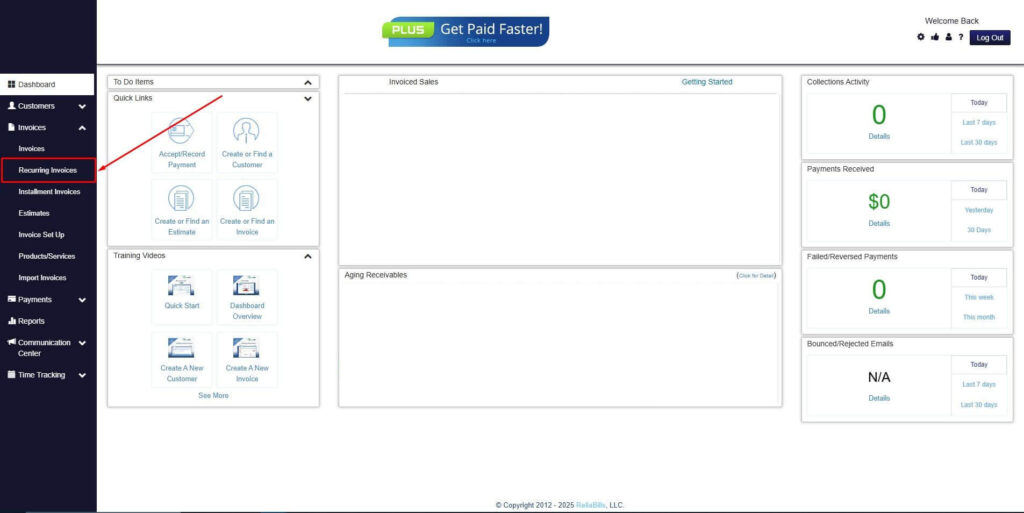
Step 2: Click on Recurring Invoices
- Navigate to the Invoices Dropdown and click on Recurring Invoices for an overview of the list of your existing customers.
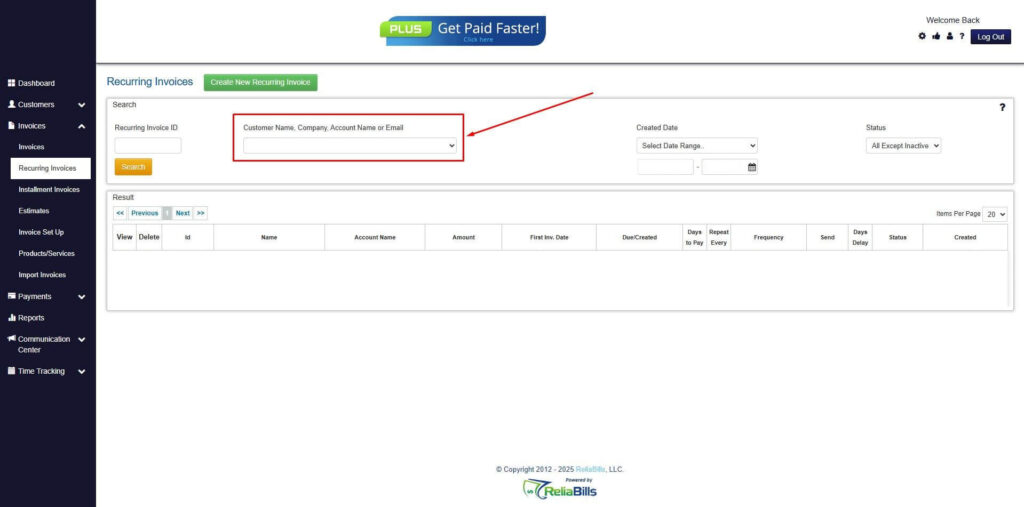
Step 3: Go to the Customers Tab
- If you have already created a customer, search for them in the Customers tab and make sure their status is “Active”.
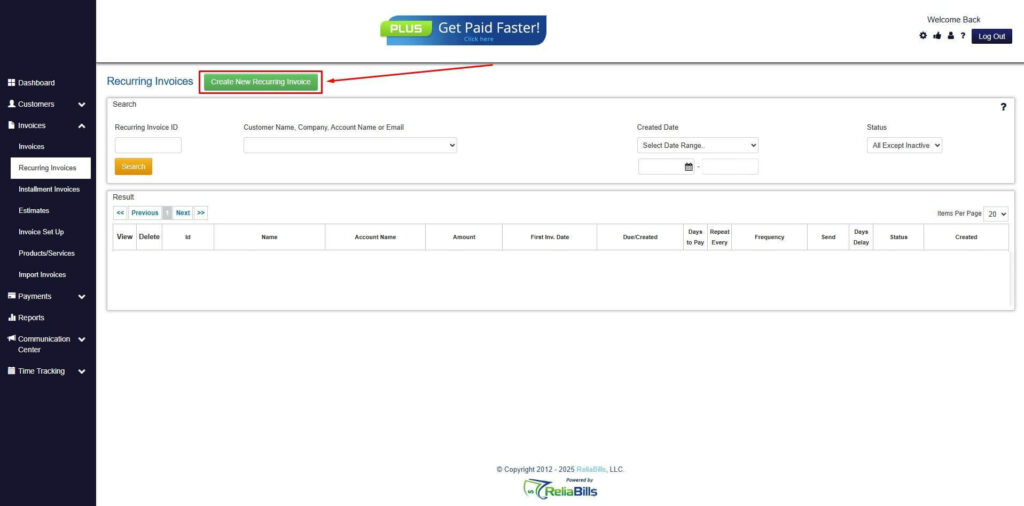
Step 4: Click the Create New Recurring Invoice
- If you haven’t created any customers yet, click the Create New Recurring Invoice to create a new customer.
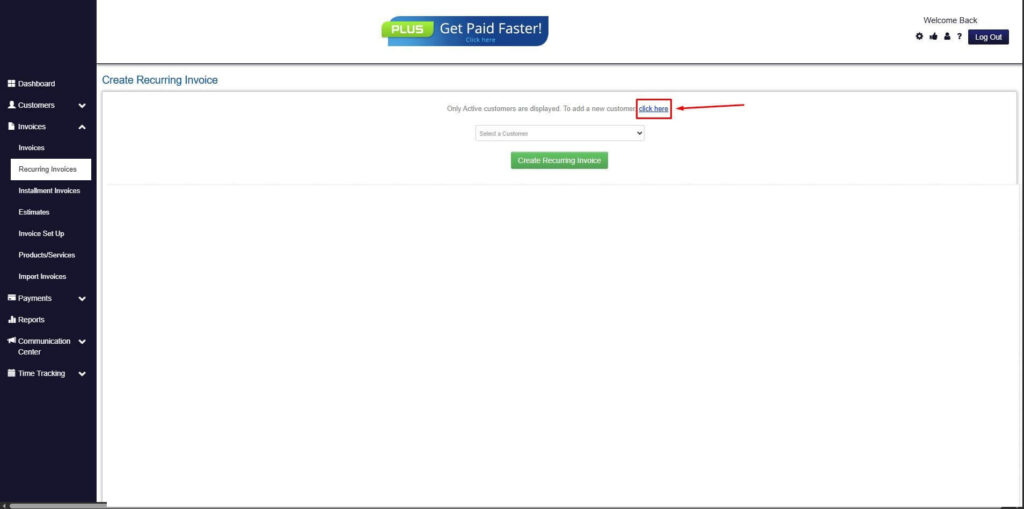
Step 5: Click on the “Click here” Button
- Click on the “Click here” button to proceed with the recurring invoice creation.
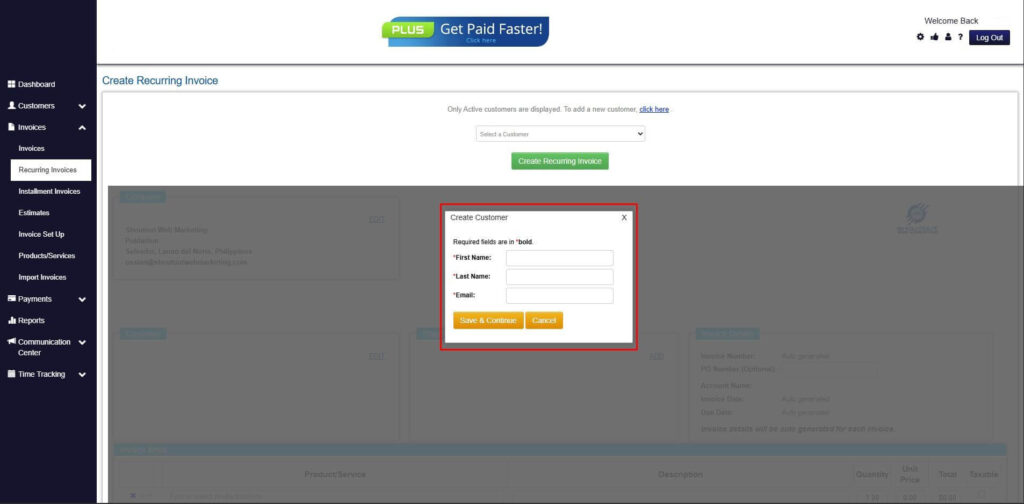
Step 6: Create Customer
- Provide your First Name, Last Name, and Email to proceed.
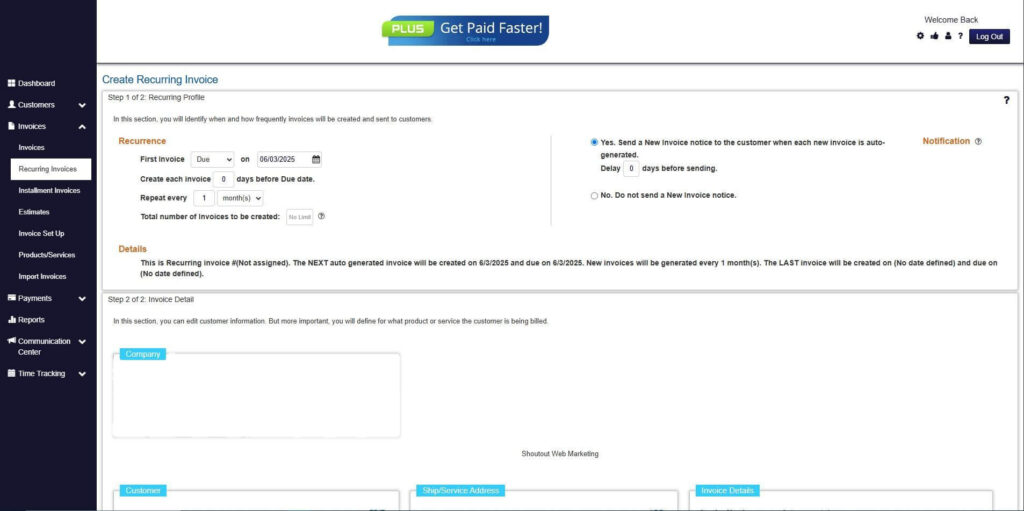
Step 7: Fill in the Create Recurring Invoice Form
- Fill in all the necessary fields.
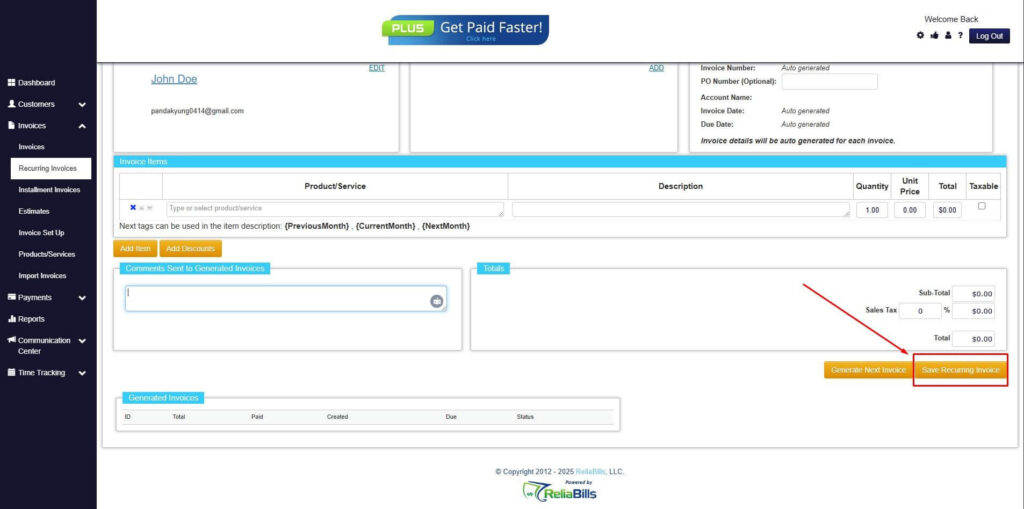
Step 8: Save Recurring Invoice
- After filling up the form, click “Save Recurring Invoice” to continue.
Step 9: Recurring Invoice Created
- Your Recurring Invoice has been created.
Frequently Asked Questions (FAQs)
1. What is real-time payment tracking?
It is a system that provides instant updates on invoice status, payments, and receivables. It eliminates delays caused by manual reporting.
2. How does it reduce invoice discounting risk?
It improves transparency and ensures lenders have access to accurate, up-to-date financial data. This reduces uncertainty in financing decisions.
3. Can real-time tracking be automated?
Yes, most systems integrate with billing and accounting platforms to automate updates and notifications. This reduces manual effort and errors.
4. Is it useful for small businesses?
Absolutely. Small businesses benefit from better cash flow visibility and reduced payment delays. It also helps them qualify for financing more easily.
5. What makes it different from traditional reporting?
Traditional reporting is delayed and static, while real-time tracking updates continuously. This provides a more accurate financial picture at all times.
Conclusion
Real-time payment tracking plays a crucial role in modern invoice discounting risk management by improving transparency, accuracy, and financial visibility. It ensures that all stakeholders operate using up-to-date and reliable data.
When combined with automation and recurring billing, it significantly reduces financial uncertainty and improves funding decisions.
As invoice-based financing continues to expand, adopting real-time financial systems will be essential for safer lending, stronger cash flow control, and long-term business stability.