

Consistent monthly payments are essential for businesses that rely on recurring revenue to maintain healthy cash flow and operational stability. Companies such as SaaS providers, membership organizations, utilities, and service-based businesses depend on timely customer payments to cover ongoing expenses and support growth. When monthly billing processes are managed efficiently, businesses gain better financial predictability and stronger customer relationships. This makes payment consistency a critical component of long-term business success.
However, many businesses still rely on manual invoicing and payment collection processes that consume significant time and resources. Staff members often need to create invoices manually, send reminders, track overdue payments, and update financial records individually. As customer volume increases, these repetitive tasks become more difficult to manage accurately and consistently. This leads to delayed payments, billing errors, and unnecessary administrative burden.
Businesses that want to automate monthly customer payments can reduce these operational challenges while improving efficiency and customer experience. Automation streamlines recurring billing, payment collection, and financial tracking through centralized systems and predefined workflows. It ensures invoices are generated on time, payments are collected consistently, and records remain accurate in real time. As a result, businesses gain stronger financial control and improved scalability.
What Does It Mean to Automate Monthly Customer Payments?
Automating monthly customer payments refers to using software and digital billing systems to manage recurring invoices and payment collection automatically. Instead of relying on employees to manually create invoices and process payments every month, automation platforms perform these tasks based on predefined schedules and customer agreements. This allows businesses to maintain consistent billing cycles without repetitive manual work. It also improves accuracy and operational efficiency.
Automated systems typically handle several functions at once, including invoice generation, payment reminders, payment collection, and transaction tracking. Businesses can set recurring billing schedules for customers, while the platform automatically sends invoices and records payments. These systems also provide real-time updates on payment status and outstanding balances. This creates better financial visibility and reporting capabilities.
It is also important to understand the difference between recurring billing, Auto Pay, and full payment automation. Recurring billing focuses on generating invoices automatically on a fixed schedule. Auto Pay allows customer payments to be automatically charged using saved payment methods. Full automation combines both processes along with tracking, notifications, and reporting to create a seamless billing ecosystem.
Why Businesses Should Automate Monthly Payments
Reduces Late or Missed Payments
Businesses that automate monthly customer payments significantly reduce the chances of invoices being forgotten or delayed. Automated systems send invoices and reminders according to predefined schedules without requiring manual action from staff members. This improves payment consistency because customers receive timely notifications and payment requests every billing cycle. Over time, businesses experience fewer overdue accounts and more reliable revenue collection.
Improves Cash Flow Predictability
Consistent monthly payment collection helps businesses forecast revenue more accurately and maintain stable cash flow. When invoices are generated and payments are collected automatically, companies gain more confidence in their expected monthly income. This predictability supports better budgeting, payroll planning, and operational decision-making. Businesses can also respond faster to financial changes because they have real-time visibility into payment performance.
Minimizes Administrative Workload
Manual billing processes require employees to spend hours creating invoices, tracking payments, and following up with customers. Automation eliminates much of this repetitive administrative work by handling recurring tasks automatically. This allows staff members to focus on higher-value business activities instead of routine billing operations. It also reduces operational costs associated with manual financial management.
Enhances Customer Convenience and Experience
Customers prefer convenient payment experiences that require minimal effort and reduce the risk of missed due dates. Automated billing and Auto Pay options make it easier for customers to pay on time without manually processing payments each month. This convenience improves customer satisfaction and reduces frustration caused by payment reminders or service interruptions. Better payment experiences also contribute to stronger customer retention.
How Automated Monthly Payment Systems Work
Automated payment systems begin by allowing businesses to create recurring billing schedules for individual customers or subscription plans. These schedules determine when invoices should be generated and when payments are expected. Businesses can customize billing frequencies based on monthly, quarterly, or annual payment arrangements. Once configured, the system manages billing cycles automatically.
The platform then generates and sends invoices according to the defined schedule without requiring manual intervention. Customers receive invoices through email or online customer portals, ensuring timely communication every billing cycle. This eliminates delays that commonly occur in manual billing environments. It also ensures consistent invoicing accuracy across all customer accounts.
Many systems also support Auto Pay functionality that allows payments to be collected automatically using saved payment methods such as credit cards or bank accounts. Once authorized by the customer, payments are processed automatically on the due date. This reduces collection delays and improves payment consistency. Businesses benefit from more predictable revenue streams and lower collection effort.
Automated systems also track payment activity and update financial records in real time. Businesses can instantly monitor paid invoices, overdue balances, and customer payment behavior through centralized dashboards and reports. This improves financial visibility and simplifies reconciliation processes. It also supports faster and more informed financial decision-making.
Key Features Needed for Payment Automation
Recurring Billing and Subscription Management
Recurring billing functionality allows businesses to automatically generate invoices based on predefined billing schedules. This ensures customers are billed consistently for subscriptions, memberships, or ongoing services without requiring manual effort every month. Subscription management features also allow businesses to handle upgrades, downgrades, renewals, and cancellations more efficiently. These capabilities are essential for maintaining organized and scalable recurring revenue operations.
Auto Pay with Secure Payment Authorization
Auto Pay features allow customers to authorize automatic payment collection using securely stored payment methods. This reduces the risk of missed payments because charges are processed automatically on due dates. Secure payment authorization also helps businesses maintain compliance with payment security standards while improving customer trust. As a result, businesses experience more reliable and predictable monthly collections.
Automated Invoice Generation and Delivery
Automated invoice generation ensures invoices are created accurately and delivered on schedule every billing cycle. Businesses no longer need to manually prepare and send invoices for repeat customers. This reduces administrative workload and eliminates delays caused by human oversight. It also improves billing consistency across all customer accounts.
Real-Time Payment Tracking and Reporting
Real-time tracking tools allow businesses to monitor payment activity as transactions occur. Companies can instantly see which invoices are paid, overdue, or pending without manually updating spreadsheets or records. This improves financial visibility and helps businesses identify collection issues quickly. Reporting tools also support better forecasting and financial analysis.
Multiple Payment Options
Modern billing systems support multiple payment methods including credit cards, ACH transfers, digital wallets, and online banking. Providing flexible payment options improves customer convenience and increases the likelihood of on-time payments. Customers are more likely to complete transactions when they can use their preferred payment method. This flexibility also supports broader customer accessibility.
Automated Reminders and Notifications
Automated reminders notify customers about upcoming due dates, failed transactions, or overdue invoices without manual follow-up from staff members. These reminders help reduce missed payments and improve payment consistency. Businesses also save time by reducing collection-related communication tasks. Automated notifications improve both operational efficiency and customer communication.
Steps to Automate Monthly Customer Payments
Choose a Billing and Payment Automation Platform
The first step is selecting a platform that supports recurring billing, Auto Pay, reporting, and payment tracking features. Businesses should evaluate software based on scalability, integration capabilities, ease of use, and payment security. Choosing the right system ensures the automation process aligns with long-term operational goals. A reliable platform becomes the foundation for efficient billing management.
Set Up Customer Billing Profiles and Payment Methods
Businesses need to create customer profiles that include billing details, payment schedules, and preferred payment methods. Customers may also authorize Auto Pay using securely stored payment information. Accurate setup is important because errors at this stage can affect billing accuracy later. Proper onboarding creates smoother recurring payment experiences.
Define Billing Cycles and Pricing Structures
Companies should clearly establish monthly billing schedules, pricing tiers, discounts, and service agreements before launching automation. Standardized billing structures reduce confusion and improve financial consistency. Businesses should also determine how renewals, prorated charges, or plan changes will be handled. Clear billing policies support better customer communication and fewer disputes.
Enable Recurring Invoices and Auto Pay Options
Once billing rules are configured, businesses can activate recurring invoice generation and automatic payment collection. Customers receive invoices and payments are processed according to the defined schedule. This reduces manual intervention while improving payment reliability. Businesses gain more stable recurring revenue streams.
Test the System Before Full Implementation
Testing ensures invoices, reminders, payment processing, and reporting functions work correctly before full deployment. Businesses should review sample transactions and identify any workflow issues early. This minimizes errors during rollout and improves operational readiness. Proper testing also increases confidence in the automation system.
Monitor and Optimize the Process Regularly
Automation systems should be reviewed regularly to ensure billing accuracy and operational efficiency remain strong over time. Businesses should monitor failed payments, overdue accounts, and customer feedback to identify improvement opportunities. Optimization helps maintain smooth recurring payment operations as the business grows. Continuous review also supports long-term scalability.
Common Challenges Without Automation
Businesses that rely on manual payment collection often struggle with time-consuming invoicing and follow-up processes that require constant administrative attention. Staff members must manually generate invoices, track due dates, and contact customers regarding overdue balances. As customer volume grows, these tasks become increasingly difficult to manage consistently. This creates inefficiencies that reduce operational productivity.
Manual billing systems also increase the likelihood of errors in invoice amounts, payment records, and customer information. Even minor mistakes can lead to disputes, delayed payments, or customer dissatisfaction. These issues consume additional time because employees must investigate and correct inaccuracies manually. Over time, repeated billing errors can damage customer trust and retention.
Delayed or missed payments are another major issue when businesses lack automation. Without recurring billing schedules and automated reminders, invoices may not be issued on time or customers may forget due dates. This negatively impacts cash flow and creates revenue instability. Businesses also struggle to accurately forecast income when collections are inconsistent.
Lack of automation limits visibility into payment status and financial performance. Businesses often rely on spreadsheets or disconnected systems that do not provide real-time updates. This makes it difficult to monitor receivables and identify collection risks quickly. Poor visibility weakens financial decision-making and operational planning.
How Recurring Billing Supports Monthly Payments
Recurring billing automatically generates invoices on a predefined monthly schedule, ensuring customers are billed consistently without manual effort. This removes the need for employees to create individual invoices every billing cycle. Consistent invoicing improves payment predictability and operational organization. It also reduces the likelihood of missed billing opportunities.
The system also manages subscription renewals and recurring service agreements automatically. Businesses can configure plans based on customer contracts, memberships, or subscription terms. This simplifies long-term billing management while reducing administrative overhead. Customers also benefit from a smoother billing experience.
Recurring billing reduces manual intervention in repeat invoicing processes. Once billing schedules are configured, the system manages invoice generation and delivery automatically. This improves operational efficiency and minimizes human error. Businesses gain more time to focus on customer service and growth initiatives.
Accuracy and consistency also improve significantly with recurring billing systems. Automated rules ensure billing amounts, due dates, and customer details remain standardized across all invoices. This reduces disputes and improves financial reporting reliability. Consistency strengthens overall cash flow management.
The Role of Auto Pay in Payment Automation
Auto Pay ensures payments are automatically collected from customer accounts on scheduled due dates without requiring manual action each month. Customers authorize recurring charges using saved payment methods such as cards or bank accounts. This eliminates the need for customers to remember payment deadlines manually. Businesses benefit from more reliable payment collection as a result.
Automatic payment collection significantly reduces overdue invoices and collection-related workload. Businesses no longer need to spend excessive time following up on unpaid balances or sending repeated reminders. This improves operational efficiency while reducing collection delays. It also strengthens overall cash flow consistency.
Customers often prefer Auto Pay because it simplifies the payment experience and reduces the risk of service interruptions caused by missed payments. Convenient payment experiences improve customer satisfaction and retention over time. Customers appreciate predictable billing and minimal administrative effort. This creates stronger long-term customer relationships.
Auto Pay also supports predictable revenue streams by ensuring payments are collected consistently each month. Businesses gain better financial forecasting capability because revenue timing becomes more reliable. Stable recurring income supports budgeting, planning, and growth initiatives. It also reduces financial uncertainty.
Best Practices for Automating Monthly Payments
Clearly Communicate Billing Terms and Schedules
Businesses should provide customers with clear information about billing dates, payment expectations, and renewal terms before automation begins. Transparent communication reduces confusion and minimizes disputes related to recurring charges. Customers are more likely to trust automated systems when billing details are clearly explained. This also improves payment compliance and customer satisfaction.
Offer Flexible and Secure Payment Options
Providing multiple payment methods improves customer convenience and increases successful payment rates. Businesses should support secure payment channels such as cards, ACH transfers, and digital wallets whenever possible. Strong payment security measures also protect customer data and strengthen trust. Flexible payment experiences contribute to better retention and payment consistency.
Use Automated Reminders for Upcoming Payments
Automated reminders help customers stay informed about upcoming due dates or failed transactions without requiring manual outreach from staff. These reminders reduce missed payments and improve collection rates significantly. Businesses also reduce administrative workload related to follow-up communication. Consistent reminders create smoother recurring payment experiences.
Regularly Review Billing and Payment Reports
Businesses should monitor billing performance regularly using automated reporting tools and dashboards. Reviewing payment trends helps identify overdue accounts, failed payments, and collection inefficiencies early. This allows businesses to adjust processes before problems grow larger. Regular analysis also improves financial forecasting accuracy.
Maintain Transparency with Detailed Invoices
Invoices should clearly explain charges, billing periods, taxes, and payment terms to reduce confusion and disputes. Transparent invoicing builds customer trust and improves payment confidence. Customers are more likely to pay promptly when invoices are easy to understand. Clear documentation also improves recordkeeping and compliance.
How Automation Improves Business Efficiency
Automation saves businesses significant time by eliminating repetitive administrative tasks related to invoicing and payment tracking. Employees no longer need to manually create invoices, process payments, or update financial records individually. This allows teams to focus on customer support, growth initiatives, and strategic operations. Productivity improves across multiple departments as a result.
It also reduces human errors that commonly occur in manual billing environments. Automated systems apply standardized billing rules consistently across all customer accounts and transactions. This improves invoice accuracy and reduces disputes or corrections. Financial reporting also becomes more reliable and organized.
Automation enhances visibility into billing performance and financial data through centralized dashboards and reporting tools. Businesses can monitor payments, receivables, and revenue trends in real time without relying on disconnected spreadsheets. This improves decision-making and operational planning. Leaders gain faster access to actionable financial insights.
As businesses expand, automation supports scalable growth without requiring proportional increases in administrative staffing. Companies can manage larger customer volumes efficiently while maintaining billing accuracy and consistency. This makes recurring revenue operations easier to scale long term. Automation becomes a key driver of operational sustainability.
Key Benefits of Automating Monthly Payments
Consistent and Predictable Cash Flow
Automated billing ensures invoices are generated and payments are collected on a consistent monthly schedule. This creates more stable and predictable revenue streams for businesses. Predictable cash flow supports stronger budgeting, forecasting, and operational planning. Businesses also gain greater financial confidence when income timing becomes more reliable.
Reduced Overdue and Missed Payments
Automation significantly lowers the number of overdue accounts by sending invoices and payment reminders automatically. Auto Pay functionality also ensures payments are collected on due dates whenever possible. This reduces collection delays and improves payment consistency across customer accounts. Businesses spend less time managing unpaid invoices as a result.
Lower Administrative Workload
Recurring billing systems reduce the need for employees to manually manage invoicing, reminders, and payment tracking tasks. This decreases administrative burden while improving operational efficiency. Teams can focus more on strategic business activities instead of repetitive billing processes. Lower manual workload also reduces operational costs over time.
Improved Customer Satisfaction
Customers benefit from convenient and reliable billing experiences when businesses automate monthly customer payments. Automated invoices, reminders, and Auto Pay options reduce confusion and simplify payment management. Customers appreciate transparent and predictable billing processes. Positive payment experiences contribute to stronger customer loyalty and retention.
Scalable and Efficient Billing Processes
Automation allows businesses to manage growing customer volumes without significantly increasing administrative complexity. Billing operations remain organized and accurate even as subscription or service accounts expand. This supports long-term scalability and operational sustainability. Businesses can grow more confidently without billing becoming a bottleneck.
Common Use Cases
Subscription-Based SaaS Businesses
SaaS companies rely heavily on recurring monthly billing for software subscriptions and service plans. Automation ensures invoices and payments are processed consistently across large customer bases. This improves revenue predictability and reduces manual billing effort. It also supports scalable subscription management.
Membership and Service-Based Companies
Gyms, associations, and service providers often bill customers monthly for ongoing access or services. Automated payment systems ensure membership fees are collected consistently and on time. This improves operational efficiency while reducing missed payments. Customers also benefit from convenient recurring payment experiences.
Utilities and Telecom Providers
Utility and telecom companies manage large numbers of recurring customer accounts with fixed monthly billing schedules. Automation helps maintain billing accuracy and timely payment collection at scale. This reduces administrative strain while improving financial visibility. Consistent billing also supports better customer service.
Managed Service Providers
Managed service providers use recurring billing to charge clients for ongoing IT support, monitoring, and maintenance services. Automated invoicing simplifies contract-based billing and recurring service renewals. This improves consistency and reduces manual administrative effort. It also supports predictable recurring revenue streams.
Small Businesses with Repeat Customers
Small businesses that provide recurring services or monthly retainers can benefit significantly from payment automation. Automation reduces manual invoicing tasks while improving payment consistency and customer convenience. This allows small teams to operate more efficiently with limited resources. It also supports sustainable growth.
How ReliaBills Helps Automate Monthly Customer Payments
ReliaBills helps businesses automate monthly customer payments by streamlining the entire billing and payment collection process through a centralized automated platform. Instead of relying on manual invoicing and follow-ups, businesses can automatically generate invoices, process payments, and monitor receivables in real time. This reduces administrative workload while improving billing accuracy and consistency across all customer accounts. As a result, businesses gain stronger cash flow stability and more efficient financial operations.
The platform’s recurring billing features are designed to support businesses that rely on ongoing monthly customer payments and subscription-based revenue models. Businesses can create automated billing schedules, enable Auto Pay options, and send recurring invoices without manual intervention every month. Automated reminders and payment tracking tools also help reduce overdue invoices and improve collection performance. These capabilities ensure that recurring revenue operations remain predictable, organized, and scalable as the business grows.
ReliaBills PLUS expands these capabilities with advanced automation, reporting, and customer management tools that provide deeper financial visibility and operational control. Businesses can monitor payment trends, track receivables performance, and generate detailed billing reports from a single platform. This real-time visibility improves forecasting accuracy and supports better financial decision-making. As recurring billing volume increases, ReliaBills PLUS helps businesses maintain efficient, scalable, and future-ready payment operations.
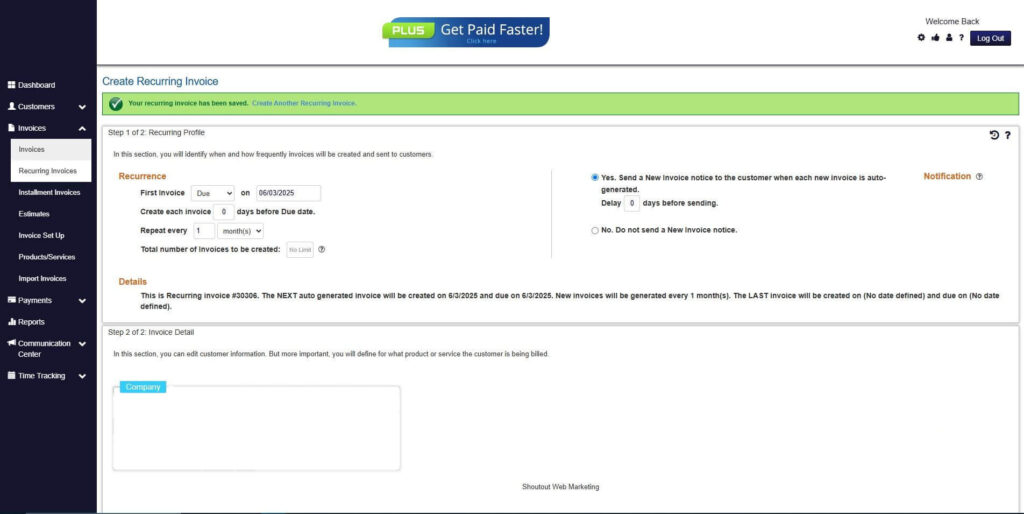
How to Create a New Recurring Invoice Using ReliaBills
Creating a New Recurring Invoice using ReliaBills involves the following steps:
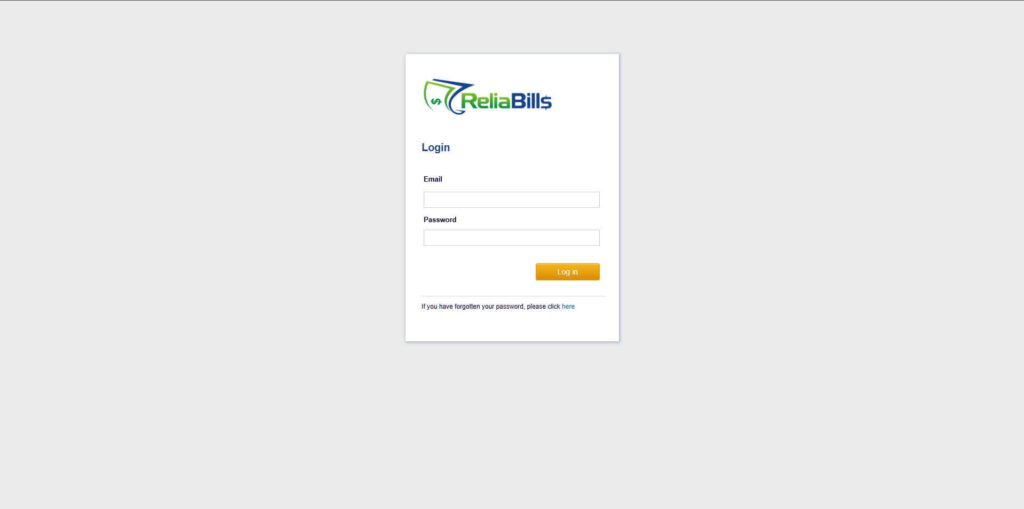
Step 1: Login to ReliaBills
- Access your ReliaBills Account using your login credentials. If you don’t have an account, sign up here.
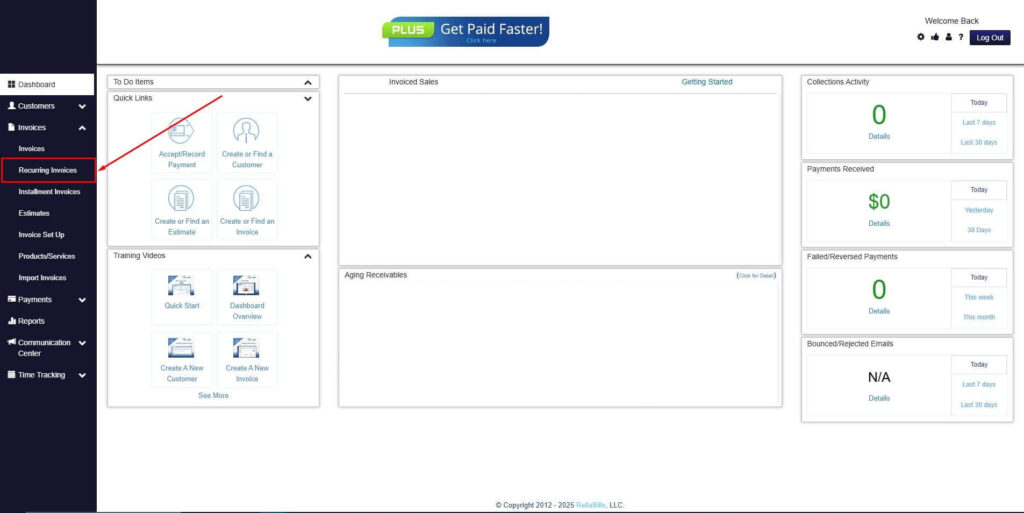
Step 2: Click on Recurring Invoices
- Navigate to the Invoices Dropdown and click on Recurring Invoices for an overview of the list of your existing customers.
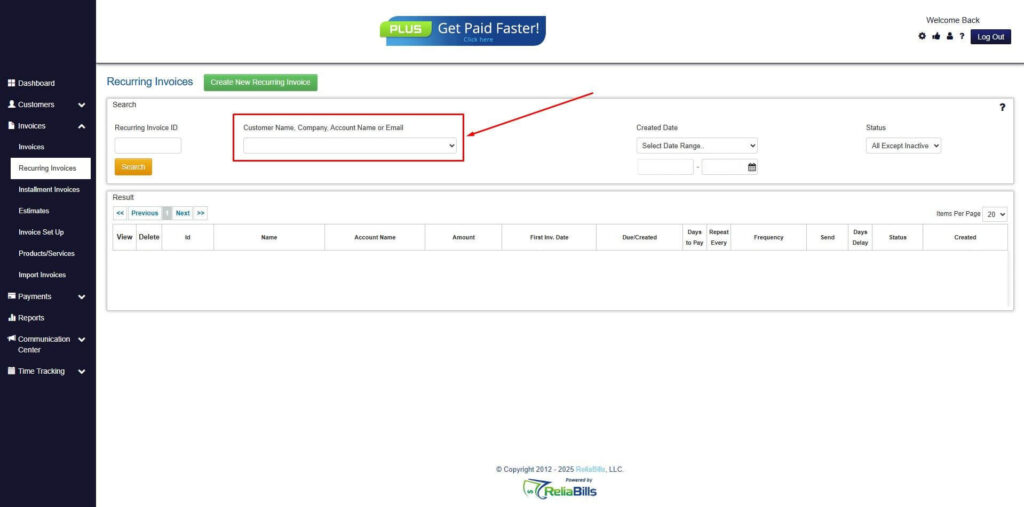
Step 3: Go to the Customers Tab
- If you have already created a customer, search for them in the Customers tab and make sure their status is “Active”.
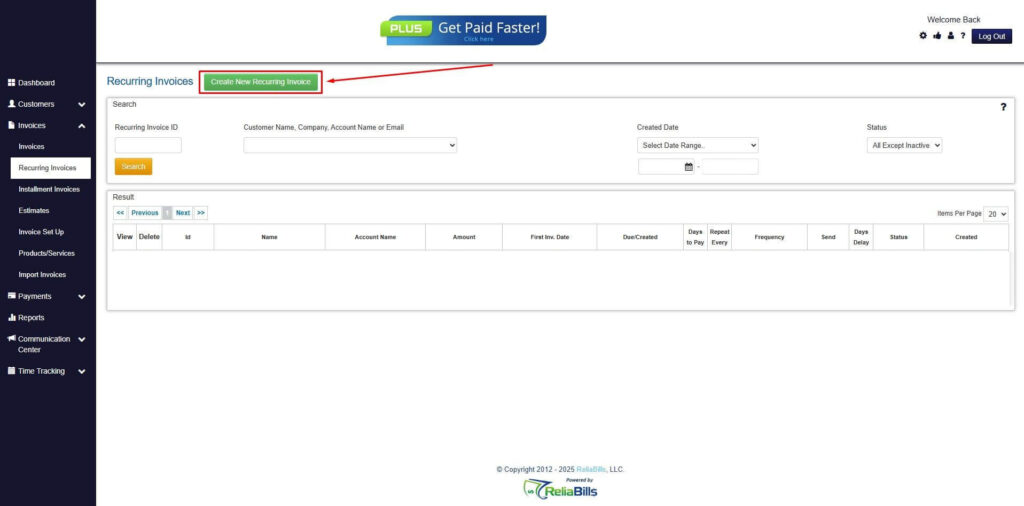
Step 4: Click the Create New Recurring Invoice
- If you haven’t created any customers yet, click the Create New Recurring Invoice to create a new customer.
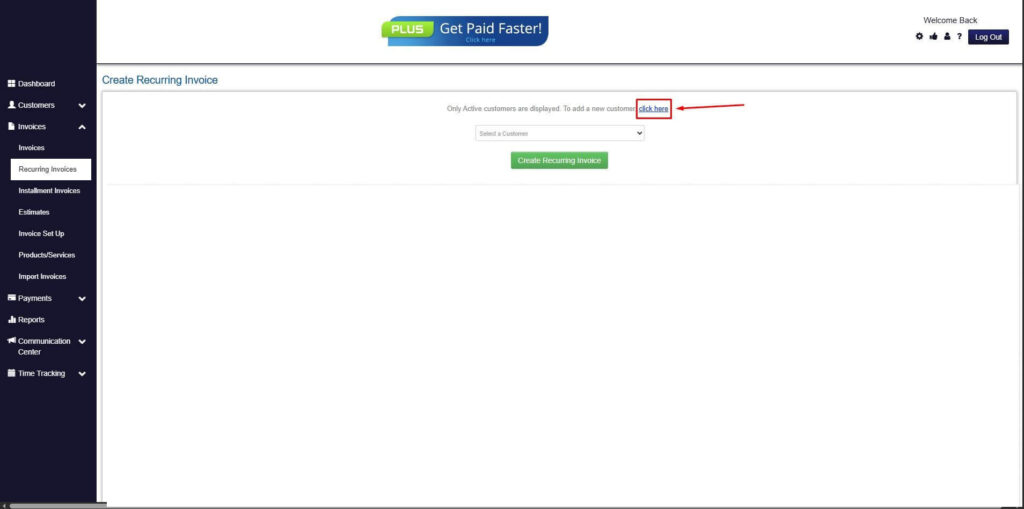
Step 5: Click on the “Click here” Button
- Click on the “Click here” button to proceed with the recurring invoice creation.
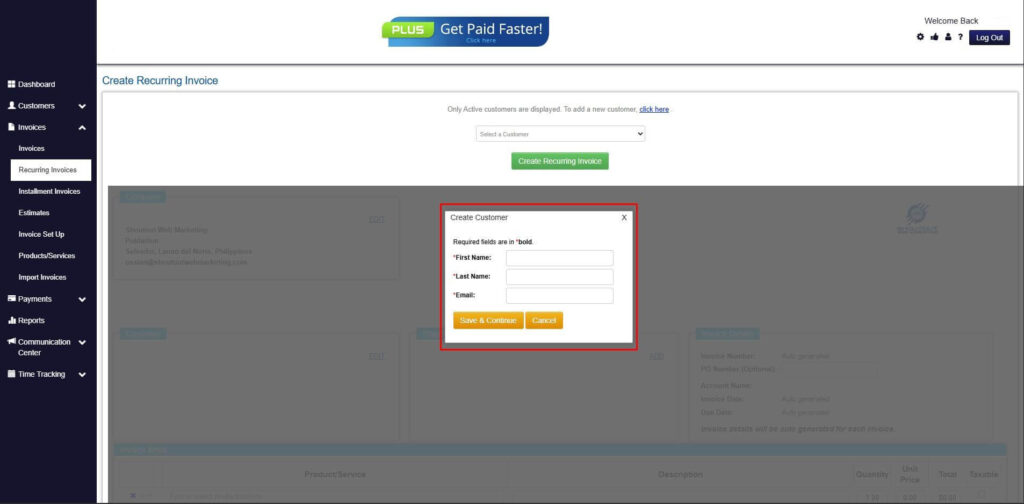
Step 6: Create Customer
- Provide your First Name, Last Name, and Email to proceed.
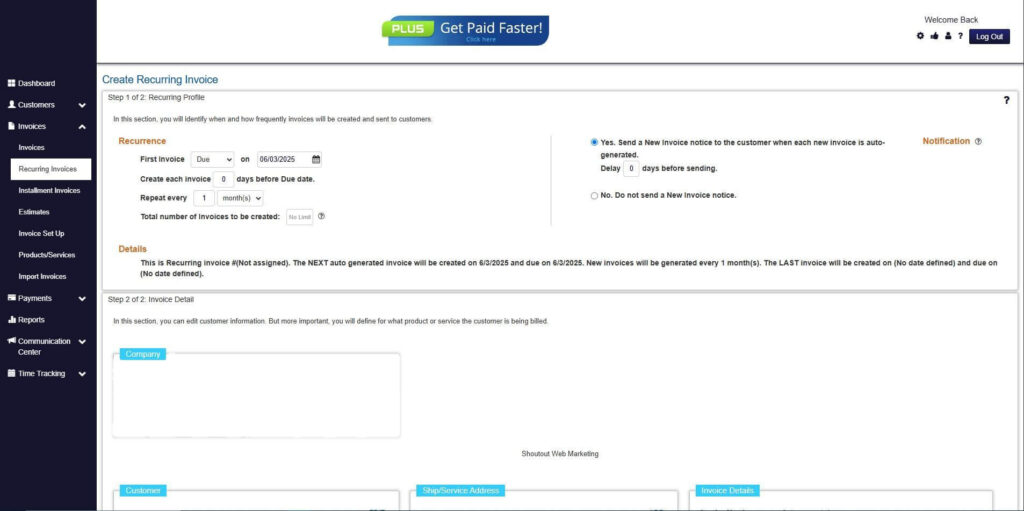
Step 7: Fill in the Create Recurring Invoice Form
- Fill in all the necessary fields.
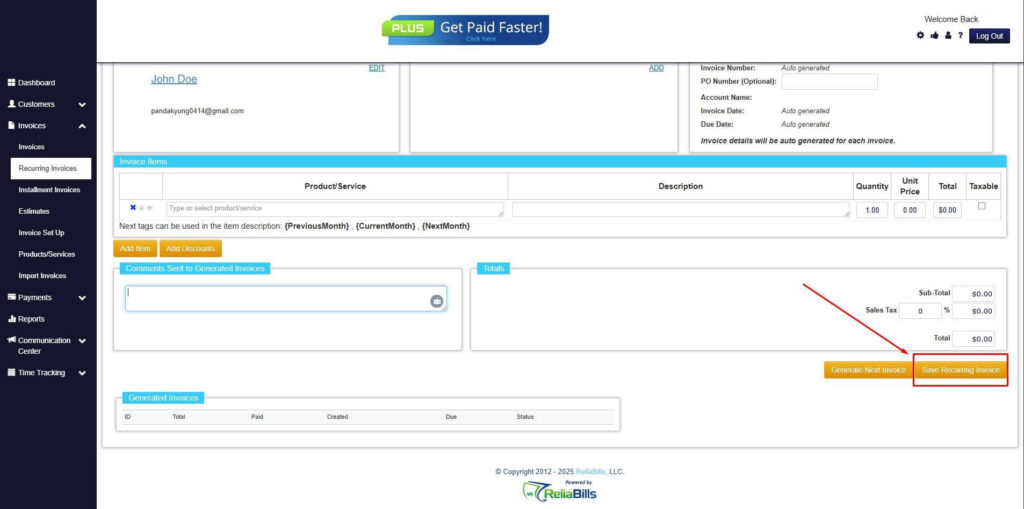
Step 8: Save Recurring Invoice
- After filling up the form, click “Save Recurring Invoice” to continue.
Step 9: Recurring Invoice Created
- Your Recurring Invoice has been created.
Frequently Asked Questions (FAQs)
1. How do businesses automate monthly payments?
Businesses automate monthly payments by using billing software that supports recurring invoicing, Auto Pay, and payment tracking features. These systems automatically generate invoices, collect payments, and update financial records according to predefined schedules. Automation reduces manual work while improving billing consistency and operational efficiency. It also creates more predictable cash flow for the business.
2. What is the difference between Auto Pay and recurring billing?
Recurring billing focuses on automatically generating invoices on a fixed schedule for ongoing services or subscriptions. Auto Pay refers to the automatic collection of payments using stored customer payment methods after authorization is provided. While recurring billing manages invoice creation, Auto Pay manages payment processing. Together, they create a complete automated billing system.
3. Is payment automation secure?
Modern payment automation platforms use encryption, secure payment gateways, and compliance standards to protect customer financial data. Secure systems help prevent unauthorized access and reduce fraud risks during payment processing. Businesses should still choose trusted platforms with strong security certifications and compliance practices. Proper security measures improve both customer trust and operational reliability.
4. Can small businesses use automated billing systems?
Yes, automated billing systems are highly beneficial for small businesses that manage recurring customer payments or subscriptions. Automation reduces manual administrative work and improves payment consistency even with limited staff resources. Many platforms are scalable and designed specifically for small and growing businesses. This allows companies to improve efficiency without requiring large technical teams.
5. What features should I look for in a billing platform?
Businesses should look for recurring billing, Auto Pay, reporting, payment tracking, and integration capabilities when selecting a billing platform. Strong customer management tools and multiple payment options are also important for improving flexibility and user experience. Automated reminders and real-time dashboards further improve operational visibility. Choosing the right features helps businesses scale billing operations more effectively.
Conclusion
Businesses that automate monthly customer payments gain significant advantages in financial consistency, operational efficiency, and customer experience. Automated billing systems reduce the risks associated with manual invoicing, payment tracking, and collection follow-ups. They also improve cash flow predictability by ensuring invoices and payments are processed on schedule. This creates a stronger financial foundation for long-term growth.
Recurring billing and Auto Pay play a critical role in building efficient and scalable payment operations. Together, they streamline invoicing, improve payment consistency, and reduce administrative workload across the organization. Businesses also benefit from improved reporting, better customer retention, and stronger financial visibility. These capabilities become increasingly important as recurring revenue operations expand.
Companies that invest in automation position themselves for better financial control, scalability, and operational resilience in the future. As subscription-based and recurring revenue models continue to grow across industries, efficient billing systems become essential for maintaining competitiveness. Businesses that embrace automation early can improve both profitability and customer satisfaction over the long term.