
Businesses across industries are rapidly moving away from traditional paper-based billing systems and adopting digital financial processes instead. Paper invoices, mailed statements, and manual payment collection methods are becoming less practical in a business environment that increasingly values speed, efficiency, and automation. As customer expectations evolve, companies are looking for more convenient ways to manage billing and payments. This shift has made digital transformation a major priority for organizations of all sizes.
Paperless billing has become an important solution for improving operational efficiency while supporting sustainability goals. Businesses are reducing paper consumption, minimizing printing costs, and streamlining invoice management through digital systems. At the same time, digital payments are helping companies collect payments faster and more consistently through online platforms and automated payment options. Together, these technologies create a more efficient and customer-friendly billing experience.
The growing adoption of digital invoicing and payment systems highlights the many advantages of paperless billing for modern businesses. Companies that implement these systems benefit from faster payment processing, better financial visibility, reduced administrative workload, and improved scalability. Digital financial operations also provide greater convenience for customers who increasingly prefer online payment experiences. As a result, paperless billing and digital payments are becoming essential components of long-term business growth strategies.
What Is Paperless Billing?
Paperless billing refers to the process of generating, sending, receiving, and storing invoices electronically instead of using physical paper documents. Businesses use digital billing systems to create invoices automatically and deliver them through email, customer portals, or online platforms. Customers can then access invoices digitally without requiring printed statements or mailed copies. This creates a faster and more organized invoicing process.
Electronic invoices are typically stored securely in cloud-based platforms or accounting systems where businesses can easily retrieve and manage records. Digital storage eliminates the need for physical filing cabinets and manual document organization. Businesses also gain easier access to historical billing data, making reporting and audits more efficient. This improves operational visibility and financial management.
Paperless billing differs significantly from traditional invoicing methods that depend on printing, mailing, and manual processing. Traditional systems often involve delays caused by physical delivery and require additional labor for handling documents. Digital systems eliminate many of these inefficiencies while improving speed and accuracy. As businesses grow, paperless billing becomes far more scalable and cost-effective than paper-based alternatives.
What Are Digital Payments?
Digital payments refer to electronic financial transactions that allow customers to pay invoices or purchase services without using physical cash or checks. Common digital payment methods include credit cards, debit cards, ACH bank transfers, mobile wallets, and online payment platforms. These payment methods allow transactions to be completed quickly and securely through internet-connected systems. Businesses increasingly rely on digital payments to support faster and more convenient customer transactions.
Modern billing systems often integrate directly with digital payment platforms to create seamless payment experiences for customers. Once invoices are issued electronically, customers can immediately complete payments using their preferred payment method through secure online portals. This integration reduces delays associated with manual payment processing and improves collection efficiency. Businesses also gain real-time visibility into payment activity and receivables.
Online payment platforms play a major role in facilitating secure and efficient digital transactions between businesses and customers. These platforms use encryption, authentication protocols, and payment security standards to protect sensitive financial data. Customers benefit from flexible payment options and faster transaction processing, while businesses experience improved cash flow and operational efficiency. As digital commerce continues growing, digital payment adoption becomes increasingly important for maintaining competitiveness.
Why Businesses Are Moving to Paperless Billing
Environmental Sustainability and Reduced Paper Usage
Businesses are adopting paperless billing as part of broader sustainability initiatives aimed at reducing environmental impact. Traditional invoicing systems require large amounts of paper, ink, envelopes, and transportation resources for mailing physical documents. Digital billing significantly reduces paper consumption and lowers waste generated by administrative operations. Companies that implement paperless systems also improve their environmental reputation among customers and stakeholders.
Faster Invoice Delivery and Processing
Digital invoices are delivered instantly through email or online customer portals instead of relying on postal services. This eliminates mailing delays and ensures customers receive invoices much faster than with traditional paper methods. Faster invoice delivery also speeds up payment processing because customers can review and pay invoices immediately. Businesses benefit from improved cash flow and more efficient billing cycles.
Lower Operational and Printing Costs
Paper-based invoicing involves ongoing expenses related to printing supplies, postage, storage, and manual labor. Businesses that switch to paperless billing reduce or eliminate many of these operational costs entirely. Automated digital systems also reduce the amount of staff time required for invoice management and document handling. Over time, these savings contribute to higher operational efficiency and profitability.
Improved Record-Keeping and Accessibility
Digital billing systems store invoices electronically in centralized platforms that are easy to search and access when needed. Businesses no longer need to manage large volumes of paper records or manually organize physical files. Electronic storage improves reporting, auditing, and financial tracking capabilities. Employees can also access records remotely, improving operational flexibility and efficiency.
Key Benefits of Paperless Billing and Digital Payments
Reduced Administrative Workload and Manual Processes
Paperless billing eliminates many repetitive tasks associated with printing, mailing, filing, and manually processing invoices. Automated systems handle invoice generation, payment tracking, and customer notifications without requiring constant employee involvement. This significantly reduces administrative workload and allows staff to focus on more strategic business activities. Businesses also improve operational productivity by streamlining financial workflows.
Faster Payment Collection and Improved Cash Flow
Digital invoices and online payment options allow customers to pay much faster than traditional paper billing methods. Businesses can send invoices instantly and receive payments electronically without delays caused by mailing or manual processing. Faster payment collection improves cash flow consistency and reduces the number of overdue accounts. This creates stronger financial stability for businesses that rely on recurring revenue.
Enhanced Accuracy and Fewer Billing Errors
Automated billing systems reduce the likelihood of manual data entry mistakes and invoicing inconsistencies. Standardized digital workflows ensure invoices contain accurate billing amounts, customer information, and payment terms every billing cycle. This reduces disputes, corrections, and administrative rework associated with billing errors. Improved accuracy also strengthens financial reporting and compliance.
Secure and Traceable Transactions
Digital payment platforms provide detailed transaction records and secure payment processing using encryption and authentication technologies. Businesses can track invoice delivery, payment status, and transaction history in real time through centralized systems. This improves financial transparency and reduces the risk of lost records or payment disputes. Secure digital records also simplify audits and compliance management.
Better Customer Experience and Convenience
Customers increasingly prefer digital billing and online payment options because they are faster and easier to use than paper invoices and mailed payments. Electronic billing allows customers to receive invoices instantly and pay from any location using their preferred payment method. This convenience improves customer satisfaction and encourages faster payment behavior. Better payment experiences also strengthen customer relationships and retention.
Easy Access to Billing History and Records
Paperless systems provide businesses and customers with centralized access to billing history and transaction records through online portals or dashboards. Users can quickly search, download, and review past invoices without handling physical documents. This improves financial organization and simplifies reporting processes. Easy record access also supports better dispute resolution and customer support.
How Paperless Billing Improves Efficiency
Paperless billing eliminates the need for printing invoices, preparing envelopes, mailing documents, and storing physical files. Businesses no longer need to allocate office space or administrative labor for paper-based document management. This significantly reduces operational complexity while improving workflow speed. Employees can manage billing activities more efficiently through centralized digital systems.
Digital systems also speed up invoice generation and delivery by automating recurring billing workflows. Businesses can generate invoices instantly and send them to customers electronically without manual intervention. This ensures invoices are issued on time every billing cycle and reduces delays associated with traditional invoicing methods. Faster invoice delivery contributes directly to faster payment collection.
Automation also enables more efficient approval workflows and internal financial processes. Managers and finance teams can review, approve, and track invoices digitally through integrated systems. This reduces bottlenecks caused by manual approvals and paper document routing. Businesses gain better visibility into financial operations as a result.
Real-time tracking features allow businesses to monitor invoice status and payment activity immediately after transactions occur. Companies can identify overdue invoices, failed payments, or outstanding balances without manually updating spreadsheets or records. This improves financial visibility and decision-making. Real-time data also supports stronger forecasting and reporting capabilities.
The Role of Digital Payments in Reducing Overdue Invoices
Digital payment systems allow customers to complete payments instantly through online platforms instead of relying on mailed checks or manual transfers. This significantly reduces delays caused by traditional payment methods and improves payment processing speed. Customers can pay invoices immediately after receiving them, which increases collection efficiency. Faster payment processing leads to more consistent cash flow for businesses.
Many digital payment systems also support scheduled payments and Auto Pay functionality for recurring transactions. Customers can authorize automatic monthly payments using stored payment methods such as credit cards or bank accounts. This reduces the risk of missed due dates and overdue balances. Businesses benefit from more predictable recurring revenue streams.
Digital payment platforms also simplify payment reminders and customer communication through automated notifications. Businesses can send reminders for upcoming due dates or failed transactions without manual follow-up from staff members. This improves collection rates and reduces administrative effort related to payment recovery. Consistent reminders encourage customers to maintain timely payment behavior.
By reducing friction in the payment process, digital systems improve payment consistency and customer convenience simultaneously. Customers appreciate having flexible payment options and easy online access to invoices. This improves overall customer experience while reducing collection-related challenges for businesses. Better payment experiences often result in stronger long-term customer relationships.
How Recurring Billing Enhances Paperless Systems
Recurring billing automates invoice generation for repeat customers and subscription-based services, making paperless billing systems even more efficient. Businesses can configure recurring schedules that automatically generate and send invoices at predefined intervals without requiring manual effort every month. This reduces administrative workload while ensuring billing consistency. Automated recurring invoicing also improves operational organization.
The system ensures customers are billed consistently according to agreed billing cycles and subscription terms. Businesses no longer need to manually track renewal dates or create repeat invoices individually. This reduces the likelihood of missed invoices or delayed billing cycles. Customers also benefit from more predictable payment experiences.
Recurring billing integrates directly with digital payment systems to create seamless automated financial workflows. Customers can receive invoices electronically and complete payments immediately using online payment methods or Auto Pay. This reduces delays in both invoicing and payment collection. Businesses experience stronger cash flow predictability as a result.
Automation also reduces errors and inefficiencies associated with manual billing processes. Standardized recurring billing rules ensure invoice accuracy across all customer accounts. This improves financial consistency and reporting reliability. Businesses gain greater scalability without significantly increasing administrative effort.
Common Challenges Without Paperless Billing
Businesses that continue using paper-based billing systems often experience time-consuming invoicing processes that require significant manual effort. Employees must print invoices, prepare mailings, track physical documents, and manually organize records. These repetitive tasks reduce productivity and increase administrative workload. Operational efficiency suffers as billing volume grows.
Paper invoices are also more likely to be lost, misplaced, or delayed during mailing and handling processes. Missing invoices can create payment disputes, delayed collections, and customer frustration. Businesses may also struggle to retrieve historical records quickly when needed for audits or customer support. Poor document accessibility weakens financial organization.
Traditional paper billing methods slow down payment cycles because invoices take longer to reach customers through physical mail delivery. Customers may also delay payments because paper invoices are less convenient to manage than digital alternatives. These delays negatively impact cash flow predictability and financial stability. Businesses often experience higher overdue invoice rates as a result.
Limited visibility into invoice status and payment activity is another common challenge without digital systems. Businesses may rely on disconnected spreadsheets or manual record updates that do not provide real-time financial insights. This makes it difficult to monitor collections and identify payment issues quickly. Poor visibility reduces operational control and forecasting accuracy.
Best Practices for Implementing Paperless Billing
Choose a Reliable Billing and Payment Platform
Businesses should select a platform that supports digital invoicing, payment processing, recurring billing, and financial reporting in a centralized system. The right platform should also offer scalability, security, and integration capabilities that align with long-term operational needs. Choosing reliable software helps ensure smooth billing automation and payment management. A strong platform becomes the foundation of efficient paperless financial operations.
Offer Multiple Digital Payment Options
Providing flexible payment methods such as credit cards, ACH transfers, and digital wallets improves customer convenience and increases payment completion rates. Customers are more likely to pay on time when they can use their preferred payment method. Multiple payment options also support broader customer accessibility across different markets and demographics. Flexible payment experiences improve customer satisfaction and retention.
Ensure Data Security and Compliance
Businesses should implement strong security measures to protect customer financial data and maintain compliance with payment regulations. Encryption, secure payment gateways, and access controls are essential for reducing cybersecurity risks. Choosing compliant platforms also helps businesses meet industry standards and avoid legal complications. Strong security practices build customer trust and confidence in digital payment systems.
Communicate Changes Clearly to Customers
Businesses transitioning from paper invoices to digital systems should explain the new billing process clearly to customers. Customers need to understand how invoices will be delivered, how payments can be completed, and where records can be accessed. Clear communication reduces confusion and improves adoption rates. It also helps customers feel more comfortable using digital billing systems.
Regularly Monitor and Optimize Billing Workflows
Businesses should continuously review billing performance, payment trends, and operational efficiency after implementing paperless systems. Monitoring helps identify overdue accounts, failed payments, or workflow bottlenecks before they become major problems. Regular optimization ensures the system continues supporting business growth effectively. Continuous improvement also enhances long-term operational efficiency.
How Paperless Billing Supports Business Growth
Paperless billing allows businesses to scale more efficiently by handling higher invoice volumes without significantly increasing administrative workload. Automated digital systems can process large numbers of invoices quickly and accurately while maintaining consistent workflows. This supports business expansion without requiring proportional increases in staffing or operational complexity. Scalability becomes much easier through automation.
Digital billing systems also reduce operational expenses related to printing, postage, document storage, and manual processing over time. These cost savings improve profitability and free up resources that businesses can reinvest into growth initiatives. Lower administrative costs also strengthen operational sustainability. Businesses become more financially efficient overall.
Enhanced reporting and financial visibility are additional advantages of paperless billing systems. Real-time dashboards and digital records allow businesses to track revenue trends, payment performance, and receivables more effectively. This improves forecasting accuracy and decision-making capabilities. Leaders gain better control over financial operations as a result.
Convenient digital payment experiences also strengthen customer relationships and improve satisfaction levels. Customers appreciate faster invoice access, flexible payment methods, and transparent billing processes. Positive payment experiences encourage customer loyalty and repeat business. Stronger customer relationships support long-term growth and retention.
Key Benefits for Small Businesses
Lower Operational and Material Costs
Small businesses can significantly reduce expenses related to printing, mailing, paper supplies, and document storage by adopting paperless billing systems. Digital invoicing eliminates many recurring administrative costs associated with traditional billing processes. These savings are especially valuable for smaller businesses operating with limited budgets and resources. Lower operational costs improve overall profitability and sustainability.
Faster and More Reliable Payment Collection
Digital invoices and online payment methods help small businesses collect payments faster and more consistently than paper billing systems. Customers can review and pay invoices immediately using convenient online payment options. This reduces payment delays and improves cash flow stability. Faster collections support healthier day-to-day business operations.
Reduced Administrative Burden
Automation reduces the amount of manual work required for invoicing, payment tracking, and customer follow-ups. Small business teams can manage billing operations more efficiently without hiring additional administrative staff. This improves productivity while reducing operational strain. Owners and employees can focus more on growth and customer service activities.
Improved Financial Visibility
Paperless billing systems provide centralized access to payment records, receivables, and financial reports in real time. Small businesses gain better insight into cash flow trends and customer payment behavior. This improves budgeting, forecasting, and financial planning capabilities. Better visibility supports stronger business decision-making.
Better Customer Satisfaction
Customers appreciate the convenience and speed of digital billing and online payment experiences. Electronic invoices are easier to access, manage, and pay compared to paper statements. This reduces frustration and improves customer relationships. Smoother payment experiences also encourage repeat business and stronger retention.
Common Use Cases
SaaS and Subscription-Based Businesses
Software companies and subscription services rely heavily on recurring digital billing to manage monthly or annual customer payments efficiently. Paperless systems automate invoice delivery and payment collection while reducing administrative workload. This improves recurring revenue management and financial predictability. Digital billing also supports scalable subscription growth.
Utilities and Telecom Companies
Utilities and telecom providers manage large customer bases that require recurring monthly billing and online payment capabilities. Paperless billing reduces mailing costs while improving billing speed and accuracy at scale. Customers benefit from convenient online payment options and digital account access. Businesses gain improved collection efficiency and financial visibility.
Property Management and Rent Collection
Property managers use digital billing systems to collect rent payments, maintenance fees, and recurring property charges electronically. Online payment portals simplify payment processing for tenants while reducing manual collection effort for property managers. This improves payment consistency and reduces administrative overhead. Digital records also improve financial tracking and reporting.
Service-Based Businesses with Recurring Clients
Agencies, consultants, and managed service providers often bill clients on recurring schedules for ongoing services or retainers. Paperless billing automates invoice generation and payment collection while improving operational efficiency. Businesses gain more predictable cash flow and reduced billing errors. Clients also benefit from convenient digital payment experiences.
eCommerce and Retail Businesses
Many eCommerce businesses use digital payment systems to process customer transactions quickly and securely through online platforms. Automated billing and payment tracking improve order processing efficiency and financial management. Customers expect seamless digital checkout experiences when shopping online. Strong payment systems support higher conversion rates and customer satisfaction.
How ReliaBills Supports Paperless Billing and Digital Payments
ReliaBills helps businesses transition from traditional paper-based billing to fully digital invoicing and payment systems that improve efficiency, accuracy, and financial control. Instead of relying on printed invoices and manual payment collection, businesses can automate billing workflows and manage payments electronically through a centralized platform. This reduces administrative workload, lowers operational costs, and improves overall billing consistency. Businesses also benefit from faster payment collection and stronger cash flow visibility through digital financial management.
The platform’s recurring billing features make it easier for businesses to automate invoice generation and maintain consistent payment collection for repeat customers and subscription-based services. Businesses can create recurring billing schedules, send invoices electronically, and integrate digital payment methods into a seamless automated workflow. Automated reminders and payment tracking tools also help reduce overdue invoices and improve collection rates. These capabilities allow businesses to fully maximize the advantages of paperless billing while improving operational scalability.
ReliaBills PLUS expands these capabilities with advanced automation, reporting, and customer engagement tools designed for growing businesses that require deeper financial visibility and operational control. Businesses can monitor payment performance, track receivables, and generate detailed reports from a single platform in real time. This improves forecasting accuracy, decision-making, and long-term financial planning. As billing operations expand, ReliaBills PLUS helps businesses maintain scalable, efficient, and customer-friendly digital payment systems.
How to Create a New Recurring Invoice Using ReliaBills
Creating a New Recurring Invoice using ReliaBills involves the following steps:
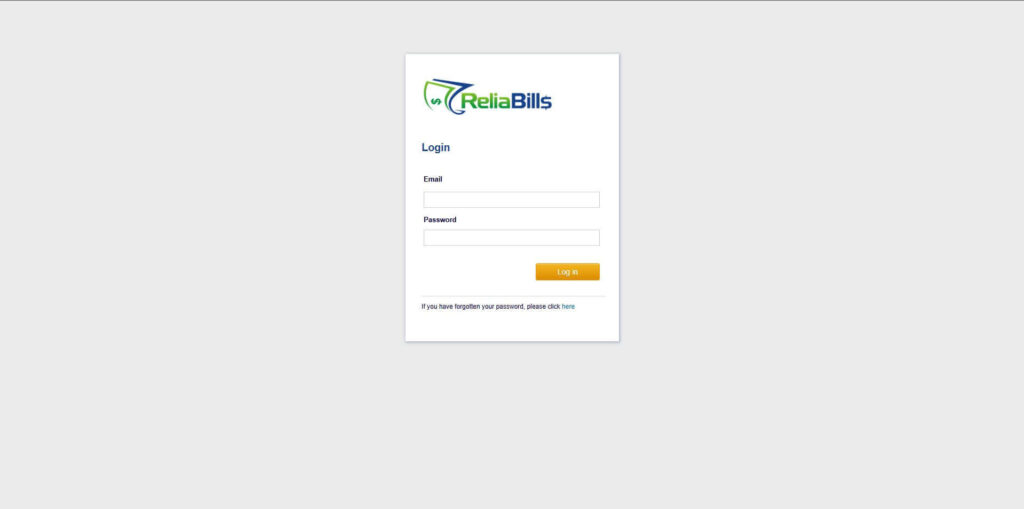
Step 1: Login to ReliaBills
- Access your ReliaBills Account using your login credentials. If you don’t have an account, sign up here.
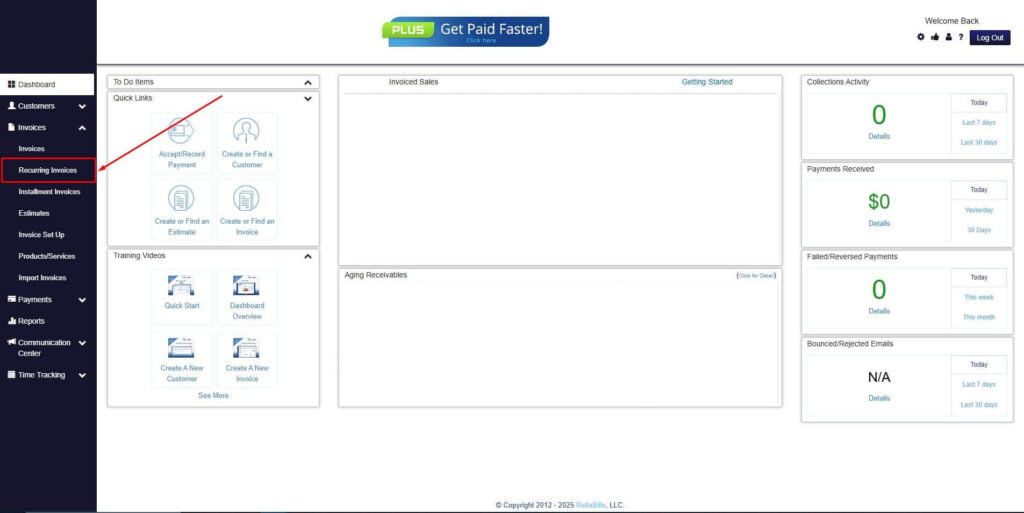
Step 2: Click on Recurring Invoices
- Navigate to the Invoices Dropdown and click on Recurring Invoices for an overview of the list of your existing customers.
Step 3: Go to the Customers Tab
- If you have already created a customer, search for them in the Customers tab and make sure their status is “Active”.
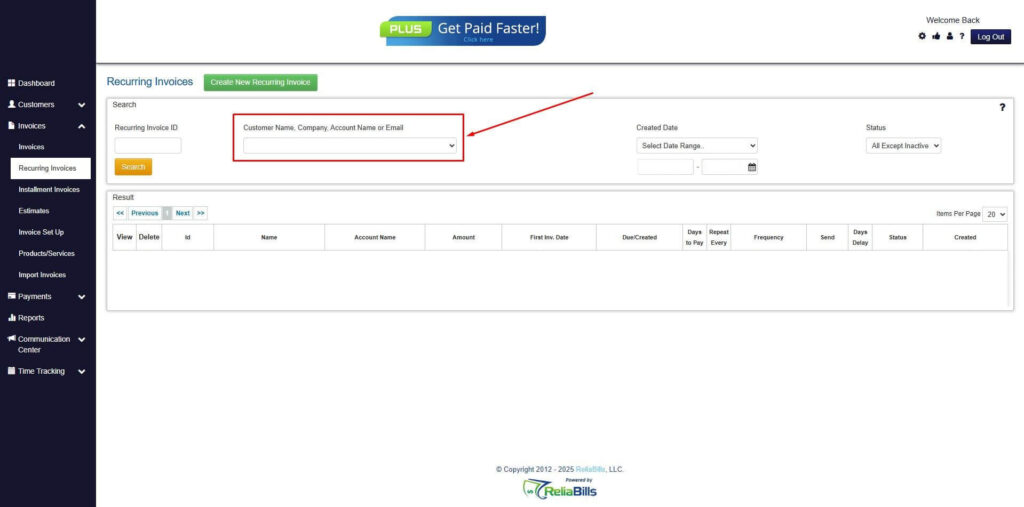
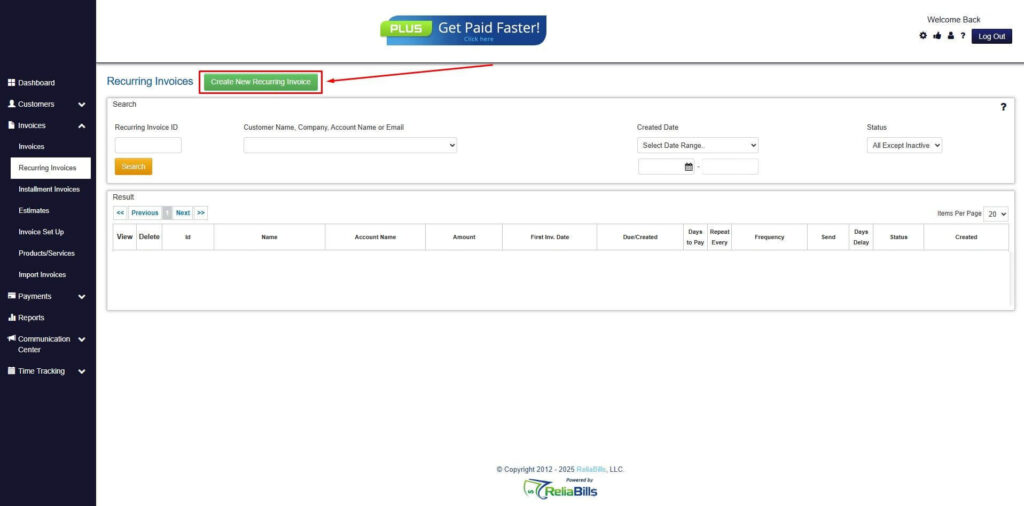
Step 4: Click the Create New Recurring Invoice
- If you haven’t created any customers yet, click the Create New Recurring Invoice to create a new customer.
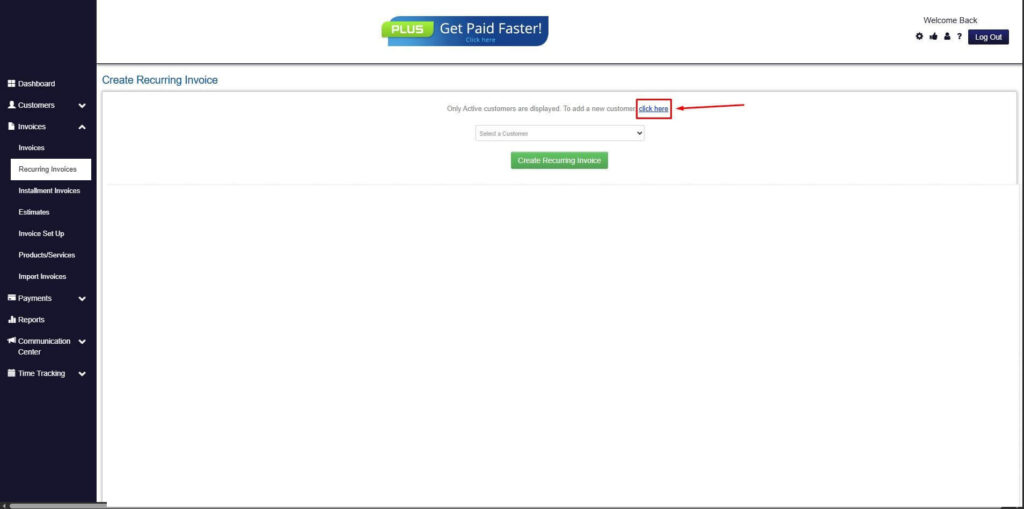
Step 5: Click on the “Click here” Button
- Click on the “Click here” button to proceed with the recurring invoice creation.
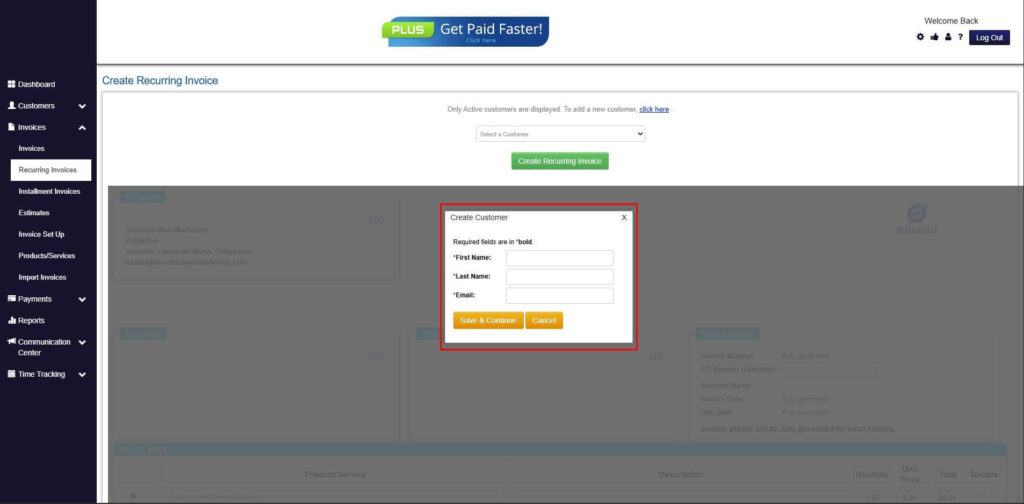
Step 6: Create Customer
- Provide your First Name, Last Name, and Email to proceed.
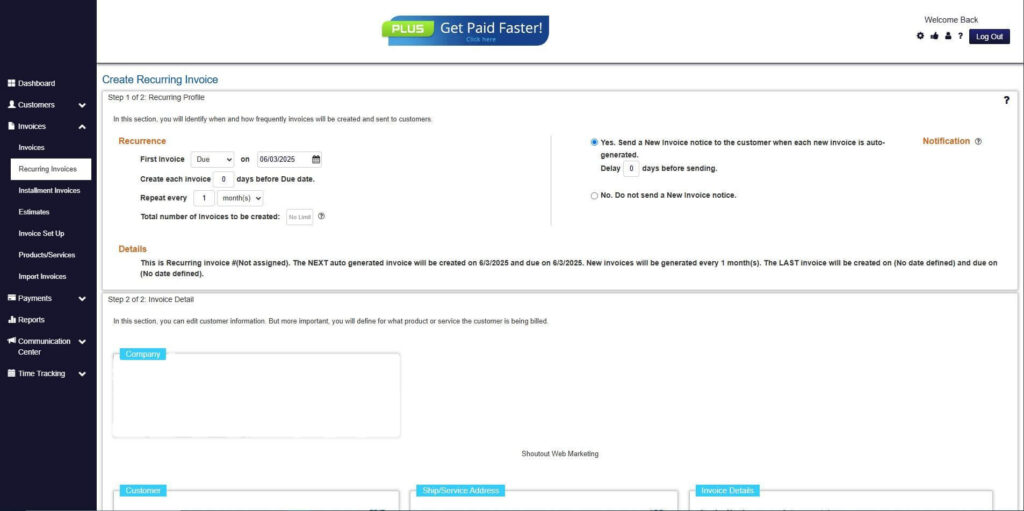
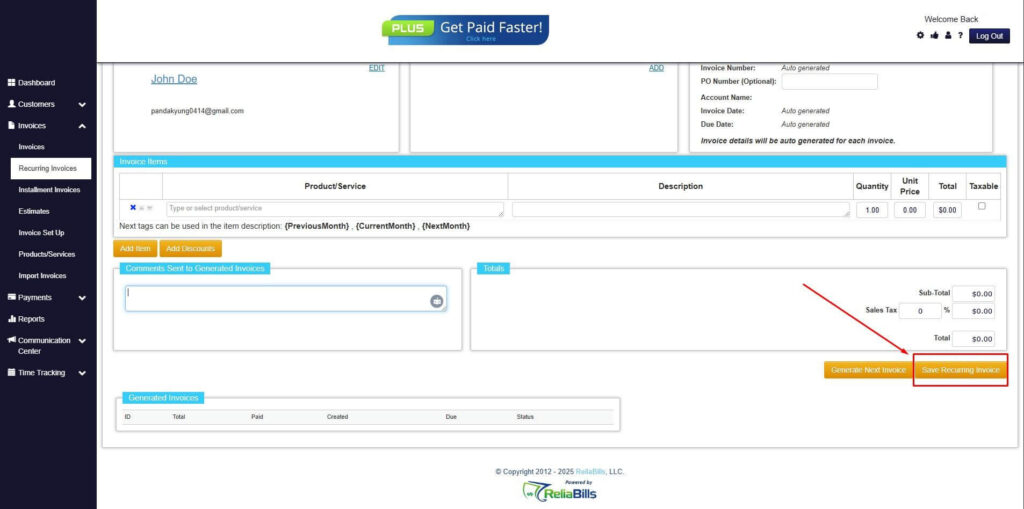
Step 7: Fill in the Create Recurring Invoice Form
- Fill in all the necessary fields.
Step 8: Save Recurring Invoice
- After filling up the form, click “Save Recurring Invoice” to continue.
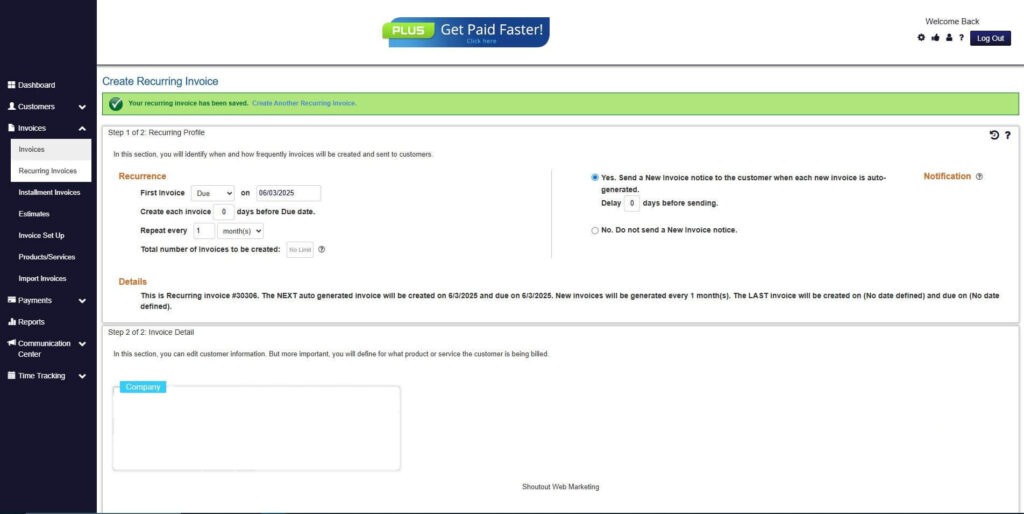
Step 9: Recurring Invoice Created
- Your Recurring Invoice has been created.
Frequently Asked Questions (FAQs)
1. What is paperless billing?
Paperless billing is the process of creating, sending, receiving, and storing invoices electronically instead of using printed paper documents. Businesses use digital systems to automate invoice management and payment tracking through online platforms or email delivery. This improves billing speed, organization, and operational efficiency. Customers also benefit from faster and more convenient access to invoices.
2. Are digital payments secure?
Yes, modern digital payment systems use encryption, authentication protocols, and secure payment gateways to protect financial information during transactions. Reputable payment platforms also comply with industry security standards designed to reduce fraud and unauthorized access. Businesses should still choose trusted providers with strong security practices and compliance certifications. Secure digital payment systems improve both customer trust and transaction reliability.
3. How does paperless billing reduce costs?
Paperless billing eliminates expenses related to paper, printing, postage, physical storage, and manual document handling. Businesses also reduce administrative labor associated with traditional invoicing processes. Over time, these savings improve operational efficiency and profitability significantly. Digital systems also reduce errors and delays that can create additional costs.
4. Can small businesses switch to digital billing easily?
Yes, many billing automation platforms are designed specifically for small businesses and offer simple setup processes with scalable features. Small companies can start with basic digital invoicing and expand automation capabilities as they grow. Cloud-based platforms also reduce the need for complex technical infrastructure. This makes digital billing accessible for businesses with limited resources.
5. What tools are needed to implement paperless billing?
Businesses typically need billing software, payment processing tools, customer management systems, and secure online payment platforms to implement paperless billing successfully. Many modern platforms combine these features into one centralized solution for easier management. Integration with accounting systems and recurring billing capabilities also improves efficiency. Choosing the right tools helps businesses streamline financial operations effectively.
Conclusion
The advantages of paperless billing and digital payments extend far beyond reducing paper usage and mailing costs. Businesses that adopt digital financial systems gain faster payment collection, improved operational efficiency, stronger financial visibility, and better customer experiences. Automation also reduces manual workload while improving billing accuracy and payment consistency. These benefits contribute directly to healthier cash flow and long-term operational stability.
Digital payments and recurring billing systems play an increasingly important role in helping businesses modernize financial operations and improve scalability. Together, these technologies streamline invoicing, simplify payment collection, and support more efficient financial workflows across growing organizations. Businesses also gain access to real-time reporting and better financial insights that improve decision-making and forecasting. This makes digital billing systems essential for maintaining competitiveness in today’s business environment.
Companies that invest in paperless billing and digital payment solutions position themselves for stronger growth, sustainability, and customer satisfaction in the future. As digital commerce and recurring revenue models continue to expand, businesses that embrace automation early will be better prepared for evolving customer expectations and operational demands.