
A non-commercial invoice is a mandatory document in international shipping when goods are transported without a sale transaction. It is commonly used for samples, gifts, warranty replacements, returned items, or internal company transfers. Even though no money changes hands, customs authorities still require detailed documentation to assess the nature and value of the shipment. This makes it just as important as a commercial invoice in terms of compliance.
Errors in this document can quickly create friction in the customs clearance process. Missing details, inconsistent declarations, or unclear descriptions often lead to inspection holds or shipment delays. In many cases, these issues are categorized as customs non commercial invoice errors, which are among the most common documentation problems in global logistics. These errors can disrupt supply chains, especially for businesses that rely on fast international movement.
Because customs officials use invoices to verify legitimacy, determine duty exemptions, and classify goods, accuracy is essential. A properly completed non-commercial invoice reduces the risk of misunderstandings and ensures smoother processing at borders. For businesses handling frequent international shipments, maintaining precision is not just recommended, it is operationally critical.
What Is a Non-Commercial Invoice for Customs?
A non-commercial invoice is a formal document that provides shipment details when goods are sent without a commercial sale. Unlike a standard invoice, it does not represent a financial transaction but still serves as an official declaration for customs authorities. It helps customs understand what is being shipped, why it is being shipped, and what its estimated value is.
This document is widely used in global trade for non-revenue shipments such as promotional samples, product testing units, repair returns, or donated goods. Even though the goods are not sold, customs still requires transparency to ensure compliance with import/export laws. Without this documentation, shipments may be flagged or delayed due to lack of classification information.
Its core function is to support customs in assessing duty exemptions, verifying shipment legitimacy, and preventing misdeclaration. Inaccurate or incomplete information increases the likelihood of customs non commercial invoice errors, which can result in additional scrutiny or penalties. Therefore, even non-commercial shipments must be documented with the same level of care as commercial ones.
Why Accuracy Matters in Non-Commercial Invoices
Accuracy is essential because customs authorities rely entirely on invoice data to evaluate shipments. Any inconsistency, no matter how small, can raise red flags and trigger additional inspections. This is particularly important for non-commercial shipments, which already require justification for their duty-free or reduced-duty status.
Accurate documentation ensures smoother clearance by reducing ambiguity. When product descriptions, quantities, and values are clearly aligned, customs officers can process shipments faster without requesting clarification. This directly reduces processing time and improves delivery reliability for businesses operating across borders.
In addition, accuracy helps companies maintain regulatory compliance across different jurisdictions. Customs laws vary by country, and even minor customs non commercial invoice errors can be interpreted as misclassification or undervaluation. Maintaining precision protects businesses from fines, delays, and reputational risks in international trade.
Common Errors in Non-Commercial Invoices
Incorrect or incomplete product descriptions
Many non-commercial invoices fail to clearly describe the shipped items in enough detail. Vague descriptions like “sample” or “gift item” are often insufficient for customs classification. This lack of clarity can lead to delays, inspections, or customs non commercial invoice errors due to misinterpretation of the goods.
Missing “non-commercial” or “no commercial value” declaration
Some invoices do not explicitly state that the shipment has no commercial value. This omission can cause customs officials to assume the goods are part of a sale transaction. As a result, the shipment may be taxed incorrectly or flagged for further verification.
Wrong or inconsistent declared value
Declared values that do not match the nature or purpose of the shipment can create suspicion. Even if the goods are free, a reasonable valuation is still required for customs processing. Inconsistencies between declared value and item description often lead to clearance delays.
Missing sender or recipient details
Incomplete contact information, such as missing addresses or phone numbers, makes it difficult for customs to verify shipments. This often results in additional holds or requests for clarification. Proper identification of both parties is essential for smooth processing.
Incorrect HS codes or tariff classifications
Misclassifying goods under the wrong Harmonized System (HS) code can lead to incorrect duty assessments. Customs authorities rely heavily on these codes to determine import regulations. Errors here are a common source of customs non commercial invoice errors and compliance issues.
Inaccurate quantity or unit measurements
Discrepancies between listed quantities and actual shipment contents can trigger inspections. Even small mismatches can raise concerns about documentation accuracy. Customs expects precise alignment between physical goods and invoice data.
Lack of invoice date or reference numbers
Missing dates or tracking references make it difficult to validate or trace shipments. This can slow down customs processing and create administrative confusion. Proper documentation ensures accountability and smoother record management.
How These Errors Affect Customs Clearance
When customs non commercial invoice errors occur, the first and most common impact is shipment delay. Customs authorities may place the goods on hold until clarification or corrected documentation is provided. This can extend delivery times by days or even weeks depending on the severity of the issue.
In some cases, errors may lead to financial penalties or formal compliance investigations. Customs agencies may view incorrect declarations as attempts to misrepresent goods, even if the mistake was unintentional. This increases regulatory risk for businesses, especially those handling high shipment volumes.
Another major consequence is shipment rejection or return. If documentation cannot be corrected in time or fails to meet regulatory standards, goods may be sent back to the origin country. This not only disrupts logistics but also increases operational costs due to return shipping and reprocessing.
How to Properly Fill Out a Non-Commercial Invoice
The first step is clearly labeling the document as a “Non-Commercial Invoice” to distinguish it from sales-related invoices. This helps customs immediately understand the nature of the shipment and prevents misclassification during initial review. Clarity at this stage reduces unnecessary scrutiny.
Next, all item descriptions should be precise and detailed, including material type, usage, and purpose. Even if the goods are samples or gifts, they must still be described in a way that allows customs to identify them accurately. This reduces ambiguity and prevents customs non commercial invoice errors during inspection.
Finally, the declared value should always be realistic, even if symbolic or minimal. Sender and receiver details must be complete, and the purpose of shipment should be clearly stated. These combined elements create a transparent document that aligns with customs expectations.
Key Elements of a Correct Non-Commercial Invoice
Invoice clearly labeled as non-commercial
The document should explicitly state that it is a non-commercial invoice to avoid misinterpretation. This helps customs immediately understand that no sale transaction is involved. Clear labeling reduces the risk of customs non commercial invoice errors during initial review.
Detailed product description
Each item must be described in a clear and specific manner, including material, function, and intended use. Generic descriptions should be avoided because they create ambiguity. Detailed descriptions help customs accurately classify the goods.
Quantity and unit of measure
Accurate quantity reporting ensures that the physical shipment matches the documentation. Units of measure should be standardized, such as pieces, sets, or kilograms. This prevents discrepancies during customs inspection.
Declared customs value
Even if goods are free, a reasonable value must be assigned for customs assessment. This value helps authorities determine duty exemptions or statistical reporting. Incorrect valuation is a major contributor to clearance delays.
Purpose of shipment
The invoice must clearly state why the goods are being shipped, such as samples or repairs. This provides context for customs officials reviewing the shipment. Without this, the shipment may be misclassified as commercial.
Complete exporter and importer details
Full names, addresses, and contact information must be included for both parties. This ensures customs can verify the legitimacy of the transaction if needed. Missing details often result in unnecessary delays.
Invoice number and date
Each invoice should include a unique reference number and issuance date. This helps track and organize shipments across logistics systems. It also supports compliance and audit requirements.
The Role of Automation in Reducing Invoice Errors
Automation significantly reduces human error in invoice preparation by standardizing data entry fields. Instead of manually entering shipment details each time, automated systems ensure consistency across all invoices. This reduces variability and minimizes customs non commercial invoice errors caused by oversight.
It also improves accuracy by validating information before submission. Automated systems can flag missing fields, inconsistent values, or incorrect formatting, allowing businesses to correct issues early. This proactive error detection improves compliance and reduces customs-related disruptions.
Additionally, automation supports scalability for businesses with frequent international shipments. As shipment volume increases, manual processes become more prone to mistakes. Automated invoicing ensures that accuracy is maintained even at high operational capacity.
Best Practices to Avoid Non-Commercial Invoice Errors
Use standardized invoice templates
Standard templates ensure consistency across all shipments and reduce manual entry mistakes. They also help employees follow a structured format every time. This significantly reduces customs non commercial invoice errors caused by missing fields.
Double-check all shipment details before submission
Reviewing invoices before submission helps catch inconsistencies early. This includes verifying quantities, descriptions, and values. A simple review process can prevent costly delays.
Keep product descriptions clear and consistent
Using uniform terminology across all documents avoids confusion during customs inspection. Consistency helps build trust with customs authorities. It also improves classification accuracy.
Align declared values with customs guidelines
Values should reflect realistic estimates based on product type and purpose. Over- or under-valuation can trigger audits or penalties. Following local customs rules helps ensure compliance.
Train staff on customs documentation requirements
Employees handling invoices should understand international shipping regulations. Proper training reduces human error and improves documentation quality. This is essential for minimizing customs non commercial invoice errors at scale.
Common Use Cases for Non-Commercial Invoices
- Product samples for evaluation: Companies often send samples to potential buyers or distributors for testing purposes. These shipments are not sold but still require documentation. Proper invoicing ensures customs recognizes their non-commercial nature.
- Warranty replacements or repairs: Items sent for repair or replacement under warranty must be documented accurately. These shipments are not new sales transactions. Clear labeling prevents unnecessary customs charges.
- Gifts or promotional items: Businesses frequently send promotional goods or gifts to clients or partners. Even though no payment is involved, customs still requires valuation. Proper documentation ensures smooth clearance.
- Return shipments: Goods being returned to the manufacturer or supplier must be properly declared. This helps customs understand that the shipment is not a new import. Accurate labeling avoids misclassification issues.
- Internal company transfers: Organizations moving goods between branches or warehouses use non-commercial invoices. These transfers still require customs documentation for tracking purposes. Proper records ensure transparency and compliance.
Key Benefits of Error-Free Non-Commercial Invoices
- Faster customs clearance: Accurate invoices allow customs officers to process shipments quickly without additional verification. This reduces overall shipping time. It also improves supply chain efficiency.
- Reduced risk of penalties or delays: Proper documentation minimizes the chances of regulatory fines or shipment holds. Customs is less likely to flag correctly prepared invoices. This helps businesses avoid unnecessary costs.
- Improved shipment accuracy: Clear documentation ensures that the physical shipment matches the declared information. This reduces disputes during inspection. It also improves logistics reliability.
- Better compliance with regulations: Accurate invoices help businesses meet international trade requirements. This is especially important for companies shipping across multiple countries. Compliance reduces legal and operational risks.
- More efficient logistics operations: When invoices are correct, fewer corrections and follow-ups are needed. This streamlines the entire shipping process. It allows logistics teams to focus on scaling operations.
How ReliaBills Helps Reduce Invoice Errors
ReliaBills helps businesses minimize invoice errors by automating the entire billing and documentation process. Instead of relying on manual data entry, which often leads to mistakes in descriptions, values, or missing fields, the platform generates structured and standardized invoices. This significantly reduces the likelihood of customs non commercial invoice errors caused by human oversight or inconsistent formatting. As a result, businesses can maintain higher accuracy across all transactions, including international shipments.
One of the key advantages of ReliaBills is its support for recurring billing and reusable invoice templates. These features ensure that businesses use consistent formats every time they issue invoices, even when handling repetitive shipments such as samples, replacements, or internal transfers. This consistency is especially important in reducing documentation discrepancies that can trigger customs delays or compliance issues. By standardizing workflows, ReliaBills helps teams maintain uniformity across all invoicing activities.
ReliaBills PLUS enhances these capabilities with advanced automation, reporting, and structured data management tools. Businesses gain better visibility into invoice accuracy, allowing them to identify and correct recurring issues before they become compliance risks. The platform also supports efficient tracking and organization of financial records, making it easier to manage high volumes of international documentation. Ultimately, ReliaBills helps organizations improve efficiency, reduce errors, and ensure smoother customs processing.
How to Create a New Recurring Invoice Using ReliaBills
Creating a New Recurring Invoice using ReliaBills involves the following steps:
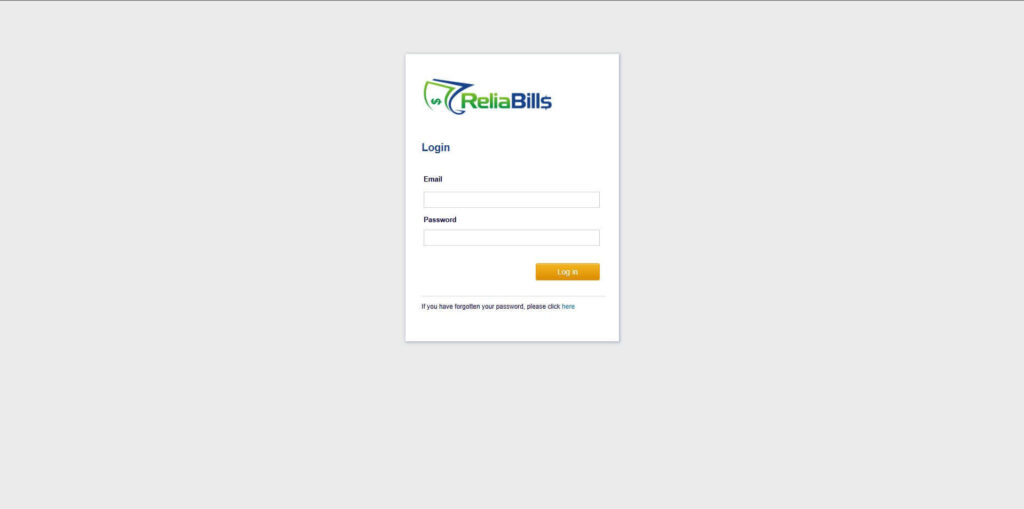
Step 1: Login to ReliaBills
- Access your ReliaBills Account using your login credentials. If you don’t have an account, sign up here.
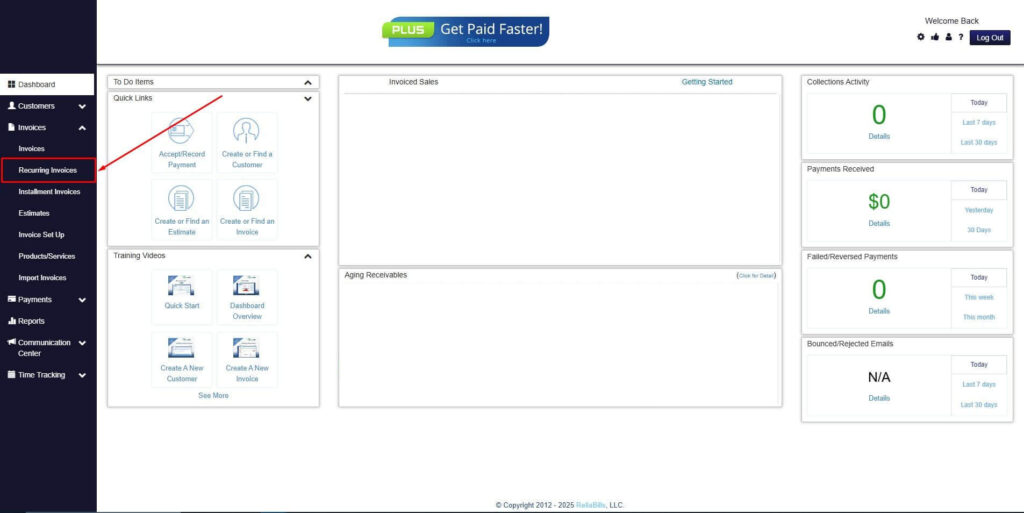
Step 2: Click on Recurring Invoices
- Navigate to the Invoices Dropdown and click on Recurring Invoices for an overview of the list of your existing customers.
Step 3: Go to the Customers Tab
- If you have already created a customer, search for them in the Customers tab and make sure their status is “Active”.
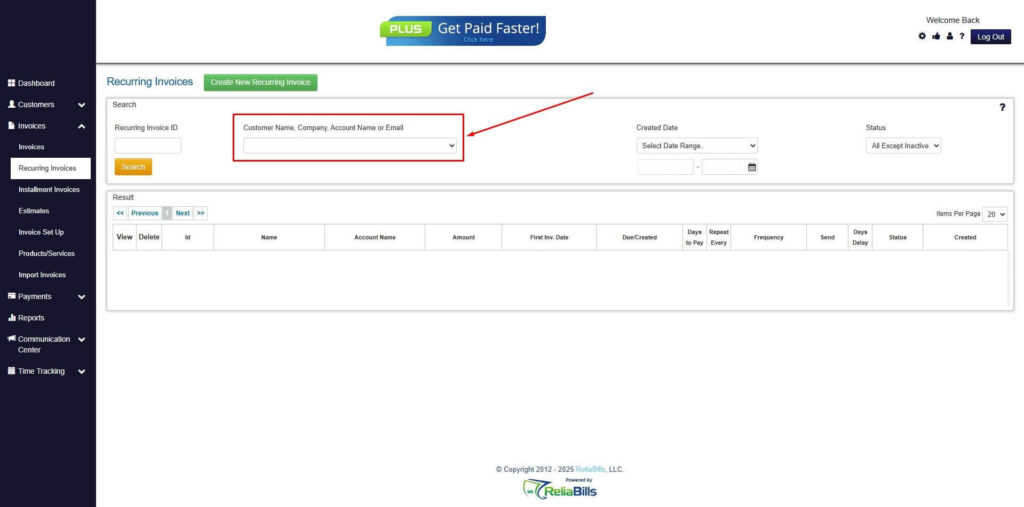
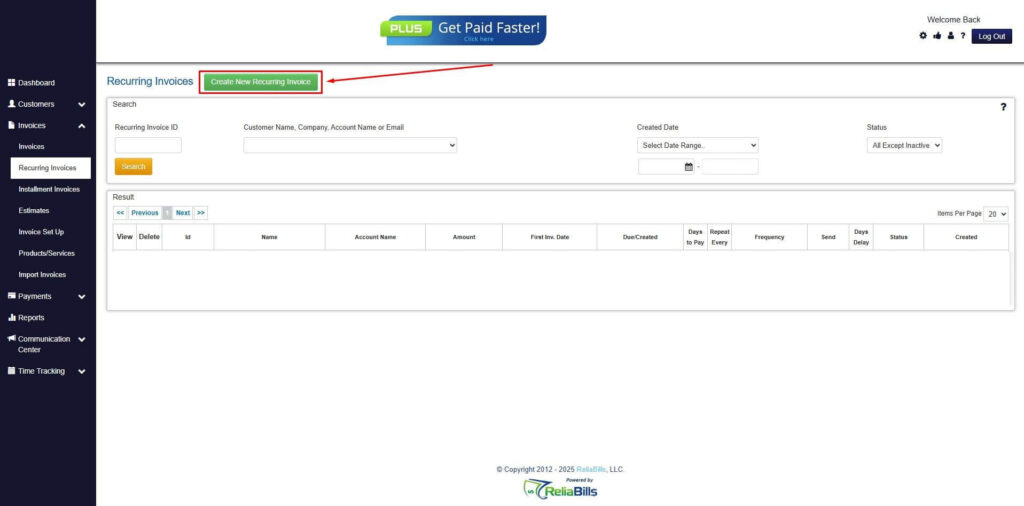
Step 4: Click the Create New Recurring Invoice
- If you haven’t created any customers yet, click the Create New Recurring Invoice to create a new customer.
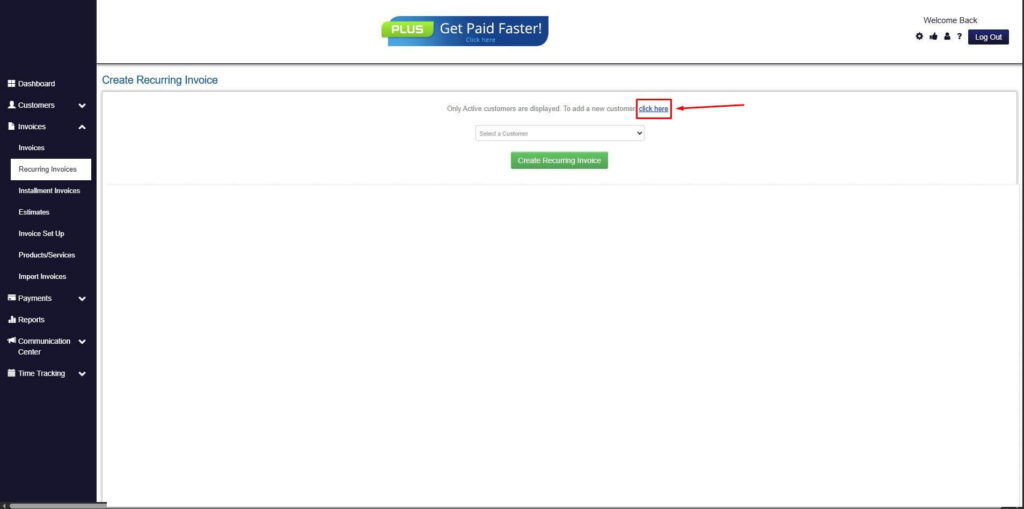
Step 5: Click on the “Click here” Button
- Click on the “Click here” button to proceed with the recurring invoice creation.
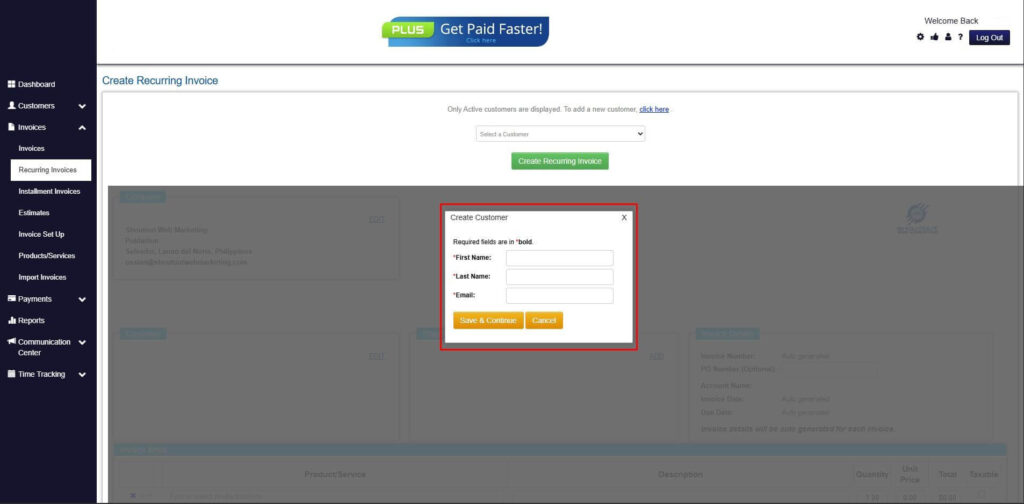
Step 6: Create Customer
- Provide your First Name, Last Name, and Email to proceed.
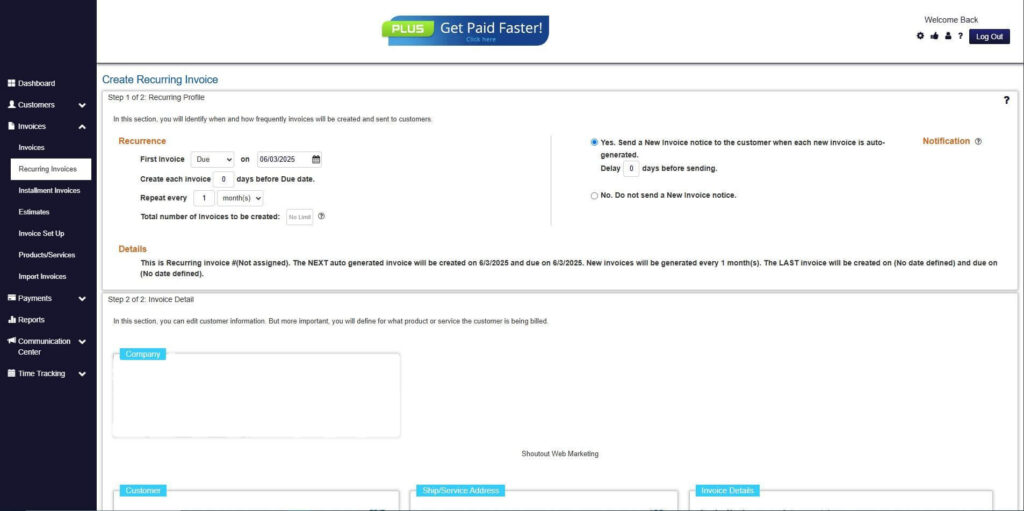
Step 7: Fill in the Create Recurring Invoice Form
- Fill in all the necessary fields.
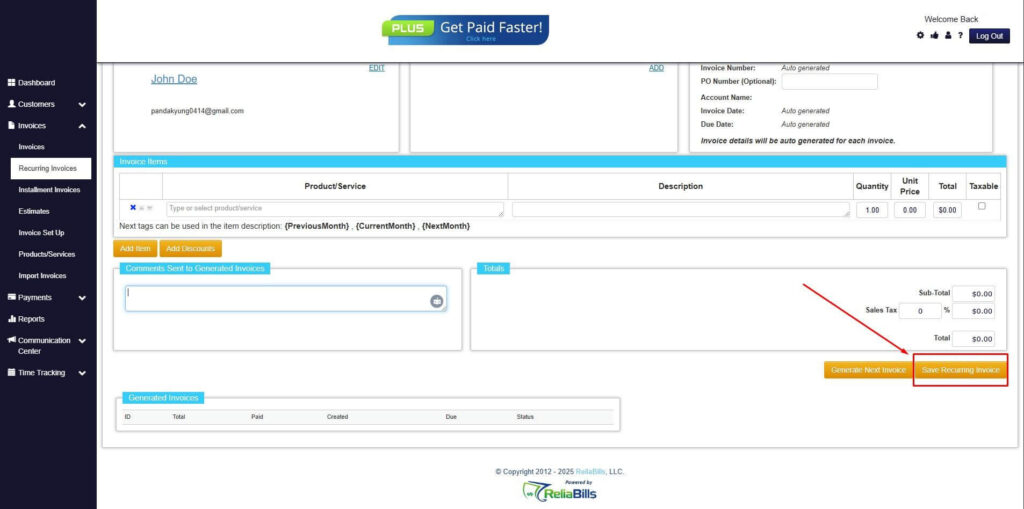
Step 8: Save Recurring Invoice
- After filling up the form, click “Save Recurring Invoice” to continue.
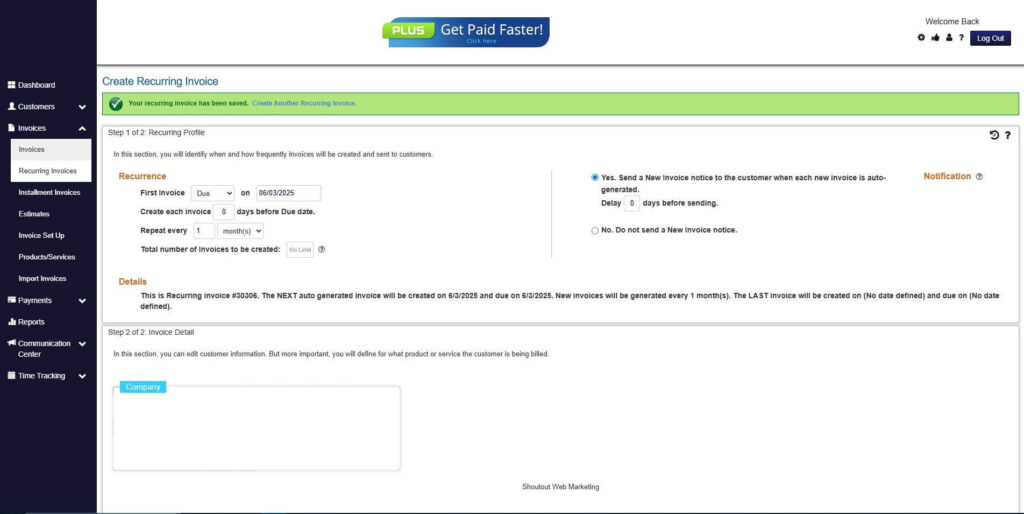
Step 9: Recurring Invoice Created
- Your Recurring Invoice has been created.
Frequently Asked Questions (FAQs)
1. What is a non-commercial invoice for customs?
A non-commercial invoice is a document used when goods are shipped without a sale transaction. It provides customs with details such as description, value, and purpose of the shipment. This helps authorities assess and process the goods correctly.
2. What are common mistakes in non-commercial invoices?
Common mistakes include incorrect descriptions, missing declarations, and wrong valuations. These issues often lead to customs non commercial invoice errors that delay clearance. Incomplete sender or recipient details are also frequent problems.
3. Can errors cause customs delays?
Yes, even small errors can result in shipment holds or inspections. Customs may require clarification before releasing the goods. This can significantly slow down delivery timelines.
4. How do you correct a wrong customs invoice?
Corrections usually involve submitting updated documentation to customs authorities. In some cases, the shipment may need to be reprocessed. Prompt correction reduces the risk of penalties.
5. Is automation useful for customs documentation?
Yes, automation helps reduce human error and ensures consistency in invoices. It also standardizes data entry across shipments. This significantly lowers the risk of documentation issues.
Conclusion
Non-commercial invoices are essential documents in international trade, even when no sale is involved. They ensure that customs authorities can properly assess, classify, and clear shipments. However, even small mistakes can lead to delays, penalties, or shipment rejection.
Avoiding customs non commercial invoice errors requires attention to detail, standardized processes, and consistent documentation practices. Accuracy is not just a compliance requirement, it directly impacts shipping efficiency and operational reliability.
As global trade becomes more complex, businesses that adopt structured invoicing systems and automation tools will be better positioned to avoid disruptions. Investing in accuracy today leads to smoother customs clearance and more efficient international operations in the long term.