

Utility companies operate in one of the most complex billing environments, handling essential services such as electricity, water, gas, and telecommunications. Each month, they must generate accurate invoices for thousands or even millions of customers, often based on varying usage levels and fluctuating rates. This complexity makes billing not only a financial process but also a critical operational function that directly impacts customer trust and satisfaction.
Accuracy, consistency, and timeliness are essential in utility invoicing because even minor errors can lead to disputes, delayed payments, or regulatory issues. Customers expect clear and reliable billing statements, especially when it comes to essential services they depend on daily. Any delay or inconsistency can quickly erode confidence and create administrative challenges for both the provider and the customer.
To address these challenges, recurring billing for utility companies has become a fundamental solution. By leveraging automation and modern billing systems, utilities can streamline invoice generation, reduce manual errors, and ensure consistent monthly billing cycles while improving overall efficiency and customer experience.
What Are Recurring Monthly Invoices in Utility Billing?
Recurring monthly invoices in utility billing refer to automatically generated bills issued to customers at regular intervals, typically every month. These invoices reflect the cost of services consumed during a specific billing period, ensuring that customers are billed consistently without requiring manual intervention. This system is essential for managing large customer bases efficiently.
Utility billing often involves a combination of usage-based and fixed-rate models. Usage-based billing calculates charges based on actual consumption, such as kilowatt-hours of electricity or cubic meters of water, while fixed-rate billing applies standard fees for services like subscriptions or maintenance. Many utility companies use a hybrid approach to ensure fair and accurate pricing.
These invoices are generated through predefined billing cycles that align with meter readings and service periods. Once the cycle is established, automated systems ensure invoices are created, processed, and delivered on time, forming the backbone of recurring billing for utility companies.
Challenges Utility Companies Face in Invoice Management
Utility companies face several challenges when managing recurring invoices, primarily due to the scale and complexity of their operations. One major issue is the sheer volume of customers and invoices, which makes manual processing inefficient and prone to delays. Handling such high volumes requires robust systems that can scale without compromising accuracy.
Another challenge lies in complex usage calculations, especially when billing is based on variable consumption. Factors such as seasonal demand, fluctuating rates, and tiered pricing structures can make billing calculations more complicated. Without automation, this increases the likelihood of errors and inconsistencies.
Delays in meter readings, payment processing issues, and manual data entry errors further complicate invoice management. These challenges can lead to late billing, overdue accounts, and customer dissatisfaction, making it essential for utilities to adopt more advanced and automated billing solutions.
How Utility Companies Manage Recurring Monthly Invoices
Utility companies manage recurring monthly invoices by automating invoice generation based on predefined billing cycles. This ensures that every customer receives their bill on time, regardless of the volume of accounts being processed. Automation eliminates the need for manual intervention, improving both speed and accuracy.
Integration with meter data and usage tracking systems is another critical component. By connecting billing platforms directly to metering infrastructure, utilities can capture real-time or periodic usage data and incorporate it into invoices seamlessly. This ensures that customers are billed accurately based on actual consumption.
Centralized billing platforms further enhance efficiency by consolidating account management, invoicing, and payment tracking into a single system. These platforms provide real-time visibility into invoice statuses and payment activity, enabling utilities to manage operations more effectively and respond quickly to any issues.
Key Features of Efficient Utility Billing Systems
Automated recurring billing and invoice scheduling
Automated billing systems ensure that invoices are generated consistently according to predefined schedules. This eliminates delays and ensures that customers receive their bills on time every month. It also reduces the risk of missed billing cycles, which can disrupt cash flow.
Integration with usage/meter data systems
Efficient billing systems integrate directly with meter data to capture accurate consumption information. This reduces manual data entry and minimizes errors in usage calculations. It also ensures that invoices reflect real-time or near-real-time data, improving accuracy and transparency.
Real-time invoice tracking and reporting
Real-time tracking allows utilities to monitor invoice generation, delivery, and payment status instantly. This visibility helps identify issues quickly and supports better decision-making. Detailed reporting also provides insights into billing performance and trends.
Auto-pay and multiple payment options
Offering auto-pay and diverse payment methods makes it easier for customers to settle their bills on time. This reduces the likelihood of missed payments and improves overall collection rates. Flexibility in payment options enhances customer convenience and satisfaction.
Customer portals for billing access and history
Customer portals provide users with easy access to their billing information, payment history, and account details. This transparency reduces inquiries and improves the customer experience. It also empowers customers to manage their accounts independently.
Alerts and notifications for due and overdue payments
Automated alerts keep customers informed about upcoming due dates and overdue invoices. These reminders help reduce late payments and encourage timely action. They also improve communication between utilities and customers.
The Role of Recurring Billing in Utility Invoicing
Recurring billing plays a central role in ensuring consistent and reliable invoice generation for utility companies. By automating the billing cycle, utilities can guarantee that invoices are created and delivered on time every month. This consistency is essential for maintaining predictable revenue streams.
Automation significantly reduces the need for manual intervention, minimizing errors and improving efficiency. With fewer manual processes, utilities can focus on optimizing operations and enhancing customer service. This also reduces administrative costs and workload.
Ultimately, recurring billing for utility companies improves billing accuracy and operational efficiency. It ensures that customers are billed correctly and consistently, which strengthens trust and reduces disputes.
How Automation Improves Utility Invoice Management
Automation accelerates the entire billing process, from invoice generation to delivery. This ensures that customers receive their bills promptly, reducing delays and improving cash flow. Faster processing also enhances operational efficiency.
By reducing manual input, automation minimizes human errors in calculations and data entry. This is particularly important in usage-based billing, where accuracy is critical. Reliable systems ensure that invoices are correct and consistent.
Automation also provides real-time insights into billing and payment activity. These insights enable utilities to monitor performance, identify trends, and make data-driven decisions to improve billing processes.
Common Challenges in Managing Recurring Utility Invoices
Utility companies often face challenges such as billing disputes and adjustments, which can arise from incorrect data or customer concerns. Resolving these disputes requires time and resources, making efficiency critical.
Managing large volumes of overdue payments is another common issue. Without proper systems in place, tracking and collecting payments can become overwhelming. This impacts cash flow and operational stability.
Ensuring data accuracy from multiple sources, including meters and customer systems, adds another layer of complexity. Utilities must also comply with strict regulations, making accurate and transparent billing essential.
Best Practices for Efficient Utility Invoice Management
Implement automated billing and payment systems
Automation ensures consistent and accurate invoice generation across all customer accounts. It reduces manual workload and improves operational efficiency. This is a foundational element of effective recurring billing for utility companies.
Ensure accurate and timely data collection
Reliable data from meters and usage systems is essential for accurate billing. Timely data collection prevents delays and ensures invoices reflect actual consumption. This reduces disputes and improves customer trust.
Provide clear and detailed invoices to customers
Transparent invoices help customers understand their charges and reduce confusion. Detailed breakdowns of usage and fees improve clarity. This leads to fewer inquiries and better customer satisfaction.
Offer flexible payment options including auto-pay
Multiple payment methods make it easier for customers to pay on time. Auto-pay further simplifies the process by automating transactions. This reduces overdue payments and improves cash flow.
Monitor billing performance and optimize processes regularly
Continuous monitoring helps identify inefficiencies and areas for improvement. Data analysis enables utilities to refine their billing strategies. This ensures long-term efficiency and effectiveness.
How Automation Supports Payment Collection
Automation improves payment collection by sending reminders for upcoming and overdue invoices. These notifications keep customers informed and encourage timely payments. This reduces the number of overdue accounts.
Auto-pay features further enhance collection rates by automatically processing payments on due dates. This eliminates reliance on customer action and minimizes missed payments. It also improves convenience for customers.
Real-time tracking allows utilities to monitor payment statuses and take immediate action when issues arise. This ensures faster resolution and better overall cash flow management.
Key Benefits of Efficient Recurring Invoice Management
- Improves billing accuracy and consistency: Automated systems ensure that invoices are generated correctly every time. This reduces errors and builds customer trust. Consistency is key in utility billing.
- Reduces overdue payments and revenue delays: Timely billing and reminders encourage prompt payments. This improves cash flow and reduces financial risk. It also minimizes collection efforts.
- Enhances customer satisfaction and transparency: Clear and accurate billing improves the customer experience. Transparency reduces disputes and confusion. This strengthens customer relationships.
- Saves time and operational costs: Automation reduces manual tasks and administrative workload. This lowers operational expenses. Teams can focus on higher-value activities.
- Provides better financial visibility and forecasting: Real-time data and reporting improve decision-making. Utilities can forecast revenue more accurately. This supports long-term planning and growth.
Common Use Cases
- Electricity and power providers: These companies rely heavily on usage-based billing, making automation essential. Accurate invoicing ensures fair charges and customer trust.
- Water and sewage utilities: Billing is based on consumption and service fees. Efficient systems ensure accurate and timely invoicing.
- Gas and energy companies: Variable usage and pricing require precise calculations. Automation ensures consistency and accuracy.
- Telecommunications and internet services: Subscription-based billing models depend on recurring invoices. Automation ensures uninterrupted service and timely payments.
- Waste management services: Regular service schedules require consistent billing. Efficient systems help manage recurring charges effectively.
How ReliaBills Helps Utility Companies Manage Recurring Invoices
ReliaBills helps utility companies streamline the complexity of recurring billing for utility companies by automating invoice generation, payment tracking, and customer account management in one centralized system. Instead of relying on manual processes to handle high volumes of monthly invoices, utilities can automatically generate accurate bills based on predefined billing cycles and usage data. This reduces administrative workload, minimizes human error, and ensures that every customer receives timely and consistent invoices without delays. It also improves operational efficiency across billing departments.
The platform’s recurring billing and auto-pay capabilities are especially valuable for utility providers managing large customer bases with varying usage patterns. ReliaBills ensures that invoices are created and delivered on schedule, while auto-pay options allow customers to settle bills automatically using stored payment methods. When payments are missed or delayed, built-in notifications and reminders help prompt action, reducing overdue accounts and improving overall collection rates. This creates a smoother and more predictable cash flow for utility providers.
With ReliaBills PLUS, utility companies gain access to advanced reporting, automation tools, and detailed customer management features that enhance billing oversight. These tools provide real-time visibility into invoice status, payment performance, and customer behavior, allowing businesses to identify trends and optimize billing strategies. By combining automation with actionable insights, ReliaBills enables utilities to scale efficiently, improve billing accuracy, and deliver a more transparent and reliable customer experience.
How to Create a New Recurring Invoice Using ReliaBills
Creating a New Recurring Invoice using ReliaBills involves the following steps:
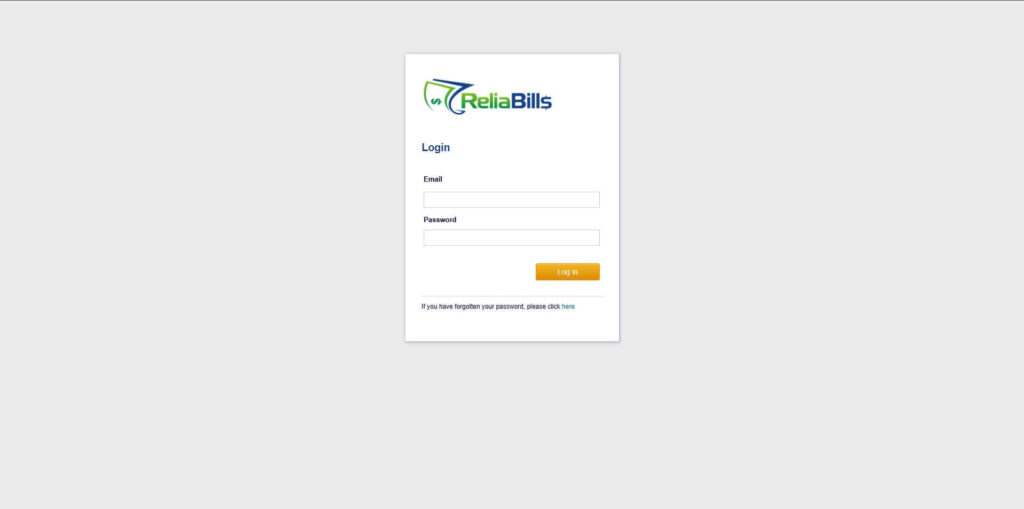
Step 1: Login to ReliaBills
- Access your ReliaBills Account using your login credentials. If you don’t have an account, sign up here.
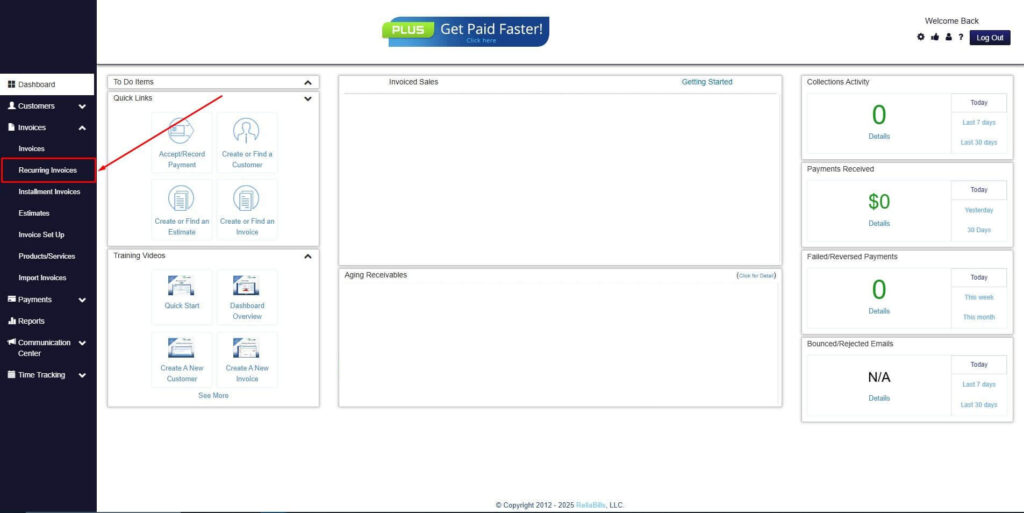
Step 2: Click on Recurring Invoices
- Navigate to the Invoices Dropdown and click on Recurring Invoices for an overview of the list of your existing customers.
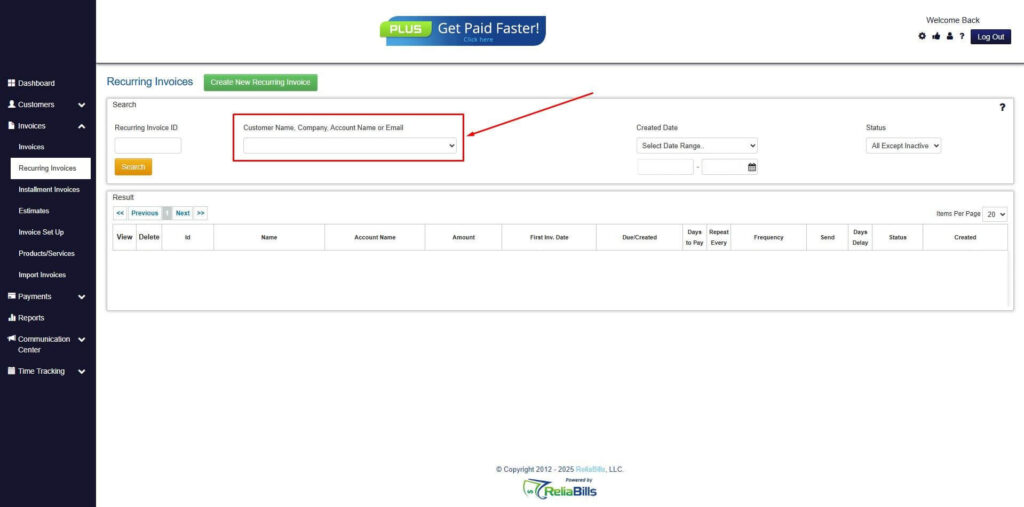
Step 3: Go to the Customers Tab
- If you have already created a customer, search for them in the Customers tab and make sure their status is “Active”.
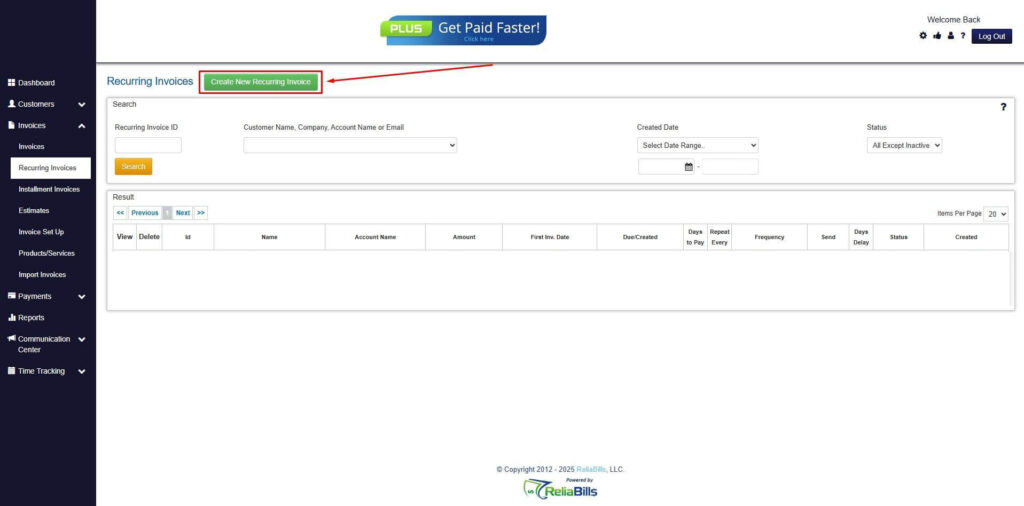
Step 4: Click the Create New Recurring Invoice
- If you haven’t created any customers yet, click the Create New Recurring Invoice to create a new customer.
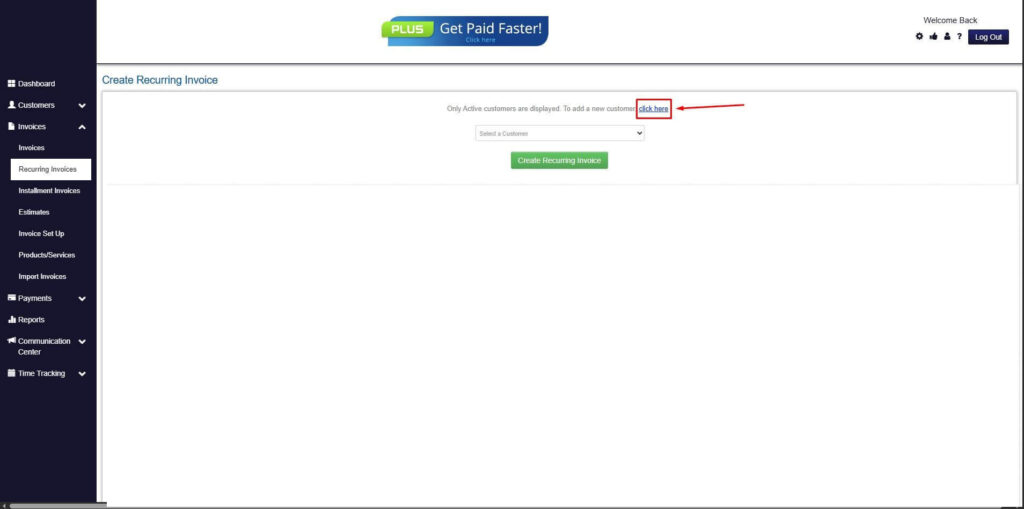
Step 5: Click on the “Click here” Button
- Click on the “Click here” button to proceed with the recurring invoice creation.
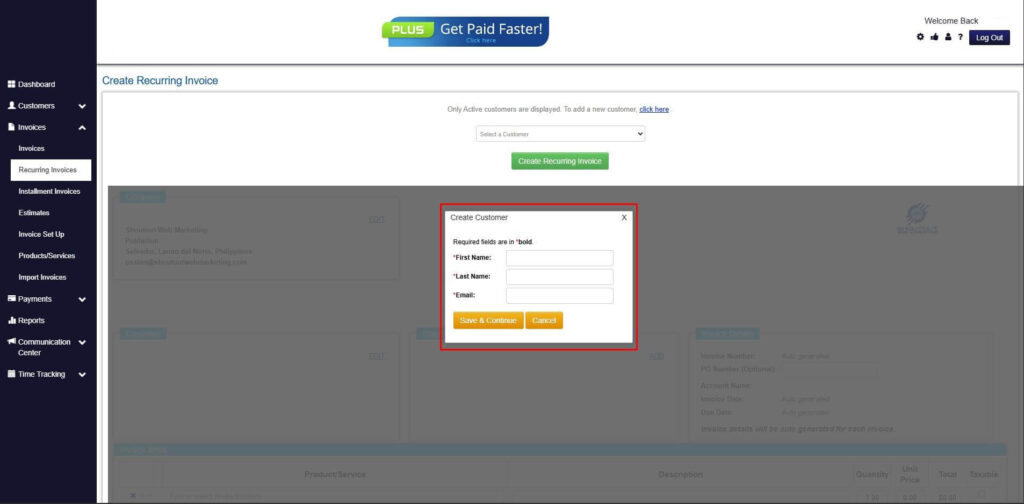
Step 6: Create Customer
- Provide your First Name, Last Name, and Email to proceed.
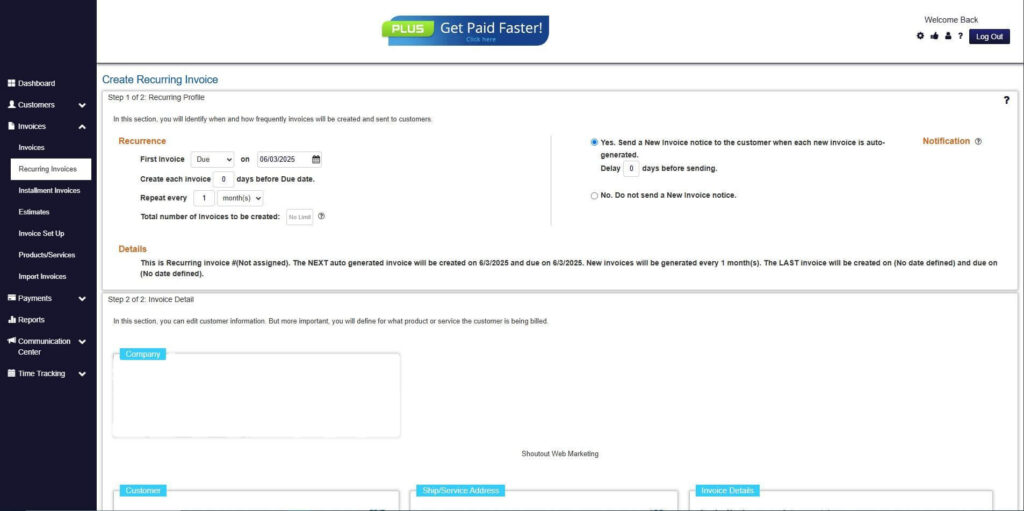
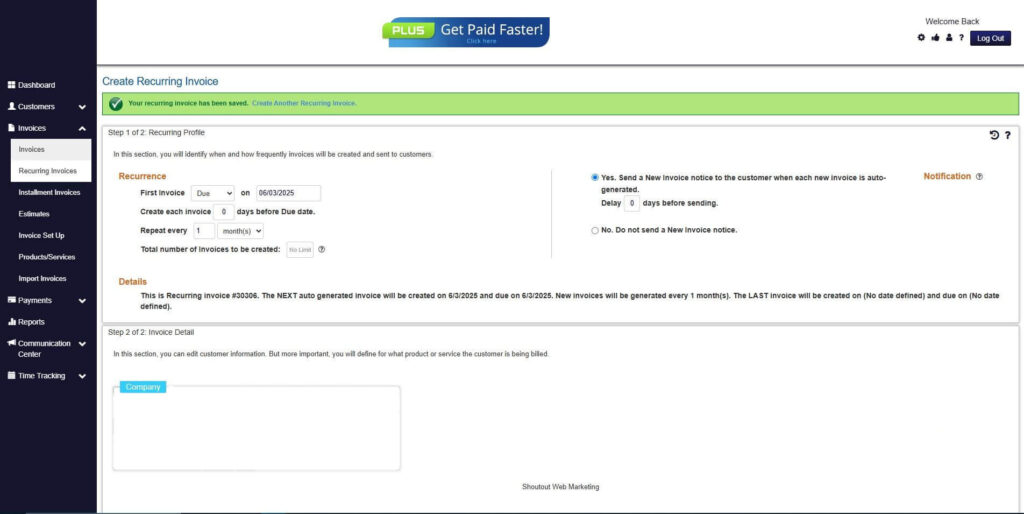
Step 7: Fill in the Create Recurring Invoice Form
- Fill in all the necessary fields.
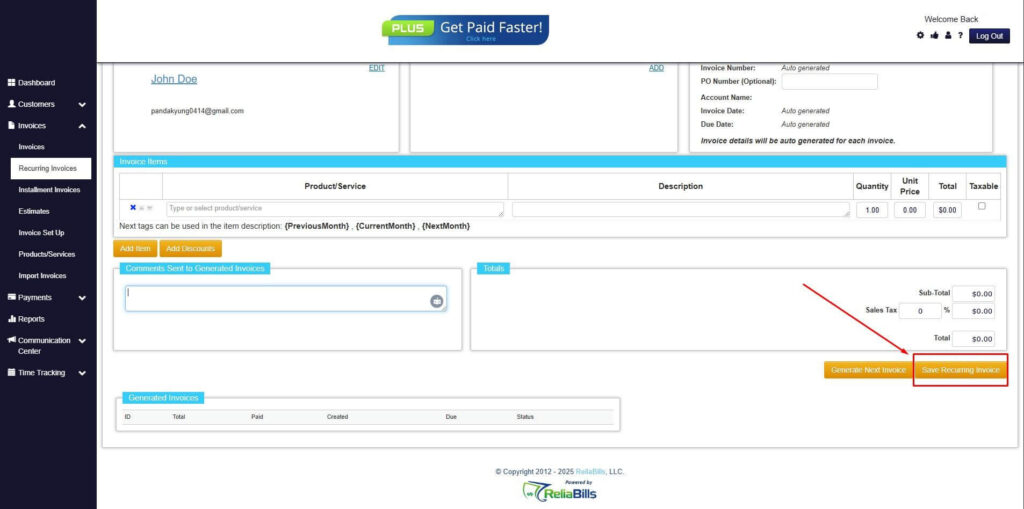
Step 8: Save Recurring Invoice
- After filling up the form, click “Save Recurring Invoice” to continue.
Step 9: Recurring Invoice Created
- Your Recurring Invoice has been created.
Frequently Asked Questions (FAQs)
1. How do utility companies generate monthly invoices?
Utility companies use automated billing systems that generate invoices based on usage data and billing cycles. This ensures consistency and accuracy.
2. What is recurring billing in utilities?
Recurring billing is the automated process of generating invoices at regular intervals. It ensures timely and consistent billing.
3. How can automation improve utility billing?
Automation reduces errors, speeds up processes, and improves accuracy. It also enhances efficiency and customer satisfaction.
4. How do utilities reduce overdue payments?
Utilities use reminders, auto-pay, and flexible payment options to encourage timely payments. These strategies improve collection rates.
5. What systems are used for utility invoice management?
Utilities use centralized billing platforms with automation and integration capabilities. These systems manage invoicing, payments, and reporting.
Conclusion
Utility companies manage recurring monthly invoices efficiently by leveraging automation, integration, and centralized billing systems. These technologies enable accurate, consistent, and timely invoicing, even at large scales.
By adopting recurring billing for utility companies, businesses can reduce errors, improve cash flow, and enhance customer satisfaction. Automation plays a critical role in simplifying complex billing processes and ensuring reliable operations.
As the utility industry continues to evolve, investing in modern billing solutions will be essential for maintaining efficiency, improving customer experience, and supporting long-term growth.