
In SaaS businesses, invoicing is traditionally associated with revenue collection, subscription billing, and payment processing. However, the reality of modern SaaS operations is more complex, as not every customer interaction involves a direct financial transaction. Companies frequently provide free trials, onboarding assistance, promotional access, or account credits that still need structured documentation for internal and external clarity.
A non commercial invoice in saas plays a crucial role in capturing these non-revenue activities in a formal and traceable way. Without such documentation, SaaS teams may struggle with incomplete records, inconsistent reporting, or gaps in customer history. This becomes especially problematic when analyzing user behavior, preparing audits, or managing enterprise accounts with complex billing arrangements.
By implementing non-commercial invoicing, SaaS companies ensure that every service delivered is properly recorded, regardless of whether it generates revenue. This improves operational transparency, strengthens compliance readiness, and provides a clearer understanding of how products are being used across all customer segments.
What Is a Non-Commercial Invoice in SaaS?
A non commercial invoice in saas is a structured billing document used to record services that do not involve payment. It is typically generated for informational, operational, or compliance purposes rather than financial collection. While it resembles a standard invoice in format, its purpose is fundamentally different because it does not represent revenue due from the customer.
Unlike commercial invoices, which are tied directly to billing cycles and revenue recognition, non-commercial invoices are often assigned a zero value or marked as informational. Despite this, they still include detailed records such as service descriptions, usage periods, customer information, and timestamps. This makes them valuable for maintaining accurate service history without impacting financial accounts.
In SaaS environments, these invoices are especially useful for tracking free-tier usage, trial engagement, promotional offerings, and system-generated credits. They ensure that even non-paying customer interactions are recorded in a structured way, allowing businesses to maintain complete visibility into product usage across all stages of the customer lifecycle.
Key Differences Between Commercial and Non-Commercial Invoices
Commercial invoices request payment; non-commercial invoices do not
Commercial invoices are directly tied to revenue collection and are issued when a customer is required to pay for a service or subscription. In contrast, a non commercial invoice in saas is created for documentation only and does not trigger any payment obligation. This distinction is important because it ensures SaaS billing systems can separate financial transactions from informational records without confusion.
Used for revenue tracking vs. operational documentation
Commercial invoices are part of a company’s revenue recognition process and are recorded in financial statements. Non-commercial invoices are not included in revenue reporting but are used for operational visibility, such as tracking trials, credits, or internal adjustments. This separation helps SaaS companies maintain accurate accounting while still documenting all service activity.
Impact on accounting and financial reporting differs significantly
Commercial invoices affect profit, loss, and accounts receivable because they represent money owed to the business. Non-commercial invoices, however, have no financial impact but still provide important audit trails. This ensures companies can maintain clean financial reporting without losing visibility into non-billed services.
Customer-facing vs. internal or informational use cases
Commercial invoices are typically sent to customers for payment processing and legal billing purposes. Non-commercial invoices may be shared with customers for transparency or used internally for tracking service delivery. This dual usage allows SaaS companies to communicate clearly while maintaining structured internal records.
When Should SaaS Companies Use Non-Commercial Invoices?
SaaS companies typically issue a non commercial invoice in saas whenever services are delivered without a financial charge. One of the most common scenarios is during free trials or onboarding periods, where customers are given access to the product before committing to a subscription. Even though no payment is involved, documenting this usage is essential for tracking engagement and evaluating conversion potential.
These invoices are also widely used in product demos, pilot programs, and enterprise evaluations. In these cases, SaaS providers offer temporary or limited access to their platforms to demonstrate value. A non-commercial invoice ensures that this service delivery is formally recorded, which is especially important for enterprise reporting and sales tracking.
Additionally, non-commercial invoices are used for internal credits, service migrations, promotional adjustments, and compliance-related documentation. In all of these cases, they help maintain structured records of non-revenue activity, ensuring that SaaS companies have a complete and accurate view of all customer interactions.
Common Use Cases in SaaS
Free trials and onboarding periods
A non commercial invoice in saas is commonly used during free trials where customers are given temporary access to a product. Even though no payment is required, SaaS companies still document usage to track engagement and conversion potential. This helps businesses understand how users interact with the product before upgrading.
Product demos and pilot programs
SaaS companies often provide demos or pilot access to enterprise clients before closing a deal. Non-commercial invoices help record the value delivered during these evaluation stages. This ensures transparency in sales reporting and helps justify pricing during contract negotiations.
Promotional or discounted service tracking
When services are offered for free or at a heavy discount, non-commercial invoices are used to document the full value of services provided. This helps marketing and finance teams measure campaign effectiveness. It also ensures accurate reporting of promotional impact on business operations.
Enterprise contracts with custom billing arrangements
Large enterprise clients often have complex agreements that include bundled services, credits, or trial extensions. Non-commercial invoices help track these special arrangements without affecting revenue records. This ensures clarity for both accounting teams and customers.
Internal service usage or system-generated credits
SaaS companies sometimes issue internal credits or adjustments that still need documentation. Non-commercial invoices record these transactions in a structured way. This improves internal accountability and prevents gaps in billing history.
How Non-Commercial Invoices Work in SaaS Systems
A non-commercial invoice is generated in much the same way as a standard invoice, but it is assigned a zero value or marked as non-revenue. It still contains all relevant transactional details, including service descriptions, billing periods, and customer identifiers. This ensures that the record is complete even without financial implications.
Once created, the invoice is stored within the SaaS billing system without triggering any payment processing workflows. This separation is important because it allows the system to track service delivery independently of revenue generation. It also ensures that financial reports remain unaffected by non-billed activity.
Over time, these invoices build a structured historical record of all customer interactions, including trials, credits, and promotional usage. This data becomes valuable for analytics, forecasting, and customer lifecycle management within SaaS platforms.
Key Features of Non-Commercial Invoice Management Systems
Modern SaaS billing platforms are designed to handle non commercial invoice in saas workflows efficiently. One essential feature is the ability to generate zero-value invoices automatically based on predefined business rules. This ensures consistency and reduces the need for manual intervention.
These systems are also typically integrated with subscription and recurring billing engines. This allows non-commercial invoices to be generated alongside paid invoices, ensuring a unified billing structure across all customer activities. Integration also helps maintain accuracy across complex billing environments.
Additional features include customizable templates, real-time reporting dashboards, and audit trails. These capabilities ensure that non-commercial invoices are not only generated correctly but also tracked, stored, and analyzed in a way that supports compliance and operational transparency.
The Role of Recurring Billing in Non-Commercial Invoices
Recurring billing plays a significant role in SaaS because many companies operate on subscription-based models. During free trials or promotional periods, recurring billing systems automatically generate non commercial invoice in saas records without requiring payment. This ensures consistent documentation across all billing cycles.
This automation eliminates gaps in transaction history and reduces manual workload for finance teams. Every billing cycle, whether paid or unpaid, is recorded in a structured way, making it easier to analyze customer behavior over time.
When customers transition from free to paid plans, recurring billing systems ensure a smooth conversion by switching invoice types while preserving historical records. This continuity is essential for accurate reporting and long-term customer lifecycle tracking.
Common Challenges in Managing Non-Commercial Invoices
Confusion between commercial and non-commercial records
One of the biggest challenges is properly distinguishing between revenue-generating invoices and a non commercial invoice in saas. Without clear labeling or structure, teams may misinterpret financial reports or duplicate records. This can lead to inconsistencies in accounting and reporting systems.
Manual tracking leading to missing or incomplete data
When non-commercial invoices are handled manually, there is a higher risk of missing entries or incomplete documentation. This becomes especially problematic in high-volume SaaS environments with many free users or trials. Over time, this can create gaps in customer activity history.
Lack of standardization across teams or departments
Different teams may use different formats or processes for generating non-commercial invoices. This inconsistency makes it harder to consolidate data and maintain accurate reporting. Standardization is essential for scalability and compliance.
Difficulty integrating with accounting systems
Some accounting platforms are primarily designed for commercial transactions, making it harder to properly classify non-commercial invoices. This can create friction in reporting workflows. Proper integration is necessary to ensure all data flows correctly between systems.
Limited visibility into non-revenue activity
Without structured tracking, businesses may lose visibility into how free services or trials are being used. This makes it harder to evaluate product performance or customer behavior. Non-commercial invoicing solves this by creating a traceable record of all activity.
Best Practices for Using Non-Commercial Invoices
To properly manage a non commercial invoice in saas, businesses should clearly label all non-revenue invoices to distinguish them from commercial ones. This simple step significantly improves clarity in reporting and reduces confusion during audits.
Standardizing invoice formats across the organization is equally important. Consistent templates ensure that all teams follow the same documentation structure, improving accuracy and simplifying data analysis.
Automation should also be implemented wherever possible to reduce manual workload and improve consistency. Finally, businesses must ensure that all non-commercial invoicing practices align with accounting and compliance requirements to maintain financial integrity.
How Automation Improves Non-Commercial Invoice Management
Automation significantly improves the management of non-commercial invoices by eliminating manual entry and reducing operational complexity. Instead of relying on staff to generate invoices, SaaS systems can automatically create them based on predefined rules.
This leads to greater consistency in documentation and reduces the risk of human error. It also ensures that all non-revenue activities are recorded uniformly across the system, improving data quality.
With real-time tracking and reporting, teams gain complete visibility into both commercial and non-commercial activity. This helps improve decision-making, operational planning, and compliance readiness.
Key Benefits of Non-Commercial Invoices in SaaS
Improves transparency across all customer activity
A non commercial invoice in saas ensures that every service interaction is documented, even when no payment is involved. This creates a complete and transparent view of customer engagement. It also helps internal teams understand product usage more clearly.
Supports compliance and audit readiness
Proper documentation of all transactions, including non-revenue ones, helps SaaS companies stay compliant with financial and regulatory requirements. During audits, these invoices provide clear evidence of service delivery. This reduces risk and strengthens governance.
Enhances internal reporting and analytics
Non-commercial invoices allow businesses to track usage trends, trial performance, and customer engagement. This data is valuable for decision-making and forecasting. It helps SaaS companies optimize pricing and product strategy.
Reduces errors in billing and financial records
By standardizing how non-revenue transactions are recorded, businesses reduce inconsistencies in their billing systems. This leads to cleaner financial data and fewer reconciliation issues. It also improves trust in reporting accuracy.
Improves customer communication and transparency
Customers benefit from having a clear record of services they receive, even if they are not charged. This improves trust and reduces confusion about billing activity. It also enhances the overall customer experience.
How ReliaBills Supports Non-Commercial Invoices in SaaS
Managing a non commercial invoice in saas becomes significantly more efficient with ReliaBills because it centralizes invoicing, billing, and payment tracking into one automated system. Instead of manually creating and categorizing invoices for free trials, credits, or promotional services, SaaS businesses can generate structured non-commercial invoices automatically based on predefined billing rules. This ensures every service interaction is properly documented, even when no payment is involved, which improves transparency and reduces administrative workload across finance and operations teams.
ReliaBills also strengthens SaaS billing workflows through its recurring billing capabilities, which are especially important for subscription-based models that include free tiers or trial periods. The system can automatically issue non-commercial invoices during onboarding, pilot programs, or promotional cycles, ensuring consistent documentation across all billing stages. When a customer transitions from a free or trial plan to a paid subscription, ReliaBills seamlessly switches invoice types while preserving the full billing history, reducing errors and eliminating gaps in financial records.
With ReliaBills PLUS, SaaS companies gain access to more advanced automation, reporting, and customer management tools that enhance control over both revenue and non-revenue transactions. Businesses can monitor non-commercial invoice activity in real time alongside paid billing data, helping teams analyze usage patterns, forecast revenue more accurately, and improve decision-making. This level of visibility ensures SaaS companies maintain clean financial records while scaling efficiently and maintaining full operational clarity.
How to Create a New Recurring Invoice Using ReliaBills
Creating a New Recurring Invoice using ReliaBills involves the following steps:
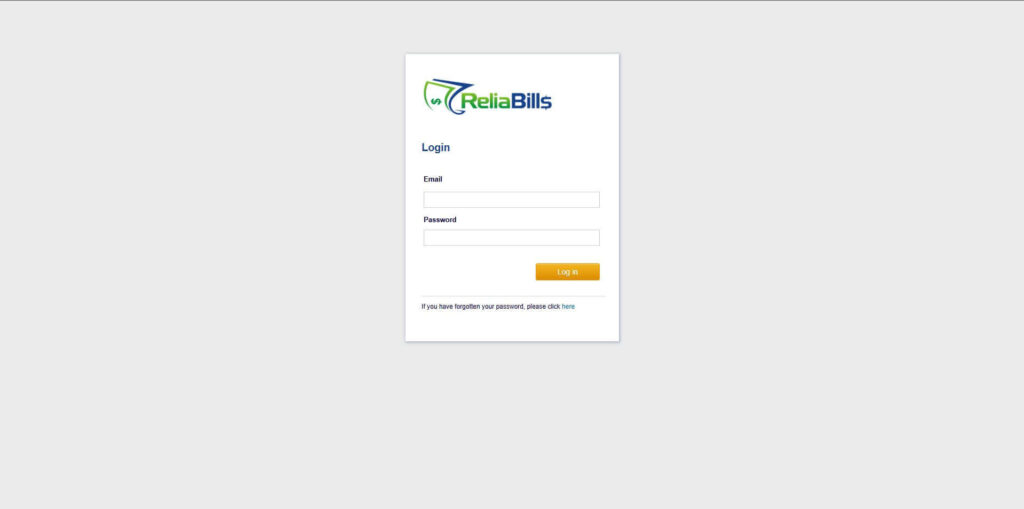
Step 1: Login to ReliaBills
- Access your ReliaBills Account using your login credentials. If you don’t have an account, sign up here.
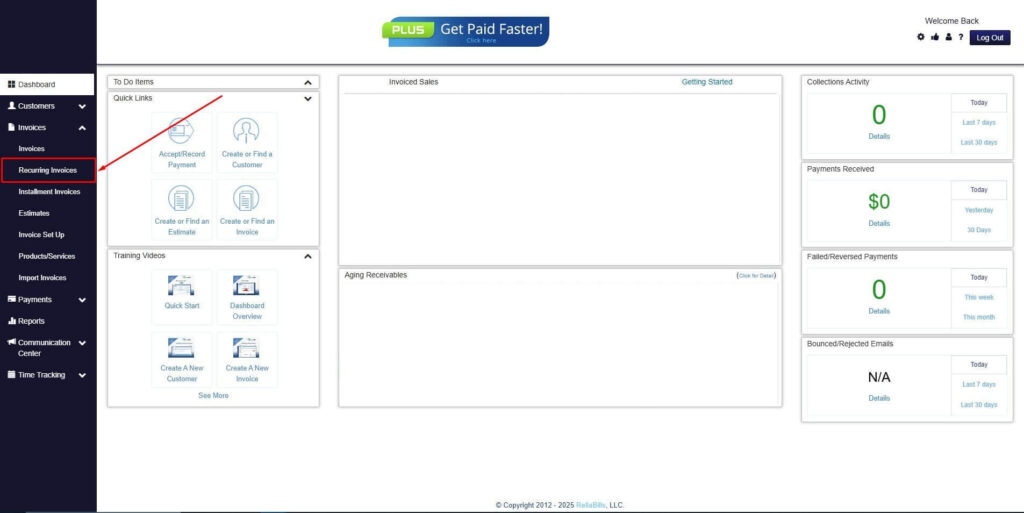
Step 2: Click on Recurring Invoices
- Navigate to the Invoices Dropdown and click on Recurring Invoices for an overview of the list of your existing customers.
Step 3: Go to the Customers Tab
- If you have already created a customer, search for them in the Customers tab and make sure their status is “Active”.
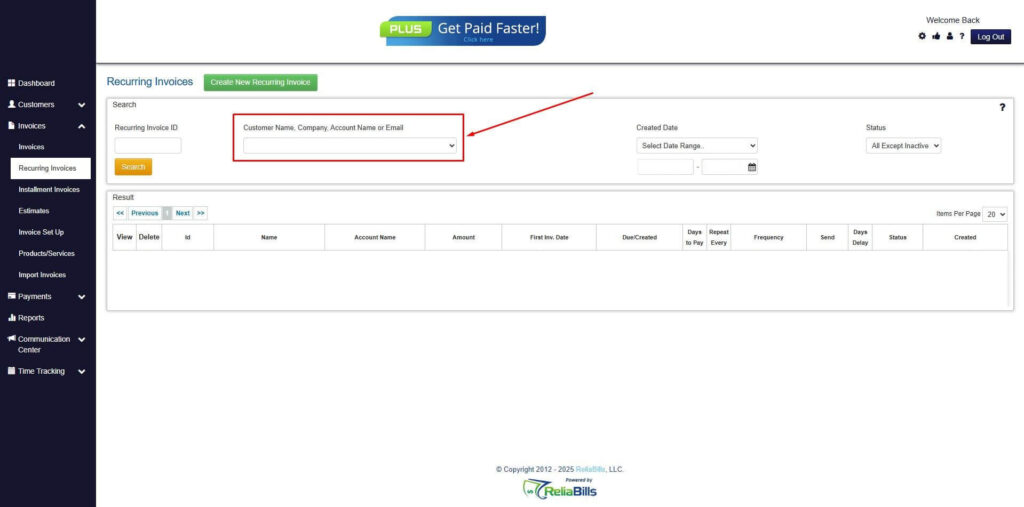
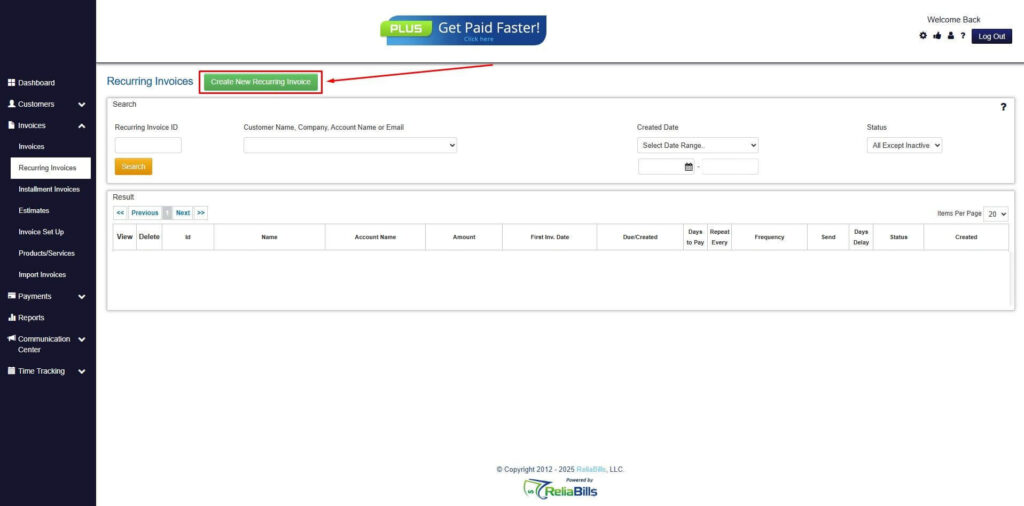
Step 4: Click the Create New Recurring Invoice
- If you haven’t created any customers yet, click the Create New Recurring Invoice to create a new customer.
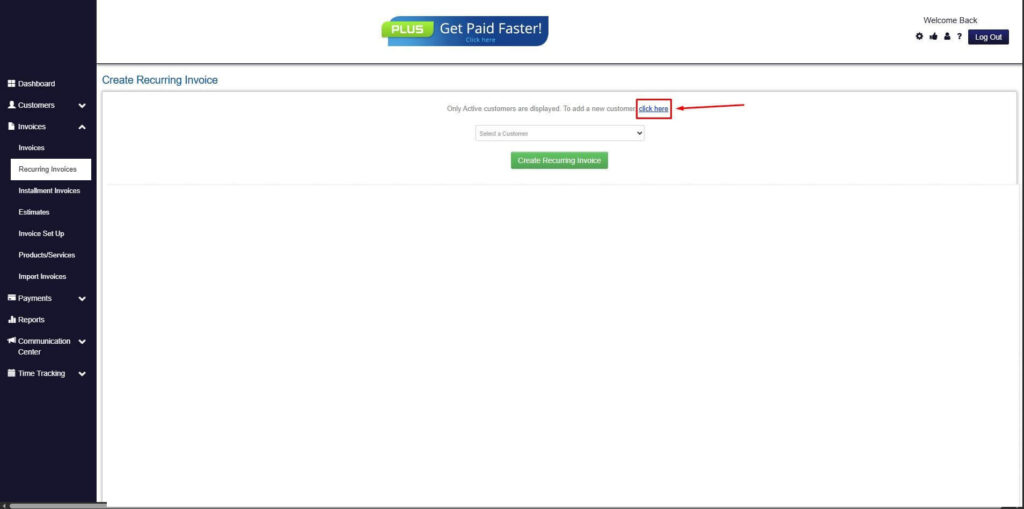
Step 5: Click on the “Click here” Button
- Click on the “Click here” button to proceed with the recurring invoice creation.
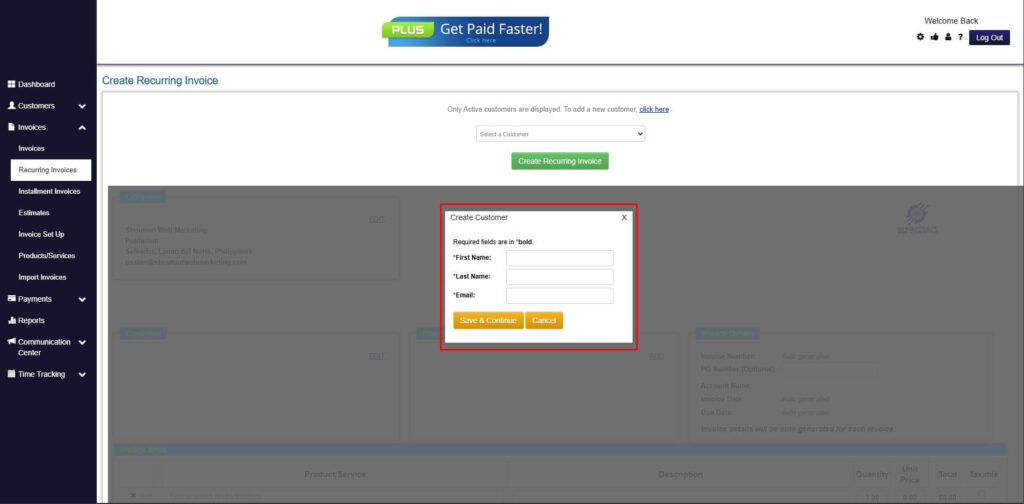
Step 6: Create Customer
- Provide your First Name, Last Name, and Email to proceed.
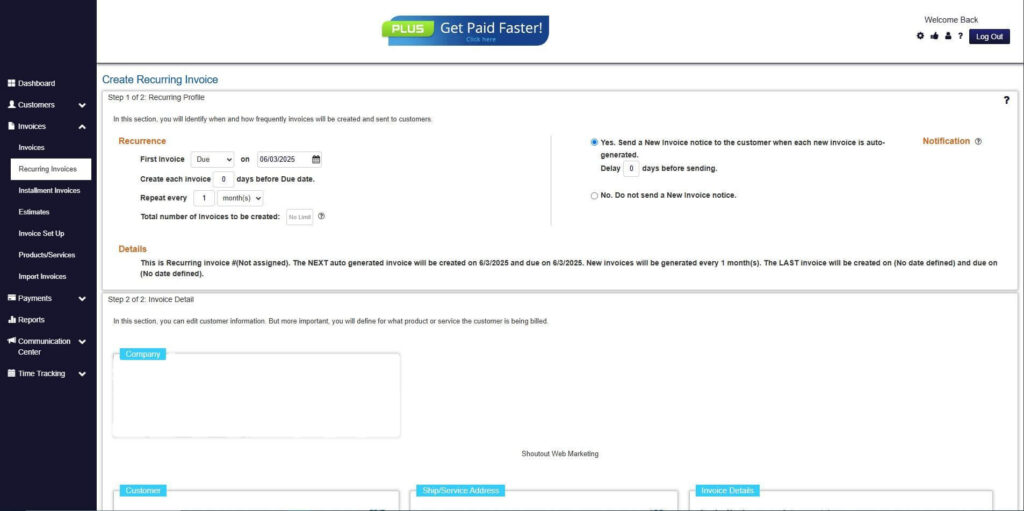
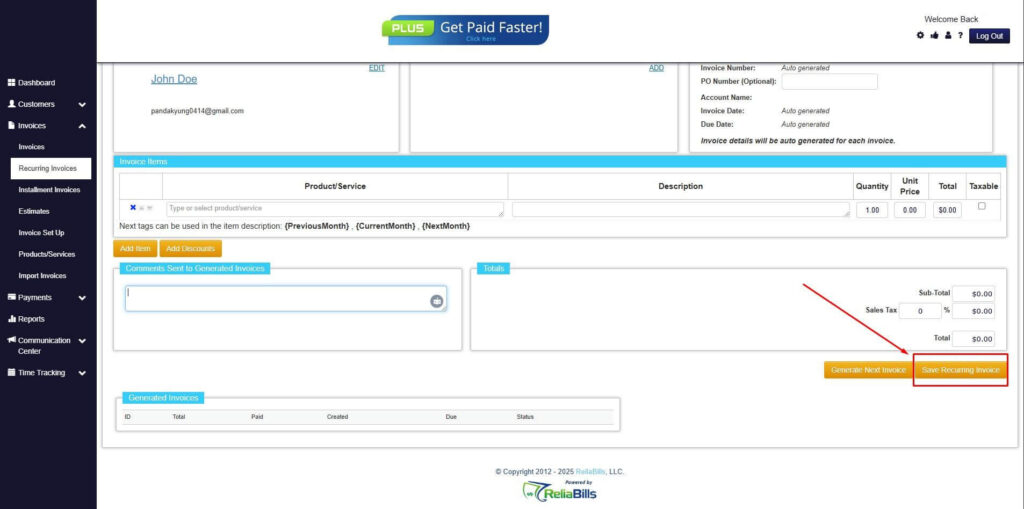
Step 7: Fill in the Create Recurring Invoice Form
- Fill in all the necessary fields.
Step 8: Save Recurring Invoice
- After filling up the form, click “Save Recurring Invoice” to continue.
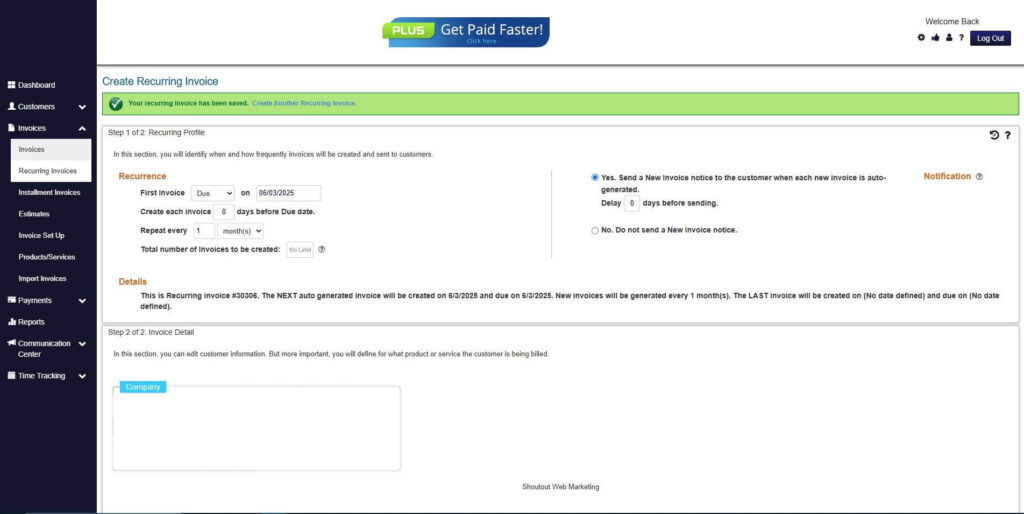
Step 9: Recurring Invoice Created
- Your Recurring Invoice has been created.
Frequently Asked Questions (FAQs)
1. What is a non commercial invoice in SaaS?
It is a billing document used to record services that do not involve payment. It helps track usage, trials, and promotional activity. It is mainly used for documentation and reporting purposes.
2. When should it be used?
It should be used during free trials, demos, credits, promotions, and internal adjustments. Any situation where services are delivered without charging the customer qualifies. It ensures proper documentation of non-revenue activity.
3. Does it affect revenue reporting?
No, it does not affect revenue because it is not considered income. It is strictly used for tracking and operational visibility. This keeps financial reporting clean and accurate.
4. Can non-commercial invoices be automated?
Yes, most SaaS billing systems can automatically generate them based on predefined rules. Automation ensures consistency and reduces manual work. It also improves accuracy in reporting.
5. How do they work with recurring billing systems?
Recurring billing systems can generate non-commercial invoices during free or trial cycles. They ensure continuous documentation of service delivery. When customers upgrade, the system transitions smoothly into commercial billing.
Conclusion
A non commercial invoice in saas is an essential component of modern SaaS billing systems, ensuring that all service activity is properly documented even when no payment is involved. It provides structure, transparency, and accountability across all customer interactions.
When combined with automation and recurring billing, it becomes a powerful tool for improving efficiency, reducing errors, and maintaining accurate financial records.
As SaaS companies continue to scale, adopting structured invoicing systems is critical for long-term compliance, operational clarity, and sustainable growth.