

As businesses grow, managing payments efficiently becomes more critical to maintaining healthy operations. Handling invoices, tracking payments, and following up with customers can quickly become overwhelming when done manually. These inefficiencies not only consume valuable time but also increase the risk of errors and missed revenue opportunities.
Many businesses begin to notice cash flow issues not because of a lack of sales, but due to delays in collecting payments. Manual systems often lead to inconsistent billing cycles, forgotten invoices, and slow follow-ups. This lack of structure can make it difficult to maintain predictable income and financial stability.
Understanding when to automate payments is essential for businesses looking to scale and improve efficiency. Automated payment systems offer a streamlined, reliable solution that reduces manual work while ensuring timely and accurate transactions. By adopting automation, businesses can take control of their financial processes and focus on growth.
What Are Automated Payment Systems?
Automated payment systems are digital solutions that handle invoicing, billing, and payment collection without requiring constant manual input. These systems are designed to streamline the entire payment lifecycle, from invoice generation to payment confirmation. By reducing human involvement, they improve both speed and accuracy.
Key features of automated systems include auto-pay, recurring billing, and scheduled invoicing. Businesses can set up payment cycles that automatically charge customers or send invoices at predefined intervals. This ensures consistency and eliminates the need for repetitive tasks.
Unlike manual or semi-automated processes, fully automated systems provide real-time updates and seamless integrations. This allows businesses to track payments instantly and maintain accurate financial records without delays.
Signs It’s Time to Switch to Automated Payment Systems
Increasing number of overdue or missed payments
If your business is consistently dealing with late payments, it may be time to automate. Manual follow-ups often fall short, leading to delayed collections. Automation ensures reminders are sent on time and payments are processed more reliably.
Time-consuming manual invoicing and collections
Spending hours creating invoices and chasing payments is not scalable. This repetitive work takes time away from strategic business activities. Automated systems eliminate these tasks and improve efficiency.
Difficulty tracking invoices and payment status
When businesses rely on spreadsheets or disconnected tools, tracking payments becomes complicated. This lack of visibility leads to confusion and missed opportunities. Automation provides real-time tracking and centralized data.
Frequent billing errors or discrepancies
Manual processes increase the likelihood of mistakes in invoicing and record-keeping. These errors can damage customer trust and delay payments. Automated systems ensure accuracy and consistency.
Business growth outpacing current processes
As transaction volume increases, manual systems struggle to keep up. This creates bottlenecks and inefficiencies in operations. Automation supports scalability and smooth growth.
Challenges of Manual Payment Systems
Manual payment systems often result in delayed invoice generation, which directly impacts how quickly businesses get paid. When invoices are not sent promptly, payment timelines are automatically extended. This creates unnecessary delays in revenue collection.
Another major challenge is the high administrative workload required to manage billing processes. Employees spend significant time on repetitive tasks such as data entry, tracking payments, and sending reminders. This reduces overall productivity and efficiency.
Additionally, manual systems offer limited visibility into cash flow and receivables. Businesses may struggle to understand their financial position due to outdated or incomplete data. This increases the risk of errors and poor decision-making.
How Automated Payment Systems Work
Automated payment systems simplify the billing process by generating and sending invoices on scheduled dates. Businesses can set up billing cycles that run automatically, ensuring consistency and reliability. This removes the need for manual intervention.
Payments are processed through auto-pay or customer-initiated methods, depending on the setup. Customers can authorize automatic charges, reducing the likelihood of missed payments. This ensures a smoother and faster payment experience.
The system also sends reminders and notifications for upcoming or overdue payments. Real-time tracking updates invoice statuses as soon as payments are made. This keeps financial records accurate and up to date.
Key Features of Automated Payment Systems
Recurring billing and scheduled invoicing
Recurring billing allows businesses to automate repeat transactions with ease. Scheduled invoicing ensures invoices are sent at the right time without manual effort. This creates consistent billing cycles and predictable revenue.
Auto-pay and secure payment processing
Auto-pay enables customers to pay automatically on due dates. Secure processing ensures that all transactions are protected and reliable. This improves trust and reduces payment delays.
Real-time payment tracking and reporting
Businesses can monitor payments as they happen through live dashboards. This visibility helps identify issues quickly and maintain control over finances. Real-time data supports better decision-making.
Automated reminders and notifications
Notifications keep customers informed about upcoming and overdue payments. This reduces the need for manual follow-ups. It also improves communication and payment consistency.
Integration with accounting and financial systems
Automated systems connect with accounting tools to streamline financial processes. This reduces manual data entry and improves accuracy. Integration ensures a seamless workflow.
Customer account and billing history management
Businesses can access detailed records of customer transactions بسهولة. This helps in managing relationships and resolving disputes. It also provides valuable insights into payment behavior.
The Role of Recurring Billing in Payment Automation
Recurring billing is a core component of automated payment systems, especially for businesses with repeat transactions. It ensures that invoices are generated and processed on a consistent schedule. This eliminates the need for manual billing and reduces administrative effort.
By automating repeat payments, businesses can maintain predictable revenue streams. Customers benefit from a seamless experience where payments are handled automatically. This improves satisfaction and retention.
Recurring billing also reduces errors and ensures accurate tracking of ongoing transactions. This enhances efficiency and supports long-term business growth.
Benefits of Switching to Automated Payment Systems
Reduces late and overdue payments
Automated reminders and auto-pay features ensure payments are made on time. This reduces the need for follow-ups and improves collection rates. Businesses experience more consistent cash flow.
Saves time on administrative tasks
Automation eliminates repetitive tasks such as invoicing and tracking payments. This allows teams to focus on higher-value activities. It also improves overall productivity.
Improves cash flow predictability
Consistent billing cycles make it easier to forecast revenue. Businesses can plan finances with greater confidence. This supports stability and growth.
Enhances accuracy and reduces errors
Automated systems minimize human errors in billing and record-keeping. This ensures reliable financial data. It also reduces disputes and delays.
Supports business scalability
Automation allows businesses to handle increased transaction volumes بسهولة. This ensures smooth operations as the business grows. It also reduces operational bottlenecks.
Best Practices for Transitioning to Automation
Evaluate current billing and payment processes
Identify inefficiencies and areas that need improvement. This helps determine the right automation strategy. A clear understanding ensures a smoother transition.
Choose a system that supports recurring billing and auto-pay
Selecting the right platform is crucial for success. Ensure it offers the features needed for your business model. This includes flexibility and scalability.
Migrate customer data and billing information carefully
Accurate data migration is essential to avoid disruptions. Double-check records to ensure consistency. This helps maintain trust and continuity.
Communicate changes clearly to customers
Inform customers about the new system and its benefits. Clear communication ensures a smooth transition. It also encourages adoption of auto-pay features.
Monitor system performance and optimize workflows
Regularly review system performance and identify improvements. Continuous optimization ensures maximum efficiency. This helps businesses get the most out of automation.
How Automation Improves Financial Management
Automation provides real-time visibility into payments and receivables, allowing businesses to stay informed at all times. This level of insight improves financial control and reduces uncertainty. Businesses can make faster and more accurate decisions.
It also enhances reporting by providing detailed analytics and performance data. These insights help identify trends and optimize financial strategies. Better reporting leads to improved planning and forecasting.
Additionally, automation streamlines reconciliation and accounting processes. This reduces manual work and ensures accurate financial records. It supports overall efficiency and stability.
Key Benefits of Automated Payment Systems
- Ensures timely and consistent payments: Automated systems ensure invoices are sent and payments are collected on schedule. This reduces delays and improves reliability. Consistency strengthens financial stability.
- Reduces manual errors and inefficiencies: Automation minimizes human involvement in repetitive tasks. This reduces errors and improves accuracy. It also enhances overall efficiency.
- Improves customer payment experience: Customers benefit from convenient and seamless payment options. This increases satisfaction and loyalty. A better experience leads to stronger relationships.
- Enhances cash flow management: Real-time tracking and consistent payments improve cash flow visibility. Businesses can manage finances more effectively. This supports long-term growth.
- Enables business growth and scalability: Automation allows businesses to scale without increasing workload. This ensures smooth operations as demand grows. It also supports expansion and innovation.
Common Use Cases
- Subscription-based businesses: These businesses rely on recurring payments for consistent revenue. Automation ensures payments are processed on schedule. This supports predictable income.
- Service providers with recurring clients: Agencies and consultants benefit from automated invoicing and tracking. This reduces administrative work and improves efficiency. It also ensures timely payments.
- Property and rent collection: Landlords can automate rent billing and payments. This reduces missed payments and simplifies management. It also improves cash flow.
- Utilities and energy billing: Utility providers handle large volumes of recurring payments. Automation ensures accurate billing and timely collection. This improves operational efficiency.
- Freelancers and small businesses: Smaller businesses benefit from reduced manual workload and improved tracking. Automation helps them stay organized and professional. It also supports growth.
How ReliaBills Helps Businesses Transition to Automated Payment Systems
Transitioning to automation becomes much easier with a centralized platform like ReliaBills that simplifies billing and payment processes. Businesses can automate invoice creation, payment collection, and tracking in one place, reducing the need for manual intervention. This streamlined approach helps eliminate errors, improve efficiency, and ensure payments are processed on time. As a result, businesses gain better control over their finances while saving valuable time.
ReliaBills is especially powerful when it comes to recurring billing, allowing businesses to automate repeat transactions and maintain consistent payment cycles. With flexible scheduling, auto-pay options, and secure payment storage, businesses can ensure that customers are billed and charged without delays. This reduces the complexity of managing multiple accounts and improves cash flow predictability. By leveraging recurring billing, businesses can transition smoothly into fully automated payment systems.
For businesses ready to scale, ReliaBills PLUS offers advanced features such as detailed reporting, customizable automation workflows, and enhanced customer management tools. These capabilities provide deeper insights into payment performance and help optimize billing strategies. With improved visibility and control, businesses can refine their processes and maximize efficiency. ReliaBills PLUS empowers organizations to fully embrace automation and achieve long-term growth.
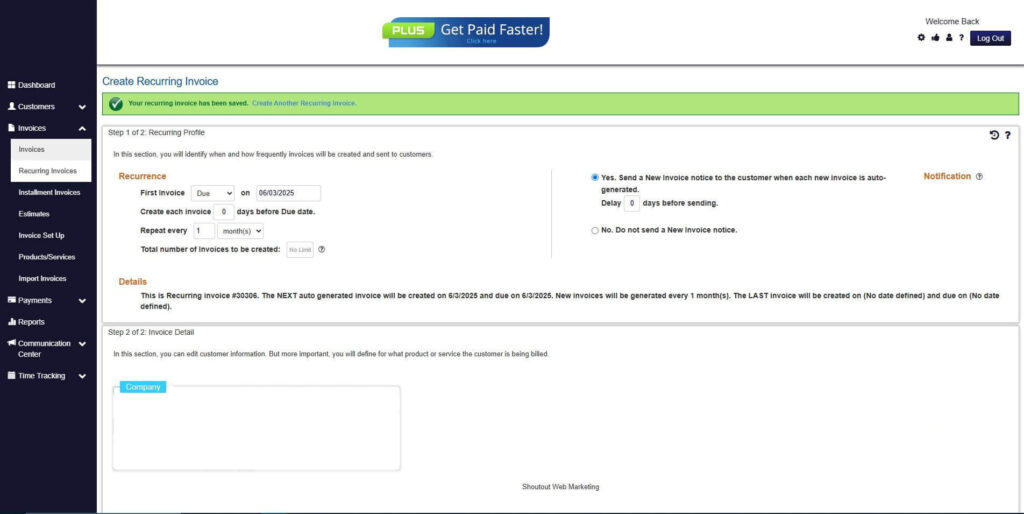
How to Create a New Recurring Invoice Using ReliaBills
Creating a New Recurring Invoice using ReliaBills involves the following steps:
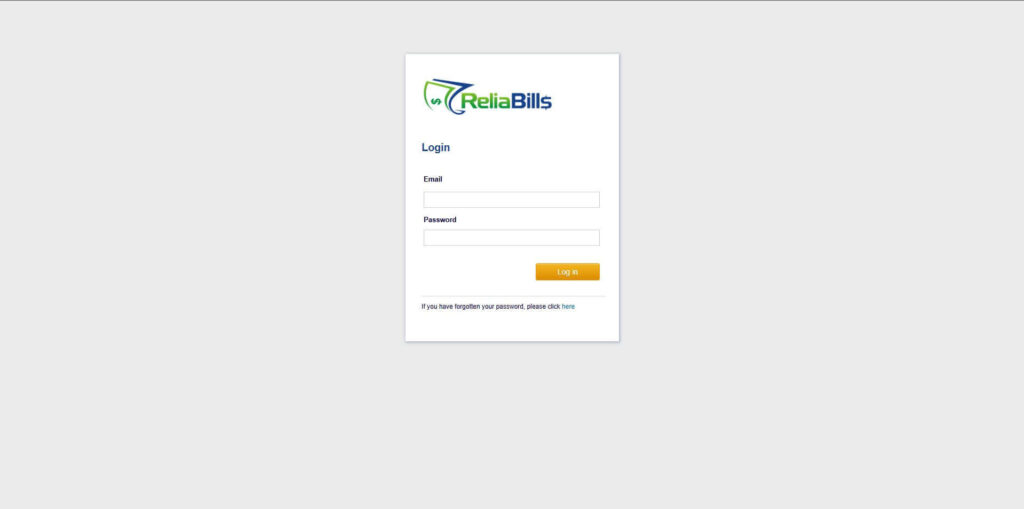
Step 1: Login to ReliaBills
- Access your ReliaBills Account using your login credentials. If you don’t have an account, sign up here.
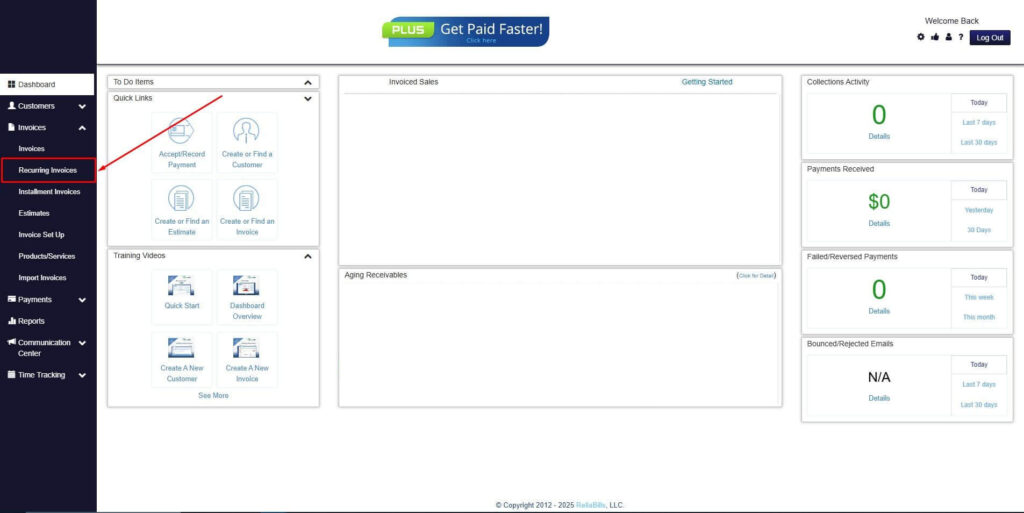
Step 2: Click on Recurring Invoices
- Navigate to the Invoices Dropdown and click on Recurring Invoices for an overview of the list of your existing customers.
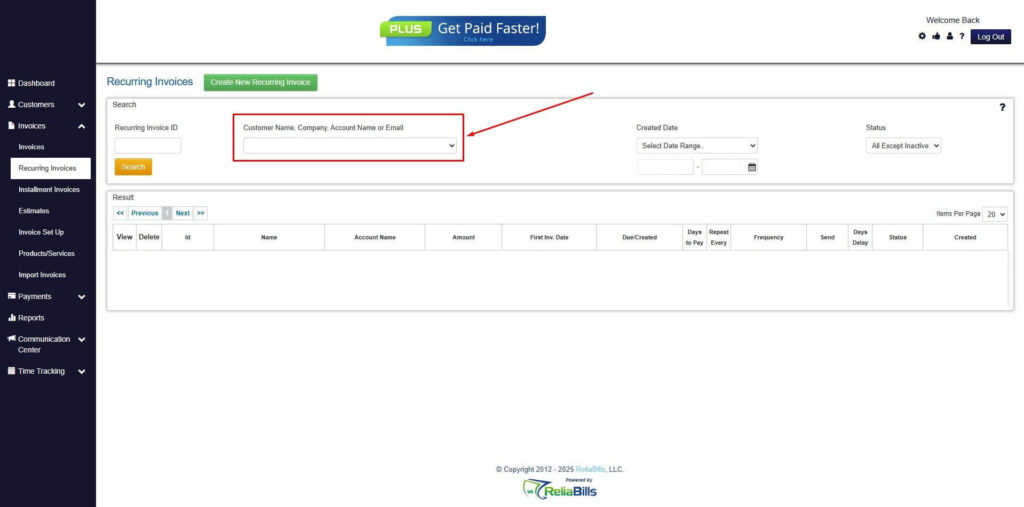
Step 3: Go to the Customers Tab
- If you have already created a customer, search for them in the Customers tab and make sure their status is “Active”.
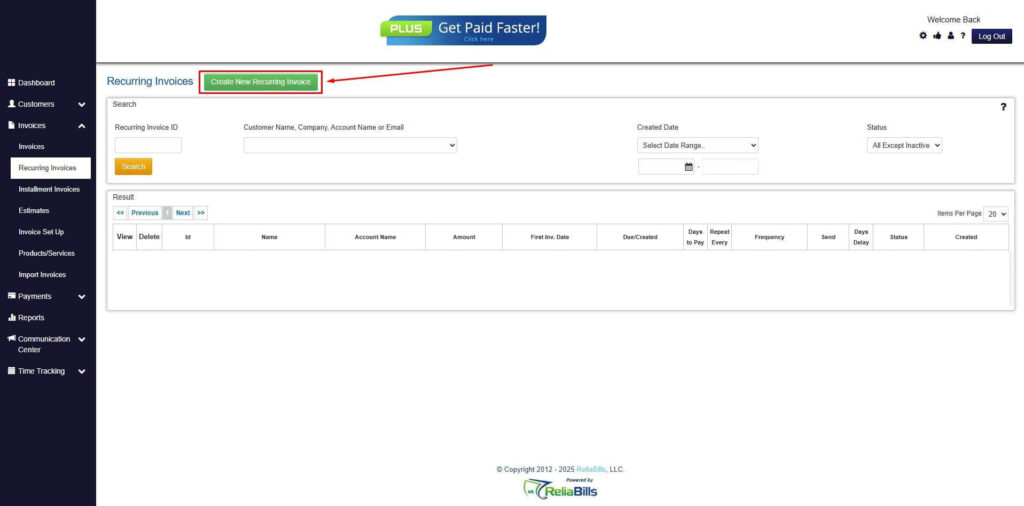
Step 4: Click the Create New Recurring Invoice
- If you haven’t created any customers yet, click the Create New Recurring Invoice to create a new customer.
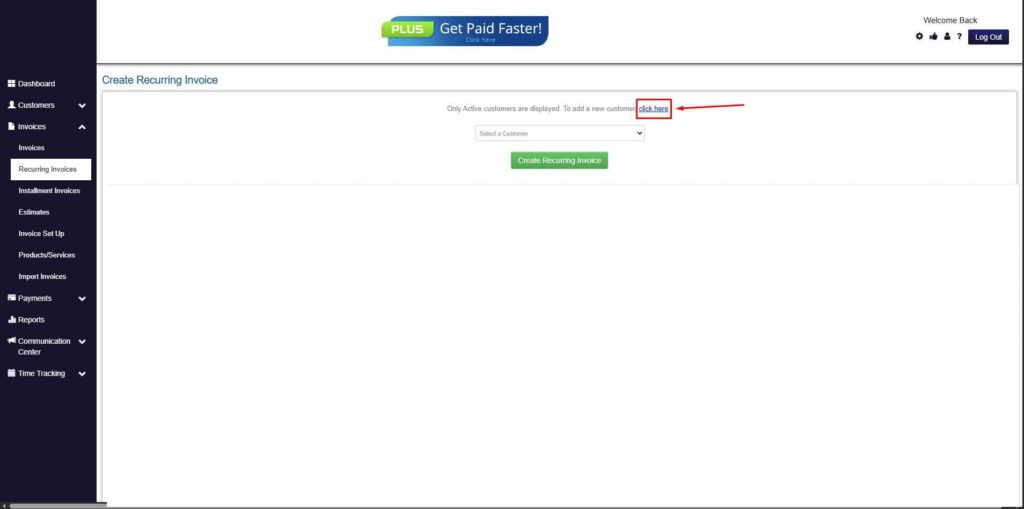
Step 5: Click on the “Click here” Button
- Click on the “Click here” button to proceed with the recurring invoice creation.
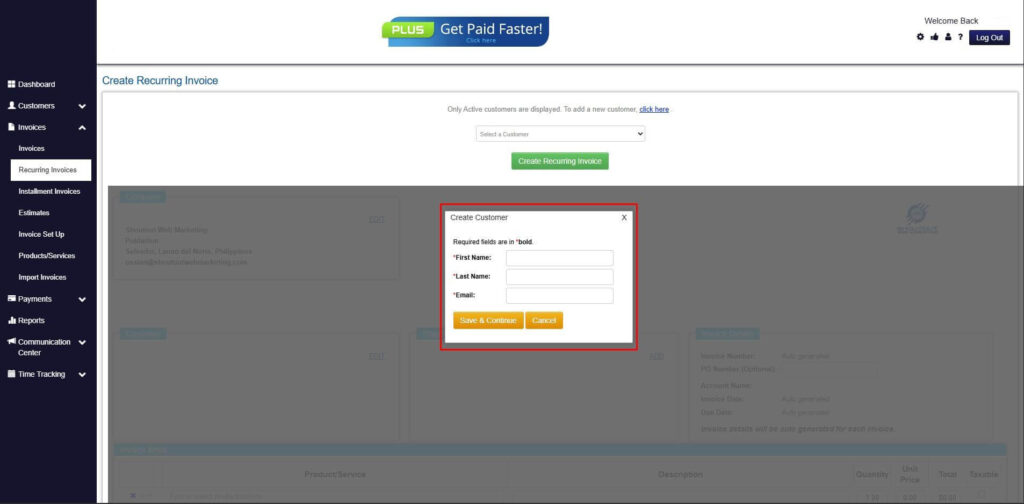
Step 6: Create Customer
- Provide your First Name, Last Name, and Email to proceed.
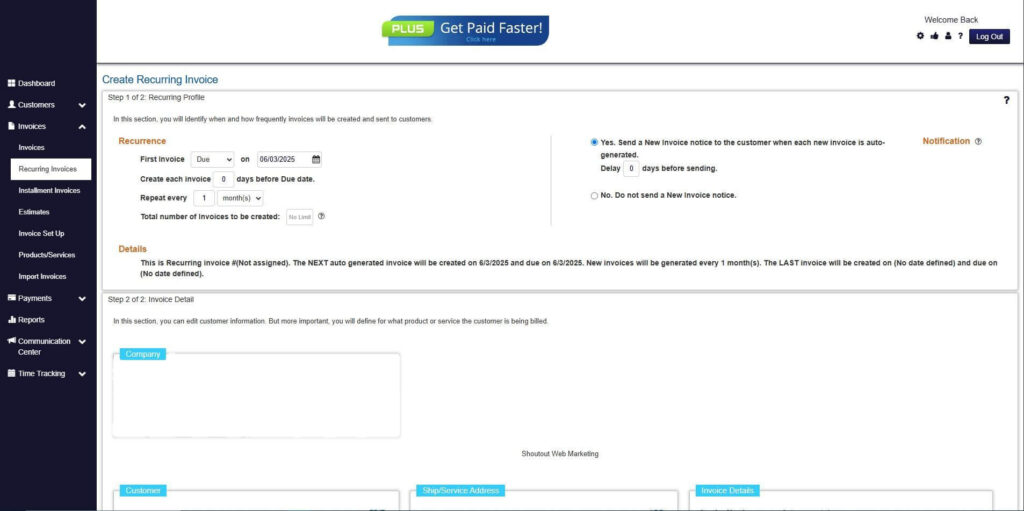
Step 7: Fill in the Create Recurring Invoice Form
- Fill in all the necessary fields.
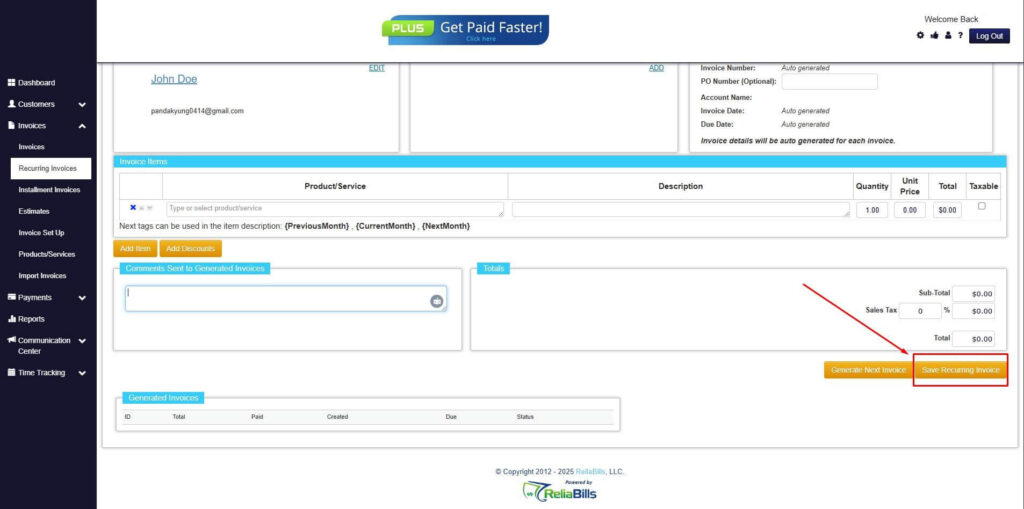
Step 8: Save Recurring Invoice
- After filling up the form, click “Save Recurring Invoice” to continue.
Step 9: Recurring Invoice Created
- Your Recurring Invoice has been created.
Frequently Asked Questions (FAQs)
1. When should a business switch to automated payment systems?
Businesses should switch when manual processes become inefficient or error-prone. Signs include late payments, high workload, and lack of visibility. Automation helps resolve these challenges.
2. What are the benefits of payment automation?
Automation improves efficiency, accuracy, and cash flow. It reduces manual work and ensures timely payments. This leads to better financial management.
3. How does recurring billing support automation?
Recurring billing automates repeat transactions and ensures consistent payment cycles. This reduces manual effort and improves predictability. It is a key component of automation.
4. Is it difficult to transition from manual to automated systems?
With the right tools and planning, the transition is smooth. Proper data migration and communication are essential. Automation systems are designed to be user-friendly.
5. Are automated payment systems secure?
Yes, modern systems use encryption and compliance standards to protect data. This ensures safe and reliable transactions. Security is a top priority.
Conclusion
Knowing when to automate payments is crucial for businesses aiming to improve efficiency and scale operations. Manual systems can no longer keep up with the demands of growing businesses, leading to delays and inefficiencies. Automated payment systems provide a reliable solution that streamlines billing and ensures consistent cash flow.
By combining automation with recurring billing, businesses can simplify their payment processes and reduce administrative workload. This leads to improved accuracy, better financial visibility, and stronger customer relationships.
As technology continues to evolve, adopting automated payment solutions is a strategic move for long-term success. Businesses that embrace automation will be better equipped to grow, adapt, and thrive in a competitive landscape.