
Recurring rent billing systems are essential tools for property managers and landlords, automating rent collection on a fixed schedule. These systems reduce manual effort, improve cash flow, and ensure tenants are billed accurately every month. Return invoices in recurring rent billing are necessary whenever adjustments are needed, such as correcting overcharges, handling lease changes, or managing early terminations. Accurate adjustments not only maintain financial accuracy but also strengthen tenant trust and satisfaction, preventing disputes and delays in rent collection.
Return invoices act as a formal mechanism to reverse or correct previously issued invoices. Without them, landlords may face discrepancies in tenant accounts, misreported revenue, or delayed reconciliations. They serve as an official record that an adjustment has been made, providing transparency for both tenants and property management teams. Leveraging these invoices within automated recurring billing systems ensures adjustments are efficient, documented, and accurate.
Using return invoices correctly is critical for maintaining organized financial records. They allow property managers to address billing errors proactively, avoiding negative impacts on tenant relationships. Additionally, they simplify audit processes by providing clear documentation of adjustments. Integrating return invoices into recurring rent billing systems ensures all changes are captured seamlessly and consistently.
What Are Return Invoices in Rent Billing Systems?
Return invoices are documents issued to reverse, correct, or adjust a previously sent rent invoice. They are primarily used when an error has been identified, such as overbilling, duplicate charges, or incorrect rent calculations. Unlike refunds or credit notes, return invoices directly modify tenant account balances and can be automatically linked to recurring billing schedules.
In rental management, return invoices ensure that corrections are applied accurately without manually altering prior statements. They maintain consistency in tenant accounts while providing formal documentation for audits or internal reporting. By clearly labeling these invoices as adjustments, property managers can prevent confusion and ensure transparency for tenants.
Return invoices differ from simple billing corrections or informal adjustments. While a credit note may indicate an amount owed back to a tenant, a return invoice formally updates the recurring rent schedule and ensures future invoices reflect the adjustment. This distinction is critical for proper accounting, financial tracking, and compliance with property management standards.
Understanding Recurring Rent Billing Systems
Recurring rent billing systems automate the invoicing process for tenants, allowing landlords to collect rent consistently on a set schedule. These systems can include features such as automated invoicing, scheduled reminders, auto-pay options, and real-time payment tracking. By automating repetitive billing tasks, property managers can focus on operations rather than chasing overdue rent or correcting errors manually.
In addition to streamlining rent collection, recurring billing systems provide enhanced reporting and financial tracking. Property managers gain insights into tenant payment patterns, outstanding balances, and potential cash flow issues. The integration of return invoices ensures that any necessary adjustments are reflected immediately, preserving accurate financial records.
Ultimately, recurring billing systems create predictable and reliable revenue streams. They reduce late payments, simplify tenant account management, and ensure consistent financial reporting. By incorporating return invoices in recurring rent billing, landlords can maintain accuracy while adapting to lease changes or other adjustments efficiently.
Why Return Invoices Are Important in Rent Billing
Return invoices are essential for correcting billing errors such as overcharges or duplicate invoices. They prevent miscalculations that could disrupt tenant accounts or financial reporting. By addressing mistakes promptly, landlords can avoid disputes and maintain tenant trust.
They also accommodate adjustments due to lease changes, rent concessions, or promotional discounts. Mid-lease modifications are common in rental management, and return invoices ensure that these changes are properly applied to recurring billing schedules. This keeps tenant accounts accurate and prevents long-term discrepancies.
Return invoices play a role in handling early move-outs, lease terminations, or prorated rent calculations. These situations require precise adjustments to avoid overbilling or underbilling. Using return invoices ensures that tenant balances reflect the correct amount owed at all times, maintaining financial accuracy and consistency.
How Return Invoices Function in Recurring Billing Systems
Return invoices reverse or adjust previously issued recurring invoices seamlessly. They automatically update tenant account balances and reflect changes in future billing cycles. This prevents errors from propagating into subsequent rent invoices and keeps accounts accurate.
These invoices synchronize with accounting and payment records, ensuring that all adjustments are properly recorded. Integration with recurring billing systems allows for automatic recalculation of totals, reducing manual effort and the likelihood of errors. This alignment ensures property managers can rely on precise data for reporting, budgeting, and auditing.
Return invoices also provide clear documentation for both tenants and property management teams. Each adjustment is recorded with references to the original invoice, enabling transparency and accountability. This thorough documentation reduces disputes, enhances audit readiness, and fosters trust in the billing process.
Key Features That Support Return Invoice Management
Automated Return Invoice Generation
Automatically creates adjustment invoices when billing errors, lease changes, or overcharges are detected. This reduces manual effort and ensures tenant accounts are corrected promptly. Automation also prevents recurring mistakes and ensures all corrections are documented.
Integration with Recurring Billing Schedules
Return invoices are synchronized with recurring rent cycles, so adjustments automatically reflect in future invoices. This prevents inconsistencies between tenant accounts and upcoming charges. Integration ensures smooth, accurate financial tracking without manual reconciliation.
Real-Time Balance Adjustments
Tenant balances are immediately updated when a return invoice is issued. Property managers can see the correct amounts owed at any moment, preventing disputes and overdue payments. Real-time updates also improve cash flow visibility.
Audit Trails and Reporting Tools
Every return invoice is logged with references to the original invoice, reasons for adjustment, and timestamps. This provides transparency and accountability for both property managers and tenants. Detailed reports simplify audits and financial reviews.
Customizable Billing Rules and Adjustments
Property managers can set rules for prorated rent, concessions, discounts, or early terminations. Flexible rules ensure adjustments match lease agreements and company policies. This customization reduces errors and supports consistent billing practices.
Tenant Communication and Notification Features
Tenants are notified of adjustments with clear explanations, ensuring transparency. Notifications prevent confusion and enhance trust. Effective communication also reduces disputes and improves tenant satisfaction.
Common Scenarios for Using Return Invoices in Rent Billing
- Overbilling or Duplicate Rent Charges: Corrects mistakes from double invoicing or miscalculated rent. Ensures tenants are not overcharged and accounts remain accurate. This scenario is common in high-volume recurring billing systems.
- Mid-Lease Rent Adjustments or Concessions: Applies discounts, rent freezes, or promotional rates negotiated during a lease. Keeps recurring billing accurate without affecting prior invoices. Ensures fairness and consistency for tenants.
- Utility Billing Corrections Included in Rent: Adjusts errors in utility pass-through charges billed with rent. Ensures tenants are billed for actual usage, avoiding disputes. Improves transparency in combined billing statements.
- Early Lease Termination or Move-Out Adjustments: Prorates rent or refunds unused rent for early terminations. Ensures tenant accounts reflect the correct balance at move-out. Supports smooth lease closure and accurate record-keeping.
- Billing Errors in Recurring Invoices: Corrects mistakes in automated recurring invoices before they propagate. Prevents future discrepancies and maintains financial integrity. Reduces manual reconciliation effort for property managers.
The Role of Automation in Managing Return Invoices
Automation reduces the manual effort required to issue return invoices in recurring rent billing systems. By automatically generating adjustments, errors can be corrected quickly without impacting the broader billing schedule. This decreases administrative workload and ensures consistent accuracy across multiple tenant accounts.
Automated systems also process adjustments faster, ensuring that tenant balances reflect the correct amounts in real time. Integration with recurring billing allows adjustments to update future invoices without manual intervention. High-volume properties benefit especially from automated handling of corrections, minimizing delays and errors.
Automation additionally improves efficiency and transparency in reporting. Property managers can track all return invoices, monitor adjustments, and generate audit-ready reports instantly. This reduces the risk of missed adjustments and ensures compliance with accounting standards.
Best Practices for Managing Return Invoices in Rent Billing Systems
Issue Return Invoices Promptly
Address errors immediately to prevent account discrepancies from affecting future billing cycles. Timely action reduces disputes and maintains tenant confidence.
Maintain Clear Documentation
Include references to original invoices, reasons for adjustments, and approvals. Proper documentation supports audits and improves transparency.
Communicate Changes Transparently with Tenants
Notify tenants about adjustments, reasons, and updated balances. Clear communication reduces confusion and strengthens landlord-tenant relationships.
Regularly Audit Billing and Adjustment Processes
Conduct routine reviews to identify recurring issues and improve system accuracy. Audits also help refine recurring billing rules and prevent errors.
Use Automated Systems for Consistency and Accuracy
Automation ensures adjustments are applied correctly and reflected in all relevant accounts. Reduces human error and streamlines large-scale recurring billing management.
How Return Invoices Improve Tenant Experience and Trust
Return invoices create transparency by clearly documenting billing corrections. Tenants understand why adjustments were made, which reduces confusion or disputes. Transparent communication strengthens trust between tenants and property management teams.
Adjustments are resolved faster, allowing tenants to see accurate balances immediately. Prompt corrections prevent delays in recurring billing and enhance the overall tenant experience. Accuracy in billing statements reinforces confidence in the property management process.
Additionally, consistent handling of return invoices fosters better long-term relationships. Tenants are more likely to feel that their accounts are managed fairly. This can reduce complaints, late payments, and turnover, supporting efficient property management.
Key Benefits of Using Return Invoices in Rent Billing
- Improves Billing Accuracy and Financial Tracking: Ensures tenant accounts and property revenue are precise. Minimizes discrepancies between billing, accounting, and tenant records.
- Reduces Disputes and Tenant Complaints: Transparent adjustments prevent misunderstandings and disputes. Enhances tenant satisfaction and trust in the billing process.
- Ensures Compliance and Audit Readiness: Provides a reliable record for internal and external audits. Supports proper accounting practices and regulatory compliance.
- Streamlines Adjustment Processes: Reduces manual effort required to correct invoices. Automated processes save time and improve operational efficiency.
- Enhances Operational Efficiency: Allows property managers to focus on strategic tasks instead of manual reconciliations. Supports consistent cash flow management and tenant account accuracy.
- Supports Better Decision-Making: Accurate adjustment data helps managers track revenue trends, lease compliance, and tenant payment behavior. Facilitates informed planning and resource allocation.
How ReliaBills Supports Return Invoices in Recurring Rent Billing
ReliaBills automates invoice creation and management, reducing errors in recurring rent billing and adjustments. Property managers can issue return invoices quickly and accurately, ensuring tenant accounts remain correct. Real-time balance updates and reporting features improve transparency and operational control.
ReliaBills’ recurring billing functionality streamlines rent collection while automating adjustments. Predefined templates, rules, and auto-pay options ensure that changes in rent, concessions, or prorated amounts are applied consistently. This reduces manual work and prevents mistakes in future billing cycles.
ReliaBills PLUS offers advanced automation, audit trails, reporting dashboards, and tenant communication tools. Managers can track all return invoices, monitor adjustments, and communicate changes efficiently. These capabilities provide a comprehensive solution to reduce return invoices in recurring rent billing errors while enhancing tenant trust and operational efficiency.
How to Create a New Recurring Invoice Using ReliaBills
Creating a New Recurring Invoice using ReliaBills involves the following steps:
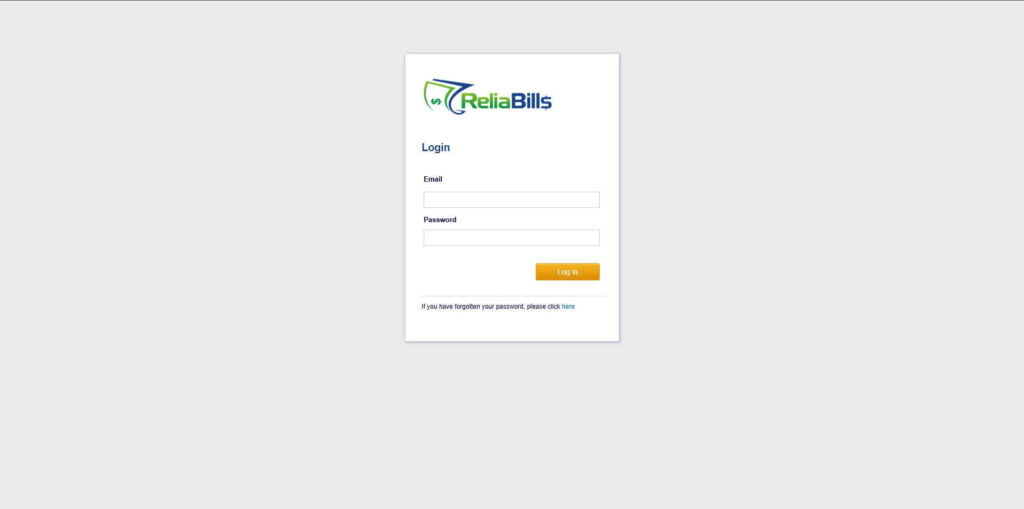
Step 1: Login to ReliaBills
- Access your ReliaBills Account using your login credentials. If you don’t have an account, sign up here.
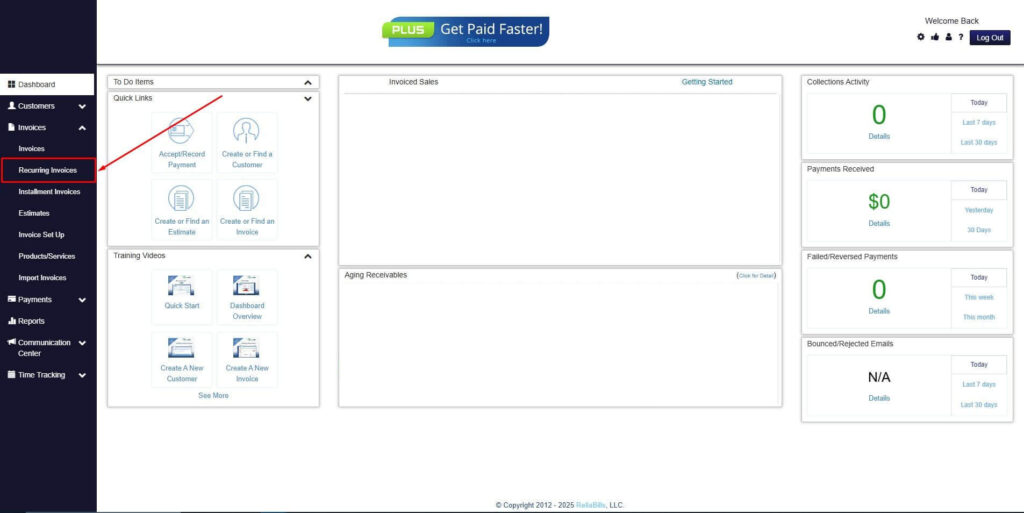
Step 2: Click on Recurring Invoices
- Navigate to the Invoices Dropdown and click on Recurring Invoices for an overview of the list of your existing customers.
Step 3: Go to the Customers Tab
- If you have already created a customer, search for them in the Customers tab and make sure their status is “Active”.
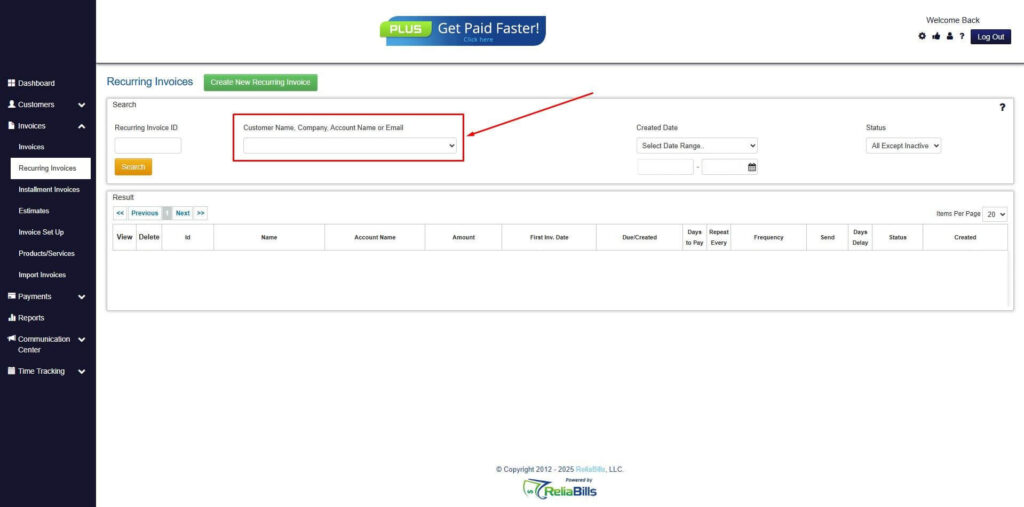
Step 4: Click the Create New Recurring Invoice
- If you haven’t created any customers yet, click the Create New Recurring Invoice to create a new customer.
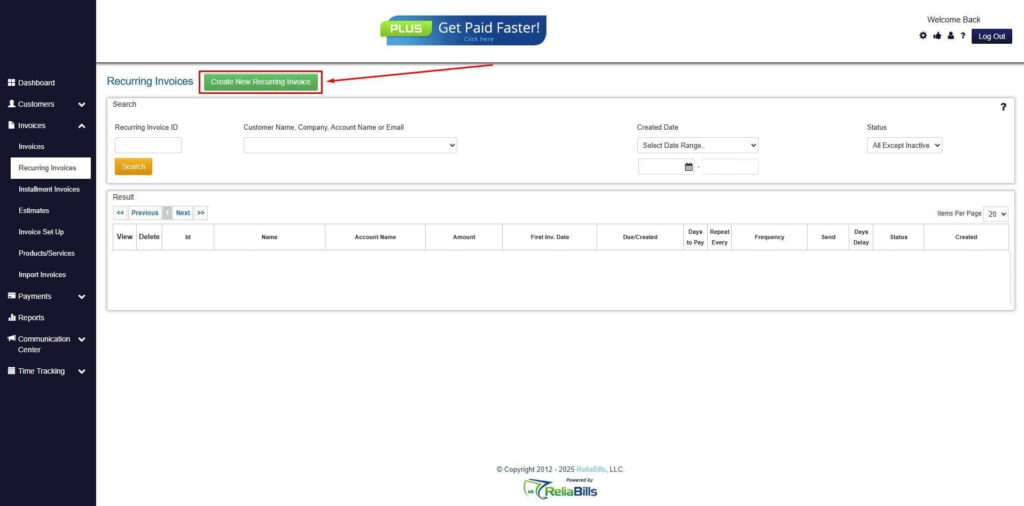
Step 5: Click on the “Click here” Button
- Click on the “Click here” button to proceed with the recurring invoice creation.
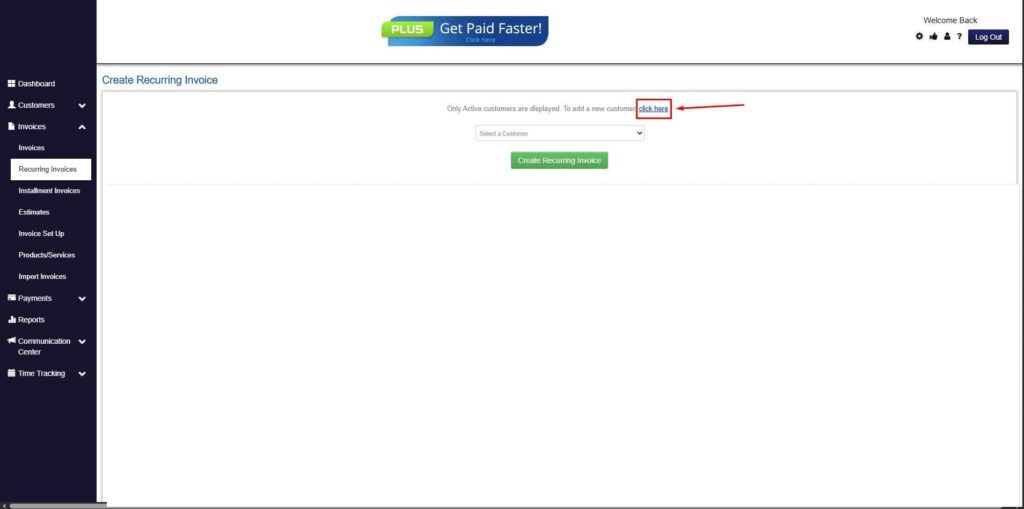
Step 6: Create Customer
- Provide your First Name, Last Name, and Email to proceed.
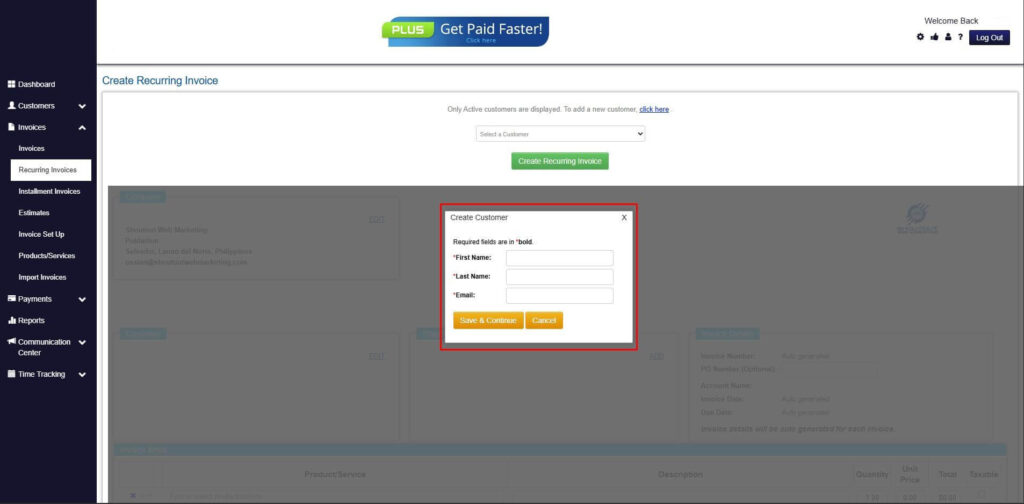
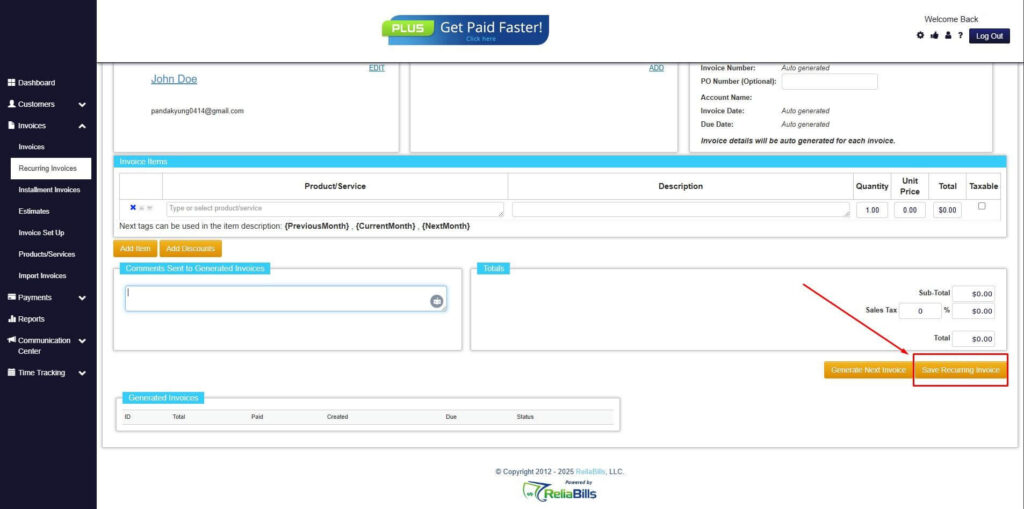
Step 7: Fill in the Create Recurring Invoice Form
- Fill in all the necessary fields.
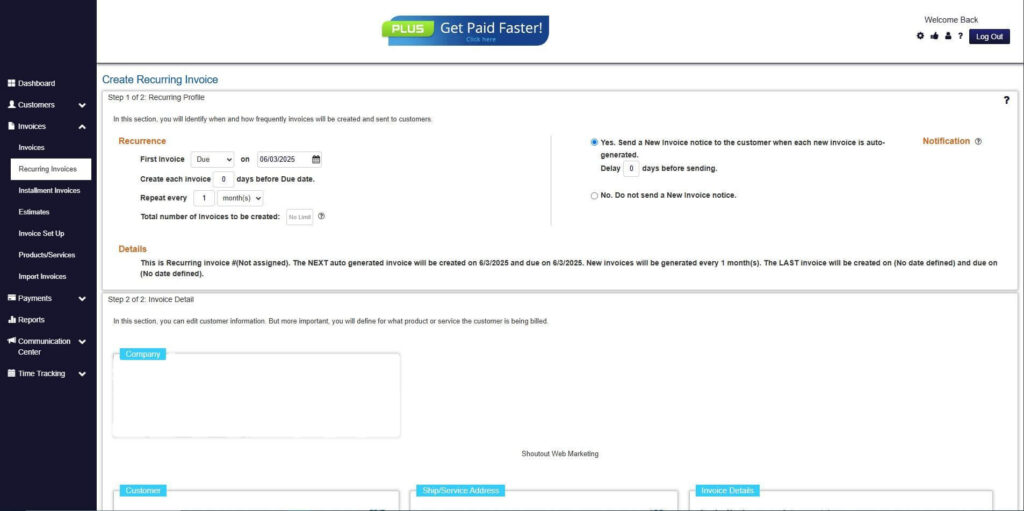
Step 8: Save Recurring Invoice
- After filling up the form, click “Save Recurring Invoice” to continue.
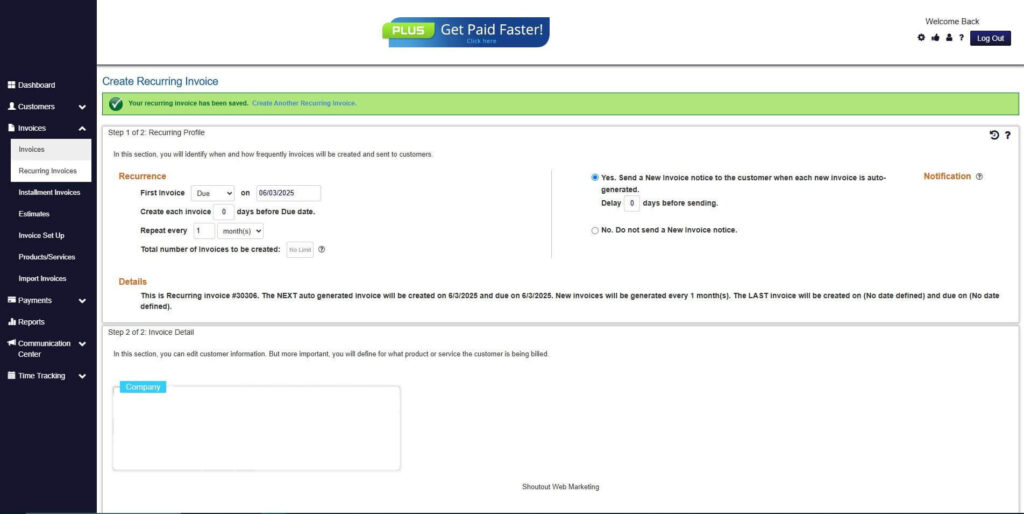
Step 9: Recurring Invoice Created
- Your Recurring Invoice has been created.
Frequently Asked Questions (FAQs)
1. What is a return invoice in rent billing?
A return invoice is issued to correct, reverse, or adjust a previously sent rent invoice. It ensures tenant accounts and future recurring invoices reflect accurate amounts.
2. How do return invoices affect recurring rent payments?
They automatically update tenant balances and subsequent invoices. This prevents errors from carrying forward in the recurring billing cycle.
3. Can return invoices be automated?
Yes, automation allows adjustments to be applied instantly and consistently, reducing manual effort and errors.
4. When should a return invoice be issued?
Return invoices should be issued as soon as errors, lease adjustments, or discrepancies are identified. Prompt issuance maintains accuracy and tenant trust.
5. How do return invoices differ from refunds or credits?
Return invoices update tenant balances directly within recurring billing systems, while refunds or credits may only indicate amounts owed without altering scheduled invoices.
Conclusion
Return invoices play a critical role in maintaining accurate recurring rent billing systems. They correct errors, adjust rent for lease changes, and ensure tenant account balances are precise. Leveraging automation and best practices reduces manual effort, prevents mistakes, and improves efficiency. By adopting automated recurring billing solutions with return invoice capabilities, property managers can enhance tenant trust, streamline operations, and maintain financial accuracy.