
Managing overdue invoices is one of the most critical challenges businesses face, especially when it directly impacts cash flow. When payments are delayed, businesses may struggle to cover operational expenses, invest in growth, or maintain financial stability. Over time, a growing list of unpaid invoices can create serious financial strain.
One of the main reasons overdue invoices become a problem is poor tracking. Without a clear system in place, businesses may miss follow-ups, forget due dates, or lose visibility into outstanding balances. This leads to delayed collections and, in some cases, unpaid invoices that turn into bad debt.
Understanding how to track overdue invoices effectively is essential for maintaining consistent cash flow. By using automation and modern billing software, businesses can streamline tracking, improve follow-ups, and ensure payments are collected on time.
What Are Overdue Invoices?
Overdue invoices are bills that have not been paid by the agreed-upon due date. Once the payment deadline passes, the invoice is considered past due and requires immediate attention. These invoices represent outstanding revenue that has yet to be collected.
Common causes of overdue invoices include late customer payments, unclear payment terms, or missed reminders. In some cases, customers may simply forget to pay, while in others, disputes or billing errors may delay the process. Without proper tracking, these issues can go unnoticed.
It is important to differentiate overdue invoices from pending or unpaid invoices. Pending invoices are still within the payment period, while overdue invoices require follow-up action. Recognizing this distinction helps businesses prioritize collections more effectively.
Why Tracking Overdue Invoices Is Important
Tracking overdue invoices plays a key role in maintaining financial health and operational efficiency.
Maintaining steady cash flow is one of the primary benefits. When businesses actively monitor overdue invoices, they can take action quickly and ensure payments are collected on time. This helps avoid cash shortages and supports daily operations.
It also reduces the risk of bad debt and write-offs. By addressing overdue invoices early, businesses can recover payments before they become uncollectible. This improves overall financial performance.
Additionally, consistent tracking improves customer payment behavior. When customers know that invoices are monitored and follow-ups are timely, they are more likely to pay on time. This also enhances financial reporting and forecasting accuracy.
Common Challenges in Tracking Overdue Payments
Tracking overdue payments can be difficult without the right systems in place.
One major challenge is the lack of real-time visibility into invoice status. Without up-to-date information, businesses may not know which invoices are overdue. This delays follow-ups and increases outstanding balances.
Manual tracking across spreadsheets or multiple systems also creates inefficiencies. Data can become inconsistent or outdated, leading to confusion and errors. This makes it harder to manage collections effectively.
Missed reminders and inconsistent follow-ups further complicate the process. Without automation, it is easy to overlook important actions. Businesses may also struggle to prioritize which overdue accounts need immediate attention.
How to Keep Track of Overdue Invoices and Payments
To effectively manage overdue invoices, businesses need a structured and proactive approach.
Start by using centralized billing software to monitor all invoices in one place. This eliminates the need for multiple tools and provides a clear overview of outstanding payments. A single system improves organization and efficiency.
Set up automated alerts for due and overdue payments. These notifications ensure that both businesses and customers are aware of upcoming deadlines. Automated reminders reduce the chances of missed payments.
Tracking payment status in real time is also essential. This allows businesses to identify overdue invoices immediately and take action. Segmenting customers based on payment behavior can help prioritize follow-ups and improve collection strategies.
Key Features to Look for in Tracking Systems
Real-time invoice tracking dashboards
A real-time dashboard provides a centralized view of all invoices, including paid, pending, and overdue statuses. This allows businesses to instantly identify which accounts need attention without manually checking multiple records. With accurate, up-to-date data, teams can act faster and make better financial decisions.
Automated reminders and follow-up notifications
Automated reminders ensure customers are notified before and after invoice due dates without manual effort. This reduces the chances of missed payments caused by forgetfulness or miscommunication. Consistent follow-ups also improve customer accountability and increase on-time payment rates.
Recurring billing for repeat customers
Recurring billing automatically generates invoices for customers on a fixed schedule, eliminating the need for repetitive manual work. This ensures invoices are always sent on time, reducing delays that can lead to overdue payments. It also creates a more predictable billing cycle, making tracking easier and more efficient.
Auto-pay and multiple payment options
Offering auto-pay allows customers to authorize automatic payments, ensuring invoices are settled on time. Multiple payment options, such as credit cards, bank transfers, or digital wallets, make it easier for customers to pay. This flexibility reduces friction and significantly lowers the risk of overdue invoices.
Customer account and payment history
Access to detailed customer payment history helps businesses understand payment patterns and behaviors. This information is useful for identifying high-risk accounts and prioritizing follow-ups. It also improves customer relationship management by providing context for communication.
Reporting and analytics tools
Reporting tools provide insights into overdue trends, payment performance, and overall cash flow. Businesses can use this data to identify inefficiencies and optimize their billing processes. Advanced analytics also support better forecasting and long-term financial planning.
The Role of Recurring Billing in Managing Overdue Payments
Recurring billing plays a crucial role in reducing overdue invoices by ensuring consistent invoice generation. When invoices are created automatically on a fixed schedule, businesses avoid delays and maintain regular billing cycles. This consistency improves tracking and reduces missed invoices.
Automated payment schedules also help reduce missed payments. Customers are billed and charged according to predefined terms, minimizing the need for manual follow-ups. This leads to more reliable and timely payments.
Additionally, recurring billing improves predictability and reduces manual intervention. Businesses can focus on monitoring performance rather than managing repetitive tasks. This enhances efficiency and financial stability.
Best Practices for Managing Overdue Invoices
Send invoices promptly and clearly define due dates
Sending invoices immediately after delivering a product or service sets clear expectations for payment. Clearly stated due dates help avoid confusion and ensure customers know when payment is required. This proactive approach reduces delays and improves overall payment timelines.
Automate reminders before and after due dates
Automated reminders keep invoices top of mind for customers and reduce the need for manual follow-ups. Notifications sent before the due date help prevent invoices from becoming overdue. Follow-ups after the due date reinforce urgency and encourage faster payment.
Offer flexible payment options to customers
Providing multiple payment methods makes it easier for customers to complete transactions quickly. Flexibility reduces barriers that might otherwise delay payments. This approach also improves the overall customer experience and satisfaction.
Regularly review overdue accounts and follow up
Consistently monitoring overdue invoices ensures no account is overlooked. Regular reviews help businesses prioritize high-value or long-overdue accounts. Timely follow-ups increase the likelihood of collecting payments before they become bad debt.
Encourage customers to enroll in auto-pay
Auto-pay simplifies the payment process by automatically charging customers on due dates. This reduces reliance on manual actions and minimizes the risk of missed payments. Over time, it creates a more reliable and predictable revenue stream.
How Automation Improves Payment Collection
Automation transforms how businesses handle overdue invoices by reducing manual tracking and administrative workload. This allows teams to focus on higher-value activities instead of repetitive tasks. Efficiency improves across the board.
It also ensures timely communication with customers through automated reminders and updates. This reduces delays and improves payment behavior. Consistent communication is key to successful collections.
Automation speeds up payment collection by streamlining processes and reducing errors. Accurate and up-to-date data ensures better tracking and faster resolution of issues.
Key Benefits of Effective Overdue Invoice Tracking
Reduces overdue and late payments
Effective tracking systems help businesses identify overdue invoices quickly and take immediate action. Automated reminders and consistent monitoring encourage customers to pay on time. This leads to a noticeable reduction in late payments.
Improves cash flow and financial stability
Faster payment collection ensures a steady flow of income, which is essential for daily operations. Businesses can better manage expenses, payroll, and investments with consistent cash flow. This stability supports long-term growth and resilience.
Saves time on collections and follow-ups
Automation reduces the need for manual tracking and repetitive communication tasks. Teams can focus on strategic activities instead of chasing payments. This improves overall productivity and operational efficiency.
Enhances customer accountability
When customers know their payments are being tracked and followed up consistently, they are more likely to pay on time. Clear communication and reminders reinforce payment expectations. This builds a culture of accountability and reliability.
Provides better financial insights
Tracking systems generate valuable data on payment trends and customer behavior. Businesses can use these insights to refine their billing strategies and improve performance. Better data leads to more informed decision-making and stronger financial management.
Common Use Cases
- Small and medium-sized businesses: SMBs benefit from streamlined tracking and reduced administrative workload. Automation helps them stay organized and efficient. It also improves cash flow.
- Service providers with recurring clients: Agencies and consultants can automate invoicing and tracking for repeat clients. This ensures consistent payments. It also reduces manual work.
- Subscription-based companies: These businesses rely on recurring billing for revenue. Automated tracking ensures payments are collected on time. This supports predictable income.
- Property and tenant billing: Landlords can track rent payments and identify overdue accounts بسهولة. Automation simplifies management and improves collection rates.
- B2B companies with extended payment terms: Businesses dealing with long payment cycles need strong tracking systems. Real-time visibility helps manage multiple invoices. This reduces overdue risks.
How ReliaBills Helps Track Overdue Invoices and Customer Payments
Managing overdue invoices becomes far more efficient with a centralized platform like ReliaBills that offers advanced tools for tracking and payment management. Businesses gain real-time visibility into invoice statuses, due dates, and payment activity, making it easier to identify overdue accounts quickly. Automated reminders and notifications ensure consistent follow-ups without manual effort. This helps reduce delays and improves overall cash flow control.
ReliaBills stands out with its powerful recurring billing and auto-pay features, which significantly reduce the likelihood of overdue payments. Businesses can automate repeat invoices, schedule billing cycles, and securely store customer payment methods for seamless transactions. This ensures payments are collected on time while simplifying the tracking of ongoing billing activities. By automating repeat transactions, businesses can maintain predictable revenue and minimize outstanding balances.
For businesses looking to scale, ReliaBills PLUS provides advanced capabilities such as detailed reporting, customizable automation workflows, and enhanced customer management tools. These features offer deeper insights into payment behavior and overdue trends, allowing businesses to refine their strategies. With improved visibility and control, businesses can proactively manage overdue invoices and optimize their billing processes. ReliaBills PLUS empowers organizations to achieve greater efficiency and long-term financial stability.
How to Create a New Recurring Invoice Using ReliaBills
Creating a New Recurring Invoice using ReliaBills involves the following steps:
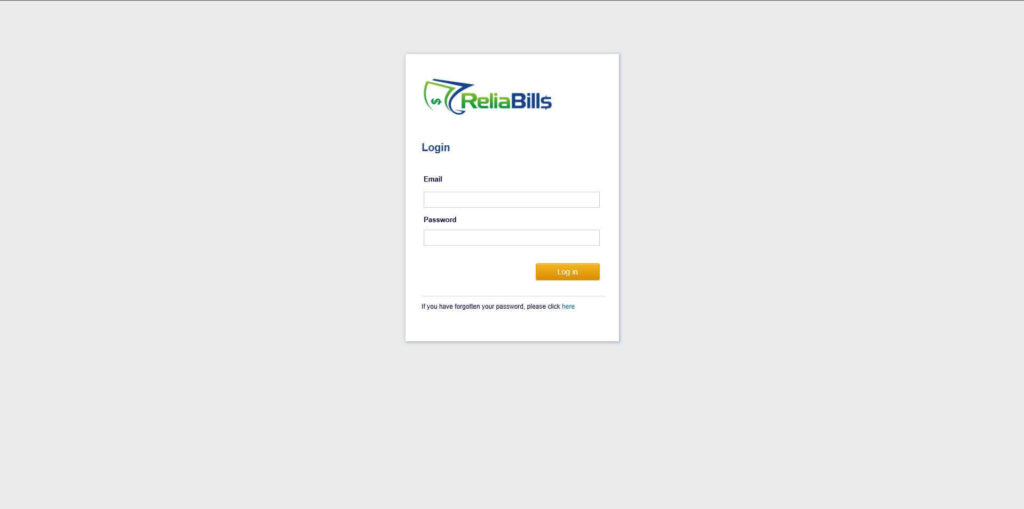
Step 1: Login to ReliaBills
- Access your ReliaBills Account using your login credentials. If you don’t have an account, sign up here.
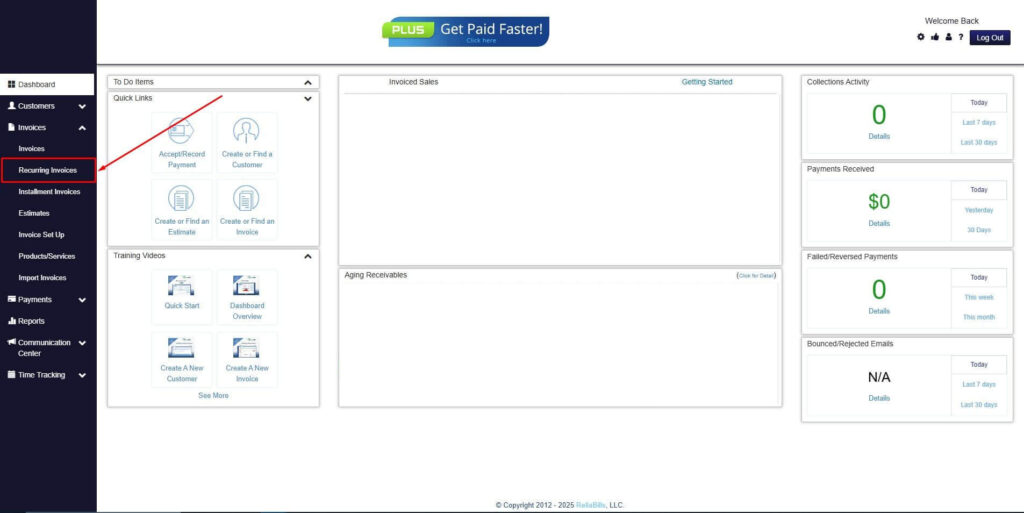
Step 2: Click on Recurring Invoices
- Navigate to the Invoices Dropdown and click on Recurring Invoices for an overview of the list of your existing customers.
Step 3: Go to the Customers Tab
- If you have already created a customer, search for them in the Customers tab and make sure their status is “Active”.
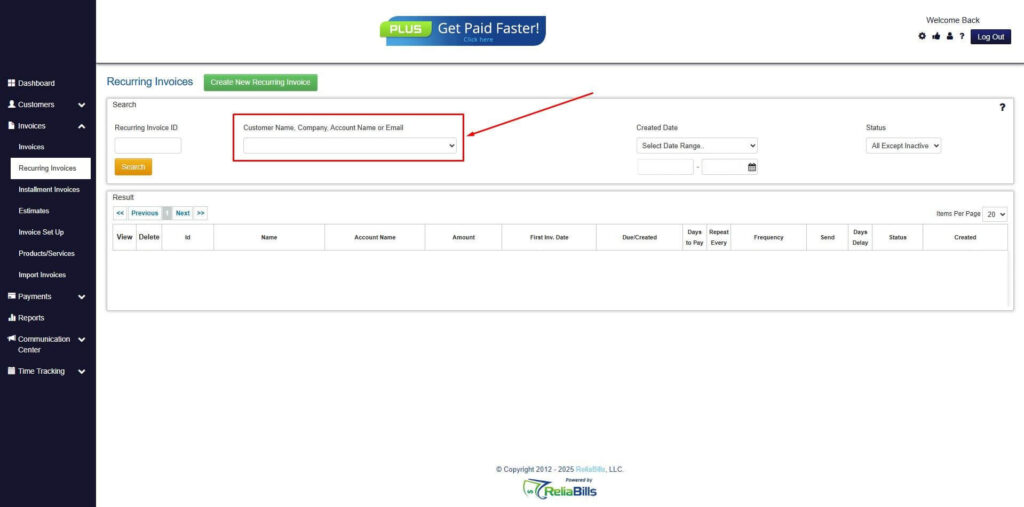
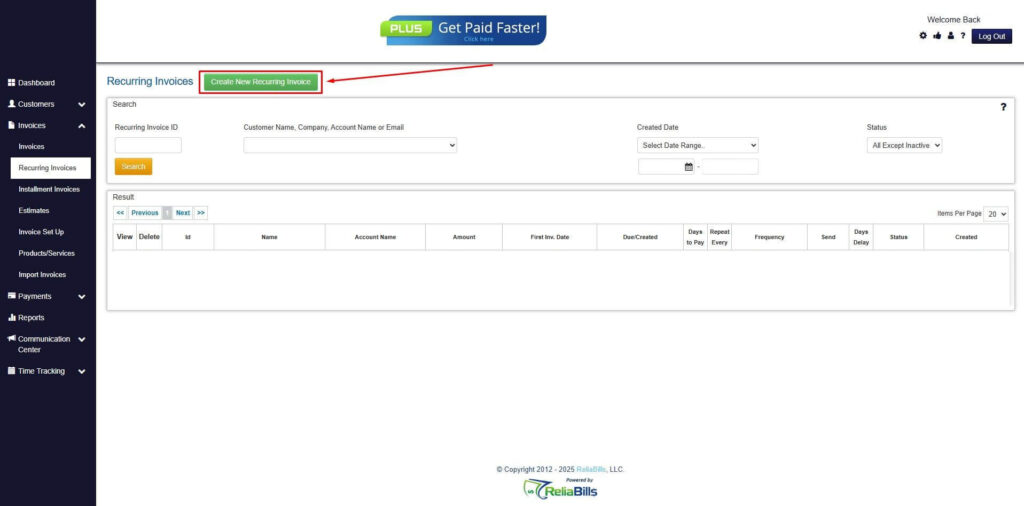
Step 4: Click the Create New Recurring Invoice
- If you haven’t created any customers yet, click the Create New Recurring Invoice to create a new customer.
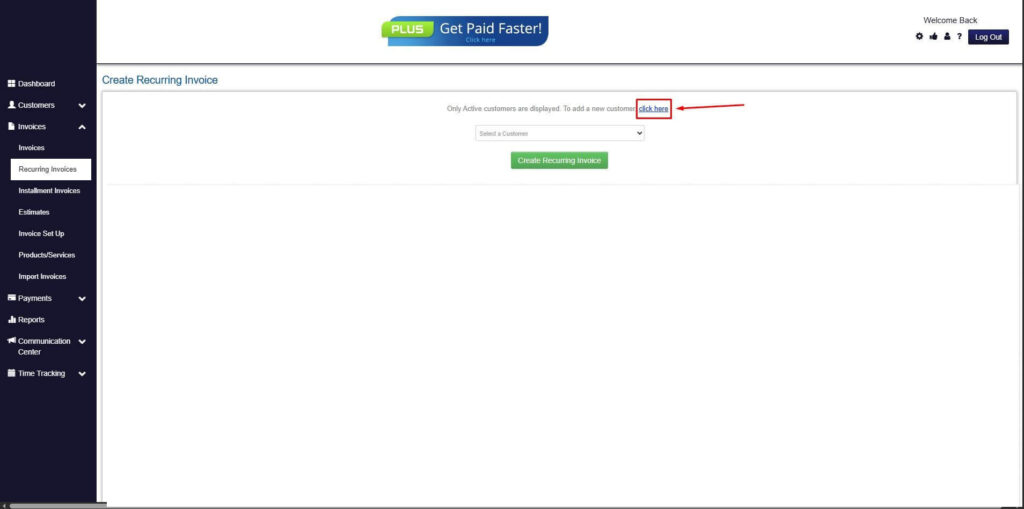
Step 5: Click on the “Click here” Button
- Click on the “Click here” button to proceed with the recurring invoice creation.
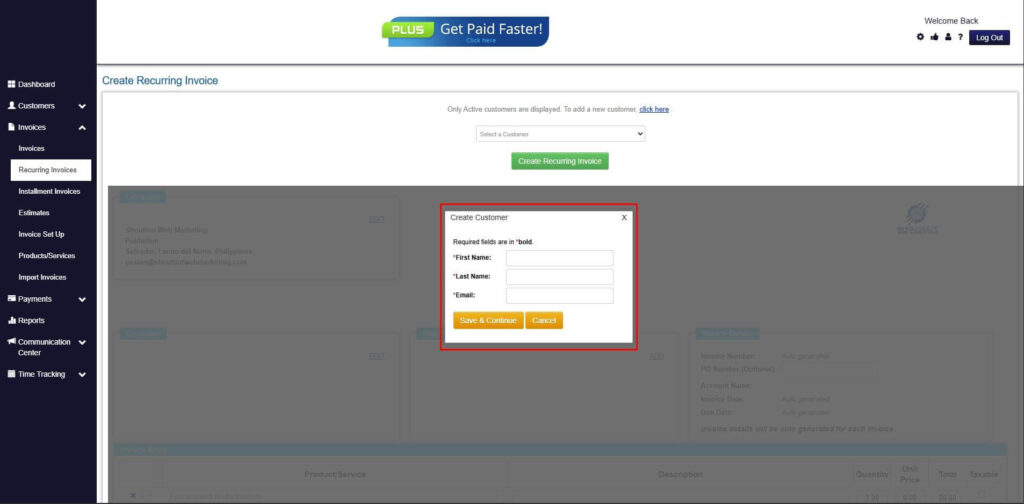
Step 6: Create Customer
- Provide your First Name, Last Name, and Email to proceed.
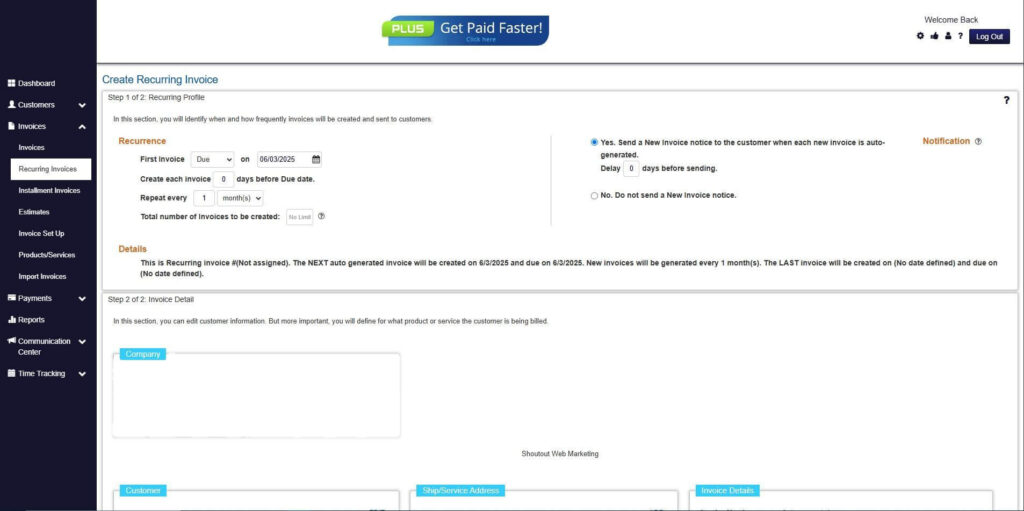
Step 7: Fill in the Create Recurring Invoice Form
- Fill in all the necessary fields.
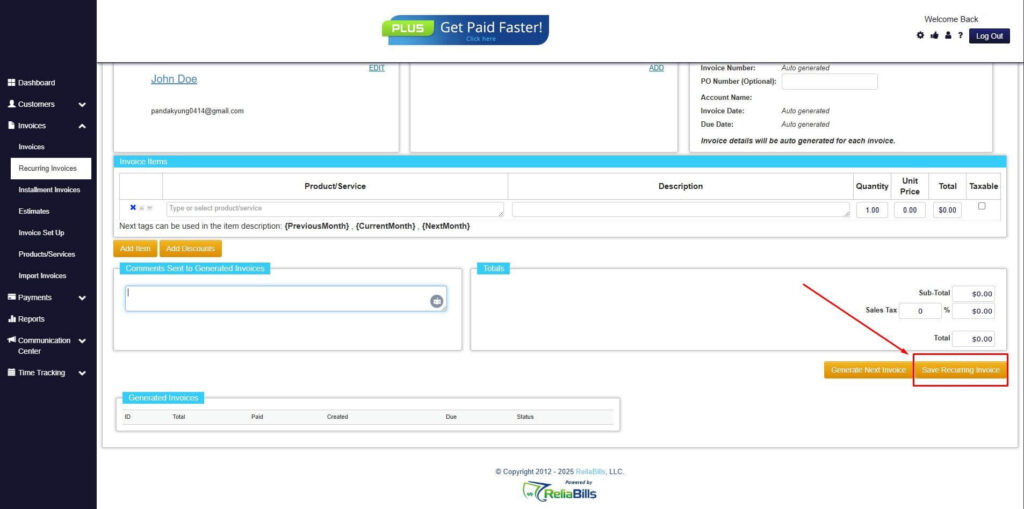
Step 8: Save Recurring Invoice
- After filling up the form, click “Save Recurring Invoice” to continue.
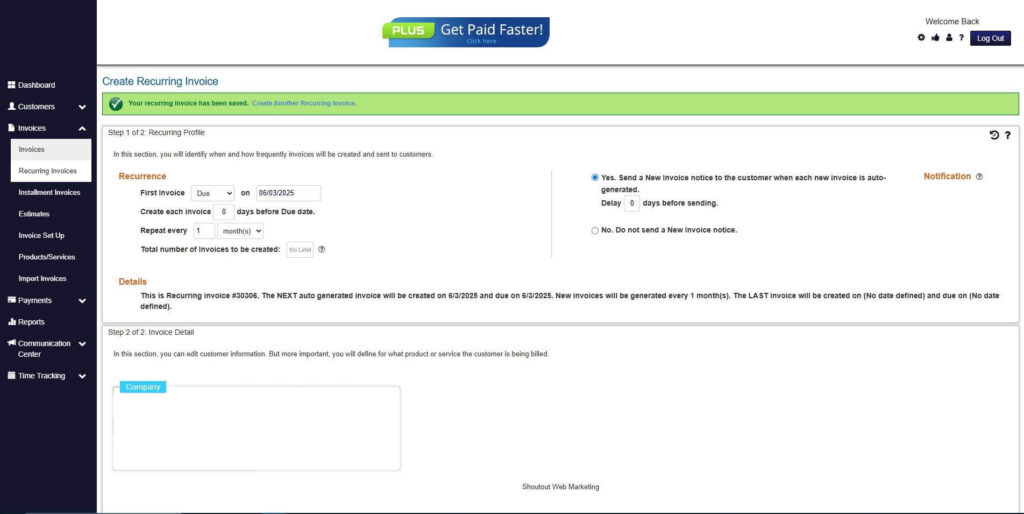
Step 9: Recurring Invoice Created
- Your Recurring Invoice has been created.
Frequently Asked Questions (FAQs)
1. What is the best way to track overdue invoices?
The best way is to use automated billing software with real-time tracking features. This ensures accurate and up-to-date information. Automation improves efficiency and reduces errors.
2. How can automation reduce overdue payments?
Automation sends reminders, updates invoice statuses, and processes payments automatically. This reduces delays and improves consistency. It also minimizes manual effort.
3. Is recurring billing effective for managing payments?
Yes, recurring billing ensures invoices are generated and paid on schedule. This reduces missed payments and improves predictability. It is highly effective for repeat transactions.
4. How often should businesses follow up on overdue invoices?
Follow-ups should begin immediately after the due date and continue regularly. Automated reminders can handle this efficiently. Consistent communication improves collection rates.
5. What tools are best for tracking payments?
Tools with real-time tracking, automation, and reporting features are ideal. Platforms like ReliaBills provide comprehensive solutions. These tools improve accuracy and efficiency.
Conclusion
Understanding how to track overdue invoices is essential for maintaining healthy cash flow and financial stability. Without proper tracking, businesses risk delayed payments, increased workload, and potential revenue loss. A structured approach combined with the right tools can make a significant difference.
Automation and recurring billing play a vital role in simplifying invoice tracking and improving payment collection. These solutions reduce manual effort, enhance accuracy, and ensure consistent follow-ups. Businesses can operate more efficiently and focus on growth.
As digital solutions continue to evolve, adopting automated billing systems is a smart move for any business. With better tracking, improved visibility, and streamlined processes, companies can achieve stronger financial control and long-term success.