

Late invoice payments are a common challenge that disrupts cash flow and overall business stability. When customers delay payments, businesses struggle to maintain consistent revenue and meet operational expenses. This issue becomes more significant as companies grow and manage a larger volume of invoices. Without a reliable system, late payments can quickly accumulate and create financial strain.
Many businesses still rely on manual follow-ups and collections, which are often time-consuming and inconsistent. Tracking due dates, sending reminders, and chasing payments require significant administrative effort. These manual processes increase the risk of missed follow-ups and delayed collections. As a result, businesses lose valuable time that could be spent on growth and customer engagement.
To address these challenges, more companies are choosing to automate late invoice payments. Automation provides a structured and efficient way to manage billing and collections without constant manual intervention. This article explores the most effective strategies businesses can use to automate late invoice payments. The goal is to help improve cash flow, reduce delays, and streamline financial operations.
Why Late Invoice Payments Are a Problem
Late payments directly impact a business’s cash flow and financial stability. When revenue is delayed, it becomes difficult to cover operational costs such as payroll, inventory, and overhead expenses. This can slow down growth and limit the ability to invest in new opportunities. Consistent delays create uncertainty in financial planning.
Manual tracking and follow-ups add another layer of complexity to the problem. Businesses must monitor multiple invoices, identify overdue accounts, and communicate with customers individually. This process is not only time-consuming but also prone to human error. Missed reminders or inconsistent communication can worsen payment delays.
An automated approach provides a more efficient and reliable solution. By reducing manual effort and standardizing processes, businesses can ensure timely follow-ups and consistent communication. Automation helps maintain control over accounts receivable and improves overall financial performance. This makes it an essential strategy for modern businesses.
What Does It Mean to Automate Late Invoice Payments?
Automating late invoice payments involves using technology to manage billing, reminders, and collections without manual intervention. Systems are configured to track due dates, send notifications, and process payments automatically. This reduces the need for manual oversight and ensures consistency in billing operations. Automation creates a more streamlined and predictable process.
With automation, businesses can set rules for reminders, late fees, and payment actions. For example, reminders can be scheduled before and after due dates to prompt customers. Late fees can be applied automatically based on predefined policies. Payment tracking is handled in real time, providing full visibility into outstanding balances.
Unlike manual collections, automation minimizes delays and reduces reliance on human effort. Manual processes often depend on staff availability and consistency, which can vary. Automated systems operate continuously and follow predefined workflows without interruption. This ensures a more efficient and reliable billing process.
Common Causes of Late Invoice Payments
Unclear or Missing Payment Terms
Invoices without clearly defined payment terms can confuse customers and delay payments. When due dates, payment methods, or penalties are not specified, customers may not prioritize the invoice. Clear and transparent terms help set expectations and encourage timely payments. This reduces misunderstandings and disputes.
Forgotten or Overlooked Invoices
Customers may simply forget to pay invoices, especially when they receive multiple bills. Without reminders, invoices can be overlooked or delayed unintentionally. This is a common issue in manual billing systems. Consistent reminders help keep payments on track.
Inefficient Billing Processes
Manual invoicing systems can lead to delays in invoice creation and delivery. Late invoices naturally result in late payments. Inefficient workflows also make it harder to track and manage outstanding balances. Streamlined processes improve payment timelines.
Lack of Payment Options
Limited payment methods can create friction for customers. If paying an invoice is inconvenient, customers may delay the process. Offering multiple payment options increases convenience and speeds up collections. Flexibility is key to improving payment behavior.
Customer Cash Flow Issues
Sometimes late payments are caused by the customer’s own financial challenges. While this cannot always be controlled, clear communication and flexible options can help. Automation ensures consistent follow-ups even in these situations. This improves the likelihood of eventual payment.
Best Ways to Automate Late Invoice Payments
Set Up Automated Payment Reminders
Automated reminders ensure customers are notified before and after due dates. These reminders maintain consistent communication without manual effort. Businesses can schedule messages at specific intervals to reduce missed payments. This is one of the most effective ways to automate late invoice payments.
Enable Auto Pay for Recurring Customers
Auto Pay allows customers to authorize automatic payments for recurring invoices. This eliminates the need for manual payment actions and ensures timely collections. It is especially useful for subscription-based or repeat clients. Auto Pay significantly improves payment consistency.
Apply Automated Late Fees
Automated systems can add late fees to overdue invoices based on predefined rules. This encourages customers to pay on time and reduces delays. Clear policies ensure transparency and fairness. Late fee automation reinforces payment discipline.
Use Recurring Billing Systems
Recurring billing systems generate and send invoices automatically on a schedule. This ensures invoices are never missed or delayed. Consistent billing cycles improve revenue predictability. Automation reduces administrative workload and errors.
Integrate Payment Gateways
Payment gateway integration allows customers to pay using various methods such as credit cards or digital wallets. This simplifies the payment process and reduces friction. Easy payment options lead to faster collections. Integration enhances overall efficiency.
How Automated Systems Handle Late Payments
Automated systems track invoice due dates and payment statuses in real time. This provides businesses with immediate visibility into which invoices are overdue. Accurate tracking ensures no invoice is overlooked. It also allows for proactive management of accounts receivable.
When an invoice becomes overdue, the system automatically triggers predefined actions. These may include sending reminders, applying late fees, or initiating payment requests. Automation ensures these steps are executed consistently without manual input. This reduces delays and improves collection rates.
Additionally, automated systems provide detailed insights into outstanding balances and payment trends. Businesses can monitor performance and identify recurring issues. This data supports better decision-making and process optimization. Visibility and control are significantly improved.
Benefits of Automating Late Invoice Payments
Faster Payment Collection
Automation ensures reminders and payment processes are handled promptly. This reduces delays and speeds up collections. Customers are more likely to pay on time with consistent communication. Faster payments improve overall cash flow.
Improved Cash Flow Consistency
Automated systems create predictable revenue cycles by reducing late payments. Businesses can better plan expenses and investments. Consistency in cash flow supports stability and growth. Financial uncertainty is minimized.
Reduced Administrative Workload
Automation eliminates repetitive tasks such as tracking and follow-ups. This frees up time for more strategic activities. Staff can focus on customer relationships and business growth. Efficiency is significantly improved.
Fewer Missed or Overdue Payments
Consistent reminders and automated processes reduce the likelihood of missed invoices. Customers receive timely notifications and clear instructions. This improves payment behavior. Overdue accounts are minimized.
Better Customer Communication
Automated systems ensure clear and consistent communication with customers. Messages are professional and timely. This enhances the overall customer experience. Strong communication supports better relationships.
Common Mistakes Businesses Make
Relying Solely on Manual Follow-Ups
Manual follow-ups are inconsistent and time-consuming. Businesses may miss reminders or delay communication. This leads to increased late payments. Automation provides a more reliable solution.
Not Setting Clear Payment Terms
Unclear terms create confusion and delay payments. Customers need clear instructions on when and how to pay. Without this, invoices may be deprioritized. Clear policies improve payment timelines.
Failing to Offer Auto Pay Options
Without Auto Pay, customers must manually process payments each time. This increases the risk of delays. Offering automated payment options improves consistency. It simplifies the payment process.
Ignoring Overdue Invoices
Failing to address overdue invoices can lead to larger financial issues. Delays can accumulate and impact cash flow. Regular monitoring is essential. Automation ensures consistent follow-ups.
Not Using Automation Tools Effectively
Simply having automation tools is not enough. Businesses must configure them სწორly to maximize benefits. Poor setup can lead to missed opportunities. Proper implementation is key to success.
Challenges in Automating Late Payments
Customer Resistance to Automated Charges
Some customers may hesitate to authorize automatic payments. They may prefer manual control over transactions. Clear communication and trust-building are essential. Transparency helps overcome resistance.
Integration Issues with Existing Systems
Integrating new billing software with existing systems can be complex. Compatibility issues may arise during implementation. Proper planning and testing are required. Seamless integration ensures smooth operations.
Setting Up Accurate Workflows
Automation requires careful configuration of rules and processes. Incorrect setup can lead to errors or missed actions. Businesses must define workflows clearly. Testing ensures accuracy and reliability.
Managing Exceptions and Disputes
Not all invoices follow standard processes. Disputes or special cases require manual intervention. Businesses must be prepared to handle exceptions. Automation should support flexibility when needed.
Ensuring Compliance with Payment Regulations
Payment processing must comply with legal and regulatory requirements. Businesses need to ensure their systems meet these standards. Non-compliance can lead to penalties. Proper setup and monitoring are essential.
How to Successfully Implement Automation
Define Clear Payment Policies
Clear policies establish expectations for customers and guide automation rules. Businesses should define due dates, late fees, and payment terms. Communicating these policies ensures transparency. Consistency improves compliance.
Choose the Right Billing Software
Selecting the right platform is critical for successful automation. Businesses should look for features such as recurring billing and payment tracking. The software must align with their operational needs. Scalability is also important.
Customize Automation Workflows
Automation should be tailored to specific business requirements. Workflows can include reminders, Auto Pay, and late fee rules. Customization ensures relevance and effectiveness. Testing helps refine these processes.
Monitor and Optimize Performance
Continuous monitoring helps identify areas for improvement. Businesses can track payment trends and overdue invoices. Adjustments can be made to improve efficiency. Optimization ensures long-term success.
Key Features to Look for in Billing Software
Automated Reminders and Notifications
Automated reminders ensure consistent communication with customers. Notifications are sent at scheduled intervals. This reduces missed payments. It improves collection efficiency.
Auto Pay and Recurring Billing Capabilities
Auto Pay ensures payments are processed automatically. Recurring billing maintains consistent invoicing cycles. Together, they reduce delays. These features support predictable revenue.
Late Fee Automation
Late fee automation enforces payment policies. It encourages timely payments. Transparent rules build trust. This feature improves discipline in billing.
Payment Tracking and Reporting
Tracking tools provide visibility into invoice status. Reporting helps analyze performance. Businesses can identify trends. Data-driven decisions improve operations.
Integration with Payment Gateways
Integration enables multiple payment options. Customers can pay بسهولة and quickly. This reduces friction. Faster payments improve cash flow.
Customer Communication Tools
Communication tools ensure clear and professional messaging. Automated emails and notifications keep customers informed. Consistency improves relationships. Strong communication supports timely payments.
Key Benefits of Automation
Consistent and Predictable Revenue
Automation reduces variability in payment cycles. Businesses can rely on steady income. Predictability supports planning. Financial stability improves.
Reduced Operational Costs
Automation minimizes manual labor and administrative tasks. This lowers operational expenses. Efficiency increases. Resources can be reallocated.
Improved Customer Experience
Convenient payment options enhance customer satisfaction. Clear communication reduces confusion. Customers appreciate seamless processes. Positive experiences build loyalty.
Enhanced Financial Visibility
Real-time tracking provides clear insights into finances. Businesses can monitor performance easily. Visibility supports better decisions. Financial control improves.
Scalable Billing Processes
Automation supports business growth without increasing workload. Systems can handle higher volumes efficiently. Scalability ensures long-term success. Processes remain consistent.
Common Use Cases
SaaS Companies with Subscription Billing
SaaS businesses rely on recurring billing for revenue. Automation ensures consistent invoicing and collections. Late payments are minimized. This supports predictable income.
Service-Based Businesses with Recurring Clients
Service providers often bill clients regularly. Automation simplifies billing cycles. It reduces manual effort. Payments become more reliable.
Property Management Companies
Property managers handle multiple tenants and payments. Automation ensures timely rent collection. Late fees can be applied automatically. This improves efficiency.
Healthcare Providers
Healthcare billing involves multiple invoices and patients. Automation streamlines payment processes. It reduces administrative burden. Collections become more consistent.
Membership-Based Organizations
Membership businesses depend on recurring payments. Automation ensures timely billing and renewals. Late payments are reduced. Revenue remains stable.
How ReliaBills Helps Automate Late Invoice Payments
ReliaBills helps businesses reduce the burden of managing overdue invoices by automating key parts of the billing and collection process from end to end. Instead of relying on manual follow-ups or reactive collection efforts, the platform streamlines invoicing workflows so that payments are tracked and managed consistently in real time. This significantly reduces administrative workload and minimizes the chances of missed or delayed follow-ups. As a result, businesses gain better control over their accounts receivable process with far less manual effort.
A major advantage of ReliaBills is its recurring billing and automation capabilities, which ensure invoices are generated on schedule and payment reminders are sent automatically before and after due dates. These built-in workflows help businesses effectively automate late invoice payments by maintaining continuous communication with customers and reducing the likelihood of overdue balances. The integration of Auto Pay further improves efficiency by allowing customers to complete payments automatically without manual intervention. This leads to more predictable cash flow and fewer disruptions in revenue collection.
ReliaBills PLUS enhances these core features with advanced automation tools, detailed reporting dashboards, and improved customer communication systems that provide deeper insight into payment behavior and overdue accounts. Businesses can monitor outstanding invoices in real time, identify trends in late payments, and optimize their collection strategies accordingly. The platform is designed to scale with growing businesses, ensuring that even high invoice volumes can be managed efficiently without increasing operational complexity. This makes ReliaBills a reliable solution for consistently managing late payments and maintaining financial stability.
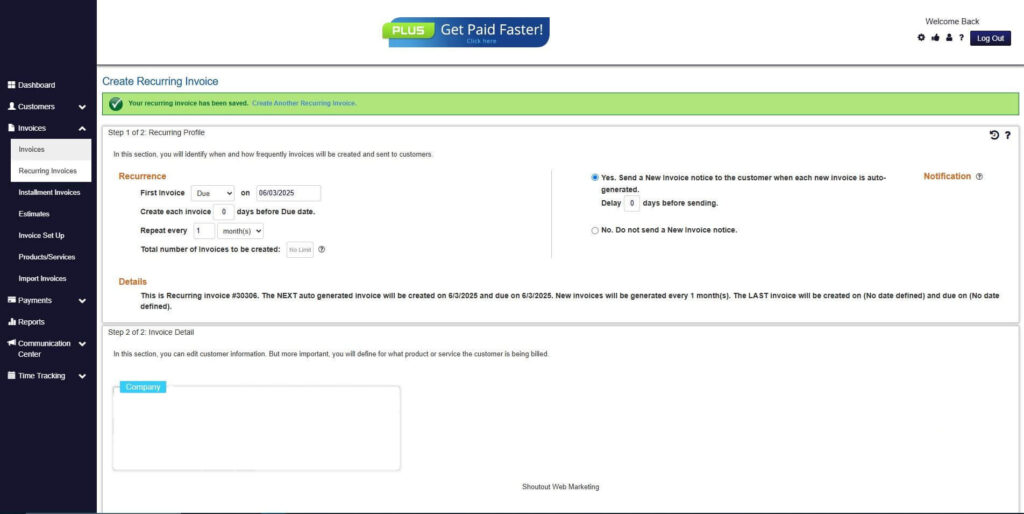
How to Create a New Recurring Invoice Using ReliaBills
Creating a New Recurring Invoice using ReliaBills involves the following steps:
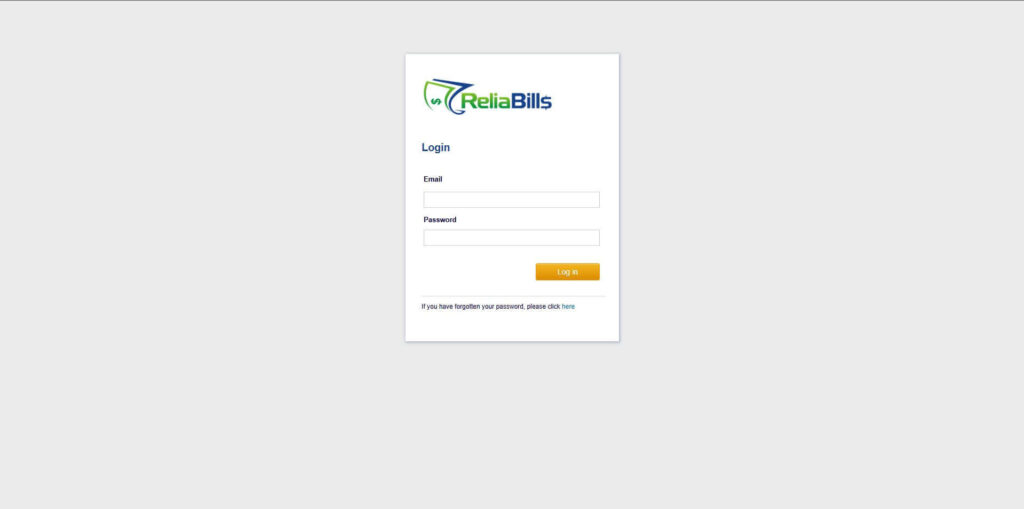
Step 1: Login to ReliaBills
- Access your ReliaBills Account using your login credentials. If you don’t have an account, sign up here.
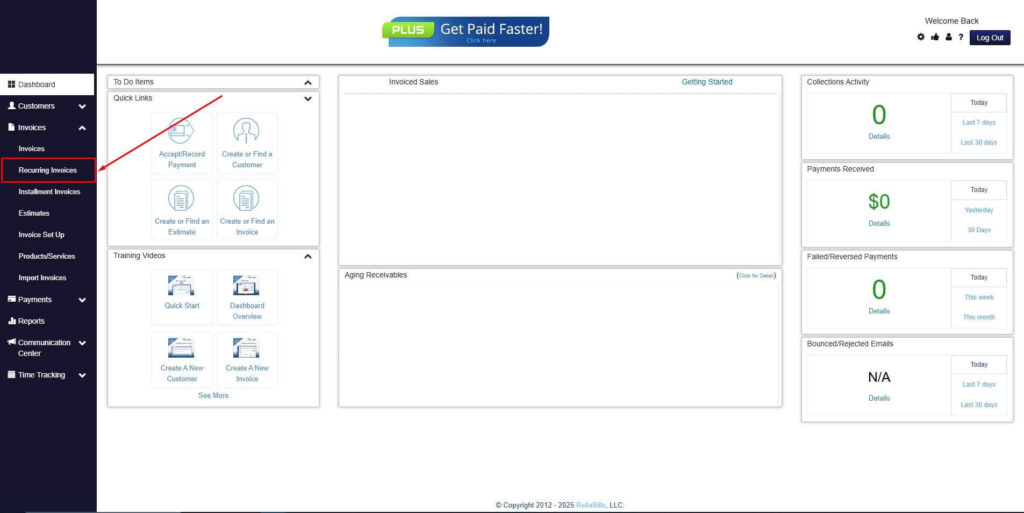
Step 2: Click on Recurring Invoices
- Navigate to the Invoices Dropdown and click on Recurring Invoices for an overview of the list of your existing customers.
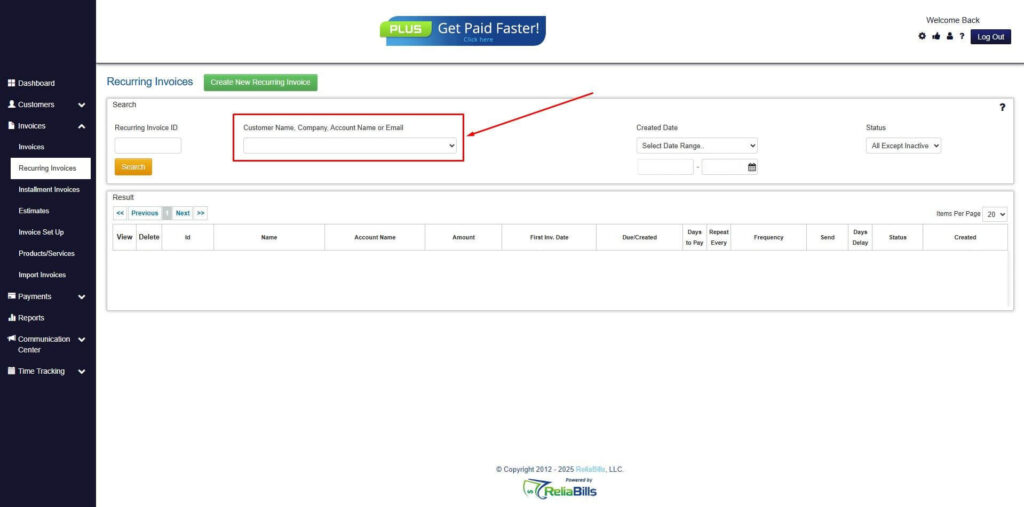
Step 3: Go to the Customers Tab
- If you have already created a customer, search for them in the Customers tab and make sure their status is “Active”.
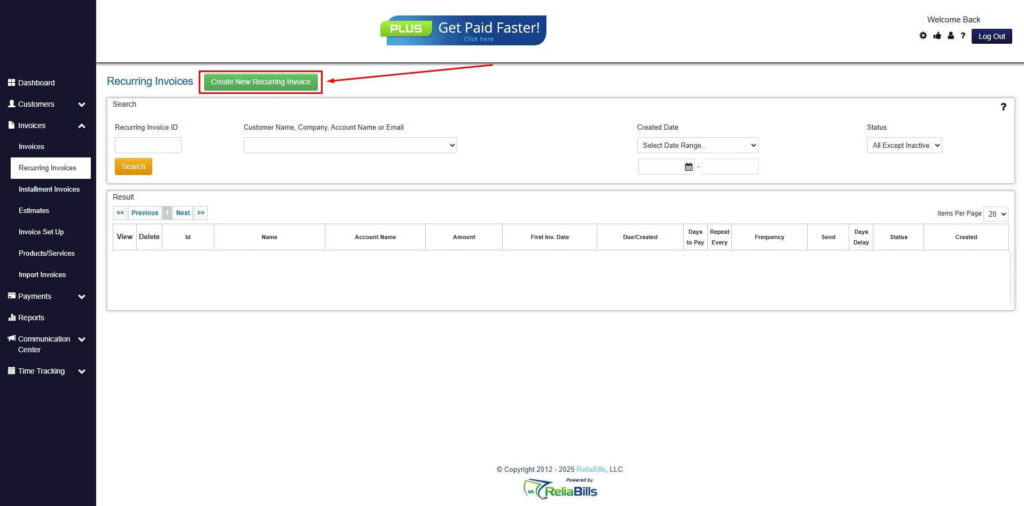
Step 4: Click the Create New Recurring Invoice
- If you haven’t created any customers yet, click the Create New Recurring Invoice to create a new customer.
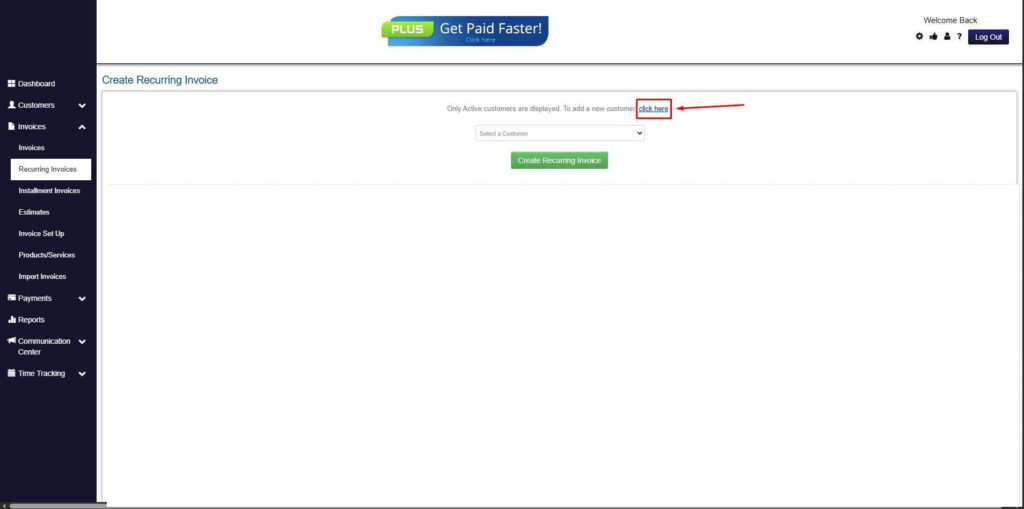
Step 5: Click on the “Click here” Button
- Click on the “Click here” button to proceed with the recurring invoice creation.
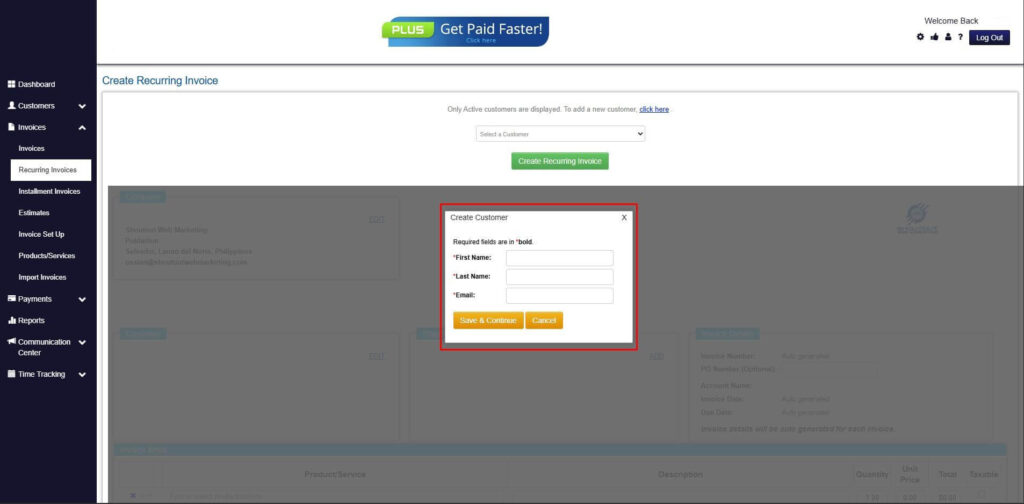
Step 6: Create Customer
- Provide your First Name, Last Name, and Email to proceed.
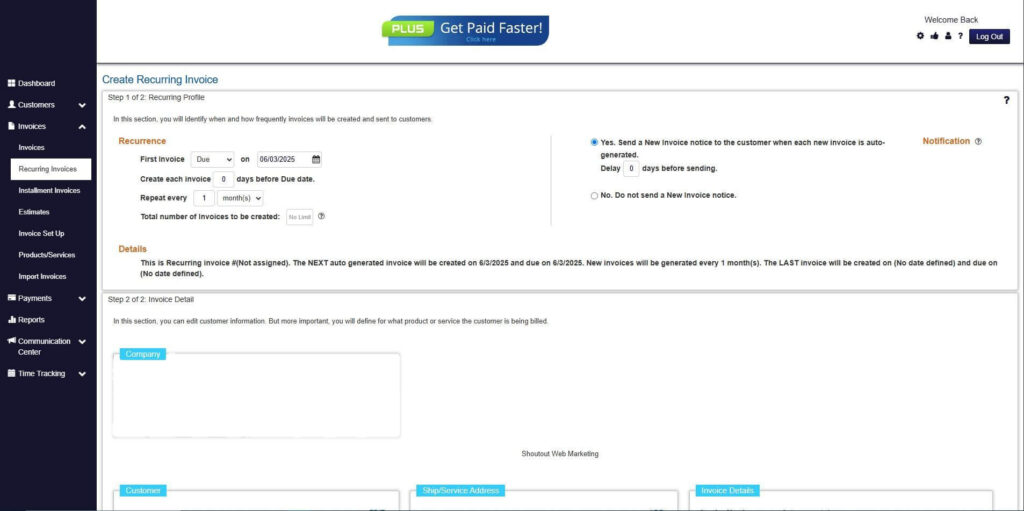
Step 7: Fill in the Create Recurring Invoice Form
- Fill in all the necessary fields.
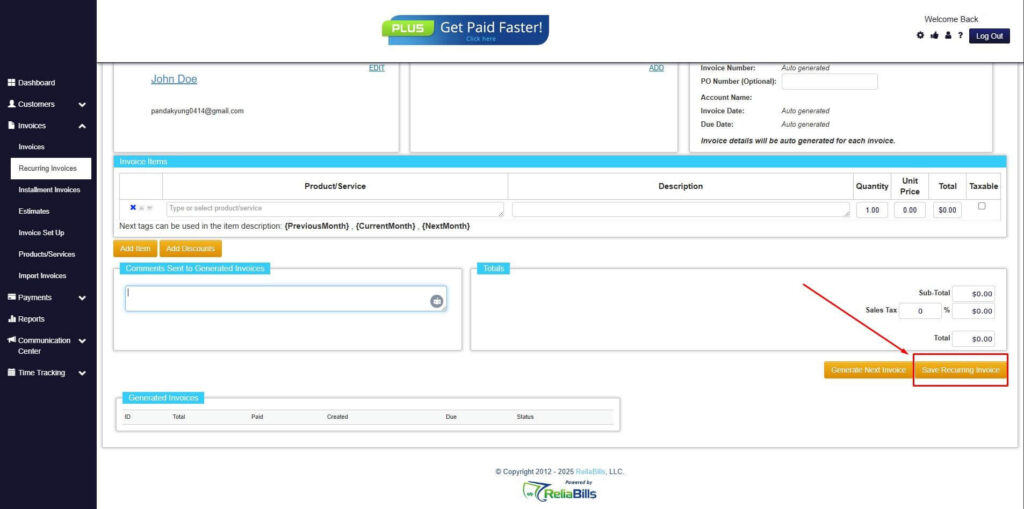
Step 8: Save Recurring Invoice
- After filling up the form, click “Save Recurring Invoice” to continue.
Step 9: Recurring Invoice Created
- Your Recurring Invoice has been created.
Frequently Asked Questions (FAQs)
1. What does it mean to automate late invoice payments?
It means using software to manage reminders, payments, and tracking automatically. This reduces manual effort and improves efficiency. Automation ensures consistent follow-ups.
2. How can automation reduce late payments?
Automation sends timely reminders and enables automatic payments. This reduces delays and missed invoices. Consistency improves payment behavior.
3. Is Auto Pay necessary for automation?
Auto Pay is not required but highly beneficial. It ensures payments are made on time. It improves reliability and convenience.
4. Can late fees be applied automatically?
Yes, automated systems can add late fees based on predefined rules. This encourages timely payments. It ensures fairness and transparency.
5. What software helps automate late invoice payments?
Billing platforms with automation and recurring billing features are ideal. They provide reminders, tracking, and payment processing. These tools improve efficiency.
Conclusion
Automating late invoice payments is essential for improving efficiency and maintaining financial stability. Manual processes are no longer sufficient for managing growing billing demands. Automation provides a structured and reliable approach to handling payments. This reduces delays and improves overall performance.
By implementing automated strategies, businesses can achieve faster collections and more consistent cash flow. Reduced administrative workload allows teams to focus on growth and customer relationships. Clear communication and streamlined processes enhance the customer experience. These benefits contribute to long-term success.
Adopting automated billing solutions is a strategic step for modern businesses. It helps streamline payment processes and reduce late payments effectively. Companies that embrace automation gain a competitive advantage. Investing in the right tools ensures sustainable growth and financial efficiency.