
SaaS startups are fundamentally built on subscription-based revenue models, where customers pay monthly or annually for continuous access to software. This recurring structure creates a predictable revenue stream, but it also introduces operational complexity from the very beginning. Unlike traditional one-time sales, SaaS businesses must manage ongoing billing relationships that evolve as customers upgrade, downgrade, or cancel their subscriptions.
Early-stage billing decisions directly impact cash flow stability, operational efficiency, and the overall customer experience. Even small inefficiencies in invoicing can quickly compound as the customer base grows, leading to delayed payments, revenue leakage, and administrative bottlenecks. For startups with lean teams, manual billing processes often become unsustainable far sooner than expected.
This is why recurring invoice automation for SaaS should be treated as a foundational system rather than a later-stage upgrade. Implementing automation early allows startups to establish reliable billing workflows, reduce errors, and create a scalable financial infrastructure. By doing so, SaaS companies position themselves for sustainable growth without needing to overhaul their billing systems later.
What Is Recurring Invoice Automation?
Recurring invoice automation in SaaS refers to the use of software systems that automatically generate, send, and manage invoices based on predefined subscription schedules. Instead of manually creating invoices for each billing cycle, the system ensures that invoices are issued accurately and consistently according to customer plans. This is particularly important in SaaS environments where billing cycles vary across customers.
The system works by aligning invoice generation with subscription timelines such as monthly, quarterly, or annual billing. It also adjusts invoices dynamically when customers change plans, add features, or cancel services. This ensures that billing always reflects the current subscription status without requiring manual intervention.
Beyond invoice creation, recurring invoice automation for SaaS also manages payment reminders, tracks outstanding balances, and integrates with payment gateways. These capabilities significantly reduce administrative workload while improving billing accuracy. As a result, startups can maintain consistent revenue collection and focus more on growth rather than operational tasks.
Why Billing Becomes Complex Quickly in SaaS Startups
Rapid Customer Growth and Onboarding
SaaS startups often experience unpredictable but rapid growth, especially after product-market fit is achieved. As more customers sign up, the volume of invoices increases exponentially, making manual billing processes difficult to sustain. Each new customer adds another billing cycle to manage, increasing operational strain.
Frequent Subscription Upgrades, Downgrades, and Cancellations
Customer behavior in SaaS is dynamic, with users frequently modifying their subscriptions. These changes require real-time billing adjustments, which can be error-prone when handled manually. Without automation, startups risk issuing incorrect invoices that can damage customer trust.
Multiple Pricing Tiers and Billing Models
Many SaaS companies offer tiered pricing, usage-based billing, or hybrid models to attract different customer segments. Managing these varied pricing structures manually introduces complexity and increases the likelihood of inconsistencies. Automation ensures that pricing rules are applied accurately across all customer segments.
Increasing Need for Accurate Revenue Tracking
As startups grow, financial visibility becomes critical for decision-making and investor reporting. Manual billing systems often fail to provide real-time insights into revenue performance. Automated systems enable accurate tracking of recurring revenue metrics such as MRR and ARR.
Key Reasons SaaS Startups Need Automation Early
Prevents Manual Billing Errors from Scaling with Growth
Manual invoicing may seem manageable at the early stage, but errors quickly multiply as the customer base expands. Small mistakes such as incorrect pricing or missed invoices can result in significant revenue losses over time. Automation eliminates these risks by standardizing billing processes.
Ensures Consistent and Timely Invoice Generation
Consistency in billing is essential for maintaining customer trust and predictable revenue streams. Automated systems generate invoices on schedule without delays or oversight. This reliability improves both operational efficiency and customer satisfaction.
Improves Cash Flow Predictability from Day One
Cash flow is the lifeline of any startup, and predictable revenue is critical for sustainability. Recurring invoice automation for SaaS ensures that invoices are issued and payments are collected on time. This enables founders to forecast revenue more accurately and make informed financial decisions.
Reduces Administrative Workload on Small Teams
Startups often operate with limited resources, making efficiency a top priority. Manual billing processes consume valuable time that could be spent on product development or customer acquisition. Automation frees up team capacity by handling repetitive billing tasks.
Supports Faster Onboarding of New Customers
A streamlined billing system accelerates the onboarding process for new customers. Automated invoicing ensures that billing setup is immediate and error-free. This improves the overall customer experience and reduces friction during signup.
Establishes Scalable Financial Infrastructure Early
Building scalable systems early prevents costly transitions later. Recurring invoice automation provides a foundation that can handle increasing transaction volumes. This allows startups to scale without needing to redesign their billing processes.
Risks of Delaying Invoice Automation
Delaying the adoption of recurring invoice automation for SaaS can create significant operational and financial risks. One of the most common issues is revenue leakage caused by missed or inaccurate invoices. These errors often go unnoticed until they accumulate into substantial financial losses.
Manual reconciliation processes also become increasingly time-consuming as transaction volumes grow. Teams may spend hours matching payments to invoices, reducing overall productivity. This inefficiency can slow down financial operations and delay critical reporting.
Billing inconsistencies can negatively impact customer experience and lead to increased churn. Customers expect accurate and transparent billing, and errors can erode trust quickly. Additionally, delayed automation makes it harder to manage subscription changes and scale operations effectively.
How Recurring Invoice Automation Works in SaaS
Recurring invoice automation for SaaS operates by linking customer subscription data with billing schedules and pricing rules. The system automatically generates invoices at the start of each billing cycle, ensuring consistency across all customers. This eliminates the need for manual intervention and reduces the risk of human error.
It also applies pricing logic based on subscription plans, usage levels, and any applied discounts. When customers upgrade or downgrade, the system adjusts invoices accordingly in real time. This ensures that billing always reflects the current subscription status.
Additionally, automated systems send invoices and payment reminders while tracking payment status in real time. This improves collection rates and reduces overdue accounts. By centralizing billing operations, startups gain better visibility into their financial performance.
Core Features SaaS Startups Should Look For
Recurring Billing and Subscription Management
A robust system should handle various subscription models including monthly, annual, and usage-based billing. It must also support plan changes and lifecycle management seamlessly. This flexibility is essential for adapting to evolving customer needs.
Automated Invoice Generation and Delivery
Automation should cover the entire invoicing process from creation to delivery. Invoices must be generated accurately and sent on schedule without manual input. This ensures consistency and reduces administrative overhead.
Auto Pay and Payment Gateway Integration
Integration with payment gateways allows for seamless payment processing. Auto Pay features ensure that payments are collected automatically, reducing delays and missed payments. This improves cash flow and simplifies the customer experience.
Real-Time Payment Tracking Dashboards
Visibility into payment status is critical for financial management. Dashboards provide real-time insights into paid, pending, and overdue invoices. This enables faster decision-making and better financial control.
Dunning Management and Payment Reminders
Automated reminders help reduce late payments and improve collection rates. Dunning systems can send follow-ups based on predefined schedules. This minimizes manual follow-up efforts while maintaining consistent communication.
Flexible Pricing and Plan Management
SaaS startups need the ability to experiment with pricing strategies. Flexible systems allow for easy updates to plans, tiers, and discounts. This supports growth and optimization of revenue models.
How Automation Supports SaaS Growth
Recurring invoice automation for SaaS plays a critical role in enabling scalable growth. By eliminating manual processes, startups can handle increasing transaction volumes without expanding their teams. This operational efficiency allows businesses to scale faster while maintaining control over their finances.
Automation also improves revenue visibility, providing real-time insights into key metrics such as MRR and churn rates. These insights are essential for strategic planning and investor reporting. With accurate data, startups can make more informed decisions and adjust their strategies proactively.
Additionally, automated billing reduces friction in the customer experience. Seamless invoicing and payment processes improve customer satisfaction and retention. This creates a strong foundation for long-term growth and customer loyalty.
The Role of Recurring Billing in SaaS Revenue Models
Recurring billing is the backbone of SaaS revenue models, enabling predictable and stable income streams. By aligning billing cycles with subscription lifecycles, startups can maintain consistent cash flow. This predictability is essential for budgeting and long-term planning.
It also reduces reliance on manual invoicing processes, which are prone to errors and inefficiencies. Automated systems ensure that billing is consistent and accurate across all customers. This reliability strengthens the overall financial structure of the business.
Moreover, recurring billing supports long-term customer relationships by providing a seamless payment experience. Customers are more likely to stay subscribed when billing is transparent and hassle-free. This directly contributes to higher retention rates and lifetime value.
Best Practices for Early Implementation
Choose Scalable Billing Infrastructure from the Start
Selecting the right billing system early can prevent future operational challenges. A scalable solution ensures that the platform can handle growth without requiring major changes. This reduces the risk of costly migrations later.
Standardize Subscription Pricing Models Early
Consistency in pricing simplifies billing operations and reduces confusion. Standardized models make it easier to manage subscriptions and generate accurate invoices. This also improves customer understanding of pricing structures.
Automate Invoicing Before Customer Base Grows
Implementing automation early prevents inefficiencies from becoming ingrained in operations. It allows startups to establish streamlined processes from the beginning. This creates a strong foundation for scaling.
Integrate Billing with Accounting and CRM Tools
Integration ensures seamless data flow across systems. This reduces manual data entry and improves accuracy in financial reporting. It also enhances overall operational efficiency.
Regularly Review Billing Performance Metrics
Monitoring key metrics helps identify areas for improvement. Startups should track revenue trends, payment delays, and churn rates. Continuous optimization ensures that billing processes remain effective.
Common Mistakes SaaS Startups Make Without Automation
Relying on Spreadsheets for Subscription Billing
Spreadsheets may work initially but quickly become unmanageable as data grows. They are prone to errors and lack automation capabilities. This can lead to inaccurate billing and reporting issues.
Delaying Automation Until Scaling Issues Appear
Waiting too long to implement automation often results in operational bottlenecks. By the time issues become apparent, transitioning systems can be complex and disruptive. Early adoption avoids these challenges.
Ignoring Payment Tracking and Analytics
Without proper tracking, startups lack visibility into revenue performance. This makes it difficult to identify payment issues or optimize billing strategies. Automation provides real-time insights that support decision-making.
Not Preparing for Billing Complexity Early
Many startups underestimate how quickly billing becomes complex. As pricing models evolve, manual systems struggle to keep up. Planning for complexity early ensures smoother operations.
Overlooking Customer Billing Experience
Billing is a key touchpoint in the customer journey. Poor billing experiences can lead to dissatisfaction and churn. Automation ensures a consistent and professional experience.
How Automation Improves SaaS Financial Operations
Recurring invoice automation for SaaS enhances financial operations by providing real-time visibility into revenue and subscription metrics. This allows startups to track performance accurately and respond quickly to changes. Improved data accuracy also supports better decision-making.
Automation reduces accounting errors by eliminating manual data entry and reconciliation tasks. This increases efficiency and ensures that financial records are consistent. It also simplifies compliance and audit processes.
Additionally, automated systems speed up payment collection cycles. Faster collections improve cash flow and reduce outstanding receivables. This strengthens the overall financial health of the startup.
Key Benefits of Early Automation Adoption
Faster and More Reliable Revenue Collection
Automated invoicing ensures that invoices are generated and sent on time. This reduces delays in payment collection and improves cash flow. Reliable billing processes support financial stability.
Reduced Operational Overhead
By automating repetitive tasks, startups can operate more efficiently. This reduces the need for additional administrative resources. Teams can focus on strategic initiatives instead.
Improved Billing Accuracy and Consistency
Automation eliminates human errors in invoicing. This ensures that customers are billed correctly every time. Consistency builds trust and reduces disputes.
Better Investor and Financial Reporting Readiness
Accurate and real-time financial data is essential for investor communication. Automation provides detailed insights into revenue performance. This improves transparency and credibility.
Stronger Customer Retention and Experience
Seamless billing processes enhance the customer experience. Customers are more likely to stay when billing is reliable and transparent. This increases long-term retention and revenue.
Common Use Cases
Early-Stage SaaS Subscription Platforms
Startups launching subscription-based services benefit from automation immediately. It ensures that billing processes are accurate from day one. This prevents operational issues as the business grows.
Freemium-to-Paid Conversion Models
Automation helps manage transitions from free to paid plans seamlessly. It ensures that billing begins at the right time without manual intervention. This improves conversion efficiency.
B2B SaaS with Tiered Pricing Plans
Complex pricing structures require accurate billing systems. Automation ensures that each customer is billed according to their plan. This reduces errors and improves scalability.
API-Based or Usage-Based SaaS Products
Usage-based billing requires dynamic invoicing based on consumption. Automated systems calculate charges accurately and generate invoices accordingly. This ensures transparency and fairness.
Startup SaaS Companies Preparing for Scale
Startups planning for growth need scalable billing infrastructure. Automation provides the flexibility to handle increasing transaction volumes. This supports long-term expansion.
How ReliaBills Helps SaaS Startups Scale with Automation
SaaS startups benefit significantly from implementing automated invoicing early, especially when managing growing subscription-based revenue streams. ReliaBills simplifies billing operations by removing manual processes and ensuring invoices are generated accurately and on time. This helps startups maintain consistent cash flow while delivering a professional and reliable billing experience to customers. By streamlining invoicing workflows, businesses can reduce administrative strain and focus more on scaling their product and customer base.
Recurring billing is at the core of ReliaBills, making it easier for SaaS startups to manage subscriptions, billing cycles, and customer payments without complexity. The platform automates recurring invoice scheduling, handles subscription changes such as upgrades or downgrades, and sends timely payment reminders to reduce missed payments. This ensures predictable revenue collection while improving customer retention through a seamless billing experience. With recurring invoice automation for SaaS, startups can confidently scale knowing their billing system will adapt to growth.
For startups ready to scale further, ReliaBills PLUS offers advanced automation, enhanced reporting, and robust customer management tools. These features provide deeper insights into recurring revenue, payment trends, and customer behavior, enabling smarter financial decisions. Customizable workflows and integrations also allow businesses to tailor billing processes to their evolving needs. With ReliaBills PLUS, SaaS startups gain a scalable, future-ready billing infrastructure designed to support long-term growth.
How to Create a New Recurring Invoice Using ReliaBills
Creating a New Recurring Invoice using ReliaBills involves the following steps:
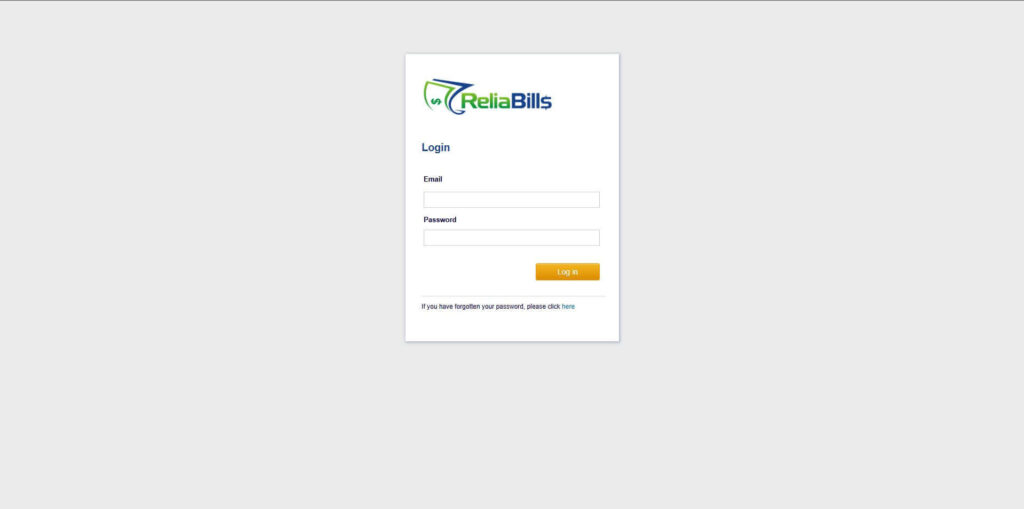
Step 1: Login to ReliaBills
- Access your ReliaBills Account using your login credentials. If you don’t have an account, sign up here.
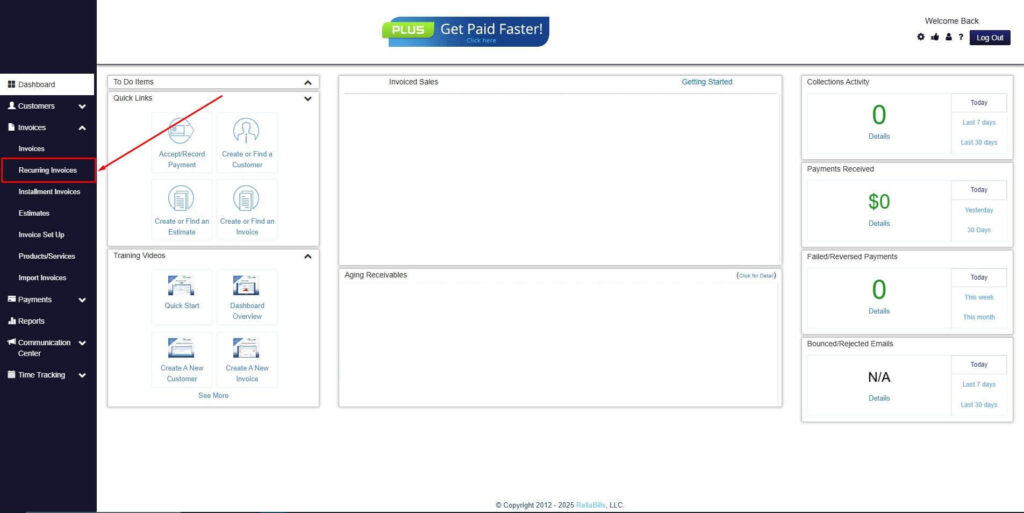
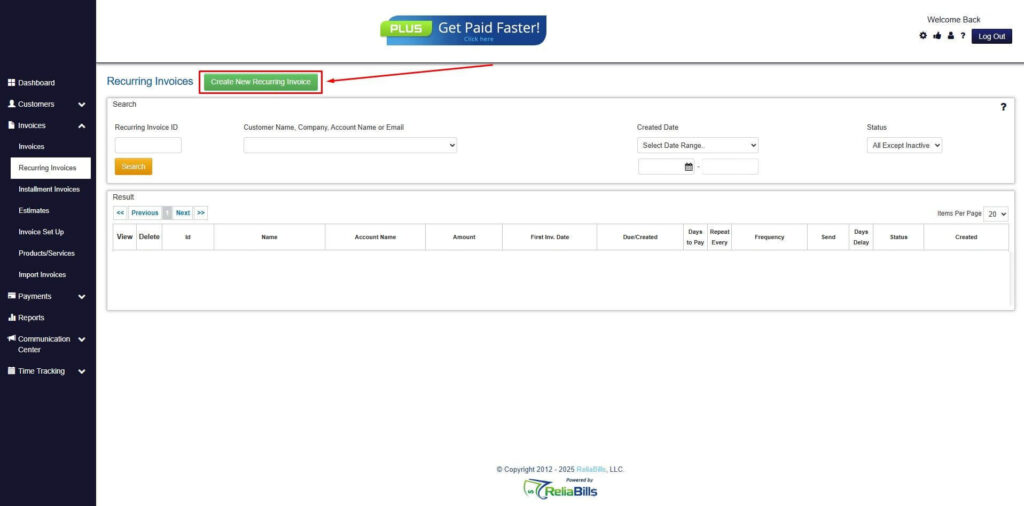
Step 2: Click on Recurring Invoices
- Navigate to the Invoices Dropdown and click on Recurring Invoices for an overview of the list of your existing customers.
Step 3: Go to the Customers Tab
- If you have already created a customer, search for them in the Customers tab and make sure their status is “Active”.
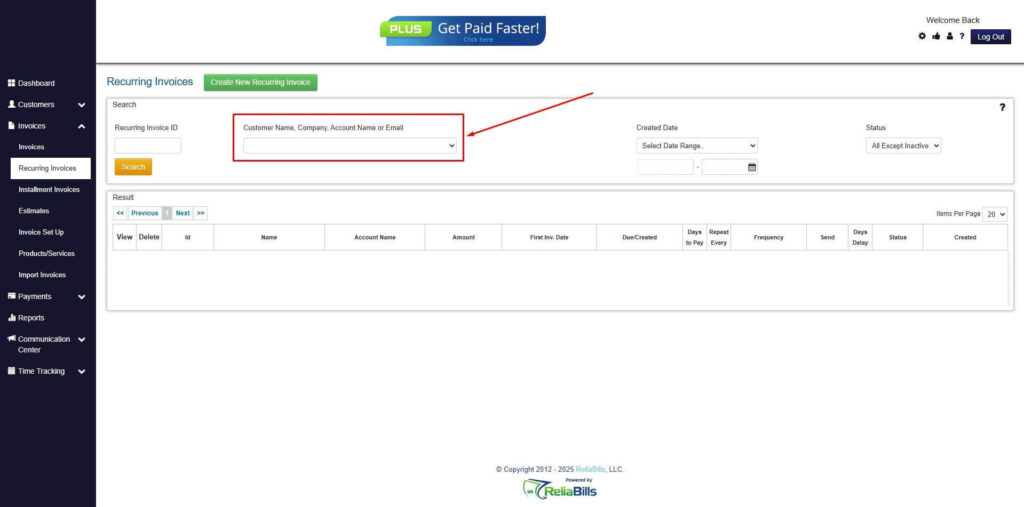
Step 4: Click the Create New Recurring Invoice
- If you haven’t created any customers yet, click the Create New Recurring Invoice to create a new customer.
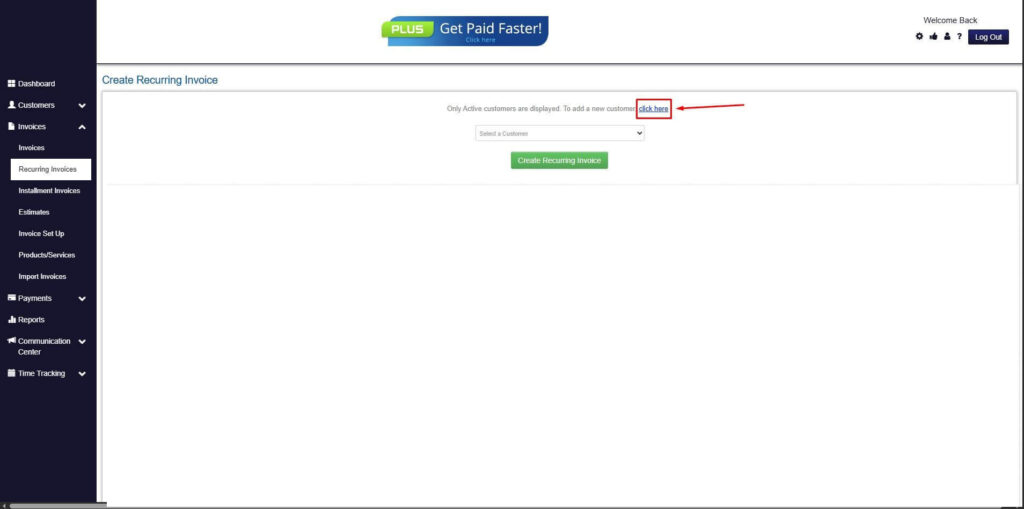
Step 5: Click on the “Click here” Button
- Click on the “Click here” button to proceed with the recurring invoice creation.
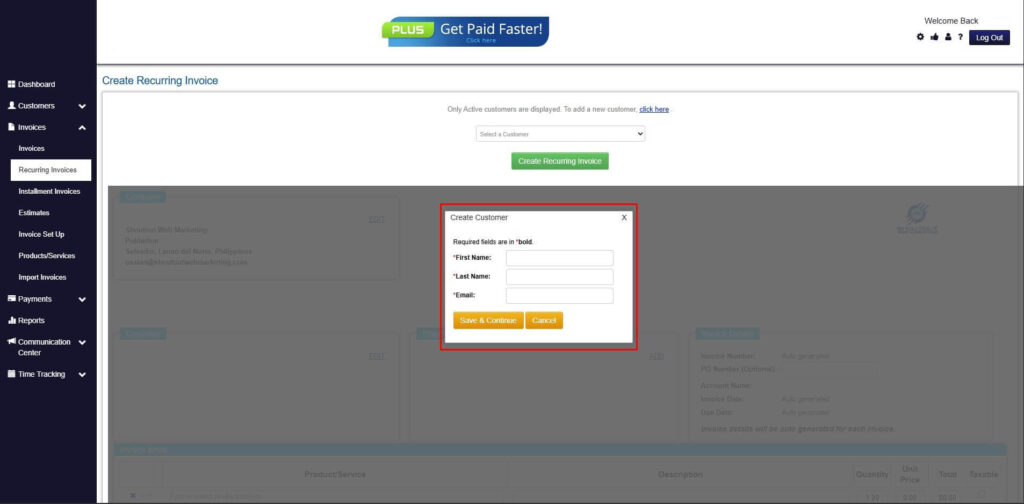
Step 6: Create Customer
- Provide your First Name, Last Name, and Email to proceed.
Step 7: Fill in the Create Recurring Invoice Form
- Fill in all the necessary fields.
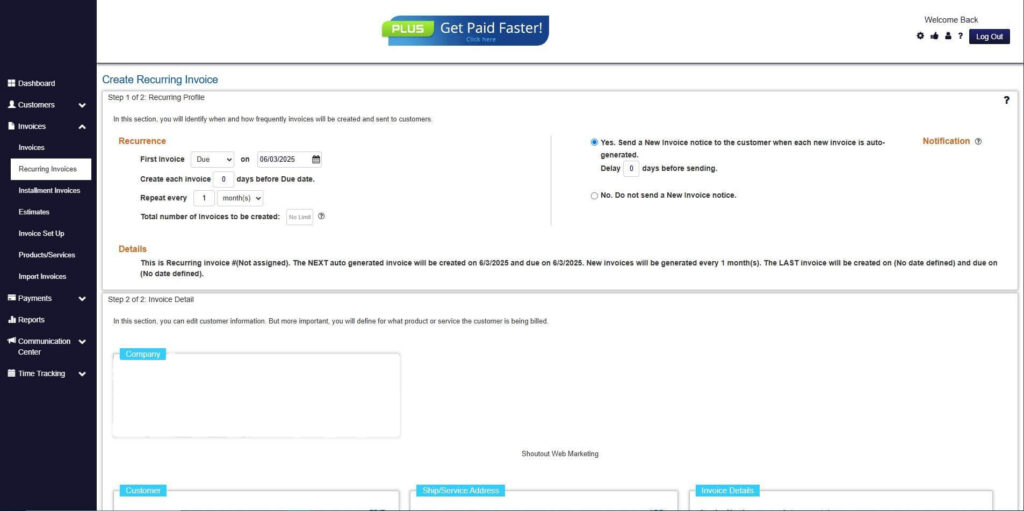
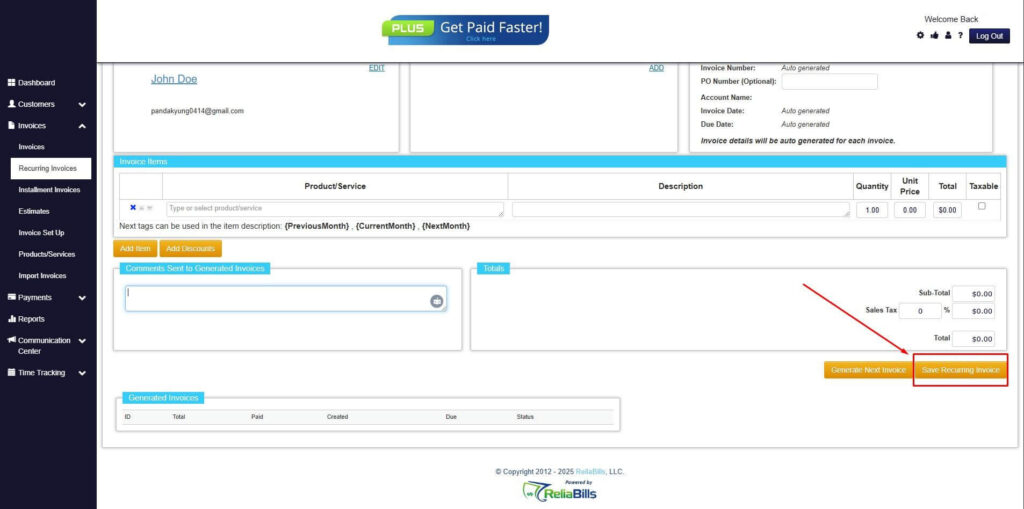
Step 8: Save Recurring Invoice
- After filling up the form, click “Save Recurring Invoice” to continue.
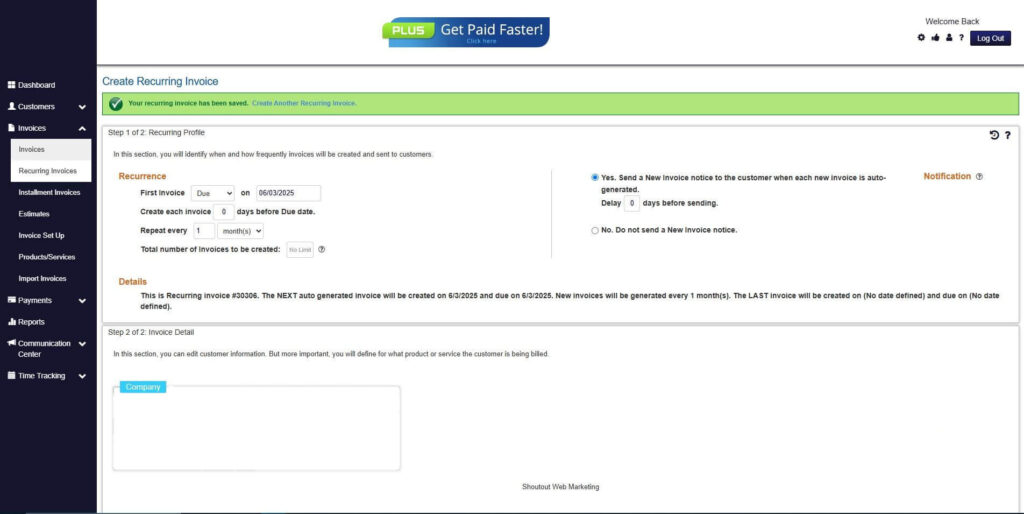
Step 9: Recurring Invoice Created
- Your Recurring Invoice has been created.
Frequently Asked Questions (FAQs)
1. Why do SaaS startups need recurring billing automation?
Recurring invoice automation for SaaS ensures consistent and accurate billing, which is essential for maintaining predictable revenue. It eliminates manual errors and reduces administrative workload. This allows startups to focus on growth and customer experience.
2. When should a startup implement billing automation?
Startups should implement automation as early as possible, ideally before scaling their customer base. Early adoption prevents inefficiencies from becoming embedded in operations. It also ensures that billing processes are scalable from the start.
3. Can small SaaS companies afford automation tools?
Many automation platforms offer scalable pricing suitable for startups. The cost of automation is often lower than the potential losses from billing errors and inefficiencies. Investing early can save money in the long run.
4. How does automation improve SaaS cash flow?
Automation ensures timely invoice generation and payment collection. It reduces delays and improves collection rates. This leads to more predictable and stable cash flow.
5. What happens if SaaS startups delay automation?
Delaying automation can lead to revenue leakage, operational inefficiencies, and customer dissatisfaction. It also makes scaling more difficult and increases the complexity of transitioning systems later. Early adoption avoids these risks.
Conclusion
Recurring invoice automation for SaaS is not just a convenience—it is a critical component of building a scalable and sustainable business. By automating billing processes early, startups can ensure accuracy, improve cash flow, and reduce operational burdens. This creates a strong financial foundation that supports long-term growth.
Delaying automation introduces unnecessary risks, including revenue leakage, inefficient workflows, and poor customer experiences. These challenges can hinder growth and make scaling more difficult. Startups that prioritize automation early are better equipped to navigate the complexities of subscription-based billing.
Ultimately, implementing recurring invoice automation from the beginning enables SaaS companies to grow with confidence. It provides the infrastructure needed to handle increasing demand while maintaining operational efficiency. For startups aiming for long-term success, building a scalable billing system early is a strategic necessity.