
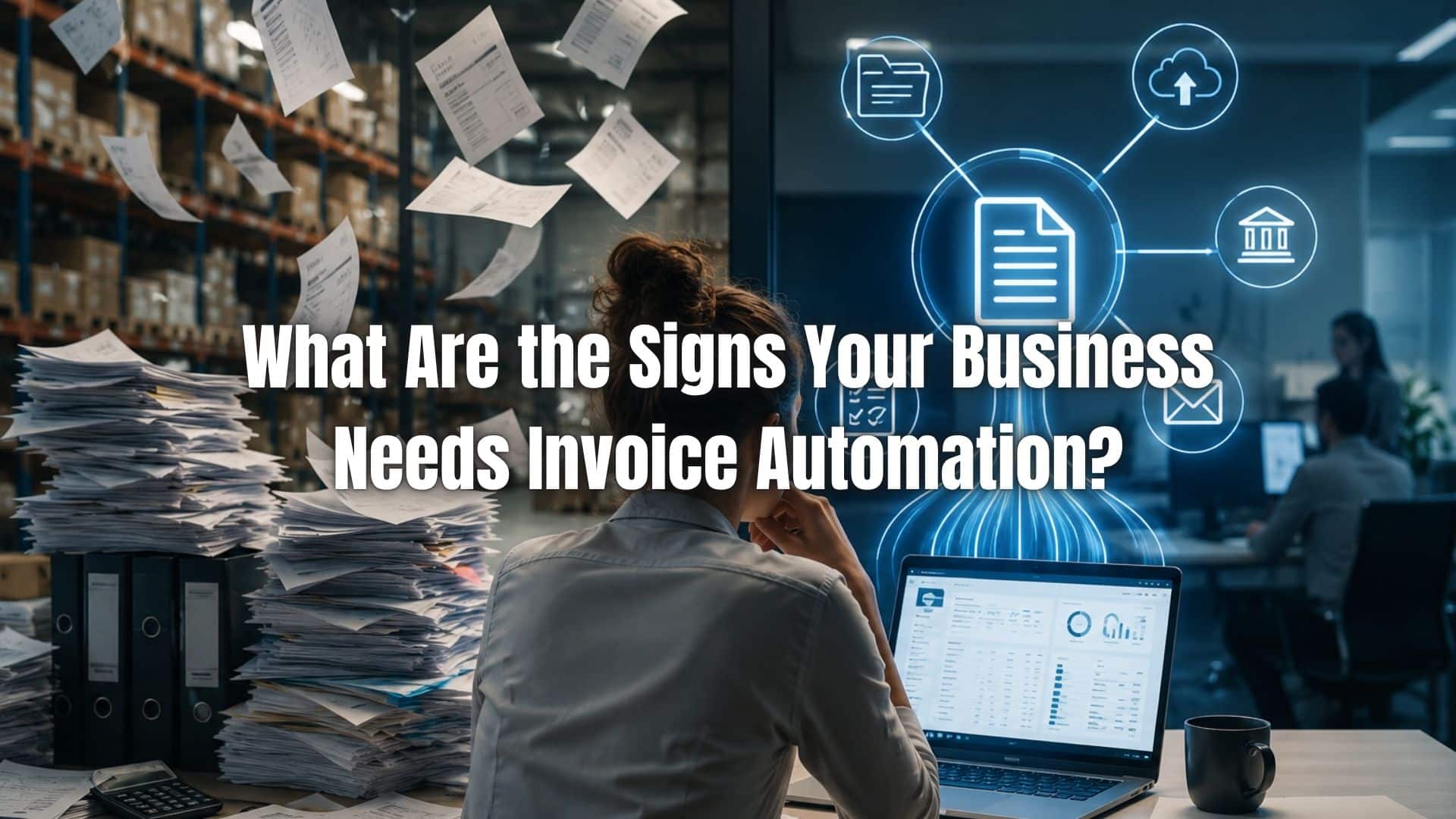
Invoice management plays a critical role in maintaining healthy cash flow and ensuring smooth financial operations for any business. Every invoice sent, tracked, and collected directly impacts revenue timing and overall financial stability. In the early stages, many businesses manage invoicing manually without major issues. However, as operations expand, this approach often becomes inefficient and difficult to sustain.
Manual invoicing processes can quickly become a bottleneck when transaction volumes increase. Tasks such as creating invoices, sending them to customers, tracking payments, and following up on overdue accounts require significant time and attention. This not only increases administrative workload but also introduces a higher risk of human error. Over time, these inefficiencies can negatively affect both cash flow and customer relationships.
This is where understanding the benefits of invoice automation becomes essential. Invoice automation provides a streamlined approach to billing by reducing manual tasks, minimizing errors, and accelerating payment collection. It allows businesses to operate more efficiently while maintaining accuracy and consistency. Recognizing when to adopt automation is key to sustaining growth and financial control.
What Is Invoice Automation?
Invoice automation refers to the use of software systems to manage and streamline the entire invoicing process with minimal human intervention. It automates tasks such as invoice creation, delivery, payment tracking, and reconciliation. By using predefined rules and workflows, businesses can ensure consistent and accurate billing operations. This significantly reduces the reliance on manual input.
Modern invoice automation systems handle the full lifecycle of an invoice from generation to payment confirmation. Invoices can be automatically created based on schedules, customer agreements, or completed transactions. They are then sent through digital channels, while the system tracks payment status in real time. This level of automation provides businesses with greater visibility and control over their financial processes.
In contrast, manual invoicing relies heavily on human effort and repetitive tasks. This increases the likelihood of errors, delays, and inconsistencies in billing. Additionally, manual systems often lack real-time tracking and reporting capabilities. Invoice automation eliminates these limitations by offering efficiency, accuracy, and scalability.
Why Businesses Start with Manual Invoicing
Many businesses begin with manual invoicing because of their initially low transaction volume. When dealing with only a few customers, creating and sending invoices manually seems manageable and cost-effective. At this stage, investing in automation may not appear necessary. This simplicity makes manual systems appealing during early operations.
Another reason is the straightforward nature of billing needs in startup environments. Early-stage businesses often have limited pricing models and fewer transactions to manage. This allows them to rely on basic tools such as spreadsheets or simple accounting software. However, these tools may not scale effectively as the business grows.
A lack of awareness about available automation tools also contributes to continued reliance on manual invoicing. Many business owners are unaware of how accessible and affordable modern solutions have become. Additionally, some prefer maintaining hands-on control over financial processes. While this approach may feel secure, it often becomes inefficient over time.
Key Signs Your Business Needs Invoice Automation
Increasing number of invoices and customers
As your customer base grows, the volume of invoices increases significantly. Managing this manually becomes time-consuming and prone to missed billing cycles. The benefits of invoice automation become clear when businesses need to handle high transaction volumes efficiently.
Frequent late or missed payments
Consistent delays in payments often indicate issues with invoice timing or follow-ups. Manual processes may fail to send reminders or track due dates effectively. Automation ensures timely invoicing and follow-ups, improving collection rates.
Too much time spent on manual invoicing tasks
If your team spends hours creating and managing invoices, it reduces time available for strategic work. Administrative overload can slow down overall business productivity. Automation reduces this burden and streamlines operations.
Rising billing errors or inconsistencies
Frequent mistakes in invoice amounts or customer details can damage trust and delay payments. Manual entry increases the likelihood of these errors. Automation standardizes processes and improves accuracy.
Difficulty tracking unpaid or overdue invoices
Without real-time tracking, it becomes challenging to monitor which invoices are outstanding. This leads to missed follow-ups and delayed collections. Automated systems provide clear visibility into payment status.
Lack of real-time visibility into cash flow
Manual invoicing systems often lack dashboards and reporting tools. This limits your ability to make informed financial decisions. Automation provides instant insights into cash flow and receivables.
Operational Problems Caused by Manual Invoicing
Manual invoicing often leads to delays in generating and sending invoices to customers. These delays can extend payment cycles and negatively impact cash flow. When invoices are not sent promptly, businesses risk receiving payments later than expected. This creates unnecessary financial strain.
Human errors are another common issue in manual billing processes. Incorrect amounts, duplicate invoices, or inaccurate customer details can lead to disputes and payment delays. These mistakes not only affect revenue but also harm customer trust. Fixing such errors requires additional time and effort.
Manual systems also struggle with efficient follow-ups on overdue payments. Without automated reminders, businesses must rely on manual tracking and communication. This increases administrative workload and reduces collection efficiency. Additionally, financial reporting becomes less accurate due to inconsistent data handling.
Financial Warning Signs
Unpredictable cash flow
Irregular payment patterns make it difficult to manage expenses and plan investments. Manual invoicing often contributes to inconsistent billing cycles. The benefits of invoice automation include improved cash flow predictability.
Increasing accounts receivable aging
A growing number of overdue invoices indicates inefficiencies in collections. Without proper tracking, overdue accounts can accumulate quickly. Automation helps reduce aging by ensuring timely invoicing and reminders.
Revenue leakage from missed invoices
Missed or forgotten invoices directly result in lost revenue. Manual systems are more prone to such oversights. Automation ensures every transaction is billed accurately.
High dependency on manual reconciliation
Reconciling payments manually takes time and increases the risk of discrepancies. This slows down financial processes and reporting. Automated systems streamline reconciliation and improve accuracy.
Difficulty forecasting income
Without reliable data, predicting future revenue becomes challenging. Manual systems lack real-time insights needed for forecasting. Automation provides accurate data for better financial planning.
Customer Experience Issues Linked to Manual Billing
Manual billing processes can lead to inconsistent and confusing invoices for customers. Variations in format, missing details, or calculation errors create confusion. This can result in delayed payments or disputes. A lack of consistency negatively impacts the overall customer experience.
Delayed invoice delivery is another common issue with manual systems. Customers may receive invoices later than expected, which shifts payment timelines. This not only affects cash flow but also creates frustration. Timely communication is essential for maintaining strong client relationships.
Manual invoicing also limits the ability to send payment reminders and offer flexible payment options. Customers may forget due dates without reminders, leading to overdue accounts. Additionally, limited payment methods can create inconvenience. These factors increase the likelihood of disputes and dissatisfaction.
How Invoice Automation Solves These Problems
Invoice automation addresses these challenges by streamlining the entire billing process. It automatically generates and sends invoices based on predefined schedules or triggers. This ensures that invoices are always delivered on time without manual effort. Consistency and reliability improve significantly.
Automated systems also send timely reminders for upcoming or overdue payments. This reduces the need for manual follow-ups and increases collection efficiency. Customers are more likely to pay on time when reminders are consistent. This directly improves cash flow.
Additionally, automation tracks payment status in real time and reduces human error in billing data. Businesses gain accurate and up-to-date insights into their financial position. Standardized processes ensure consistency across all invoices. These improvements highlight the practical benefits of invoice automation.
Core Features of Invoice Automation Systems
Automated invoice generation and scheduling
Invoices are created automatically based on predefined rules or schedules. This eliminates repetitive manual tasks and ensures consistency. It also reduces the risk of missed billing cycles.
Recurring billing for repeat customers
Recurring billing automates invoices for subscription-based or repeat services. This ensures consistent billing without manual intervention. It also supports predictable revenue streams.
Real-time payment tracking dashboards
Dashboards provide instant visibility into invoice status and payment trends. Businesses can monitor outstanding balances. This supports better financial decision-making.
Automated reminders and follow-ups
Systems send scheduled reminders for due or overdue invoices. This improves collection rates and reduces manual communication. Consistent follow-ups enhance customer relationships.
Online payment integration and Auto Pay options
Customers can pay invoices quickly through integrated payment gateways. Auto Pay ensures payments are made automatically on due dates. This reduces late payments and improves convenience.
Reporting and financial analytics tools
Automation provides detailed reports on revenue, payments, and outstanding invoices. These insights help businesses plan and forecast effectively. Data-driven decisions become easier to make.
The Role of Recurring Billing in Automation
Recurring billing is a fundamental component of invoice automation, especially for businesses with subscription-based models. It ensures that invoices are generated automatically for repeat customers based on set schedules. This eliminates the need for manual invoice creation each billing cycle. As a result, businesses can maintain consistency and efficiency.
One of the major benefits of recurring billing is improved revenue predictability. Businesses can forecast income more accurately when billing cycles are consistent. This stability supports better financial planning and growth strategies. It also reduces uncertainty associated with one-time transactions.
Recurring billing also minimizes the risk of missed invoices and billing errors. Automated systems handle calculations and scheduling with precision. This reduces disputes and improves customer trust. Overall, it enhances both operational efficiency and financial reliability.
Benefits of Switching to Invoice Automation Early
Faster and more reliable payment collection
Automation ensures invoices are sent promptly and reminders are consistent. This encourages customers to pay on time. Faster payments improve overall cash flow.
Improved cash flow stability
Consistent billing and timely collections create predictable revenue streams. Businesses can manage expenses more effectively. Financial stability improves significantly.
Reduced administrative workload
Automation eliminates repetitive invoicing tasks. Employees can focus on strategic activities instead of manual processes. Productivity increases across the organization.
Better financial visibility and reporting
Real-time dashboards provide insights into revenue and outstanding invoices. Businesses can make informed financial decisions. Reporting becomes more accurate and efficient.
Scalable invoicing processes for business growth
Automated systems can handle increasing transaction volumes. This supports business expansion without additional administrative burden. Scalability ensures long-term success.
Best Practices Before Implementing Automation
Evaluate current invoicing challenges
Identify inefficiencies such as delays, errors, or lack of visibility. Understanding these issues helps determine the right solution. This ensures a smoother transition.
Choose a system that fits business size and needs
Select software that aligns with your operational requirements. Scalability and integration capabilities are essential. The right system supports long-term growth.
Ensure integration with accounting tools
Seamless integration prevents data silos and duplication. It improves accuracy across financial systems. This enhances overall efficiency.
Train staff on new workflows
Proper training ensures successful adoption of the new system. Employees become more confident in using automation tools. This reduces resistance to change.
Start with a phased implementation approach
Gradual implementation allows businesses to test and adjust processes. This minimizes disruptions during transition. It ensures a smoother rollout.
Key Benefits of Recognizing the Need Early
Prevents cash flow disruptions
Early adoption of automation ensures consistent billing and collections. This reduces the risk of delayed payments. Cash flow remains stable.
Reduces billing errors and disputes
Automation standardizes invoicing processes. This minimizes mistakes and improves accuracy. Customer trust increases.
Improves operational efficiency
Streamlined workflows reduce time spent on administrative tasks. Teams can focus on growth initiatives. Efficiency improves across departments.
Enhances customer satisfaction
Accurate and timely invoices create a better customer experience. Payment convenience also improves satisfaction. Stronger relationships are built.
Supports scalable business growth
Automation allows businesses to grow without operational bottlenecks. Systems can handle increased demand. This ensures sustainable expansion.
Common Use Cases
SaaS and subscription businesses
These businesses rely heavily on recurring billing models. Automation ensures consistent invoicing and payment tracking. It simplifies subscription management.
Freelancers and agencies
Managing multiple clients becomes easier with automated invoicing. It reduces administrative workload and improves accuracy. This supports scalability.
Service-based small businesses
Repeat services require consistent billing cycles. Automation ensures timely and accurate invoices. Efficiency improves significantly.
Utilities and membership organizations
Fixed billing schedules benefit from automation. It ensures reliable invoicing and collections. Operational stability is enhanced.
Growing eCommerce businesses
As order volumes increase, manual invoicing becomes inefficient. Automation handles large transaction volumes effectively. This supports business growth.
How ReliaBills Helps Businesses Identify and Solve Invoicing Challenges
ReliaBills helps businesses streamline their invoicing processes by replacing manual workflows with efficient, automated systems. By adopting ReliaBills, companies can reduce billing errors, ensure timely invoice delivery, and gain better control over cash flow. The platform simplifies complex billing operations, allowing businesses to manage invoices, payments, and customer data in one place. This leads to improved accuracy, faster payment collection, and a more scalable financial process.
Recurring billing is a core strength within ReliaBills, making it easier for businesses to manage repeat customers and subscription-based services. Instead of manually creating invoices for each billing cycle, businesses can automate schedules to ensure consistent and reliable invoicing. This reduces administrative workload while minimizing the risk of missed or delayed invoices. With recurring billing, companies benefit from predictable revenue streams and a smoother customer billing experience.
ReliaBills PLUS builds on these capabilities by offering advanced automation, detailed reporting, and enhanced customer management tools. Businesses gain deeper insights into financial performance through real-time analytics and customizable reports. These features support better decision-making and allow companies to optimize their invoicing strategies as they grow. With ReliaBills PLUS, businesses can scale confidently while maintaining efficiency, accuracy, and full visibility over their billing operations.
How to Create a New Recurring Invoice Using ReliaBills
Creating a New Recurring Invoice using ReliaBills involves the following steps:
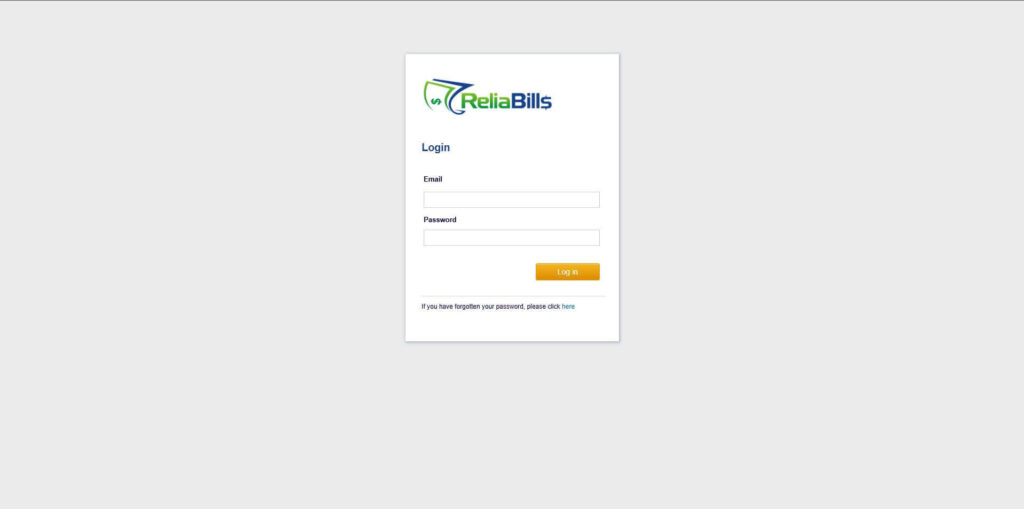
Step 1: Login to ReliaBills
- Access your ReliaBills Account using your login credentials. If you don’t have an account, sign up here.
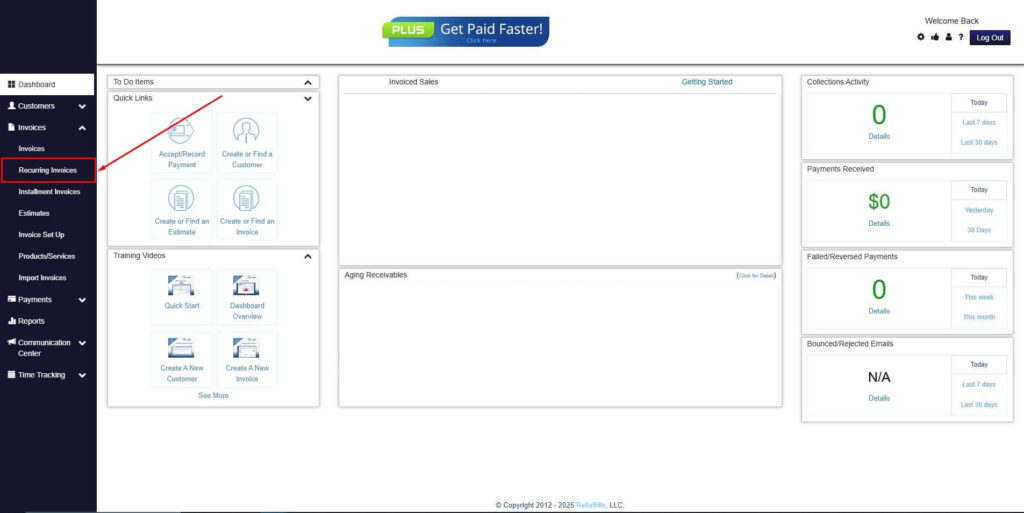
Step 2: Click on Recurring Invoices
- Navigate to the Invoices Dropdown and click on Recurring Invoices for an overview of the list of your existing customers.
Step 3: Go to the Customers Tab
- If you have already created a customer, search for them in the Customers tab and make sure their status is “Active”.
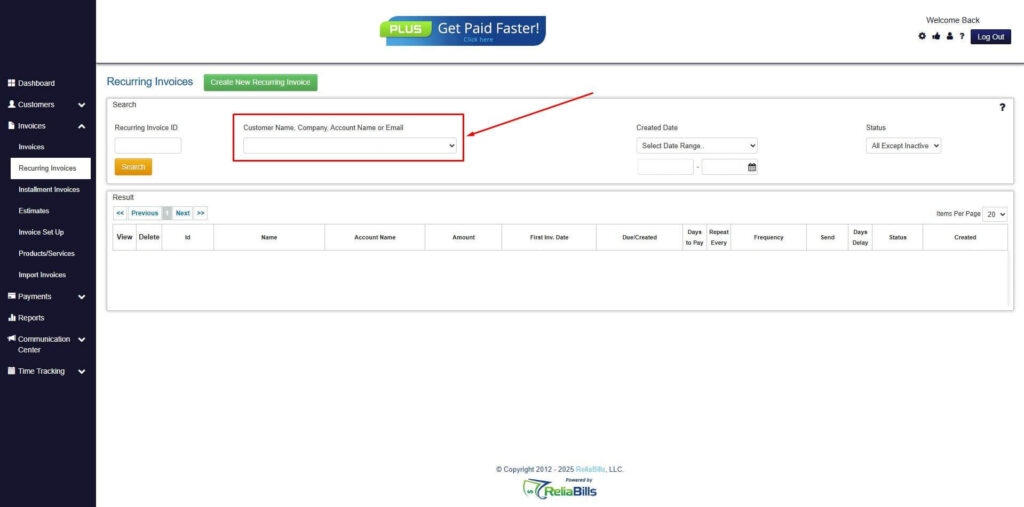
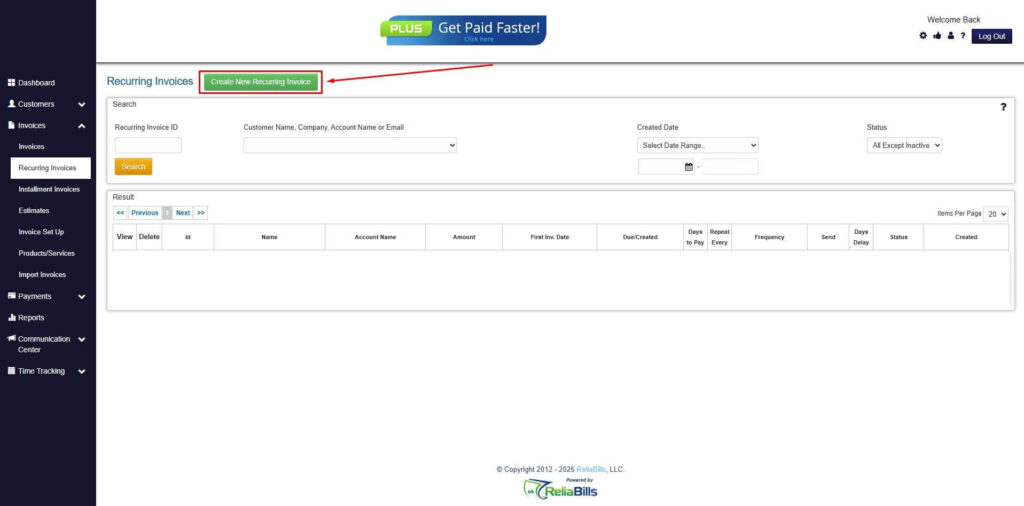
Step 4: Click the Create New Recurring Invoice
- If you haven’t created any customers yet, click the Create New Recurring Invoice to create a new customer.
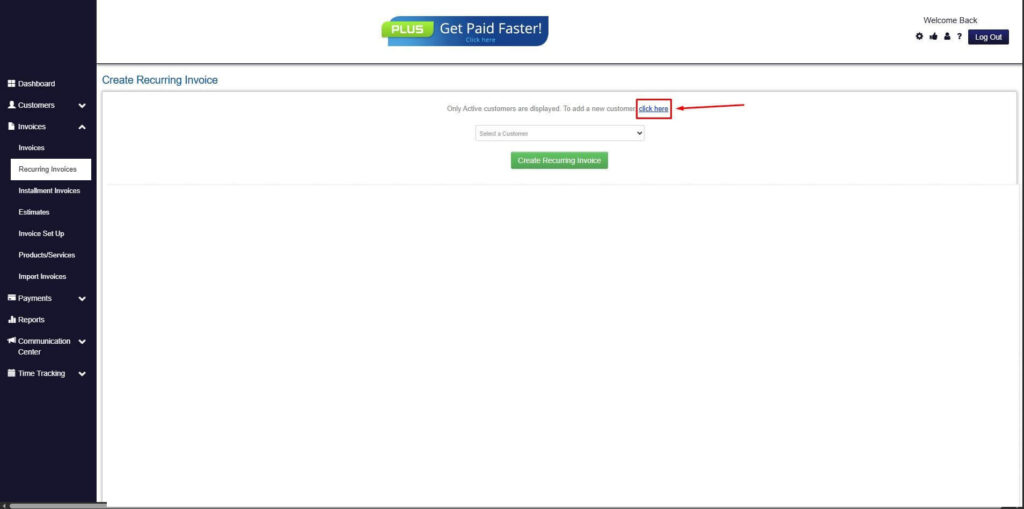
Step 5: Click on the “Click here” Button
- Click on the “Click here” button to proceed with the recurring invoice creation.
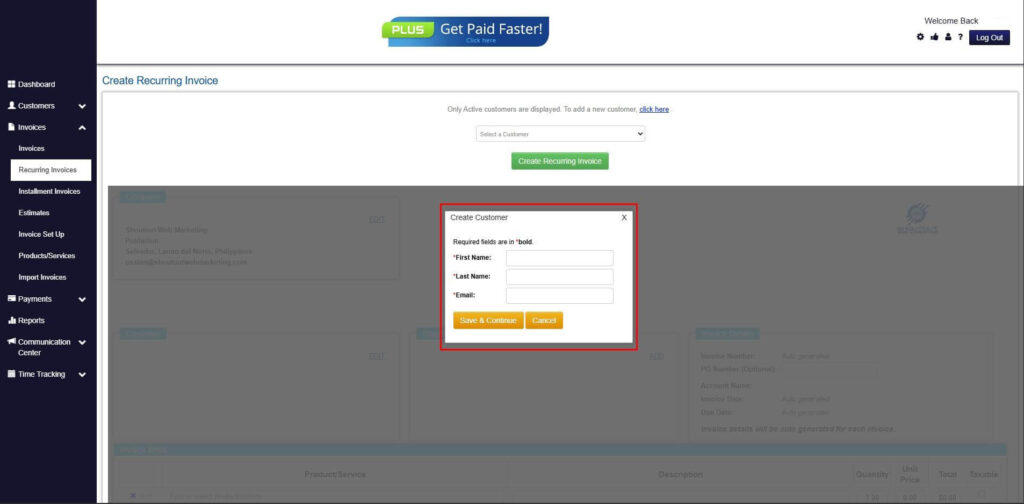
Step 6: Create Customer
- Provide your First Name, Last Name, and Email to proceed.
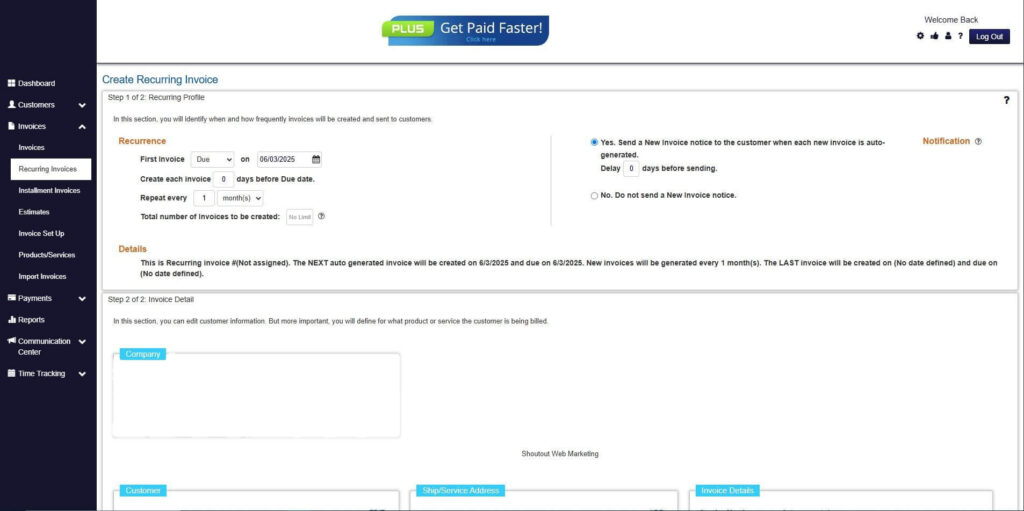
Step 7: Fill in the Create Recurring Invoice Form
- Fill in all the necessary fields.
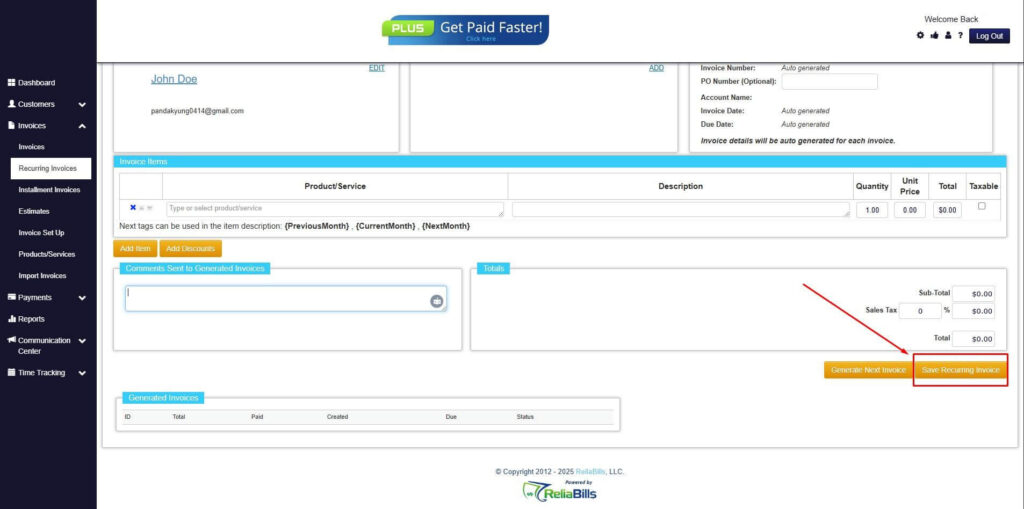
Step 8: Save Recurring Invoice
- After filling up the form, click “Save Recurring Invoice” to continue.
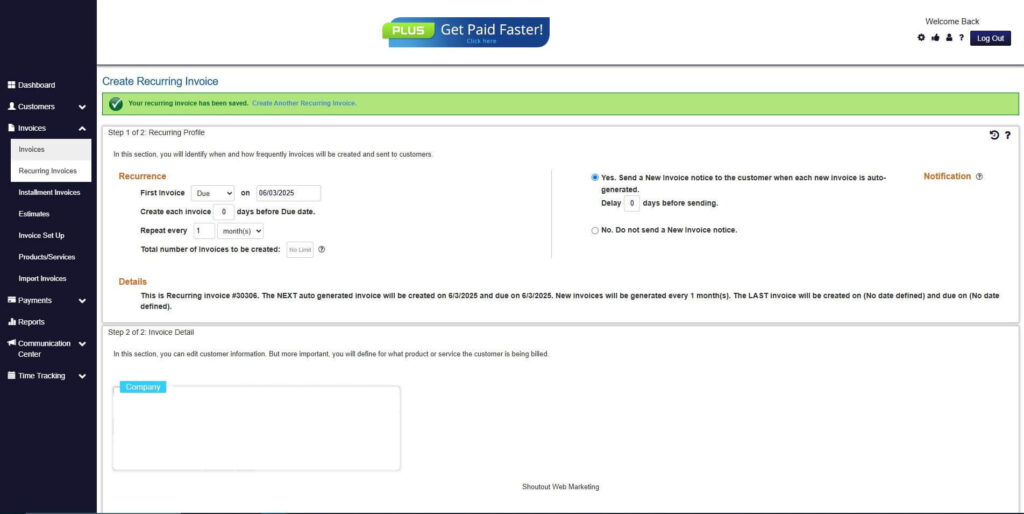
Step 9: Recurring Invoice Created
- Your Recurring Invoice has been created.
Frequently Asked Questions (FAQs)
1. What is invoice automation?
Invoice automation is the process of using software to manage invoicing tasks automatically. It handles invoice creation, delivery, and tracking. This reduces manual effort and improves accuracy.
2. How do I know if my business needs automation?
Signs include increasing invoice volume, frequent errors, and delayed payments. Difficulty tracking invoices is another indicator. These challenges highlight the benefits of invoice automation.
3. Is manual invoicing bad for small businesses?
Manual invoicing can work for very small operations. However, it becomes inefficient as the business grows. Automation supports scalability and efficiency.
4. Does automation help reduce late payments?
Yes, automated reminders and timely invoicing improve payment behavior. Customers are more likely to pay on time. This reduces overdue accounts.
5. Is invoice automation expensive to implement?
Many solutions are affordable and scalable. Costs are often offset by time savings and improved cash flow. The long-term benefits outweigh the initial investment.
Conclusion
Recognizing the signs that your business needs invoice automation is essential for maintaining efficiency and financial stability. Indicators such as increasing invoice volume, frequent errors, delayed payments, and limited visibility into cash flow highlight the limitations of manual systems. Addressing these issues early allows businesses to avoid operational bottlenecks and revenue loss. The benefits of invoice automation become increasingly valuable as businesses grow.
Delaying automation can lead to compounding inefficiencies that impact both operations and customer experience. Manual processes struggle to keep up with expanding demands, resulting in higher costs and reduced accuracy. Businesses that fail to adapt risk falling behind competitors who leverage modern tools. Early adoption ensures smoother transitions and better outcomes.
Looking forward, adopting invoice automation is a strategic move for businesses aiming to improve efficiency, accuracy, and financial control. It enables streamlined operations, faster payments, and enhanced customer satisfaction. Companies that embrace automation position themselves for sustainable growth and long-term success.