
Overdue accounts remain one of the most persistent challenges businesses face, particularly when trying to maintain stable cash flow and predictable financial operations. When payments are delayed, it creates a ripple effect that can disrupt budgeting, delay vendor payments, and even impact growth opportunities. Many organizations still rely on manual tracking methods, which often result in missed due dates, inconsistent follow-ups, and increased administrative burden. This is where automated payment scheduling emerges as a powerful solution, enabling businesses to streamline billing processes and significantly reduce the risk of overdue accounts.
By implementing automation, companies can ensure that invoices are issued on time, reminders are sent consistently, and payments are collected efficiently without constant human intervention. This not only improves operational efficiency but also enhances customer experience by providing clear and predictable payment expectations. As businesses scale, relying on manual systems becomes increasingly unsustainable, making automation a necessity rather than a luxury. Ultimately, automated payment scheduling helps businesses maintain financial discipline while improving cash flow reliability.
What Is Automated Payment Scheduling?
Automated payment scheduling refers to the process of using digital systems to plan, manage, and execute payment collections based on predefined rules and timelines. Instead of manually tracking invoices and due dates, businesses can set up recurring billing cycles, payment terms, and automated reminders that operate seamlessly in the background. This ensures that payments are consistently requested and collected without delays or oversight.
Unlike manual billing processes, which require constant monitoring and follow-up, automated payment scheduling minimizes human involvement and reduces the risk of errors. It also differs from one-time billing systems by enabling recurring transactions, making it especially valuable for subscription-based or repeat-service businesses. With automation, businesses gain better control over their receivables while providing customers with a smoother and more convenient payment experience.
Why Overdue Accounts Are a Major Business Challenge
Disrupt cash flow and financial planning
Overdue accounts directly impact a company’s ability to maintain consistent cash flow, which is essential for day-to-day operations and long-term planning. When expected payments are delayed, businesses may struggle to meet their own financial obligations, including payroll, supplier payments, and operational expenses. This unpredictability can force companies to rely on external financing, increasing costs and financial risk. Over time, repeated disruptions can weaken overall financial stability and limit growth opportunities.
Increase administrative workload for collections
Managing overdue accounts manually requires significant time and effort from finance and operations teams. Employees must track outstanding invoices, send reminders, and follow up with customers, often across multiple communication channels. This repetitive process not only reduces productivity but also diverts resources away from more strategic tasks. As the volume of overdue accounts grows, the administrative burden can quickly become overwhelming and inefficient.
Strain customer relationships
Frequent payment follow-ups and collection efforts can create tension between businesses and their customers. When communication is inconsistent or poorly timed, it may come across as unprofessional or overly aggressive. This can damage trust and negatively impact long-term relationships, especially with loyal or high-value clients. Maintaining a balance between effective collections and positive customer experience becomes increasingly difficult without structured systems.
Lead to revenue loss and operational inefficiencies
Unpaid invoices can eventually turn into bad debt, resulting in direct revenue loss for the business. Additionally, the time and resources spent chasing payments contribute to operational inefficiencies and increased costs. Businesses may also face challenges in forecasting revenue accurately, which affects decision-making and strategic planning. Over time, these inefficiencies can erode profitability and hinder overall business performance.
How Automated Payment Scheduling Works
Automated payment scheduling operates by allowing businesses to define billing cycles, due dates, and payment rules within a centralized system. Once configured, the system automatically generates invoices and schedules payment requests according to the predefined timeline. This eliminates the need for manual intervention and ensures that billing processes remain consistent and reliable.
In addition to scheduling invoices, many systems offer Auto Pay functionality, enabling customers to authorize automatic payments on specified dates. Automated reminders are also sent before and after due dates, keeping customers informed and reducing the likelihood of missed payments. Real-time tracking features provide visibility into payment statuses, allowing businesses to monitor receivables and take action when necessary.
Key Features of Automated Payment Scheduling Systems
Recurring billing and invoice automation
Recurring billing allows businesses to automatically generate invoices at regular intervals without manual input. This ensures that customers are billed consistently and on time, reducing the chances of missed or delayed invoices. Automated invoice generation also minimizes errors and improves overall billing accuracy. Over time, this consistency helps establish reliable cash flow patterns and simplifies financial management.
Auto Pay with secure customer authorization
Auto Pay enables customers to authorize automatic deductions from their preferred payment method on scheduled dates. This significantly reduces the risk of late or missed payments, as transactions are completed without requiring manual action from the customer. Secure authorization protocols ensure that customer data is protected while maintaining compliance with payment regulations. As a result, businesses can improve collection rates while enhancing customer convenience.
Customizable billing schedules and payment terms
Automated systems allow businesses to tailor billing schedules and payment terms to suit different customer segments or service models. This flexibility ensures that payment expectations are clearly defined and aligned with business needs. Customization also enables businesses to adapt to changing requirements without disrupting operations. By offering tailored payment options, companies can improve customer satisfaction and reduce payment delays.
Automated reminders and notifications
Automated reminders ensure that customers are consistently notified about upcoming and overdue payments. These notifications can be scheduled at strategic intervals, helping customers stay informed and prepared. Consistent communication reduces the likelihood of forgotten payments and improves overall payment behavior. Additionally, it eliminates the need for manual follow-ups, saving time and resources.
Real-time payment tracking and reporting
Real-time tracking provides businesses with immediate visibility into payment statuses and outstanding invoices. This enables faster decision-making and more effective cash flow management. Detailed reporting tools also offer insights into payment trends, customer behavior, and collection performance. With accurate data, businesses can identify issues early and optimize their billing strategies.
Integration with accounting and CRM systems
Integration with accounting and CRM platforms ensures seamless data flow across business systems. This eliminates the need for duplicate data entry and reduces the risk of inconsistencies. By connecting billing, customer, and financial data, businesses gain a holistic view of their operations. This integration enhances efficiency and supports more informed decision-making.
How Automated Scheduling Prevents Overdue Accounts
Ensures payments are collected on time through Auto Pay
Automated payment scheduling allows businesses to collect payments directly on the due date באמצעות Auto Pay functionality. This removes the dependency on customers to manually initiate payments, significantly reducing delays. As a result, businesses experience more consistent and predictable cash flow. Over time, this reliability strengthens financial stability and reduces overdue accounts.
Sends timely reminders to customers before due dates
Automated reminders play a crucial role in preventing missed payments by keeping customers informed. Notifications sent before due dates act as proactive prompts, encouraging timely action. This reduces the likelihood of customers forgetting or overlooking payment deadlines. Consistent reminders also create a sense of accountability and improve payment discipline.
Reduces human error in billing and scheduling
Manual billing processes are prone to errors such as incorrect dates, missed invoices, or inconsistent follow-ups. Automation eliminates these risks by standardizing billing workflows and ensuring accuracy. This reduces discrepancies and prevents issues that could lead to delayed payments. With fewer errors, businesses can maintain smoother operations and stronger customer trust.
Maintains consistent billing cycles
Consistency in billing cycles ensures that customers know exactly when to expect invoices and payments. This predictability helps customers plan their finances and reduces confusion. Automated systems enforce these cycles without deviation, ensuring reliability. Over time, consistent billing patterns contribute to improved payment behavior and fewer overdue accounts.
Improves visibility into outstanding payments
Automated systems provide real-time insights into which invoices are paid, pending, or overdue. This visibility allows businesses to take proactive measures before issues escalate. By identifying trends and patterns, companies can address potential risks early. Improved visibility ultimately leads to better control over receivables and reduced overdue accounts.
The Role of Recurring Billing in Payment Scheduling
Recurring billing is a foundational component of automated payment scheduling, enabling businesses to generate invoices automatically on a fixed schedule. This eliminates the need for manual invoice creation and ensures that billing processes remain consistent across all customers. For subscription-based and repeat-service models, recurring billing provides a reliable framework for managing payments efficiently.
By automating invoice generation, businesses can reduce administrative workload while maintaining accuracy and consistency. Recurring billing also supports predictable revenue streams, making financial planning more effective. As a result, businesses can focus on growth and customer satisfaction rather than managing repetitive billing tasks.
Benefits of Preventing Overdue Accounts
Improved cash flow and financial stability
Preventing overdue accounts ensures that businesses receive payments on time, maintaining a steady flow of revenue. This stability allows for better financial planning and reduces reliance on external financing. Consistent cash flow also supports operational efficiency and long-term growth. Over time, improved financial health strengthens the overall resilience of the business.
Reduced time spent on collections
Automation significantly reduces the need for manual follow-ups and collection efforts. This frees up valuable time for employees to focus on strategic initiatives rather than administrative tasks. By minimizing repetitive work, businesses can improve productivity and efficiency. Reduced collection efforts also lower operational costs.
Lower risk of bad debt
Timely payments reduce the likelihood of invoices becoming uncollectible. By addressing payment issues early, businesses can prevent accounts from escalating into bad debt. This protects revenue and improves financial performance. Over time, lower bad debt levels contribute to stronger profitability.
Better customer payment behavior
Consistent billing and reminders encourage customers to adopt more disciplined payment habits. Clear expectations and automated processes reduce confusion and improve compliance. Customers are more likely to pay on time when the process is simple and predictable. This leads to stronger relationships and improved trust.
Increased operational efficiency
Automation streamlines billing and payment processes, reducing manual intervention and errors. This improves overall efficiency and allows businesses to scale operations بسهولة. With fewer bottlenecks, companies can handle higher transaction volumes without additional resources. Enhanced efficiency supports sustainable growth and competitiveness.
Common Challenges Without Automated Scheduling
Without automation, businesses often struggle with delayed invoice generation, inconsistent follow-ups, and limited visibility into payment statuses. These challenges can lead to increased overdue accounts and reduced cash flow reliability. Manual processes also make it difficult to scale operations, as the workload grows with the number of customers and transactions.
Additionally, the lack of standardized workflows increases the risk of errors and inconsistencies. This can result in customer dissatisfaction and strained relationships. Over time, these challenges can hinder growth and reduce overall business performance.
Best Practices for Implementing Automated Payment Scheduling
Clearly define payment terms and billing cycles
Establishing clear payment terms ensures that customers understand their obligations from the outset. Well-defined billing cycles create consistency and reduce confusion بشأن due dates. This clarity improves communication and minimizes disputes. As a result, businesses can achieve more reliable payment outcomes.
Encourage customers to enroll in Auto Pay
Promoting Auto Pay adoption simplifies the payment process for customers while improving collection rates. Customers benefit from convenience, while businesses gain more predictable cash flow. Providing incentives or clear instructions can increase enrollment rates. Over time, widespread Auto Pay usage significantly reduces overdue accounts.
Use automated reminders for upcoming payments
Scheduling reminders at strategic intervals helps keep customers informed and prepared. These reminders act as proactive prompts, reducing the likelihood of missed payments. Consistent communication reinforces payment expectations. This approach improves overall payment behavior and reduces collection efforts.
Monitor payment reports regularly
Regularly reviewing payment reports allows businesses to identify trends and address issues early. Insights into customer behavior can inform adjustments to billing strategies. Monitoring also ensures that automation systems are functioning as expected. Continuous oversight supports ongoing optimization and efficiency.
Adjust schedules based on customer behavior and business needs
Flexibility in scheduling allows businesses to adapt to changing الظروف and customer preferences. Adjusting payment terms based on behavior can improve compliance and satisfaction. This adaptability ensures that billing processes remain effective over time. By aligning schedules with real-world needs, businesses can achieve better outcomes.
How Automation Improves Collections Efficiency
Automation streamlines the entire billing and collections process by reducing manual intervention and standardizing workflows. This leads to faster invoice generation, timely reminders, and more efficient payment collection. With fewer errors and delays, businesses can improve overall performance and reduce operational costs.
Enhanced reporting and real-time insights also enable better decision-making and strategic planning. By leveraging automation, businesses can scale their operations without increasing administrative burden. This creates a more efficient and sustainable approach to managing receivables.
Key Benefits of Automated Payment Scheduling
Timely and consistent payment collection
Automated payment scheduling ensures that invoices are issued and payments are collected on time. This consistency reduces delays and improves cash flow predictability. By eliminating manual intervention, businesses can maintain reliable billing processes. Over time, this leads to stronger financial stability.
Reduced overdue invoices
Automation minimizes the risk of missed payments through reminders and Auto Pay features. This significantly lowers the number of overdue accounts. With fewer delays, businesses can improve revenue collection and reduce financial stress. Consistent payment behavior also enhances operational efficiency.
Lower administrative workload
By automating repetitive tasks, businesses can reduce the burden on their teams. Employees can focus on higher-value activities rather than manual billing and follow-ups. This improves productivity and job satisfaction. Reduced workload also supports scalability and growth.
Improved customer satisfaction
Automated systems provide a seamless and transparent payment experience for customers. Clear communication and predictable billing schedules enhance trust and satisfaction. Customers appreciate the convenience of automated payments and reminders. This leads to stronger relationships and long-term loyalty.
Scalable and efficient billing operations
Automation enables businesses to handle increasing transaction volumes without additional resources. This scalability supports growth and expansion. Efficient processes reduce costs and improve performance. Over time, businesses can achieve sustainable success with minimal operational friction.
Common Use Cases
SaaS subscription businesses
Subscription-based companies rely heavily on recurring billing and automated payment scheduling to manage customer payments. Automation ensures consistent invoicing and reduces churn caused by payment issues. This model supports predictable revenue streams and efficient operations.
Utilities and telecom providers
These industries require reliable billing systems to handle large volumes of recurring payments. Automated scheduling ensures timely billing and reduces overdue accounts. This improves cash flow and operational efficiency.
Membership and subscription services
Organizations offering memberships benefit from automated billing to manage renewals and payments. Consistent scheduling improves customer retention and satisfaction. Automation also simplifies administrative tasks and reduces errors.
Managed service providers
Service providers with ongoing contracts can use automation to streamline billing and collections. This ensures timely payments and reduces manual workload. Consistent invoicing supports better financial planning and growth.
Small businesses with recurring customers
Small businesses can leverage automation to improve efficiency and reduce overdue accounts. Automated payment scheduling simplifies billing processes and enhances cash flow. This allows small teams to focus on growth and customer service.
How ReliaBills Helps Prevent Overdue Accounts with Automation
Automating payment scheduling through a reliable platform allows businesses to eliminate inefficiencies and significantly reduce overdue accounts. Digital invoicing systems ensure that invoices are generated accurately and delivered on time, while automated reminders keep customers informed about upcoming payments. This structured approach minimizes delays and creates a more predictable billing environment. As a result, businesses can maintain steady cash flow and improve overall financial performance without increasing administrative workload.
ReliaBills enhances this process by offering robust recurring billing capabilities that ensure invoices are created consistently based on predefined schedules. These features help businesses maintain uniform billing cycles, reducing confusion and improving customer payment behavior. By automating both invoicing and collections, companies can ensure timely payment collection while retaining full control over their customer relationships. This level of consistency is critical for reducing overdue accounts and improving operational efficiency.
With ReliaBills PLUS, businesses gain access to advanced automation, reporting, and customer management tools that further strengthen their billing processes. Features such as customizable templates, real-time analytics, and centralized document management enable greater accuracy and visibility. These tools not only simplify invoice management but also enhance compliance and audit readiness. Ultimately, ReliaBills provides a comprehensive solution for businesses looking to prevent overdue accounts and scale efficiently.
How to Create a New Recurring Invoice Using ReliaBills
Creating a New Recurring Invoice using ReliaBills involves the following steps:
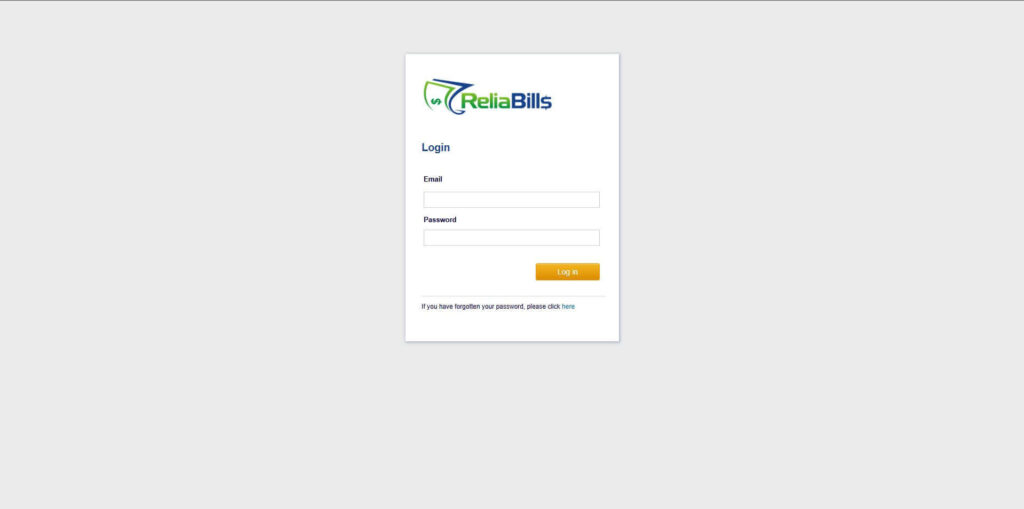
Step 1: Login to ReliaBills
- Access your ReliaBills Account using your login credentials. If you don’t have an account, sign up here.
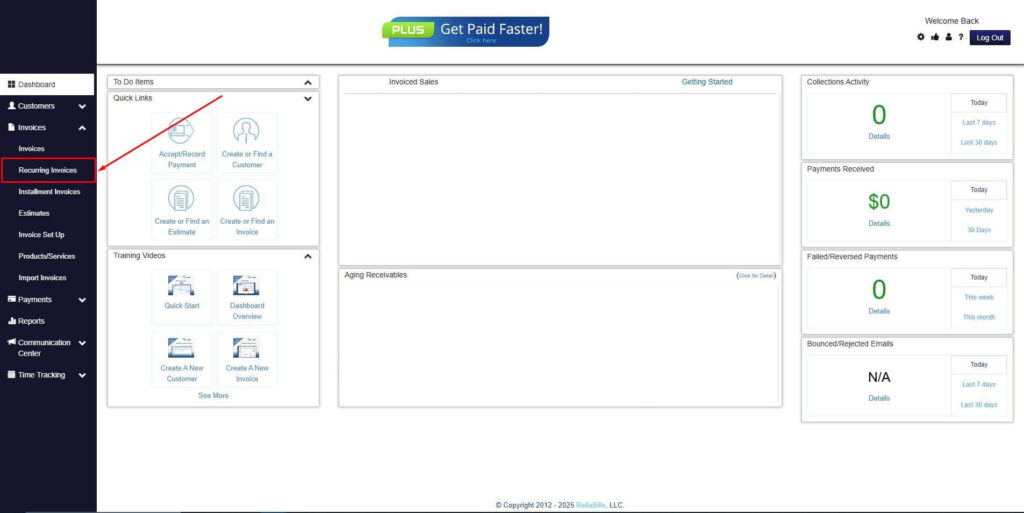
Step 2: Click on Recurring Invoices
- Navigate to the Invoices Dropdown and click on Recurring Invoices for an overview of the list of your existing customers.
Step 3: Go to the Customers Tab
- If you have already created a customer, search for them in the Customers tab and make sure their status is “Active”.
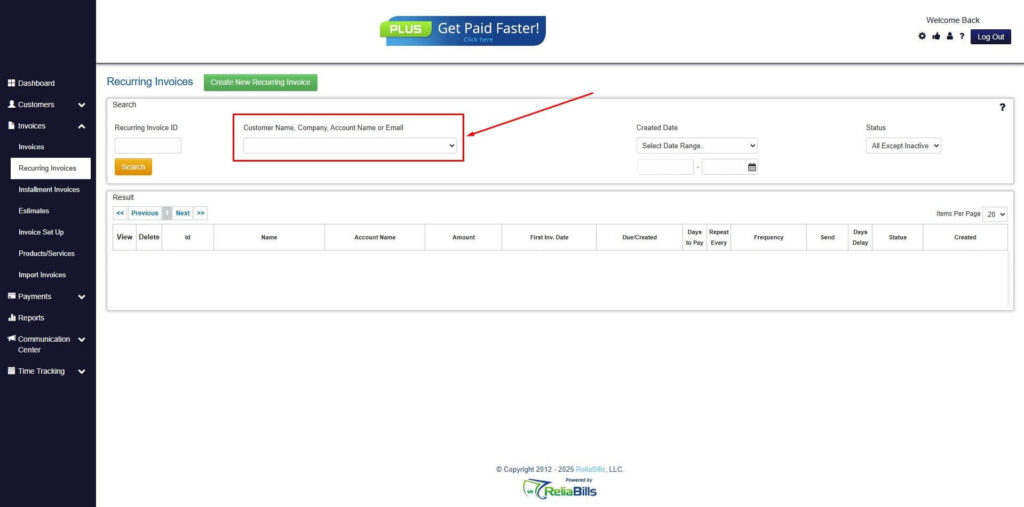
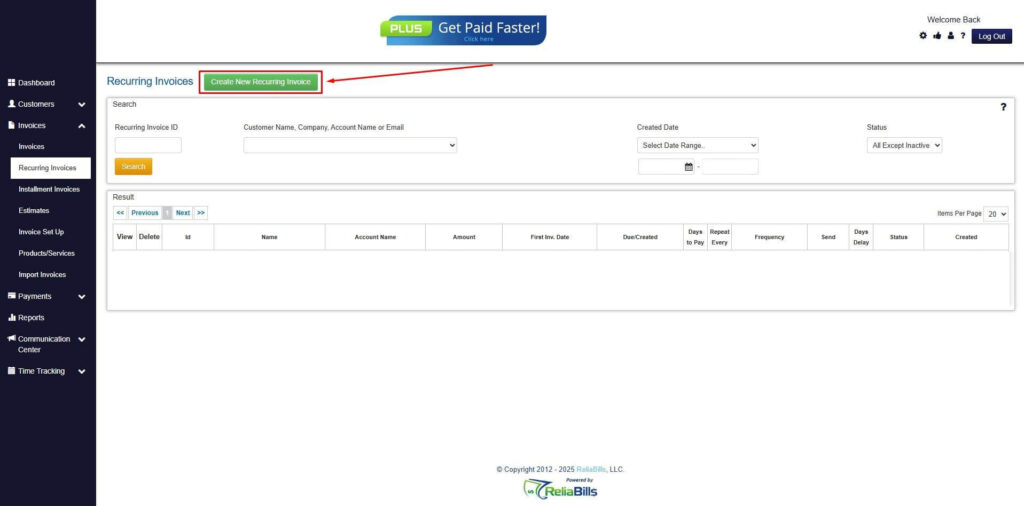
Step 4: Click the Create New Recurring Invoice
- If you haven’t created any customers yet, click the Create New Recurring Invoice to create a new customer.
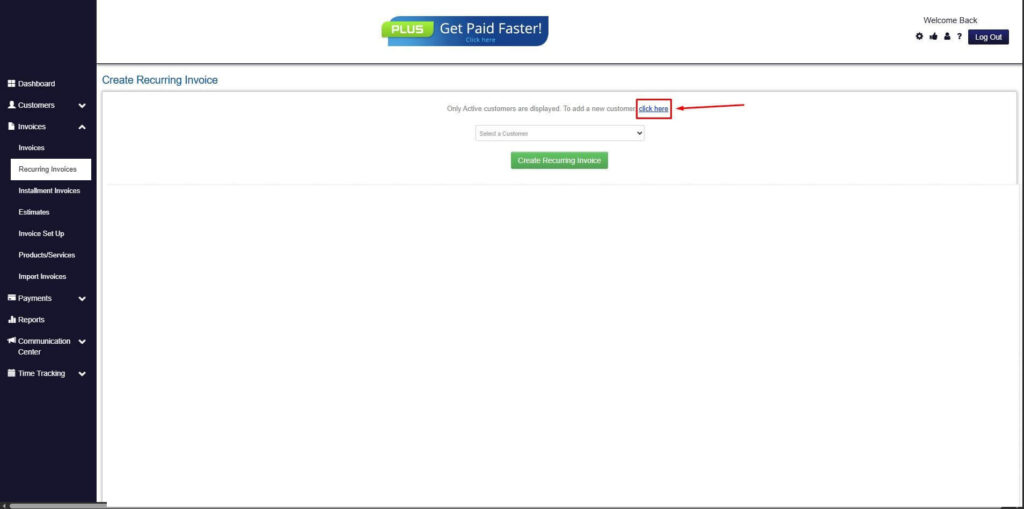
Step 5: Click on the “Click here” Button
- Click on the “Click here” button to proceed with the recurring invoice creation.
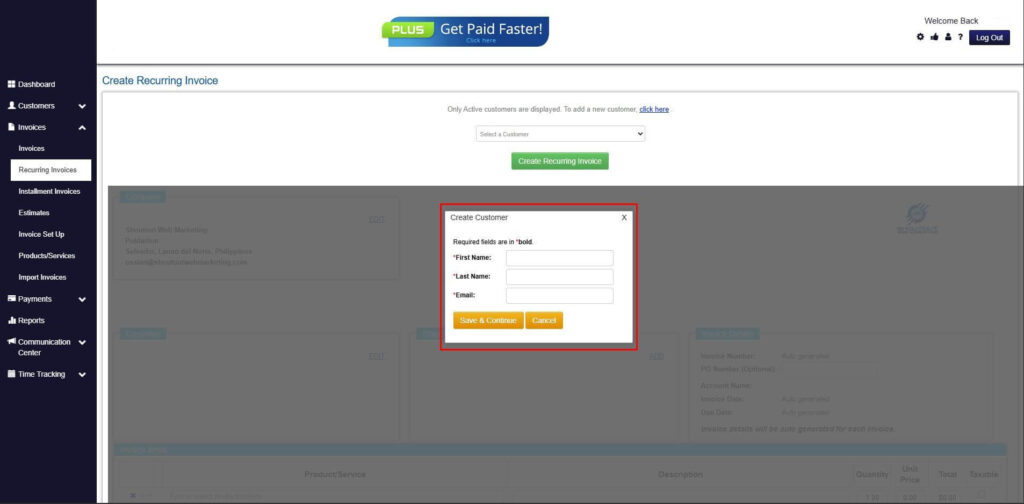
Step 6: Create Customer
- Provide your First Name, Last Name, and Email to proceed.
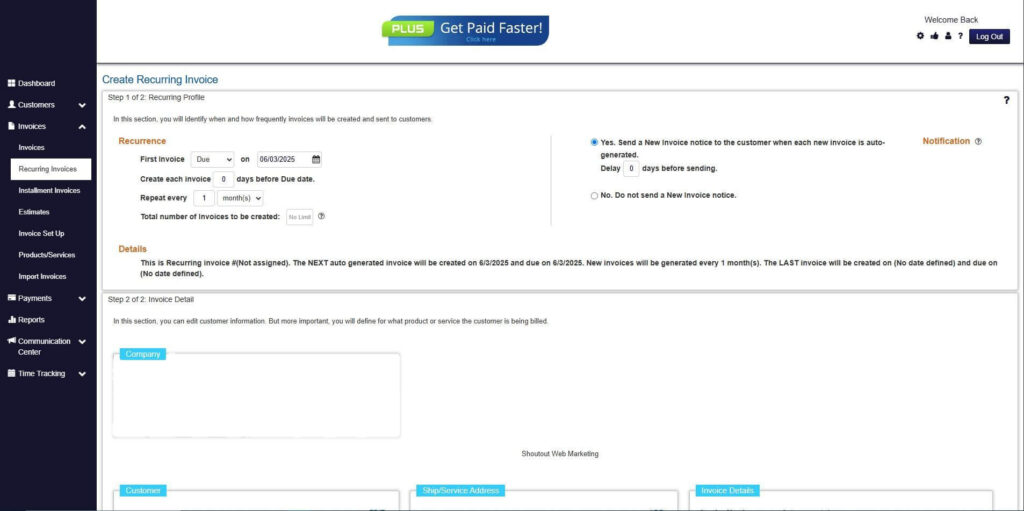
Step 7: Fill in the Create Recurring Invoice Form
- Fill in all the necessary fields.
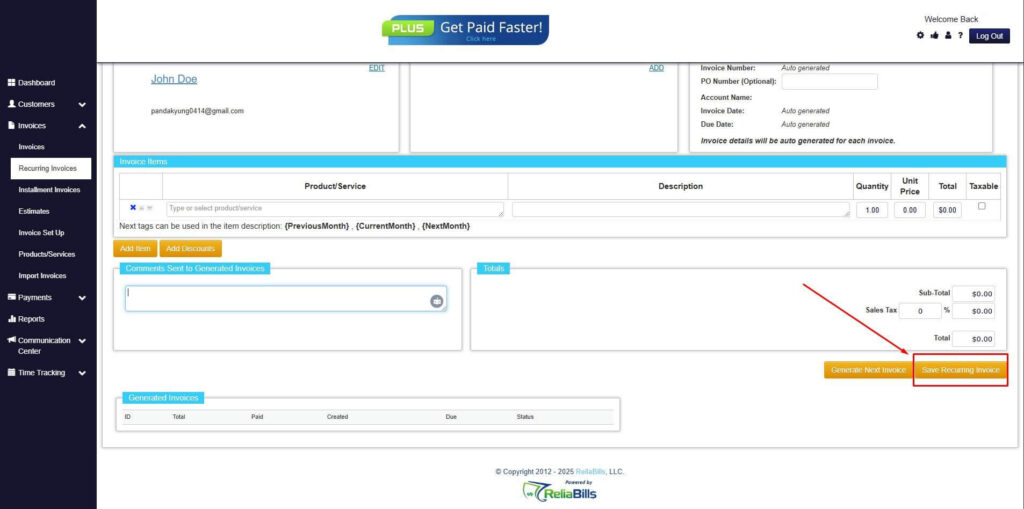
Step 8: Save Recurring Invoice
- After filling up the form, click “Save Recurring Invoice” to continue.
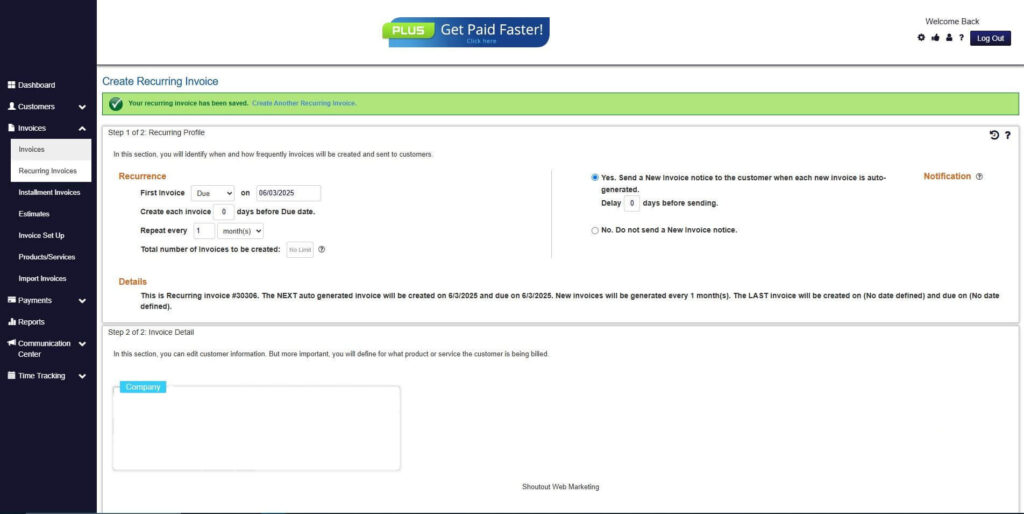
Step 9: Recurring Invoice Created
- Your Recurring Invoice has been created.
Frequently Asked Questions (FAQs)
1. What is automated payment scheduling?
Automated payment scheduling is a system that allows businesses to set predefined rules for invoicing and payment collection. It ensures that invoices are generated and payments are collected on time without manual intervention. This improves efficiency and reduces the risk of overdue accounts.
2. How does it prevent overdue accounts?
Automation prevents overdue accounts by sending reminders, enabling Auto Pay, and ensuring consistent billing cycles. These features reduce the likelihood of missed payments and improve customer compliance. As a result, businesses experience fewer delays and better cash flow.
3. Is Auto Pay necessary for automation?
While not mandatory, Auto Pay significantly enhances the effectiveness of automated payment scheduling. It ensures that payments are collected automatically on due dates, reducing reliance on customer action. This leads to more consistent and reliable payment collection.
4. Can small businesses benefit from payment scheduling?
Yes, small businesses can greatly benefit from automation by reducing manual workload and improving cash flow. Automated systems help streamline operations and reduce errors. This allows small teams to focus on growth and customer service.
5. What features should a payment system include?
An effective payment system should include recurring billing, Auto Pay, automated reminders, and real-time tracking. Integration with accounting and CRM systems is also महत्वपूर्ण for efficiency. These features ensure a comprehensive and reliable billing process.
Conclusion
Automated payment scheduling plays a critical role in preventing overdue accounts by ensuring timely invoicing, consistent reminders, and efficient payment collection. By reducing manual errors and streamlining billing processes, businesses can maintain steady cash flow and improve financial stability. The integration of recurring billing and Auto Pay further enhances efficiency, making it easier to manage receivables at scale.
As businesses continue to grow, adopting automation becomes essential for maintaining operational efficiency and reducing financial risk. Leveraging advanced tools and systems allows companies to stay competitive while delivering a better customer experience. Moving forward, businesses that embrace automated payment scheduling will be better positioned to achieve sustainable growth and long-term success.