
IT service providers play a critical role in supporting modern businesses by delivering continuous, always-on managed services. These services often include monitoring, maintenance, cybersecurity, cloud management, and technical support that operate in the background of daily business operations. Because these services are ongoing rather than one-time deliverables, they require a billing structure that reflects their continuous nature. This makes predictable and automated billing essential for both providers and clients.
For IT companies, consistency in revenue is just as important as consistency in service delivery. Managed services are typically sold through contracts or subscription-based agreements, meaning clients are billed on a recurring basis rather than per transaction. Without a structured billing system, managing dozens or even hundreds of clients becomes complex and error-prone. This is where recurring billing becomes a foundational part of financial operations.
Recurring invoicing has become a key solution for simplifying billing processes and ensuring stable cash flow for IT service providers. By automating invoice generation, businesses can eliminate manual work, reduce errors, and maintain consistent billing cycles. As demand for managed services continues to grow, the use of recurring invoices for managed services is becoming a standard practice across the IT industry.
What Are Managed IT Services?
Managed IT services refer to outsourced IT functions that are continuously monitored and maintained by a service provider. These services can include network monitoring, server maintenance, cloud infrastructure management, cybersecurity protection, and helpdesk support. Instead of addressing issues reactively, managed service providers (MSPs) take a proactive approach to ensure systems remain stable and secure.
These services are typically delivered through subscription-based models, where clients pay a fixed or structured fee for ongoing support. Service Level Agreements (SLAs) define the scope, performance standards, and response times expected from the provider. This ensures accountability and clarity between both parties regarding service expectations. SLAs also form the foundation for billing structures in managed IT environments.
Because managed services are continuous and long-term in nature, they require a billing system that can handle ongoing contracts efficiently. Unlike one-time projects, these services involve monthly or annual commitments that must be invoiced consistently. This makes structured billing essential for maintaining operational stability and financial predictability.
What Are Recurring Invoices?
Recurring invoices are automated billing documents generated at regular intervals based on predefined schedules. Instead of manually creating invoices each billing cycle, businesses set up a system that automatically generates invoices monthly, quarterly, or annually. This ensures that clients are billed consistently without manual intervention.
These invoices are commonly used in subscription-based and contract-based business models, especially in industries like IT services. Once configured, the system continues to issue invoices based on the agreed billing cycle until the contract is modified or terminated. This reduces administrative effort and ensures billing consistency.
Recurring invoices also help eliminate human error in repetitive billing processes. Since the system follows predefined rules, it ensures accuracy in pricing, timing, and invoice details. This is particularly important for IT service providers managing multiple clients with different service agreements.
Why IT Service Providers Use Recurring Invoices
Ensure consistent and predictable revenue streams
IT service providers rely on steady monthly or annual income to support staffing, infrastructure, and service delivery. Recurring invoices help lock in predictable cash flow based on contracted services. This stability allows MSPs (Managed Service Providers) to plan budgets, investments, and scaling strategies more effectively. It also reduces revenue uncertainty caused by one-off billing cycles.
Reduce manual invoicing workload
Without automation, finance teams must manually generate invoices for every client and billing cycle. Recurring invoicing eliminates this repetitive task by automating invoice creation and delivery. This significantly reduces administrative workload and frees up internal resources. Teams can then focus more on service quality and client support rather than billing operations.
Improve billing accuracy and consistency
Automated recurring invoices follow predefined rules set in contracts or subscription plans. This reduces the risk of human error such as incorrect pricing, missing line items, or inconsistent billing periods. Consistency also improves client trust and reduces disputes. Over time, standardized billing processes create smoother financial operations.
Minimize late or missed payments
Regular and predictable invoicing cycles help clients stay aware of payment obligations. Many systems also include automated reminders and notifications. This reduces the likelihood of missed deadlines or overdue invoices. As a result, IT providers experience improved payment discipline and healthier cash flow.
Support scalable service delivery
As IT providers onboard more clients, manual billing becomes unsustainable. Recurring invoicing systems allow businesses to scale without proportionally increasing administrative staff. Whether managing 10 clients or 1,000, the billing process remains efficient and controlled. This scalability is essential for growing MSPs.
How Recurring Invoices Work in Managed Services
Recurring invoicing in managed IT services begins with setting up billing schedules based on client contracts or subscription plans. Once configured, invoices are automatically generated at the specified intervals without manual input. This ensures that billing aligns directly with service agreements and SLAs.
When services are ongoing, the system continuously issues invoices for active contracts. If clients upgrade their plans, add services, or adjust usage, the billing system updates automatically to reflect these changes. This ensures that invoices always match the current service scope.
In addition, modern systems track payments in real time and update billing records automatically. This allows IT providers to monitor outstanding balances, payment history, and invoice status without manual tracking. It creates a seamless connection between service delivery and financial management.
Common Managed Service Billing Models
Flat-rate monthly service plans
Clients pay a fixed monthly fee for a defined set of IT services. This model simplifies budgeting for clients and ensures predictable revenue for providers. It typically includes standard support, monitoring, and maintenance services. It is one of the most common models in managed IT environments.
Per-user or per-device pricing
Billing is based on the number of users or devices being managed. As a client grows, their costs increase proportionally. This model aligns pricing directly with service usage. It is especially common in endpoint management and cloud-based IT support.
Tiered service packages
Providers offer different levels of service (basic, standard, premium) with increasing features and support. Clients choose the tier that best fits their needs and budget. Higher tiers usually include faster response times and advanced security features. This model helps segment customers efficiently.
Usage-based billing for additional services
Clients are charged based on actual consumption of services such as cloud storage, bandwidth, or support hours. This ensures fairness in billing and flexibility for clients with variable needs. It is often used alongside other pricing models. It also helps providers monetize additional services.
Hybrid models combining fixed and variable fees
This approach blends a base subscription fee with additional charges for extra services. It provides stability while still capturing variable usage. Many enterprise IT contracts use this model. It balances predictability with flexibility.
Key Features of Recurring Invoicing Systems for IT Providers
Automated invoice generation and delivery
Invoices are automatically created based on predefined billing schedules. They are then sent to clients without manual intervention. This ensures timely and consistent billing. It also reduces administrative delays.
Recurring billing and subscription management
Systems allow providers to manage multiple clients, contracts, and service plans in one platform. Changes in pricing or service scope are automatically reflected in future invoices. This reduces complexity in managing large client portfolios. It also improves operational control.
Real-time payment tracking and reporting
Providers can monitor invoice status, payment confirmations, and overdue accounts instantly. Dashboards provide financial visibility across all clients. This helps finance teams make faster decisions. It also improves cash flow management.
Integration with CRM and service management tools
Recurring invoicing systems often connect with ITSM, PSA, and CRM platforms. This ensures seamless data flow between service delivery and billing. It eliminates duplicate data entry. It also improves accuracy across systems.
Auto Pay and multiple payment options
Clients can set up automatic payments using credit cards, bank transfers, or digital wallets. This reduces delays and improves payment consistency. It also enhances client convenience. Providers benefit from faster revenue collection.
Customizable billing schedules and templates
IT providers can tailor invoice frequency, format, and structure based on client agreements. This flexibility supports diverse service contracts. It also ensures compliance with different billing requirements. Customization improves professionalism and clarity.
Benefits of Recurring Invoices for Managed Services
Predictable cash flow and revenue stability
Recurring billing ensures that income is received on a regular schedule. This helps IT providers maintain financial stability. It also supports better long-term planning. Predictability is essential for scaling operations.
Reduced administrative overhead
Automation eliminates repetitive billing tasks and manual invoice creation. This reduces workload for finance teams. It also lowers operational costs. Staff can focus on higher-value activities.
Improved client billing transparency
Clients receive clear and consistent invoices aligned with their service agreements. This reduces confusion and disputes. It also builds trust between providers and clients. Transparency improves long-term relationships.
Faster payment collection
Automated invoicing and reminders encourage timely payments. Combined with Auto Pay, delays are significantly reduced. This improves overall cash flow. It also reduces outstanding receivables.
Enhanced scalability for growing client bases
IT providers can handle more clients without increasing billing complexity. Systems scale automatically with demand. This supports business expansion. It ensures operational efficiency remains stable.
The Role of Auto Pay in Recurring Invoicing
Auto Pay enhances recurring invoices by automatically collecting payments when invoices are issued. This reduces the need for manual payment processing and ensures that clients are charged on time. It significantly reduces the number of overdue invoices and improves overall payment consistency.
For IT service providers, Auto Pay creates a smoother financial workflow by connecting invoicing directly to payment collection. Clients benefit from convenience, while providers benefit from faster revenue realization. When combined with recurring invoicing, it creates a fully automated billing ecosystem.
Together, recurring invoices and Auto Pay reduce friction in both billing and payments. This combination improves cash flow stability and strengthens long-term client relationships.
Challenges Without Recurring Invoicing
Time-consuming manual billing processes
Without automation, invoices must be created individually each cycle. This consumes significant administrative time. It also increases operational inefficiency. Scaling becomes difficult as clients grow.
Increased risk of billing errors and missed invoices
Manual processes are prone to mistakes such as incorrect amounts or missing invoices. These errors can lead to revenue loss. They also damage client trust. Fixing errors requires additional time and effort.
Difficulty managing multiple clients and contracts
As the number of clients increases, tracking billing manually becomes complex. Different contracts and pricing models add further difficulty. This increases the risk of inconsistencies. It also strains internal teams.
Delayed payments and inconsistent cash flow
Irregular invoicing leads to unpredictable payment cycles. This affects financial stability. It also makes budgeting and forecasting more difficult. Cash flow gaps can impact operations.
Best Practices for Using Recurring Invoices in IT Services
Align billing cycles with service agreements
Ensure invoices reflect the exact terms defined in contracts or SLAs. This avoids confusion and disputes. It also improves transparency. Alignment ensures accuracy in billing.
Clearly define pricing and service scope in contracts
All services should be clearly documented before billing begins. This prevents misunderstandings later. It also simplifies invoice generation. Clear contracts support smoother operations.
Automate invoice generation and reminders
Use systems that automatically create and send invoices on schedule. Include payment reminders for overdue accounts. This improves efficiency and payment consistency. Automation reduces manual effort.
Regularly review and adjust billing for service changes
Update invoices when clients upgrade or downgrade services. This ensures billing accuracy. It also reflects real-time service usage. Regular reviews prevent discrepancies.
Provide clients with transparent billing details
Include itemized charges and clear descriptions in invoices. This improves understanding and trust. It also reduces billing disputes. Transparency strengthens client relationships.
How Automation Improves IT Service Billing
Automation streamlines the entire billing lifecycle from invoice creation to payment tracking. It removes manual steps that often slow down financial operations. This allows IT providers to focus more on service delivery rather than administrative tasks.
It also significantly reduces errors by ensuring consistent application of billing rules and pricing structures. Automated systems maintain accurate records across all clients and contracts. This improves financial reliability and reduces disputes.
Additionally, automation enhances reporting and visibility into revenue streams and client activity. IT providers can analyze performance trends and make informed business decisions. It also supports efficient scaling as client bases grow.
Key Benefits of Recurring Invoicing for IT Providers
- Consistent and predictable billing cycles across all clients
- Reduced late payments and improved cash flow stability
- Lower administrative burden on finance and operations teams
- Better client relationship management through transparent billing
- Scalable billing operations that support business growth
Common Use Cases
- Managed IT support services for businesses
- Cloud service subscriptions and infrastructure management
- Network monitoring and maintenance plans
- Cybersecurity service contracts and protection services
- Helpdesk and remote IT support services
How ReliaBills Helps IT Service Providers Manage Recurring Invoices
ReliaBills helps IT service providers simplify and automate their billing operations by centralizing invoicing into a streamlined digital system. Instead of manually creating invoices for each client and service cycle, providers can automate the entire process from generation to delivery. This reduces administrative workload and minimizes the risk of billing errors that often occur in manual workflows. For managed service businesses, this creates a more efficient and reliable way to handle recurring invoices for managed services at scale.
One of the core advantages of ReliaBills is its recurring billing functionality, which is specifically designed to support subscription-based and contract-based IT service models. Providers can set up automated billing schedules for monthly, quarterly, or custom intervals depending on client agreements. The system also allows easy adjustments for service upgrades, add-ons, or pricing changes without disrupting ongoing billing cycles. This flexibility is essential for IT companies managing evolving service requirements across multiple clients.
ReliaBills PLUS enhances these capabilities by offering advanced automation, reporting, and client management tools tailored for growing IT service providers. Businesses gain deeper visibility into invoice performance, payment status, and revenue trends through real-time analytics dashboards. The platform also supports scalable operations, allowing providers to manage increasing client volumes without adding manual complexity. With these features, ReliaBills enables IT companies to build a more predictable, efficient, and future-ready billing system.
How to Create a New Recurring Invoice Using ReliaBills
Creating a New Recurring Invoice using ReliaBills involves the following steps:
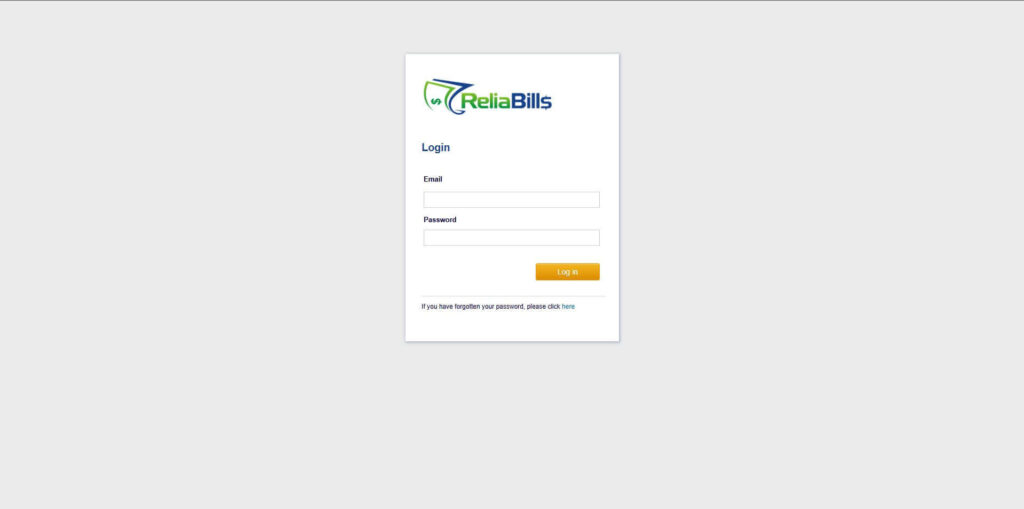
Step 1: Login to ReliaBills
- Access your ReliaBills Account using your login credentials. If you don’t have an account, sign up here.
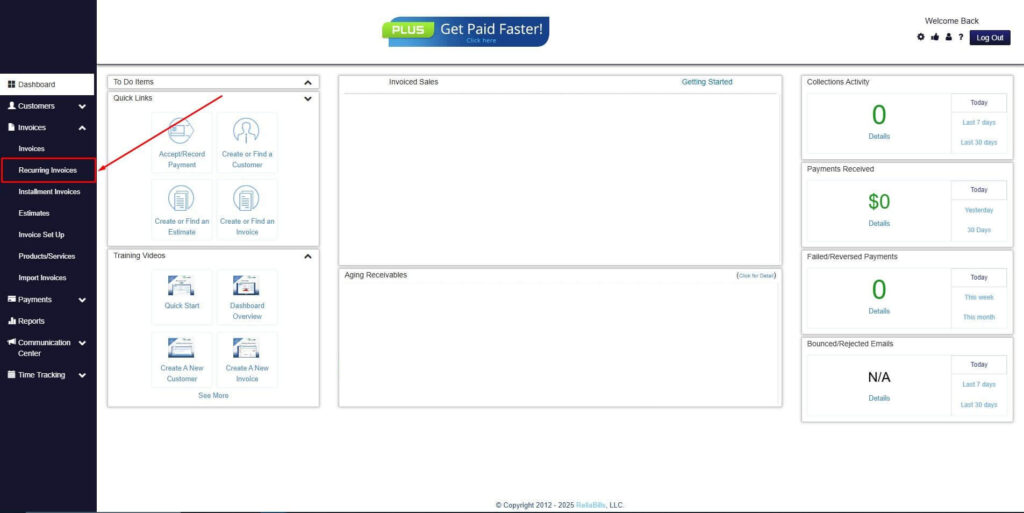
Step 2: Click on Recurring Invoices
- Navigate to the Invoices Dropdown and click on Recurring Invoices for an overview of the list of your existing customers.
Step 3: Go to the Customers Tab
- If you have already created a customer, search for them in the Customers tab and make sure their status is “Active”.
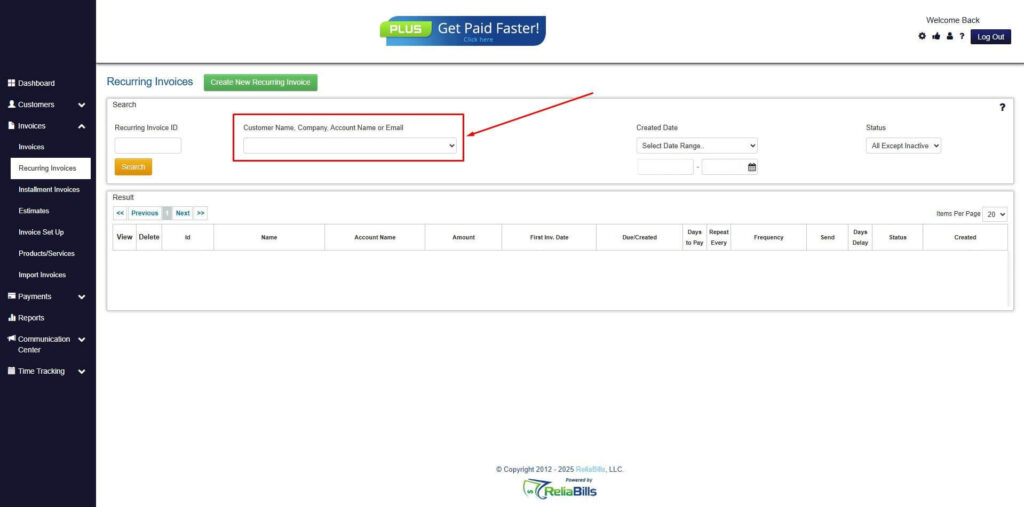
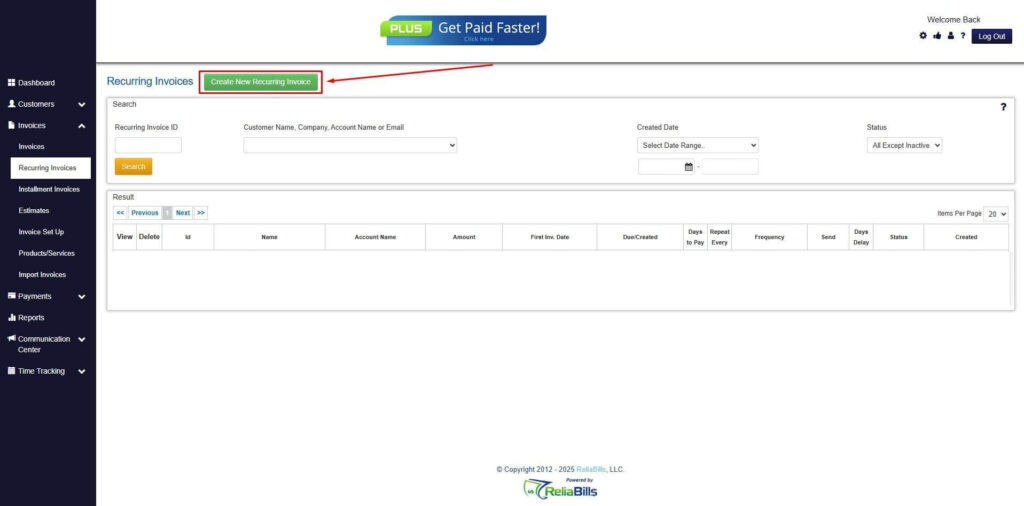
Step 4: Click the Create New Recurring Invoice
- If you haven’t created any customers yet, click the Create New Recurring Invoice to create a new customer.
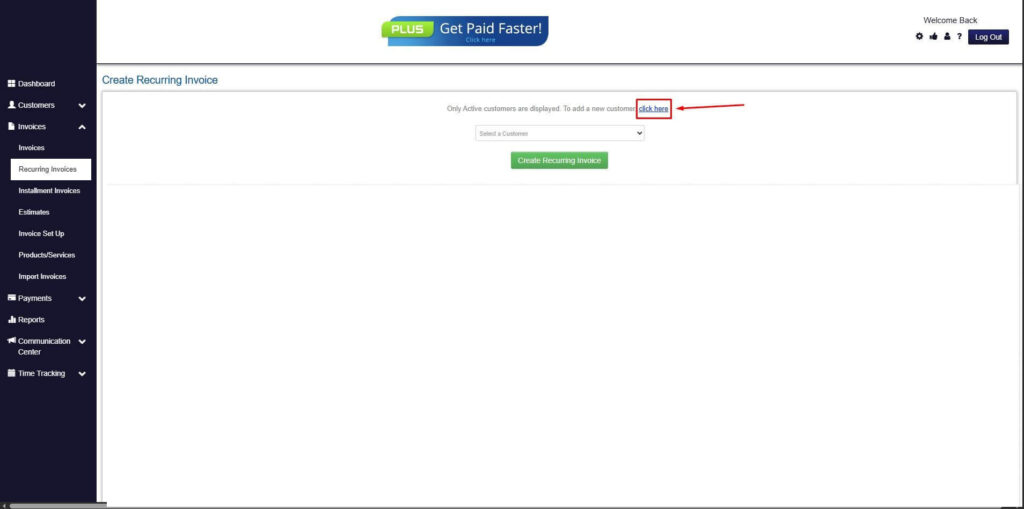
Step 5: Click on the “Click here” Button
- Click on the “Click here” button to proceed with the recurring invoice creation.
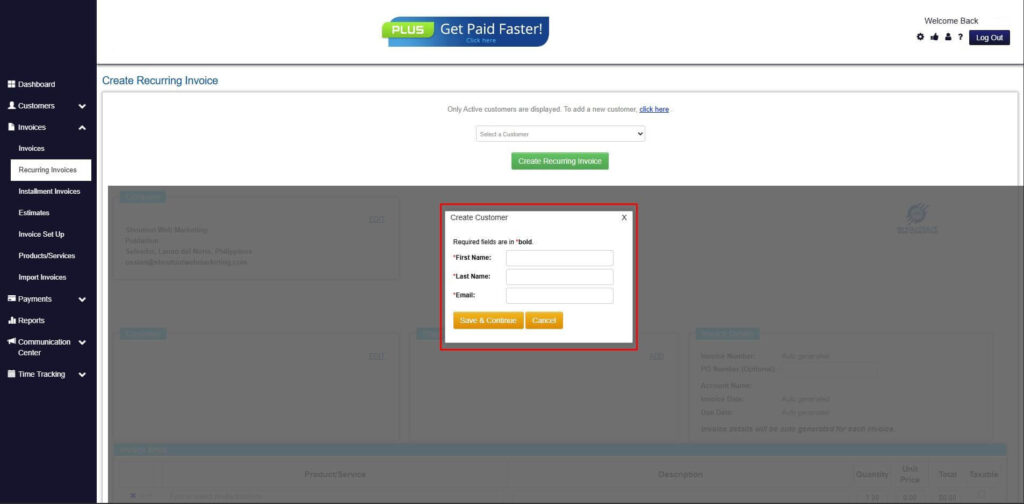
Step 6: Create Customer
- Provide your First Name, Last Name, and Email to proceed.
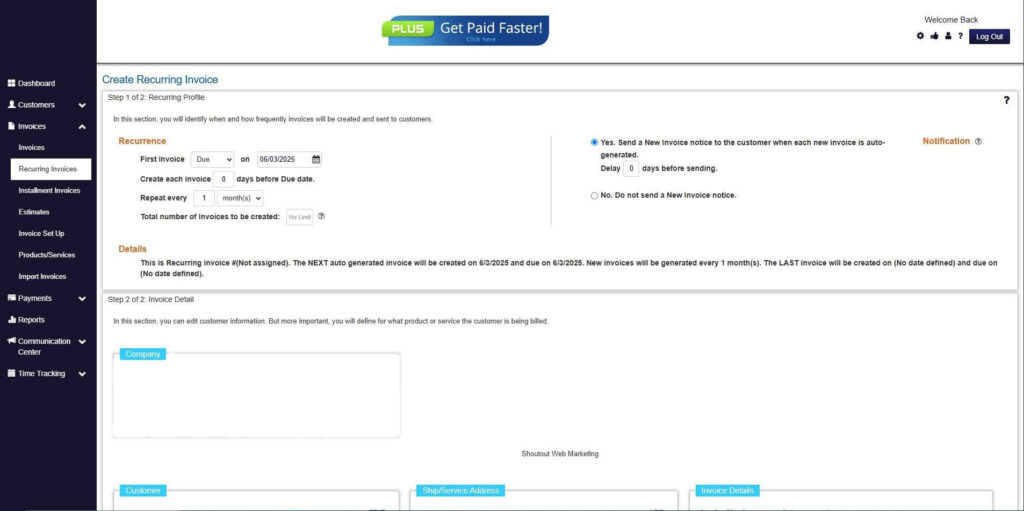
Step 7: Fill in the Create Recurring Invoice Form
- Fill in all the necessary fields.
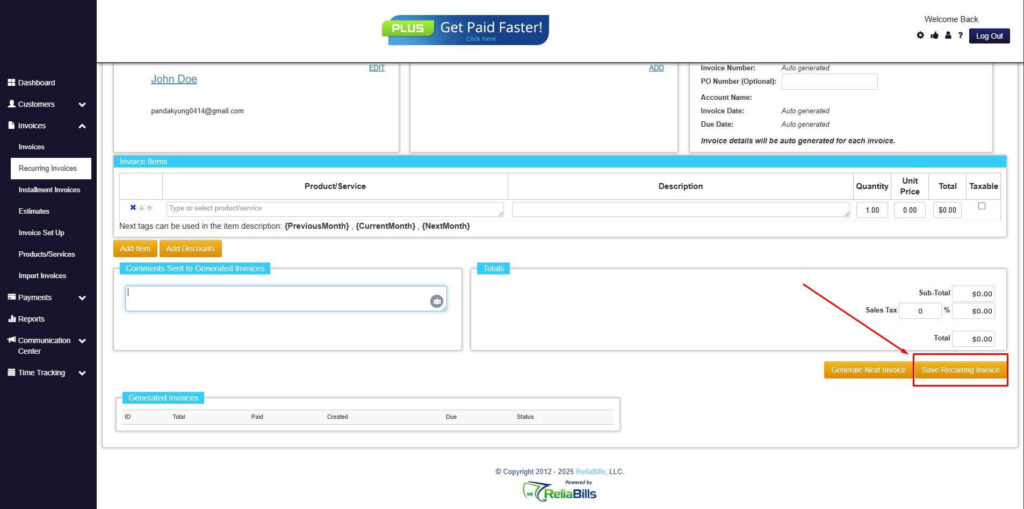
Step 8: Save Recurring Invoice
- After filling up the form, click “Save Recurring Invoice” to continue.
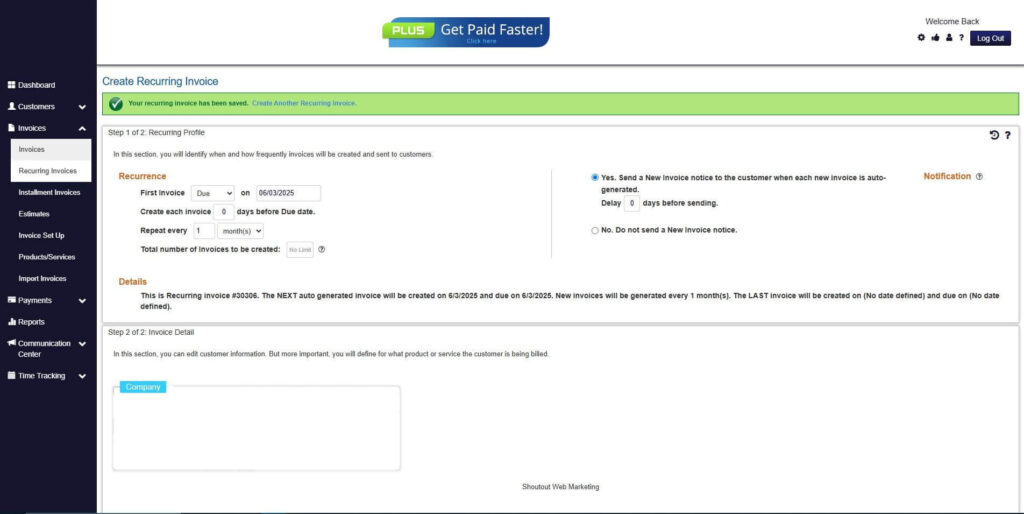
Step 9: Recurring Invoice Created
- Your Recurring Invoice has been created.
Frequently Asked Questions (FAQs)
1. What are recurring invoices in managed IT services?
They are automated invoices generated at regular intervals for ongoing IT services. These invoices are based on contracts or subscription plans. They eliminate the need for manual billing. They ensure consistent revenue collection.
2. How do IT providers automate billing?
IT providers use invoicing software that generates invoices automatically based on schedules. These systems are configured using client contracts and pricing rules. They reduce manual effort and errors. Automation improves efficiency.
3. Can recurring invoices handle service changes?
Yes, modern systems can adjust invoices based on upgrades, add-ons, or usage changes. These updates are reflected automatically in future billing cycles. This ensures accuracy. It also maintains billing flexibility.
4. How does Auto Pay improve payment collection?
Auto Pay automatically deducts payments when invoices are issued. This reduces delays and missed payments. It improves cash flow consistency. It also enhances client convenience.
5. What tools help manage recurring billing?
IT providers typically use invoicing platforms, PSA tools, CRM systems, and accounting software. These tools integrate to streamline billing workflows. They improve accuracy and visibility. Integration is key to efficiency.
Conclusion
IT service providers rely heavily on structured billing systems to manage long-term client relationships and ongoing service delivery. Recurring invoices ensure that billing remains consistent, automated, and aligned with service contracts. This reduces administrative complexity while improving financial stability across managed service operations.
The use of recurring invoices for managed services continues to grow as IT companies shift toward automation and subscription-based models. These systems help improve efficiency, reduce errors, and support scalable growth. Automation also ensures better visibility into revenue and client billing activity.
As the IT industry continues to evolve, adopting automated recurring billing systems is no longer optional but essential. Providers that embrace these tools will be better positioned to scale, maintain cash flow stability, and deliver seamless client experiences in an increasingly competitive market.