

Billing and payment management is a foundational part of running any small business, yet it is often treated as a secondary administrative task. In reality, it directly affects whether a business can sustain daily operations and fund future growth. Many small businesses struggle not because they lack customers, but because they fail to collect payments efficiently and on time. This disconnect between sales and actual cash inflow creates ongoing financial pressure.
A major issue is that cash flow problems are frequently caused by inefficiencies in invoicing rather than insufficient revenue generation. Delayed invoices, manual tracking errors, and inconsistent follow-ups can all contribute to unstable finances. Over time, these issues accumulate and create serious operational risks. This is why understanding invoicing challenges for small businesses is essential for long-term survival.
These challenges are not isolated incidents but recurring patterns that affect businesses across industries. Whether it is a service provider, retailer, or freelancer, billing inefficiencies can disrupt financial stability. Addressing them early allows businesses to maintain control over their cash flow and reduce unnecessary financial stress. Ultimately, strong billing systems are just as important as strong sales strategies.
Why Billing and Payment Management Matters for Small Businesses
Billing and payment management is not just about sending invoices—it is about maintaining the financial health of a business. Without a structured system, even profitable businesses can face cash shortages. Efficient billing ensures that money owed to the business is collected in a predictable and timely manner. This predictability is essential for planning expenses and managing growth.
- Ensures steady cash flow for operations and expenses
- Helps maintain accurate financial records
- Improves customer trust and payment reliability
- Supports long-term business scalability
Each of these benefits contributes to operational stability. For example, steady cash flow allows businesses to pay suppliers, employees, and overhead costs without delays. Accurate financial records also help with tax preparation and financial forecasting. Together, these factors reduce uncertainty and improve decision-making.
Additionally, well-managed billing systems improve customer relationships. When invoices are clear, accurate, and timely, customers are less likely to dispute charges or delay payments. This builds trust and encourages repeat business. Over time, strong billing practices contribute directly to business reputation and growth.
Common Billing and Payment Challenges Small Businesses Face
Late or overdue customer payments
Late payments are one of the most persistent issues small businesses face and directly affect cash flow stability. Customers may delay payment due to forgetfulness, cash constraints, or lack of urgency when terms are unclear. These delays can create operational bottlenecks, especially when businesses rely on timely incoming funds to cover expenses.
Manual invoicing errors and inconsistencies
Manual invoicing often leads to mistakes such as incorrect amounts, missing line items, or wrong client details. These errors can trigger disputes, requiring additional time to correct and resend invoices. Over time, inconsistent invoicing reduces professionalism and can damage customer trust.
Lack of payment tracking and visibility
Without proper tracking systems, businesses struggle to identify which invoices are paid, pending, or overdue. This creates confusion and increases the risk of missed payments. Poor visibility also makes financial forecasting unreliable and reactive instead of proactive.
Poor follow-up on unpaid invoices
Many small businesses fail to follow up consistently on overdue invoices due to time constraints or lack of systems. As a result, unpaid balances accumulate and become harder to collect over time. Inconsistent follow-ups also signal weak payment enforcement to customers.
Limited payment options for customers
When businesses offer only one or two payment methods, customers may delay payment due to inconvenience. Modern customers expect flexibility such as cards, bank transfers, or digital wallets. Limited options can unintentionally slow down payment cycles.
Inefficient invoice delivery methods
Relying on manual email sending or physical invoices often leads to delays or lost documents. This slows down the entire payment process and increases administrative workload. Automated delivery ensures invoices reach customers instantly and consistently.
How Manual Invoicing Contributes to These Challenges
Manual invoicing remains common among small businesses, but it significantly contributes to inefficiencies. It requires time, attention, and consistent effort to ensure accuracy. However, as the number of clients increases, manual systems become harder to manage effectively. This often leads to delays and mistakes.
Time-consuming invoice creation reduces productivity because business owners spend hours preparing documents instead of focusing on growth activities. This inefficiency becomes more pronounced during peak business periods. Manual tracking also increases the risk of missed payments or duplicate invoices. Over time, this creates confusion in financial records.
Human error is another major issue in manual systems. Incorrect billing details, miscalculated totals, or outdated client information can lead to disputes. These errors not only delay payments but also damage client trust. As businesses grow, manual invoicing becomes increasingly unsustainable.
Impact of Billing Challenges on Small Businesses
The impact of invoicing challenges for small businesses extends far beyond administrative inconvenience. One of the most immediate effects is cash flow disruption, which can affect payroll, rent, and supplier payments. Even businesses with strong sales performance can struggle if payments are delayed.
Increased administrative workload is another major consequence. Business owners often spend excessive time chasing unpaid invoices or correcting billing errors. This reduces time available for strategic planning and customer acquisition. As a result, growth slows down despite strong demand.
Strained customer relationships can also occur when billing issues arise frequently. Disputes over invoices or inconsistent follow-ups may frustrate clients. Over time, this can reduce repeat business and damage reputation. These combined effects make billing efficiency a critical business priority.
Key Causes of Payment Delays
Unclear payment terms or due dates
When invoices lack clear deadlines, customers may not prioritize payment. Ambiguity around terms often leads to unintentional delays. Clearly defined due dates help set expectations and improve payment discipline.
Lack of automated reminders or follow-ups
Without automated reminders, customers can easily forget payment obligations. Manual follow-ups are often inconsistent or delayed due to workload. Automation ensures consistent communication and improves on-time payments.
Customer financial constraints
Some delays occur simply because customers are facing temporary financial difficulties. This is common in industries with fluctuating demand or seasonal revenue cycles. While unavoidable, structured billing can still improve predictability.
Inefficient billing systems or processes
Outdated systems slow down invoice generation and delivery. This creates gaps between service delivery and billing, delaying payment cycles. Inefficient processes also increase the likelihood of errors and rework.
How Small Businesses Can Overcome Billing and Payment Challenges
Overcoming billing issues requires a shift from manual processes to automated and structured systems. Automation helps eliminate repetitive tasks and reduces the likelihood of human error. It also ensures that invoices are consistently delivered on time.
Adopting automated invoicing systems allows businesses to generate and send invoices instantly. This improves speed and accuracy while reducing administrative workload. Using recurring billing is especially beneficial for businesses with repeat customers. It ensures consistent revenue without manual intervention.
Offering multiple payment options also improves customer convenience. When customers can pay using different methods, payments are more likely to be completed on time. Centralizing billing and tracking systems further enhances visibility and control over finances.
Key Features That Help Solve Billing Problems
Automated invoice generation and delivery
Automated systems generate invoices instantly after a transaction or service completion. This eliminates delays caused by manual preparation. It also ensures consistency in formatting and accuracy.
Real-time payment tracking dashboards
Dashboards provide instant visibility into invoice status, including paid, pending, and overdue payments. This helps businesses monitor cash flow more effectively. It also reduces the risk of missed or forgotten invoices.
Recurring billing for subscriptions and repeat clients
Recurring billing automates invoicing cycles for ongoing services or subscriptions. This reduces manual workload and ensures no billing cycle is missed. It also improves revenue predictability.
Auto-pay and digital payment integration
Integrating multiple payment methods allows customers to pay quickly and conveniently. Auto-pay features further reduce delays by automating transactions. This significantly improves on-time payment rates.
Customer billing history and account management
Access to billing history helps businesses track customer payment behavior. It also improves transparency and reduces disputes. Organized records support better customer relationship management.
Automated reminders and dunning workflows
Automated reminders ensure customers are notified before and after due dates. Dunning workflows escalate follow-ups for overdue accounts. This structured approach improves collection efficiency.
The Role of Recurring Billing in Reducing Payment Challenges
Recurring billing plays a crucial role in stabilizing business revenue. It ensures that invoices are generated on a fixed schedule without manual intervention. This reduces the risk of missed billing cycles and delayed payments.
It also minimizes errors associated with repetitive manual invoicing. Since the process is automated, businesses can maintain consistency across billing periods. This improves operational efficiency and reduces administrative workload.
From a customer perspective, recurring billing creates a seamless experience. Payments are processed automatically, reducing friction and improving satisfaction. This leads to stronger retention and more predictable cash flow.
Best Practices for Managing Billing and Payments
Send invoices immediately after service or sale
Prompt invoicing reduces the time gap between service delivery and payment request. This increases the likelihood of faster payment. It also reinforces professionalism and efficiency.
Clearly define payment terms and due dates
Clear terms eliminate confusion and set expectations from the start. Customers are more likely to comply when deadlines are explicit. This reduces disputes and delays significantly.
Automate reminders and follow-ups
Automated systems ensure consistent communication with customers. This removes dependency on manual tracking and reduces missed follow-ups. It also improves payment discipline over time.
Offer flexible payment options
Providing multiple payment methods increases convenience for customers. This reduces friction in the payment process. It also helps speed up collections across different customer preferences.
Regularly reconcile accounts receivable
Frequent reconciliation ensures financial records remain accurate and up to date. It helps identify discrepancies early before they become major issues. This improves overall financial control.
These best practices help reduce inefficiencies and improve financial control. Immediate invoicing ensures that payments are requested while the transaction is still fresh in the customer’s mind. Clear terms eliminate confusion and reduce disputes.
Automation helps maintain consistency in follow-ups. Flexible payment options increase the likelihood of timely payments. Regular reconciliation ensures financial records remain accurate and up to date.
How Automation Improves Small Business Cash Flow
Automation directly improves cash flow by accelerating the entire billing cycle. Invoices are sent faster, payments are tracked in real time, and overdue accounts are flagged automatically. This reduces delays in revenue collection.
It also reduces the number of missed or forgotten invoices. Automated systems ensure that every transaction is recorded and followed up appropriately. This improves financial reliability and predictability.
Additionally, automation reduces administrative workload, allowing business owners to focus on growth. It also improves reporting accuracy, which supports better financial decision-making. Overall, it significantly reduces invoicing challenges for small businesses.
Key Benefits of Solving Billing and Payment Challenges
- Improved cash flow stability: Efficient billing ensures faster and more predictable payment cycles. This helps businesses manage expenses without delays. Stable cash flow also supports long-term planning.
- Reduced overdue payments: Automation and structured follow-ups significantly reduce late payments. Customers are consistently reminded of obligations. This improves collection rates and financial reliability.
- Increased operational efficiency: Businesses spend less time on manual invoicing and follow-ups. This allows teams to focus on growth and customer service. It also reduces administrative overhead.
- Better customer satisfaction: Clear and efficient billing processes improve customer experience. Customers appreciate transparency and convenience. This leads to stronger relationships and repeat business.
- Scalable financial processes: Automated systems grow easily with the business. They handle increased transaction volumes without additional workload. This supports long-term scalability.
Solving billing inefficiencies leads to stronger financial health. Businesses experience fewer delays in payment collection and improved liquidity. This stability allows for better planning and investment decisions.
Operational efficiency also improves as manual tasks are reduced. Customers benefit from smoother payment experiences, which enhances satisfaction. Ultimately, businesses become more scalable and resilient.
Common Use Cases
- Freelancers and consultants: Freelancers often manage multiple clients with varying payment schedules. Automated invoicing helps ensure consistent billing and reduces missed payments. It also saves time that can be spent on client work.
- Service-based small businesses: Service providers benefit from structured billing for recurring or project-based work. Automation ensures invoices are sent on time after each service. This improves cash flow consistency.
- Subscription-based companies: These businesses rely heavily on recurring billing cycles. Automation ensures uninterrupted invoicing and payment collection. It also reduces churn caused by billing issues.
- Retail and eCommerce businesses: Retailers need fast and accurate invoicing to match high transaction volumes. Automated systems reduce errors and improve processing speed. This enhances overall customer experience.
- Local service providers: Local businesses such as repair services or agencies often handle on-the-spot transactions. Automated invoicing helps maintain proper records and ensures timely payments. It also reduces manual paperwork.
Each of these industries experiences invoicing challenges for small businesses in different forms. Freelancers often struggle with inconsistent payment timelines, while subscription businesses need reliable recurring billing systems. Retail and service providers benefit from faster and more structured invoicing processes.
Despite differences in operations, all these businesses share a common need for efficient billing systems. Automation and structured processes help reduce errors and improve financial stability. This makes billing optimization universally valuable.
How ReliaBills Helps Small Businesses Overcome Billing Challenges
ReliaBills helps small businesses address common billing inefficiencies by automating the entire invoicing and payment workflow. Instead of relying on manual processes, businesses can generate and send invoices instantly, reducing delays and human errors that often contribute to invoicing challenges for small businesses. This streamlined approach improves accuracy, ensures consistency, and helps businesses maintain better control over their financial operations. As a result, business owners can focus more on growth and customer service rather than administrative tasks.
A key advantage of ReliaBills is its recurring billing functionality, which is especially valuable for businesses with repeat customers or subscription-based services. This feature automates invoice creation and delivery on a scheduled basis, ensuring that no billing cycle is missed. It also reduces late payments by keeping invoicing consistent and predictable for customers. Over time, this leads to more stable cash flow and fewer disruptions in revenue collection.
ReliaBills PLUS takes billing automation further by offering advanced tools such as enhanced reporting, deeper financial insights, and improved customer management capabilities. These features allow businesses to track payment trends, monitor outstanding invoices, and better understand customer behavior. With this level of visibility, decision-making becomes more data-driven and efficient. Ultimately, ReliaBills provides a scalable solution that helps small businesses eliminate billing inefficiencies and build a stronger financial foundation.
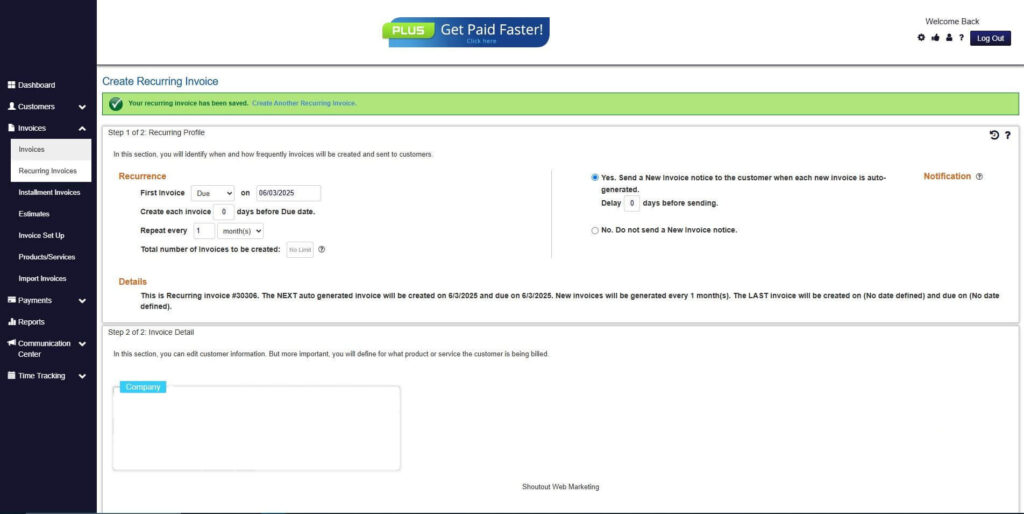
How to Create a New Recurring Invoice Using ReliaBills
Creating a New Recurring Invoice using ReliaBills involves the following steps:
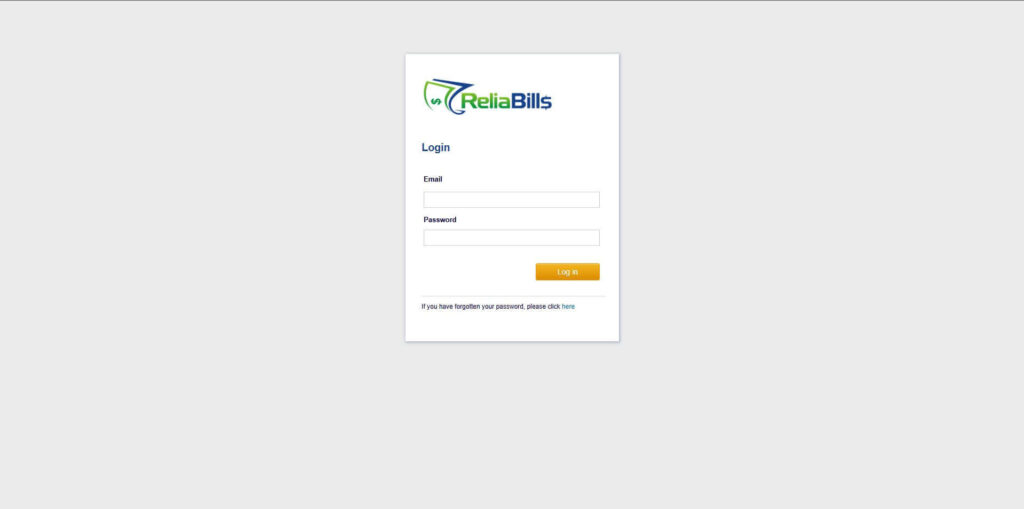
Step 1: Login to ReliaBills
- Access your ReliaBills Account using your login credentials. If you don’t have an account, sign up here.
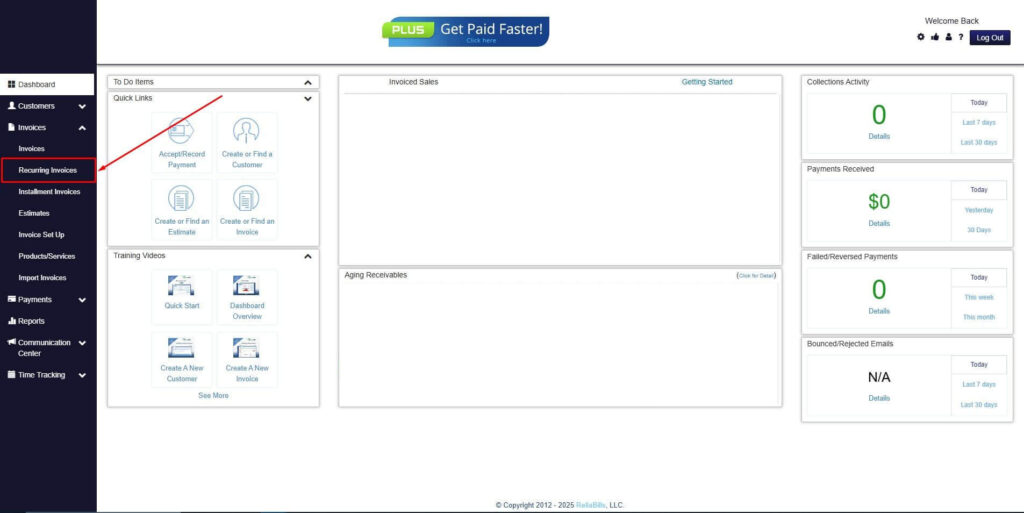
Step 2: Click on Recurring Invoices
- Navigate to the Invoices Dropdown and click on Recurring Invoices for an overview of the list of your existing customers.
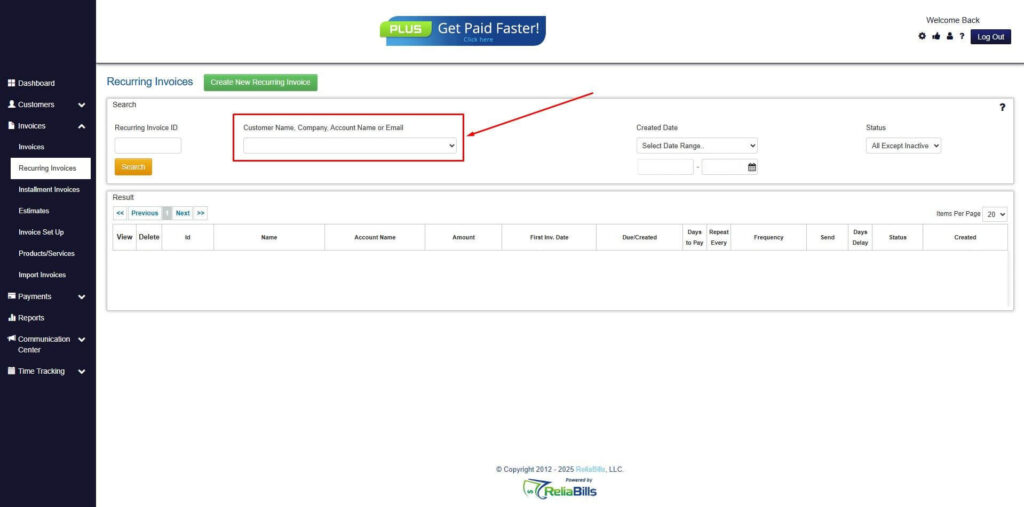
Step 3: Go to the Customers Tab
- If you have already created a customer, search for them in the Customers tab and make sure their status is “Active”.
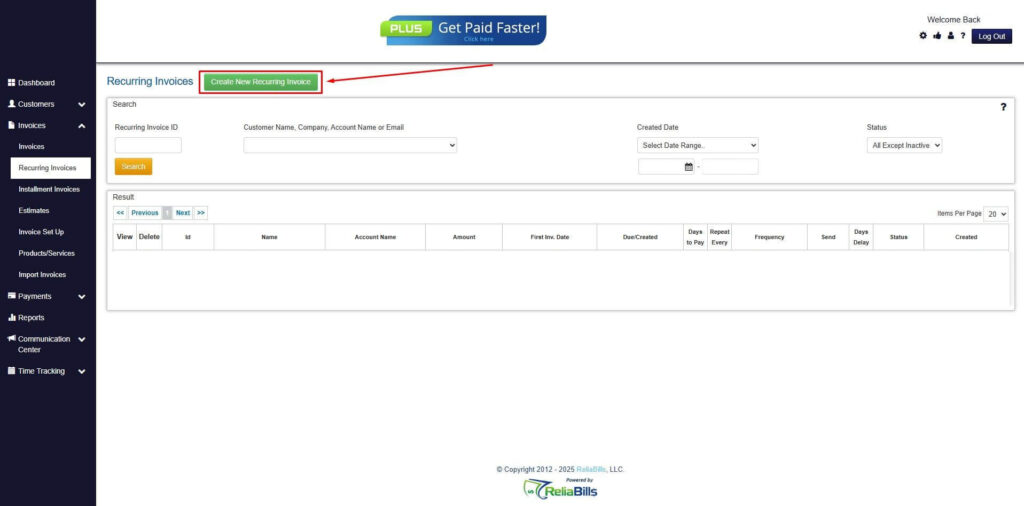
Step 4: Click the Create New Recurring Invoice
- If you haven’t created any customers yet, click the Create New Recurring Invoice to create a new customer.
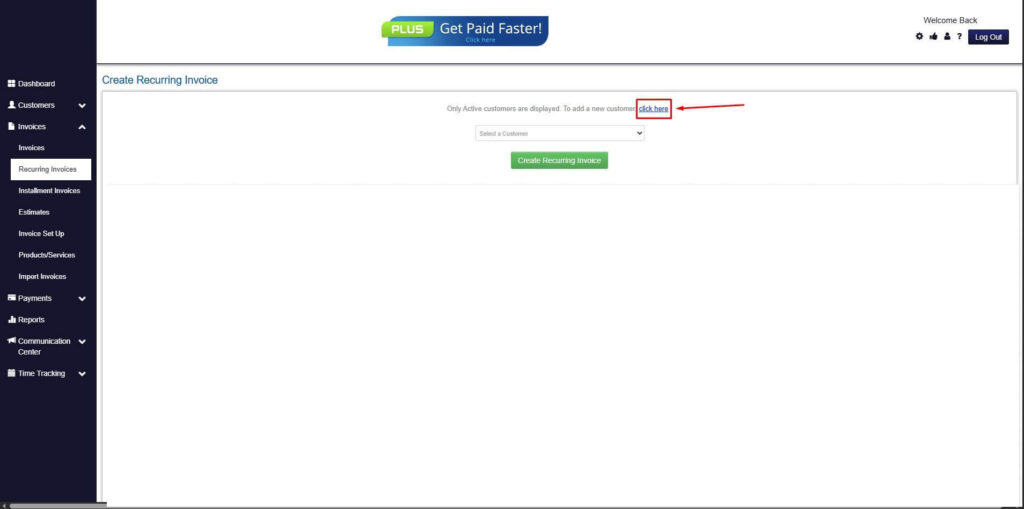
Step 5: Click on the “Click here” Button
- Click on the “Click here” button to proceed with the recurring invoice creation.
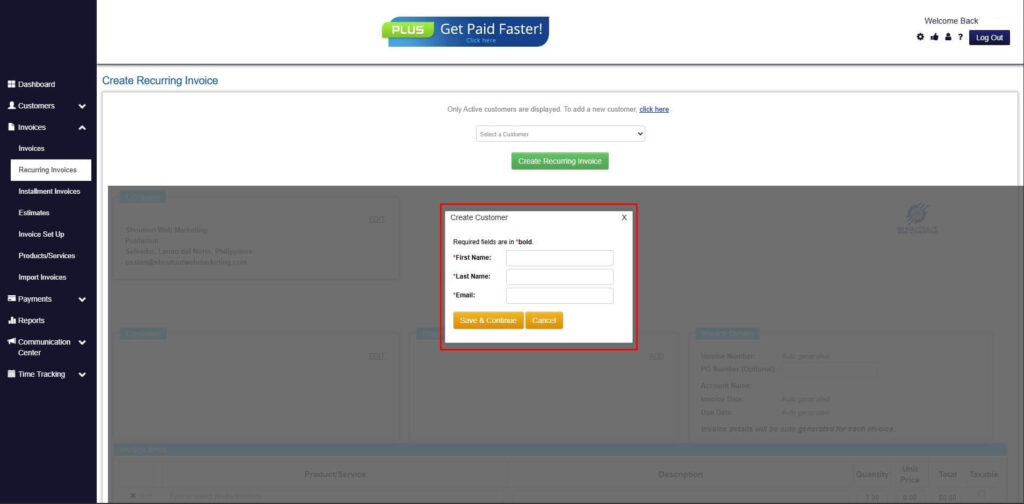
Step 6: Create Customer
- Provide your First Name, Last Name, and Email to proceed.
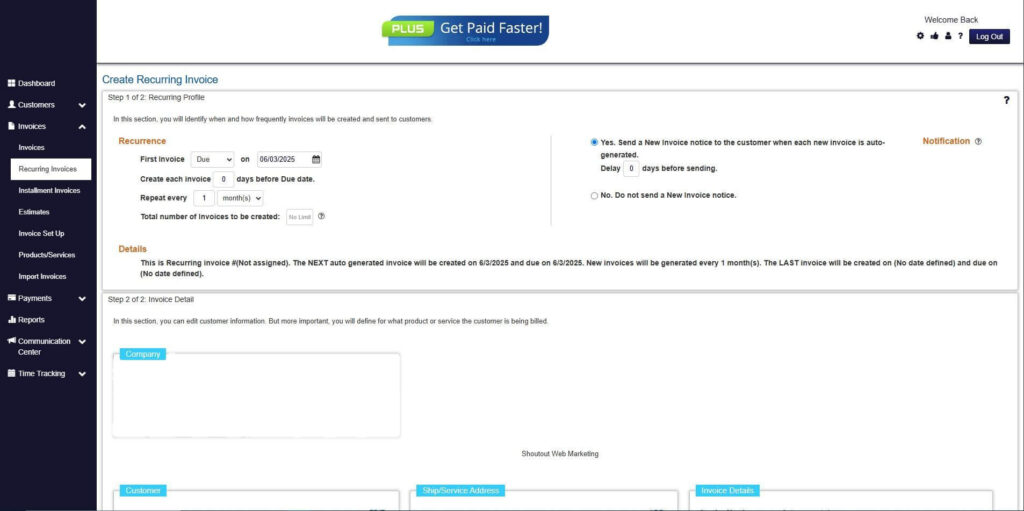
Step 7: Fill in the Create Recurring Invoice Form
- Fill in all the necessary fields.
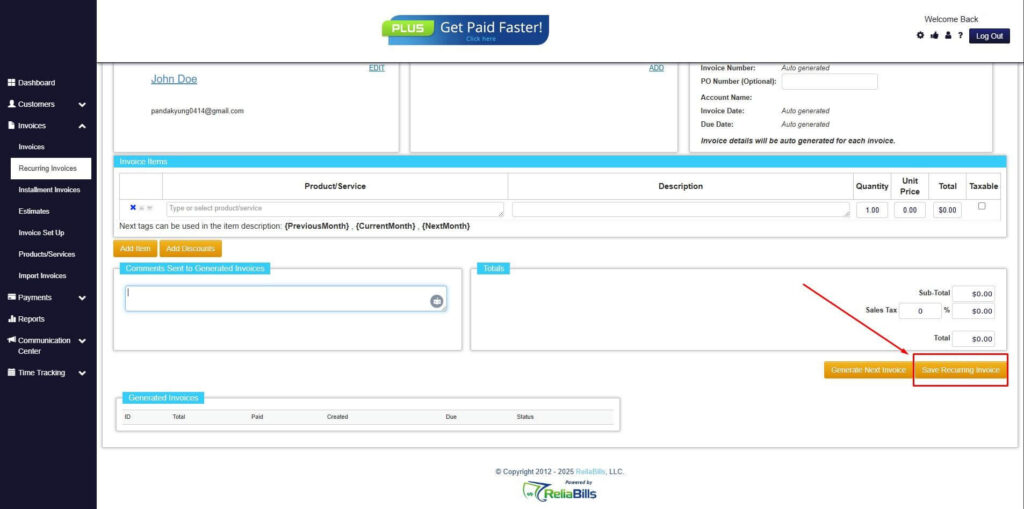
Step 8: Save Recurring Invoice
- After filling up the form, click “Save Recurring Invoice” to continue.
Step 9: Recurring Invoice Created
- Your Recurring Invoice has been created.
Frequently Asked Questions (FAQs)
1. What are the most common billing challenges for small businesses?
The most common issues include late payments, manual invoicing errors, and poor tracking systems. These problems often lead to inconsistent cash flow. They are usually caused by outdated or manual processes.
2. How can small businesses reduce late payments?
Businesses can reduce late payments by automating invoicing and setting clear payment terms. Sending reminders before and after due dates also helps. Offering multiple payment options improves speed of collection.
3. Is automation necessary for small business invoicing?
While not mandatory, automation greatly improves efficiency and accuracy. It reduces human error and ensures timely invoice delivery. It also helps businesses scale more easily.
4. How does recurring billing help cash flow?
Recurring billing ensures consistent and predictable revenue cycles. It removes the need for manual invoice creation for repeat customers. This leads to more stable and reliable cash flow.
5. What tools help manage invoices efficiently?
Invoice management tools with automation, tracking, and payment integration are most effective. They reduce manual workload and improve accuracy. They also provide real-time financial visibility.
Conclusion
Small businesses face numerous billing and payment issues that directly affect financial stability and operational efficiency. These invoicing challenges for small businesses include late payments, manual errors, and inefficient tracking systems. Left unresolved, they can significantly hinder growth and profitability.
Automation and recurring billing provide practical solutions by streamlining processes and improving consistency. These tools reduce manual work, minimize errors, and ensure timely payments. As a result, businesses gain better control over their finances.
In an increasingly digital business environment, adopting automated billing systems is essential. Businesses that modernize their invoicing processes are better positioned for stability, scalability, and long-term success.