

Transportation and logistics companies operate in a high-cost environment where cash flow stability is critical. Fuel prices fluctuate, payroll must be met consistently, and fleet maintenance cannot be delayed. When revenue cycles are unpredictable, even profitable transportation businesses can experience financial strain.
Operating expenses such as fuel, labor, insurance, vehicle payments, and compliance costs create constant outgoing cash requirements. If invoices are delayed or payments are inconsistent, companies may struggle to maintain liquidity. Predictable billing structures become essential to keeping operations running smoothly.
This is where transportation recurring billing becomes a strategic advantage. By automating invoicing schedules and aligning them with service contracts, transportation companies can stabilize income, reduce delays, and improve overall financial management.
How Does the Transportation Revenue Model Work?
Transportation revenue often comes from contract-based freight agreements and route-specific service contracts. Dedicated routes, long-term hauling contracts, and third-party logistics partnerships commonly rely on pre-agreed pricing structures. These contracts may include fixed monthly rates or per-load charges.
Some businesses also offer subscription-style logistics services, such as ongoing fleet management or scheduled distribution runs. In these cases, recurring billing structures ensure revenue is generated consistently without requiring manual invoice preparation each cycle.
Because revenue models vary between per-load and recurring contracts, companies need flexible systems that support both. A structured billing approach ensures accurate invoicing regardless of contract type.
What Are Recurring Invoices?
Recurring invoices are automated invoices generated on a predetermined schedule or based on contract terms. Instead of manually preparing invoices for each billing cycle, the system issues them automatically. This reduces administrative effort and ensures consistency.
Recurring billing can operate on fixed cycles such as monthly billing, or it can be contract-driven based on service milestones. For transportation companies, this may include monthly route charges or scheduled freight agreements.
Digital invoice generation and delivery further streamline the process. Clients receive invoices promptly, improving payment timelines and reducing disputes caused by delayed or inconsistent billing.
What Are the Common Cash Flow Challenges in Transportation?
Delayed Invoice Issuance
In many transportation companies, invoicing happens after deliveries are confirmed and paperwork is finalized. When billing depends on manual data entry or internal approvals, invoices may be issued days or even weeks late. This delay immediately extends the payment cycle and slows cash inflow.
Long Payment Terms (Net 30, 60, or 90 Days)
Freight and logistics contracts often include extended payment terms. While these terms may be standard in the industry, they create a gap between service delivery and payment receipt. Without transportation recurring billing to trigger invoices promptly, companies face prolonged accounts receivable cycles.
High Upfront Operating Costs
Fuel, driver wages, insurance, tolls, and fleet maintenance must be paid regardless of when clients settle invoices. Transportation businesses often operate with continuous outgoing expenses. Any delay in revenue collection can quickly strain working capital.
Manual Billing Errors
Incorrect mileage calculations, misapplied rates, or overlooked surcharges can result in invoice disputes. When clients question invoices, payments are often delayed until corrections are made. These errors disrupt predictable cash flow and increase administrative workload.
Irregular Revenue Cycles
Per-load billing structures can lead to fluctuating income depending on shipment volume. Seasonal demand changes or contract variability may create inconsistent monthly revenue. Recurring billing models help smooth these fluctuations, but without them, forecasting becomes difficult.
Unbilled Completed Deliveries
In high-volume operations, completed jobs may not be invoiced immediately due to backlog or oversight. Each unbilled delivery represents revenue that has been earned but not yet collected. Over time, this creates hidden cash flow gaps.
Fuel Price Volatility
Fuel costs can change rapidly, impacting operating margins. If fuel surcharges are not accurately calculated and billed, businesses may absorb unexpected expenses. Delayed adjustments further complicate revenue stability.
Disputed Accessorial Charges
Additional fees such as detention, layover, tolls, or special handling often require detailed documentation. When these charges are unclear or inconsistently billed, clients may delay payment. This adds friction to the revenue cycle.
Limited Visibility into Accounts Receivable
Without centralized reporting, managers may struggle to see which invoices are overdue. Poor visibility makes it difficult to follow up strategically and forecast short-term liquidity needs.
Dependence on Short-Term Financing
When payments are delayed, transportation companies may rely on credit lines or factoring services. While these tools provide temporary relief, they reduce overall profitability due to interest and service fees.
How Do Billing Delays Impact Transportation Operations?
Billing delays directly affect the ability to cover operational expenses such as fuel and payroll. Transportation companies cannot pause operations while waiting for payments. When invoices are delayed, businesses may rely on credit lines or short-term financing.
Increased borrowing raises financial costs and reduces profit margins. It also disrupts budgeting and forecasting efforts, limiting the company’s ability to plan for expansion or equipment upgrades.
Client relationships may also suffer if billing inconsistencies create confusion. Clear and consistent invoicing helps maintain professional partnerships and long-term contracts.
How Can Transportation Recurring Billing Automate Contract Invoicing?
Transportation recurring billing automates monthly invoicing for dedicated routes and long-term freight contracts. Once service terms are configured, invoices are generated automatically based on agreed schedules.
Subscription-style fleet services and recurring logistics agreements can also be billed automatically. Contract renewal billing ensures that revenue continues without gaps when agreements extend.
By aligning billing cycles with contract terms, transportation companies reduce administrative workload and ensure timely, predictable income.
How Does Automation Improve Invoice Timing and Consistency?
System-triggered invoice generation ensures that invoices are issued immediately according to schedule. This removes dependency on manual reminders or spreadsheets.
Standardized billing schedules promote consistency across all clients and routes. Immediate digital delivery accelerates the start of the payment cycle.
Reliable timing strengthens cash flow stability and builds client trust. Businesses can operate with greater financial confidence when invoicing is predictable.
How Does Automation Reduce Errors in High-Volume Transactions?
Transportation companies often process large volumes of transactions. Automated rate calculations ensure that pricing aligns with contract terms and mileage data.
Integration with delivery and mileage systems improves invoice accuracy. Built-in validation checks prevent incorrect totals or duplicate invoices.
Consistent invoice numbering and standardized formats simplify reconciliation. These safeguards reduce disputes and improve financial reporting accuracy.
How Does Transportation Recurring Billing Accelerate Payment Collection?
Automated reminders notify clients of upcoming or overdue invoices. Auto-debit and scheduled payment options further streamline collections.
Real-time payment tracking provides visibility into outstanding balances. Reduced accounts receivable aging improves liquidity and operational stability.
Faster collections reduce reliance on external financing. Transportation companies can reinvest revenue into fleet maintenance and expansion more confidently.
How Does Recurring Billing Enhance Cash Flow Forecasting?
Recurring revenue tracking provides predictable income streams. With transportation recurring billing, managers can anticipate monthly inflows more accurately.
Accounts receivable reporting highlights trends in payment performance. Financial dashboards offer insights into revenue growth and potential risks.
Improved forecasting supports strategic planning. Businesses can make informed decisions about fleet expansion, hiring, or capital investments.
How Are Variable and Add-On Charges Managed?
Transportation services often include fuel surcharges, tolls, and accessorial fees. Automated systems can incorporate these charges into recurring billing cycles.
Equipment rentals and additional service fees can also be added seamlessly. Automatic adjustments ensure invoices reflect accurate totals without manual recalculation.
Managing variable charges within structured billing systems reduces disputes and enhances transparency.
How Does Recurring Billing Support Scaling Transportation Operations?
As transportation companies grow, managing multiple clients and routes becomes more complex. Centralized billing systems allow businesses to oversee operations across locations.
Automation reduces administrative overhead, enabling growth without expanding accounting teams. Standardized processes ensure consistency across contracts.
Scalable billing infrastructure supports long-term expansion while maintaining financial control.
How ReliaBills Supports Transportation Recurring Billing
Transportation businesses operate on tight margins and fast-moving schedules, which makes billing efficiency critical. ReliaBills simplifies the invoicing process by automating recurring billing for contracted routes, scheduled deliveries, and ongoing logistics agreements. Instead of manually generating invoices after every completed job, businesses can pre-configure billing schedules that automatically trigger invoices based on service frequency. This ensures consistent cash flow and eliminates delays caused by administrative bottlenecks.
Recurring billing is especially valuable for transportation companies with long-term contracts, such as weekly freight lanes or monthly fleet service agreements. ReliaBills allows businesses to set fixed pricing, fuel surcharges, or variable line items within a structured recurring framework. Automated invoice generation reduces errors in rate calculations and ensures charges like accessorial fees are consistently applied. With automated reminders and online payment options, clients are encouraged to pay on time, shortening the accounts receivable cycle.
For companies seeking advanced control, ReliaBills PLUS enhances transportation recurring billing with deeper automation and branded communication tools. Businesses can monitor payment trends, track overdue invoices, and streamline customer relationship management from a centralized dashboard. This level of visibility supports more accurate cash flow forecasting and reduces dependency on short-term financing. By combining automation, recurring billing, and real-time reporting, ReliaBills helps transportation companies stabilize revenue and scale operations with confidence.
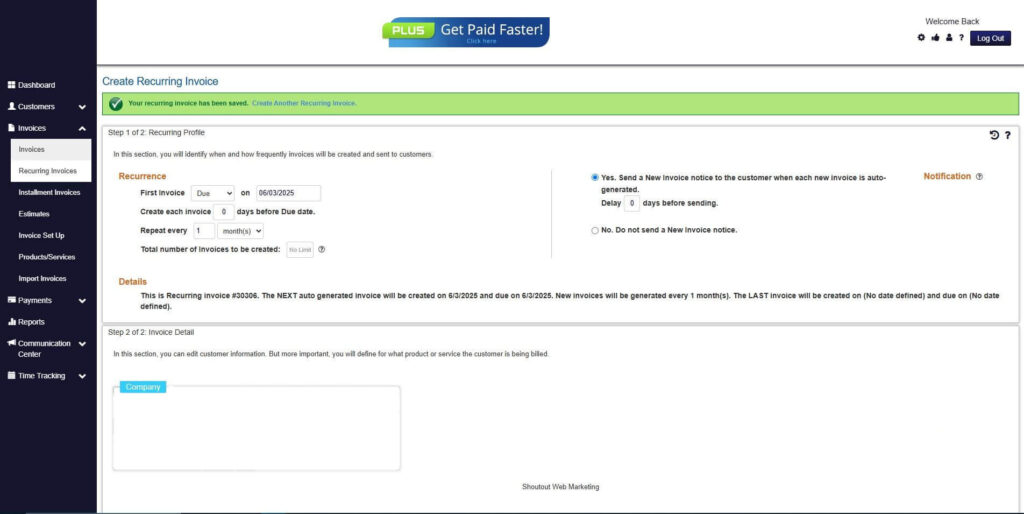
How to Create a New Recurring Invoice Using ReliaBills
Creating a New Recurring Invoice using ReliaBills involves the following steps:
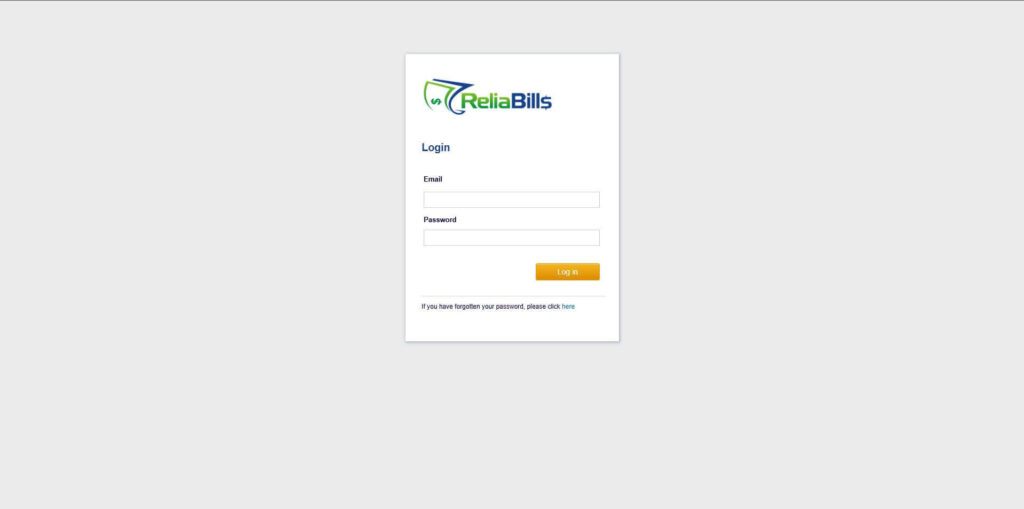
Step 1: Login to ReliaBills
- Access your ReliaBills Account using your login credentials. If you don’t have an account, sign up here.
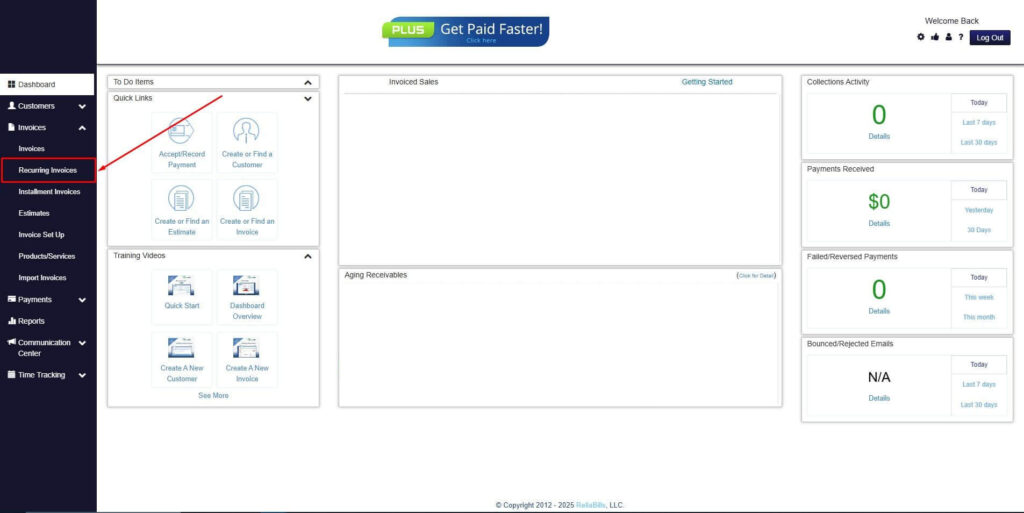
Step 2: Click on Recurring Invoices
- Navigate to the Invoices Dropdown and click on Recurring Invoices for an overview of the list of your existing customers.
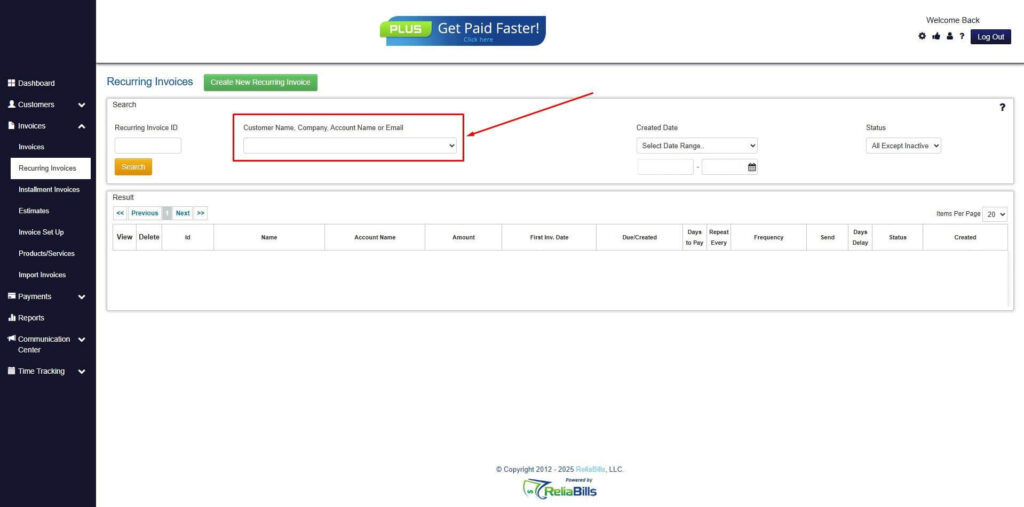
Step 3: Go to the Customers Tab
- If you have already created a customer, search for them in the Customers tab and make sure their status is “Active”.
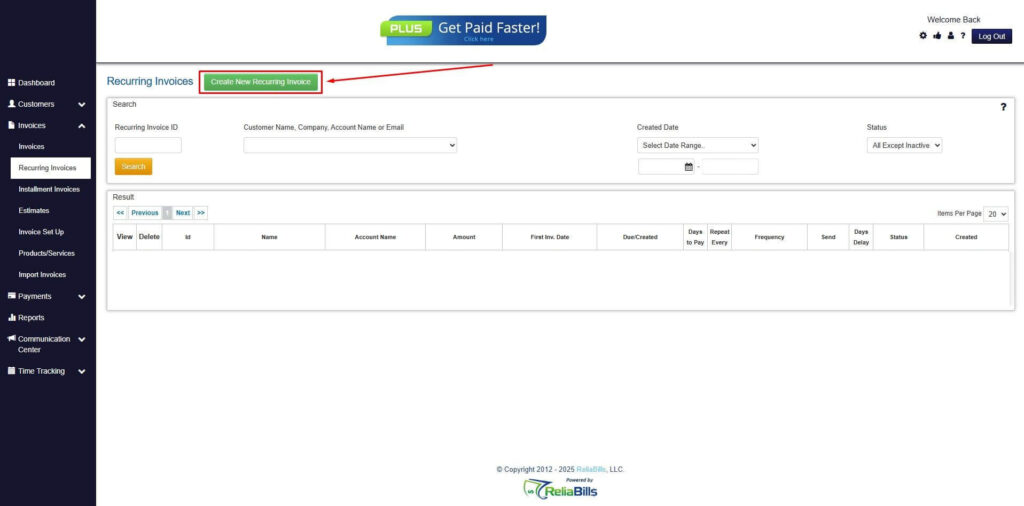
Step 4: Click the Create New Recurring Invoice
- If you haven’t created any customers yet, click the Create New Recurring Invoice to create a new customer.
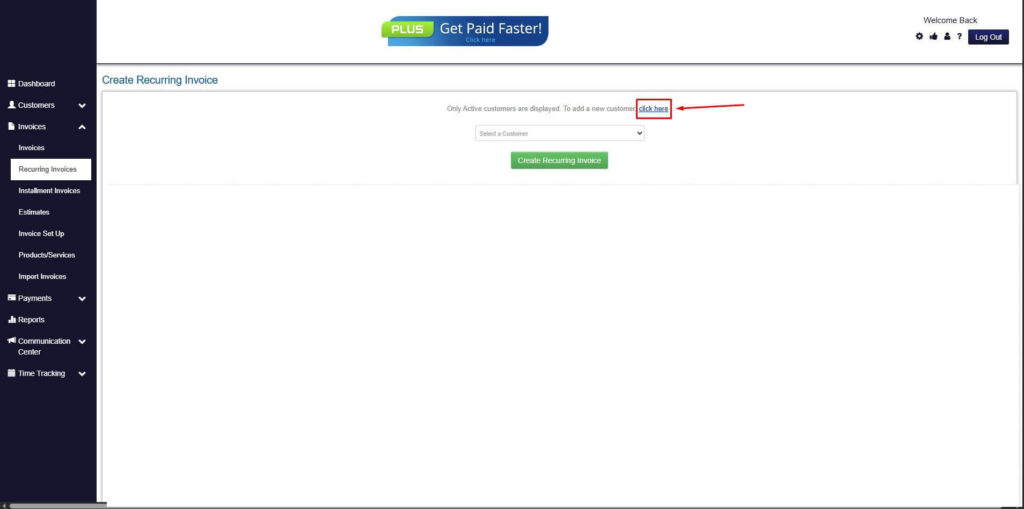
Step 5: Click on the “Click here” Button
- Click on the “Click here” button to proceed with the recurring invoice creation.
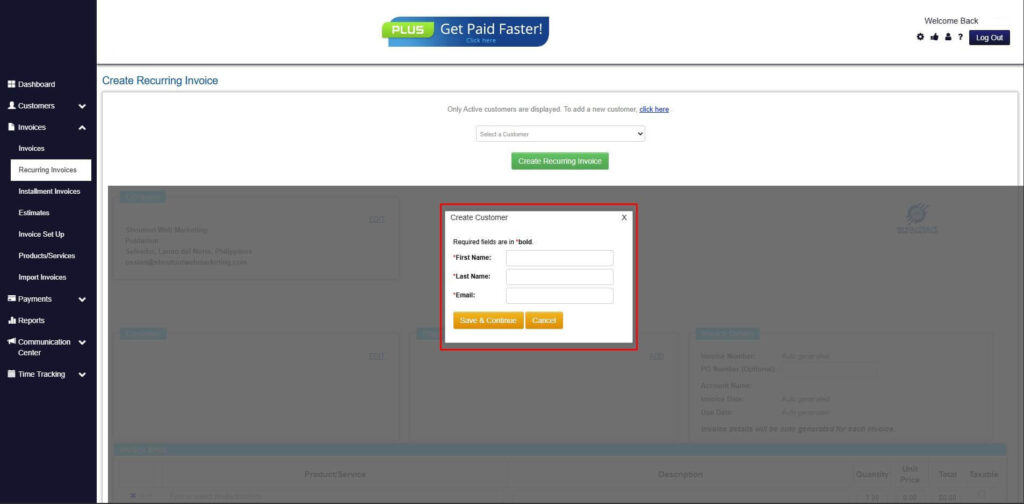
Step 6: Create Customer
- Provide your First Name, Last Name, and Email to proceed.
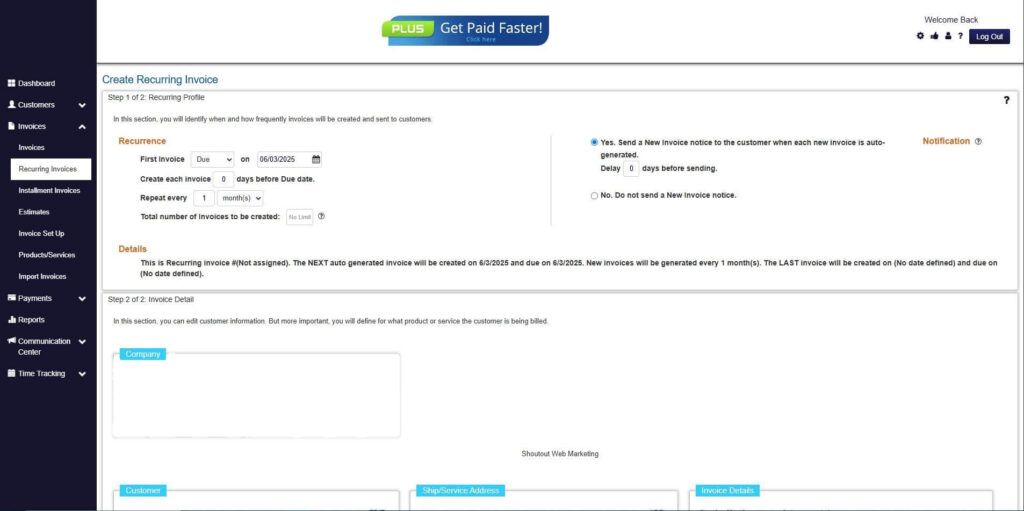
Step 7: Fill in the Create Recurring Invoice Form
- Fill in all the necessary fields.
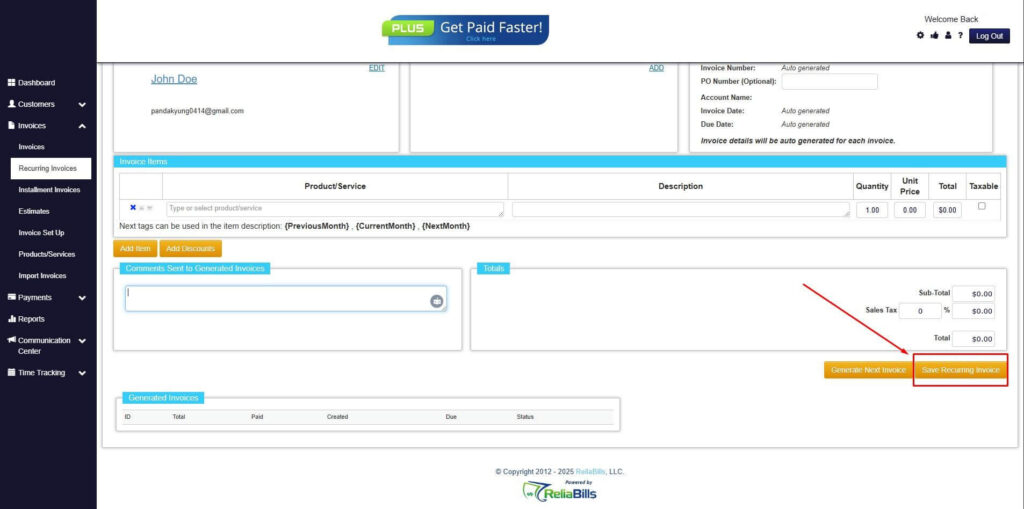
Step 8: Save Recurring Invoice
- After filling up the form, click “Save Recurring Invoice” to continue.
Step 9: Recurring Invoice Created
- Your Recurring Invoice has been created.
Frequently Asked Questions
1. What is transportation recurring billing?
Transportation recurring billing automates invoice generation for freight contracts, dedicated routes, and subscription-style logistics services to ensure predictable revenue.
2. How does recurring billing improve cash flow?
It ensures invoices are issued on time, reduces delays, accelerates collections, and stabilizes monthly revenue streams.
3. Can recurring billing handle fuel surcharges and variable fees?
Yes. Automated systems can include adjustable charges within recurring billing cycles to maintain accurate invoicing.
4. Does automation reduce payment delays?
Yes. Automated reminders and digital delivery help accelerate payment processing and reduce accounts receivable aging.
5. How does ReliaBills support transportation companies?
ReliaBills provides automated recurring billing, real-time reporting, branded invoice communication, and receivables tracking to improve financial stability.
Conclusion
Recurring invoices are critical for transportation companies seeking stable and predictable cash flow. Manual billing delays and irregular revenue cycles create unnecessary financial strain.
Transportation recurring billing automates invoice timing, reduces errors, and accelerates collections. By implementing automation, businesses improve operational efficiency and financial control.
Choosing a scalable recurring billing solution such as ReliaBills ensures long-term growth, consistent revenue, and stronger client relationships.