
Fuel costs are one of the largest and most unpredictable expenses for transportation companies. Whether it is trucking, freight, or delivery services, daily operations depend heavily on fuel, making it a constant financial pressure. Even small price increases can significantly impact profit margins.
At the same time, many transportation businesses face delayed payments from clients. Long payment cycles, sometimes stretching to 30, 60, or even 90 days, can create serious cash flow gaps. This makes it difficult to cover immediate expenses like fuel, driver wages, and maintenance.
This is where transportation invoice discounting becomes valuable. It allows businesses to unlock cash tied up in unpaid invoices, providing quick access to working capital that can be used to manage fuel costs and maintain operations.
What Is Invoice Discounting?
Invoice discounting is a financing method that allows businesses to receive a portion of their unpaid invoice value upfront. Instead of waiting for clients to pay, companies can access funds almost immediately based on their outstanding receivables.
Unlike invoice factoring, invoice discounting allows businesses to retain control over their customer relationships. Clients continue to pay the company directly, and the financing arrangement typically remains confidential.
For transportation companies, this means they can maintain their existing billing processes while improving cash flow. It provides flexibility without disrupting customer interactions or operational workflows.
Why Are Fuel Costs a Major Challenge for Transportation Companies?
Fuel expenses are a major concern because they are both high and unpredictable. Prices can fluctuate due to global supply conditions, market demand, and geopolitical factors, making it difficult for businesses to maintain stable operating budgets.
Transportation companies rely on fuel every day, and even minor price changes can quickly add up across multiple vehicles and routes. This creates ongoing pressure to manage costs efficiently.
The challenge becomes even greater when combined with delayed client payments. When revenue is tied up in unpaid invoices, businesses may struggle to cover immediate fuel expenses, leading to potential disruptions in operations.
How Does Invoice Discounting Help Manage Fuel Costs?
The main advantage of transportation invoice discounting is immediate access to working capital. Instead of waiting for invoice payments, businesses can use discounted funds to cover fuel purchases and other operational costs.
This ensures that transportation companies can continue operating without interruption. Drivers can stay on the road, deliveries can be completed on time, and service quality remains consistent even when payments are delayed.
Invoice discounting also provides financial flexibility. With quicker access to cash, businesses are better equipped to handle sudden increases in fuel prices and adjust their budgets accordingly.
How Does the Invoice Discounting Process Work?
Understanding the workflow helps transportation companies apply transportation invoice discounting more effectively and avoid delays. The typical process includes:
A Transportation Company Issues an Invoice to a Client
After completing a delivery or logistics service, the business generates an invoice with agreed payment terms such as 30 or 60 days. This invoice becomes the asset used for funding.
The Invoice Is Submitted to a Financing Provider
The company submits the invoice to a discounting provider, either manually or through an integrated system. The provider reviews the invoice and the client’s creditworthiness.
Credit Assessment and Approval
The financing provider evaluates the reliability of the customer, the invoice value, and payment history before approving the advance. Strong client profiles often result in higher advance rates.
A Percentage of the Invoice Value Is Advanced Upfront
Once approved, the provider releases a large portion of the invoice value, typically 70% to 90%, within a short time frame. This gives the business immediate working capital.
The Business Continues to Manage Customer Relationships
Unlike factoring, the transportation company still handles communication and payment collection from the client, maintaining full control of the relationship.
The Client Pays the Invoice on the Due Date
The customer pays the full invoice amount according to the original agreement, usually directly to the business.
The Remaining Balance Is Released Minus Fees
After payment is received, the financing provider deducts service fees and releases the remaining balance to the business.
What Are the Benefits of Invoice Discounting for Transportation Businesses?
Using transportation invoice discounting offers several financial and operational advantages. Key benefits include:
- Faster Access to Cash Tied Up in Receivables: Businesses do not have to wait for long payment cycles and can access funds almost immediately.
- Improved Ability to Manage Fuel and Daily Operational Costs: Ready cash flow ensures expenses like fuel, maintenance, and payroll are covered without disruption.
- Reduced Reliance on Traditional Loans or Credit Lines: Invoice discounting provides funding without increasing long-term debt or requiring collateral.
- Better Cash Flow Stability During Long Payment Cycles: Businesses can maintain consistent operations even when clients take weeks or months to pay.
- Continued Control Over Customer Relationships: Since the company handles collections, client communication remains unchanged.
- Scalable Funding Based on Business Activity: As invoice volume grows, access to funding increases, making it suitable for expanding businesses.
- Flexibility to Handle Seasonal Demand: Transportation companies can manage peak seasons more effectively by unlocking additional working capital.
What Risks or Challenges Should Businesses Consider?
While effective, transportation invoice discounting comes with certain risks that should be managed carefully. Potential challenges include:
- Service Fees That Reduce Overall Profit Margins: Financing providers charge fees that can impact net earnings, especially if used frequently.
- Dependence on Customer Payment Reliability: If clients delay payments or default, it can affect the final settlement and cash flow.
- Potential Overuse Leading to Financial Dependency: Relying too heavily on invoice discounting may create long-term reliance on external funding.
- Need for Accurate and Organized Invoice Records: Incomplete or incorrect invoices may be rejected or delay funding approval.
- Limited Eligibility for Certain Clients or Invoices: Some invoices may not qualify based on client creditworthiness or contract terms.
- Cash Flow Mismanagement Risk: Easy access to funds can lead to poor financial planning if not used strategically.
What Best Practices Help Transportation Companies Use Invoice Discounting Effectively?
To maximize the value of transportation invoice discounting, businesses should follow structured financial practices. Best practices include:
- Use Invoice Discounting Selectively for High-Value or Strategic Invoices: Focus on invoices that provide the most financial benefit to reduce overall fees.
- Monitor Fuel Cost Trends and Align Funding Needs: Plan funding based on expected fuel expenses and market price changes.
- Maintain Accurate and Up-to-Date Invoicing Records: Clean and complete invoices improve approval rates and speed up funding.
- Combine Discounting With Efficient Billing and Collection Processes: Faster invoicing and follow-ups improve overall cash flow performance.
- Evaluate Financing Costs Regularly: Review fees and compare providers to ensure the strategy remains cost-effective.
- Work With Reliable and Transparent Financing Partners: Choose providers with clear terms and strong reputations to avoid unexpected issues.
- Avoid Over-Reliance on Discounting: Use it as a support tool rather than a primary funding source.
How Does Automation Support Invoice Discounting Strategies?
Automation strengthens invoice discounting by improving billing accuracy and speed. Automated invoicing systems ensure invoices are generated on time and contain all necessary details.
Faster invoice processing increases eligibility for discounting, as financing providers prefer accurate and well-documented invoices. This reduces delays in accessing funds.
Automation also improves tracking and reporting. Businesses can monitor outstanding invoices, funding activity, and payment status, allowing for better financial planning and decision-making.
Key Benefits of Combining Invoice Discounting with Automated Billing
Integrating automation with transportation invoice discounting creates a more efficient financial system. Key benefits include:
Faster Cash Flow Access and Improved Liquidity
Automated invoicing speeds up the funding process by generating invoices quickly and accurately.
Better Fuel Cost Management
Consistent access to funds ensures fuel expenses are covered without delays.
Reduced Administrative Workload
Automation eliminates manual invoice creation, tracking, and follow-ups.
Improved Financial Forecasting
Real-time data allows businesses to predict revenue and expenses more accurately.
Increased Operational Efficiency
Streamlined billing processes allow teams to focus on logistics operations instead of paperwork.
Enhanced Control Over Receivables
Businesses gain better visibility into outstanding invoices and funding status.
Lower Risk of Errors in Invoice Processing
Automated systems reduce human errors that could delay funding approvals.
How Does ReliaBills Support Transportation Companies Managing Cash Flow?
ReliaBills helps transportation companies take control of their cash flow by simplifying invoicing, payment tracking, and collections through automation. Instead of relying on manual billing processes that can lead to delays and errors, businesses can generate accurate invoices quickly and monitor their status in real time. This visibility allows companies to identify unpaid invoices early, follow up consistently, and reduce payment delays. By streamlining billing operations, ReliaBills ensures that transportation businesses maintain a steady flow of incoming payments, which is essential for covering high and recurring costs like fuel, maintenance, and driver wages.
A major advantage of ReliaBills is its recurring billing capability, which supports transportation companies managing ongoing contracts, freight agreements, and scheduled delivery services. Automated billing cycles ensure that invoices are sent on time and payments are collected consistently, improving cash flow predictability. This consistency works well alongside transportation invoice discounting, as businesses can rely on clean, accurate, and timely invoices when accessing funding. Features like automated payment reminders, multiple payment options, and centralized dashboards also make it easier to manage receivables and reduce the risk of overdue payments.
For companies that need deeper financial control, ReliaBills PLUS offers advanced tools such as detailed reporting, customizable automation workflows, and enhanced visibility into financial performance. Businesses can track payment trends, monitor outstanding invoices, and analyze cash flow patterns to make informed decisions about funding strategies like invoice discounting. With built-in audit trails and integration capabilities, ReliaBills PLUS helps transportation companies maintain accurate financial records while scaling operations efficiently. This combination of automation and insight enables businesses to improve liquidity, reduce financial stress, and maintain stable operations even in the face of fluctuating fuel costs.
How to Create a New Recurring Invoice Using ReliaBills
Creating a New Recurring Invoice using ReliaBills involves the following steps:
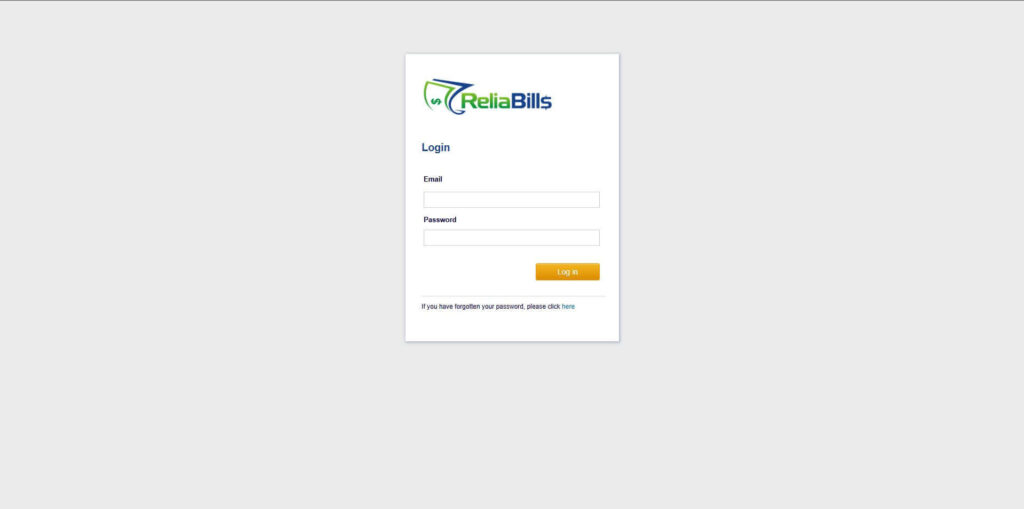
Step 1: Login to ReliaBills
- Access your ReliaBills Account using your login credentials. If you don’t have an account, sign up here.
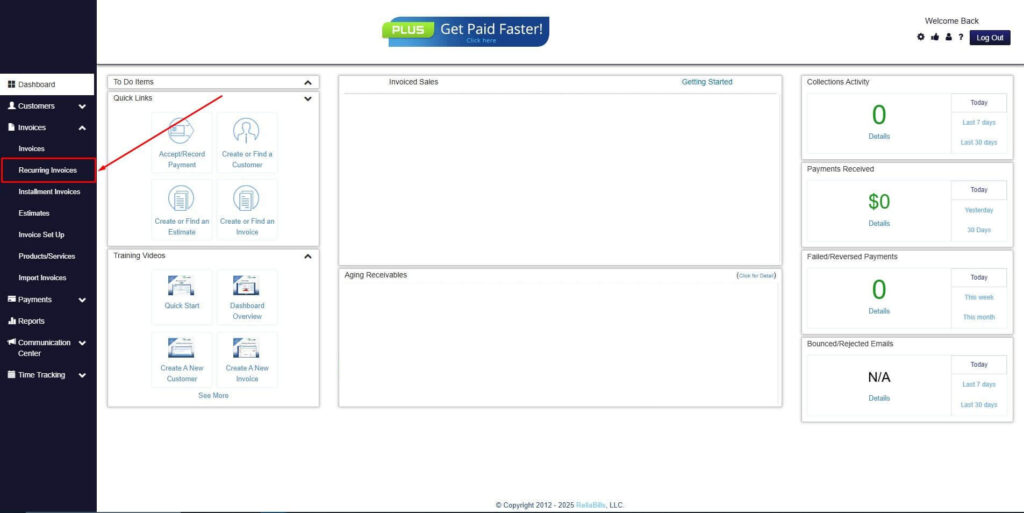
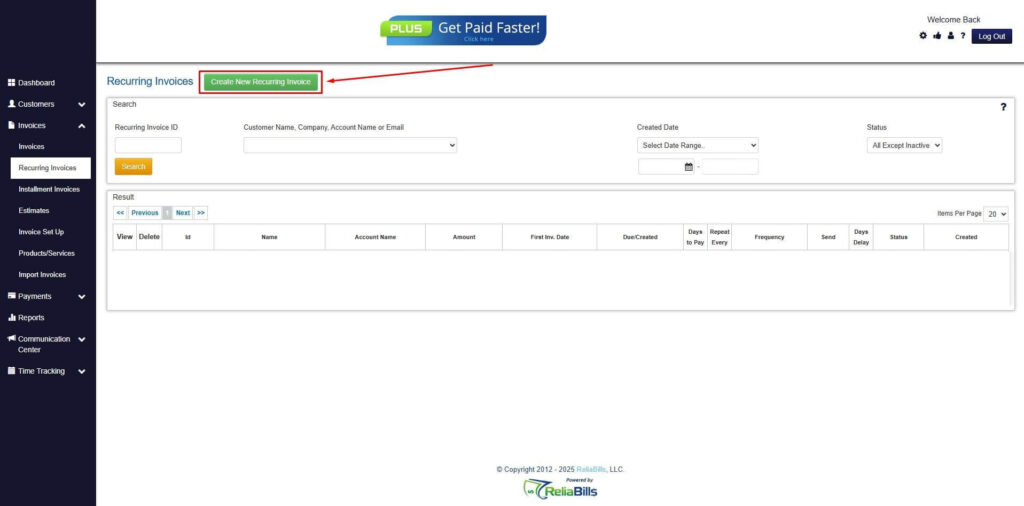
Step 2: Click on Recurring Invoices
- Navigate to the Invoices Dropdown and click on Recurring Invoices for an overview of the list of your existing customers.
Step 3: Go to the Customers Tab
- If you have already created a customer, search for them in the Customers tab and make sure their status is “Active”.
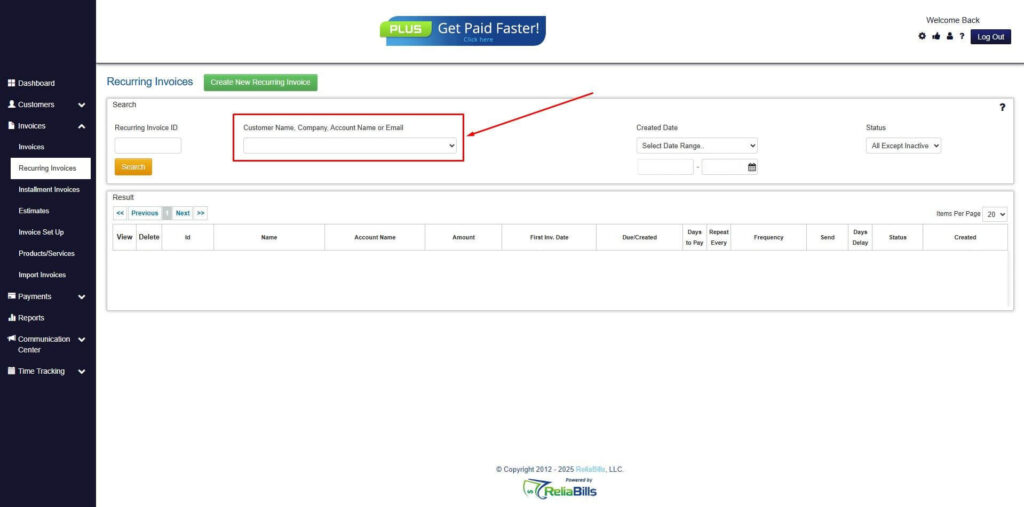
Step 4: Click the Create New Recurring Invoice
- If you haven’t created any customers yet, click the Create New Recurring Invoice to create a new customer.
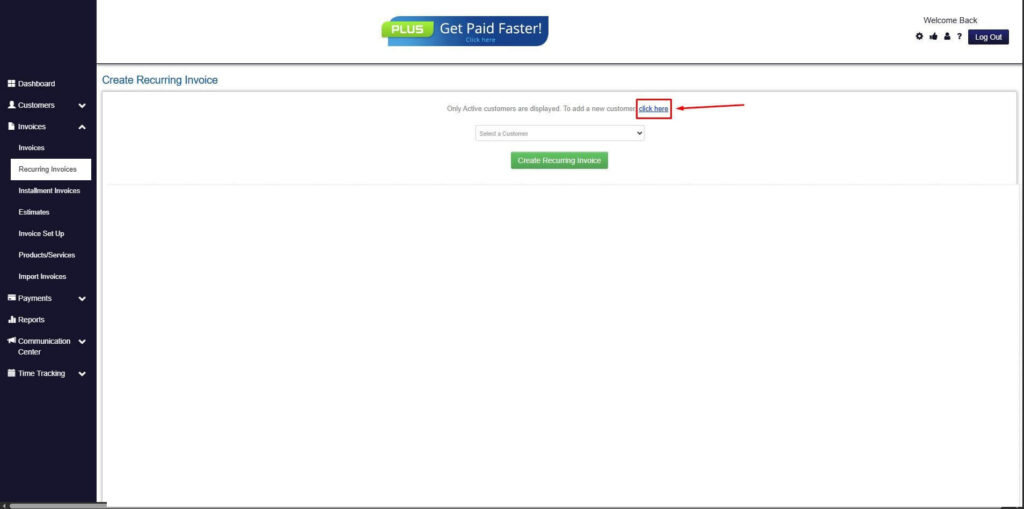
Step 5: Click on the “Click here” Button
- Click on the “Click here” button to proceed with the recurring invoice creation.
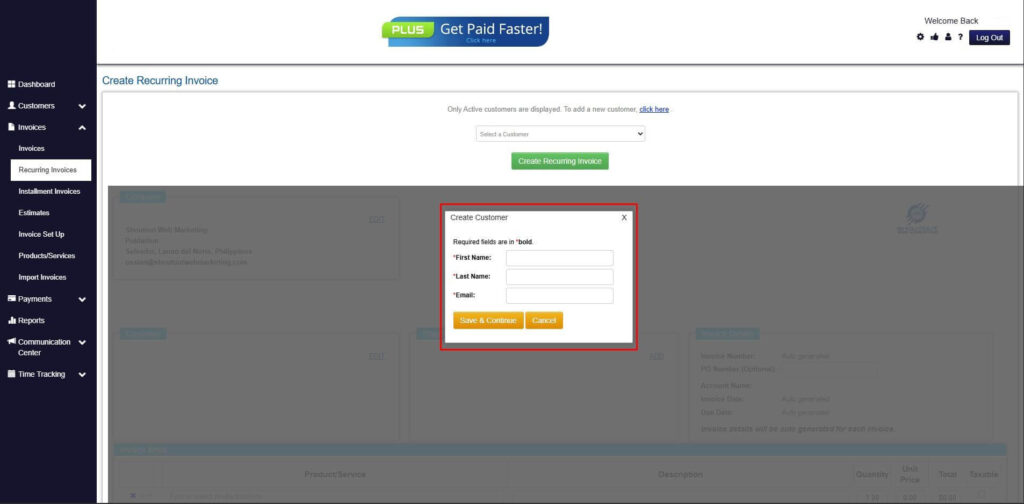
Step 6: Create Customer
- Provide your First Name, Last Name, and Email to proceed.
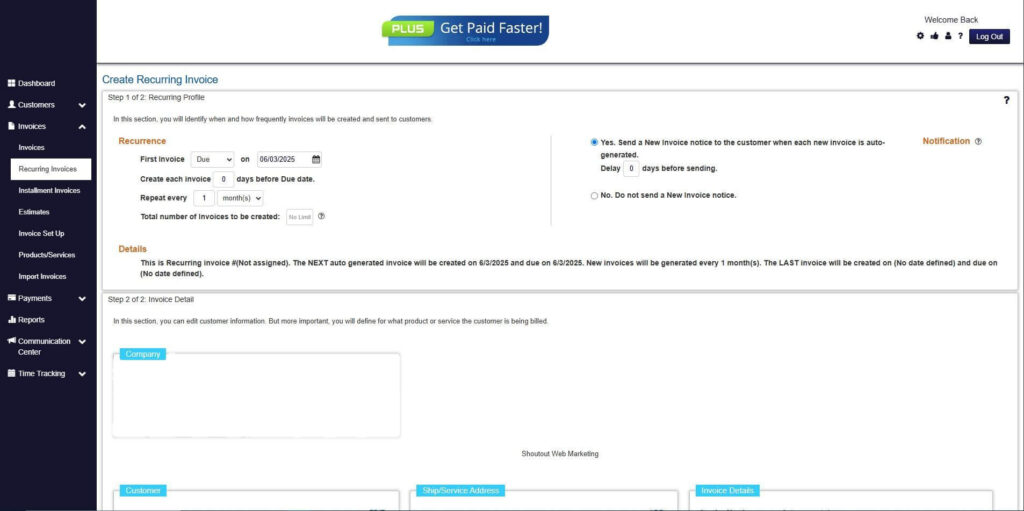
Step 7: Fill in the Create Recurring Invoice Form
- Fill in all the necessary fields.
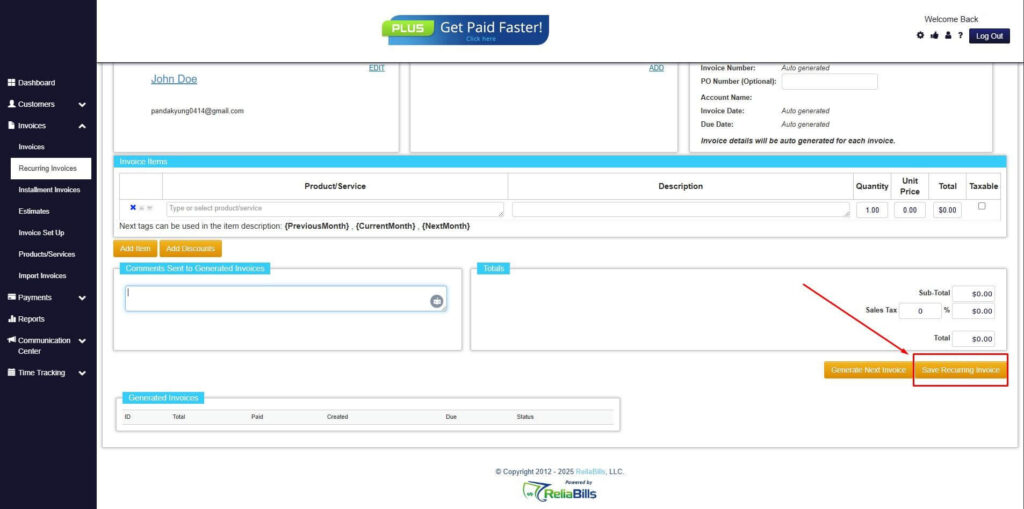
Step 8: Save Recurring Invoice
- After filling up the form, click “Save Recurring Invoice” to continue.
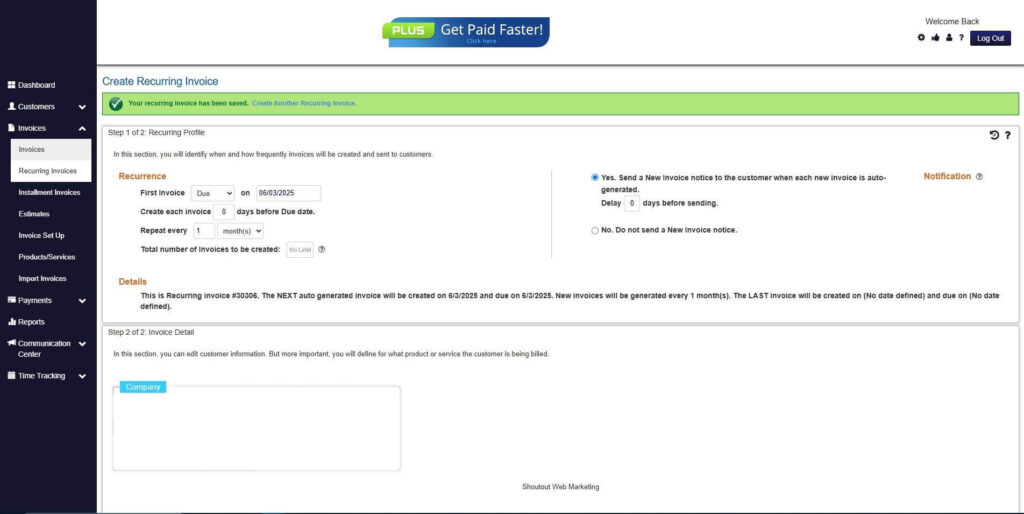
Step 9: Recurring Invoice Created
- Your Recurring Invoice has been created.
Frequently Asked Questions
1. Is invoice discounting suitable for small transportation businesses?
Yes. Small and growing businesses can benefit from improved cash flow without needing large credit facilities.
2. How is invoice discounting different from a business loan?
Invoice discounting is based on unpaid invoices rather than borrowing a fixed amount, so it does not function like traditional debt.
3. Can invoice discounting help during fuel price spikes?
Yes. Immediate access to funds allows businesses to cover sudden increases in fuel costs without disrupting operations.
4. Do customers know when a company uses invoice discounting?
In many cases, no. Invoice discounting arrangements are often confidential, allowing normal client relationships to continue.
5. How quickly can businesses receive funds through invoice discounting?
Once approved, funds are typically released within a short period, sometimes within 24 to 48 hours.
6. Does invoice discounting affect profit margins?
Yes. Service fees reduce the total amount received, so businesses should evaluate costs carefully.
Conclusion
Transportation companies often face cash flow challenges due to delayed payments and rising fuel costs. These issues can impact daily operations and limit business growth if not managed effectively.
Transportation invoice discounting provides a practical solution by unlocking cash tied up in unpaid invoices. This allows businesses to cover fuel expenses, maintain operations, and stay financially flexible.
By combining invoice discounting with automated tools like ReliaBills, transportation companies can improve efficiency, reduce financial stress, and build a more stable and scalable business.