
Many organizations handle invoices that do not involve a direct sale. These are commonly known as non-commercial invoices and are used for documentation purposes rather than payment collection. Businesses may issue them when shipping product samples, sending replacement items, or transferring goods internally between departments or locations.
Despite their administrative nature, non-commercial invoices still play an important role in record keeping and operational transparency. If these invoices are created differently across departments, inconsistencies can lead to confusion in accounting records, logistics documentation, and compliance processes.
Learning how to standardize non-commercial invoices across your business helps create clear documentation, reduce errors, and ensure that internal teams follow consistent procedures. With standardized templates and automated systems, companies can maintain accurate records while improving efficiency.
What Is a Non-Commercial Invoice?
A non-commercial invoice is a document used to describe goods or services that are not being sold as part of a commercial transaction. Instead of requesting payment, it provides details about items being transferred, shipped, or documented for administrative purposes.
These invoices are commonly used in situations such as sending product samples to clients, shipping replacement items under warranty, or transferring equipment between company branches. Although no payment is expected, the invoice still contains key information about the goods involved in the transaction.
The main difference between commercial and non-commercial invoices lies in their purpose. A commercial invoice is issued to collect payment for goods or services, while a non-commercial invoice is created primarily for documentation, shipping, or accounting records.
Why Do Businesses Need to Standardize Non-Commercial Invoices?
Standardizing documentation helps ensure that every department follows the same invoicing structure. When teams use consistent formats and fields, it becomes easier to track transactions and maintain reliable records.
Consistency also reduces documentation errors. Without standardized templates, employees may forget to include required details such as reference numbers, shipment descriptions, or compliance statements.
Another major benefit of standardization is improved financial transparency. When all invoices follow the same format, accounting teams can easily review records, reconcile documentation, and ensure compliance with internal policies or regulatory requirements.
Which Situations Require Non-Commercial Invoices?
Businesses use non-commercial invoices in several operational situations where goods or items are transferred but no payment is expected. Proper documentation ensures that these transactions are clearly recorded for logistics, accounting, and compliance purposes.
Shipping Product Samples
Companies frequently send product samples to potential customers, distributors, or partners for evaluation. A non-commercial invoice documents the shipment while clearly stating that the items have no commercial value and are not intended for sale.
Internal Company Transfers
Organizations with multiple branches, warehouses, or offices may transfer equipment, materials, or inventory between locations. Non-commercial invoices help track these internal movements and maintain accurate inventory and accounting records.
Replacement Shipments
When businesses send replacement items to customers due to defects, shipping errors, or damaged goods, a non-commercial invoice documents the replacement transaction without creating a new charge.
Warranty or Repair Returns
Products returned for repair or warranty service often require documentation when they are shipped back to the customer. A non-commercial invoice helps logistics teams and shipping carriers understand the purpose of the shipment.
Promotional or Marketing Items
Businesses sometimes send branded merchandise, promotional kits, or demonstration products to partners or event organizers. A non-commercial invoice records these items while clarifying that they are distributed for marketing purposes.
Exhibition or Trade Show Shipments
Companies sending products to trade shows or exhibitions may use non-commercial invoices to document temporary shipments that will later be returned to the business.
What Problems Occur When Non-Commercial Invoices Are Not Standardized?
When businesses fail to standardize non-commercial invoices, documentation issues can quickly arise. Different departments may create invoices using inconsistent formats, which makes records harder to track and verify.
Incomplete documentation is another common problem. If required fields are missing, logistics teams or accounting departments may struggle to identify the purpose of a shipment or the origin of the transaction.
Inconsistent documentation can also lead to accounting discrepancies. Without clear records, financial teams may find it difficult to reconcile inventory movements or internal transfers. Over time, this can increase administrative workload and create compliance risks.
What Key Information Should Every Non-Commercial Invoice Include?
Even though non-commercial invoices do not request payment, they must still contain detailed information to ensure proper documentation and avoid confusion during shipping or accounting processes.
Sender and Recipient Information
The invoice should include the name, address, and contact details of both the sender and the recipient. This information helps identify the parties involved in the transaction and ensures accurate shipment tracking.
Description of Goods or Items
A clear and detailed description of the items being transferred should be included. This may involve product names, quantities, model numbers, or other identifying characteristics that clarify the contents of the shipment.
Statement Indicating “No Commercial Value”
Non-commercial invoices should clearly state that the goods are not part of a commercial sale. Including phrases such as “No commercial value” or “For documentation purposes only” helps avoid misunderstandings during shipping or customs processing.
Reference Numbers or Related Documentation
Internal tracking numbers, shipment references, purchase order numbers, or warranty claim identifiers should be included. These references connect the invoice to related business records.
Date of Issue
The invoice should indicate the date when the document was created. This helps maintain chronological records and supports accurate documentation during audits or reviews.
Purpose of the Shipment
Including a short explanation of the transaction such as product samples, warranty replacement, or internal transfer helps clarify the reason for the invoice.
How Can Businesses Create a Standard Non-Commercial Invoice Template?
Developing a standardized template is one of the most effective ways to maintain consistent documentation across departments. A well-designed template ensures that employees follow the same structure every time an invoice is created.
Businesses should begin by defining the required fields that must appear on every invoice. These may include sender information, item descriptions, internal reference numbers, and compliance statements.
Once the required fields are defined, companies can establish consistent formatting and terminology. Standardized wording helps ensure that employees describe transactions clearly and consistently.
Approval workflows can also improve accuracy. Before an invoice is finalized, it may be reviewed by accounting or logistics teams to ensure all required information is included.
When Should Non-Commercial Invoices Be Issued?
Non-commercial invoices should be issued whenever goods or services are transferred without a direct sale. Proper documentation helps maintain transparency and ensures that the transaction can be tracked later.
These invoices are commonly used when sending product samples to potential clients or partners. Even though the items are provided free of charge, the shipment still needs proper documentation.
Businesses may also issue non-commercial invoices when sending promotional materials, transferring equipment internally, or documenting items shipped for repair or warranty service.
Why Is Clear Documentation Important for Compliance?
Clear documentation helps businesses meet regulatory and operational requirements. In many cases, shipping and logistics partners rely on invoice documentation to understand the purpose of a shipment.
Accurate records also support accounting processes. When transactions are documented properly, financial teams can track inventory movement and verify internal transfers.
Compliance and audit readiness are additional benefits. When businesses maintain well-organized documentation, they can easily demonstrate transparency during internal reviews or external audits.
How Can Digital Invoicing Systems Improve Standardization?
Digital invoicing systems make it easier for organizations to maintain consistent documentation. These platforms allow businesses to create predefined templates that ensure every invoice follows the same format.
Automated systems can also populate certain fields automatically. Information such as company details, department identifiers, and transaction references can be filled in automatically, reducing manual effort.
Centralized document storage further improves accessibility. Instead of searching through multiple files or spreadsheets, teams can access invoice records from a single system.
Can Automation Reduce Errors in Non-Commercial Invoicing?
Automation plays an important role in reducing errors and improving efficiency. When businesses rely on manual processes, small mistakes in data entry can lead to inaccurate documentation.
Automated systems eliminate many of these risks by ensuring that required fields are completed before an invoice is finalized. This helps prevent missing information and incomplete records.
Automation also allows businesses to link invoices to related transactions. By referencing shipment records or internal transfers automatically, companies can maintain accurate documentation and better traceability.
What Best Practices Help Maintain Consistent Invoice Standards?
Maintaining consistent invoice standards requires structured processes, clear policies, and reliable technology. Following best practices helps ensure that all departments create invoices using the same guidelines.
Establish Company-Wide Documentation Policies
Businesses should define clear invoicing rules that apply across departments. These policies should outline the required fields, formatting guidelines, and approval procedures for all invoices.
Use Standardized Invoice Templates
Providing employees with approved templates ensures that every invoice follows the same format. Templates reduce the risk of missing information and help maintain professional documentation.
Provide Employee Training on Invoicing Procedures
Staff responsible for creating invoices should understand when non-commercial invoices are required and how to complete them correctly. Training ensures consistent practices across teams.
Conduct Regular Invoice Audits
Periodic reviews of invoice records help identify inconsistencies or missing information. Audits allow businesses to correct issues early and maintain accurate documentation standards.
Centralize Invoice Storage and Access
Keeping invoice records in a centralized system ensures that authorized teams can easily retrieve documents when needed for accounting, shipping verification, or compliance checks.
Use Standardized Billing or Invoicing Software
Implementing digital invoicing tools helps automate formatting, enforce required fields, and reduce manual errors. Software platforms also make it easier to maintain consistent invoicing practices across the organization.
How Does ReliaBills Help Standardize Non-Commercial Invoices?
Managing different types of invoices across multiple departments can quickly become complicated, especially when documentation standards vary. ReliaBills helps businesses maintain consistency by providing customizable invoice templates that ensure every invoice follows the same structure and required format. This makes it easier for teams to create non-commercial invoices with the correct fields, descriptions, and documentation details.
Automation also plays a major role in improving invoice standardization. With ReliaBills, businesses can automate invoice generation and ensure that important information such as sender details, item descriptions, and reference numbers are consistently included. Recurring billing features further support businesses that manage ongoing service agreements while maintaining organized documentation for other invoice types across the organization.
ReliaBills also provides centralized dashboards and reporting tools that allow teams to track invoices, review records, and maintain clear documentation across departments. By combining automation, standardized templates, and recurring billing capabilities, ReliaBills helps businesses standardize non-commercial invoices while reducing administrative work and improving overall invoice management.
How to Create a New Recurring Invoice Using ReliaBills
Creating a New Recurring Invoice using ReliaBills involves the following steps:
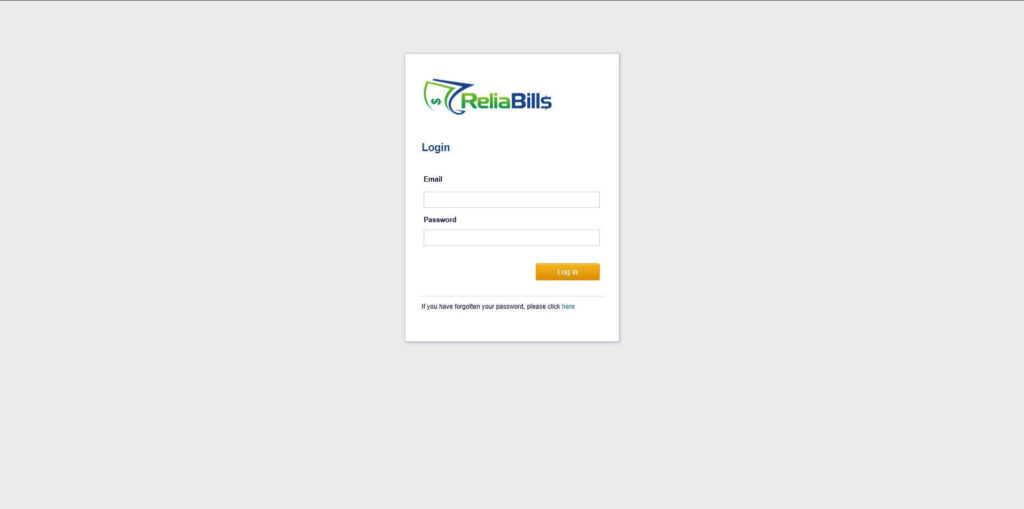
Step 1: Login to ReliaBills
- Access your ReliaBills Account using your login credentials. If you don’t have an account, sign up here.
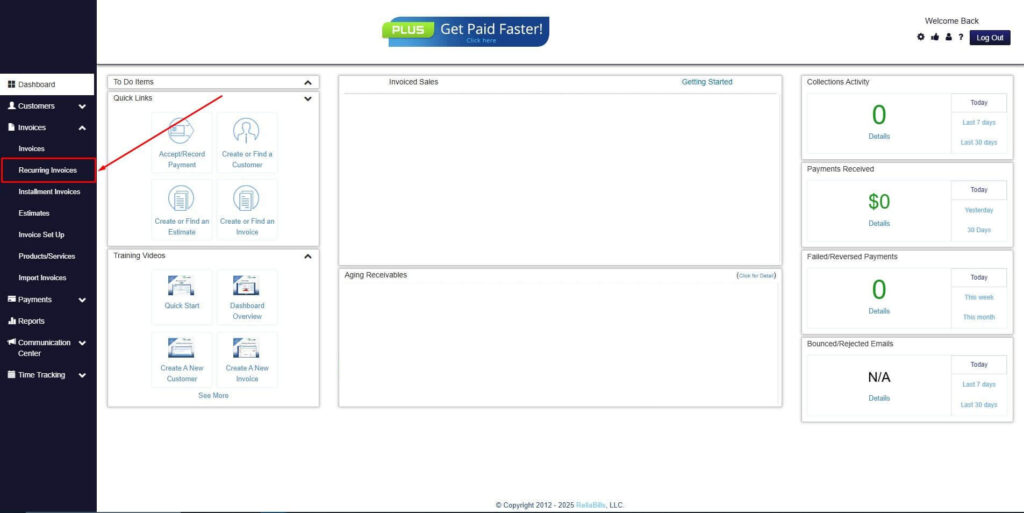
Step 2: Click on Recurring Invoices
- Navigate to the Invoices Dropdown and click on Recurring Invoices for an overview of the list of your existing customers.
Step 3: Go to the Customers Tab
- If you have already created a customer, search for them in the Customers tab and make sure their status is “Active”.
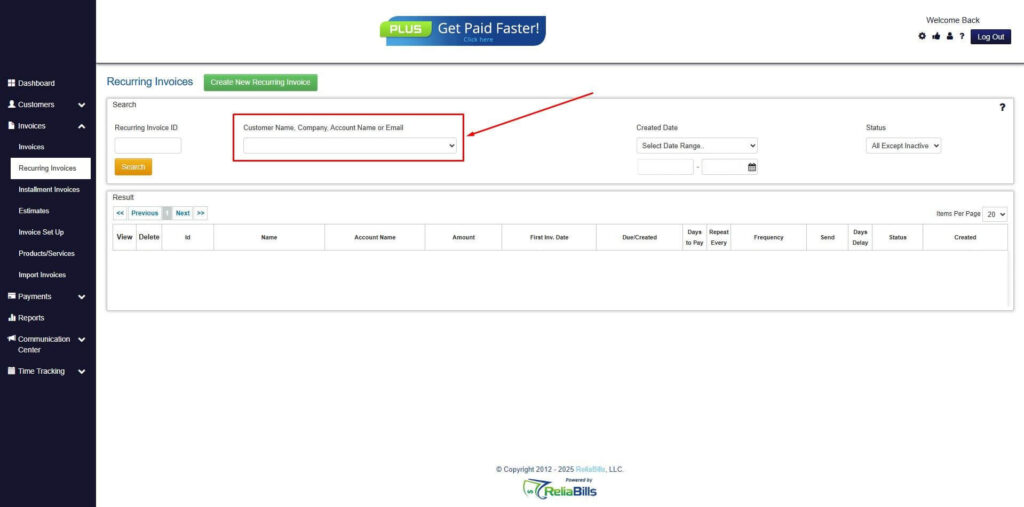
Step 4: Click the Create New Recurring Invoice
- If you haven’t created any customers yet, click the Create New Recurring Invoice to create a new customer.
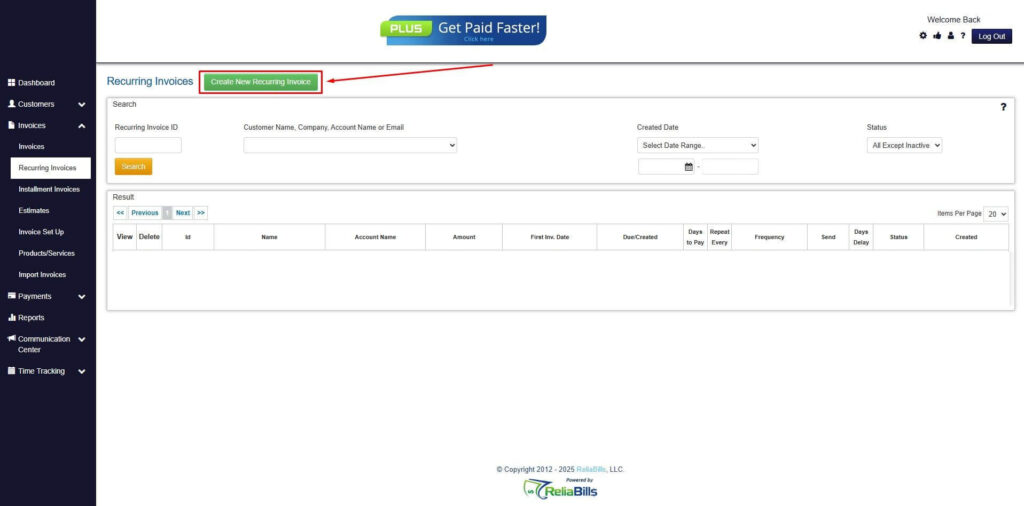
Step 5: Click on the “Click here” Button
- Click on the “Click here” button to proceed with the recurring invoice creation.
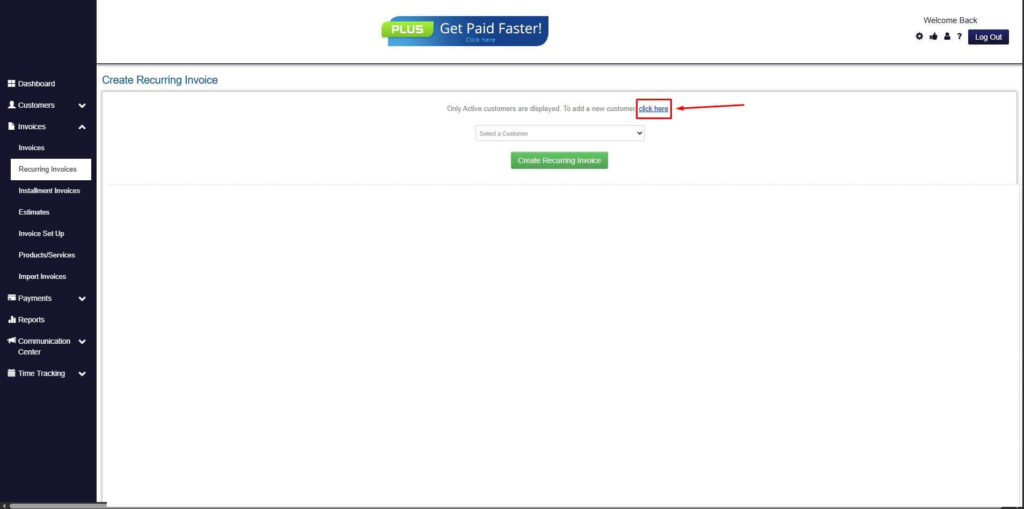
Step 6: Create Customer
- Provide your First Name, Last Name, and Email to proceed.
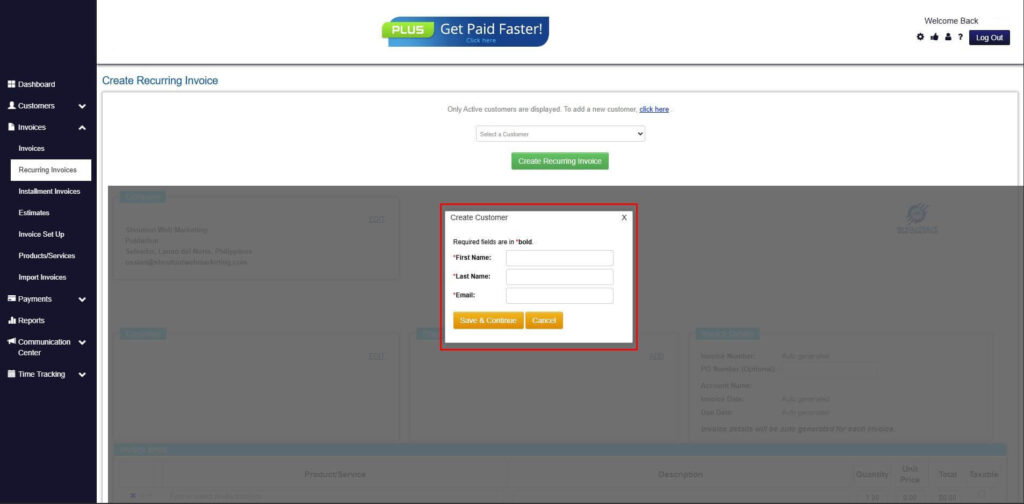
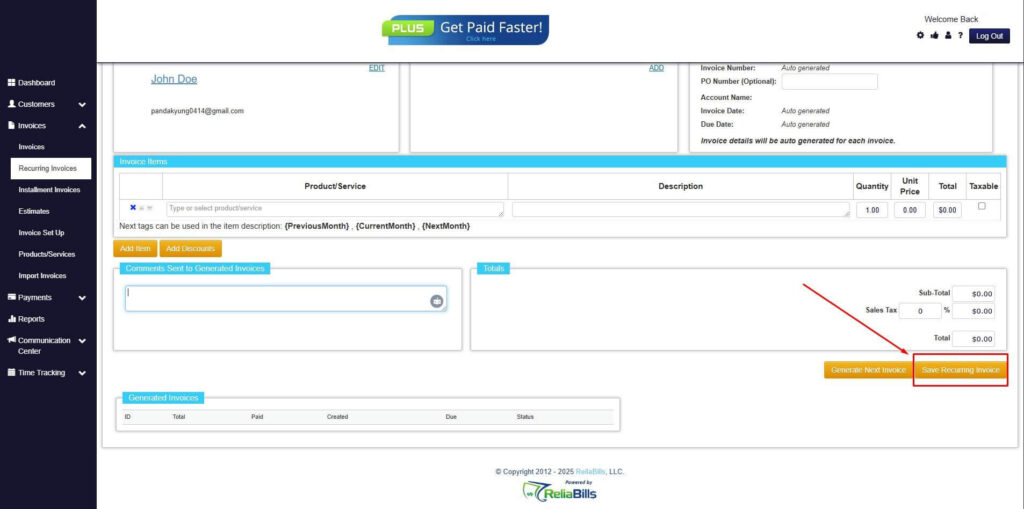
Step 7: Fill in the Create Recurring Invoice Form
- Fill in all the necessary fields.
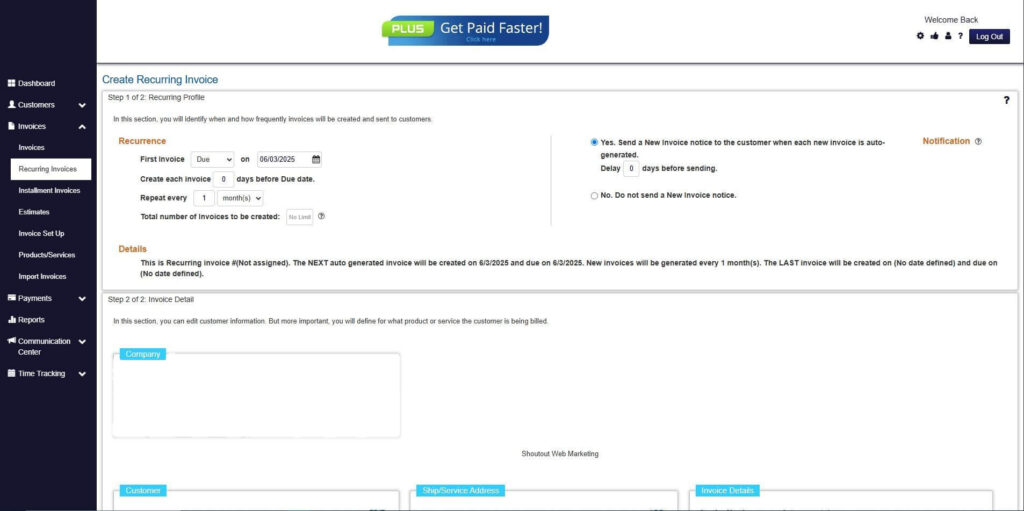
Step 8: Save Recurring Invoice
- After filling up the form, click “Save Recurring Invoice” to continue.
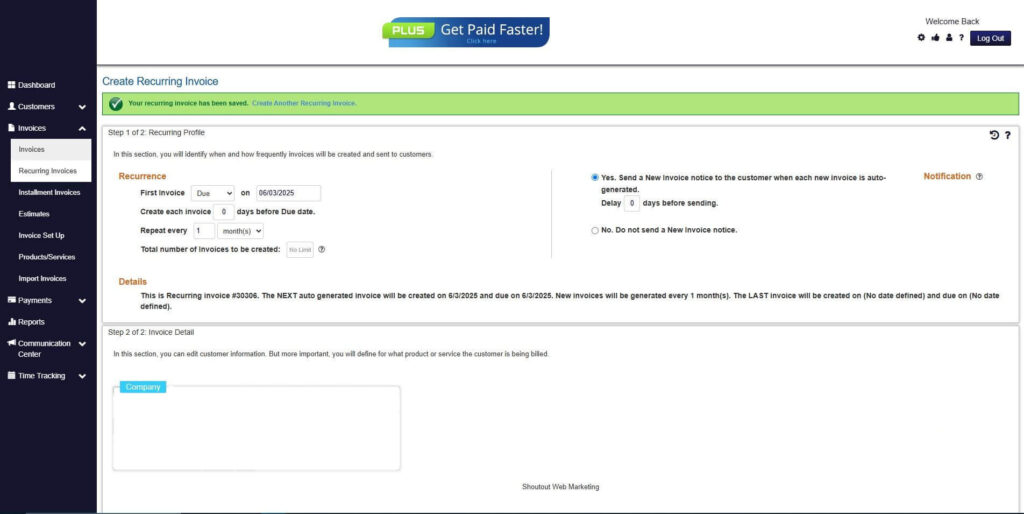
Step 9: Recurring Invoice Created
- Your Recurring Invoice has been created.
Frequently Asked Questions
1. What is a non-commercial invoice used for?
A non-commercial invoice documents the transfer of goods or services that do not involve a sale, such as product samples, replacements, or internal shipments.
2. Why is it important to standardize non-commercial invoices?
Standardization ensures consistent documentation, reduces errors, and helps businesses maintain accurate accounting and logistics records.
3. Do non-commercial invoices require detailed information?
Yes. Even without payment, these invoices must include sender details, item descriptions, reference numbers, and a statement indicating no commercial value.
4. Can software help manage non-commercial invoices?
Yes. Digital invoicing systems can automate templates, enforce required fields, and store documents centrally to improve accuracy and efficiency.
Conclusion
Standardizing non-commercial invoices helps businesses maintain accurate documentation while reducing administrative confusion. Clear templates and structured processes ensure that every invoice contains the information required for accounting, logistics, and compliance.
Without standardization, organizations may face documentation gaps, inconsistent records, and increased administrative workload. Implementing consistent invoice templates and internal procedures helps prevent these issues.
Using invoicing software like ReliaBills allows businesses to maintain standardized documentation across all departments. With automated workflows, centralized records, and recurring billing tools, companies can streamline invoice management while improving operational efficiency.