

Service-based businesses often need to adjust invoices after they have been issued. Changes in project scope, pricing corrections, service cancellations, or billing errors can all require updates to an existing invoice. Without a clear system for managing these adjustments, businesses may struggle to maintain accurate billing records.
Return invoices help solve this problem by documenting refunds, credits, or billing corrections in a structured way. Instead of simply modifying or deleting the original invoice, businesses issue a return invoice that clearly records the adjustment and links it to the original transaction.
Understanding how return invoices for service businesses work is important for maintaining accurate financial reporting and transparent communication with clients. Properly documented adjustments ensure that revenue records remain accurate while reducing disputes and confusion.
What Is a Return Invoice?
A return invoice is a financial document issued when a previously billed transaction needs to be corrected or reversed. It records adjustments such as refunds, service credits, or pricing corrections while maintaining a clear reference to the original invoice.
Unlike a standard invoice that requests payment from a client, a return invoice usually reflects a reduction in the amount owed or a credit issued to the customer. It serves as a formal accounting record showing that part or all of the original charge has been adjusted.
Return invoices are closely related to credit adjustments and refund transactions. Instead of modifying existing records, businesses use return invoices to maintain an accurate audit trail that shows exactly when and why billing changes occurred.
Why Do Service-Based Businesses Issue Return Invoices?
Service businesses issue return invoices whenever billing adjustments are required. One common situation involves correcting billing errors, such as incorrect pricing, duplicate charges, or inaccurate service descriptions.
Return invoices are also used when services are only partially delivered. For example, if a consulting engagement ends earlier than expected or a maintenance contract is reduced in scope, a return invoice allows the business to adjust the original billing amount.
Another reason for issuing return invoices is handling cancellations or processing refunds. When a client cancels a service agreement or qualifies for a credit, a return invoice provides a transparent way to document the change and maintain clear financial records.
What Types of Services Commonly Require Return Invoices?
Several service industries regularly use return invoices to correct billing records, issue service credits, or process refunds. These adjustments help maintain accurate financial documentation when services change after an invoice has been issued.
Consulting and Professional Services
Consultants, accountants, and legal professionals often adjust invoices when project scope changes or when hours billed need correction. If a client is billed for more hours than were actually worked, a return invoice documents the billing correction and ensures accurate client records.
Maintenance and Repair Services
Companies providing repair, equipment servicing, or facility maintenance may issue return invoices when initial estimates change after inspection. If the final service cost is lower than the original invoice, a return invoice can reflect the price adjustment or service credit.
Subscription-Based Service Contracts
Businesses offering monthly services such as IT support, marketing retainers, or software subscriptions may need return invoices when customers downgrade plans, cancel early, or receive prorated service adjustments.
Project-Based Services with Revisions
Design agencies, software developers, and marketing firms frequently revise project deliverables during the service period. If a client removes certain deliverables or negotiates revised pricing, a return invoice helps update the billing record.
Training and Educational Services
Businesses that provide training programs or workshops may need to issue return invoices when participants cancel, switch sessions, or receive partial refunds.
When Should a Return Invoice Be Issued?
Return invoices should be issued as soon as a billing adjustment is confirmed. One common situation occurs after a billing dispute has been resolved and the business agrees to modify the original charge.
They are also necessary when services are partially delivered. If a project ends earlier than planned or certain services are removed from the agreement, a return invoice ensures the financial records reflect the actual work performed.
Contract modifications can also require return invoices. When pricing terms change or clients receive refunds or service credits, issuing a return invoice provides a clear and traceable record of the adjustment.
How Do Return Invoices Affect Financial Records?
Return invoices directly impact financial reporting by adjusting the revenue originally recorded for a transaction. When a return invoice is issued, the accounting system reflects a reduction in the previously recognized revenue.
These adjustments also update accounts receivable balances. If a client has not yet paid the original invoice, the return invoice lowers the outstanding amount they owe. If the invoice was already paid, the return invoice may create a credit balance or trigger a refund.
Maintaining these records is essential for audit compliance and accurate bookkeeping. Clear documentation ensures that financial statements correctly reflect the business’s actual income and billing activity.
What Information Should Be Included in a Return Invoice?
A properly structured return invoice must contain clear and complete information to ensure that accounting records remain accurate and traceable. Including detailed documentation helps prevent confusion for both businesses and clients.
Reference to the Original Invoice
The return invoice should clearly include the original invoice number and date. This reference allows accounting teams to track which transaction is being corrected and ensures adjustments are properly recorded.
Reason for the Adjustment
Every return invoice should explain why the correction was made. This may include billing errors, service cancellations, scope reductions, or approved customer refunds. Providing a clear explanation helps maintain transparency.
Adjusted Amount or Credit Value
The document should show the exact amount being credited or deducted from the original invoice. This ensures that the financial impact of the adjustment is fully documented.
Updated Transaction Date
The date when the return invoice was issued should be included so financial reports reflect when the adjustment occurred.
Customer and Service Details
The invoice should still contain the client’s information, service description, and any relevant contract references. This helps maintain complete records for auditing and customer communication.
Payment or Credit Instructions
If the adjustment results in a refund or account credit, the return invoice should indicate how the credit will be applied. For example, it may be applied to future invoices or refunded directly to the customer.
Why Is Proper Documentation Important for Return Invoices?
Proper documentation helps businesses avoid financial discrepancies. Without clear records, adjustments may be forgotten or misapplied, leading to inaccurate financial statements.
Detailed documentation also supports internal accounting controls. By recording every billing change through a return invoice, businesses create a traceable history of transactions that can be reviewed during audits.
Accurate records also reduce disputes with clients. When customers receive clear documentation showing why an invoice was adjusted, they are more likely to trust the billing process and accept the correction without further disagreement.
Can Return Invoices Occur in Recurring Billing Arrangements?
Return invoices often occur within recurring billing environments. Subscription services sometimes require billing adjustments when customers change plans, pause services, or cancel contracts before the billing cycle ends.
Contract downgrades or service reductions can also require return invoices. For example, a client may remove certain services from a monthly agreement, requiring a credit adjustment to the existing billing cycle.
Using return invoices ensures recurring revenue records remain accurate. By documenting these adjustments clearly, businesses maintain transparent financial reporting even when recurring billing changes occur.
How Can Automation Simplify Return Invoice Management?
Automation can significantly simplify the process of managing return invoices. Modern billing systems can generate credit invoices automatically whenever a billing adjustment is required.
Automated platforms also link return invoices directly to the original transaction. This connection ensures that accounting records remain accurate and that adjustments can be tracked easily.
Digital storage and reporting tools further improve efficiency. Businesses can quickly locate invoice records, review adjustments, and update financial data in real time without relying on manual documentation.
What Challenges Do Businesses Face When Managing Return Invoices Manually?
Handling return invoices manually can create several operational and financial challenges for service-based businesses. Without automation or structured processes, adjustments may be difficult to track and manage.
Data Entry Errors
Manually creating return invoices increases the risk of incorrect amounts, duplicated adjustments, or missing transaction details. Even small errors can affect financial reports and customer balances.
Missing Invoice References
When return invoices are not properly linked to their original invoices, accounting teams may struggle to identify which transactions were adjusted. This lack of connection can lead to confusion during financial reconciliation.
Delayed Financial Updates
Manual processes often slow down the recording of adjustments. If return invoices are not entered quickly, accounts receivable balances and revenue reports may temporarily show inaccurate figures.
Increased Administrative Workload
Finance teams may spend significant time verifying invoices, updating spreadsheets, and correcting records. This reduces efficiency and distracts staff from more strategic financial tasks.
Difficulty Maintaining Audit Trails
Proper documentation is essential for compliance and financial audits. Manual systems can make it harder to maintain a clear record of why adjustments were made and when they occurred.
Higher Risk of Customer Disputes
If adjustments are not documented clearly, clients may question billing changes. Inconsistent records can damage trust and delay payment resolution.
How Do Return Invoices Help Maintain Customer Trust?
Return invoices play an important role in maintaining transparency with clients. When businesses clearly document billing corrections, customers can easily understand how adjustments were calculated.
This transparency helps resolve disputes faster. Clients appreciate clear explanations and formal documentation when refunds or credits are issued.
By demonstrating professionalism and accountability, service businesses strengthen customer relationships. Transparent billing practices show clients that the company values fairness and accuracy in its financial processes.
How Does ReliaBills Help Manage Return Invoices for Service Businesses?
Managing billing adjustments can become complicated when service businesses handle multiple clients, contracts, and recurring billing cycles. ReliaBills simplifies this process by allowing businesses to create and manage return invoices that are automatically linked to the original transaction. This connection ensures that any refund, credit, or billing correction is clearly documented, helping businesses maintain accurate financial records and transparent communication with clients.
Recurring billing management is another area where ReliaBills provides strong support. Service businesses that rely on subscription plans, retainers, or scheduled service contracts can easily modify recurring invoices when service changes occur. If a customer cancels a service, downgrades a plan, or receives a billing adjustment, ReliaBills can generate the appropriate return invoice while keeping the recurring billing schedule accurate and up to date.
ReliaBills also provides centralized dashboards and reporting tools that allow businesses to track invoice adjustments, monitor receivables, and review billing activity in real time. With automated workflows, digital documentation, and integrated invoicing features, service businesses can reduce manual administrative work while ensuring that return invoices for service businesses are handled efficiently and professionally.
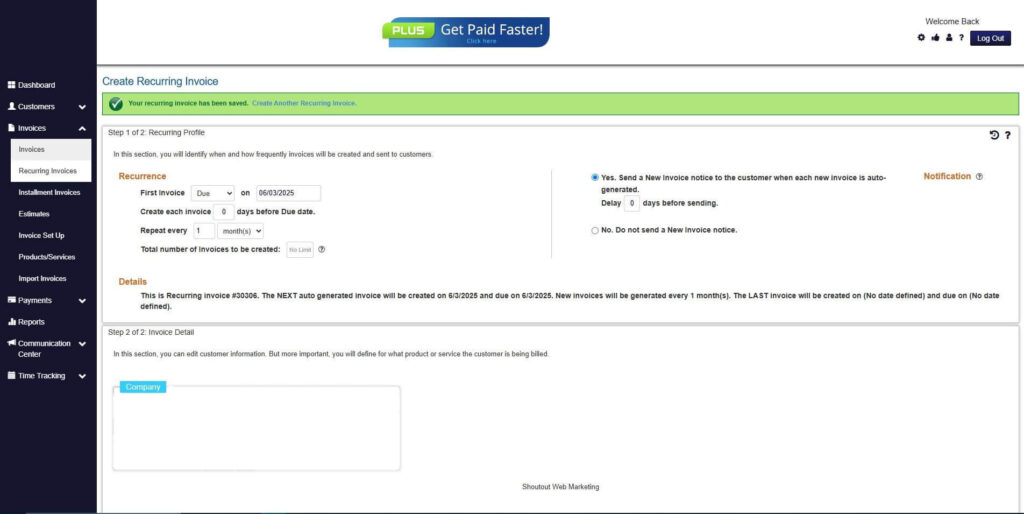
How to Create a New Recurring Invoice Using ReliaBills
Creating a New Recurring Invoice using ReliaBills involves the following steps:
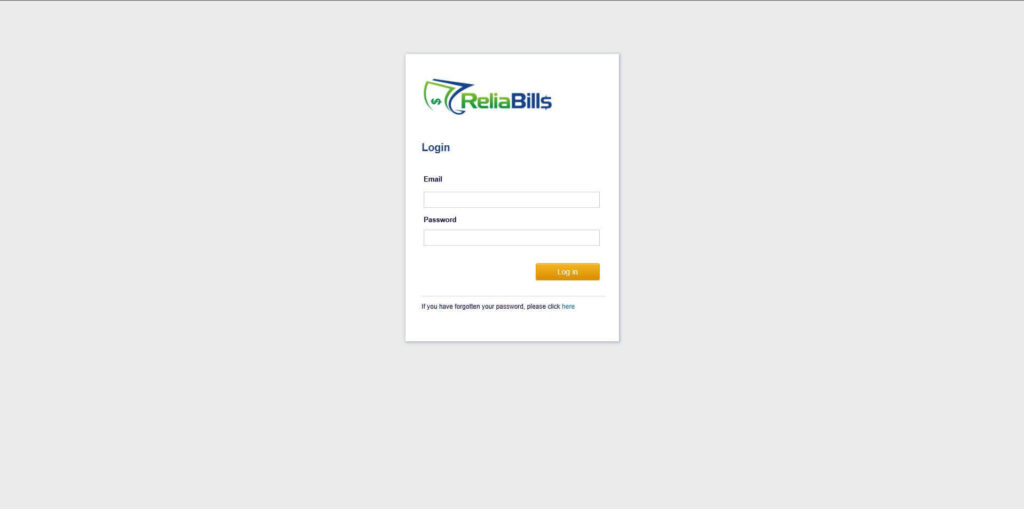
Step 1: Login to ReliaBills
- Access your ReliaBills Account using your login credentials. If you don’t have an account, sign up here.
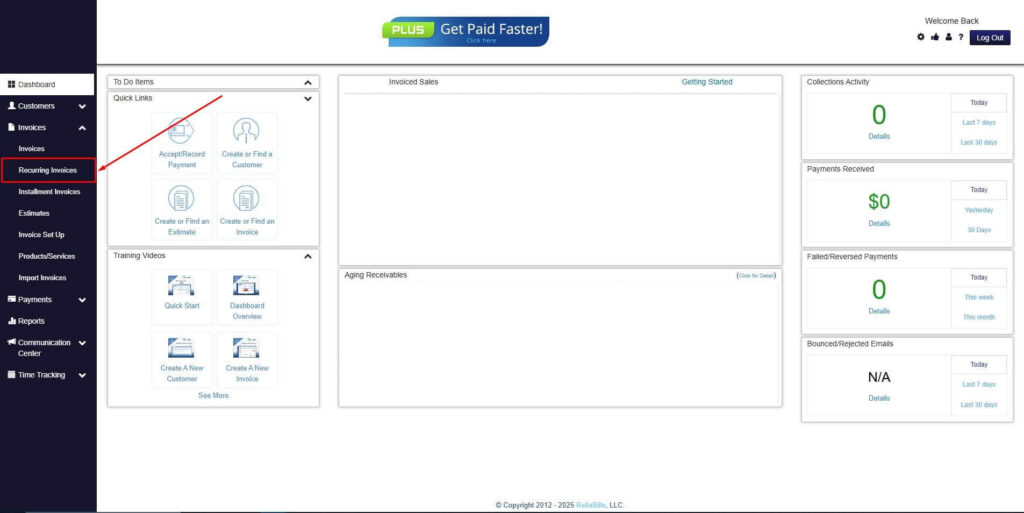
Step 2: Click on Recurring Invoices
- Navigate to the Invoices Dropdown and click on Recurring Invoices for an overview of the list of your existing customers.
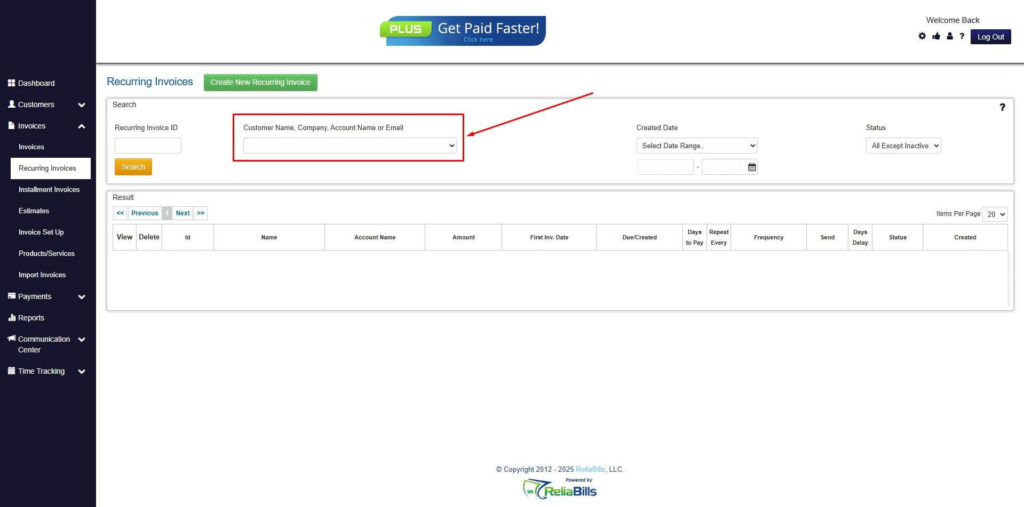
Step 3: Go to the Customers Tab
- If you have already created a customer, search for them in the Customers tab and make sure their status is “Active”.
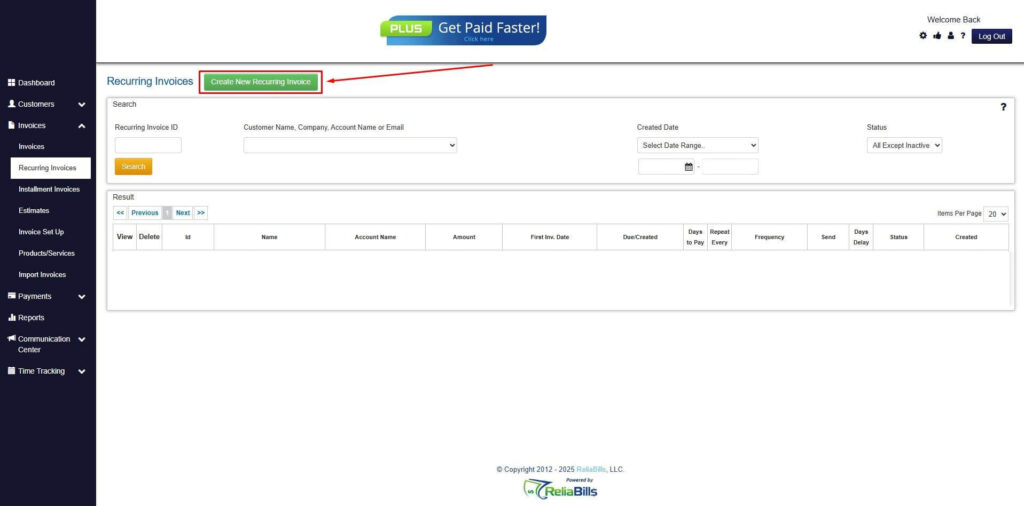
Step 4: Click the Create New Recurring Invoice
- If you haven’t created any customers yet, click the Create New Recurring Invoice to create a new customer.
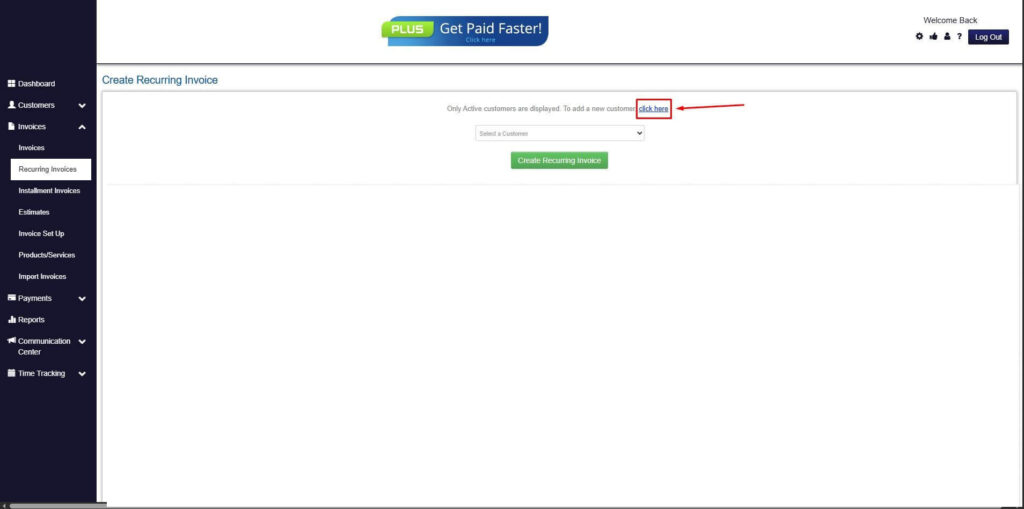
Step 5: Click on the “Click here” Button
- Click on the “Click here” button to proceed with the recurring invoice creation.
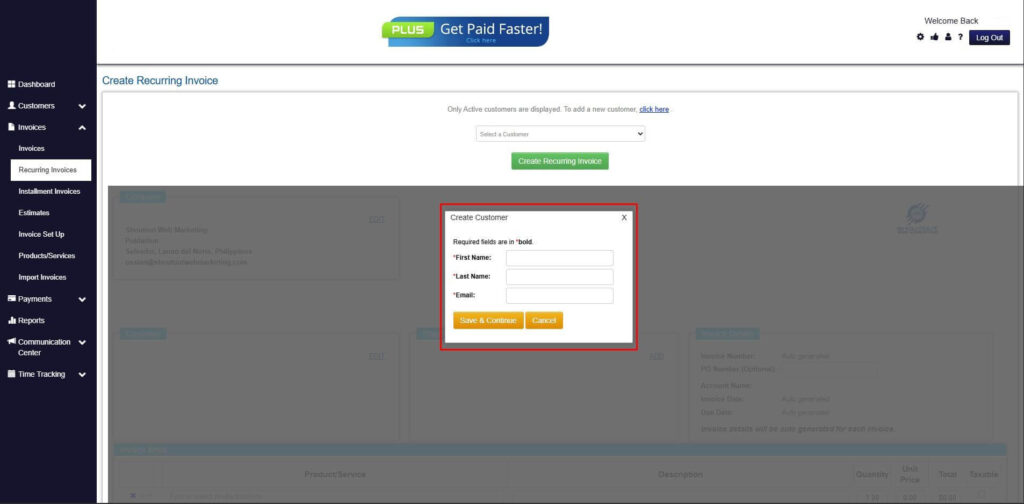
Step 6: Create Customer
- Provide your First Name, Last Name, and Email to proceed.
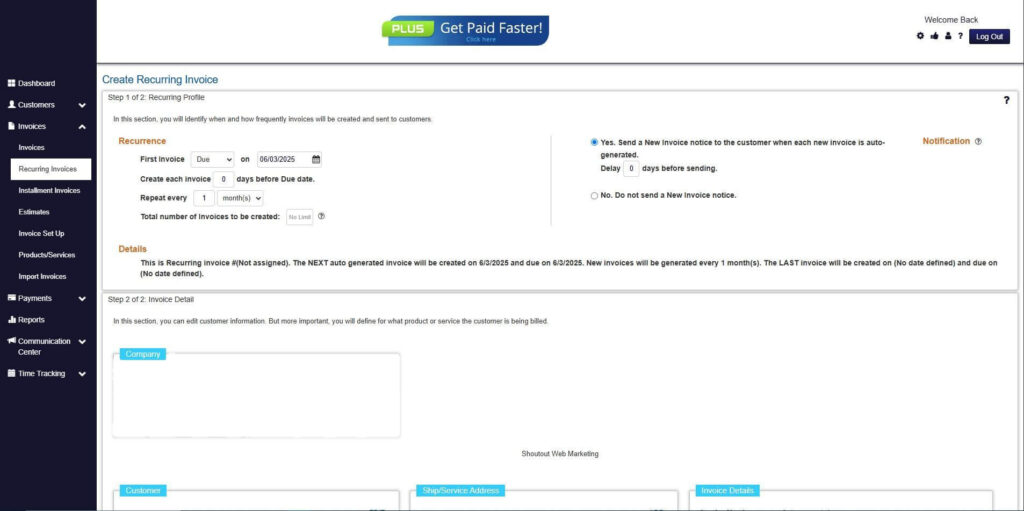
Step 7: Fill in the Create Recurring Invoice Form
- Fill in all the necessary fields.
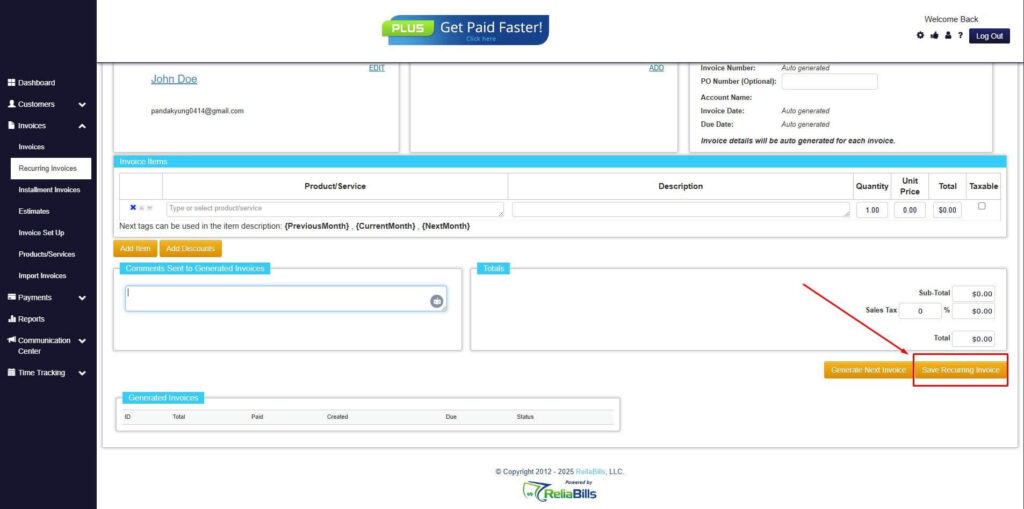
Step 8: Save Recurring Invoice
- After filling up the form, click “Save Recurring Invoice” to continue.
Step 9: Recurring Invoice Created
- Your Recurring Invoice has been created.
Frequently Asked Questions
1. What are return invoices for service businesses?
Return invoices are documents used to record billing adjustments such as refunds, credits, or corrections to previously issued invoices.
2. When should a return invoice be issued?
Return invoices should be issued whenever an original invoice requires adjustment due to billing errors, service cancellations, or contract modifications.
3. Do return invoices affect financial records?
Yes. Return invoices adjust revenue records and accounts receivable balances to reflect the correct transaction amounts.
4. Can return invoices be used in recurring billing?
Yes. Return invoices are commonly used to adjust subscription charges, service plan changes, or contract cancellations in recurring billing arrangements.
Conclusion
Return invoices play an essential role in helping service businesses manage billing corrections, refunds, and service adjustments. By formally documenting these changes, businesses maintain accurate financial records and transparent communication with clients.
Clear documentation ensures that revenue recognition, accounts receivable balances, and financial reports remain reliable. It also reduces disputes and strengthens trust between businesses and their customers.
Using automated billing solutions like ReliaBills can further simplify return invoice management. With tools designed for recurring billing, digital invoicing, and financial tracking, businesses can streamline adjustments while maintaining efficient and accurate billing operations.