

Recurring patient billing has become increasingly common in modern healthcare. From chronic care management to membership-based primary care, many providers rely on structured billing cycles to support ongoing treatment relationships. As care models evolve, consistent and accurate billing is no longer optional.
Healthcare organizations must balance financial stability with patient transparency. Errors, unclear charges, or inconsistent invoicing can quickly damage trust and delay payments. This is why recurring patient billing invoices play such an important operational role.
Structured invoices provide a reliable framework for documenting services, communicating charges, and tracking payments. When implemented correctly, they help healthcare providers maintain steady revenue while improving the overall patient billing experience.
What Is Recurring Patient Billing?
Recurring patient billing refers to charging patients on a scheduled basis for ongoing services. Instead of issuing a one-time invoice after each visit, providers create recurring patient billing invoices aligned with care plans or subscription models. These invoices are generated automatically at defined intervals.
Common models include monthly care management programs, therapy sessions billed weekly, concierge medicine memberships, and structured treatment plans with installment options. These arrangements allow providers to deliver consistent care while maintaining predictable billing cycles.
Unlike one-time medical billing, recurring billing requires clear documentation of frequency, service scope, and payment terms. Accurate recurring patient billing invoices ensure patients understand what they are paying for and when charges will occur.
Why Invoices Are Essential in Healthcare Billing
Invoices serve as formal documentation of medical services provided. In healthcare settings, they create a clear financial record that supports internal accounting and regulatory compliance.
For patients, invoices break down charges into understandable line items. This transparency reduces confusion about fees, co-pays, or recurring program costs. Clear recurring patient billing invoices also support trust and accountability.
Beyond communication, invoices act as proof of billing activity during audits or disputes. Accurate and well-organized billing records are critical for maintaining financial integrity in healthcare operations.
Common Healthcare Services That Use Recurring Billing
Chronic Care Management (CCM) Programs
Ongoing monitoring and coordination for patients with chronic conditions are often billed monthly. These programs involve regular check-ins, medication management, and care planning, making recurring patient billing invoices ideal for structured reimbursement.
Therapy and Counseling Sessions
Mental health providers frequently schedule weekly or biweekly sessions. Recurring billing simplifies consistent invoicing, reduces missed charges, and ensures steady cash flow for long-term treatment plans.
Membership-Based or Concierge Primary Care
Direct primary care and concierge practices typically charge monthly or annual membership fees. Recurring invoices formalize subscription-style healthcare models and provide predictable revenue.
Physical Therapy and Rehabilitation Programs
Rehabilitation often spans multiple weeks or months with scheduled sessions. Recurring billing ensures each cycle is invoiced accurately without relying on manual tracking.
Remote Patient Monitoring (RPM)
Providers offering ongoing digital monitoring services commonly bill monthly. Automated recurring invoices help track these continuing services while reducing administrative burden.
Chronic Disease Management Programs
Diabetes management, cardiac monitoring, and similar programs often require long-term follow-up. Recurring patient billing invoices maintain billing consistency throughout extended care periods.
Wellness Plans and Preventive Care Subscriptions
Some clinics offer subscription-based wellness packages covering routine screenings and consultations. Recurring invoicing supports these preventive care models with predictable payment schedules.
Structured Payment Plans for Large Balances
When patients owe significant balances, providers may divide payments into installments. Recurring invoices automate these installments, improving collection rates and reducing missed payments.
Structuring Invoices for Recurring Patient Charges
Recurring patient billing invoices should clearly itemize services and recurring fees. Each invoice must include patient identification, service dates, billing frequency, and a detailed description of charges.
Payment terms and due dates must be stated plainly. For recurring charges, it is essential to indicate whether billing occurs monthly, quarterly, or according to another cycle.
Clear formatting reduces billing disputes and improves patient understanding. Consistent invoice structure also strengthens compliance and internal financial reporting.
Coordinating Patient and Insurance Billing
Healthcare billing often involves both insurance claims and patient responsibility. Providers must separate insurer payments from patient invoices to avoid confusion.
Recurring patient billing invoices typically reflect co-pays, deductibles, and uncovered services. Proper coordination ensures patients are only billed for their actual financial responsibility.
Accurate record-keeping is essential. Clear separation between insurance reimbursements and patient charges prevents duplicate billing and supports compliance requirements.
Reducing Administrative Work with Automated Invoices
Manual billing processes consume valuable administrative time. Automated recurring patient billing invoices reduce repetitive data entry and minimize errors.
Scheduled invoice generation ensures bills are created on time without staff intervention. Pre-filled patient and service data further streamline workflows.
By automating recurring cycles, healthcare offices can focus more on patient care rather than paperwork. Automation improves efficiency while maintaining accuracy.
Supporting Payment Plans and Installments
Large medical balances can create financial strain for patients. Recurring patient billing invoices make it easier to structure installment plans.
Providers can divide balances into predictable monthly payments. Automated billing reduces the risk of missed installments and manual follow-ups.
Clear installment schedules also improve patient satisfaction. Patients are more likely to comply with payment plans when expectations are transparent and manageable.
Improving Cash Flow Through Recurring Invoicing
Consistent recurring patient billing invoices contribute to predictable revenue streams. Healthcare providers benefit from knowing when payments are expected.
Automated invoicing reduces delays caused by forgotten or late billing. This stability supports better budgeting and financial forecasting.
Predictable cash flow allows practices to invest confidently in staffing, equipment, and patient services.
Enhancing Patient Experience with Transparent Billing
Patients value clarity in medical billing. Clear recurring patient billing invoices reduce confusion and frustration.
Digital access to invoice history empowers patients to review past charges at any time. This transparency minimizes phone calls and billing-related inquiries.
When billing processes are straightforward, patients are more likely to trust the provider and maintain long-term relationships.
Ensuring Compliance and Audit Readiness
Healthcare providers must meet strict documentation standards. Detailed recurring patient billing invoices help satisfy regulatory and audit requirements.
Time-stamped records, secure storage, and organized financial documentation protect practices during reviews. Proper billing records also support dispute resolution.
Maintaining compliant billing practices reduces risk and strengthens financial oversight.
Best Practices for Implementing Recurring Patient Invoicing
Clearly Define Billing Policies Upfront
Patients should understand billing frequency, due dates, cancellation terms, and any late payment policies before services begin. Transparency prevents disputes and improves trust.
Align Invoices with Treatment Agreements
Recurring patient billing invoices must reflect the exact services outlined in care plans or contracts. Misalignment between services and billing schedules can create compliance risks.
Standardize Invoice Templates
Use consistent formatting, clear service descriptions, and itemized charges. Standardization improves accuracy and reduces billing-related inquiries.
Automate Invoice Generation and Delivery
Automation ensures invoices are issued on time and reduces manual data entry. Scheduled billing cycles minimize administrative workload and prevent missed invoices.
Separate Insurance and Patient Responsibility
Clearly distinguish insurance reimbursements from patient charges. This avoids duplicate billing and ensures patients are invoiced only for their actual financial responsibility.
Implement Automated Payment Reminders
Scheduled reminders before and after due dates encourage timely payments without requiring manual follow-ups from staff.
Monitor Billing Performance Metrics
Track invoice aging reports, collection timelines, and payment trends. Regular review helps identify inefficiencies and opportunities for improvement.
Maintain Secure and Compliant Record-Keeping
Ensure recurring invoices are stored securely and meet healthcare documentation standards. Organized records support audits and regulatory compliance.
Train Administrative Staff Thoroughly
Staff should understand how recurring billing systems function, including adjustments, cancellations, and payment tracking. Proper training reduces errors and increases efficiency.
How ReliaBills Supports Recurring Patient Billing
ReliaBills helps healthcare providers streamline recurring patient billing invoices by automating the entire invoicing lifecycle. Instead of relying on manual tracking for ongoing care plans, memberships, or therapy sessions, providers can schedule invoices to generate automatically based on defined billing cycles. This reduces administrative workload while ensuring patients receive accurate and timely billing communication.
Recurring billing is built directly into the platform, making it easy to manage subscriptions, installment plans, and long-term treatment programs. Providers can set fixed monthly, quarterly, or customized billing schedules aligned with care agreements. Automated reminders and integrated payment options help reduce late payments, while centralized dashboards give staff real-time visibility into invoice status, outstanding balances, and collected revenue.
For growing practices, ReliaBills PLUS offers enhanced features that support higher billing volumes and more complex patient billing structures. Advanced reporting tools improve financial oversight, while automated workflows help maintain consistency and compliance. By combining recurring billing, digital invoicing, and payment tracking in one system, ReliaBills enables healthcare providers to maintain predictable revenue and focus more on patient care rather than paperwork.
How to Create a New Recurring Invoice Using ReliaBills
Creating a New Recurring Invoice using ReliaBills involves the following steps:
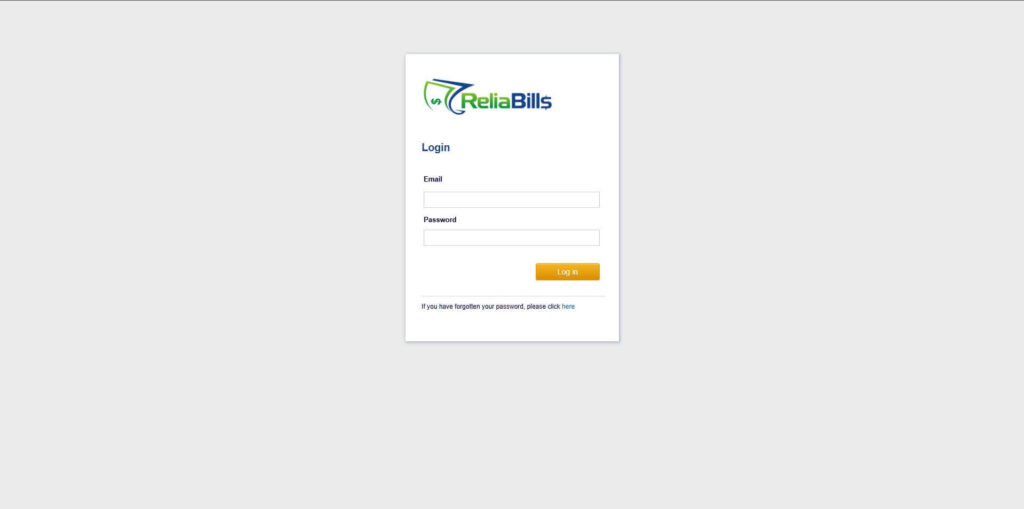
Step 1: Login to ReliaBills
- Access your ReliaBills Account using your login credentials. If you don’t have an account, sign up here.
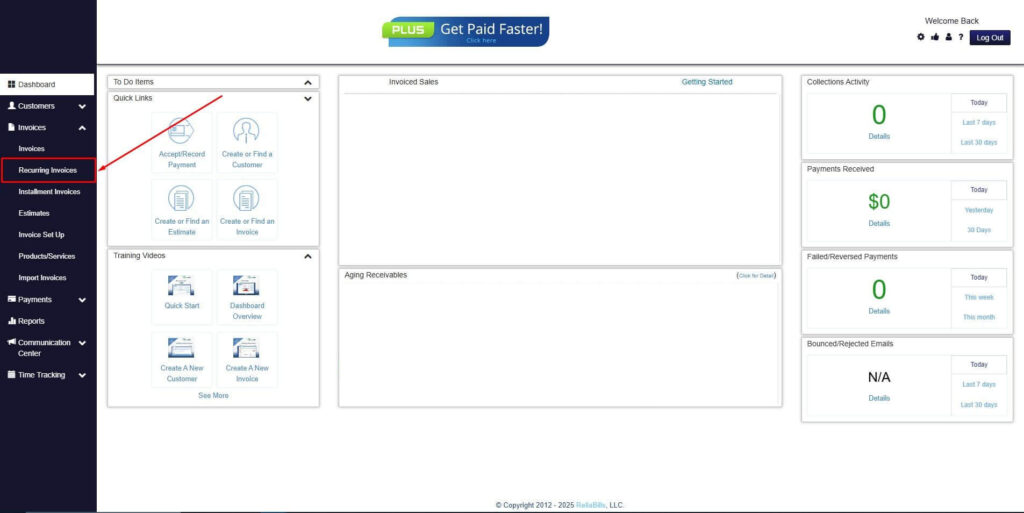
Step 2: Click on Recurring Invoices
- Navigate to the Invoices Dropdown and click on Recurring Invoices for an overview of the list of your existing customers.
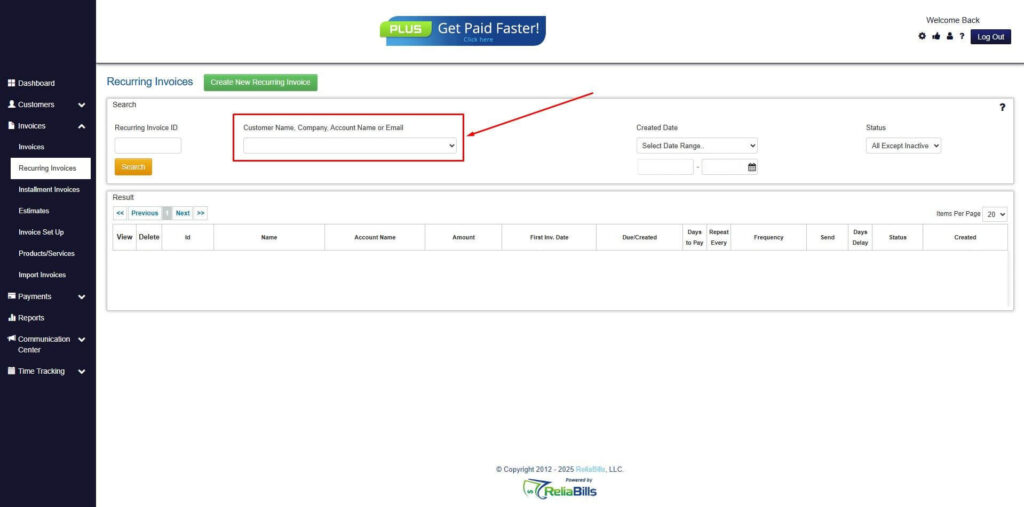
Step 3: Go to the Customers Tab
- If you have already created a customer, search for them in the Customers tab and make sure their status is “Active”.
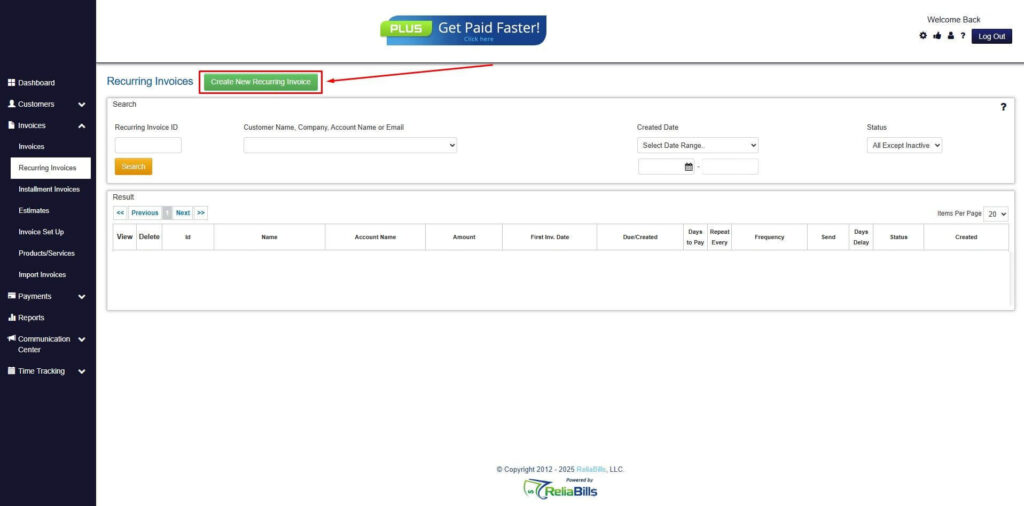
Step 4: Click the Create New Recurring Invoice
- If you haven’t created any customers yet, click the Create New Recurring Invoice to create a new customer.
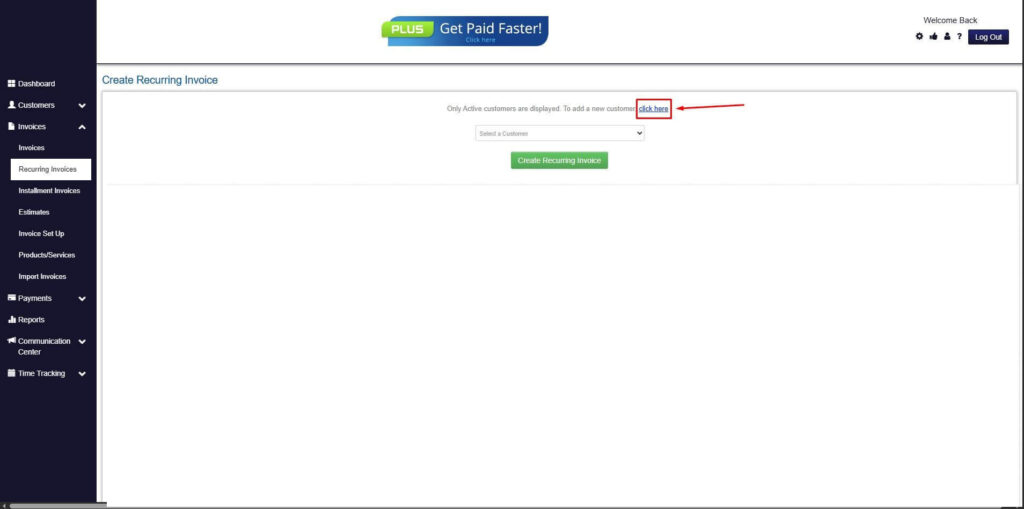
Step 5: Click on the “Click here” Button
- Click on the “Click here” button to proceed with the recurring invoice creation.
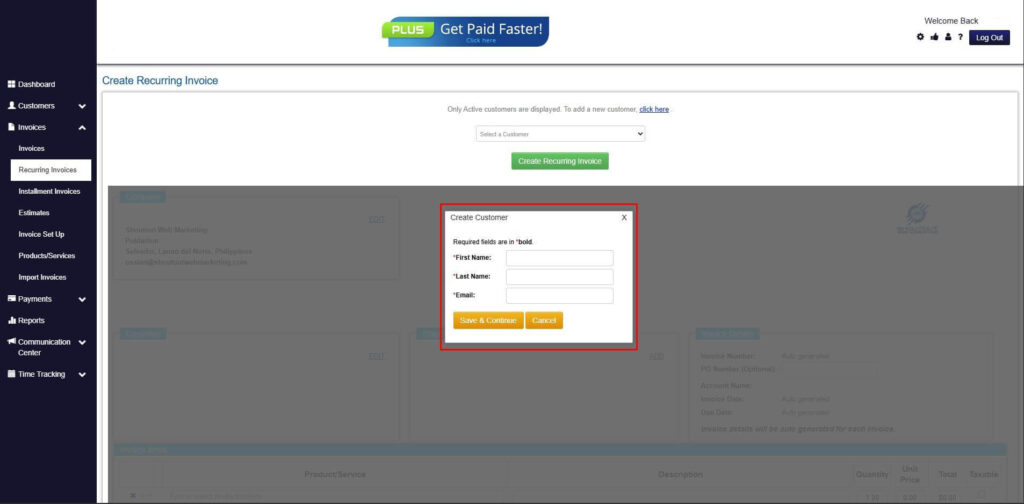
Step 6: Create Customer
- Provide your First Name, Last Name, and Email to proceed.
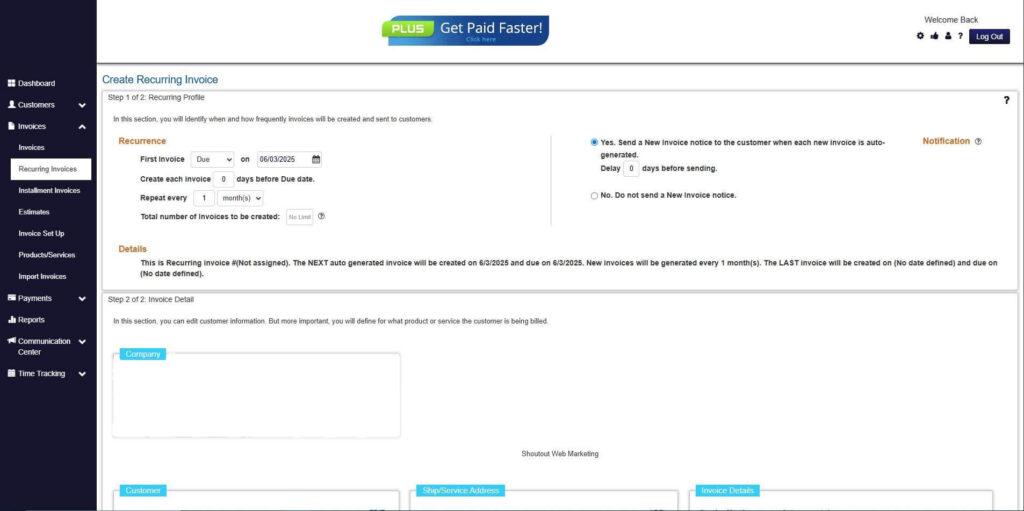
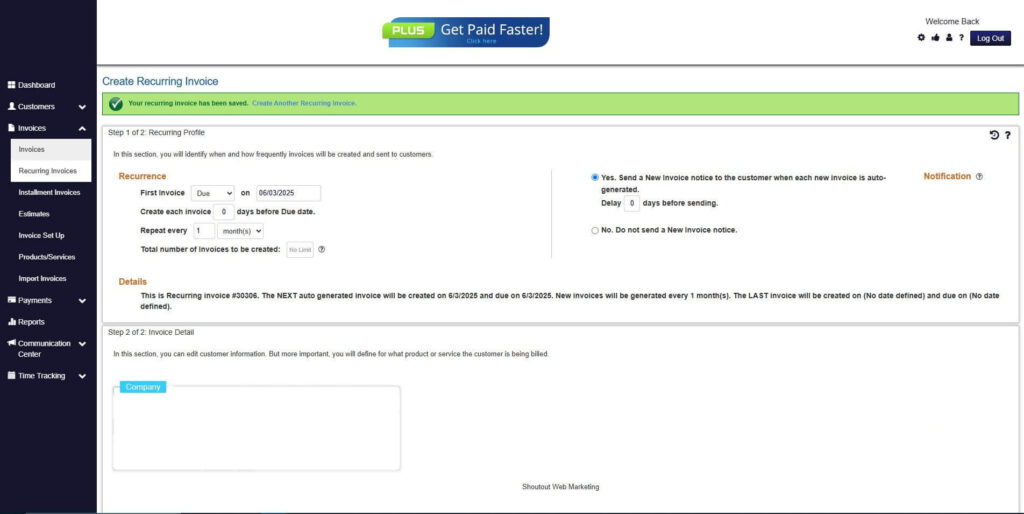
Step 7: Fill in the Create Recurring Invoice Form
- Fill in all the necessary fields.
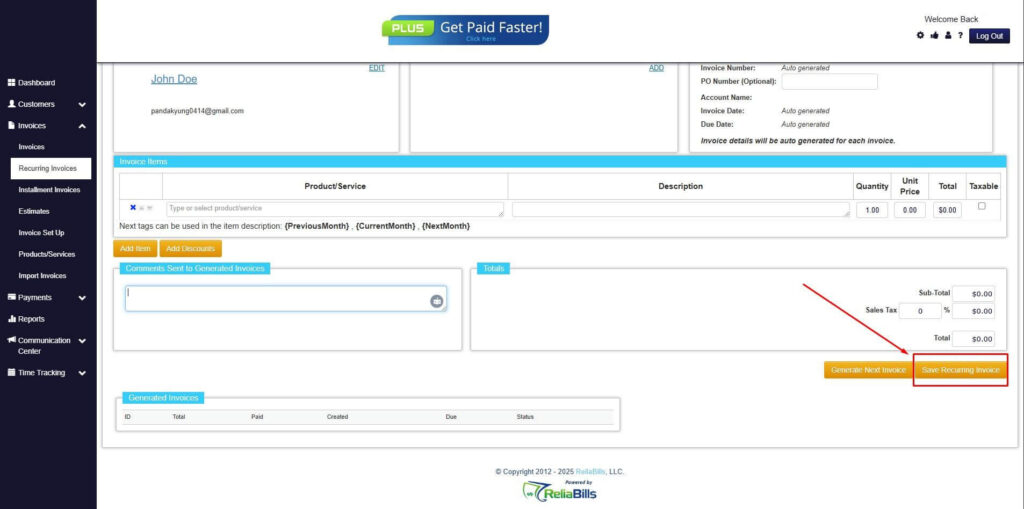
Step 8: Save Recurring Invoice
- After filling up the form, click “Save Recurring Invoice” to continue.
Step 9: Recurring Invoice Created
- Your Recurring Invoice has been created.
Frequently Asked Questions
1. What are recurring patient billing invoices?
These are scheduled invoices issued for ongoing healthcare services such as memberships, therapy sessions, or chronic care programs. They automate consistent billing cycles.
2. Are recurring invoices suitable for small clinics?
Yes. Even small practices benefit from predictable revenue and reduced administrative workload through recurring invoicing.
3. How do recurring invoices improve cash flow?
They create predictable billing schedules, reduce missed charges, and encourage timely payments through automation and reminders.
4. Can recurring billing support payment plans?
Yes. Providers can structure installment plans with automated recurring invoices to manage large patient balances.
5. How do recurring invoices reduce billing errors?
Automated systems minimize manual data entry, standardize calculations, and ensure consistent billing cycles.
6. Is recurring patient billing compliant with healthcare regulations?
It can be fully compliant when invoices include proper documentation, secure storage, and accurate separation of insurance and patient charges.
7. What happens if a patient’s treatment plan changes?
Recurring billing schedules should be adjusted promptly to reflect new service terms, preventing overbilling or underbilling.
8. Do patients prefer recurring billing?
Many patients appreciate predictable billing schedules, especially for ongoing care or installment arrangements, as it reduces financial surprises.
Conclusion
Recurring patient billing invoices play a central role in modern healthcare operations. They provide structured documentation, improve payment consistency, and support predictable revenue streams.
By automating recurring billing processes, healthcare providers can reduce administrative burden while enhancing transparency and compliance. Clear and consistent invoicing strengthens both financial stability and patient relationships.
For practices seeking efficiency and reliability, implementing automated recurring patient billing invoices is a strategic step toward sustainable growth and improved patient trust.