

Rent collection is one of the most important responsibilities in property management. Property managers must ensure that tenants are billed accurately and that rent payments are collected on time each month. When rent collection runs smoothly, property owners can maintain stable income and cover operational expenses such as maintenance, utilities, and property improvements.
However, manual billing processes can make rent collection more difficult than it needs to be. Preparing invoices every month, sending reminders, and tracking payments manually can lead to delays and administrative errors. When tenants forget payment deadlines or invoices are sent late, overdue rent becomes more common.
This is where automated billing tools become valuable. Systems that support recurring invoices for rent collection allow property managers to automate rent billing cycles, send reminders automatically, and track payments digitally. These tools simplify the entire rent collection process while improving payment consistency.
What Is Recurring Invoicing in Property Management?
Recurring invoicing refers to an automated billing process where invoices are generated and sent to tenants on a regular schedule. Instead of manually creating rent invoices each month, property managers can set up billing cycles that automatically generate invoices for every tenant.
In property management, recurring invoices are typically scheduled monthly because most lease agreements require tenants to pay rent on a fixed date each month. Once the recurring invoice schedule is configured, the system automatically generates invoices without manual intervention.
Modern recurring billing platforms can also integrate with online payment systems. This allows tenants to pay their rent through digital payment methods while property managers track payments and outstanding balances in one centralized platform.
Why Is Consistent Rent Billing Important for Property Managers?
Consistent rent billing is essential for maintaining predictable income from rental properties. Property owners rely on regular rent payments to cover expenses such as property maintenance, insurance, taxes, and utilities.
When rent invoices are delivered consistently and on time, tenants are more likely to follow established payment schedules. Reliable billing helps reduce confusion about payment deadlines and prevents unnecessary disputes.
Regular rent collection also provides financial stability for property owners. With predictable income, property managers can plan maintenance schedules, manage operating budgets, and ensure that properties remain well maintained.
What Challenges Do Property Managers Face With Manual Rent Collection?
Property managers who rely on manual billing systems often encounter several operational challenges that slow down rent collection and increase administrative workload. Managing multiple tenants, properties, and payment schedules without automation can easily lead to inefficiencies.
Delayed or Forgotten Rent Payments
Tenants may forget payment deadlines when invoices are sent manually or inconsistently. Without automated reminders, property managers often need to follow up individually, which increases the time spent on rent collection tasks.
Time-Consuming Invoice Creation
Preparing rent invoices manually each month requires repetitive administrative work. Property managers must enter tenant details, rent amounts, due dates, and payment instructions for every invoice, which becomes difficult when managing multiple properties.
Difficulty Tracking Multiple Tenants
Property managers who oversee many rental units must track payments from several tenants at once. Without automated systems, monitoring payment status across different properties can become confusing and prone to mistakes.
Errors in Payment Records
Manual data entry increases the risk of recording incorrect payment amounts or missing transaction details. These errors can affect financial reporting and may lead to disputes between tenants and property managers.
Limited Visibility Into Overdue Rent
When rent tracking is done through spreadsheets or paper records, it can be difficult to identify overdue accounts quickly. This lack of visibility delays follow-ups and slows down rent recovery.
How Do Recurring Invoices Simplify Rent Billing?
Recurring invoicing helps simplify rent billing by automating the entire invoice generation process. Once the billing schedule is configured, invoices are automatically created for each tenant at the start of every billing cycle.
Automated systems also deliver invoices directly to tenants through email or online billing platforms. This ensures that tenants receive rent invoices on time without requiring manual distribution.
Recurring billing also maintains consistent payment due dates. Tenants become familiar with predictable billing schedules, which helps encourage timely payments and reduces confusion about rent deadlines.
Most importantly, automation reduces the workload for property managers. Instead of manually preparing invoices every month, managers can rely on automated systems to handle routine billing tasks.
Why Do Automated Rent Reminders Improve Payment Rates?
Automated reminders play an important role in improving rent payment rates. Even responsible tenants may occasionally forget payment deadlines, especially when they are managing multiple financial obligations.
Digital billing systems allow property managers to schedule reminders before rent is due. These notifications help tenants prepare payments ahead of the deadline and reduce the likelihood of missed payments.
If rent becomes overdue, automated follow-up reminders can be sent automatically. These reminders encourage tenants to complete payments without requiring property managers to send individual messages.
Consistent communication helps tenants stay informed about payment expectations while reducing the administrative effort required to track and follow up on overdue rent.
What Payment Methods Can Be Integrated With Recurring Rent Invoices?
Modern billing systems allow property managers to integrate multiple digital payment options with recurring invoices for rent collection. Providing convenient payment methods helps tenants complete transactions faster and reduces delays.
Online Tenant Payment Portals
Secure online portals allow tenants to view rent invoices, payment history, and due dates in one place. These portals simplify rent payments and improve transparency between tenants and property managers.
Bank Transfers or ACH Payments
Direct bank transfers are a common method for recurring rent payments. Automated clearing house (ACH) payments allow tenants to transfer funds directly from their bank accounts with minimal processing delays.
Debit and Credit Card Payments
Allowing tenants to pay using debit or credit cards offers flexibility and convenience. Card payments can often be processed instantly, helping property managers receive rent payments faster.
Mobile Payment Solutions
Many tenants prefer paying rent using mobile payment apps or smartphone-based payment platforms. Integrating mobile payments provides additional convenience and encourages quicker transactions.
Automatic Payment Scheduling
Some billing systems allow tenants to schedule automatic monthly payments. This feature ensures that rent is paid on time every billing cycle without requiring manual action from tenants.
How Do Recurring Invoices Improve Cash Flow Stability?
Cash flow stability is essential for property owners and managers. Regular rental income allows property owners to cover ongoing expenses and maintain financial stability.
Recurring invoices help ensure that rent billing happens on time every month. This consistency improves payment predictability and reduces delays caused by manual invoicing.
Automated billing also accelerates payment processing because tenants receive invoices immediately and can pay through digital payment channels. Faster payment processing leads to quicker revenue collection.
With predictable rent income, property managers can manage budgets more effectively and plan property maintenance or improvements with greater confidence.
How Can Property Managers Track Tenant Payments Efficiently?
Efficient payment tracking is critical when managing multiple tenants. Digital billing systems provide tools that help property managers monitor payments in real time.
These platforms automatically record tenant payments as soon as they are completed. This reduces the need for manual updates and ensures that financial records remain accurate.
Accounts receivable reports provide a clear overview of rent payments, outstanding balances, and overdue invoices. Property managers can quickly identify which tenants have paid and which accounts require follow-up.
Centralized billing dashboards make it easier to manage multiple properties and tenants from a single platform, improving operational efficiency.
Can Recurring Invoices Reduce Administrative Work?
Yes, recurring invoicing significantly reduces the administrative workload involved in rent collection.
Property managers no longer need to manually create rent invoices each month. Automated systems generate and deliver invoices based on preconfigured billing schedules.
Payment tracking and reconciliation are also automated. When tenants complete payments, the system records the transaction and updates account balances automatically.
Centralized billing dashboards allow property managers to manage tenant billing activities in one place. This reduces the time spent on administrative tasks and allows managers to focus on property operations and tenant relationships.
Why Do Digital Invoices Improve Tenant Experience?
Digital invoicing improves the overall experience for tenants by making rent payments more convenient and transparent.
Tenants can access their invoices online and review billing details anytime. This visibility helps them stay organized and avoid missing payment deadlines.
Online payment options also simplify the payment process. Instead of mailing checks or visiting offices, tenants can complete rent payments quickly using digital payment methods.
Clear documentation and faster communication also reduce misunderstandings between tenants and property managers, improving overall satisfaction.
What Best Practices Help Property Managers Implement Recurring Rent Billing?
Successfully implementing recurring invoices for rent collection requires a structured approach that ensures billing processes remain consistent and efficient.
Define Clear Payment Terms in Lease Agreements
Lease agreements should clearly specify rent amounts, payment due dates, late payment policies, and acceptable payment methods. Clear terms help tenants understand expectations and reduce disputes.
Automate Recurring Invoice Schedules
Setting up automated invoice generation ensures that rent bills are sent consistently every month. This eliminates the risk of late or forgotten invoices.
Send Automated Payment Reminders
Scheduling reminders before rent due dates helps tenants stay aware of upcoming payments. Automated notifications also help reduce late rent by encouraging timely action.
Offer Multiple Payment Options
Providing various digital payment methods makes it easier for tenants to complete transactions. Flexible payment options improve convenience and increase the likelihood of on-time payments.
Monitor Rent Payment Reports Regularly
Reviewing payment reports and accounts receivable data helps property managers identify overdue rent quickly. Regular monitoring supports faster follow-up and better financial oversight.
Use Digital Billing Software
Implementing automated billing platforms simplifies recurring invoice management. These systems help property managers generate invoices, track payments, and maintain organized financial records.
How Does ReliaBills Support Recurring Rent Collection?
ReliaBills helps property managers streamline rent billing by providing a digital invoicing platform that simplifies how recurring invoices are created and delivered. Instead of preparing rent invoices manually every month, property managers can configure automated billing schedules that generate invoices for each tenant on a recurring basis. This ensures that rent invoices are sent consistently and on time, helping property managers maintain organized billing processes.
Recurring billing is a key feature that supports efficient rent collection. Property managers can schedule monthly invoices based on lease agreements, ensuring tenants receive their rent bills at the correct time each billing cycle. Automated reminders can also notify tenants before and after payment due dates, which helps reduce missed payments and improves payment consistency across multiple properties.
ReliaBills also provides centralized invoice management and real-time receivables tracking. Property managers can monitor tenant payments, review outstanding balances, and generate financial reports from a single dashboard. With automated invoicing, recurring billing tools, and digital payment support, ReliaBills makes it easier for property managers to manage recurring invoices for rent collection while reducing administrative workload and improving cash flow visibility.
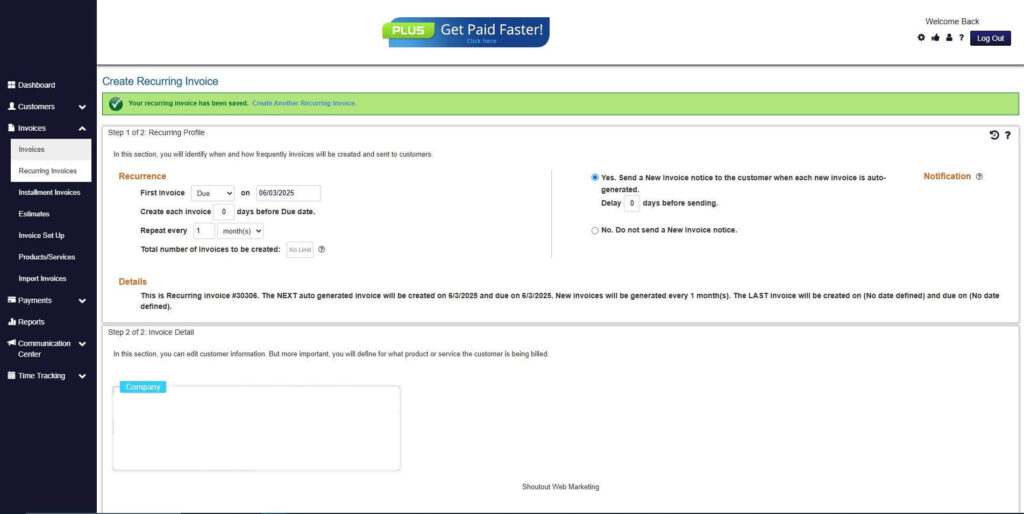
How to Create a New Recurring Invoice Using ReliaBills
Creating a New Recurring Invoice using ReliaBills involves the following steps:
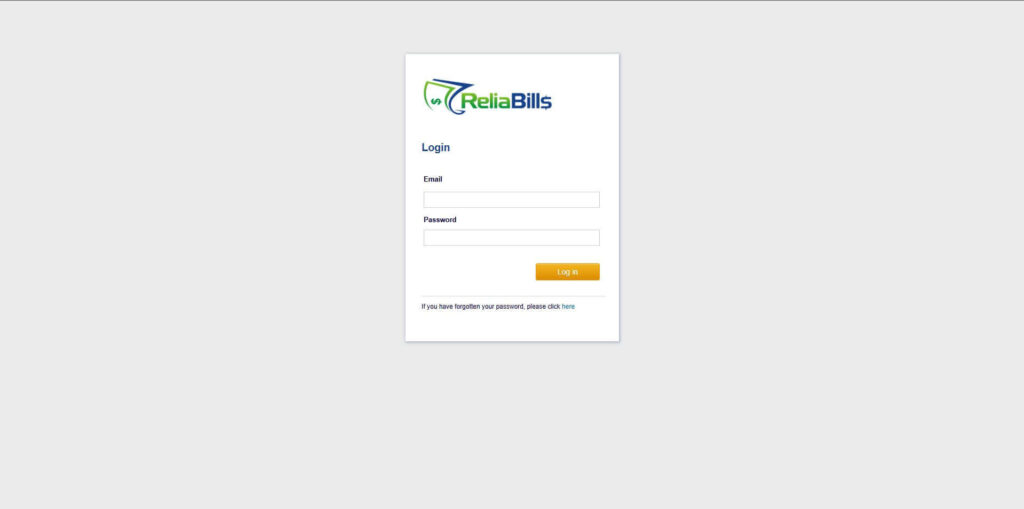
Step 1: Login to ReliaBills
- Access your ReliaBills Account using your login credentials. If you don’t have an account, sign up here.
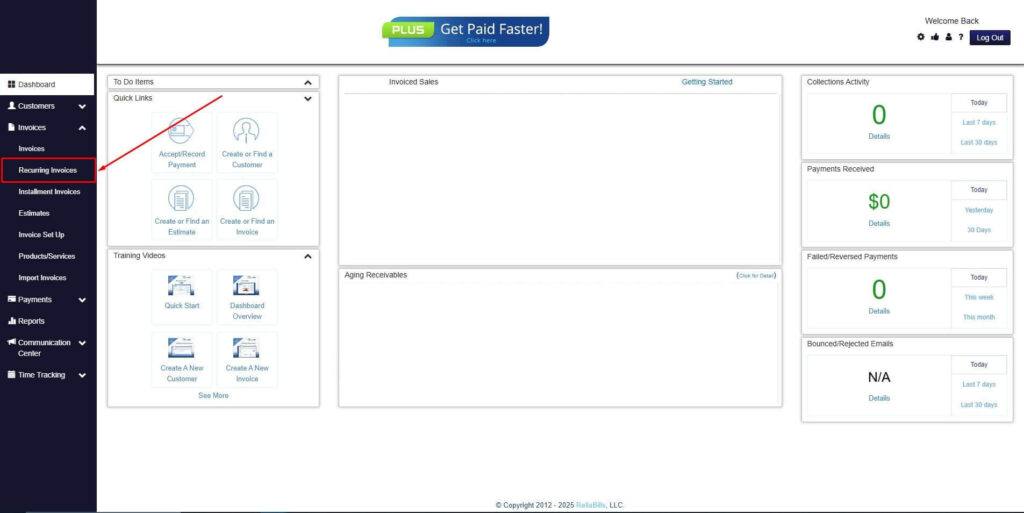
Step 2: Click on Recurring Invoices
- Navigate to the Invoices Dropdown and click on Recurring Invoices for an overview of the list of your existing customers.
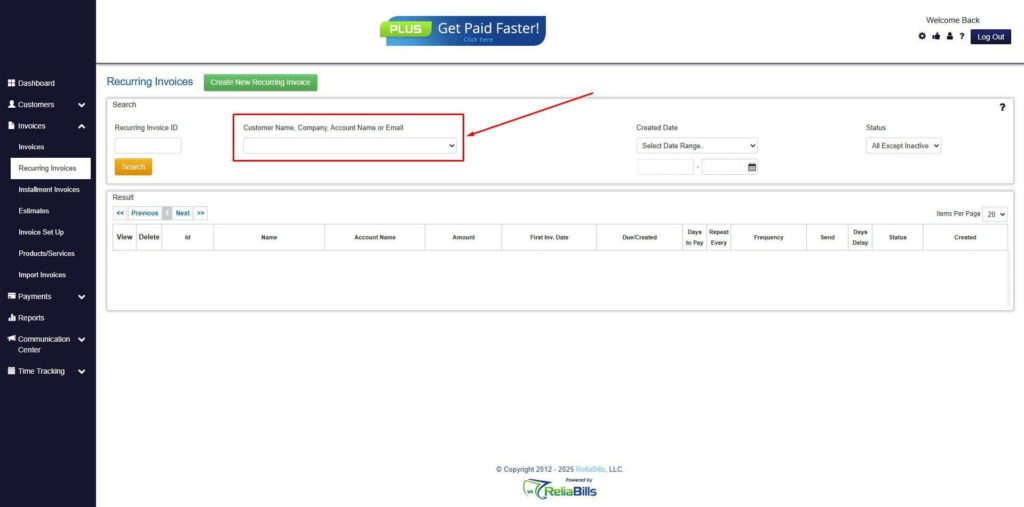
Step 3: Go to the Customers Tab
- If you have already created a customer, search for them in the Customers tab and make sure their status is “Active”.
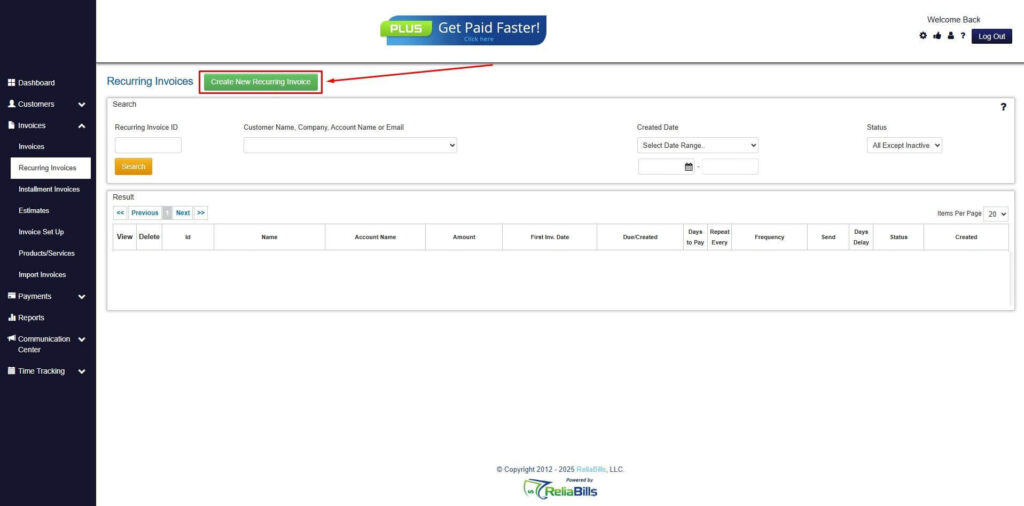
Step 4: Click the Create New Recurring Invoice
- If you haven’t created any customers yet, click the Create New Recurring Invoice to create a new customer.
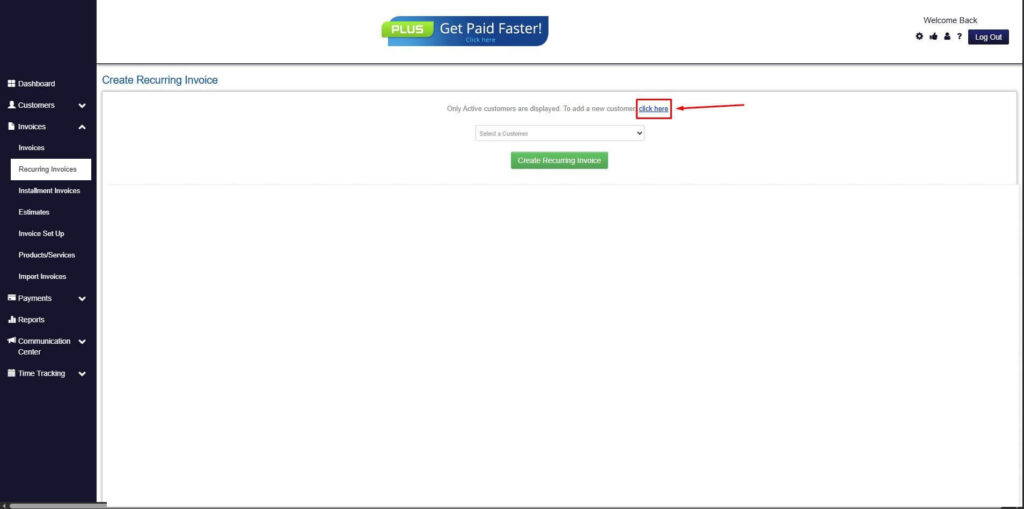
Step 5: Click on the “Click here” Button
- Click on the “Click here” button to proceed with the recurring invoice creation.
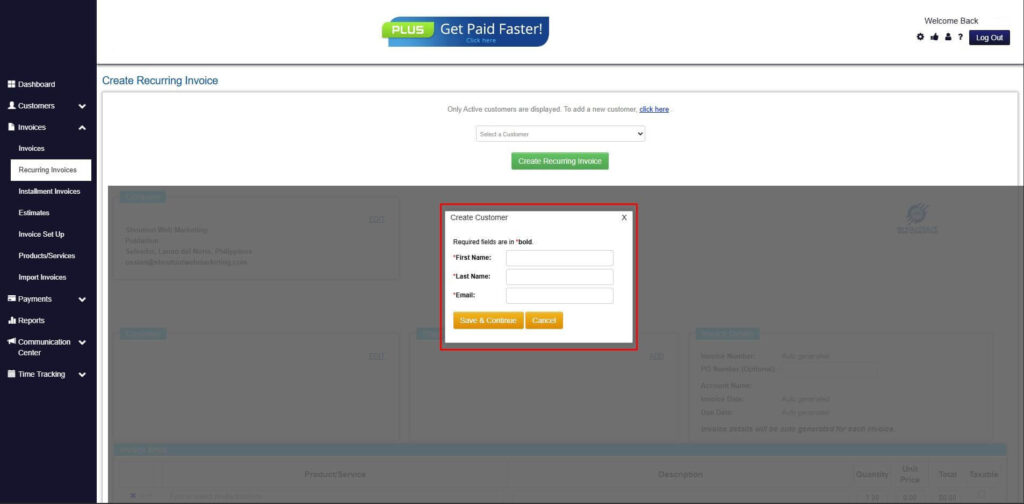
Step 6: Create Customer
- Provide your First Name, Last Name, and Email to proceed.
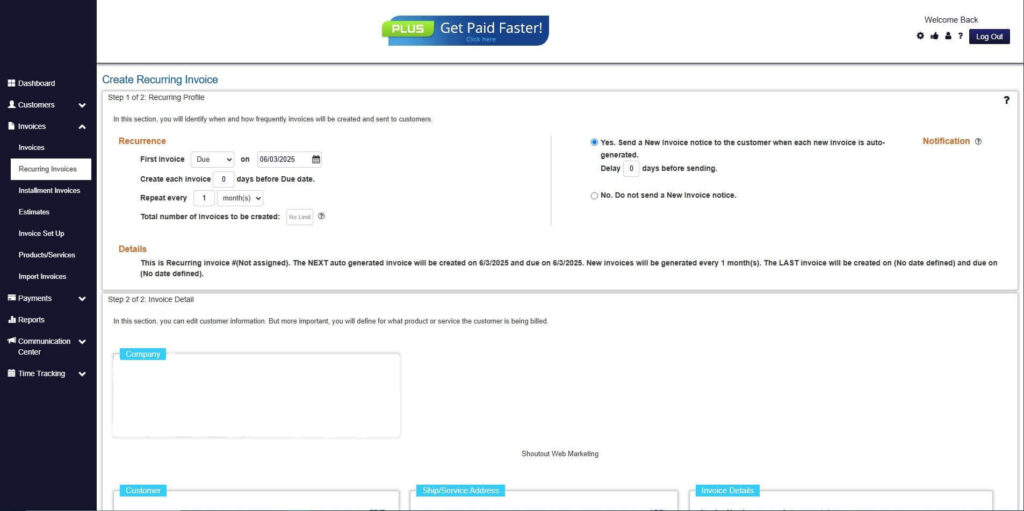
Step 7: Fill in the Create Recurring Invoice Form
- Fill in all the necessary fields.
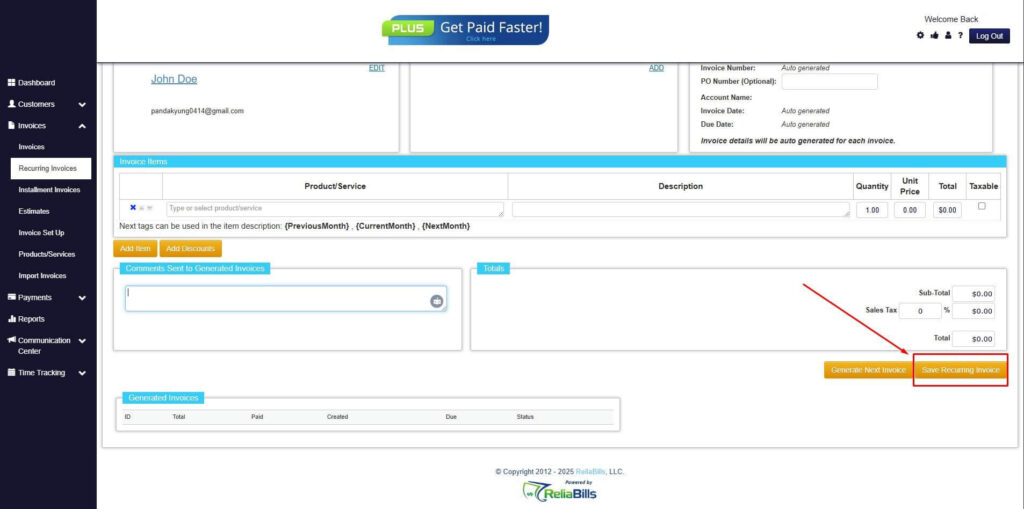
Step 8: Save Recurring Invoice
- After filling up the form, click “Save Recurring Invoice” to continue.
Step 9: Recurring Invoice Created
- Your Recurring Invoice has been created.
Frequently Asked Questions
1. What are recurring invoices for rent collection?
Recurring invoices are automated rent bills generated on a scheduled basis, typically monthly, to ensure tenants receive consistent rent payment requests.
2. How do recurring invoices help property managers?
Recurring invoices automate rent billing, send reminders, and track payments, which reduces manual work and improves payment consistency.
3. Can tenants pay recurring invoices online?
Yes. Many billing systems allow tenants to pay recurring rent invoices using online payment methods such as bank transfers, credit cards, or payment portals.
4. Do recurring invoices reduce late rent payments?
Automated invoices and reminders help tenants remember payment deadlines, which often reduces the number of late payments.
Conclusion
Managing rent collection manually can become complicated, especially when property managers oversee multiple tenants and properties. Manual invoicing processes often lead to missed reminders, delayed billing, and administrative inefficiencies.
Recurring invoicing systems simplify rent collection by automating invoice generation, payment reminders, and financial tracking. These tools ensure that tenants receive invoices on time and provide convenient payment options that encourage timely payments.
Platforms like ReliaBills help property managers streamline rent collection by combining automated invoicing, recurring billing, and real-time payment tracking. By using recurring invoices for rent collection, property managers can improve efficiency, reduce overdue payments, and maintain stable rental income.