
Late payments are a common challenge for businesses in nearly every industry. Whether a company provides professional services, subscription products, or ongoing maintenance contracts, waiting for customers to settle invoices can create serious financial pressure. Even reliable clients sometimes forget invoices or delay payments due to internal approval processes.
Overdue invoices do more than just delay revenue. They disrupt cash flow planning, increase accounts receivable workloads, and force businesses to spend valuable time following up on unpaid balances. As overdue accounts grow, companies may also face increased financial risk and administrative stress.
Recurring billing offers a practical way to reduce these problems. By automating invoice creation, reminders, and payment collection, businesses can maintain consistent billing cycles and minimize payment delays. Implementing recurring billing systems helps organizations reduce overdue recurring billing invoices while improving overall financial efficiency.
Why Are Overdue Invoices a Major Problem for Businesses?
Overdue invoices create several financial and operational challenges for businesses. When customers fail to pay on time, it becomes difficult for companies to maintain stable working capital and meet ongoing financial obligations.
One major issue is cash flow disruption. Businesses depend on incoming payments to cover expenses such as payroll, supplier costs, rent, and operational investments. When invoices remain unpaid, these obligations must still be met, often forcing businesses to rely on credit lines or emergency financing.
Overdue invoices also increase accounts receivable aging. As unpaid invoices accumulate, finance teams must dedicate more time to tracking outstanding balances and contacting clients. This process increases administrative workload and may lead to higher risks of bad debt if payments are delayed for extended periods.
What Is Recurring Billing, and How Does It Work?
Recurring billing is a payment system that automatically generates invoices for customers at scheduled intervals. Instead of manually creating invoices each billing cycle, businesses can set up automated billing schedules based on subscription plans, service contracts, or ongoing agreements.
These systems generate invoices on predetermined dates and send them directly to customers through digital delivery methods such as email or secure payment portals. This ensures invoices are issued consistently without relying on manual processes.
Many recurring billing platforms also include automated payment collection features. Customers may choose to enable auto pay using credit cards, bank transfers, or other digital payment options. In addition, recurring billing systems often integrate with accounting software, helping businesses maintain accurate financial records and simplified reconciliation.
What Causes Invoices to Become Overdue?
Invoices can become overdue for several reasons, and many of them are linked to inefficient billing processes or communication gaps. Understanding these causes helps businesses improve their billing systems and reduce recurring billing overdue invoices.
Forgotten or Overlooked Invoices
Clients may simply forget to process a payment, especially when they receive a large number of invoices each month. Without reminders or consistent billing schedules, invoices can easily get lost in busy inboxes or internal accounting queues.
Manual Billing Delays
When invoices are created manually, they may not be issued immediately after services are delivered. Even a short delay in sending invoices can reduce the time clients have to process payments, which increases the likelihood of overdue accounts.
Inconsistent Billing Schedules
If invoices are sent at irregular intervals, clients may struggle to anticipate when payments are due. A lack of predictable billing cycles often leads to confusion and missed deadlines.
Billing Errors or Incorrect Information
Mistakes such as incorrect pricing, inaccurate service descriptions, or missing purchase order numbers can trigger disputes. When clients question invoice details, payment processing often pauses until the issue is resolved.
Complex Client Approval Processes
Larger companies typically have multiple approval steps before releasing payments. If invoices do not reach the correct department quickly, payment authorization may be delayed.
Limited Payment Options
If businesses only accept a small number of payment methods, clients may experience inconvenience when settling invoices. Complicated payment procedures can lead to postponed payments.
Why Do Manual Billing Processes Increase Payment Delays?
Manual billing processes introduce several inefficiencies that often lead to delayed payments. When invoices are created manually, businesses may experience delays in generating and sending invoices to clients.
Human errors in data entry can also create problems. Incorrect invoice amounts, missing details, or inaccurate billing information may require corrections before clients can approve payments. These errors slow down the payment cycle and increase the likelihood of overdue invoices.
Another challenge is the lack of consistent reminder systems. Without automated notifications, businesses must manually track due dates and follow up with customers. This process can become time consuming and inconsistent, increasing the risk of recurring billing overdue invoices.
How Does Recurring Billing Ensure Timely Invoice Delivery?
Recurring billing systems help ensure invoices are delivered on time by automating the entire billing process. Businesses can schedule invoices to be generated automatically at the beginning of each billing cycle, eliminating delays caused by manual preparation.
Once an invoice is generated, it can be sent immediately through digital channels. Instant delivery allows customers to receive invoices promptly, giving them more time to review and process payment before the due date.
Consistent billing cycles also help customers anticipate upcoming payments. When invoices arrive at predictable intervals, clients can better plan their budgets and payment schedules, reducing the likelihood of overdue invoices.
In What Ways Does Automation Encourage On-Time Payments?
Automation plays a major role in improving billing efficiency and encouraging customers to pay invoices on schedule. By reducing manual intervention and improving communication, automated systems help businesses prevent recurring billing overdue invoices.
Automated Payment Reminders
Billing platforms can send reminders before invoice due dates, ensuring clients are aware of upcoming payments. These notifications help customers plan ahead and avoid forgetting payment deadlines.
Easy Online Payment Options
Automated invoicing systems often include integrated payment portals. Clients can pay invoices instantly using credit cards, bank transfers, or digital payment systems, making the payment process faster and more convenient.
Scheduled Auto Pay Features
Some customers prefer enabling auto pay for recurring charges. With this option, payments are automatically processed on the due date, eliminating the risk of late payments caused by oversight.
Instant Invoice Delivery
Automated systems generate and deliver invoices immediately through digital channels. Faster invoice delivery ensures customers receive billing information early enough to process payments on time.
Clear and Transparent Billing Records
Automated platforms maintain detailed records of invoices, payments, and account history. This transparency reduces confusion and allows both businesses and customers to review billing details quickly.
Consistent Communication With Clients
Automation ensures that communication related to invoices remains consistent. Notifications, payment confirmations, and overdue alerts help maintain visibility throughout the billing cycle.
Why Do Recurring Payment Schedules Improve Cash Flow Stability?
Recurring payment schedules help businesses maintain predictable revenue streams. Instead of waiting for irregular payments, companies receive income at consistent intervals based on automated billing cycles.
This predictability allows businesses to plan expenses more effectively. Payroll, supplier payments, and operational investments can be scheduled with greater confidence when revenue timing is reliable.
Recurring billing also speeds up payment processing. Because invoices are generated and delivered automatically, customers receive them earlier in the billing cycle. Faster invoice delivery often leads to faster payments, improving overall cash flow stability.
What Role Do Payment Reminders Play in Reducing Overdue Accounts?
Payment reminders are one of the most effective tools for reducing overdue accounts. Pre due date notifications give customers advance notice that payment is approaching, helping them prepare and avoid missing deadlines.
If an invoice becomes overdue, automated alerts can immediately notify the client. These reminders maintain visibility and encourage prompt payment without requiring manual follow up from staff.
Some billing systems also include escalation workflows. For example, additional reminders may be sent after a certain number of days overdue, ensuring consistent communication while maintaining a professional tone with clients.
How Can Recurring Billing Reduce Administrative Workload?
Recurring billing significantly reduces the administrative workload associated with invoice management. Instead of manually tracking invoices and due dates, businesses can rely on automated systems to handle these tasks.
Payment reconciliation is also simplified. When customers pay through integrated payment systems, transactions are automatically recorded and matched with the corresponding invoice.
Centralized billing dashboards provide clear visibility into invoice status, payments received, and overdue balances. This allows finance teams to monitor accounts receivable efficiently while reducing time spent on manual follow ups.
Which Industries Benefit Most From Recurring Billing?
Recurring billing is especially beneficial for businesses that provide ongoing services or operate on subscription-based models. These industries rely on consistent billing cycles to maintain predictable revenue and reduce administrative workload.
Subscription-Based Services
Businesses that offer monthly or annual subscriptions, such as software platforms, streaming services, or online communities, rely heavily on recurring billing to automate regular payments and maintain steady revenue streams.
Fitness Centers and Membership Businesses
Gyms, wellness centers, and professional organizations often charge recurring membership fees. Automated billing ensures members are billed consistently while reducing the risk of missed or late payments.
Maintenance and Service Providers
Companies that provide routine services such as equipment maintenance, cleaning services, landscaping, or IT support benefit from recurring billing because contracts typically involve scheduled payments.
Logistics and Delivery Services
Businesses that manage transportation, freight, or regular delivery contracts often invoice clients on recurring schedules. Automated billing helps ensure invoices are issued on time and reduces recurring billing overdue invoices.
Professional Service Firms
Consulting firms, accounting agencies, marketing services, and legal professionals may bill clients monthly for retainers or ongoing projects. Recurring billing simplifies invoice management and improves payment reliability.
Utility and Infrastructure Services
Organizations that provide essential services such as telecommunications, internet connectivity, and facility management frequently rely on recurring billing to manage large volumes of regular invoices.
Can Recurring Billing Strengthen Customer Relationships?
Recurring billing can also improve the overall customer experience. Transparent billing schedules help clients understand when invoices will arrive and when payments are expected.
Consistent invoicing reduces confusion and minimizes billing disputes. When customers receive clear and accurate invoices on a predictable schedule, they are less likely to question charges or delay payments.
Convenient payment options also contribute to stronger relationships. Clients appreciate simple and secure payment methods that allow them to complete transactions quickly, creating a smoother and more professional billing experience.
How Does ReliaBills Help Businesses Reduce Overdue Invoices?
ReliaBills helps businesses minimize overdue invoices by simplifying and automating the entire billing process. The platform allows companies to set up structured billing schedules, ensuring invoices are generated and delivered on time without relying on manual preparation. With consistent invoice delivery and clear billing documentation, businesses can reduce the chances of missed payments and billing disputes. This structured approach helps maintain organized financial records while improving overall accounts receivable management.
Recurring billing automation is a key feature of ReliaBills. Businesses can schedule recurring invoices for subscriptions, service contracts, or membership fees so that invoices are created automatically at the start of every billing cycle. The system can also apply pricing rules, service charges, or discounts based on the agreement with each client. By maintaining consistent billing cycles and providing convenient online payment options, ReliaBills helps encourage customers to settle invoices on time and reduces the risk of recurring billing overdue invoices.
ReliaBills also provides real time visibility into receivables and payment activity. Businesses can track invoice status, monitor overdue accounts, and review payment trends through centralized dashboards and reporting tools. Automated reminders notify customers before and after due dates, helping maintain consistent communication without requiring manual follow ups. With these tools in place, businesses can improve payment reliability, reduce administrative workload, and maintain more stable cash flow.
How to Create a New Recurring Invoice Using ReliaBills
Creating a New Recurring Invoice using ReliaBills involves the following steps:
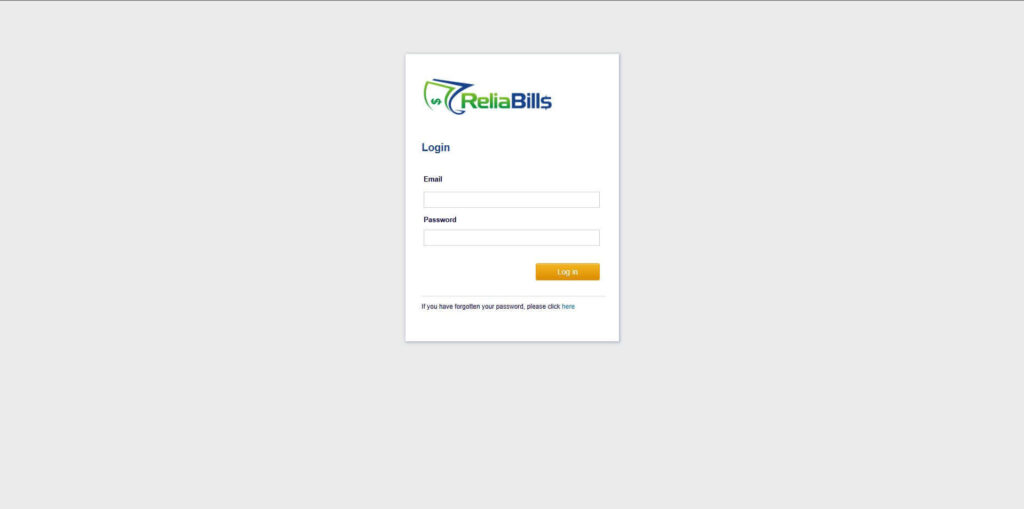
Step 1: Login to ReliaBills
- Access your ReliaBills Account using your login credentials. If you don’t have an account, sign up here.
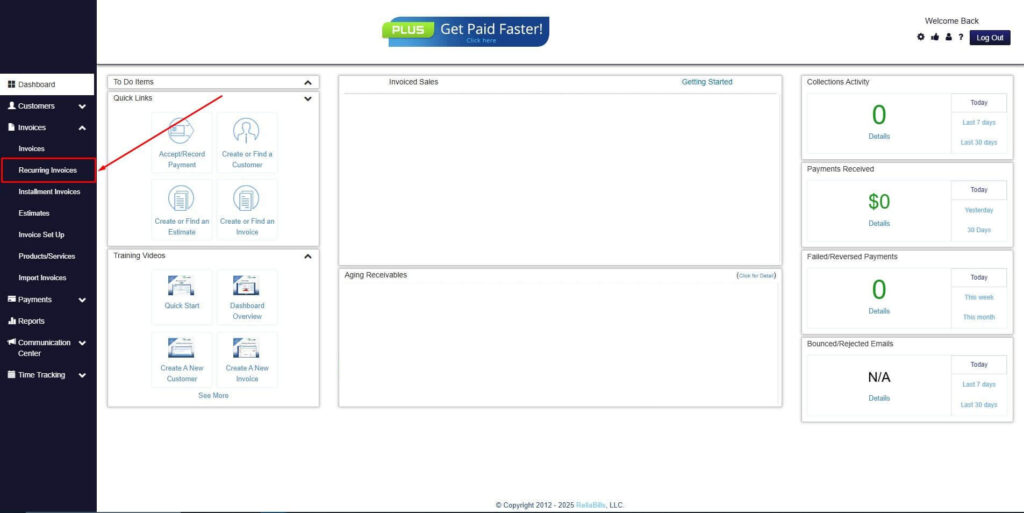
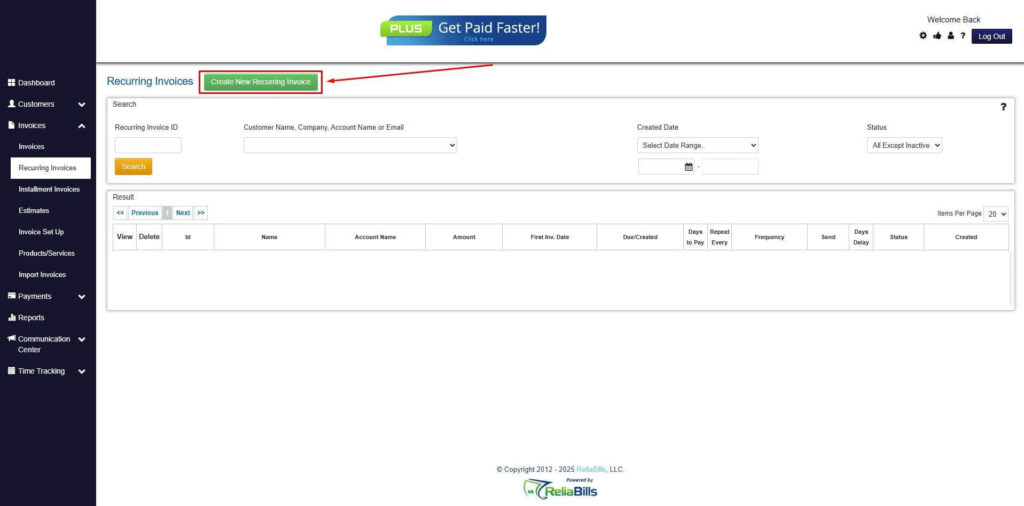
Step 2: Click on Recurring Invoices
- Navigate to the Invoices Dropdown and click on Recurring Invoices for an overview of the list of your existing customers.
Step 3: Go to the Customers Tab
- If you have already created a customer, search for them in the Customers tab and make sure their status is “Active”.
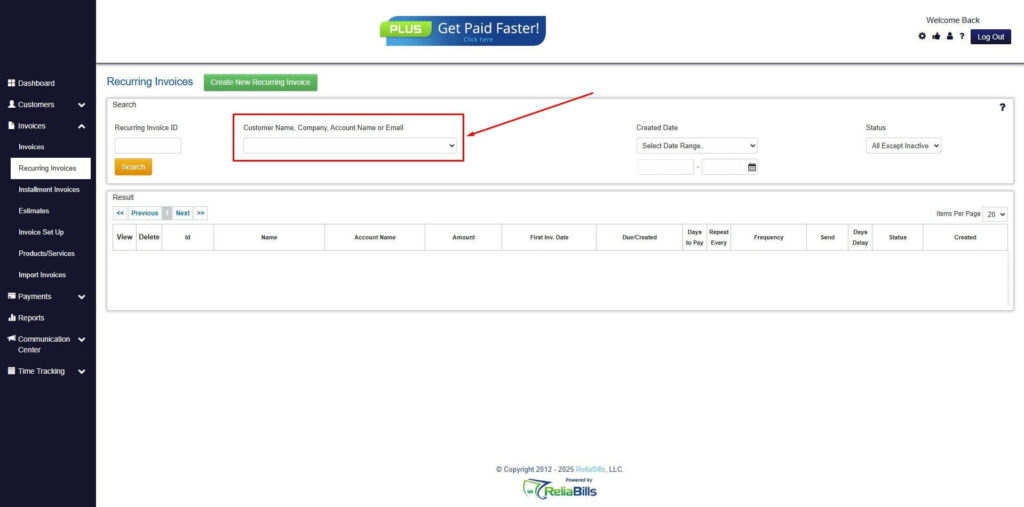
Step 4: Click the Create New Recurring Invoice
- If you haven’t created any customers yet, click the Create New Recurring Invoice to create a new customer.
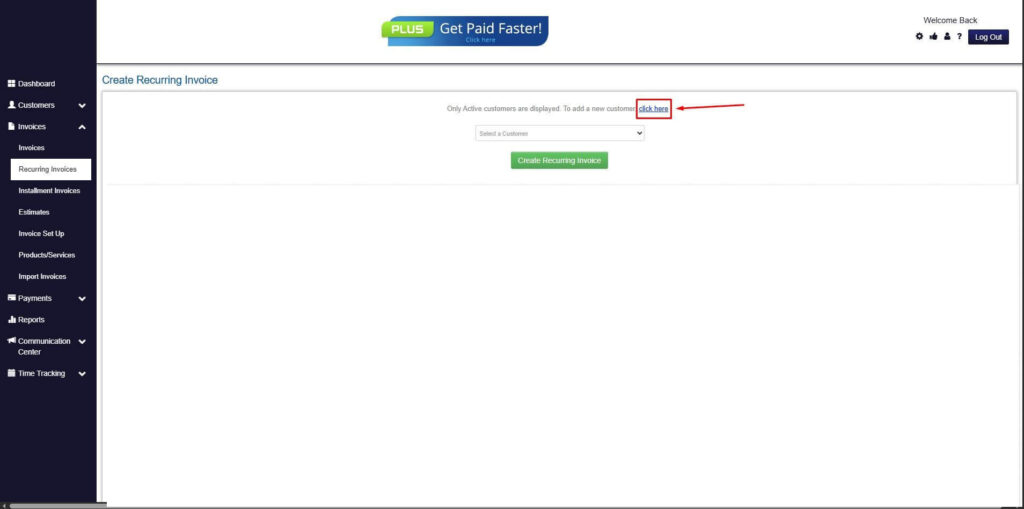
Step 5: Click on the “Click here” Button
- Click on the “Click here” button to proceed with the recurring invoice creation.
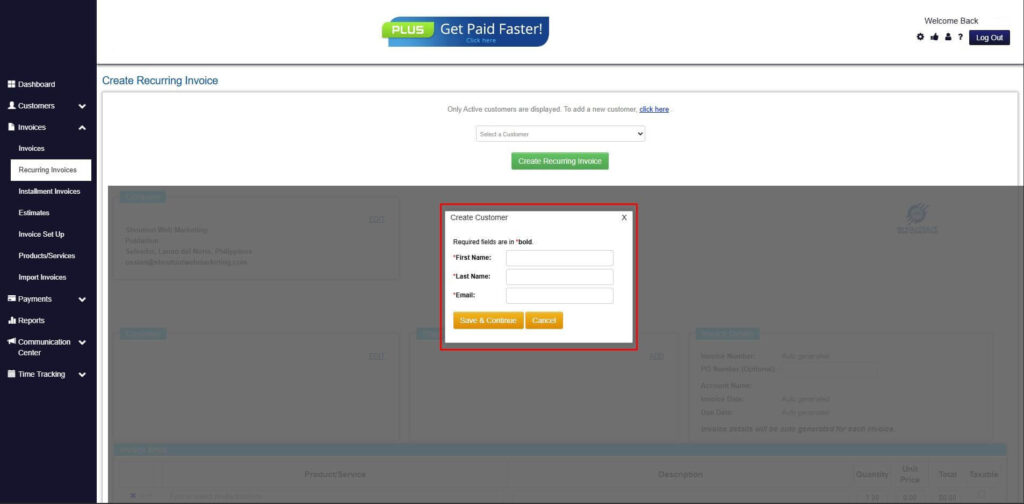
Step 6: Create Customer
- Provide your First Name, Last Name, and Email to proceed.
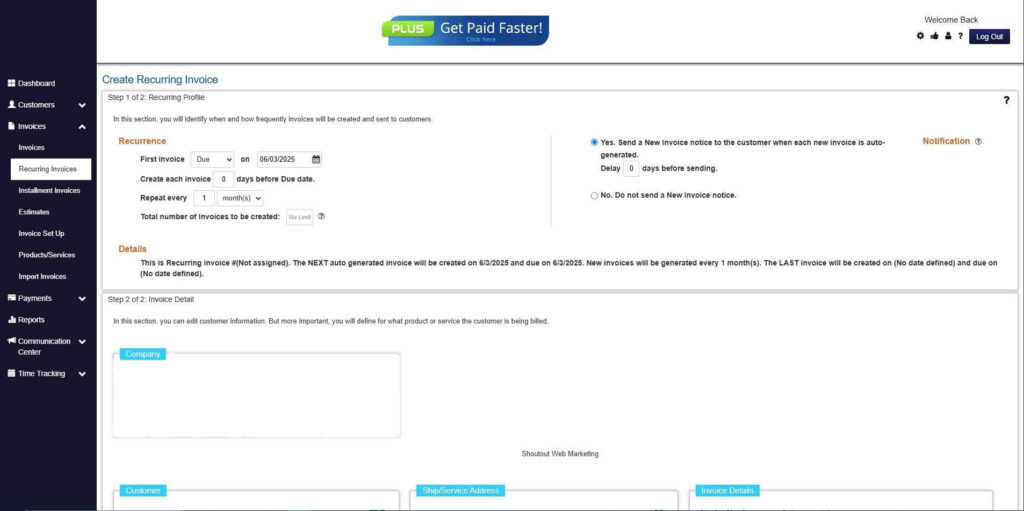
Step 7: Fill in the Create Recurring Invoice Form
- Fill in all the necessary fields.
Step 8: Save Recurring Invoice
- After filling up the form, click “Save Recurring Invoice” to continue.
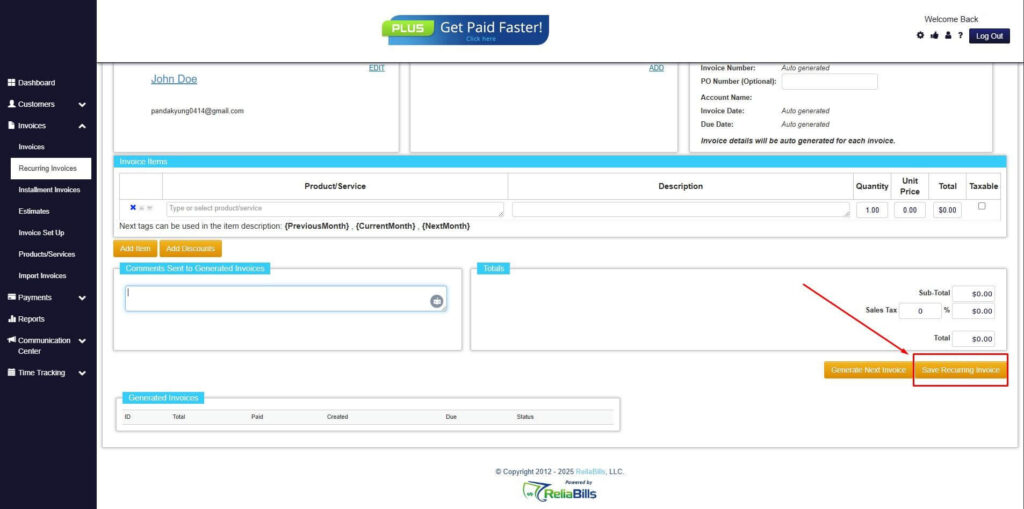
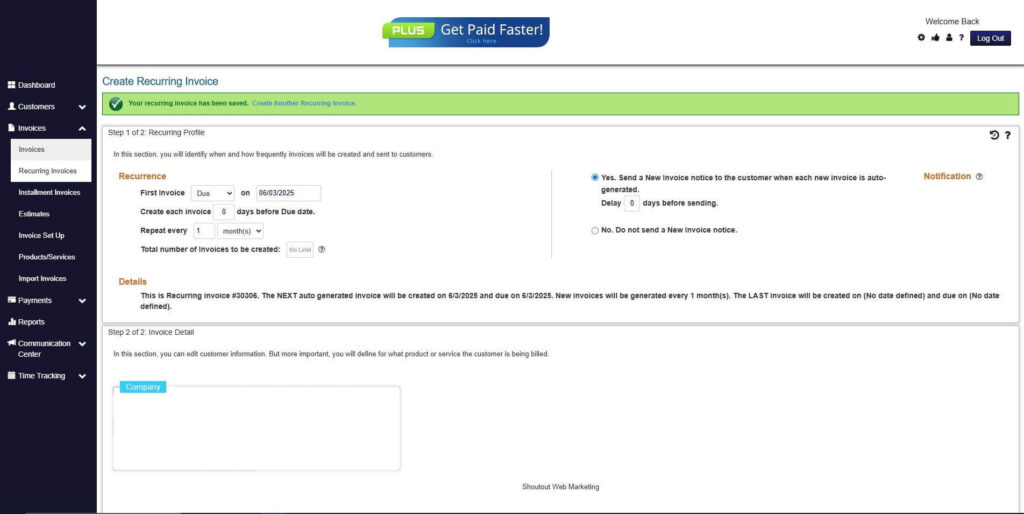
Step 9: Recurring Invoice Created
- Your Recurring Invoice has been created.
Frequently Asked Questions
1. What are recurring billing overdue invoices?
Recurring overdue billing invoices occur when customers fail to pay invoices generated through automated recurring billing systems within the agreed payment terms.
2. Can recurring billing reduce late payments?
Yes. Recurring billing automates invoice generation, reminders, and payment collection, which significantly reduces the likelihood of late or missed payments.
3. Do automated reminders really improve payment rates?
Automated reminders help keep invoices visible to customers and encourage them to process payments before due dates, improving overall payment consistency.
4. Is recurring billing suitable for small businesses?
Yes. Many small businesses use recurring billing systems to simplify invoicing, reduce administrative work, and maintain steady cash flow.
Conclusion
Overdue invoices can create serious financial and operational challenges for businesses. Late payments disrupt cash flow, increase administrative workload, and raise the risk of unpaid balances.
Recurring billing provides an effective solution by automating invoice creation, reminders, and payment collection. Consistent billing cycles and convenient payment options encourage customers to settle invoices on time.
By implementing automated billing solutions such as ReliaBills, businesses can streamline invoicing processes, reduce recurring billing overdue invoices, and maintain more predictable revenue streams.