

For gardeners and lawn care providers, sending professional invoices is just as important as mowing the lawn or trimming hedges. A well-prepared lawn care invoice ensures you get paid on time, keeps your clients informed, and demonstrates that your business is organized and trustworthy. It also helps you track the work you’ve done, the materials you’ve used, and any recurring services, which makes managing cash flow much easier.
Clear invoicing also builds credibility. When clients receive a detailed, easy-to-read invoice, they feel confident that you are professional and reliable. This trust can lead to repeat business, referrals, and stronger client relationships—all of which are crucial for growing a successful lawn care business.
What Is a Lawn Care Invoice?
A lawn care invoice is a document that outlines the services you provided, the cost of those services, and the terms of payment. Unlike general service invoices, a lawn care invoice often includes specific details like mowing, trimming, fertilizing, cleanup, labor hours, and equipment usage. By listing everything clearly, clients know exactly what they are paying for and why.
Beyond billing, a lawn care invoice acts as a record of your work. If there’s ever a disagreement about services or pricing, the invoice provides proof of what was done. Keeping accurate invoices also makes taxes, reporting, and business planning much simpler.
When to Issue a Lawn Care Invoice
Invoices should be sent after services are completed. This applies to one-time lawn maintenance, seasonal contracts, and recurring lawn care like weekly or monthly mowing. Residential and commercial clients both benefit from having a clear record of services and payments.
Sending invoices promptly also helps track work efficiently. For recurring services, issuing invoices on a consistent schedule keeps payments steady, reduces confusion, and ensures that clients know what to expect. This simple step can make a big difference in keeping your business organized and profitable.
Key Elements of a Lawn Care Invoice
A complete lawn care invoice should include: your business name and contact information, client details, a clear description of the services performed, labor hours and equipment used, materials and supplies, applicable taxes, any discounts, total amount due, and payment terms.
Adding small notes, like weather delays or special requests, can improve communication with your clients. Clear and detailed invoices help prevent misunderstandings and make it easier for clients to pay quickly.
How to Create a Lawn Care Invoice
Creating a lawn care invoice does not need to be complicated. Follow these steps to ensure accuracy and professionalism every time:
Send the invoice promptly
Deliver the invoice as soon as the service is completed to encourage faster payment.
Document the completed work
Record all lawn care services performed, such as mowing, trimming, fertilizing, or cleanup. Make sure nothing is missed.
List labor, materials, and equipment used
Itemize labor hours, tools, and materials so clients can clearly see how costs are calculated.
Apply agreed pricing
Use the rates discussed with the client, whether hourly, flat rate, or seasonal pricing. Include recurring service frequency if applicable.
Review invoice details
Double-check service descriptions, totals, dates, and payment terms to avoid billing errors.
Pricing Lawn Care Services Correctly
Setting the right price for your services is key. Decide whether you charge by the hour, offer flat rates, or provide seasonal packages. For clients who schedule recurring services, bundling services or offering subscription-style pricing can make billing easier. Be sure to clearly state charges for any additional or emergency services.
Transparent pricing helps clients understand the value of your work and reduces disputes. It also allows you to cover your costs and remain competitive in your area, ensuring your business remains profitable.
Best Practices for Professional Lawn Care Invoicing
Use consistent service descriptions, provide digital invoices, and set up recurring billing for ongoing clients. Keeping accurate records also helps with taxes and planning. These small steps make your business look professional and make it easier for clients to pay.
Tools like ReliaBills help simplify these tasks by automating recurring invoices, sending reminders, and keeping all client and payment information in one place. This automation saves time, reduces errors, and ensures your cash flow stays predictable.
Common Mistakes to Avoid
Some common mistakes include vague service descriptions, missing recurring service details, incorrect pricing, or unclear payment terms. These can lead to delayed payments and unhappy clients.
Another common problem is inconsistent invoicing. Sending invoices irregularly or too late can confuse clients and hurt your cash flow. Maintaining a consistent schedule makes your business appear reliable and organized.
Lawn Care Invoice Template (Example)
Below is a simple example of how a lawn care invoice might look. This format can be adjusted based on your services and whether billing is recurring.
Business Name: GreenScape Lawn Services
Contact Information: Phone, Email, Address
Client Name: John Smith
Service Location: 123 Oak Street
Invoice Number: 2025-045
Invoice Date: March 15, 2025
Payment Due: March 22, 2025
Services Provided:
- Weekly lawn mowing
- Edge trimming
- Yard cleanup
Labor: 2 hours at $45/hour
Materials: Fertilizer and supplies
Subtotal: $110
Tax: $8.80
Total Amount Due: $118.80
Payment Terms: Payment due within 7 days. Late fees may apply.
Notes: Weekly recurring service scheduled every Friday.
How ReliaBills Helps Gardeners With Lawn Care Invoicing
ReliaBills simplifies invoicing for gardeners by automating the creation and delivery of invoices. You can quickly generate invoices for one-time services or seasonal contracts, ensuring your clients always receive clear, professional billing.
For ongoing services, ReliaBills makes recurring billing effortless. You can set up weekly, monthly, or seasonal invoices that are sent automatically, reducing manual work and helping maintain consistent cash flow. Automated reminders and tracking ensure clients pay on time without the need for follow-ups.
For those looking for more advanced features, ReliaBills Plus, the paid tier of ReliaBills, offers customizable invoice templates, detailed reporting, and integration with multiple payment platforms. ReliaBills Plus gives full control over recurring billing, client communication, and service tracking, helping gardeners manage multiple clients efficiently while maintaining a professional operation.
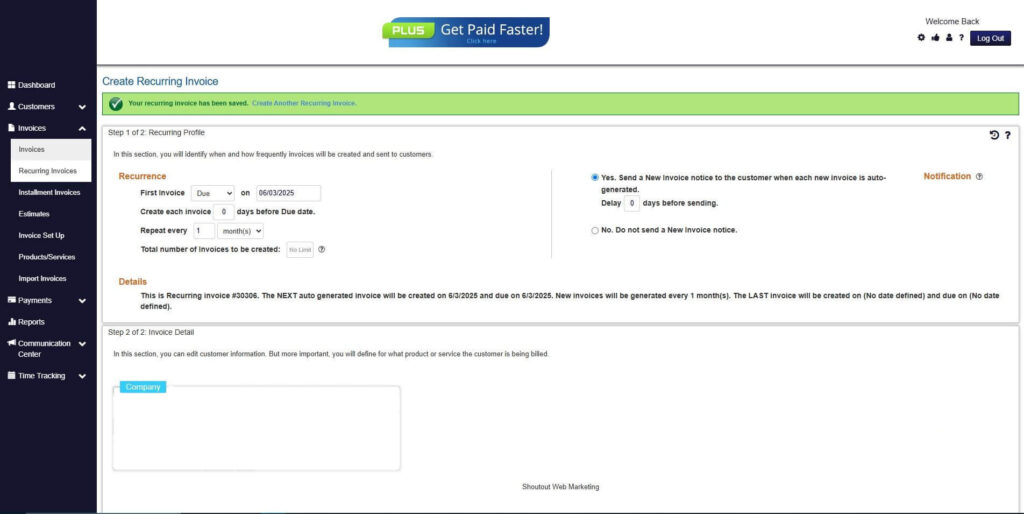
How to Create a New Recurring Invoice Using ReliaBills
Creating a New Recurring Invoice using ReliaBills involves the following steps:
Step 1: Login to ReliaBills
- Access your ReliaBills Account using your login credentials. If you don’t have an account, sign up here.
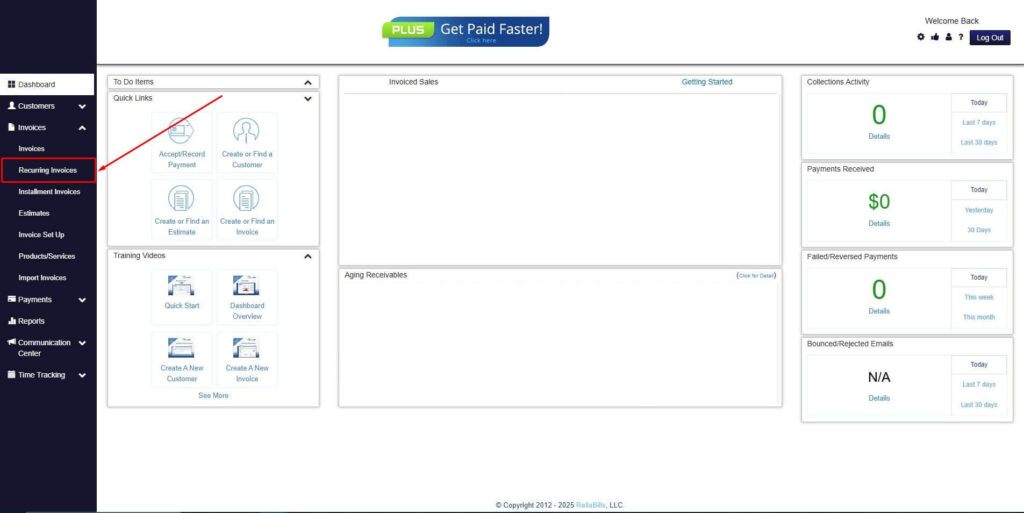
Step 2: Click on Recurring Invoices
- Navigate to the Invoices Dropdown and click on Recurring Invoices for an overview of the list of your existing customers.
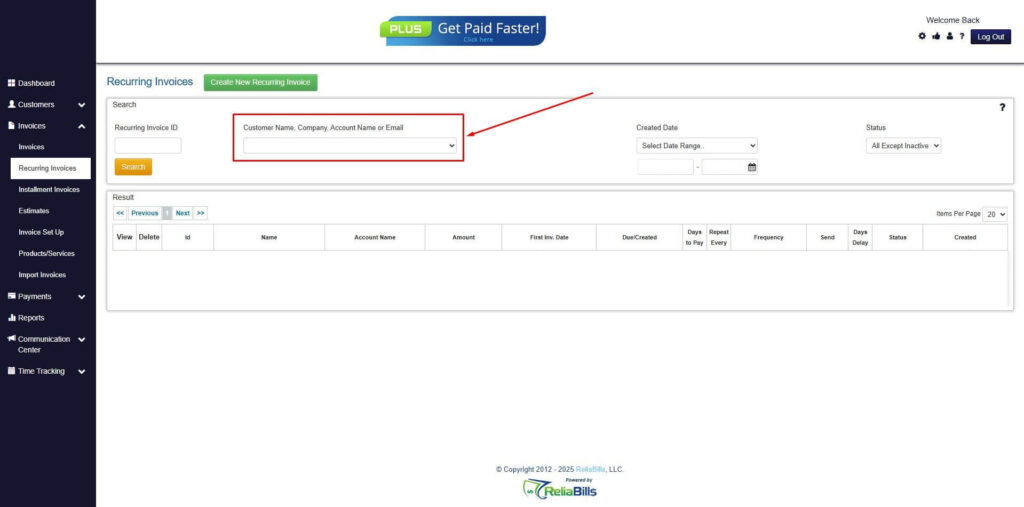
Step 3: Go to the Customers Tab
- If you have already created a customer, search for them in the Customers tab and make sure their status is “Active”.
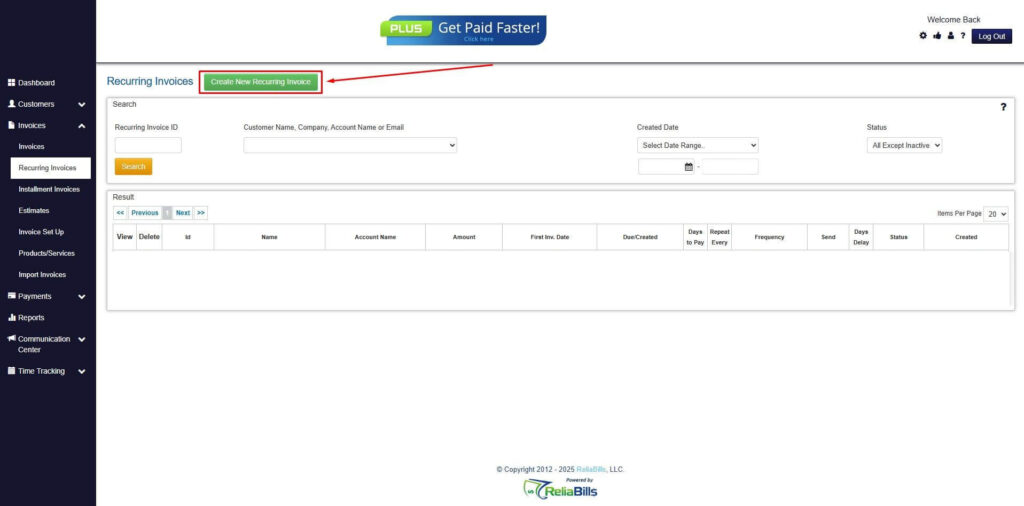
Step 4: Click the Create New Recurring Invoice
- If you haven’t created any customers yet, click the Create New Recurring Invoice to create a new customer.
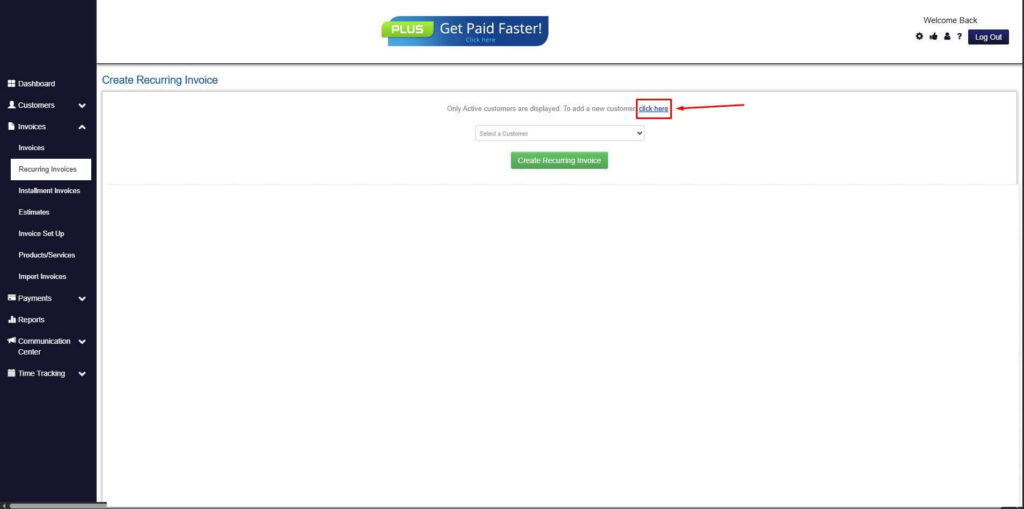
Step 5: Click on the “Click here” Button
- Click on the “Click here” button to proceed with the recurring invoice creation.
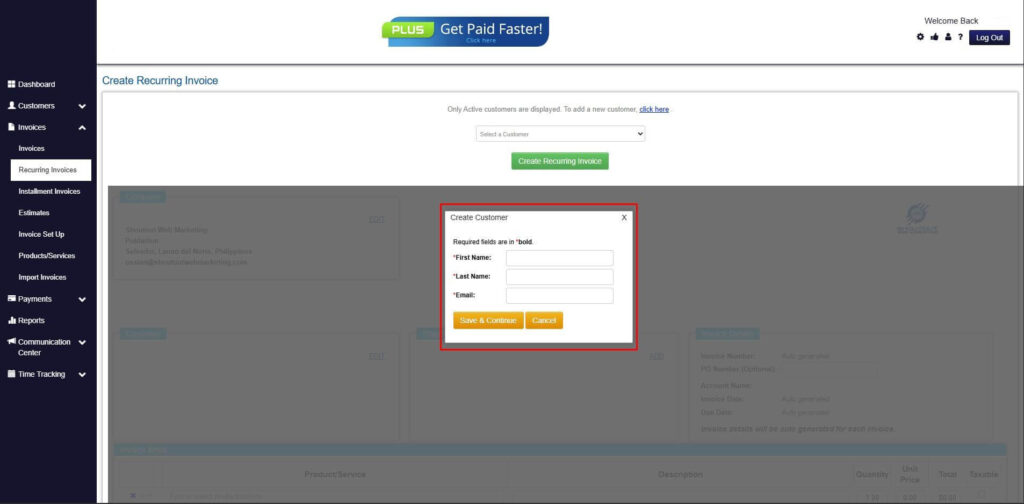
Step 6: Create Customer
- Provide your First Name, Last Name, and Email to proceed.
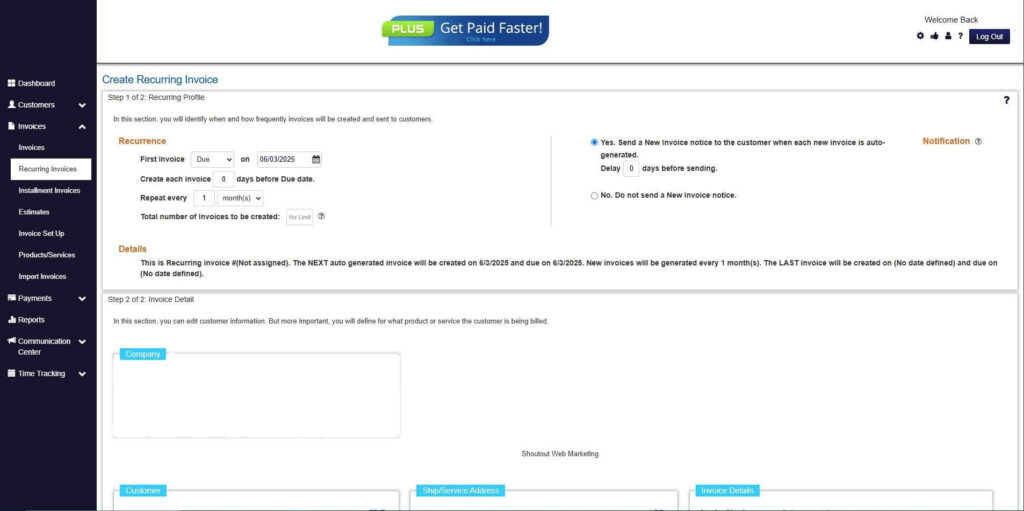
Step 7: Fill in the Create Recurring Invoice Form
- Fill in all the necessary fields.
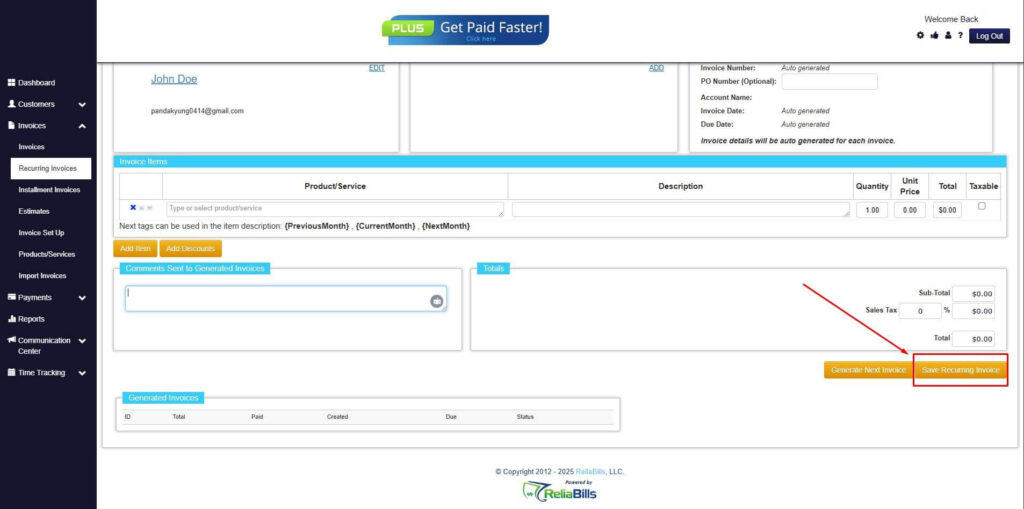
Step 8: Save Recurring Invoice
- After filling up the form, click “Save Recurring Invoice” to continue.
Step 9: Recurring Invoice Created
- Your Recurring Invoice has been created.
Frequently Asked Questions
1. Should gardeners invoice weekly or monthly?
It depends on your service schedule. Weekly invoices are common for ongoing maintenance, while monthly invoices work well for seasonal or larger contracts.
2. How do you handle skipped or weather-delayed services?
Note any skipped services on the invoice and adjust the total. Clear communication helps maintain client trust.
3. Can lawn care invoices be automated?
Yes. Platforms like ReliaBills allow recurring billing, automated reminders, and easy invoice generation.
4. What payment methods should gardeners accept?
Digital payments, bank transfers, checks, and mobile payments provide clients with convenient options.
Conclusion
Creating a professional lawn care invoice ensures timely payments, improves client trust, and keeps your business organized. By including detailed service descriptions, pricing, and clear payment terms, you reduce disputes and streamline operations. Tools like ReliaBills and ReliaBills Plus make recurring billing and payment tracking effortless, so you can spend more time on the work you love while keeping your finances in order.