

Landlords and property managers deal with many responsibilities, and one of the most sensitive tasks is billing tenants for damage beyond normal wear and tear. When a tenant causes damage to your property, it is important to document the issue clearly and issue a proper invoice for tenant damages to maintain fairness and avoid disputes. A well-written invoice protects both parties, ensures transparency, and helps you recover repair costs quickly.
With the right process in place, tenant damage invoicing becomes much easier. From conducting inspections to itemizing repair costs, knowing how to prepare a complete and accurate invoice can help keep your records organized and support any claims you may need to make. This guide walks you through everything you need to include and how to create an invoice that tenants understand and respect.
What Is a Tenant Damage Invoice?
A tenant damage invoice is a formal document that landlords send to tenants when property damage occurs due to negligence, accidents, misuse, or lease violations. It is different from a rent invoice because it focuses on specific repair items, labor costs, and damage findings. Its purpose is to explain what was damaged, how much it costs to fix, and why the tenant is responsible.
A clear invoice for tenant damages helps maintain transparency and provides written proof if tenants question repair amounts or if disputes escalate into legal or collection situations.
When Should You Invoice Tenants for Damages?
Landlords typically issue a tenant damage invoice after:
• Move-out inspections
• Damage discovered during routine checks
• Accidental or emergency issues caused by tenant actions
• Damage due to neglect or failure to report problems
• Lease violations that lead to added cleanup or repairs
Issuing the invoice as soon as possible helps maintain accurate documentation and increases the likelihood of timely payment.
Essential Information to Include in a Tenant Damage Invoice
A complete and professional invoice should include:
• Landlord or property management details
• Tenant name and unit address
• Date of inspection and date of invoice
• A clear description of each damaged item
• Photos or documentation references
• Repair costs broken into materials and labor
• Total amount owed
• Payment instructions and due date
The more detailed your invoice is, the easier it becomes to justify the charges and avoid misunderstandings.
How to Invoice Tenants for Damages (Step-by-Step)
- Inspect the unit and identify all damage.
- Take photos or videos to document the condition.
- Collect repair estimates or calculate the repair cost.
- Create an itemized invoice for tenant damages.
- Attach supporting documentation such as before-and-after photos.
- Send the invoice to the tenant and keep a digital record.
- Follow up with reminders if the payment deadline passes.
Being consistent with this process helps you maintain professionalism and fairness.
How to Calculate Repair Costs Correctly
Accurate pricing is important to avoid disputes. When calculating costs, consider:
• Labor rates from reliable contractors
• Material prices or replacement parts
• The age, condition, and depreciated value of damaged items
• Market rates for emergency or specialty repairs
Many landlords use at least two contractor estimates to ensure fairness and accuracy before issuing the invoice.
Sample Tenant Damage Invoice Template
Invoice Title: Tenant Damage Invoice
Landlord Information
Tenant Information
Property Address
Inspection Date
Description of Damages:
- Broken door handle
- Stained carpet
- Hole in drywall
Costs: - Materials: $___
- Labor: $___
Total Amount Due: $___
Payment Due Date:
Notes and Instructions
Included documentation: photos, contractor quote, inspection report.
How ReliaBills Can Help With Tenant Damage Invoicing
ReliaBills makes it easy for landlords and property managers to create, send, and track an invoice for tenant damages. With customizable templates, you can build a detailed and professional invoice that clearly outlines each repair cost and attaches supporting documentation for full transparency. This helps tenants understand exactly what they are being charged for, which reduces disputes and speeds up payments.
The platform also organizes every invoice, inspection record, and repair file in one place, which is extremely helpful when managing multiple units or frequent move-ins and move-outs. You can automate reminders, send digital invoices, and offer online payments, so tenants can settle repair costs quickly and conveniently. This eliminates the slow back-and-forth that often happens with manual or paper billing.
For property managers who need consistent and dependable billing, ReliaBills also supports recurring billing, especially useful for ongoing property fees, scheduled maintenance charges, or repeated tenant obligations. The system can automatically generate and send these recurring invoices, reducing administrative work and ensuring nothing gets missed. Combined with scheduled follow-ups, detailed reporting, and automated communication, ReliaBills keeps documentation organized, improves collection efficiency, and helps maintain a professional and streamlined workflow.
How to Create a New Recurring Invoice Using ReliaBills
Creating a New Recurring Invoice using ReliaBills involves the following steps:
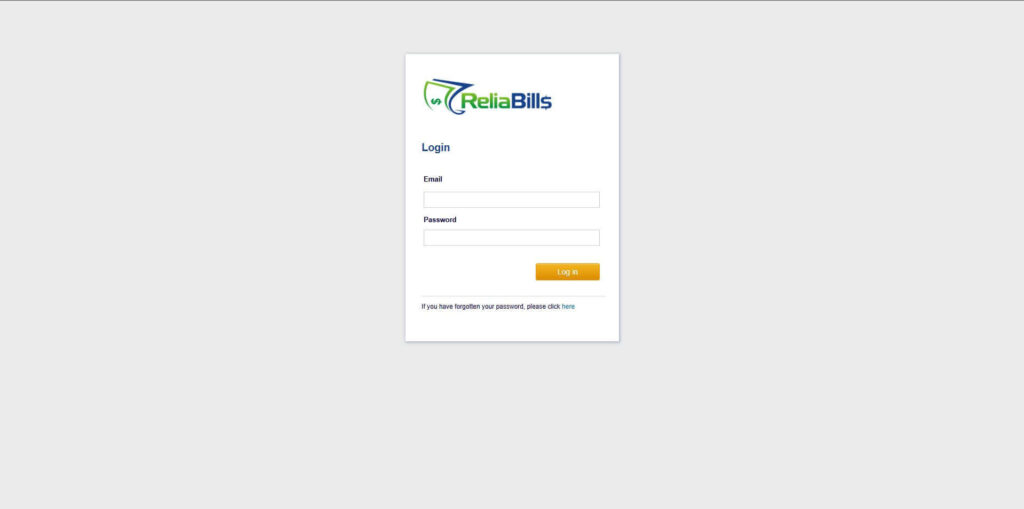
Step 1: Login to ReliaBills
- Access your ReliaBills Account using your login credentials. If you don’t have an account, sign up here.
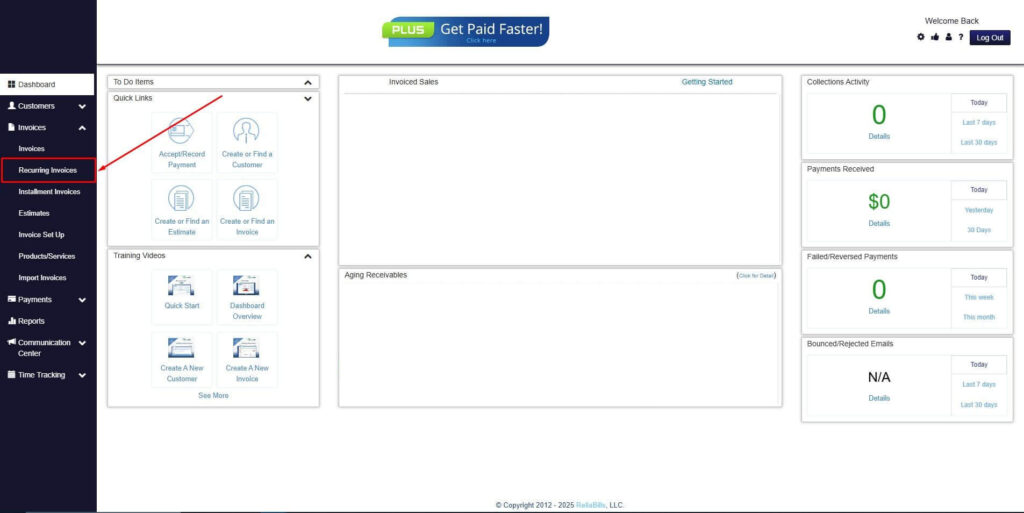
Step 2: Click on Recurring Invoices
- Navigate to the Invoices Dropdown and click on Recurring Invoices for an overview of the list of your existing customers.
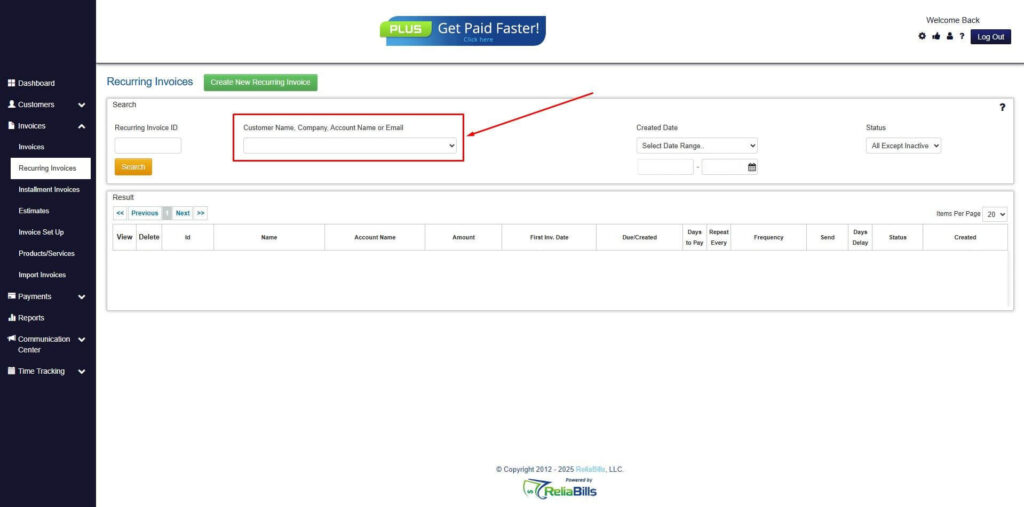
Step 3: Go to the Customers Tab
- If you have already created a customer, search for them in the Customers tab and make sure their status is “Active”.
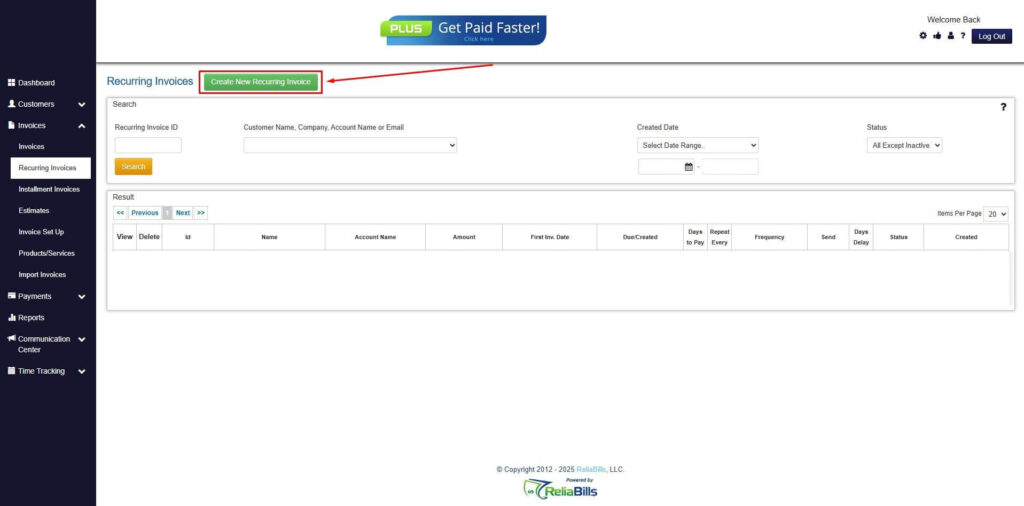
Step 4: Click the Create New Recurring Invoice
- If you haven’t created any customers yet, click the Create New Recurring Invoice to create a new customer.
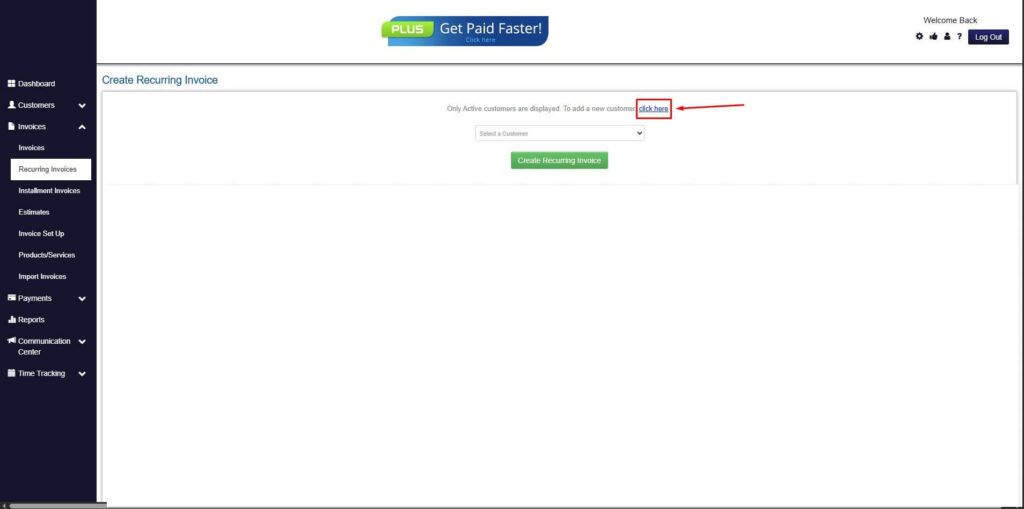
Step 5: Click on the “Click here” Button
- Click on the “Click here” button to proceed with the recurring invoice creation.
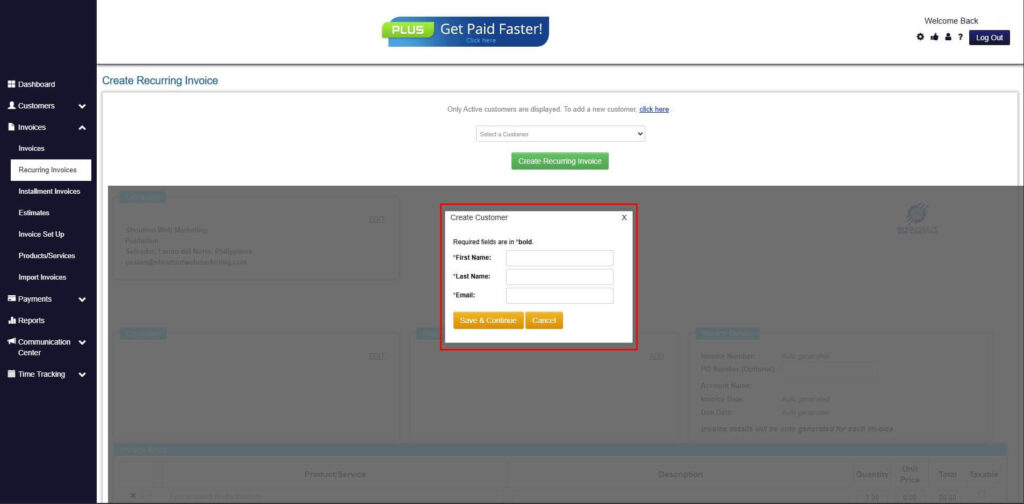
Step 6: Create Customer
- Provide your First Name, Last Name, and Email to proceed.
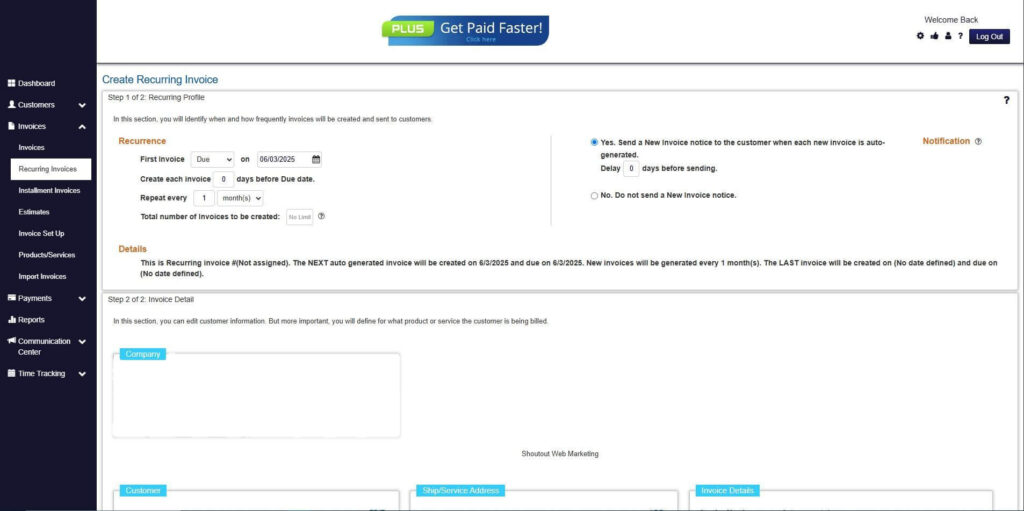
Step 7: Fill in the Create Recurring Invoice Form
- Fill in all the necessary fields.
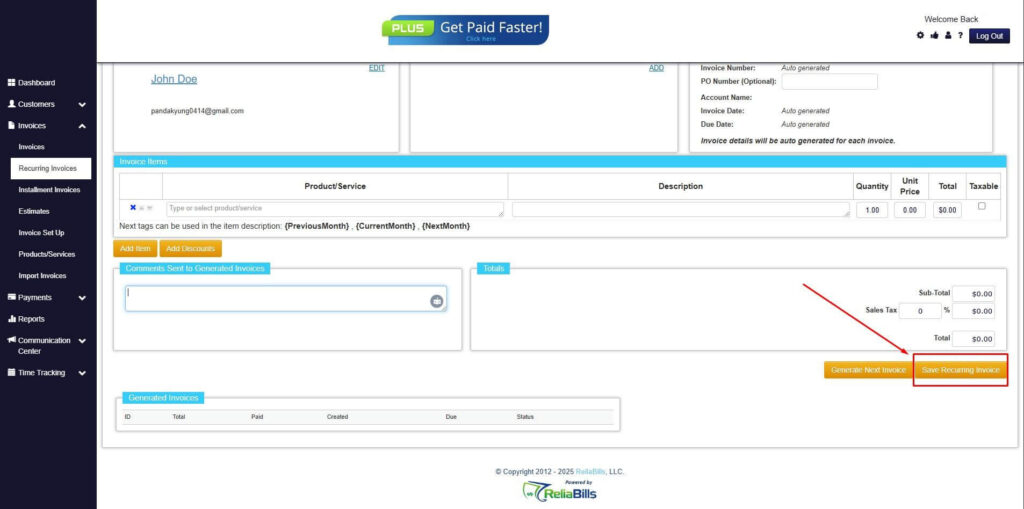
Step 8: Save Recurring Invoice
- After filling up the form, click “Save Recurring Invoice” to continue.
Step 9: Recurring Invoice Created
- Your Recurring Invoice has been created.

Frequently Asked Questions
1. Can I charge tenants for normal wear and tear?
No. You can only invoice tenants for damage that goes beyond everyday use, such as holes in walls or broken fixtures.
2. Do I need photos to support my invoice?
Photos are highly recommended. They help support your claim and reduce disputes.
3. How soon should I send the damage invoice after inspection?
It is best to send it immediately after you complete your inspection and have accurate repair costs.
4. What if a tenant refuses to pay?
You may deduct the amount from their security deposit or pursue further actions based on your state laws.
5. Can I send invoices digitally to tenants?
Yes. Digital invoicing platforms like ReliaBills make the process faster and more organized.
Conclusion
Issuing a clear and detailed invoice for tenant damages protects your property, maintains transparency, and helps you recover repair costs without conflict. With proper documentation, accurate pricing, and a simple invoicing process, landlords can handle damage issues professionally. Using a reliable invoicing tool like ReliaBills streamlines everything from documentation to reminders, making tenant damage billing easier and more efficient.