

Creating a clear and professional invoice is essential for every electrician, whether you’re handling small repairs or large installation projects. A well-structured invoice does more than request payment. It helps clients understand the work completed, the materials used, and the total cost. This transparency builds trust and reduces the chance of price disputes.
Electricians who use organized invoicing systems get paid faster, avoid misunderstandings, and present a more credible image to customers. When your invoice explains the full scope of work in simple terms, clients feel confident about the services they received. This guide breaks down everything you need to know to create an effective invoice for electrical work, from essential components to pricing tips and automation tools.
What Is an Electrical Work Invoice?
An electrical work invoice is a formal billing document that electricians issue after completing a service. It outlines what work was done, the materials used, the labor hours required, and the total cost the client must pay. It helps homeowners and businesses understand exactly what they are being charged for.
This type of invoice is more detailed than a basic service invoice because electrical jobs often involve safety inspections, specific equipment, and code-related requirements. It ensures all services and materials are properly documented for both the electrician and the customer.
When Do Electricians Need to Issue an Invoice?
Electricians issue invoices anytime a service is completed and payment is due. This includes routine repair jobs such as fixing outlets or switches, troubleshooting wiring issues, and replacing panels or breakers.
Invoices are also needed for installations, emergency calls, scheduled maintenance, inspections, or project-based electrical work. Whether the job is residential, commercial, or industrial, providing an invoice ensures accurate records and timely payment.
Key Components of an Electrical Work Invoice
A complete and professional invoice for electrical work should include:
Electrician and Business Details
Your name, business name, contact number, email, and license number (if applicable).
Client Information
The customer’s full name, service address, and contact details.
Service Description
A clear explanation of the electrical work completed, including tasks performed and materials used.
Labor Hours and Rates
A breakdown of time spent on the job, your hourly rate, and total labor cost.
Materials and Parts
A list of all parts, components, or equipment used along with their individual prices.
Payment Terms
Due date, accepted payment methods, late fees, deposits, and any recurring billing arrangements for ongoing maintenance.
Invoice Number and Date
For record-keeping and tracking payments.
How to Create an Electrical Work Invoice (Step-by-Step)
1. Start with your business header
Include your company logo, address, and contact information to make the invoice look professional.
2. Add the client’s details
Write the customer’s full name, service location, phone number, and email.
3. Insert the invoice number and date
Unique numbering helps organize your billing records and prevents confusion.
4. Describe the electrical work performed
Provide a simple explanation that the client can easily understand.
5. Break down labor and materials
Show the hours worked, hourly rate, parts used, and unit prices.
6. Calculate the total cost
Add labor, materials, permits, fees, and any taxes.
7. Include payment instructions
Tell the customer how and when to pay. If you offer recurring billing for regular maintenance or service contracts, include it here.
8. Add notes or warranties
This can include safety reminders, work guarantees, or follow-up advice.
How to Accurately Price Electrical Work
Accurate pricing starts with calculating labor. Consider the time spent diagnosing problems, completing repairs, and testing the system. Multiply the total time by your hourly rate.
Next, include the cost of materials and equipment such as breakers, wires, outlets, connectors, or specialized tools. Add a reasonable markup to cover overhead and ensure profitability. For larger jobs, consider permit fees, inspection costs, and travel expenses. Specialized electrical work may require premium pricing to reflect expertise and certification requirements.
Best Practices for Professional Electrical Invoicing
To create an effective invoice for electrical work, always use clear language and avoid technical jargon when possible. Clients appreciate easy-to-understand descriptions of what they’re paying for.
Make sure to itemize everything. This improves transparency and helps build trust. Additionally, incorporate branding elements like your logo and consistent formatting to look more professional. Finally, always keep copies of your invoices and follow up politely on late payments to keep cash flow steady.
Electrical Work Invoice Example Template
Electrician Information:
- Business Name
- Address
- Phone / Email
- License Number
Client Information:
- Name
- Service Address
- Phone / Email
Invoice Details:
- Invoice Number
- Date Issued
- Due Date
Work Performed:
- Description of services
- Diagnosis and repairs
- Installation or replacement tasks
Labor Charges:
- Hours Worked
- Hourly Rate
- Total Labor Cost
Materials Used:
- Item | Quantity | Price
Total Amount Due:
- Subtotal
- Tax
- Grand Total
Payment Instructions:
- Accepted payment methods, due date, and recurring billing details if applicable.
How ReliaBills Can Help Electricians With Invoicing
ReliaBills is an excellent tool for electricians who want to simplify and speed up the billing process. It allows you to create branded invoices, send them instantly, and track whether clients have viewed or paid them. This eliminates the hassle of manual paperwork and ensures that nothing gets overlooked.
The platform also automates reminders, follow-ups, and recurring billing for electricians who handle ongoing service contracts or maintenance programs. This helps you maintain steady cash flow and reduces the need for manual chasing. Everything is stored securely in one system, making it easy to review past jobs and keep your billing fully organized.
With ReliaBills, you can accept online payments, schedule automatic charges, and generate professional invoices in just minutes. It’s a complete solution designed to help electricians save time, improve customer relationships, and get paid faster.
How to Create a New Recurring Invoice Using ReliaBills
Creating a New Recurring Invoice using ReliaBills involves the following steps:
Step 1: Login to ReliaBills
- Access your ReliaBills Account using your login credentials. If you don’t have an account, sign up here.

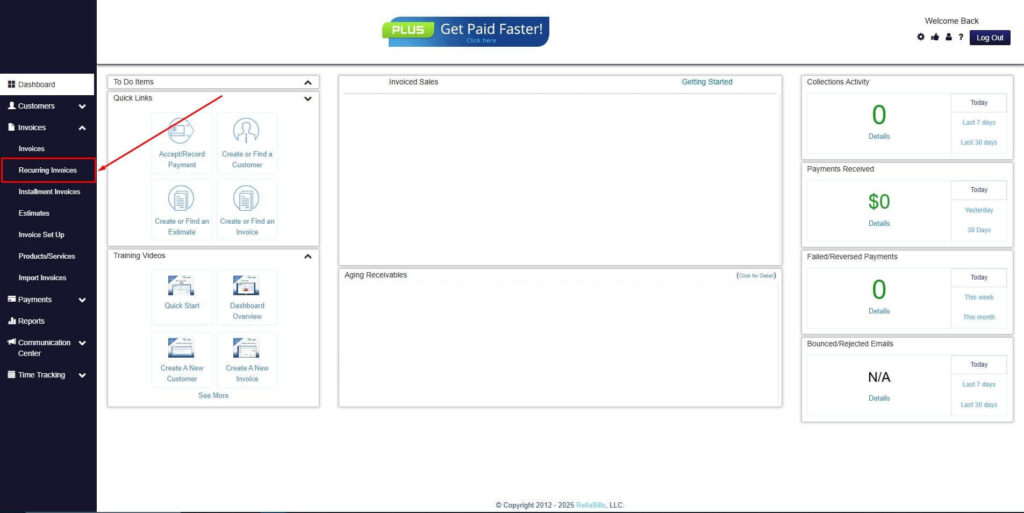
Step 2: Click on Recurring Invoices
- Navigate to the Invoices Dropdown and click on Recurring Invoices for an overview of the list of your existing customers.
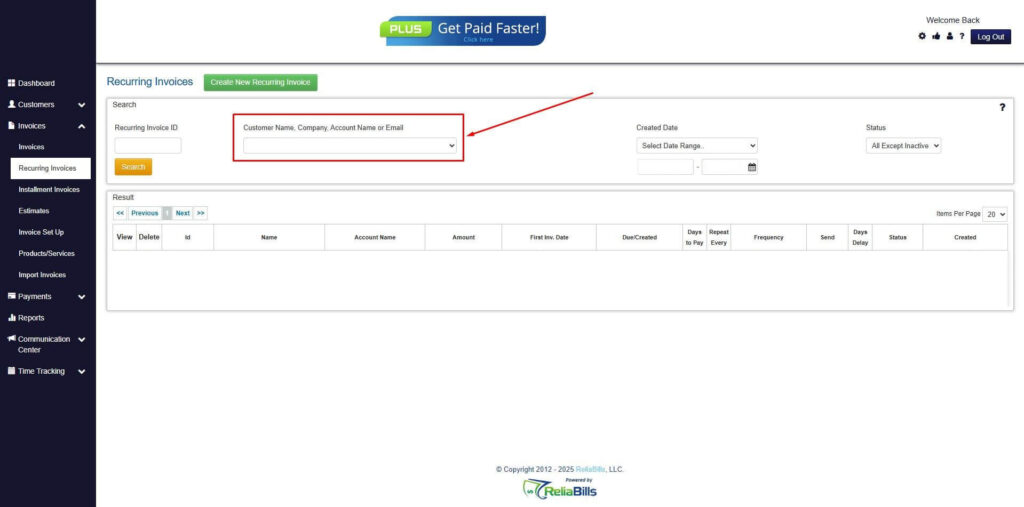
Step 3: Go to the Customers Tab
- If you have already created a customer, search for them in the Customers tab and make sure their status is “Active”.
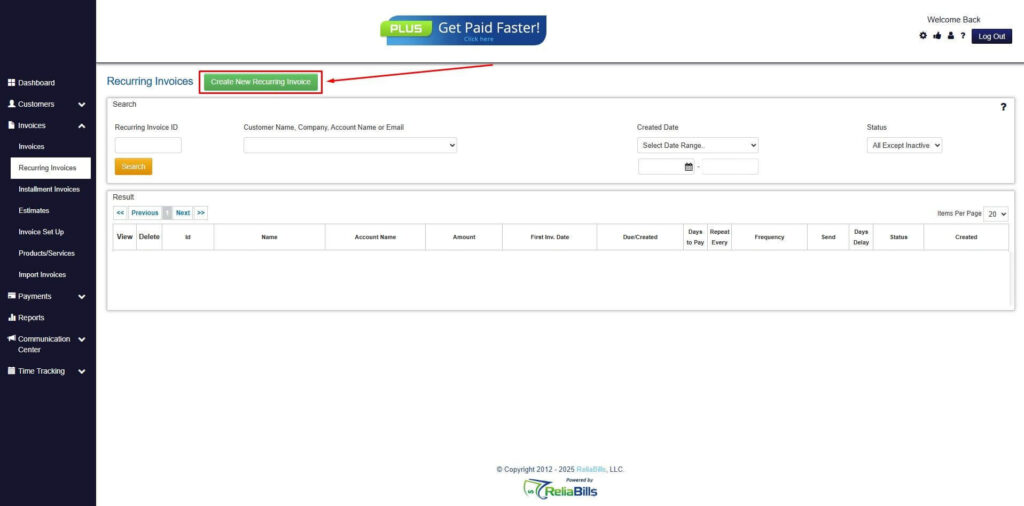
Step 4: Click the Create New Recurring Invoice
- If you haven’t created any customers yet, click the Create New Recurring Invoice to create a new customer.
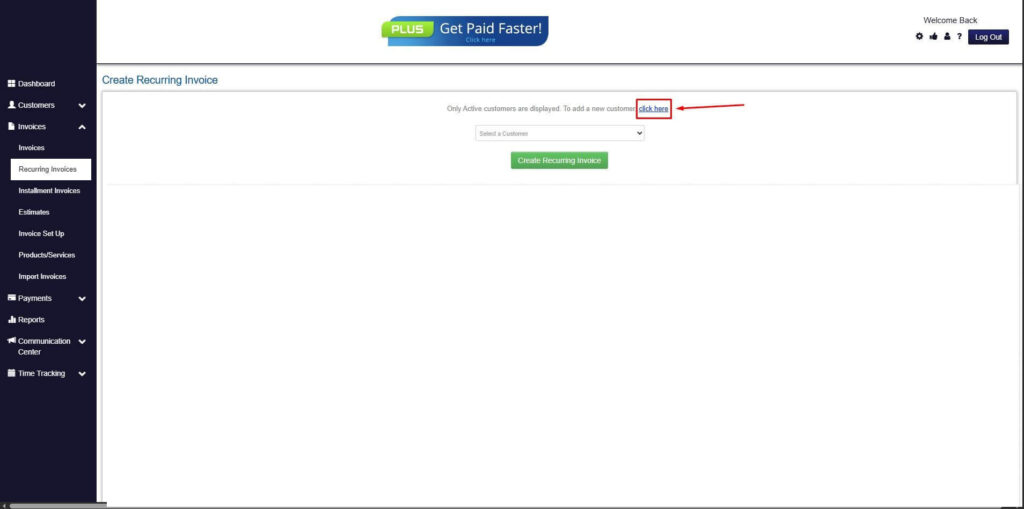
Step 5: Click on the “Click here” Button
- Click on the “Click here” button to proceed with the recurring invoice creation.
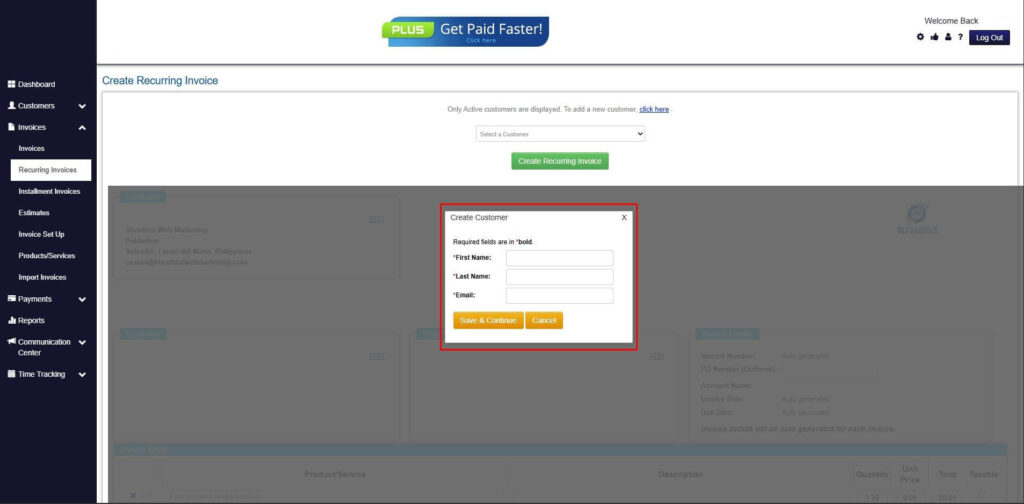
Step 6: Create Customer
- Provide your First Name, Last Name, and Email to proceed.
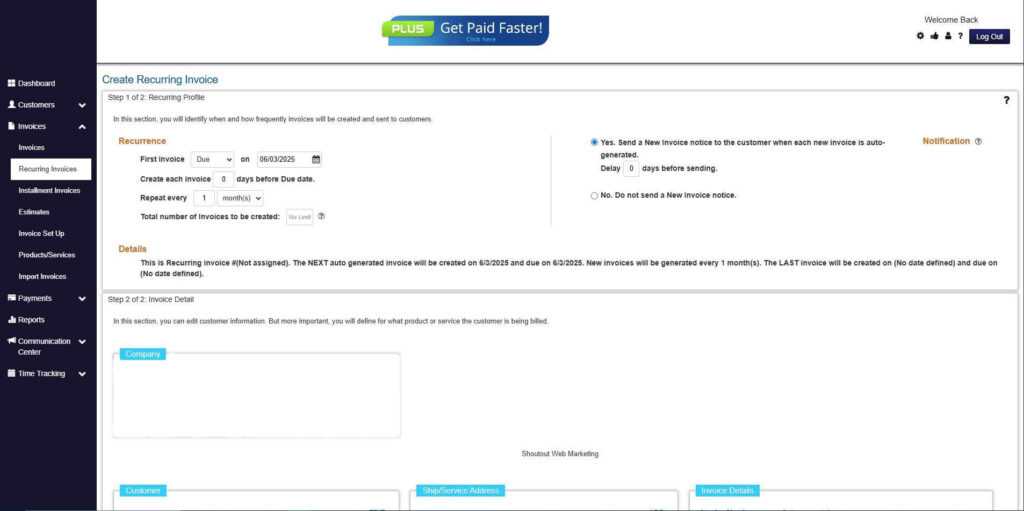
Step 7: Fill in the Create Recurring Invoice Form
- Fill in all the necessary fields.
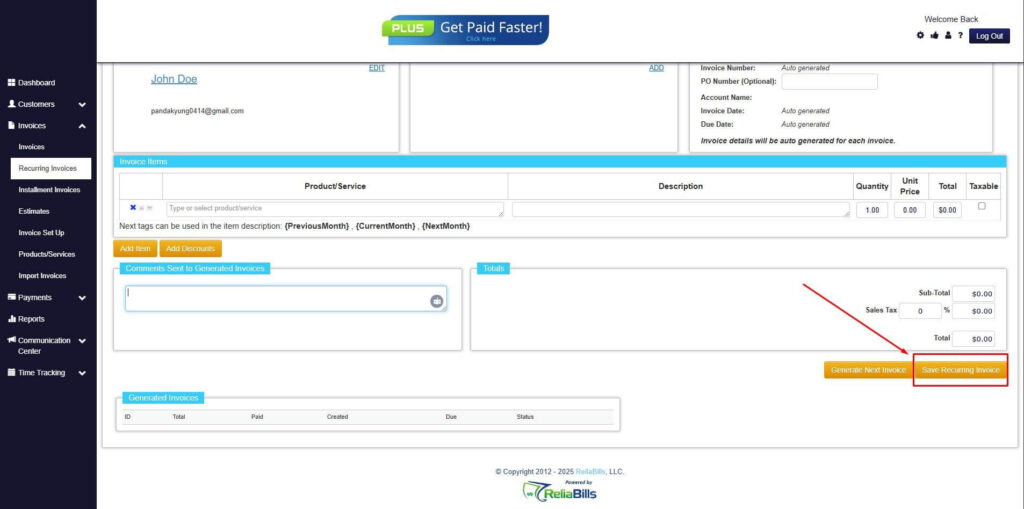
Step 8: Save Recurring Invoice
- After filling up the form, click “Save Recurring Invoice” to continue.
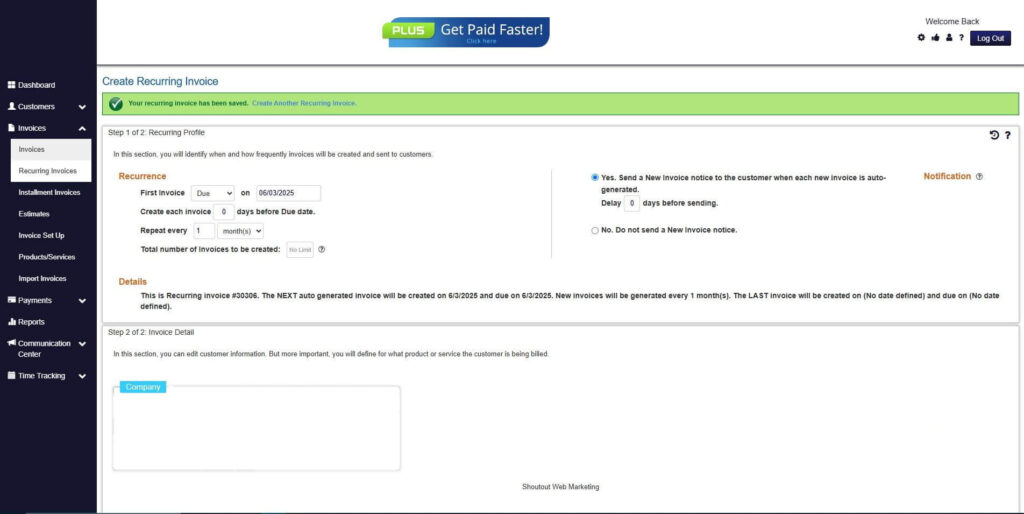
Step 9: Recurring Invoice Created
- Your Recurring Invoice has been created.
Frequently Asked Questions
1. Do I need to list every material on an electrical invoice?
Yes. Listing all materials improves transparency and helps clients understand the total cost.
2. Can I bill for travel time?
Many electricians include travel fees, especially for long distances or emergency calls.
3. How do I invoice for emergency electrical work?
Clearly state emergency rates, the time of service, and any additional charges for immediate response.
4. What payment terms work best for electricians?
Standard terms are seven to 30 days, but immediate payment is recommended for small repair jobs.
5. Should I offer recurring billing?
Yes. Recurring billing is helpful for clients who require regular electrical maintenance or inspections.
Conclusion
A professional invoice for electrical work helps electricians communicate clearly, maintain accurate records, and get paid efficiently. By outlining labor, materials, and service details, clients know exactly what they’re paying for, which builds trust and minimizes disputes.
Using digital tools like ReliaBills makes invoicing even easier by automating billing, reminders, and recurring payments. With a solid invoicing system in place, electricians can focus more on delivering excellent work and less on chasing payments.