

Gyms rely heavily on subscription-based revenue, where timely membership payments are critical for sustaining daily operations. When payments are missed, gyms face cash flow disruptions that can impact staff salaries, equipment maintenance, and facility operations. Efficiently managing overdue invoices ensures financial stability while maintaining a positive experience for members.
As gyms expand their memberships and offer various plans monthly, annual, or class packages tracking and collecting payments manually becomes increasingly complex. Errors, overlooked renewals, and missed follow-ups can result in delayed cash flow and higher administrative workloads. Automating these processes provides a reliable solution to minimize gaps and reduce manual effort.
The growing adoption of recurring billing and automated payment systems has transformed gym operations. By streamlining invoice delivery, payment reminders, and collection processes, gyms can maintain consistent revenue streams while focusing on enhancing the member experience. This article explores practical strategies for handling gym overdue membership invoices efficiently.
Why Are Overdue Membership Invoices a Serious Issue for Gyms?
Overdue invoices directly impact revenue predictability, especially in businesses where recurring membership fees are the primary source of income. Missed payments can disrupt cash flow, limiting a gym’s ability to cover operational expenses and invest in new services or facilities.
Beyond financial implications, late payments increase the administrative burden. Staff must spend time sending reminders, tracking payment histories, and manually reconciling accounts, which can be time-consuming and error-prone.
Consistently overdue invoices can also affect member retention. Members may face service interruptions or penalties, leading to dissatisfaction and higher churn rates. A proactive billing system ensures gyms maintain both revenue stability and member trust.
How Do Gym Membership Billing Models Typically Work?
Gym revenue is typically structured around recurring billing cycles, including monthly memberships, annual prepaid plans, and specialized packages like personal training or class subscriptions. Each plan type has its own invoicing requirements, which can complicate collection when handled manually.
Many gyms offer auto-pay setups, where cards on file are charged automatically, reducing the risk of missed payments. Others rely on manual payments, which can result in lapses if members forget or encounter issues with their preferred payment method.
Add-ons such as locker rentals, premium programs, or merchandise subscriptions further complicate billing. Maintaining clarity and accuracy across these recurring and one-time charges is critical for minimizing overdue invoices.
What Is Considered an Overdue Membership Invoice?
An overdue membership invoice occurs when a payment is not received by its due date, often following a grace period. Depending on gym policy, overdue status may begin immediately after a missed monthly charge or after several days past the scheduled payment.
Some gyms offer grace periods to account for temporary payment issues, such as insufficient funds or processing delays. Understanding the difference between a failed payment and an overdue invoice is essential for correctly managing collections.
Clear documentation of payment terms and overdue definitions is critical for both staff and members. It ensures consistent enforcement and reduces disputes or confusion.
Why Do Gym Membership Invoices Become Overdue?
Overdue invoices often result from simple errors or oversight. Common reasons include expired or declined credit cards, insufficient funds in the member’s account, and manual billing errors.
Members may forget to update their payment information after a card change or neglect to process a manual payment, especially with multiple memberships or subscriptions.
Occasionally, billing disputes or confusion about charges can delay payment. Without automated tracking and clear communication, these delays accumulate, affecting both cash flow and member satisfaction.
How Do Overdue Membership Fees Affect Gym Cash Flow?
Overdue payments create revenue gaps that can disrupt operational planning, from payroll to facility maintenance.
They contribute to accounts receivable aging, where outstanding balances accumulate over time, increasing financial risk and the need for credit reliance.
Persistent overdue invoices may also heighten churn risk, as frustrated members could leave the gym due to service suspensions or unclear billing practices.
How Can Clear Billing Policies Reduce Overdue Payments?
Clear billing policies are essential for setting expectations with gym members. When members understand their payment schedule, due dates, and consequences of late payments, they are more likely to pay on time. Policies should include specific terms for monthly, quarterly, or annual memberships and any applicable late fees. This transparency builds trust and minimizes confusion that often leads to overdue invoices.
Consistent enforcement of billing policies ensures fairness and reduces disputes. Staff can reference the policies when addressing late payments, creating a professional and standardized approach. It also allows gyms to differentiate between occasional missed payments and repeated non-compliance, enabling targeted collection strategies.
In addition, clear policies help with automation setup. Recurring billing, auto-debits, and digital invoicing can be aligned with the rules laid out in the policy, reducing manual intervention and ensuring every member is billed correctly according to the agreed terms. Members are informed in advance, which reduces resistance to automated charges and strengthens cash flow predictability.
How Does Recurring Billing Prevent Missed Membership Payments?
Recurring billing eliminates the need for manual invoicing by automatically charging members on a fixed schedule, whether monthly, quarterly, or annually. This ensures that membership fees are consistently collected on time, reducing the risk of gaps in cash flow.
With recurring billing, gyms can securely store payment information on file and automatically process transactions even if a member forgets to pay. This feature not only prevents missed payments but also allows for prorated charges or upgrades/downgrades to be applied automatically, maintaining accurate billing records without additional administrative work.
Recurring billing also provides real-time notifications of failed transactions, enabling staff to address issues quickly. By reducing missed payments through automation, gyms can stabilize revenue, improve forecasting, and focus on growth initiatives rather than chasing overdue invoices.
How Do Automated Payment Reminders Improve Collection Rates?
Automated reminders increase the likelihood of members paying on time by keeping them informed. Pre-due notifications alert members before a charge is processed, helping them prepare funds or update payment methods. Overdue reminders follow if a payment fails, providing multiple opportunities to resolve the issue before it becomes a long-term delinquency.
Escalation workflows can be built into automated reminders, increasing the urgency over time while still maintaining a professional tone. Multiple channels, such as email and SMS, ensure members receive messages in the format they are most likely to engage with, further improving collection success rates.
Automated reminders also free staff from manual follow-ups, reducing errors and ensuring that no member is overlooked. Members receive consistent communication, which minimizes disputes and late payments while strengthening the overall billing experience.
How Should Gyms Handle Failed Membership Payments Efficiently?
When a payment fails, automation allows gyms to implement retry logic, automatically attempting the transaction again without manual intervention. This can significantly reduce the number of overdue invoices caused by temporary issues, such as insufficient funds or network errors.
Expired or outdated payment information triggers notifications to the member, prompting them to update their card or payment method. Combined with grace period workflows, gyms can maintain access for members temporarily while still encouraging prompt payment, balancing revenue protection with member satisfaction.
In more complex scenarios, such as multiple failed attempts, gyms can apply tiered actions: from reminders to temporary access restrictions. Automation ensures these steps are executed consistently and professionally, reducing disputes and preserving long-term member trust.
How Can Gyms Maintain a Positive Member Experience While Collecting Payments?
Maintaining member satisfaction is critical, even when enforcing payment collection. Professional, respectful communication sets the tone and reassures members that billing is handled fairly. Notifications and reminders should be polite, concise, and non-confrontational.
Flexible repayment options, such as deferred payments, partial payments, or updated billing dates, provide members with solutions rather than penalties. This approach strengthens loyalty while addressing overdue invoices, ensuring members feel supported rather than penalized.
Transparency through digital invoices and online payment portals allows members to view their billing history, upcoming charges, and payment methods. This level of clarity reduces disputes, builds trust, and improves the overall membership experience, even when payments are overdue.
How Can Gyms Track and Monitor Overdue Accounts Effectively?
Tracking overdue accounts begins with accurate aging reports that show outstanding balances by member, date, and plan type. These reports allow management to prioritize collections based on severity and timing, focusing efforts on accounts that pose the greatest risk to cash flow.
Payment trend analysis provides insights into member behavior, such as repeated late payments or patterns in failed transactions. Combining this data with churn monitoring helps gyms identify at-risk members early and take proactive steps to resolve issues while retaining them.
Centralized dashboards consolidate data across all billing cycles, including recurring invoices, add-ons, and special packages. This real-time visibility ensures staff can monitor overdue balances, track collection outcomes, and measure the effectiveness of automated billing and reminder strategies.
How Does Automation Reduce Administrative Workload?
Automation removes repetitive manual tasks, such as creating invoices, sending reminders, and reconciling payments. This significantly reduces administrative burden, allowing staff to focus on member services and strategic growth initiatives.
Centralized billing dashboards provide real-time updates on all outstanding invoices, recurring charges, and failed payments. Staff no longer need to manually track spreadsheets or rely on error-prone paper records.
Scalable automation supports growing membership bases. Whether a gym has hundreds or thousands of members, automated recurring billing and reminders maintain accuracy, prevent missed payments, and ensure consistency across all accounts without increasing administrative headcount.
How ReliaBills Helps Gyms Manage Overdue Membership Invoices
ReliaBills simplifies management of gym overdue membership invoices by providing an all-in-one automated solution. Recurring billing setup ensures members are charged on schedule for monthly, annual, or class-based plans, reducing missed payments and stabilizing revenue.
Built-in payment reminders, retry logic, and card-on-file management address failed payments automatically, while recurring billing adjustments handle upgrades, downgrades, and proration. Members are kept informed through branded digital invoices, ensuring clarity and professionalism.
Real-time receivables tracking and reporting dashboards provide managers with visibility into outstanding balances, aging accounts, and payment trends. This enables proactive follow-up, reduces manual reconciliation, and preserves member relationships while maintaining predictable cash flow.
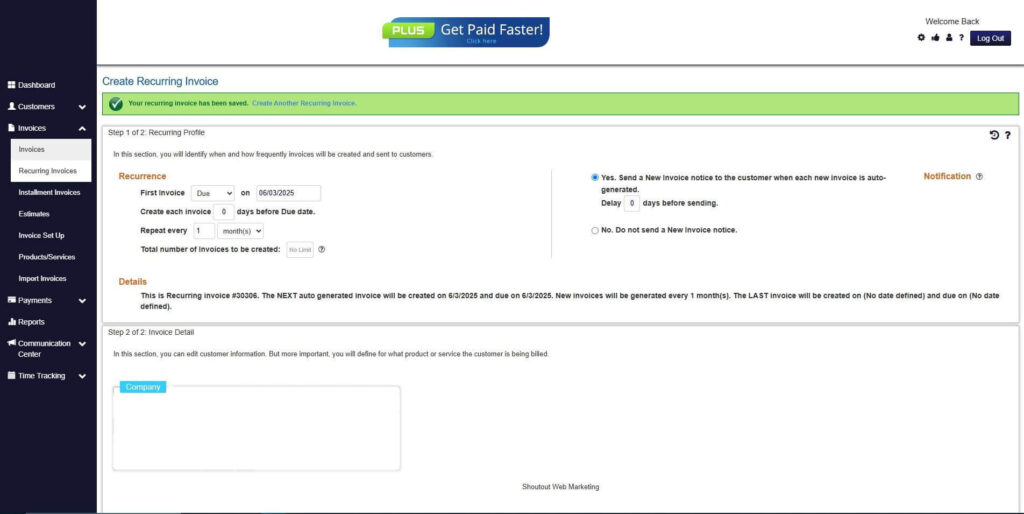
How to Create a New Recurring Invoice Using ReliaBills
Creating a New Recurring Invoice using ReliaBills involves the following steps:
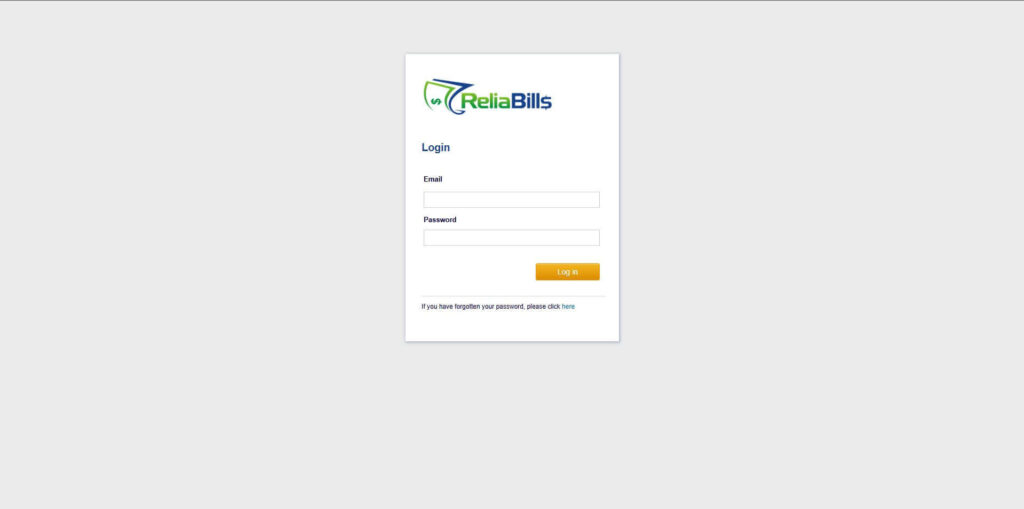
Step 1: Login to ReliaBills
- Access your ReliaBills Account using your login credentials. If you don’t have an account, sign up here.
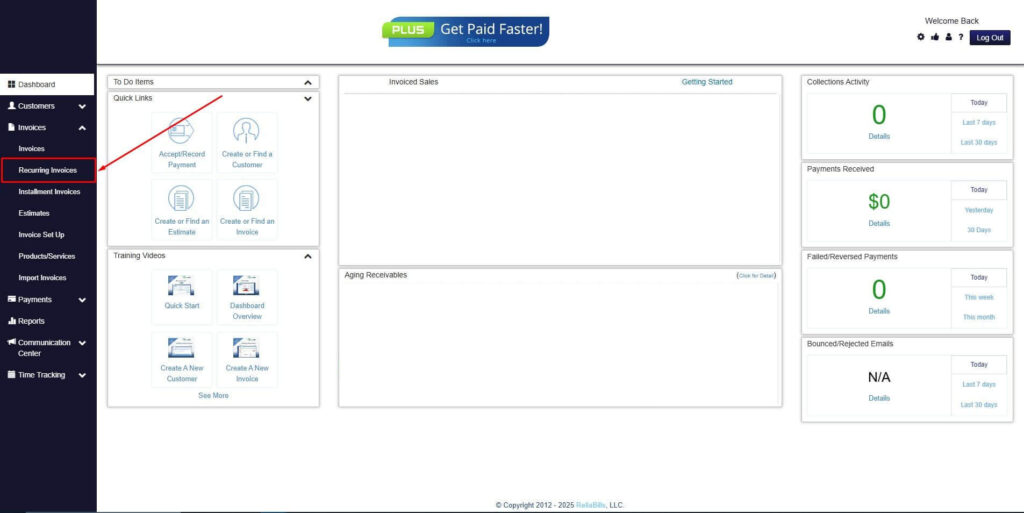
Step 2: Click on Recurring Invoices
- Navigate to the Invoices Dropdown and click on Recurring Invoices for an overview of the list of your existing customers.
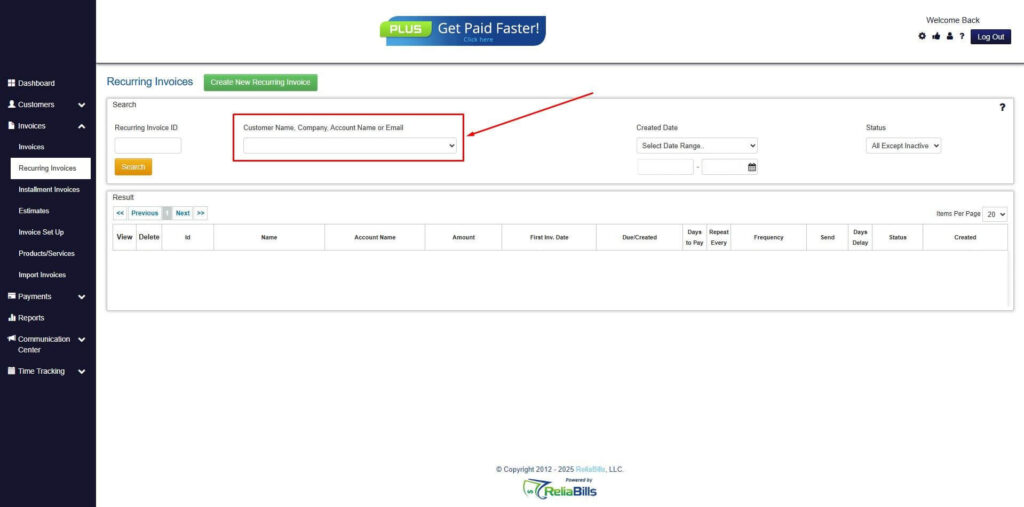
Step 3: Go to the Customers Tab
- If you have already created a customer, search for them in the Customers tab and make sure their status is “Active”.
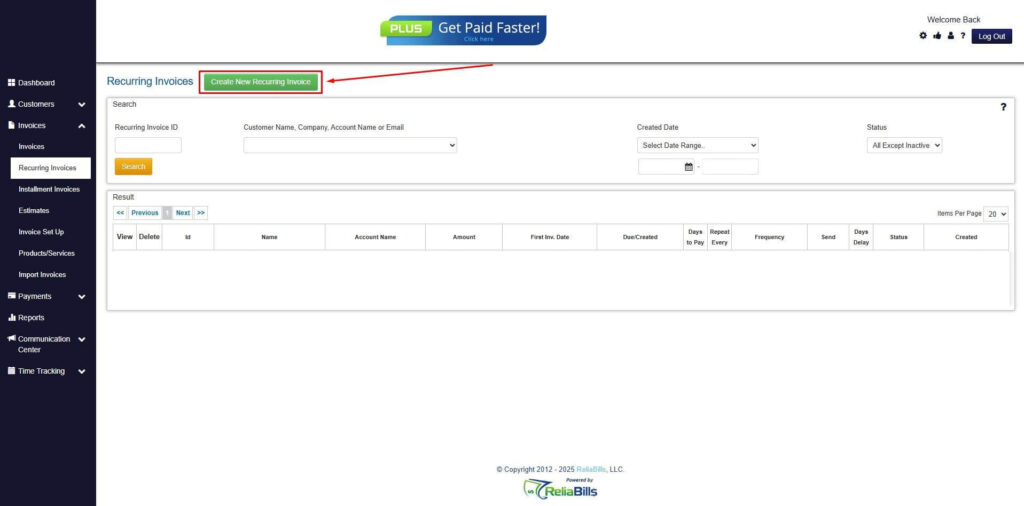
Step 4: Click the Create New Recurring Invoice
- If you haven’t created any customers yet, click the Create New Recurring Invoice to create a new customer.
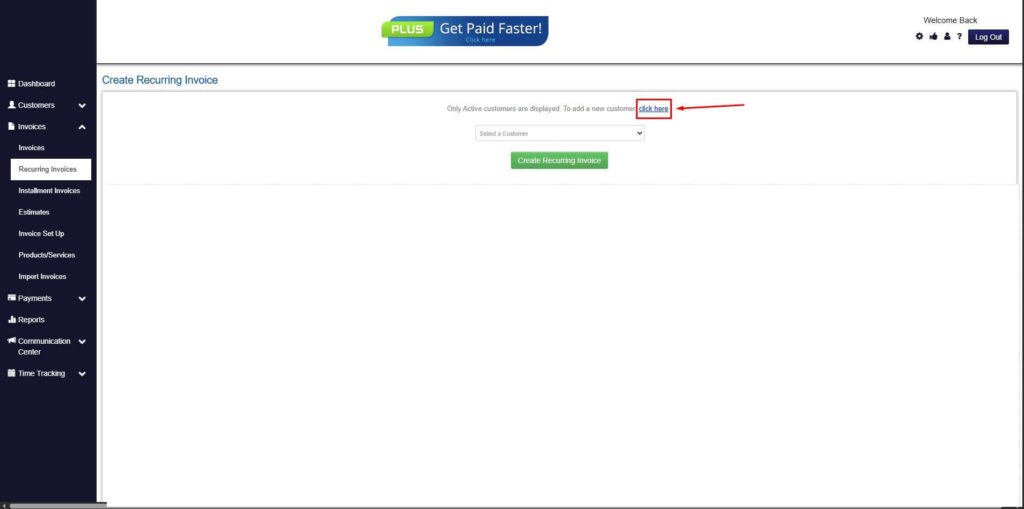
Step 5: Click on the “Click here” Button
- Click on the “Click here” button to proceed with the recurring invoice creation.
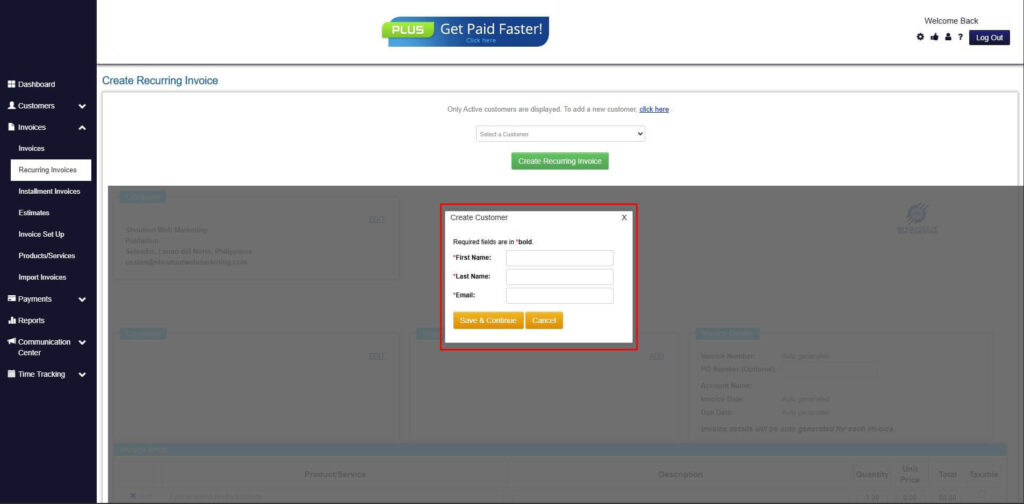
Step 6: Create Customer
- Provide your First Name, Last Name, and Email to proceed.
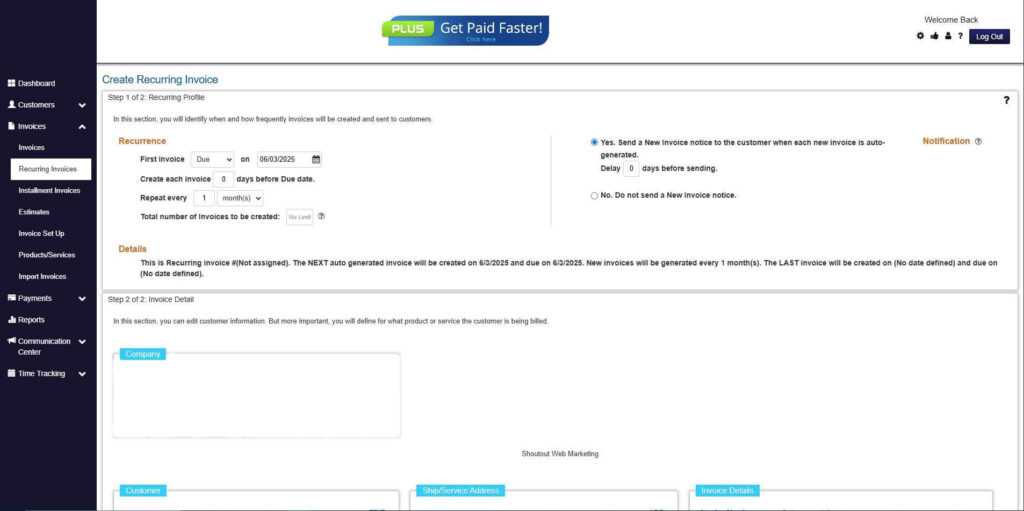
Step 7: Fill in the Create Recurring Invoice Form
- Fill in all the necessary fields.
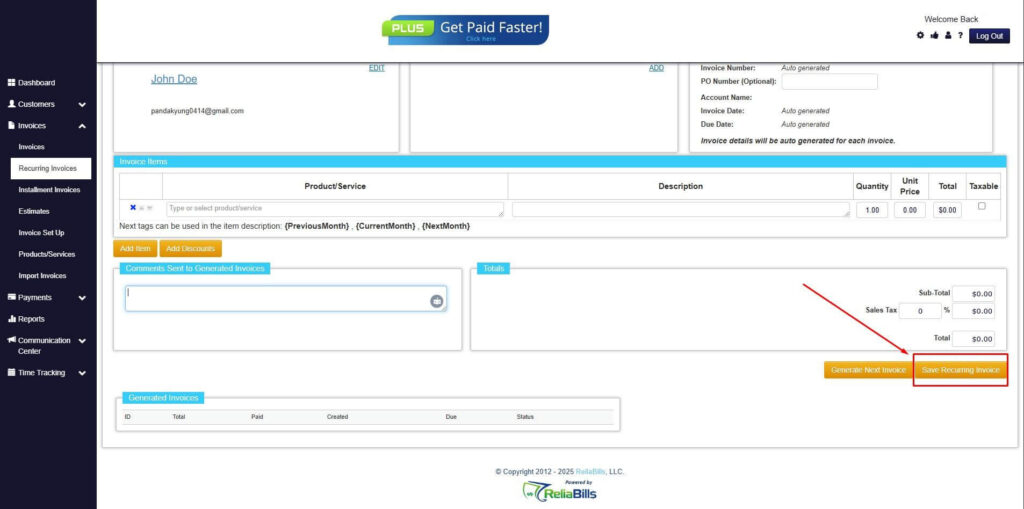
Step 8: Save Recurring Invoice
- After filling up the form, click “Save Recurring Invoice” to continue.
Step 9: Recurring Invoice Created
- Your Recurring Invoice has been created.
Frequently Asked Questions
1. What is the difference between a failed payment and an overdue invoice?
A failed payment occurs when a transaction cannot be processed, while an overdue invoice refers to any unpaid membership balance after the due date or grace period.
2. How does recurring billing reduce overdue invoices?
Recurring billing automates invoice delivery and payment collection, ensuring charges occur on schedule and reducing reliance on manual follow-ups.
3. Can gyms automate reminders for overdue payments?
Yes. Automation allows pre-due, overdue, and escalation notifications via email or SMS, keeping members informed and increasing collection rates.
4. What happens if a member’s card fails multiple times?
Platforms like ReliaBills use retry logic, notifications, and optional grace period workflows to minimize disruptions while encouraging prompt payment.
5. How can automation improve cash flow predictability?
Automated recurring invoices, reminders, and real-time tracking reduce payment delays, providing steady cash flow and clearer financial forecasting.
Conclusion
Overdue membership invoices are a significant challenge for gyms, affecting both cash flow and member retention.
Implementing recurring billing, automated reminders, and digital invoice management ensures timely payments while reducing administrative effort.
By choosing a solution like ReliaBills, gyms can maintain operational efficiency, strengthen member relationships, and stabilize revenue streams while managing gym overdue membership invoices effectively.