
B2B manufacturing transactions are rarely simple. Orders often involve bulk quantities, customized components, staggered deliveries, and negotiated contract terms. With high invoice volumes and extended payment cycles, even small billing inefficiencies can disrupt cash flow and strain vendor relationships.
Manufacturers frequently operate on Net 30, Net 60, or even Net 90 terms, which means revenue is delayed long after goods are shipped. When invoices are inaccurate or delayed, payment cycles stretch even further. This is why digital invoicing for B2B manufacturing has become essential for improving payment efficiency and maintaining financial stability.
Digital systems streamline invoice creation, delivery, tracking, and reconciliation. Instead of relying on manual processes, manufacturers can automate billing workflows and reduce friction across procurement, accounting, and operations teams.
Understanding B2B Manufacturing Payment Structures
Manufacturing payments often begin with purchase orders tied to detailed contracts. Billing must match agreed pricing, quantities, freight terms, and tax structures. Even minor discrepancies can trigger disputes or delay approval.
Milestone billing is common in large production contracts. Manufacturers may invoice at different stages, such as raw material procurement, partial production completion, and final delivery. Bulk orders also require precise documentation to align with client procurement systems.
Recurring supply agreements add another layer of complexity. Ongoing parts replenishment, maintenance components, or consumables may require scheduled billing. Digital invoicing for B2B manufacturing ensures these recurring supply contracts are billed consistently and accurately.
What Are Digital Invoices?
Digital invoices are electronically generated billing documents that replace manual, paper-based invoicing. They include automated data population, electronic delivery, and secure storage. Unlike traditional PDFs created manually, digital invoices integrate directly with operational systems.
Core features include automated invoice generation from sales orders, real-time tracking, and electronic payment links. Many systems integrate with ERP and accounting platforms to eliminate duplicate data entry. This improves accuracy and speeds up internal approvals.
For manufacturers, integration is critical. When invoicing aligns with inventory, production, and procurement systems, billing becomes a seamless extension of operational workflows.
Challenges of Traditional Manufacturing Invoicing
Manual Data Entry Errors
Entering invoice details by hand increases the risk of pricing mistakes, incorrect quantities, or tax miscalculations. In high-volume manufacturing environments, even small errors can result in delayed approvals and payment disputes. These mistakes often require credit memos and additional administrative corrections.
Lost or Delayed Invoices
Paper-based invoices or manually emailed files can be misplaced, overlooked, or sent to the wrong contact. When invoices do not reach the correct approver on time, payment cycles extend unnecessarily. This creates uncertainty in accounts receivable tracking.
Purchase Order Mismatches
Manufacturing invoices must align precisely with purchase orders and contract terms. If there are discrepancies in pricing, freight charges, or product codes, clients may reject the invoice. Resolving these mismatches slows down collections and increases back-and-forth communication.
Lengthy Internal Approval Workflows
Large B2B clients often require multi-level approvals before releasing payment. Without digital tracking, it becomes difficult to monitor invoice status. This lack of visibility delays follow-ups and extends payment timelines.
Limited Real-Time Tracking
Traditional invoicing methods do not provide immediate insight into invoice status. Finance teams may struggle to determine which invoices are pending, approved, or overdue. This reactive approach weakens cash flow management.
High Administrative Overhead
Printing, mailing, filing, and manually reconciling invoices consume significant staff time. As transaction volumes grow, these processes become increasingly inefficient. Scaling operations becomes difficult without expanding the finance team.
Improving Accuracy in High-Volume Transactions
Digital invoicing for B2B manufacturing improves accuracy by automatically pulling data from sales orders and contracts. This reduces manual entry and ensures invoices match agreed terms. Automated data synchronization minimizes discrepancies.
Standardized templates ensure consistent formatting across departments and clients. Built-in validation checks flag pricing mismatches or missing purchase order numbers before invoices are sent. This prevents disputes before they occur.
Reduced reconciliation discrepancies mean accounting teams can close books faster. Accurate invoices accelerate approvals and improve trust between manufacturers and their clients.
Accelerating Payment Cycles
Speed matters in manufacturing finance. Digital invoices are delivered instantly, reducing mailing delays. Faster delivery means clients can begin their internal approval processes sooner.
Automated payment reminders help ensure invoices are not forgotten. When reminders are systematic and professional, they reduce awkward follow-ups. This improves accounts receivable turnover without straining business relationships.
Clear and accurate digital invoices also reduce disputes. When billing details are transparent and easy to verify, approvals move faster and payments arrive on time.
Supporting Recurring Supply Contracts
Many manufacturers operate under long-term supply agreements. Digital invoicing for B2B manufacturing allows automated recurring invoices for these ongoing contracts. This ensures consistency in billing cycles.
Subscription-style billing can apply to maintenance programs or recurring parts replenishment. Automated schedules ensure invoices are issued on time without manual oversight. Contract-driven billing reduces administrative workload.
Consistent recurring revenue tracking provides better financial predictability. Manufacturers gain clearer visibility into steady income streams tied to long-term agreements.
How to Enhance Cash Flow Visibility
Implement Real-Time Receivables Reporting
Digital dashboards provide immediate insight into outstanding invoices and payment status. Finance teams can quickly identify overdue accounts and prioritize follow-ups. Real-time visibility supports proactive cash flow management.
Use Automated Aging Reports
Aging reports categorize receivables by time intervals such as 30, 60, or 90 days. This structured view helps assess collection risk and forecast incoming revenue. It also supports better credit control decisions.
Centralize Financial Data
Consolidating invoicing, payments, and recurring billing into one platform eliminates data silos. A centralized system ensures leadership has a unified view of revenue performance. This improves strategic financial planning.
Track Recurring Revenue Streams
For manufacturers with supply agreements or maintenance contracts, recurring billing tracking is essential. Monitoring predictable revenue streams enhances forecasting accuracy. Consistent visibility reduces financial uncertainty.
Monitor Payment Trends and Client Behavior
Analyzing payment patterns reveals which customers consistently pay late or on time. This data allows businesses to adjust credit terms or follow-up strategies. Informed decisions lead to stronger cash flow stability.
Leverage Forecasting Tools
Revenue forecasting tools use historical invoicing and payment data to project future cash inflows. Accurate forecasts support inventory planning, capital investments, and operational expansion. Better forecasting leads to stronger financial control.
Strengthening Compliance and Audit Readiness
Digital recordkeeping improves audit preparedness. Every invoice is stored securely with timestamps and version histories. This creates a transparent audit trail.
Accurate tax calculations are automated based on configured rules. This reduces compliance risk and ensures invoices meet regulatory requirements. Manufacturers operating across multiple jurisdictions benefit from consistent tax handling.
Easy retrieval of invoice records saves time during internal reviews or external audits. Instead of searching through paper files, finance teams can access documents instantly.
Reducing Administrative Overhead
Paper-based workflows require printing, mailing, and manual filing. Digital systems eliminate these steps entirely. This reduces operational costs and environmental impact.
Automated reconciliation tools match payments to invoices without manual intervention. Finance teams spend less time correcting errors or chasing paperwork. Efficiency improves without increasing headcount.
As production scales, billing can scale with it. Digital invoicing for B2B manufacturing allows companies to handle higher transaction volumes without expanding their finance departments.
Improving Vendor and Client Relationships
Clear, itemized digital invoices reduce confusion. When line items are transparent and easy to understand, clients can approve payments quickly. This strengthens trust.
Online access to invoices allows clients to review billing at their convenience. Transparent communication reduces misunderstandings and prevents unnecessary disputes.
Professional digital billing reinforces credibility. Reliable invoicing contributes to long-term business partnerships in competitive manufacturing markets.
Integration with Manufacturing Systems
ERP synchronization ensures invoice data aligns with production, procurement, and accounting systems. This reduces duplicate entries and maintains data integrity. Operational alignment becomes seamless.
Inventory management linkage allows invoices to reflect real-time stock movements. Production-to-invoice automation ensures that shipped goods trigger accurate billing automatically.
Real-time operational alignment connects manufacturing output directly to financial reporting. This improves decision-making across departments.
How ReliaBills Supports B2B Manufacturing Payments
ReliaBills provides automated digital invoicing for bulk orders, milestone billing, and recurring supply agreements. Manufacturers can configure flexible recurring billing schedules that align with contract terms and long-term supply arrangements. This ensures invoices are generated and delivered accurately without manual intervention.
ReliaBills supports digital invoice delivery with branded communication tools that reinforce professionalism. Automated reminders help reduce payment delays while maintaining strong client relationships. Recurring billing features are especially valuable for manufacturers managing ongoing supply contracts.
For growing operations, ReliaBills PLUS offers enhanced reporting and real-time revenue insights. Manufacturers can monitor receivables, track recurring revenue streams, and improve cash flow visibility from a centralized dashboard. By combining automation, recurring billing, and digital invoicing in one platform, ReliaBills helps manufacturers reduce delays and strengthen financial performance.
How to Create a New Recurring Invoice Using ReliaBills
Creating a New Recurring Invoice using ReliaBills involves the following steps:
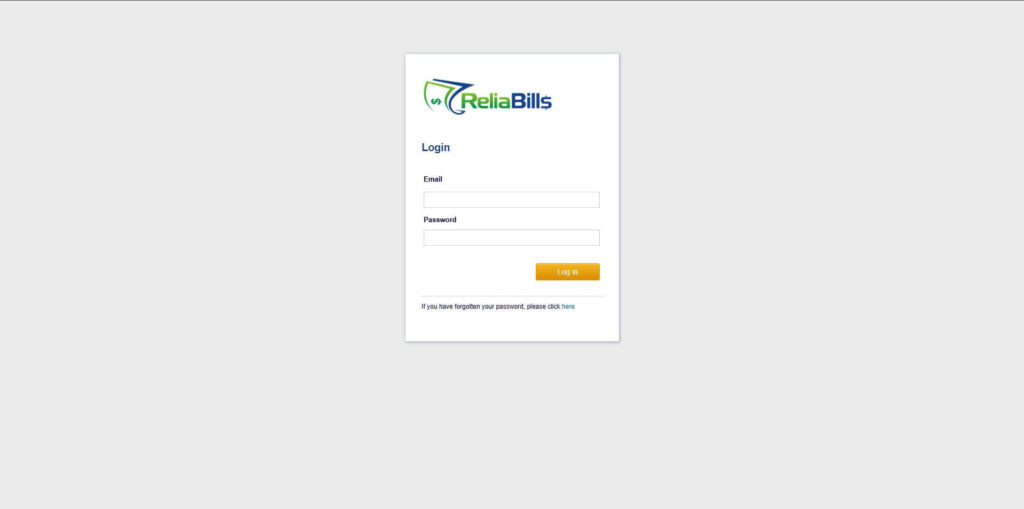
Step 1: Login to ReliaBills
- Access your ReliaBills Account using your login credentials. If you don’t have an account, sign up here.
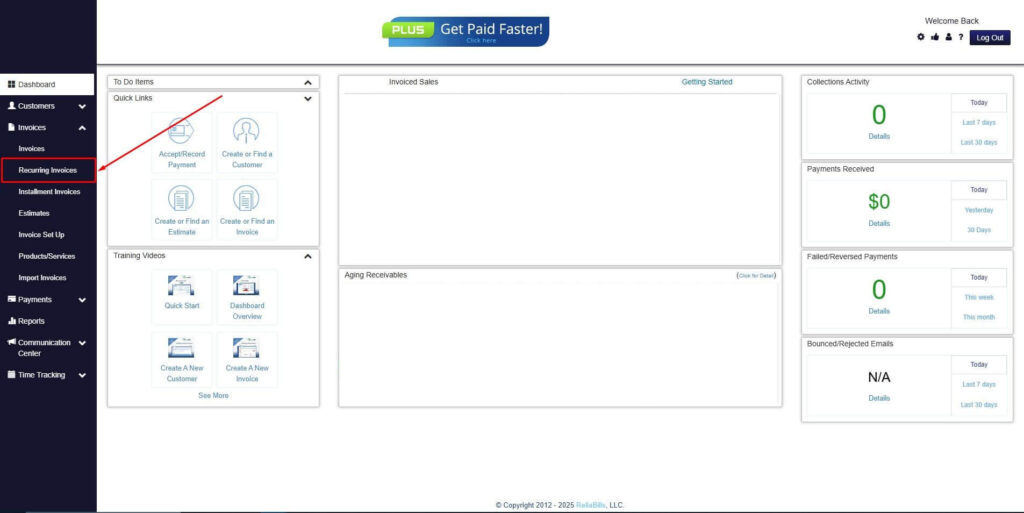
Step 2: Click on Recurring Invoices
- Navigate to the Invoices Dropdown and click on Recurring Invoices for an overview of the list of your existing customers.
Step 3: Go to the Customers Tab
- If you have already created a customer, search for them in the Customers tab and make sure their status is “Active”.
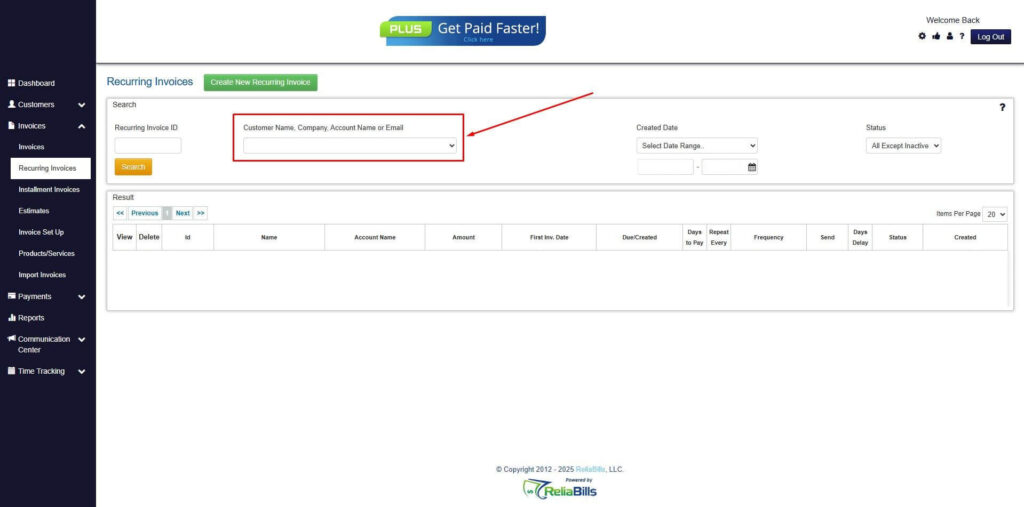
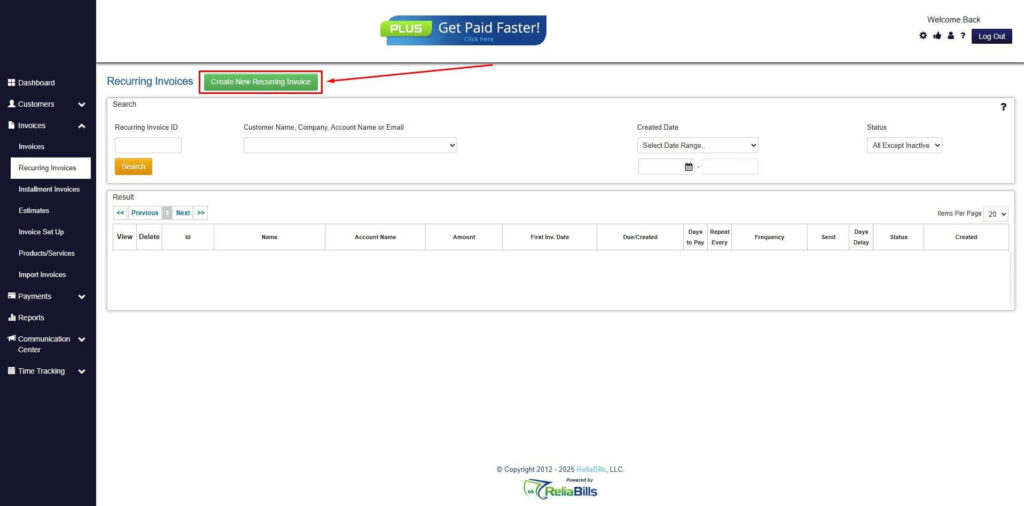
Step 4: Click the Create New Recurring Invoice
- If you haven’t created any customers yet, click the Create New Recurring Invoice to create a new customer.
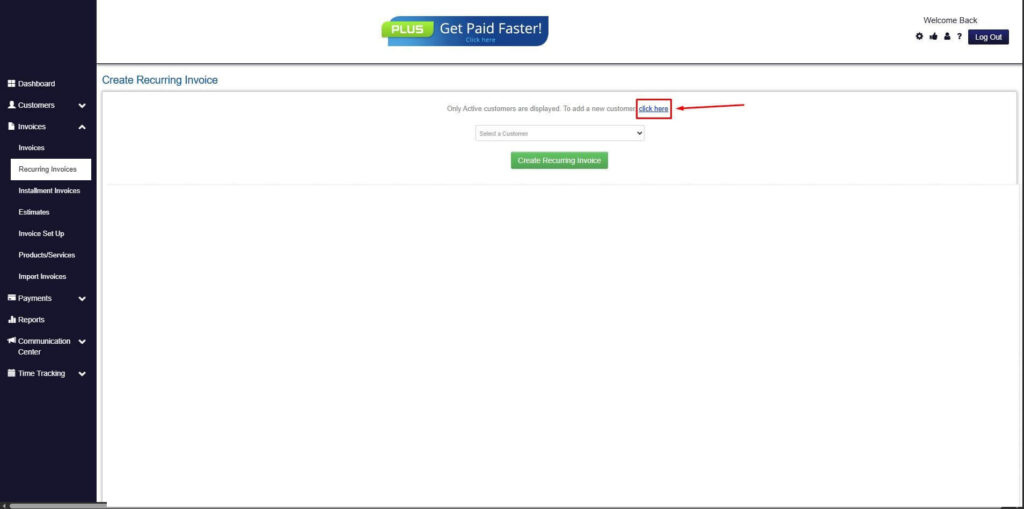
Step 5: Click on the “Click here” Button
- Click on the “Click here” button to proceed with the recurring invoice creation.
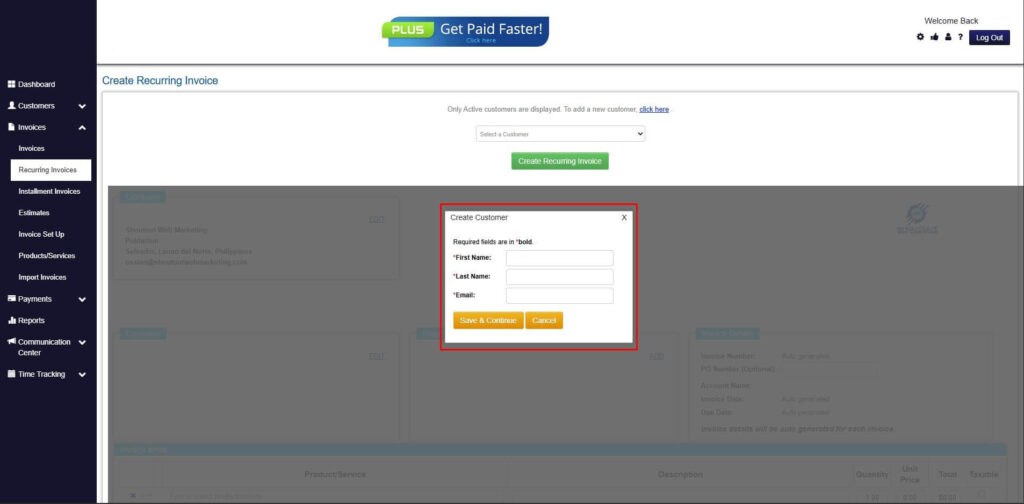
Step 6: Create Customer
- Provide your First Name, Last Name, and Email to proceed.
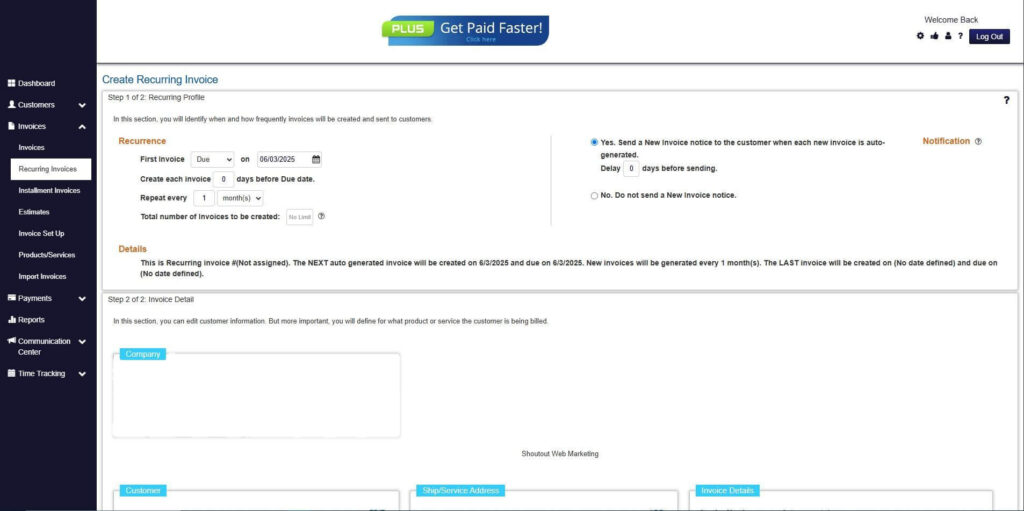
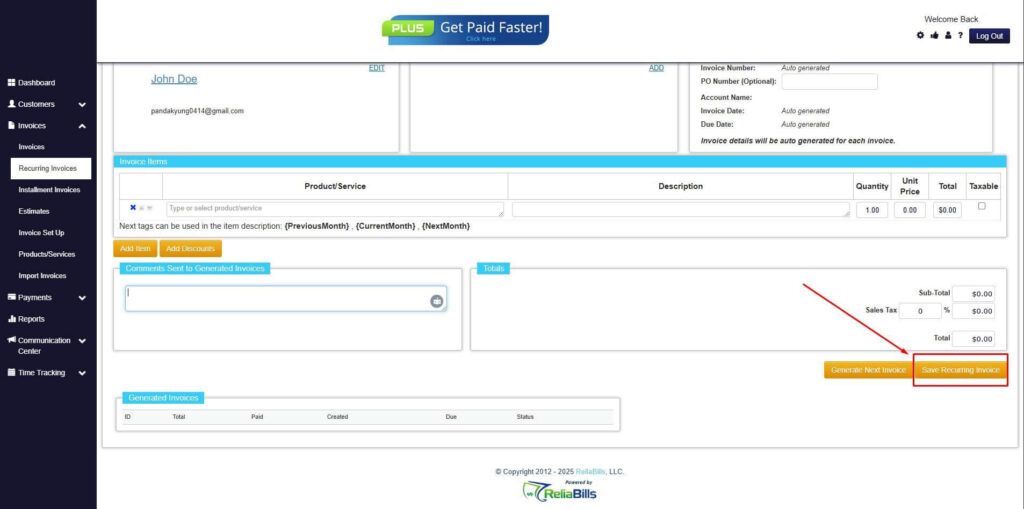
Step 7: Fill in the Create Recurring Invoice Form
- Fill in all the necessary fields.
Step 8: Save Recurring Invoice
- After filling up the form, click “Save Recurring Invoice” to continue.
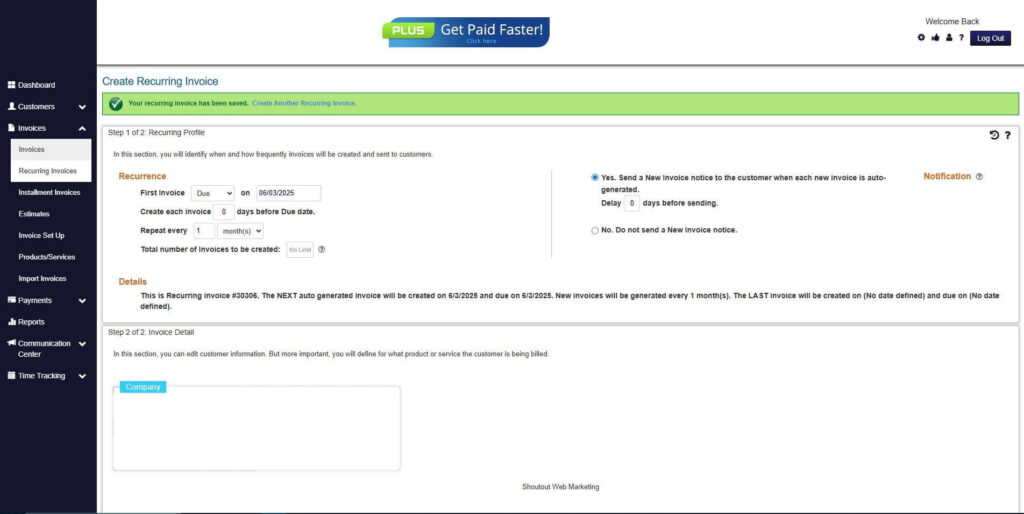
Step 9: Recurring Invoice Created
- Your Recurring Invoice has been created.
Frequently Asked Questions
1. How does digital invoicing improve payment speed in manufacturing?
It accelerates invoice delivery, reduces errors, and automates reminders. Faster approvals lead to improved accounts receivable turnover.
2. Can digital invoicing handle milestone billing?
Yes. Automated schedules can generate invoices based on production or delivery milestones defined in contracts.
3. Is digital invoicing secure for B2B transactions?
Reputable platforms use encrypted systems and secure data storage to protect financial information.
4. How does recurring billing help manufacturers?
Recurring billing ensures consistent invoicing for supply agreements and maintenance contracts, improving revenue predictability.
5. Can digital invoicing integrate with ERP systems?
Many modern platforms support ERP synchronization to maintain data consistency across operations and finance.
Conclusion
Digital invoicing for B2B manufacturing is no longer optional. It improves billing accuracy, accelerates payments, enhances compliance, and strengthens operational alignment. Manufacturers that automate invoicing gain a competitive advantage through improved efficiency and financial clarity.
Automation reduces administrative workload while supporting complex payment structures. Recurring billing capabilities further stabilize revenue for long-term supply contracts. Selecting scalable invoicing software ensures manufacturers can grow without increasing financial friction.
In today’s fast-moving industrial environment, digital invoicing is a strategic asset that supports both operational performance and long-term profitability.