

Billing disputes are a common challenge in professional services such as consulting, legal, marketing, and IT services. Conflicts often arise when clients feel unclear about charges, question the accuracy of invoices, or receive inconsistent billing formats. These disputes can strain client relationships, delay payments, and increase administrative workload.
Many disputes stem from unclear invoices, manual errors, and a lack of transparency in billing communication. Traditional paper-based or manually prepared invoices leave room for mistakes, omissions, and misunderstandings. This creates friction between service providers and clients, especially when detailed services or hourly work are involved.
Digital invoicing provides a powerful solution. By automating invoice creation, itemizing services, and integrating with payment systems, digital invoices for billing disputes improve clarity, accuracy, and client communication. Professional service firms can now streamline billing processes while reducing conflicts and fostering trust.
Why Do Billing Disputes Happen in Professional Services?
Billing disputes typically occur when invoices lack clarity or accuracy. Ambiguous service descriptions or unclear pricing structures make it difficult for clients to understand charges, often resulting in questions or objections.
Manual invoicing errors are another major contributor. Inconsistent formats, miscalculations, and typos create confusion and can make clients doubt the integrity of the billing process.
A lack of supporting documentation or poor communication between providers and clients further increases the risk of disputes. Without detailed records of services rendered, clients may challenge invoices or delay payments, impacting cash flow and client relationships.
What Are Digital Invoices?
Digital invoices are electronically generated billing documents that are created, delivered, and tracked online. Unlike traditional paper invoices, they provide structured, clear, and professional billing records that reduce ambiguity and disputes.
Key components of digital invoices include itemized services, timestamps, automated calculations for totals, taxes, and discounts, and integration with payment gateways for easy client payments. These features ensure both accuracy and transparency in billing.
Digital invoices can also integrate with accounting platforms, enabling seamless reconciliation, reporting, and audit capabilities. They are especially effective in professional services where multiple services, hours, or milestones need to be tracked accurately.
How Do Digital Invoices Reduce Billing Disputes?
Digital invoices reduce billing disputes by providing clear, itemized breakdowns of services. Each line shows the work performed, hours spent, and corresponding charges, minimizing confusion or misinterpretation.
Automated calculations ensure totals, taxes, and discounts are accurate, eliminating human error and reducing disagreements. Clients receive consistent, professional invoices that clearly communicate value and charges.
Real-time delivery and tracking improve transparency and accountability. Clients can confirm receipt, view detailed information, and make payments promptly, reducing delays and conflicts. This makes digital invoices for billing disputes an effective tool for professional services.
What Features of Digital Invoices Help Prevent Disputes?
Detailed line-item descriptions of services rendered
Each service is broken down with clear descriptions, quantities, rates, and timestamps. For example, a marketing consultant can list “3 hours of SEO strategy review” versus just “consulting,” reducing ambiguity and clarifying client expectations.
Automated calculations for taxes, discounts, and totals
Calculations for taxes, discounts, and totals are performed automatically, ensuring accuracy even for complex billing scenarios. Clients see precise numbers, which eliminates disputes over miscalculations.
Time tracking integration for service-based billing
Hours worked, project milestones, or deliverables are directly tied to the invoice. This helps freelancers, consultants, and IT service providers justify billed hours and prevent questions about overcharging.
Digital records and audit trails
Every invoice is securely stored with timestamps and change logs. If a client questions a charge, you can easily access historical data to support your billing.
Real-time invoice delivery and notifications
Clients receive immediate notification when invoices are sent or viewed. This prevents delays caused by lost or overlooked invoices and ensures everyone is on the same page.
Secure and transparent payment links
Payment links embedded in digital invoices allow clients to pay quickly through secure portals. Transparent payment instructions reduce confusion and prevent disputes about how and when payments should be made.
Integration with accounting platforms
Seamless integration with tools like QuickBooks, Xero, or other accounting software ensures invoices match financial records, reducing reconciliation errors and saving time for finance teams.
Custom branding and consistent formatting
Branded invoices with a consistent format improve professionalism and make it easier for clients to recognize and trust your invoices.
What Common Billing Mistakes Lead to Disputes?
Vague or incomplete service descriptions
Descriptions like “consulting services” without specifying tasks or deliverables often leave clients questioning charges, resulting in disputes or delayed payments.
Incorrect pricing or miscalculated totals
Mistakes in hourly rates, tax calculations, or discounts are common in manual invoices. Even minor errors can lead clients to refuse or delay payment.
Missing supporting documentation
Failure to attach contracts, receipts, or proof of work can create misunderstandings about the scope or quality of services delivered.
Delayed invoice delivery
Sending invoices weeks after completing work increases the likelihood of disputes because clients may forget project details or question charges.
Lack of standardized billing formats
Using different templates or inconsistent formats makes it harder for clients to review and approve invoices quickly.
Poor communication with clients
Not discussing billing expectations upfront or failing to notify clients about changes in project scope can result in disagreements when invoices arrive.
Failure to track time or milestones
Without proper documentation, billed hours or project milestones can appear inflated or incorrect, leading to disputes in service-based industries.
Overcomplicated or cluttered invoices
Invoices with too much technical jargon or unnecessary details can confuse clients, causing delays in payment or requests for clarification.
How Can Professional Services Improve Billing Transparency?
Professional services can reduce disputes by establishing clear contracts and pricing agreements before work begins. Outlining hourly rates, project fees, and additional costs ensures both parties understand expectations.
Consistent invoice formats with detailed line items help clients verify charges and reduce confusion. Including timestamps, service descriptions, and totals creates a transparent record.
Regular communication about billing—sending reminders, confirming receipt, and addressing questions promptly—further enhances trust and minimizes disputes.
What Best Practices Help Reduce Billing Disputes?
Standardize digital invoice templates
Consistent templates help clients easily understand invoices and reduce errors. Templates should include essential sections such as services, rates, taxes, and payment instructions.
Include detailed service descriptions and timelines
Clearly outline what was delivered, when, and by whom. For instance, in IT services, specifying “Server maintenance – 2 hours, March 15” prevents ambiguity.
Send invoices promptly after service completion
Immediate invoicing ensures clients remember the work and reduces disputes about forgotten tasks or services.
Use automated reminders for payments
Digital tools can send reminders for upcoming or overdue payments, helping clients pay on time and avoiding disputes over missed invoices.
Maintain accurate records and documentation
Attach work logs, contracts, or receipts to support charges. This ensures any disputes can be resolved quickly and with evidence.
Offer multiple payment options for convenience
Allowing clients to pay via credit card, bank transfer, or online payment portals reduces delays and prevents misunderstandings about accepted methods.
Communicate billing expectations upfront
Clearly explain rates, invoicing schedules, and additional charges in contracts. This transparency reduces confusion and disagreements later.
Regularly review and audit invoices
Performing quality checks before sending invoices ensures they are error-free and professional, minimizing disputes.
Educate clients about the invoice structure
Briefly explain how to read your invoice format, especially if it includes complex billing calculations or multiple line items.
How Does Automation Strengthen Dispute Prevention?
Automation ensures consistency across all invoices, reducing variability that often triggers disputes. By removing manual data entry, automation minimizes errors in calculations, totals, and service descriptions.
It also improves tracking, reporting, and dispute resolution processes. Automated logs and audit trails allow service providers to quickly respond to client questions and demonstrate accurate billing.
Through automation, digital invoices for billing disputes become more reliable, professional, and client-friendly, strengthening overall billing efficiency.
Key Benefits of Using Digital Invoices in Professional Services
Reduced billing disputes and errors
Automation and clarity prevent mistakes, meaning fewer disagreements and faster resolutions.
Improved client trust and transparency
Clients appreciate clear, itemized invoices that reflect exactly what they are paying for, strengthening professional relationships.
Faster payment processing
Immediate delivery, reminders, and digital payment options accelerate collections and improve cash flow.
Better financial tracking and reporting
Integrated systems allow easy tracking of revenue, overdue payments, and historical data, aiding in forecasting and audits.
Increased operational efficiency
Automation reduces repetitive administrative tasks, allowing teams to focus on client work instead of chasing invoices.
Enhanced professionalism in billing practices
Consistent and branded invoices convey competence and reliability, improving your firm’s reputation.
Audit-ready documentation
Detailed records and digital trails make compliance easier and ensure disputes are resolved with clear evidence.
Scalable billing solutions for growing firms
Digital invoicing systems can handle increasing client volumes without errors or manual strain.
How Does ReliaBills Help Professional Services Reduce Billing Disputes?
ReliaBills makes digital invoicing simple for professional services by providing automated, accurate, and easy-to-use billing tools. Service providers can create clear, itemized invoices that eliminate common errors, helping clients understand exactly what they’re paying for. With templates, line-item details, and secure delivery, ReliaBills reduces misunderstandings and ensures invoices are professional and reliable.
With recurring billing features, ReliaBills ensures ongoing contracts are billed consistently and on time. This means clients receive predictable invoices for subscriptions, retainers, or service agreements, reducing disputes caused by missed or irregular billing. Automated reminders and digital payment links further streamline the process, making it easier for clients to pay promptly.
ReliaBills PLUS takes your billing transparency to the next level. It offers advanced reporting, detailed audit trails, and enhanced tracking, giving service providers the insight and documentation they need to resolve questions quickly. With PLUS, firms gain an even greater ability to prevent disputes, maintain accurate records, and build stronger client trust.
How to Create a New Recurring Invoice Using ReliaBills
Creating a New Recurring Invoice using ReliaBills involves the following steps:
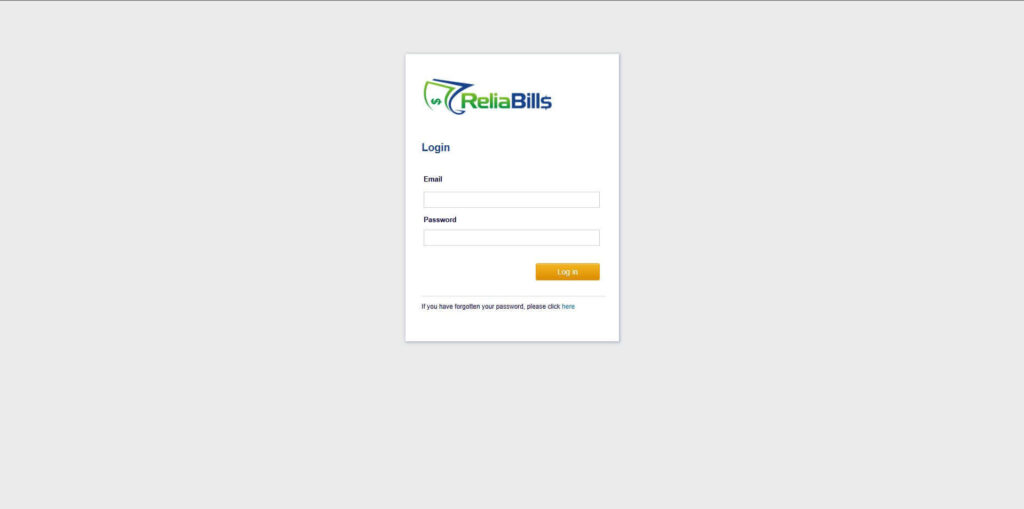
Step 1: Login to ReliaBills
- Access your ReliaBills Account using your login credentials. If you don’t have an account, sign up here.
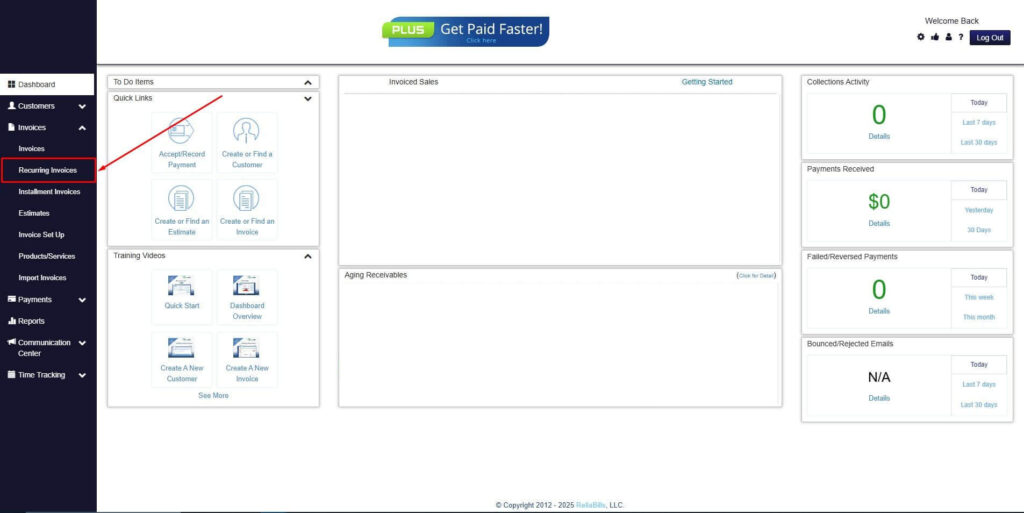
Step 2: Click on Recurring Invoices
- Navigate to the Invoices Dropdown and click on Recurring Invoices for an overview of the list of your existing customers.
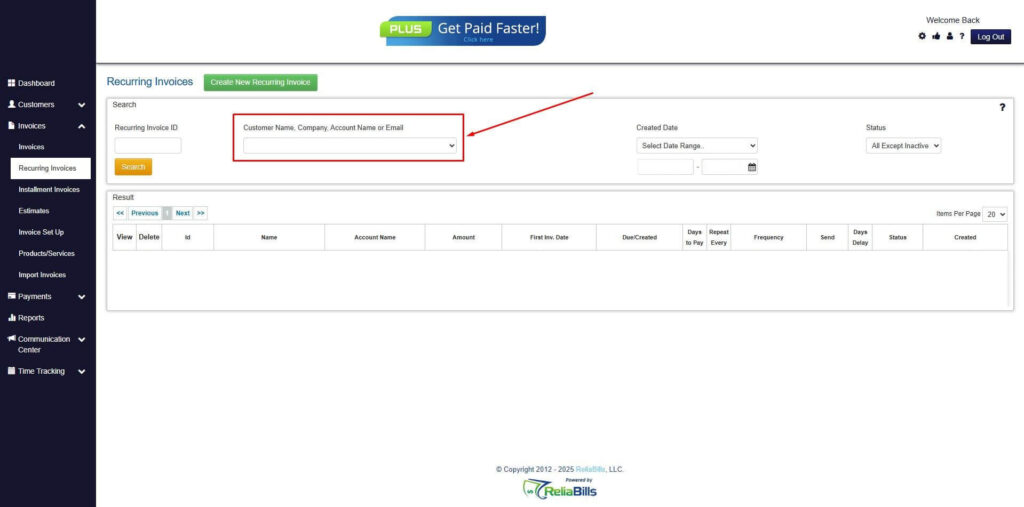
Step 3: Go to the Customers Tab
- If you have already created a customer, search for them in the Customers tab and make sure their status is “Active”.
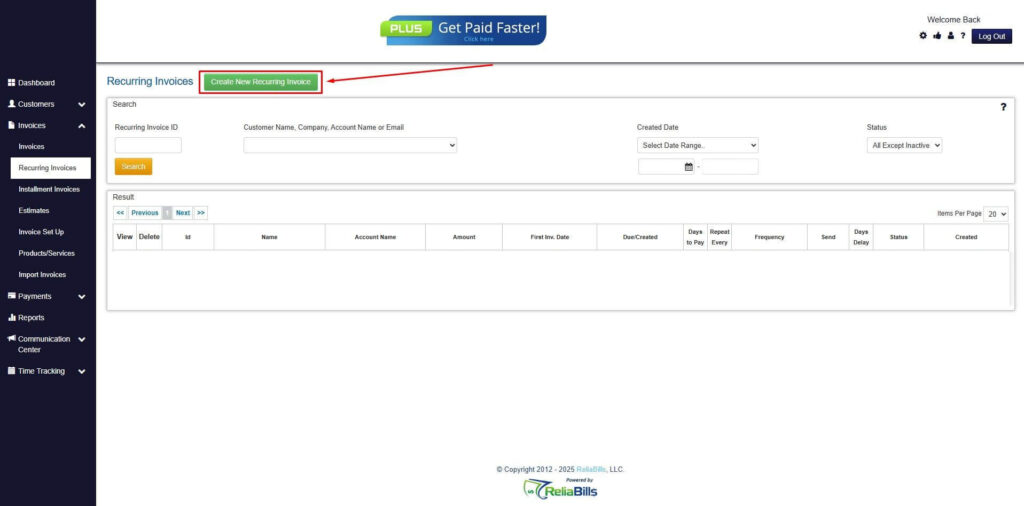
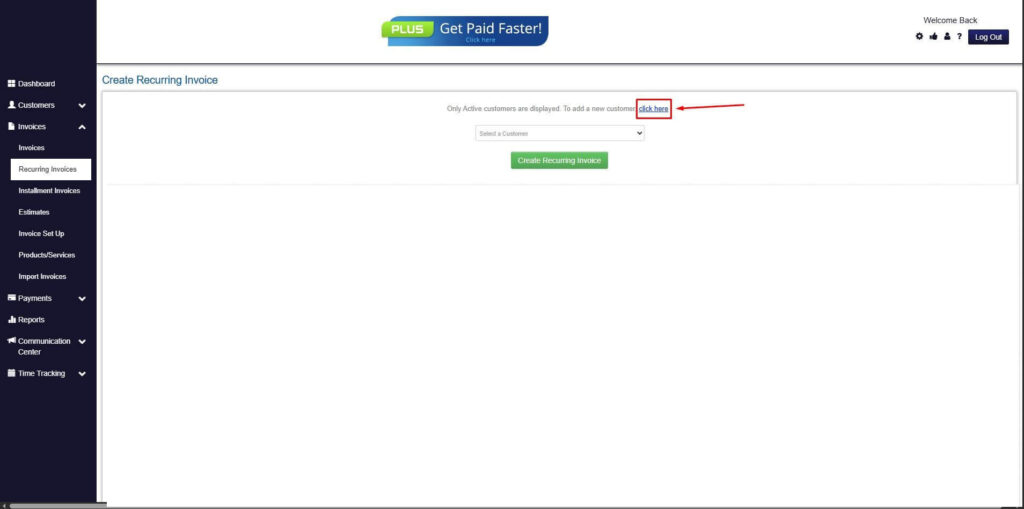
Step 4: Click the Create New Recurring Invoice
- If you haven’t created any customers yet, click the Create New Recurring Invoice to create a new customer.
Step 5: Click on the “Click here” Button
- Click on the “Click here” button to proceed with the recurring invoice creation.
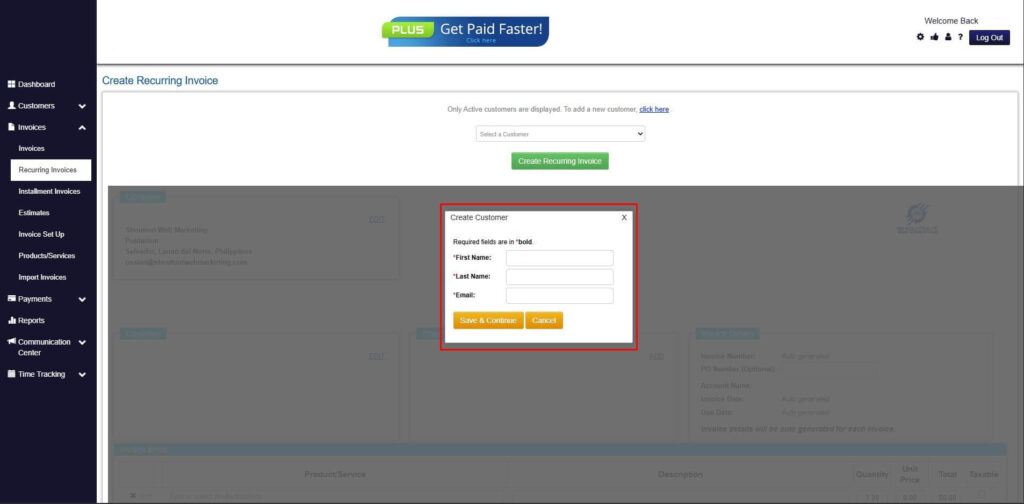
Step 6: Create Customer
- Provide your First Name, Last Name, and Email to proceed.
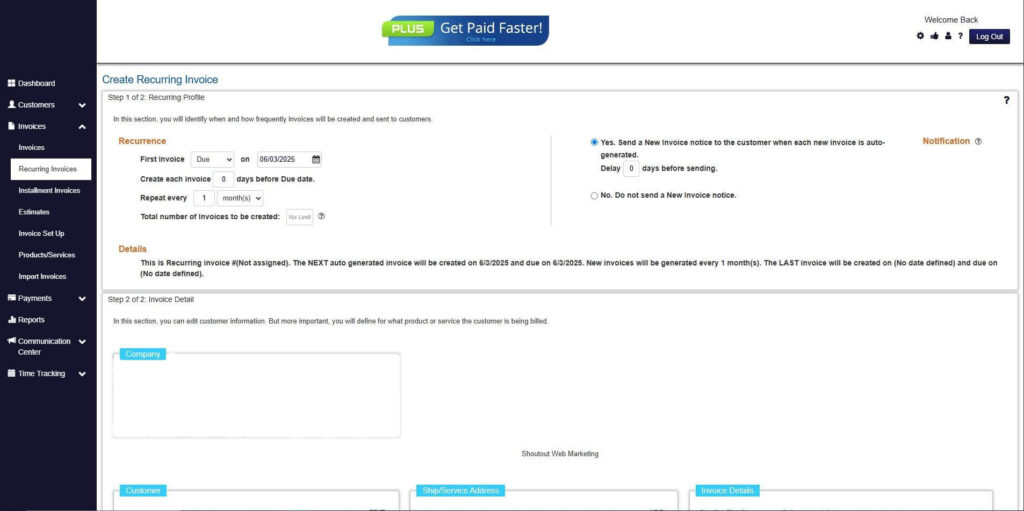
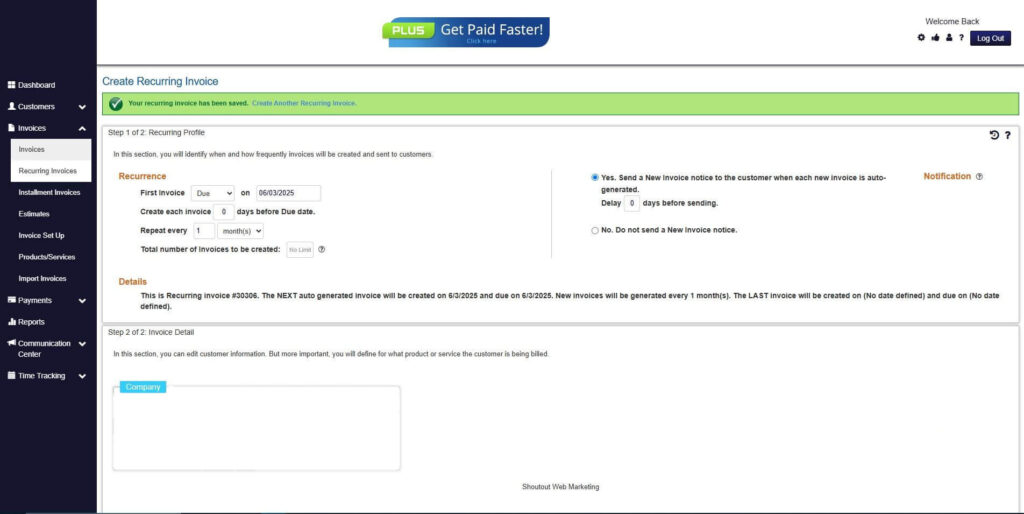
Step 7: Fill in the Create Recurring Invoice Form
- Fill in all the necessary fields.
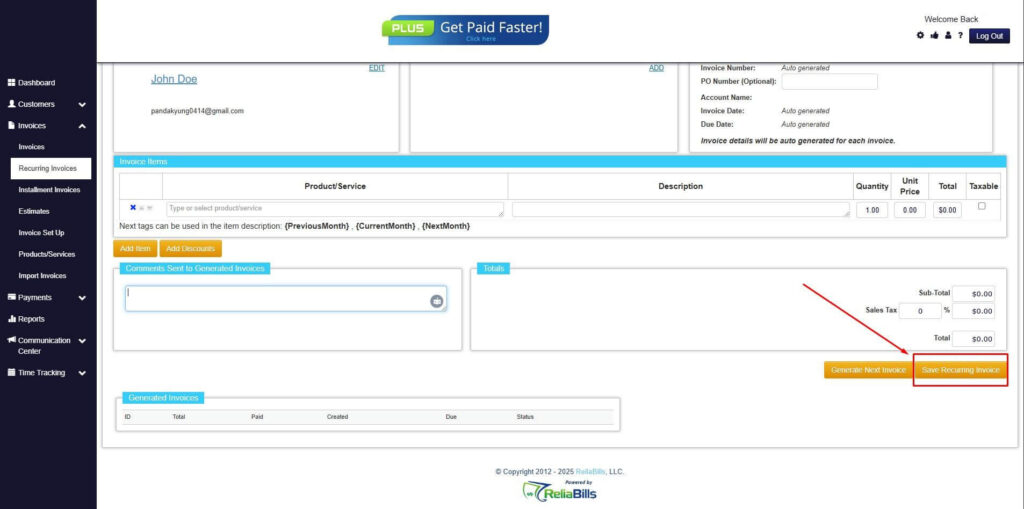
Step 8: Save Recurring Invoice
- After filling up the form, click “Save Recurring Invoice” to continue.
Step 9: Recurring Invoice Created
- Your Recurring Invoice has been created.
Frequently Asked Questions
1. What is a digital invoice, and how does it prevent billing disputes?
A digital invoice is an electronically generated billing document with line-item details, automated calculations, and integrated payment tracking. It reduces errors, improves transparency, and speeds up client approvals.
2. Can digital invoices integrate with accounting systems?
Yes. Platforms like ReliaBills sync with accounting software such as QuickBooks or Xero, ensuring financial data is consistent and reducing reconciliation errors.
3. How do automated calculations help avoid disputes?
Automation guarantees accurate totals, taxes, and discounts, eliminating mistakes caused by manual entry and preventing client disagreements.
4. Are recurring billing features useful for professional services?
Absolutely. Recurring billing ensures predictable, timely invoices for ongoing services, reducing disputes over missed or irregular payments.
5. What should a digital invoice include to prevent disputes?
Line-item descriptions, timestamps, quantities or hours, unit rates, taxes, totals, payment instructions, and supporting documents for transparency.
6. How can digital invoices improve client relationships?
They enhance trust by providing clarity, timely reminders, and easy payment options, reducing friction and fostering stronger professional partnerships.
7. Can clients track invoices in real time?
Yes, most platforms notify clients when invoices are sent or viewed, helping maintain transparency and accountability.
Conclusion
Clear, accurate billing is essential in professional services to prevent disputes, maintain client trust, and ensure timely payments. Digital invoices provide transparency, reduce errors, and streamline communication, making them a critical tool for modern firms.
By adopting automated solutions like ReliaBills, professional services can simplify billing, minimize conflicts, and enhance relationships with clients. Using digital invoices for billing disputes not only improves operational efficiency but also strengthens professionalism and credibility in financial interactions.