
Managing payroll correctly is one of the most critical operational responsibilities for any business, especially when dealing with a mix of employees and independent contractors. Each group follows different rules for compensation, taxation, and reporting, making it essential to understand how payroll processes vary. Failure to handle these differences properly can lead to compliance issues, financial penalties, and strained working relationships.
The distinction between contractor vs employee payroll goes beyond simple payment methods. Employees are typically integrated into your business operations with structured schedules and benefits, while contractors operate independently and are paid based on agreed deliverables or timelines. These differences directly impact how payroll is calculated, processed, and documented.
As businesses grow and adopt more flexible workforce models, the need for accurate and automated payroll systems becomes increasingly important. Leveraging digital tools ensures consistency, reduces manual errors, and helps organizations stay compliant with evolving tax and labor regulations.
What Is the Difference Between Contractors and Employees?
Employees and independent contractors differ primarily in how they interact with a business and the level of control exercised over their work. Employees typically work under direct supervision, follow company policies, and are integrated into daily operations. In contrast, contractors maintain autonomy over how and when they complete their tasks.
Another key distinction lies in benefits and tax obligations. Employees are entitled to benefits such as health insurance, paid leave, and retirement contributions, depending on local laws and company policies. Contractors, however, are responsible for their own benefits and taxes, which significantly changes how payroll is structured and managed.
For example, a full-time office administrator or customer support representative is usually classified as an employee. Meanwhile, freelance designers, consultants, or project-based developers are commonly treated as independent contractors. Understanding these roles is essential when implementing an accurate contractor vs employee payroll system.
Why Proper Payroll Handling Matters
Proper payroll handling ensures compliance with labor laws and tax regulations, which vary by country and jurisdiction. Mismanaging payroll, especially when distinguishing between contractors and employees, can result in audits, fines, and reputational damage. Businesses must follow strict guidelines when classifying workers and processing payments.
Financial risks are another major concern. Incorrect payroll calculations, missed tax filings, or improper documentation can disrupt cash flow and lead to unexpected liabilities. For example, failing to withhold the correct taxes for employees can result in penalties, while misclassifying a contractor could trigger back payments and legal claims.
Accurate documentation and reporting also play a crucial role in business transparency. Maintaining detailed payroll records not only supports compliance but also provides insights into labor costs and operational efficiency. This becomes even more important when managing both contractor and employee payroll simultaneously.
How Payroll Works for Employees
Employee payroll follows a structured and recurring schedule, typically weekly, biweekly, or monthly. Employers are responsible for calculating gross wages, deducting taxes, and issuing net pay. This process often includes overtime calculations, bonuses, and statutory deductions based on local labor laws.
Employers must also handle tax withholding and contributions, such as income tax, social security, and other government-mandated payments. These responsibilities require precise calculations and timely submissions to avoid penalties. Additionally, employee payroll often includes benefits administration, such as insurance premiums and retirement contributions.
Modern payroll systems streamline these processes by automating salary calculations, deductions, and payment disbursements. Automation reduces administrative workload and ensures accuracy, making it easier to manage contractor vs employee payroll within a single system.
How Payroll Works for Contractors
Contractor payroll operates differently, as payments are typically based on invoices or contractual agreements rather than fixed salaries. Contractors submit invoices for completed work, which businesses then review and approve before issuing payment. This makes the process more flexible but also less standardized.
Unlike employees, contractors are responsible for managing their own taxes. Businesses do not withhold income taxes or make contributions on behalf of contractors. This reduces administrative burden but requires clear documentation to ensure compliance with tax regulations.
Payment schedules for contractors can vary widely, including per project, milestone-based, hourly, or retainer agreements. Proper record-keeping, such as contracts, invoices, and payment confirmations, is essential for maintaining transparency and supporting financial reporting.
Key Differences Between Contractor and Employee Payroll
Tax withholding responsibilities
Employers are legally required to withhold income taxes, social security contributions, and other statutory deductions from employee wages. For contractors, no taxes are withheld contractors are responsible for calculating, filing, and paying their own taxes. This distinction is one of the most critical aspects of contractor vs employee payroll compliance.
Benefits and entitlements
Employees are often entitled to benefits such as paid leave, health insurance, retirement contributions, and statutory protections. Contractors, on the other hand, do not receive employer-sponsored benefits and must independently secure their own insurance, retirement plans, and leave arrangements.
Payment structure and frequency
Employee payroll follows a consistent schedule (e.g., weekly, biweekly, or monthly), with fixed salaries or hourly wages. Contractors are paid based on invoices, which may be tied to project milestones, hourly work, or retainer agreements, resulting in more variable payment timing.
Level of control and work relationship
Employers typically control how, when, and where employees perform their work. Contractors retain autonomy over their work processes and schedules, which directly affects how payroll or payments are structured and managed.
Legal classification and compliance requirements
Employees are protected under labor laws, including minimum wage, overtime, and workplace safety regulations. Contractors operate under commercial agreements, and misclassification can lead to legal disputes, penalties, and back payments.
Reporting and documentation processes
Employee payroll requires formal payslips, tax filings, and government reporting. Contractor payments rely on invoices, contracts, and payment records, which must be maintained for financial tracking and audit purposes.
Cost implications for businesses
Employees often come with additional costs such as benefits, taxes, and insurance contributions. Contractors may have higher upfront rates but typically do not incur long-term financial obligations, making cost structures significantly different.
Common Challenges in Managing Both Payroll Types
One of the most common challenges is worker misclassification, which can lead to significant legal and financial consequences. Businesses must carefully evaluate roles to ensure workers are correctly categorized as employees or contractors. Misclassification often triggers audits and back payments.
Managing different payment schedules and systems can also be complex. Employee payroll follows a predictable cycle, while contractor payments may vary depending on project timelines. This creates additional administrative work and increases the risk of missed or delayed payments.
Tracking invoices alongside payroll records adds another layer of complexity. Businesses must ensure accurate documentation for both types of payments while maintaining compliance with tax and labor laws. Handling audits and financial reporting becomes more challenging without a centralized system.
How Automation Simplifies Payroll Management
Automation plays a critical role in simplifying contractor vs employee payroll management. Payroll software can automatically calculate employee wages, deductions, and taxes, ensuring compliance and reducing manual errors. This significantly improves efficiency and accuracy.
For contractors, automation streamlines invoice processing and payment workflows. Businesses can track invoices, approve payments, and maintain organized records without manual intervention. This reduces administrative overhead and ensures timely payments.
Additionally, automated systems improve reporting capabilities by consolidating payroll and contractor data into a single platform. This enables better financial insights, easier audits, and more strategic decision-making for growing businesses.
Best Practices for Managing Payroll for Contractors and Employees
Clearly classify workers based on legal guidelines
Regularly review job roles and responsibilities to ensure proper classification. Use government criteria (such as control, independence, and financial risk) to avoid misclassification issues.
Use separate systems or workflows
Maintain distinct processes for employee payroll and contractor payments. This reduces confusion, ensures compliance, and helps streamline reporting and audits.
Maintain comprehensive documentation
Keep accurate records of employment contracts, contractor agreements, invoices, tax filings, and payment histories. Proper documentation is essential for compliance and dispute resolution.
Automate payroll and invoicing processes
Implement digital tools to handle salary calculations, tax deductions, invoice generation, and payment scheduling. Automation minimizes manual errors and improves efficiency.
Standardize payment schedules where possible
Even for contractors, establishing consistent payment cycles (e.g., monthly retainers) can improve financial planning and cash flow management.
Conduct regular compliance audits
Periodically review payroll processes to ensure alignment with current tax laws and labor regulations. This helps identify and resolve issues before they escalate.
Train finance and HR teams
Ensure that staff handling payroll understand the differences between contractor vs employee payroll to reduce errors and maintain compliance.
The Role of Recurring Billing in Contractor Payments
Recurring billing is particularly useful for businesses that engage contractors on an ongoing basis, such as monthly retainers or long-term service agreements. Instead of manually processing invoices each cycle, businesses can automate billing and payment schedules. This ensures consistency and reduces administrative effort.
Automated invoice generation allows contractors to receive payments on time without repeated manual input. Businesses can set predefined billing intervals, ensuring that recurring contractor payments are processed accurately and efficiently. This is especially beneficial for service-based industries.
By integrating recurring billing into contractor vs employee payroll workflows, businesses can maintain better financial control and predictability. It also enhances the contractor experience by ensuring reliable and transparent payment processes.
Key Benefits of Proper Payroll Management
- Ensures compliance with tax and labor laws: Proper payroll systems help businesses meet regulatory requirements, reducing the risk of audits, fines, and legal complications.
- Reduces risk of penalties and misclassification issues: Accurate classification and payroll handling prevent costly legal disputes and back payments related to worker misclassification.
- Improves financial accuracy and reporting: Organized payroll data allows businesses to track labor costs, forecast budgets, and generate reliable financial reports.
- Saves time through automation: Automated payroll and invoicing systems significantly reduce manual workload, allowing teams to focus on strategic tasks.
- Enhances transparency and accountability: Clear payroll processes build trust with employees and contractors by ensuring timely and accurate payments.
- Supports scalability and business growth: Efficient payroll systems enable businesses to manage larger teams and more contractors without increasing administrative complexity.
- Strengthens audit readiness: Well-maintained payroll records make it easier to respond to audits and financial reviews with confidence.
Common Use Cases
- Businesses with mixed workforce models: Companies that employ both full-time staff and freelance workers need structured systems to manage contractor vs employee payroll efficiently.
- Marketing and creative agencies: Agencies often work with multiple freelancers (designers, writers, developers) alongside internal teams, requiring flexible payment systems.
- Construction and project-based industries: These industries rely heavily on contractors for specific projects while maintaining core employee teams.
- IT and software development firms: Tech companies frequently hire contract developers or consultants for short-term projects or specialized expertise.
- Consulting and professional services firms: Firms often engage independent consultants on a retainer or per-project basis, requiring invoice-based payment systems.
- E-commerce and digital businesses: Online businesses may outsource roles like content creation, marketing, and customer support to contractors while maintaining in-house staff.
- Startups and scaling businesses: Startups often use contractors to remain flexible and control costs before transitioning to full-time employees.
How ReliaBills Helps Manage Contractor Payments and Billing
Managing contractor payments manually can quickly become time-consuming and error-prone, especially for businesses handling multiple vendors or freelancers. Automation simplifies this process by reducing repetitive administrative tasks and ensuring consistent payment workflows. Platforms like ReliaBills enable businesses to centralize billing and payment management, improving efficiency and accuracy.
ReliaBills stands out with its recurring billing capabilities, which are particularly useful for businesses that rely on ongoing contractor relationships. Instead of manually generating invoices each billing cycle, businesses can automate invoice creation and schedule payments for retainers or continuous services. This ensures timely payments while maintaining a seamless contractor experience.
With ReliaBills PLUS, businesses gain access to advanced automation tools, detailed reporting, and enhanced financial tracking features. These capabilities allow for better visibility into contractor expenses and overall cash flow. By leveraging these tools, companies can scale their contractor vs employee payroll processes with confidence and control.
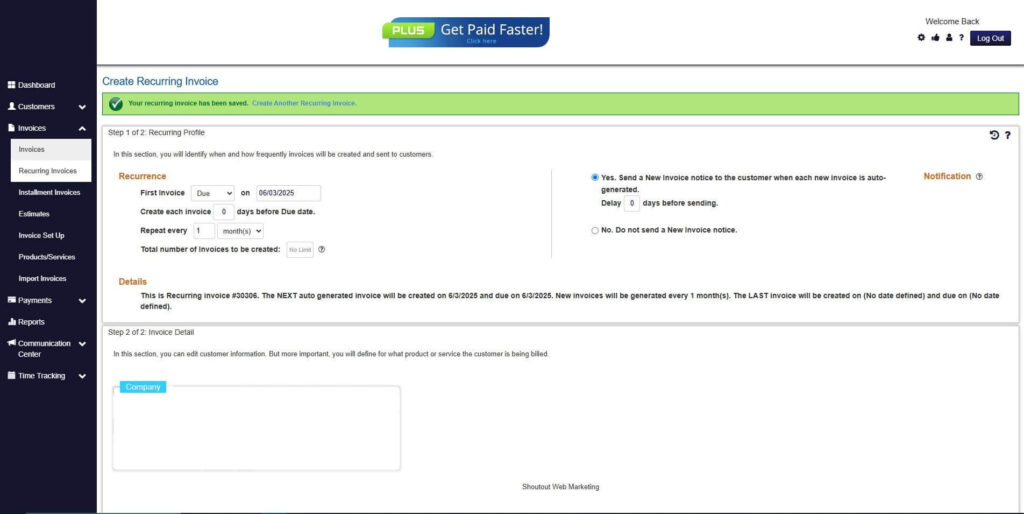
How to Create a New Recurring Invoice Using ReliaBills
Creating a New Recurring Invoice using ReliaBills involves the following steps:
Step 1: Login to ReliaBills
- Access your ReliaBills Account using your login credentials. If you don’t have an account, sign up here.

Step 2: Click on Recurring Invoices
- Navigate to the Invoices Dropdown and click on Recurring Invoices for an overview of the list of your existing customers.
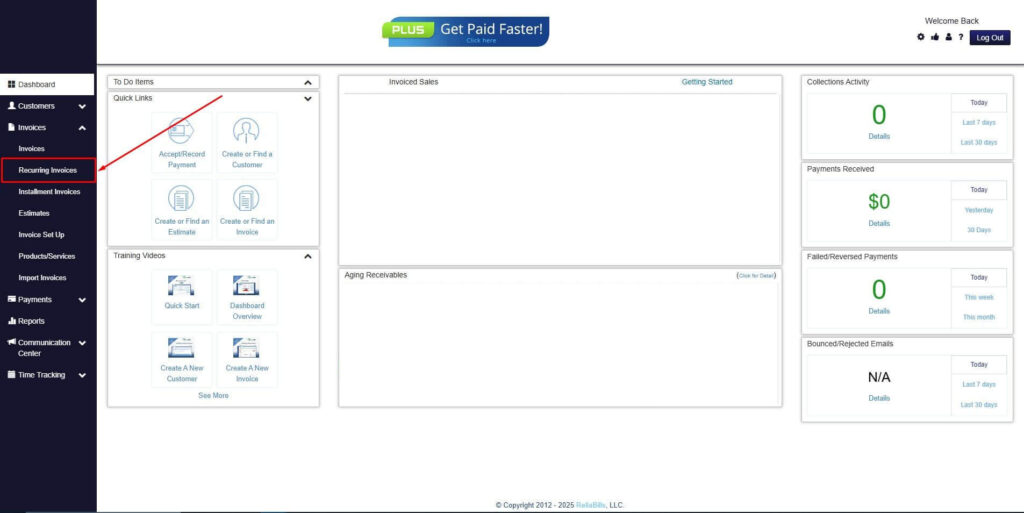
Step 3: Go to the Customers Tab
- If you have already created a customer, search for them in the Customers tab and make sure their status is “Active”.
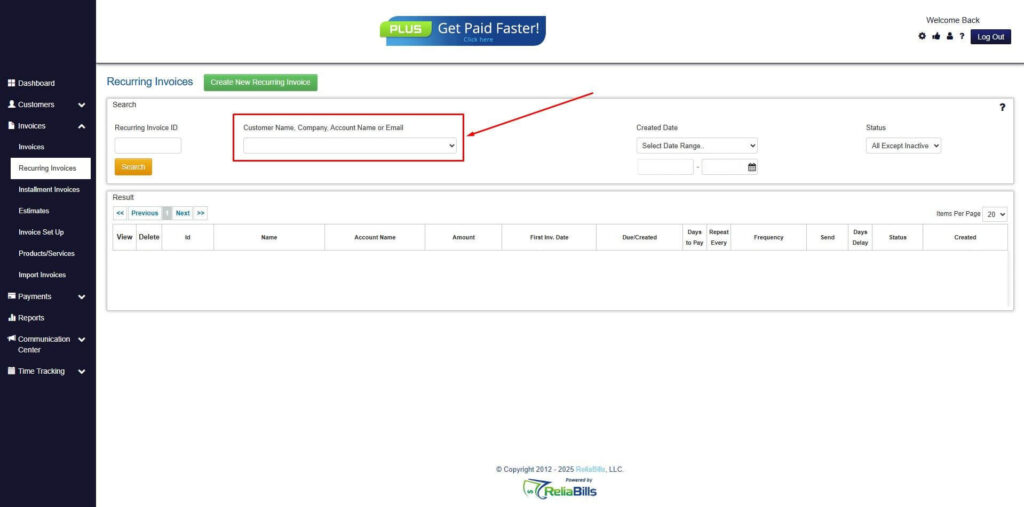
Step 4: Click the Create New Recurring Invoice
- If you haven’t created any customers yet, click the Create New Recurring Invoice to create a new customer.
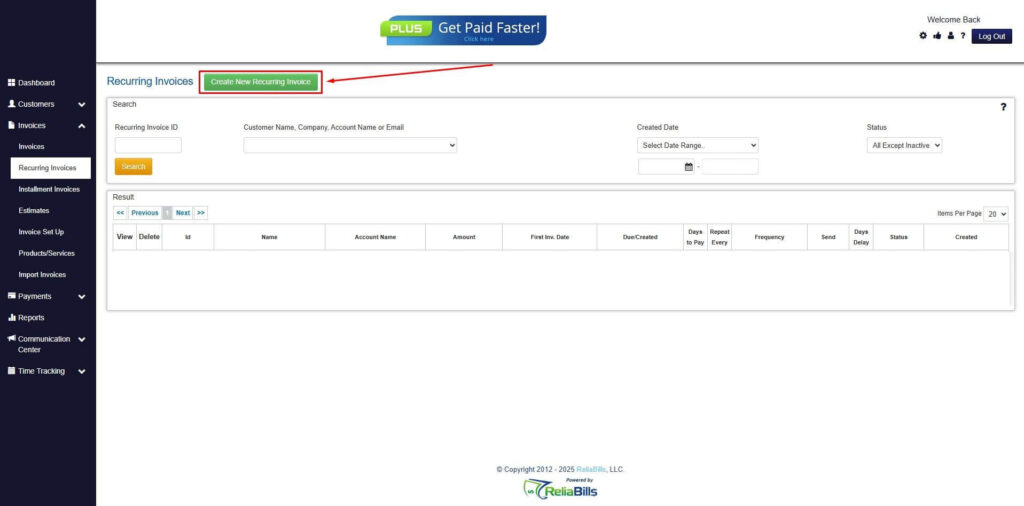
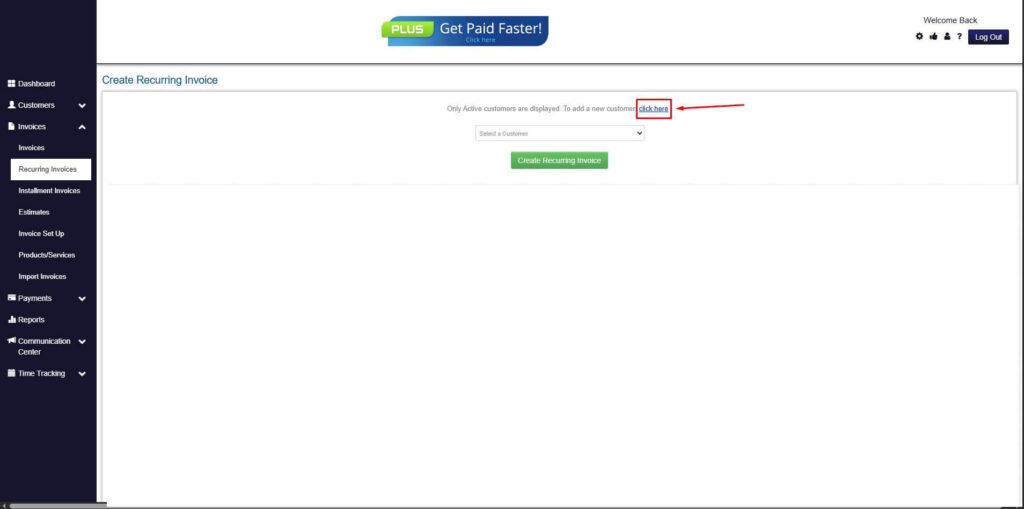
Step 5: Click on the “Click here” Button
- Click on the “Click here” button to proceed with the recurring invoice creation.
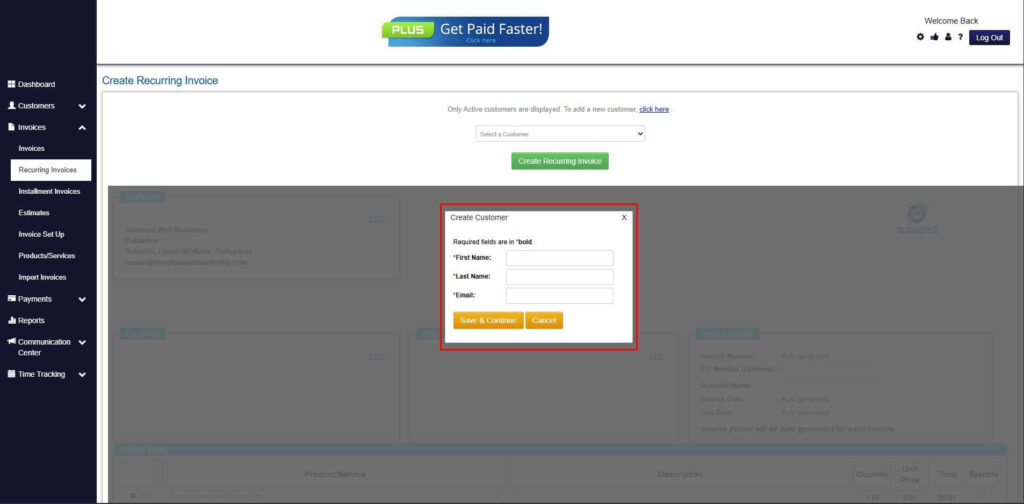
Step 6: Create Customer
- Provide your First Name, Last Name, and Email to proceed.
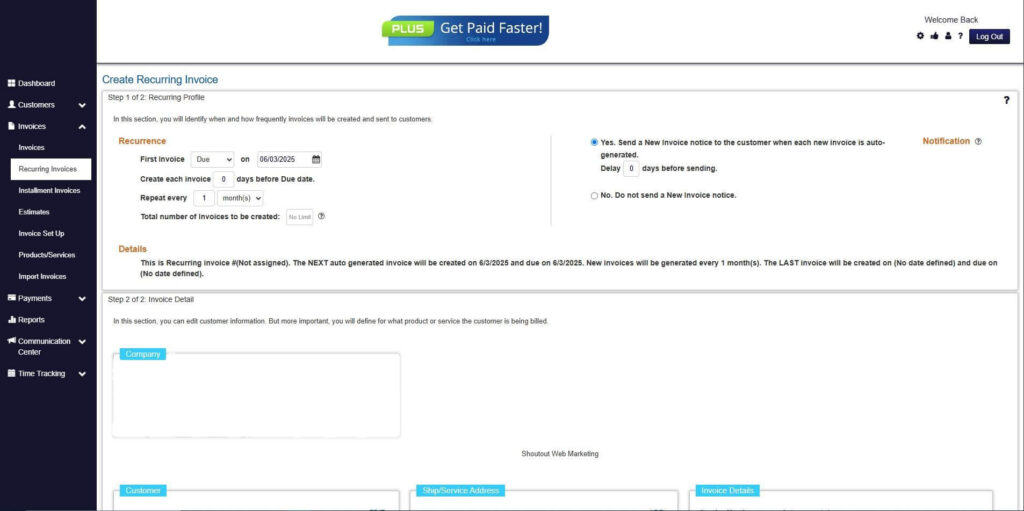
Step 7: Fill in the Create Recurring Invoice Form
- Fill in all the necessary fields.
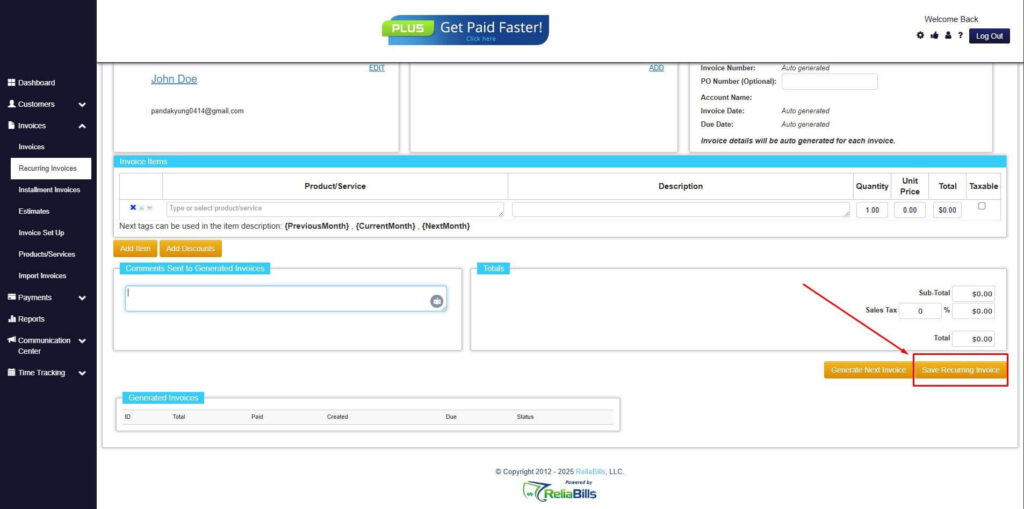
Step 8: Save Recurring Invoice
- After filling up the form, click “Save Recurring Invoice” to continue.
Step 9: Recurring Invoice Created
- Your Recurring Invoice has been created.
Frequently Asked Questions (FAQs)
1. What is the main difference between contractor and employee payroll?
The primary difference lies in tax handling and payment structure. Employees are paid through structured payroll systems with tax withholding, while contractors are paid via invoices and manage their own taxes.
2. Do employers need to withhold taxes for contractors?
No, employers do not withhold taxes for contractors. Contractors are responsible for filing and paying their own income taxes and contributions.
3. Can contractors be paid through payroll systems?
While some systems support contractor payments, they are typically handled separately through invoicing modules to maintain proper classification and compliance.
4. How does recurring billing apply to contractor payments?
Recurring billing automates regular payments for contractors working on retainers or ongoing services, reducing manual invoicing and ensuring consistent cash flow.
5. What are the risks of misclassifying workers?
Misclassification can lead to fines, back taxes, legal disputes, and reputational damage. It may also require businesses to provide retroactive benefits to workers.
Conclusion
Handling contractor vs employee payroll requires a clear understanding of the differences in payment structures, tax responsibilities, and compliance requirements. Employees follow structured payroll systems with tax withholding and benefits, while contractors operate independently with invoice-based payments. Proper classification and documentation are essential to avoid costly mistakes.
Businesses that invest in accurate payroll processes and automation tools are better positioned to maintain compliance and improve operational efficiency. Automation reduces errors, simplifies workflows, and ensures consistent payment management across both payroll types.
As workforce models continue to evolve, adopting digital payroll and billing solutions will be key to scalability and long-term success. Businesses that streamline contractor vs employee payroll today will be better equipped to manage growth and complexity in the future.