
Overdue payments are one of the most common challenges businesses face, often disrupting cash flow and slowing down operations. When invoices are not paid on time, it creates a ripple effect that can impact everything from payroll to supplier relationships. Many businesses struggle to maintain consistent revenue simply because they lack visibility into their billing process.
A major contributor to overdue payments is the inability to monitor invoice statuses in real time. Without clear insights into which invoices are pending, paid, or overdue, businesses are forced to rely on guesswork or delayed reports. This lack of transparency leads to missed follow-ups and delayed actions, increasing the risk of unpaid invoices.
This is where real-time invoice tracking becomes essential. By providing instant visibility into billing and payment activity, businesses can take proactive steps to ensure timely payments. With the right tools and automation, companies can gain better financial control and significantly reduce overdue accounts.
What Is Real-Time Invoice Tracking?
Real-time invoice tracking refers to the ability to monitor invoices, payments, and due dates instantly as changes occur. Instead of waiting for manual updates or periodic reports, businesses can access up-to-date information through centralized dashboards. This ensures that financial data is always accurate and actionable.
Modern billing systems use automation and integrations to update invoice statuses automatically. When a payment is made, the system reflects it immediately, eliminating delays in record-keeping. This level of visibility allows businesses to respond quickly to any issues or discrepancies.
Unlike traditional tracking methods that rely on spreadsheets or manual entry, real-time systems provide continuous updates. This eliminates the lag between invoicing and reporting, giving businesses a more precise understanding of their financial position.
Why Overdue Payments Are a Common Issue
Overdue payments often result from a combination of operational inefficiencies and customer behavior.
Lack of timely follow-ups and reminders
Many businesses fail to consistently remind customers about upcoming or overdue payments. Without structured follow-ups, invoices can easily be forgotten or deprioritized. This leads to delays that could have been avoided with proper communication.
Poor visibility into invoice status
When businesses cannot clearly see which invoices are pending or overdue, they struggle to take timely action. This lack of visibility creates confusion and inefficiencies in the billing process. It also increases the likelihood of missed payments.
Customer forgetfulness or unclear payment terms
Customers may overlook invoices if payment terms are not clearly communicated. In some cases, they simply forget due dates without reminders. This highlights the importance of consistent and automated communication.
Manual processes causing delays in invoicing and tracking
Manual invoicing systems often result in delayed invoice generation and updates. This slows down the entire billing cycle and increases the risk of errors. As a result, payments are often received later than expected.
How Real-Time Invoice Tracking Prevents Overdue Payments
Real-time invoice tracking directly addresses the root causes of overdue payments by improving visibility and responsiveness.
First, it provides instant access to the status of all invoices, allowing businesses to quickly identify which ones require attention. This eliminates the need to manually review records and reduces the chances of missing overdue accounts.
Second, automated reminders can be triggered based on real-time data, ensuring customers are notified before and after due dates. This proactive approach significantly improves payment timeliness and reduces delays.
Finally, businesses can identify at-risk accounts early and take action before invoices become overdue. Whether it’s sending follow-ups or resolving disputes, real-time insights enable faster and more effective decision-making.
Key Features of Real-Time Invoice Tracking Systems
Live dashboards showing invoice and payment status
Real-time dashboards provide a centralized view of all invoices and payments. Businesses can instantly see which invoices are paid, pending, or overdue. This visibility enables faster decision-making and better financial control.
Automated alerts for upcoming and overdue invoices
Systems can send notifications to both businesses and customers due dates. These alerts help ensure no invoice is overlooked. They also improve communication and reduce the risk of missed payments.
Real-time payment updates and confirmations
Payments are recorded instantly as soon as they are processed. This eliminates delays in updating financial records. Accurate and up-to-date data improves reliability and trust.
Customer account tracking and history
Businesses can view complete transaction histories for each customer. This helps identify payment patterns and potential risks. It also improves customer relationship management.
Integration with payment gateways and accounting systems
Seamless integration ensures data flows automatically between systems. This reduces manual entry and improves accuracy. It also creates a more efficient billing ecosystem.
Mobile access for monitoring on the go
Mobile-friendly platforms allow businesses to track invoices anytime, anywhere. This flexibility ensures constant oversight of financial activity. It also enables faster responses to payment issues.
The Role of Recurring Billing in Real-Time Tracking
Recurring billing plays a crucial role in enhancing real-time invoice tracking by automating repeat transactions. When invoices are generated on a fixed schedule, businesses can easily monitor them without manual intervention. This consistency simplifies tracking and reduces administrative workload.
Automated billing cycles ensure that invoices are always created and updated in real time. This eliminates delays and ensures accurate tracking of ongoing payments. Businesses can rely on consistent data to manage cash flow effectively.
Additionally, recurring billing reduces the risk of human error and missed invoices. By automating the process, businesses can focus on monitoring performance rather than managing repetitive tasks.
Challenges Without Real-Time Tracking
Without real-time invoice tracking, businesses face significant operational and financial challenges.
Delayed identification of overdue invoices makes it difficult to take timely action. This often results in longer payment cycles and increased outstanding balances.
Limited visibility into receivables also affects cash flow planning and forecasting. Businesses may struggle to make informed financial decisions due to outdated information.
Additionally, manual tracking increases administrative workload and the likelihood of errors. This inefficiency can slow down operations and reduce overall productivity.
Best Practices for Using Real-Time Invoice Tracking
Use centralized billing software with live tracking features
A centralized system ensures all invoice data is stored and updated in one place. This eliminates confusion and improves efficiency. It also provides a single source of truth for financial data.
Set up automated reminders and alerts
Automated notifications help ensure customers never miss a payment deadline. These reminders improve communication and reduce overdue invoices. They also save time on manual follow-ups.
Monitor dashboards regularly for overdue accounts
Regular monitoring allows businesses to quickly identify and address issues. This proactive approach prevents small problems from becoming larger ones. It also improves financial control.
Integrate invoicing with payment and accounting systems
Integration ensures seamless data flow and reduces manual entry. This improves accuracy and efficiency across financial processes. It also enhances reporting capabilities.
Encourage customers to use auto-pay options
Auto-pay simplifies the payment process for customers. It ensures payments are made on time without manual effort. This significantly reduces the risk of overdue invoices.
How Automation Enhances Real-Time Tracking
Automation is a key driver of effective real-time invoice tracking. It ensures that invoice statuses are updated instantly as payments are made. This eliminates delays and keeps financial data accurate at all times.
By reducing manual data entry, automation minimizes errors and inconsistencies. This improves the reliability of financial records and reduces the need for corrections.
Automation also streamlines communication with customers through reminders and confirmations. This enhances efficiency and ensures a smoother billing experience for both businesses and clients.
Key Benefits of Real-Time Invoice Tracking
- Reduces overdue and missed payments: Real-time visibility allows businesses to act quickly on pending invoices. Automated reminders ensure customers are consistently notified of due dates. This significantly lowers the chances of missed payments.
- Improves cash flow visibility: Businesses can see incoming payments and outstanding invoices instantly. This helps with better financial planning and decision-making. Accurate visibility reduces uncertainty in cash flow management.
- Enhances decision-making with real-time data: Access to up-to-date information enables faster and more informed decisions. Businesses can identify trends and address issues proactively. This leads to improved financial performance.
- Saves time on manual tracking and follow-ups: Automation reduces the need for repetitive tasks such as updating records and sending reminders. This frees up time for more strategic activities. It also improves overall productivity.
- Strengthens customer payment accountability: Transparent tracking and consistent communication encourage customers to pay on time. This builds trust and accountability. It also improves long-term customer relationships.
Common Use Cases
- Subscription-based businesses: These businesses rely on recurring payments that require consistent monitoring. Real-time invoice tracking ensures payments are processed on schedule. This supports predictable revenue streams.
- Service providers with recurring clients: Agencies and consultants benefit from tracking multiple ongoing invoices. Real-time systems help ensure timely payments and reduce administrative effort. This improves efficiency and client satisfaction.
- Property and tenant billing: Landlords can monitor rent payments and identify overdue accounts instantly. This improves collection rates and reduces manual tracking. It also simplifies property management.
- Retail and eCommerce businesses: Businesses handling high transaction volumes benefit from real-time updates. This ensures accurate tracking of payments and refunds. It also improves financial reporting.
- B2B companies managing multiple invoices: Companies dealing with multiple clients and invoices need clear visibility. Real-time tracking helps manage complex billing cycles efficiently. This reduces errors and improves cash flow.
How ReliaBills Helps Prevent Overdue Payments with Real-Time Tracking
Staying on top of invoices is much easier when businesses use a centralized platform like ReliaBills with built-in real-time invoice tracking. The system provides instant visibility into invoice statuses, payment activity, and due dates, allowing businesses to quickly identify which accounts need attention. Automated tracking eliminates the need for manual updates and reduces the risk of overlooked invoices. This results in faster follow-ups, fewer delays, and improved overall cash flow management.
ReliaBills further enhances efficiency through its powerful recurring billing and auto-pay capabilities, which ensure invoices are generated and paid on a consistent schedule. Businesses can automate repeat transactions, send timely reminders, and securely store customer payment methods for seamless processing. This reduces the chances of missed or late payments while simplifying the tracking of ongoing billing cycles. By combining recurring billing with real-time tracking, businesses can maintain predictable revenue and significantly reduce overdue accounts.
For growing businesses, ReliaBills PLUS offers advanced tools that take invoice tracking and payment management to the next level. Features such as detailed dashboards, real-time reporting, and customizable automation workflows provide deeper insights into financial performance. These tools help businesses identify trends, monitor overdue risks, and optimize their billing strategies. With enhanced visibility and control, ReliaBills PLUS empowers businesses to prevent overdue payments and scale their operations more effectively.
How to Create a New Recurring Invoice Using ReliaBills
Creating a New Recurring Invoice using ReliaBills involves the following steps:
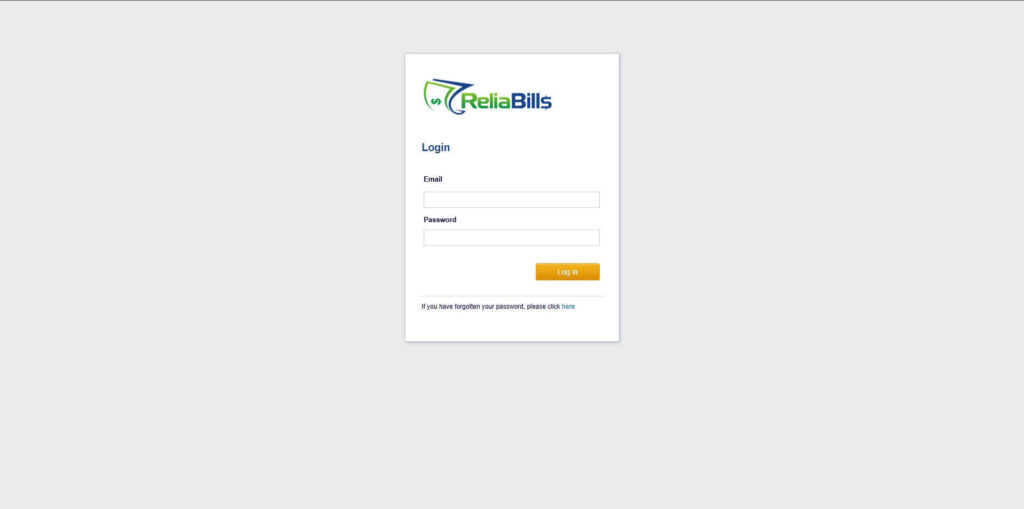
Step 1: Login to ReliaBills
- Access your ReliaBills Account using your login credentials. If you don’t have an account, sign up here.
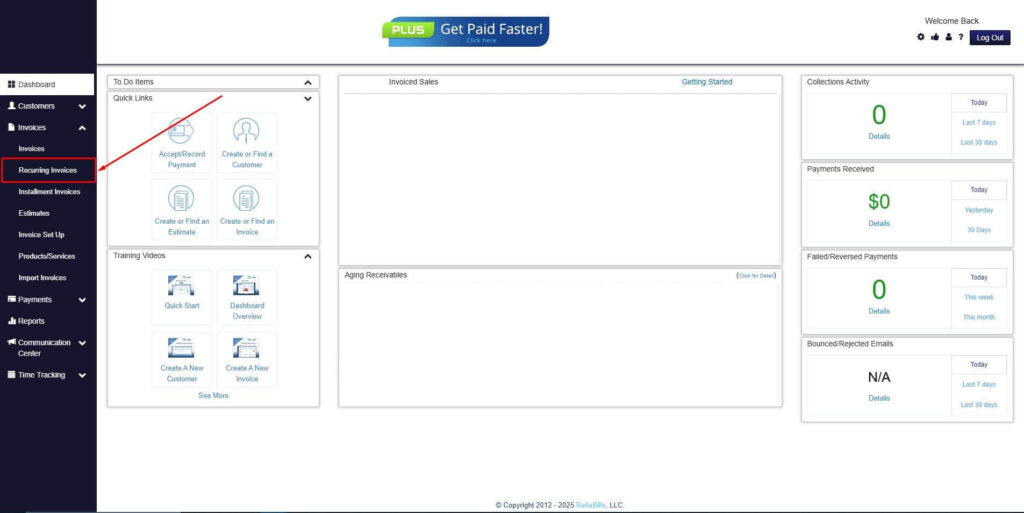
Step 2: Click on Recurring Invoices
- Navigate to the Invoices Dropdown and click on Recurring Invoices for an overview of the list of your existing customers.
Step 3: Go to the Customers Tab
- If you have already created a customer, search for them in the Customers tab and make sure their status is “Active”.
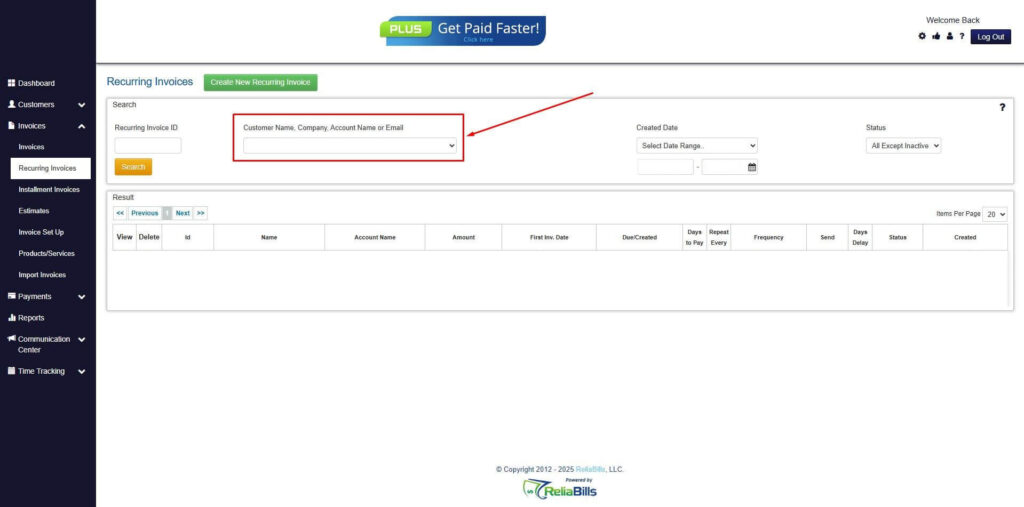
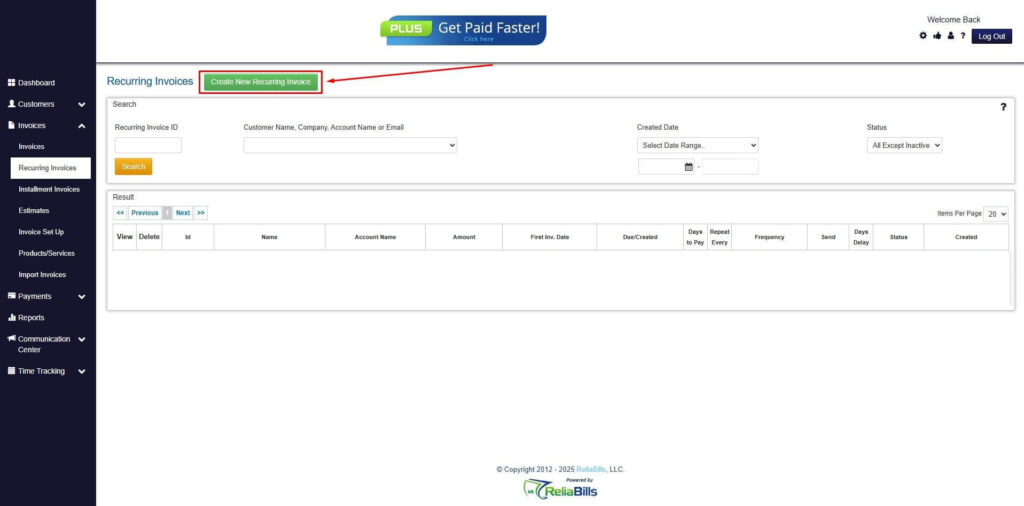
Step 4: Click the Create New Recurring Invoice
- If you haven’t created any customers yet, click the Create New Recurring Invoice to create a new customer.
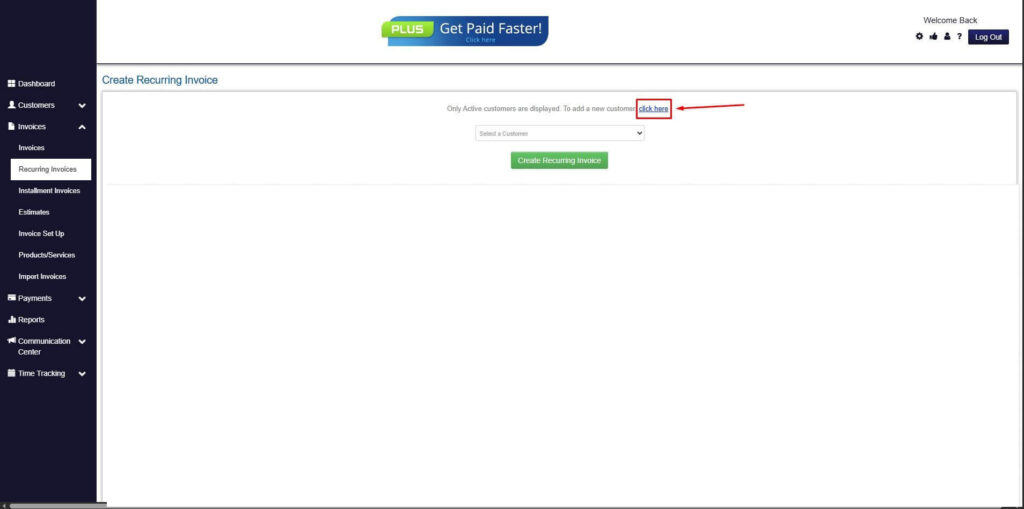
Step 5: Click on the “Click here” Button
- Click on the “Click here” button to proceed with the recurring invoice creation.
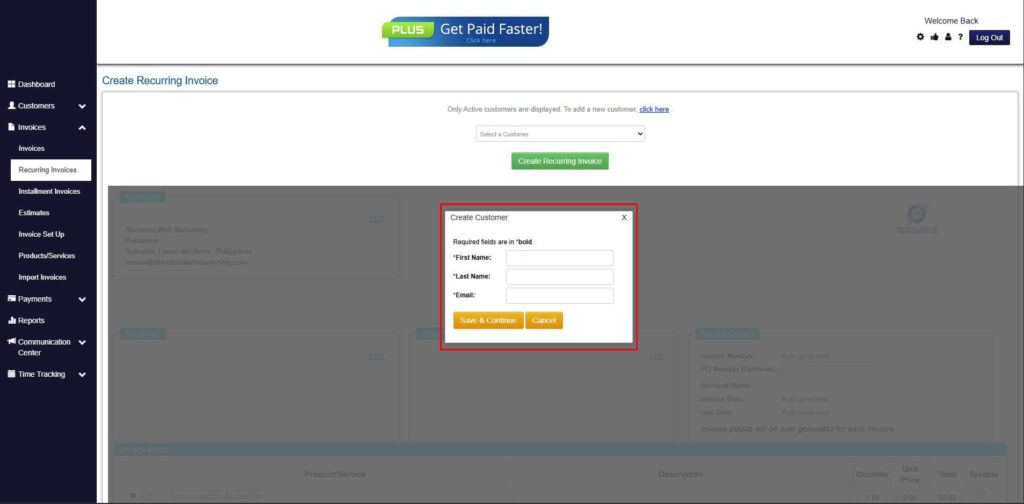
Step 6: Create Customer
- Provide your First Name, Last Name, and Email to proceed.
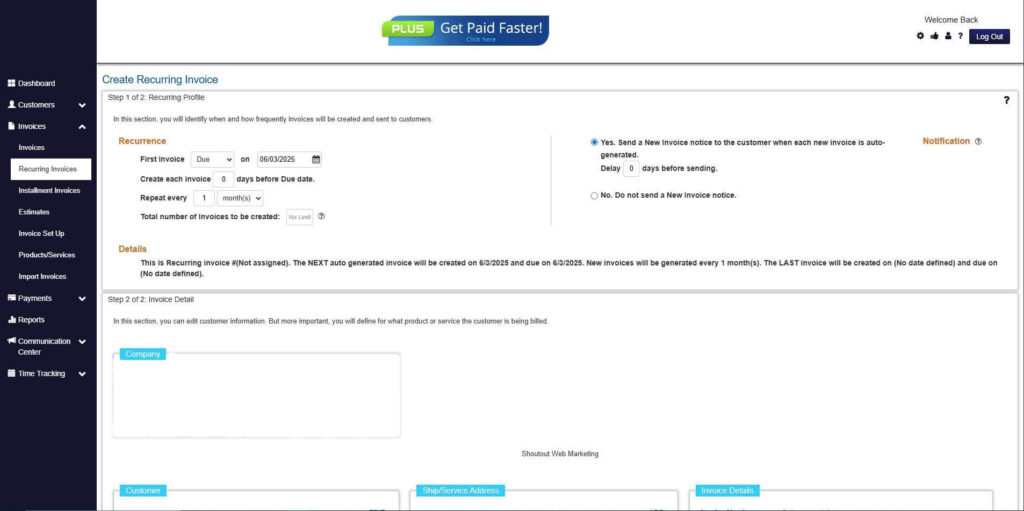
Step 7: Fill in the Create Recurring Invoice Form
- Fill in all the necessary fields.
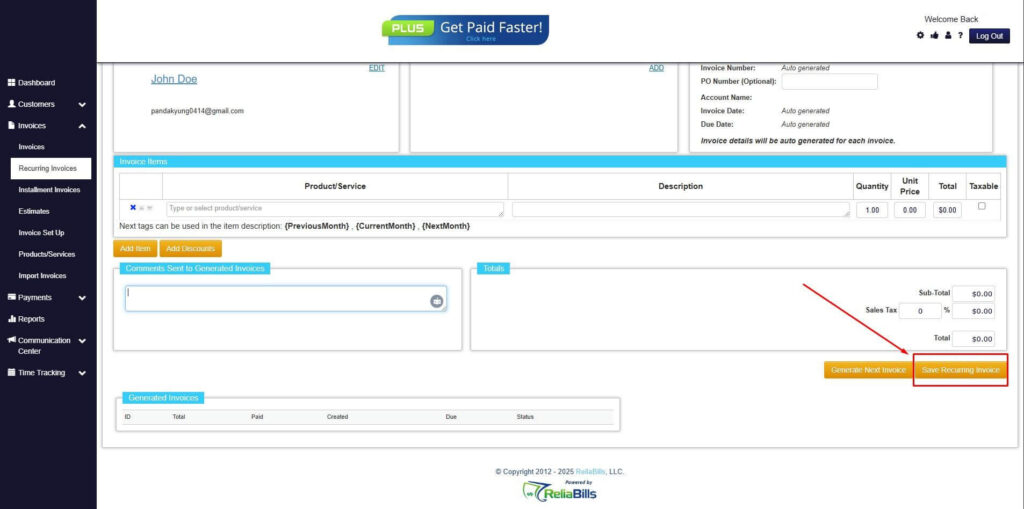
Step 8: Save Recurring Invoice
- After filling up the form, click “Save Recurring Invoice” to continue.
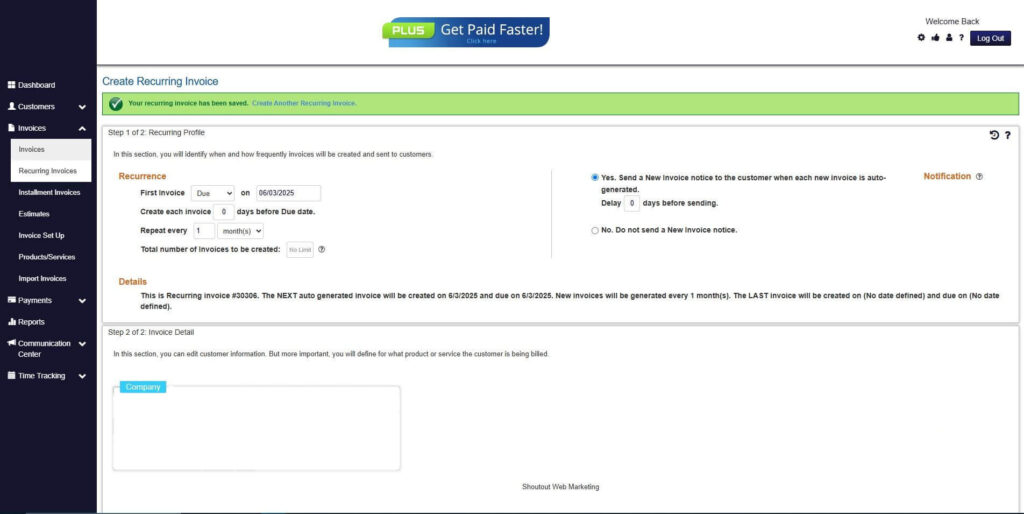
Step 9: Recurring Invoice Created
- Your Recurring Invoice has been created.
Frequently Asked Questions (FAQs)
1. What is real-time invoice tracking?
Real-time invoice tracking is the ability to monitor invoice statuses and payments instantly. It provides up-to-date information on billing activity. This helps businesses stay informed and take timely action.
2. How does it help prevent overdue payments?
It enables businesses to identify unpaid invoices quickly and send reminders. This proactive approach reduces delays and improves payment timeliness. It also ensures better communication with customers.
3. Can real-time tracking be automated?
Yes, modern billing systems automate tracking and updates. This ensures accurate data without manual input. Automation improves efficiency and reliability.
4. Is it suitable for small businesses?
Absolutely, small businesses benefit greatly from improved visibility and automation. It helps them manage cash flow more effectively. It also reduces administrative workload.
5. How does recurring billing support real-time tracking?
Recurring billing automates invoice generation and ensures consistent tracking. This reduces manual effort and improves accuracy. It also supports predictable payment cycles.
Conclusion
Real-time invoice tracking is a powerful tool for preventing overdue payments and improving financial control. By providing instant visibility into invoice statuses and payment activity, businesses can take proactive steps to ensure timely collections. This leads to better cash flow management and more efficient operations.
When combined with automation and recurring billing, real-time tracking becomes even more effective. These tools work together to streamline billing processes, reduce errors, and ensure consistent payments. Businesses can operate with greater confidence and accuracy.
As digital transformation continues to reshape financial management, adopting real-time invoice tracking solutions is no longer optional. Businesses that embrace these tools will gain a competitive advantage through improved efficiency, stronger cash flow, and better customer relationships.